Author: Tech & Tools Desk

Tech & Tools Desk17 February 2026
zz-15.jpeg

3min6900
Oil markets drew attention on Tuesday after Donald Trump stepped up warnings against Iran, unsettling trading during a holiday-thinned session across Asia and the United States. West Texas Intermediate pared earlier gains after climbing more than one per cent to trade near $64 per barrel, while Brent crude slipped slightly to just below $69. Trump cautioned Tehran about the “consequences of not making a deal” ahead of scheduled talks between Washington and Iran in Geneva. The US president has previously threatened military action against the Islamic Republic, initially over its violent response to anti-government protests and more recently over concerns surrounding its nuclear programme. The remarks rippled through largely quiet markets as several Asian financial centres including Shanghai, Hong Kong, Taipei, Seoul and Singapore — remained shut for the extended Lunar New Year holiday. US markets were due to reopen later on Tuesday following the Presidents’ Day break. Gold prices fell below $5,000 an ounce, while silver dropped three per cent. In Japan, stocks closed 0.4 per cent lower after data showed the world’s fourth-largest economy recorded weak growth in the final quarter of last year. Brokerage firm Monex said the absence of US market activity was likely to keep Japanese trading subdued, adding that a softer yen with the dollar trading in the mid-153 range could lend support to export-focused stocks. Australian shares edged up 0.2 per cent after mining giant BHP posted an increase in half-year net profit, driven by strong demand for copper amid global electrification efforts. Bangkok rose 0.5 per cent, brushing off weak growth data and extending gains after the Bhumjaithai Party’s surprise election victory earlier in the month. Markets in Mumbai and Manila also advanced, while Wellington slipped 0.5 per cent. Investors are also watching developments in artificial intelligence, as technology executives and world leaders gather at the AI Impact Summit in New Delhi. The five-day event, billed as its largest yet, aims to outline a shared global roadmap for AI governance and cooperation. US Federal Reserve officials Michael Barr and Mary Daly are expected to speak on AI later on Tuesday, according to Bloomberg News. While booming demand for generative AI has lifted tech-sector profits, concerns continue to mount over its broader social and environmental implications.

Tech & Tools Desk16 February 2026
zz-5.webp

3min7280
The Federal Government has instructed all Ministries, Departments and Agencies (MDAs) to strictly apply the eight-year tenure limit for directors and permanent secretaries, in line with a renewed directive from the Office of the Head of the Civil Service of the Federation. The directive follows the revision of the Public Service Rules (PSR), which was announced in July 2023 by the former Head of the Civil Service of the Federation, Folasade Yemi-Esan. She stated at a lecture marking the 2023 Civil Service Week at the State House, Abuja, that the revised rules took effect from July 27, 2023. A circular issued by the Head of Service and addressed to permanent secretaries, the Accountant-General of the Federation, the Auditor-General for the Federation and heads of extra-ministerial departments formally communicated the revised rules. According to the circular, the revised PSR—approved by the Federal Executive Council on September 27, 2021, and unveiled during the 2023 Civil Service Week lecture became operational from July 27, 2023. Section 020909 of the revised PSR provides that permanent secretaries are to serve a four-year tenure, renewable only once subject to satisfactory performance. It also stipulates that directors on Grade Level 17 or equivalent must compulsorily retire after spending eight years in that rank. While some MDAs, including the Federal Ministry of Finance, implemented the policy promptly, others reportedly failed to comply. In August 2025, the Association of Senior Civil Servants of Nigeria raised concerns over alleged attempts to extend the tenure of some directors and permanent secretaries, warning that such moves would contravene civil service regulations. However, in a memo dated February 10, 2026, and signed by the current Head of the Civil Service, Didi Walson-Jack, MDAs were accused of uneven and inconsistent enforcement of the tenure policy. The memo reaffirmed that the eight-year tenure rule for directors remains valid and must be fully implemented across the Federal Public Service. It noted that the reminder was necessary following observations that compliance had been irregular, in violation of the Public Service Rules. The circular directed permanent secretaries, directors-general and chief executive officers of government agencies to submit annual reports on the status of implementation of the policy by February 28 each year, as well as monthly nominal rolls for monitoring and record-keeping purposes. It warned that failure to comply with the directive would attract appropriate administrative sanctions and urged MDAs to ensure that the contents of the circular are brought to the attention of all relevant officials for strict adherence.

Tech & Tools Desk15 February 2026
ab-2.jpg

3min4830
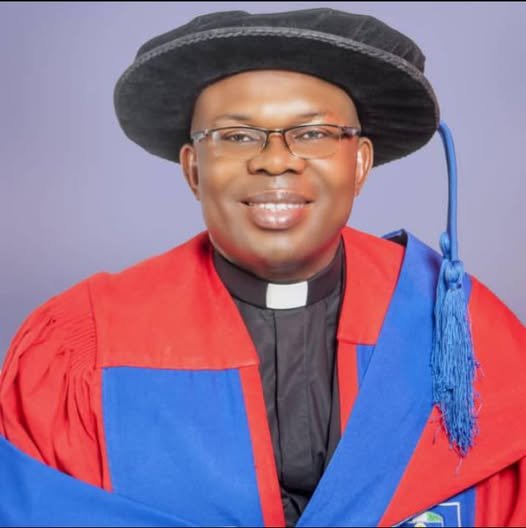
A Catholic priest and university scholar, Innocent Uwah, has called on the Independent National Electoral Commission (INEC) to leverage artificial intelligence to improve the electronic transmission of election results ahead of the 2027 general elections. Uwah, the Acting Vice-Chancellor of Nigerian British University (NBU), said the effective deployment of AI-driven technologies would enhance operational capacity, strengthen credibility, and address recurring challenges associated with transmitting poll results electronically. He made the call while speaking with journalists during the institution’s third matriculation ceremony on Saturday. According to him, AI has already been successfully integrated into sectors such as education and medicine, and there is no justification for excluding it from Nigeria’s electoral system. “The Nigerian British University is committed to advancing knowledge, and we emphasise AI as a strategic tool for national development. As a technology-driven institution, we aim to become a leading hub for artificial intelligence research,” he said. Uwah argued that AI-enabled automation would make the electoral process more transparent and dependable. “If Nigeria fully embraces AI in its electoral operations, results declared at the end of voting will be clearer and less prone to disputes. AI has transformed medicine, education, and research. It can do the same for politics,” he stated. He appealed to the INEC chairman to adopt modern technologies capable of delivering more reliable election outcomes. “We are in the digital age. Once these technological innovations are embraced, election results will be more dependable and public confidence will improve. We cannot continue to cite lack of capacity to transmit results electronically in the 21st century,” he added. Drawing a comparison with the banking sector, Uwah noted that financial institutions rely on advanced technology to securely transmit funds and questioned why similar systems could not be applied to electoral processes. Speaking on the university’s growth, the acting vice-chancellor revealed that the institution currently runs five faculties and two schools, with 257 students matriculating this academic session. Licensed in May 2022, the university commenced operations in February 2023 with three faculties Management and Social Sciences, Law, and Computing and Information Technology offering 16 programmes. Two additional faculties were approved in June 2024 by the university Senate and the National Universities Commission. He urged the newly admitted students to remain focused and disciplined, advising them to work hard, avoid negative peer influence, and strive for excellence throughout their academic journey.

Tech & Tools Desk14 February 2026
aa-12.jpg

3min7100
Residents in several communities across Cross River State have decried the worsening electricity situation in the area, describing it as frustrating and damaging to livelihoods. Speaking on Saturday in Calabar, residents said prolonged power outages have crippled businesses and made daily life increasingly difficult. In Boki Local Government Area, Ajot Ajim said his community has been without electricity for years, leaving residents in “total darkness” and forcing many small business owners to shut down operations. “For some years, we have not had light in my area. This is affecting most of us, especially business owners. When it is election time, they remember us, yet we are neglected during governance,” he said. In Ikom Local Government Area, Dr. Dimitris Okim also expressed concern over the persistent poor power supply, urging both the federal and state governments to urgently intervene. Another resident of Ikom, Ashor Ubi, said his community has endured more than 14 years without electricity. He explained that the outage has paralysed his sachet water and soft drinks business. At Edgerly Street in Calabar South Local Government Area, Affiong Duke, a mother of four, said the prolonged blackout has led to the collapse of several small-scale businesses and significant revenue losses. “I want to appeal to the government to help us. Our businesses are not working. We have been in total darkness for so many years. We have a government, yet they are not making adequate provision for us. This is so sad and frustrating,” she said. Another trader in Calabar South, Bassey Effiom, warned that the lack of electricity has also contributed to rising insecurity, noting that darkness at night creates opportunities for criminal activities. He called on the Federal Government and Governor Prince Bassey Otu to take decisive action. Responding to the complaints, the State Commissioner for Power, Hon. Eka Williams, acknowledged the poor electricity supply and said efforts were underway to restore power. He explained that some electricity poles had collapsed but assured residents that repairs were ongoing and that effective power supply would be restored within the next two weeks.

Tech & Tools Desk13 February 2026
trrump-1280x853.avif

2min3220
United States President Donald Trump is scheduled to meet on Friday with special forces troops involved in the operation that led to the capture of Venezuelan leader Nicolás Maduro during a deadly raid in Caracas in January. The White House said the president will be joined by First Lady Melania Trump as they travel to Fort Bragg to greet the soldiers. According to US officials, the operation involved helicopters arriving under the cover of darkness and the seizure of Maduro and his wife, Cilia Flores, from a heavily guarded compound in the Venezuelan capital on January 3. Venezuelan authorities said the assault, which began with US air strikes on military targets, left 83 people dead and more than 112 injured. No US troops were reported killed. White House Press Secretary Karoline Leavitt said the president and first lady would also meet with military families and commend members of the special forces who carried out what the administration calls “Operation Absolute Resolve,” describing Maduro as a narco-terrorist brought to justice. Maduro is currently being held in the United States, where he faces charges including drug trafficking. He has pleaded not guilty, and his next court appearance is set for March 17 in New York. Trump has approved former vice president Delcy Rodríguez to replace Maduro, contingent on meeting US demands related to oil access and easing state repression. The president has repeatedly cited the operation as a demonstration of US military power and Washington’s influence in the region. Speaking at a rally in Iowa in January, Trump praised the mission as “spectacular” and credited what he called an exceptionally skilled and patriotic team. Trump has also alluded to the use of a secret weapon, which he referred to as a “discombobulator,” claiming it disabled Venezuelan equipment during the operation. In a recent interview with NBC News, he declined to provide details, saying only that it rendered opposing equipment inoperable.

Tech & Tools Desk12 February 2026
zz.jpg

3min3990
Samsung Electronics on Thursday announced the start of mass production of its next-generation memory chips designed to support artificial intelligence, describing the development as an industry-leading milestone. The new high-bandwidth HBM4 chips are considered critical for expanding large data centres that drive the rapid growth of AI technologies. US technology firm Nvidia, the world’s most valuable company, is widely expected to be a major customer. In a statement, Samsung said it had commenced mass production of its HBM4 chips and had already shipped commercial units to clients, noting that the move gives it an early leadership position in the HBM4 market. Rising global investment in AI data centres has sharply increased demand for advanced high-bandwidth memory chips. Samsung said the new chips deliver more than 40 per cent higher processing speeds than previous models, exceeding current industry benchmarks and meeting growing performance demands. Following the announcement, Samsung Electronics shares rose by more than six per cent in afternoon trading on the South Korean stock exchange. South Korea has set a national goal of becoming one of the world’s top three AI powers, alongside the United States and China. Samsung and local rival SK hynix are already among the leading producers of high-performance memory chips, with both companies racing to begin HBM4 production. Industry research firm TrendForce projects that global memory chip revenue will climb to a peak of over $840 billion by 2027. Samsung has also reported record quarterly profits this year, driven by strong demand for its advanced memory products. The company has committed billions of dollars to expanding and upgrading its chip manufacturing facilities to meet rising demand. Meanwhile, Nvidia continues to dominate AI computing hardware, fuelling intense demand for memory chips from suppliers such as Samsung and SK hynix. Other major technology firms, including Apple, Microsoft and Amazon, have developed AI-focused chips, but many still rely heavily on Nvidia’s hardware. Analysts and manufacturers have cautioned that the strong focus on AI chip production could contribute to higher consumer electronics prices over time.

Tech & Tools Desk11 February 2026
zz-1-1280x853.jpeg

2min3600
Britain’s government has drawn criticism from right-wing politicians after confirming it has replaced “His Majesty’s Government” branding with a “UK Government” logo in official communications. The UK government is formally known as His Majesty’s (HM) Government, a title linked to the reigning monarch, King Charles III. Until recently, government websites and public materials typically displayed the Royal Coat of Arms alongside the wording “HM Government”. However, a Labour government minister confirmed this week that a strategic decision had been taken to adopt “UK Government” as the main branding across all public-facing communications. The change, confirmed on Tuesday, was criticised by opposition Conservative figures, who described it as disrespectful to Britain’s history, culture and constitutional traditions. Conservative politician Alex Burghart accused Labour of attempting to erode long-standing customs, saying the move reflected a disregard for tradition. Under guidance issued by the previous Conservative administration, which remained in power until 2024, the Royal Coat of Arms and “HM Government” branding were to be used wherever possible. A government spokesperson said the new approach was intended to provide greater clarity in public communications. Anti-monarchy campaigner Graham Smith, head of the pressure group Republic, welcomed the change, saying it better reflected the government’s role in serving the public. He also pointed to what he described as declining support for the monarchy following the release of new documents last month detailing further links between Prince Andrew and the late US sex offender Jeffrey Epstein. A Savanta poll commissioned by Republic showed support for the monarchy at 45 percent, down from the 57 to 59 percent recorded by YouGov in mid-January. A separate YouGov poll for Sky News found that 45 percent of respondents believed King Charles III had done enough to distance himself from his brother, Prince Andrew, who lost his royal titles last year over his Epstein connections, while nearly 40 percent said the monarch should have done more.

Tech & Tools Desk10 February 2026
99.webp

6min4090
The Corporate Affairs Commission (CAC) has revealed that it now processes nearly 10,000 business registration applications daily, a significant increase from the few hundred handled in its early years, following the full deployment of artificial intelligence across its service platforms. The commission, however, acknowledged that the transition to an AI-powered system came with challenges, including temporary disruptions to productivity and service delivery during 2025. The Registrar-General of the commission, Hussaini Magaji, disclosed this on Monday in Abuja at the opening ceremony of CAC’s 35th anniversary celebration, describing the milestone as a defining moment in Nigeria’s drive toward economic formalisation. The event, themed “Upholding Public Trust through Excellent Service Delivery,” highlighted the commission’s growth, resilience, teamwork, and institutional transformation since its establishment in 1991. CAC was created under the Companies and Allied Matters Act of 1990 to replace the former Company Registry and was further modernised by the enactment of CAMA 2020. As an autonomous agency, the commission is responsible for the incorporation and regulation of companies, business names, and incorporated trustees nationwide. In his address, Magaji explained that CAC has evolved into a fully digital, end-to-end registry that operates круглo around the clock and is accessible both within Nigeria and globally. He recalled that when the commission began operations in 1991, it functioned from a single office in Area 11, Garki, Abuja, serving the entire country through manual, paper-based processes. He noted that business owners were then required to travel long distances to Abuja to register entities, with service delivery constrained by geography and time. According to him, that modest beginning laid the foundation for what has become one of Africa’s most reform-driven corporate registries. “Today, our services are no longer limited to one physical location,” Magaji said. “This evolution from paper to portal, from queues to clicks, and from stress to seamless service defines our journey.” He attributed the sharp rise in registration volumes to tax reforms, government policies aimed at formalising informal businesses, and the rapid growth of digital and social media-driven enterprises. “To put this in context, CAC now receives close to 10,000 business registration requests daily, compared to only hundreds in the past,” he said. “In addition, our complaint management system processes an average of 5,000 inquiries every day through emails and call centres.” Magaji stressed that managing such volumes would be impossible through manual processes alone, noting that artificial intelligence is essential in complementing human capacity with speed, accuracy, and efficiency. He admitted that the transition year was particularly demanding, explaining that large-scale transformation often comes with initial setbacks. He thanked stakeholders and customers for their patience and understanding during the adjustment period. Magaji described the adoption of AI as inevitable, adding that CAC has already become a global reference point for name reservation and business registration, with turnaround times of as little as 10 minutes. To further strengthen its digital infrastructure, he announced the signing of a Letter of Collaboration between CAC and Google, describing the partnership as strategic to enhancing portal performance and improving the ease of doing business in Nigeria. He also unveiled a redesigned CAC website featuring AI-powered tools, including an AI Lawyer that provides instant guidance on CAC laws and procedures, and an AI Name Generator that allows users to generate and reserve scalable business names. As part of its 35th anniversary initiatives, the commission approved free business name registration for 3,500 small businesses across the 36 states and the Federal Capital Territory. Other initiatives include scholarships for the six best corporate law students from each campus of the Nigerian Law School in 2026, donations to internally displaced persons’ camps and orphanages, and a commemorative staff bonus of 25 per cent of one month’s gross salary. Special car and housing loan schemes, as well as board-recommended promotions for pioneer and retiring staff, were also announced. Delivering a goodwill message, the Chairman of the House of Representatives Committee on Commerce, Ahmed Munir, said CAC’s digital reforms have simplified business registration and empowered millions of entrepreneurs to transition from the informal to the formal economy. He pledged continued legislative support to strengthen the commission’s digital infrastructure and transparency. The Director-General of the National Information Technology Development Agency, Kashifu Abdullahi, also assured the commission of technical support, noting that the integration of ethical and responsible artificial intelligence is essential for modern institutional transformation. Established in 1991, the Corporate Affairs Commission remains central to the Federal Government’s efforts to improve Nigeria’s ease-of-doing-business ranking, expand the tax base, and formalise micro, small, and medium-scale enterprises.


Tech & Tools Desk9 February 2026
Tax-illustration-1.webp

3min5530
Nigeria’s new tax laws have moved beyond speculation and debate. They are now fully in effect and firmly established. President Bola Tinubu deserves recognition for undertaking a difficult but necessary reform of a tax system that for years placed excessive pressure on salary earners while allowing inefficiencies and abuses to persist. At a moment when tough decisions were required to stabilise the economy and shield the most vulnerable, the administration chose structural reform over political convenience. That choice, now reflected in real outcomes, is increasingly proving to be timely and people-centred. From the outset, however, the tax reforms were met with sustained misinformation. Opposition figures and social media commentators, many lacking a sound grasp of tax policy, spread fear to score political points. Nigerians were warned that their earnings would shrink, that take-home pay would fall, and that workers would be burdened with heavier taxes. PAYE was portrayed as a fresh penalty rather than a restructured system designed to offer relief. These claims gained traction not because they were accurate, but because anxiety often spreads faster than facts online. Now, reality is beginning to replace speculation. As January salary payments were received, Nigerians started sharing their own experiences—personal accounts rather than official assurances. Many salary earners reported that despite adjustments to gross income, their net pay increased. PAYE deductions fell. Overall tax payments declined. From verified social media accounts to private messages expressing appreciation to those who clarified the reforms early, the pattern has become clear: a significant number of workers are paying less tax, not more. As several analysts have pointed out, many Nigerians were never at risk of being adversely affected. The new tax framework is intentionally designed to protect low- and middle-income earners and to promote equity. Gradually, the uproar is subsiding, and the figures are telling a story very different from the narrative initially circulated. Beyond the immediate relief being felt, the reforms represent a broader commitment to long-term nation-building. They aim to establish a fairer, more transparent, and sustainable tax system one that strengthens public finances, supports development, and lays a stronger foundation for a more stable and prosperous Nigeria.

Tech & Tools Desk8 February 2026
aa-1.webp

2min6680
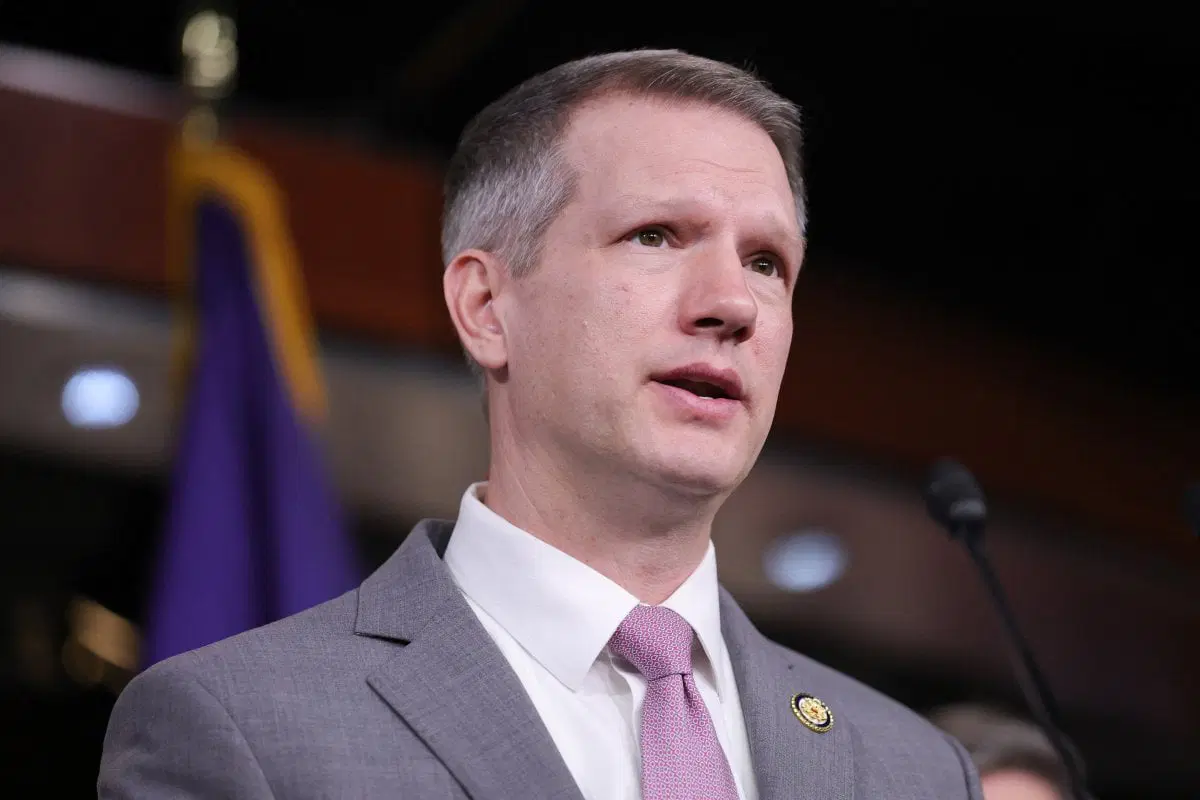
United States Congressman Riley M. Moore has dismissed claims that the US supports any move to disintegrate Nigeria, warning that separatist agitations would only deepen insecurity and further endanger Christian communities. Moore made the clarification in a statement shared on his verified X (formerly Twitter) account following a visit to Nigeria, where he met with government officials, church leaders, humanitarian organisations, and internally displaced persons. According to the lawmaker, his engagements focused on understanding the ongoing persecution of Christians across the country, not on discussions about dividing Nigeria. “Throughout my meetings, the idea of breaking up Nigeria did not arise in any serious way,” Moore said, noting that “attempts to embolden separatist movements ultimately harm Christians, particularly in the North and Middle Belt.” He warned that any weakening of Nigeria’s unity would have far-reaching security implications beyond its borders. “A destabilised Nigeria would embolden terrorist groups and make Christians less safe, not only within Nigeria but across the African continent,” he stated. Moore also reaffirmed his commitment to advocating for victims of terrorism and insecurity in Nigeria, stressing that his concern extends to all affected citizens regardless of faith. “I remain committed to working to save the lives of our brothers and sisters in Christ and, indeed, all Nigerians suffering from the instability caused by terrorists,” he said. The congressman linked his stance to ongoing security cooperation between Washington and Abuja, describing the recently signed US-Nigeria security cooperation agreement as a significant step toward curbing violence and strengthening bilateral relations between the two countries.