Author: Lifestyle & Wellness Desk

aa.avif

3min8010
Renowned American climber Alex Honnold has completed a daring free-solo ascent of Taipei 101, scaling the iconic skyscraper without ropes, a harness or any form of safety equipment. The 508-metre (1,667-foot) tower in Taiwan’s capital, named after its 101 floors and designed to resemble a bamboo stalk, is one of the tallest buildings in the world. Honnold, famous for becoming the first person to climb Yosemite National Park’s El Capitan without protective gear, completed the skyscraper climb in one hour and 31 minutes. The feat was originally scheduled for Saturday but was postponed due to wet weather conditions. The ascent was streamed live on Netflix, which noted there would be a broadcast delay as a safety precaution. After reaching the top, Honnold summed up the experience with a single word: “Sick.” His time was more than twice as fast as the previous known ascent of the tower. French climber Alain Robert, also known as “Spiderman,” scaled Taipei 101 in four hours using ropes and a harness when the building was still the world’s tallest. Taiwan’s Vice President, Hsiao Bi-khim, praised the climber, writing on X that she could “barely watch” the nerve-racking ascent. Honnold was welcomed at the summit by his wife, who had earlier voiced concerns about the strong winds and intense heat during the climb. At one point, as he neared the 89th floor, spectators inside the building spotted him and began cheering and waving through the glass. Footage shared by Honnold and Netflix on Instagram showed him continuing calmly, unfazed by the distraction. Honnold has built a career around extreme, high-risk climbs. His 2018 documentary Free Solo, which chronicled his rope-free ascent of El Capitan’s 3,000-foot granite face, went on to win an Academy Award.

aa-3-1280x720.jpg

5min5340
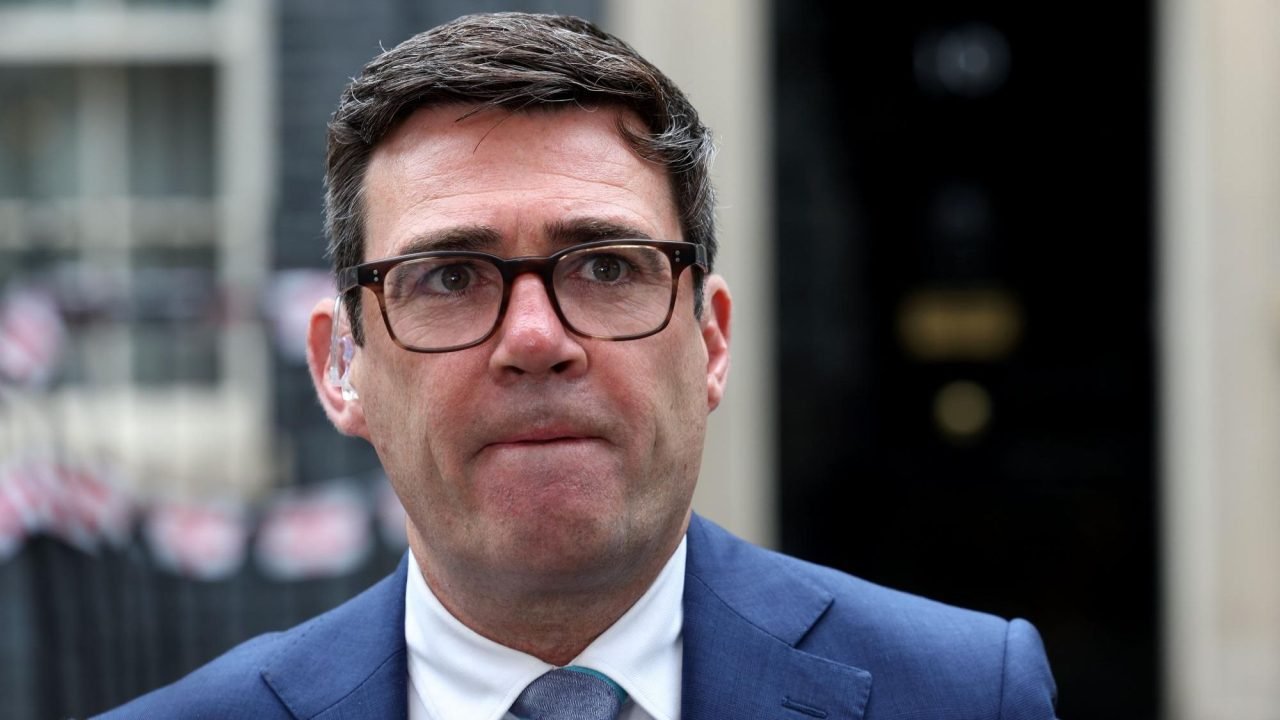
Andy Burnham has been prevented from contesting the forthcoming parliamentary by-election in Gorton and Denton after Labour’s ruling body refused to approve his candidacy. Burnham, the directly elected Mayor of Greater Manchester, required clearance from Labour’s National Executive Committee (NEC) to stand. He applied on Saturday, but the NEC decided against granting permission, citing concerns over the cost and disruption of triggering a mayoral election. In a statement, Labour said the decision was taken to avoid an unnecessary mayoral poll that would consume significant public funds and party resources at a time when attention should be focused on addressing the cost-of-living crisis. The by-election was triggered after former Labour minister Andrew Gwynne resigned as MP on health grounds. Burnham, a former cabinet minister and ex-MP for Leigh, is widely viewed as a potential future leadership challenger to Prime Minister Sir Keir Starmer should he return to Westminster. The decision has angered a number of Labour MPs and party members, some of whom argue that local members should have been allowed to choose Burnham as their candidate. Critics within the party say blocking him is a risky move that could deepen internal divisions, especially as Labour continues to trail Reform UK in national opinion polls. One senior Labour source described the decision as a “huge gamble,” warning that the party was sidelining its strongest candidate in what could be a difficult by-election. The NEC decision was taken on Sunday morning by 10 members, including Sir Keir Starmer, Home Secretary Shabana Mahmood and Labour chair Ellie Reeves. NEC sources said the vote was 8–1 in favour of blocking Burnham’s candidacy. Mahmood abstained as chair, while Deputy Labour leader Lucy Powell voted in favour of allowing him to stand. According to party sources, concerns raised during the meeting included the financial burden of replacing Burnham as mayor and the risk of a divisive internal campaign. Allies of the prime minister argued that Burnham is performing well as mayor and that a replacement election could cost millions of pounds at a time of economic pressure. They also warned that Reform UK could significantly outspend Labour during the campaign. Labour said the NEC believed forcing a mayoral election would have a “substantial and disproportionate impact” on party resources ahead of key elections in May, including local council contests and devolved polls in Scotland and Wales. Former shadow chancellor John McDonnell strongly criticised the decision, calling it “weakness and cowardice” and warning that it would provoke anger among party members. He dismissed claims that cost considerations justified the move, describing them as an “insult to people’s intelligence.” However, other Labour MPs welcomed the ruling. John Slinger said the swift decision would allow the party to move past what he described as a damaging period of internal drama. Burnham, who has twice unsuccessfully contested the Labour leadership, has not ruled out a future challenge to Sir Keir but said in a letter to the NEC that his intention in returning to Parliament would be to support the government, not undermine it. Gorton and Denton has long been a Labour stronghold. The party won the seat in 2024 with a majority of 13,000, though its popularity has since dipped, with Reform UK and the Green Party expected to mount strong challenges.

aa-1.jpg

3min4970
The Socio-Economic Rights and Accountability Project (SERAP) has instituted a lawsuit against the Minister of Power, Adebayo Adelabu, and the Nigerian Bulk Electricity Trading Plc (NBET) over their alleged failure to account for N128 billion in public funds. The suit, filed before a Federal High Court in Abuja, was disclosed in a statement issued on Sunday by SERAP’s Deputy Director, Kolawole Oluwadare. According to the statement, the case, marked FHC/ABJ/CS/143/2026, was instituted last Friday and is based on allegations contained in the Auditor-General of the Federation’s report published on September 9, 2025. In the action, SERAP is asking the court to issue an order of mandamus compelling the Minister of Power and NBET to account for what it described as “missing or diverted” N128bn allegedly traced to the Ministry of Power and NBET. The organisation is also seeking a court order directing the defendants to publicly disclose how the funds were spent, including dates of disbursement and the identities of beneficiaries or contractors involved. SERAP further wants the court to mandate the disclosure of the names, official positions and offices of all public officials who authorised, approved or were otherwise involved in the release of the disputed funds. The organisation said Nigerians continue to bear the brunt of corruption in the electricity sector, particularly in the face of persistent grid collapses and unreliable power supply. “There is a clear public interest in ensuring accountability and justice over these serious allegations,” SERAP stated, arguing that the reliefs sought would help address deep-rooted problems in the power sector. According to the group, compelling transparency would contribute to curbing corruption, reducing frequent transmission failures and improving access to stable and uninterrupted electricity nationwide. SERAP also warned that corruption has worsened the hardship faced by electricity consumers, noting that many Nigerians remain without power while still being burdened with exorbitant electricity bills. The suit was filed by SERAP’s legal team, comprising Kolawole Oluwadare, Kehinde Oyewumi and Andrew Nwankwo, and is anchored on findings from the Auditor-General’s 2022 audited report, which allegedly highlighted several financial irregularities involving the Ministry of Power and NBET. SERAP cited relevant provisions of the 1999 Constitution and international anti-corruption treaties, insisting that public institutions are legally obligated to uphold transparency, accountability and the eradication of corruption. No hearing date has been fixed for the matter.

aa-5.webp

2min9910
The Nigerian Independent System Operator (NISO) has explained that Friday’s national electricity grid collapse was caused by the simultaneous tripping of several 330kV transmission lines, along with the disconnection of some power generation units. The incident led to a sharp drop in electricity generation, which fell from over 4,500 megawatts to about 24 megawatts by around 1:30 pm. All 23 power plants connected to the grid reportedly lost output, leaving the country’s 11 electricity distribution companies with zero power allocation. In a preliminary statement issued on Saturday, NISO said the system-wide disturbance occurred at approximately 12:40 pm on Friday, January 23, 2026, resulting in a total outage across the interconnected power network. According to the operator, initial operational findings showed that the collapse was linked to the simultaneous tripping of multiple 330kV transmission lines and the shutdown of some grid-connected generating units, which together triggered the system failure. NISO said restoration efforts began shortly after the outage, with grid recovery activities commencing around 1:15 pm in line with established restoration procedures. The operator added that electricity supply had since been restored to areas including Abuja, Osogbo, Benin, Onitsha, Sakete, Jebba, Kainji, Shiroro, and parts of Lagos, while work continued to restore power in other parts of the country. NISO also confirmed that an investigation into the incident is underway to determine the root and contributing causes, stressing that full restoration and stabilisation of the national grid remain its top operational priority.

aa-13.jpeg

5min9400
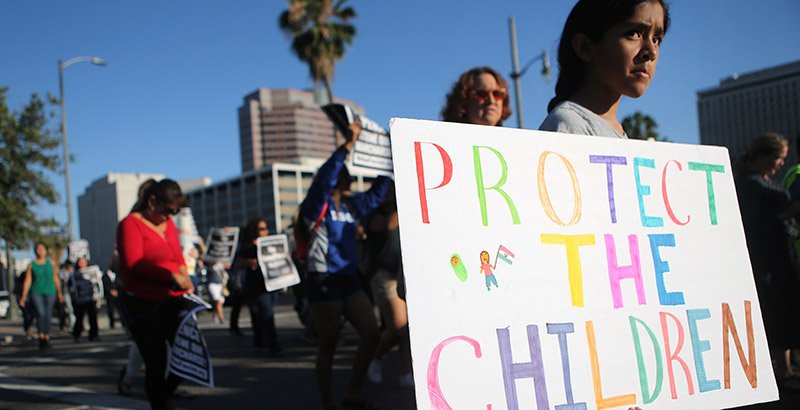
Thousands of people defied freezing temperatures on Friday to protest the Trump administration’s immigration crackdown in Minneapolis, as anger mounted over the detention of a five-year-old migrant boy. The demonstrations were accompanied by widespread business closures in protest of the ongoing federal operation in Minnesota. Dozens of restaurants, entertainment venues, and other businesses shut down as part of a coordinated day of action opposing the weeks-long immigration enforcement campaign. Public outrage intensified after images circulated showing a distressed preschooler, Liam Conejo Ramos, being held by immigration officers who were attempting to arrest his father. The crackdown has already drawn criticism following an incident in which a federal agent shot and killed a US citizen. The superintendent of Columbia Heights Public Schools said Ramos, a preschool pupil, and his Ecuadorian father, Adrian Conejo Arias both asylum seekers were taken from their driveway on Tuesday as they arrived home. She alleged that officers later used the child to lure others out of the house. One demonstrator told reporters he joined the march because “if we don’t fight, we don’t win,” holding a sign that read “five-years-old, dude,” in reference to the boy. Thousands of Immigration and Customs Enforcement (ICE) agents have been deployed to the Democratic-led city as President Donald Trump intensifies efforts to deport undocumented immigrants nationwide. During a visit to Minneapolis on Thursday, Vice President JD Vance confirmed that Ramos was detained but said agents were acting to protect him after his father allegedly fled from officers. “What are they supposed to do?” Vance asked. “Let a five-year-old child freeze to death?” UN human rights chief Volker Turk urged US authorities to halt what he described as the harmful treatment of migrants and refugees. ICE records showed that Arias was being held at a detention facility in Texas, though the database does not disclose the locations of minors. Senior Border Patrol official Gregory Bovino defended the handling of the child, insisting officers were trained to deal with children. ICE commander Marcos Charles said officers made efforts to reunite Ramos with his family, alleging that relatives refused to open the door after the father ran. He added that both father and son would remain in custody pending immigration proceedings, claiming they entered the country illegally. Ramos’s teacher described him as a bright and enthusiastic student. As temperatures dropped to minus 23 degrees Celsius on Friday, protesters wrapped in winter clothing chanted “ICE out” across Minneapolis. Separate demonstrations were held outside Minneapolis–St. Paul International Airport over its use in deportation operations. A Methodist pastor said about 100 clergy members were arrested at the airport during protests and charged with trespassing and disobeying a peace officer. Former vice president Kamala Harris condemned the child’s detention, calling it “outrageous” and describing Ramos as “just a baby.” School officials said at least four children in the same district have been detained this month. Protests in the city have grown increasingly tense since federal agents shot and killed US citizen Renee Good on January 7. An autopsy ruled the death a homicide, though the officer involved has not been suspended or charged. The lawyer representing Ramos and his father said they followed legal procedures in applying for asylum in Minneapolis, a sanctuary city. Minnesota authorities are seeking a temporary restraining order to halt the ICE operation, with a court hearing scheduled for Monday.

Tinubu-Shettimas.webp

4min5440
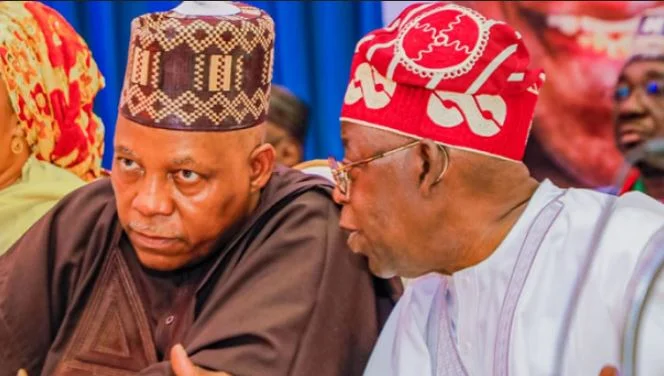
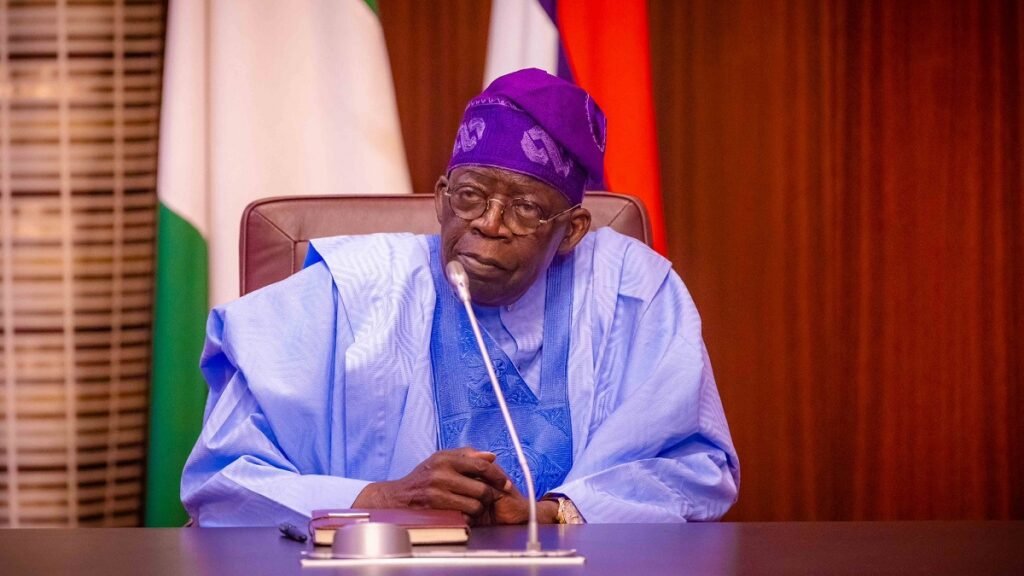
The North-Central All Progressives Congress (APC) Forum has rejected calls to remove Vice President Kashim Shettima as President Bola Tinubu’s running mate ahead of the 2027 general election, describing such a move as a serious political error. The forum, in a statement on Thursday in Abuja signed by its Chairman, Alhaji Saleh Zazzaga, responded to reports that some party members were pushing for Shettima’s replacement. Speculation intensified after the vice president’s photo was left off a banner featuring APC leaders from the North-East during the party’s zonal public hearing in Maiduguri on constitutional amendments. The banner included President Tinubu, five governors from the zone, and the party’s National Legal Adviser. The controversy has reignited debate over the viability of the APC’s Muslim-Muslim ticket for 2027 and Shettima’s political future. Some party stakeholders have suggested replacing him with a Christian from the North-Central region. However, the North-Central APC Forum warned that dropping Shettima would be disastrous for the party and could undermine Tinubu’s re-election prospects. The forum stressed that the North-Central region is focused on contesting the presidency in 2031, not the vice-presidency in 2027. It argued that injecting religion into the decision would be counterproductive, noting that there is currently no Christian candidate in the North with the grassroots support, national appeal, or political structure to match Shettima’s complementarity with Tinubu. “Changing a winning ticket is highly risky. We totally reject calls to drop Vice President Kashim Shettima as President Bola Tinubu’s running mate. We advise the President and party leaders not to heed such calls, as it would be a grievous political miscalculation,” the statement read. The forum accused proponents of Shettima’s removal of acting against the party’s and the President’s interests, claiming they had no intention of supporting Tinubu’s re-election. Analysing voting patterns, the forum said replacing Shettima would not attract new voters but could cost core northern support, potentially benefiting opposition candidates such as Peter Obi of the African Democratic Congress. “Those calling for a change did not back Tinubu in 2023 and are unlikely to support him in 2027, even if he drops Shettima for a Christian. This would risk alienating core northern voters and strengthen the opposition,” the statement warned. The forum also dismissed suggestions that foreign powers might pressure Nigeria to abandon the Muslim-Muslim ticket, insisting that Nigeria’s sovereignty must be respected. “The Muslim-Muslim ticket delivered victory in 2023. Nigeria is independent, and no external actor will dictate our political choices,” it said, cautioning that outside interference could undermine democracy and provoke conflict.

Tinubu-Restricts-UNGA-Attendance-to-Authorised-Officials-1-1024x576-1.jpg

5min9500
From diplomatic updates to academic achievements and urgent security developments, Friday’s headlines highlight key events shaping Nigeria today. President Bola Tinubu has approved the posting of three ambassador-designates to France, the United States, and the United Kingdom, while Joaquin Wike, son of FCT Minister Nyesom Wike, celebrated his Master’s degree graduation in London. Security issues remain a priority as the US raises concerns over the abduction of worshippers in Kaduna, the Supreme Court closes the long-running Kudirat Abiola murder case, and the Lagos State Police respond to threats against top schools. Here’s a closer look at the top stories: 1. Tinubu posts three ambassador-designates to France, US, UK President Bola Tinubu has approved the posting of three ambassador-designates to key nations, part of the 68 nominees confirmed by the Senate last December. The appointments include Ambassador Ayodele Oke to France, Colonel Lateef Are to the United States, and Ambassador Amin Dalhatu as High Commissioner-designate to the United Kingdom. The President instructed the Ministry of Foreign Affairs to notify the respective governments in line with standard diplomatic procedures. 2. Wike’s Son Graduates from King’s College London Joaquin Wike, son of FCT Minister Nyesom Wike, earned a Master’s degree in Management and Technology Change from King’s College London. The graduation ceremony was attended by family, including Justice Eberechi Wike, and notable politicians. Senior Special Assistant Lere Olayinka shared highlights, noting the family’s strong academic tradition, including Joaquin’s brother Jordan, who holds a Master of Laws from Queen Mary University, UK. 3. Abductions: US urges action, FG intensifies efforts Security concerns escalated in Kaduna State after gunmen abducted 177 worshippers from three churches in Kurmin Wali, Kajuru Local Government Area. Eleven victims escaped, while 166 remain in captivity. US Under Secretary of State Allison Hooker called for urgent measures to combat violence against religious communities. National Security Adviser Nuhu Ribadu assured that Nigeria is intensifying military operations and investigations, emphasizing that attacks along religious lines are treated as assaults on the state. Survivors, including 27-year-old Maimuna Babangida, recounted harrowing experiences. Eight months pregnant during captivity, she gave birth to a baby boy, Abubakar, while still held. Community groups have urged inclusion of local residents in forest-based security systems to prevent future attacks. 4. Supreme Court closes Kudirat Abiola murder case The Supreme Court concluded the decades-long legal saga by dismissing Lagos State’s attempt to reopen the prosecution of Major Hamza Al-Mustapha (retd) for the assassination of Alhaja Kudirat Abiola. Justice Uwani Aba-Aji faulted the state government for failing to act for nine years, confirming that Lagos State neither filed an appeal notice nor implemented prior orders. The case stems from Al-Mustapha’s 2012 conviction, later overturned by the Court of Appeal in 2013 due to insufficient evidence. 5. Police deploy officers to Lagos schools after attack threats Following threats to schools in Ikeja, the Lagos State Police Command deployed officers to Grange School and Greensprings School (Anthony Campus). Temporary school closures followed WhatsApp messages warning of potential attacks. Commissioner of Police Olohundare Jimoh confirmed that thorough sweeps found no explosives or hazardous devices, and the schools were declared safe. Authorities assured parents and students that investigations are ongoing, highlighting continued collaboration between schools and security agencies.

food-break-down-northh.webp

3min5400
At least one million people in northeast Nigeria could lose access to emergency food and nutrition support unless funding is secured “within weeks,” the World Food Programme (WFP) has warned. In a statement on Thursday, WFP described Nigeria as facing one of the most severe hunger crises in recent memory. As the world’s largest humanitarian organisation, WFP provides lifesaving assistance in emergencies while supporting communities recovering from conflict, disasters, and the impacts of climate change. “The United Nations World Food Programme is raising the alarm as more than one million people in northeast Nigeria risk losing emergency food and nutrition support within weeks unless urgent new funding is received,” the statement said. “Violence is intensifying in the north, and WFP is being forced to cut aid from 1.3 million people down to just 72,000.” “If WFP cannot continue supporting displaced populations in camps, many will be forced to leave in search of survival. They may attempt to migrate or, in extreme cases, join armed groups to provide for themselves and their families,” said WFP Nigeria Country Director David Stevenson. WFP projects that nearly 35 million people could face acute and severe food insecurity during the lean season. In Borno State alone, around 15,000 people are at risk of falling into catastrophic hunger, one step away from famine. “The crisis is unfolding amid renewed violence across the north, devastating rural communities, displacing families, and destroying food reserves. Now is not the time to halt food assistance,” Stevenson added. “Stopping aid would have catastrophic humanitarian, security, and economic consequences for the most vulnerable populations who have fled their homes.” He emphasised that humanitarian interventions remain one of the few stabilising forces preventing mass displacement and broader regional instability. WFP described the current hunger levels as the worst seen in a decade and is urgently seeking $129 million to sustain its operations in northeast Nigeria over the next six months. The agency warned that its programmes could shut down entirely without this funding.

MENO.avif

7min6940
What began as a personal moment unexpectedly triggered a nationwide discussion. I was flooded with kindness and support — close to 400 comments on LinkedIn, dozens of private messages, and hundreds more responses beneath a widely shared news article. Many messages followed a similar theme: people called me “brave” for speaking openly, or thanked me for helping to normalise experiences like brain fog. At the time, I didn’t feel especially brave — or even particularly normal. But the reaction made one thing painfully clear: there is still deep shame and stigma surrounding the symptoms of perimenopause and menopause, despite the fact that almost half the population will experience it at some point. High-profile figures such as Oprah Winfrey, Halle Berry, Davina McCall and Lorraine Kelly have spoken publicly about menopause and its impact, while Gwyneth Paltrow once called for the topic to be “rebranded.” Awareness has improved, and some practical changes have followed. Menopause screening is set to be included in routine health checks for women over 40 in England, and a new Employment Relations Bill will require UK companies with 250 or more staff to introduce menopause action plans from April 2027, with voluntary adoption beginning earlier. Yet progress remains uneven. A survey of around 1,600 women published by University College London found that more than three-quarters felt poorly informed about menopause. Many also reported that stigma persists, making it difficult to speak openly. One woman in her 60s, a social policy academic, told me she jokes about her “menopausal moments” among female colleagues, but still finds it embarrassing — particularly when she forgets specialist terminology in her field. Hiding symptoms, often referred to as menopause masking, comes at a cost. GP and menopause specialist Fionnuala Barton explains that the mental and emotional energy spent compensating for symptoms can further drain reserves and lower resilience, increasing the risk of burnout. This raises an important question: can masking itself harm women’s wellbeing? The NHS recognises 34 possible menopause symptoms, many of which can be debilitating. One woman who contacted me described how reduced oestrogen led to vaginal dryness so severe that walking became painful. Another said she developed bladder weakness almost overnight, making office work stressful and pushing her towards home working. Others said brain fog left them withdrawing from social situations because following conversations felt impossible. Women shared countless coping strategies — desk fans to manage hot flushes, detailed notes to counter memory lapses, and creative workarounds to stay productive. These stories highlight remarkable resilience, but they also reveal how much effort goes into simply functioning. Journalist and author Fiona Clark says many women experience a journey through confusion, denial, grief and acceptance when menopause symptoms begin. But she warns that masking can delay seeking help, prolonging unnecessary struggle. The workplace can be particularly challenging. Around four million women aged 45 to 55 are currently employed in the UK — the age range when menopause is most common. Professor Jo Brewis of The Open University explains that masking symptoms at work creates what economists call “intensive margin costs,” meaning extra hidden labour and emotional strain. Some women reduce their visibility at work, avoid promotions, or step into lower-paid roles to cope. Others work longer hours to compensate for fatigue or lapses in concentration. Research from The Fawcett Society found that one in ten women aged 40 to 55 left a job because of menopause-related symptoms. Not all experiences are negative, and cultural attitudes play a powerful role. In Japan, menopause is known as “konenki,” a word associated with renewal and energy, often described as a “second spring.” Anthropologist Dr Megan Arnot notes that while stigma still exists in many countries, some cultures frame menopause as a transition into wisdom, leadership and respect. This is true in several Indigenous communities, including Native American, Mayan and Indigenous Australian cultures, where postmenopausal women often gain influence as educators and guides. Anthropology professor Melissa Melby argues that Western narratives focus almost exclusively on problems. Women are typically asked about symptoms and difficulties, rarely about positive changes. This shapes expectations and perceptions. Her time working in Japan left her feeling hopeful about later life stages. Personally, I’m not fully there yet — and if my husband suggested optimism at the wrong moment, it might not go well for him. But perhaps there is value in stepping back from symptom checklists and considering the wider picture. Menopause has also become a booming industry, with supplements, apps, therapies and coaching services filling social media feeds. The global menopause market was valued at over $17bn in 2024 and is expected to exceed $24bn by 2030. Still, products alone are rarely enough. In workplaces, Brewis stresses the need for trained managers who can have sensitive conversations and offer tailored adjustments. Clear policies recognising menopause as a legitimate reason for absence are also crucial. While some women will never want to disclose their menopausal status — and that choice must be respected — effective initiatives can reduce stigma and make openness safer. Ultimately, mindset matters. Anthropologist Margaret Mead once spoke of “post-menopausal zest,” saying more than 70 years ago that few forces are as powerful as a woman in this stage of life. For now, that idea is something many of us cling to. I’m trying to embrace it myself — alongside HRT — and to channel a little “konenki” where I can. What the response to my own experience taught me most, though, is something even more reassuring: I am far from alone.


trump.jpeg

4min5320
Donald Trump stepped back from his threats over Greenland after the UK firmly defended the Danish territory’s sovereignty, according to David Lammy. The deputy prime minister said the US president had “responded to our concerns” by abandoning earlier suggestions of using military force or trade sanctions to gain control of the island. He said European nations were now back to a position focused on negotiation rather than confrontation. However, Lammy noted that Trump remains keen for the United States to take on a larger role in Arctic security, citing increased Russian activity in the region. Trump withdrew his threat to use force to take Greenland on Wednesday, reversing a stance that had risked severely damaging relations with Denmark and other Nato allies. Shortly afterwards, he also dropped plans to impose a 10% import tax on eight countries, including the UK, that had opposed his position, pointing instead to progress toward a future agreement on Greenland. Prime Minister Sir Keir Starmer did not respond with retaliatory tariffs, despite Trump previously criticising his agreement to transfer sovereignty of the Chagos Islands to Mauritius and arguing that it justified a stronger US presence in Greenland. Starmer later hardened his public stance, telling MPs he would not compromise on Greenland’s right to self-determination. Downing Street credited sustained behind-the-scenes diplomacy for Trump’s decision to withdraw his threats. Lammy, who has close ties to US Vice President JD Vance, said he never believed the US would use military force to annex Greenland. He said he had long argued that such an outcome was never realistic, even before Trump began his second term. He said the shift in Trump’s position followed the UK and its European partners making their commitment to international law and Nato unity “absolutely clear”. Trump, Lammy said, retreated from both the threat of force and the use of tariffs after close allies expressed strong opposition. Despite the public rhetoric, he argued, the US ultimately listened to its partners. Lammy said the UK’s relationship with the US remained special, particularly in defence and security cooperation, but acknowledged that global politics had entered a new phase. He warned that powerful nations were increasingly using pressure and coercion rather than legal frameworks to resolve disputes. He said the international order was undergoing profound change and that the balance of global power had shifted. With the US increasingly focused on Asia, Lammy argued that Europe would need to take on greater leadership within Nato in the decades ahead.