Author: Lifestyle & Wellness Desk

russiaa.avif

5min7020
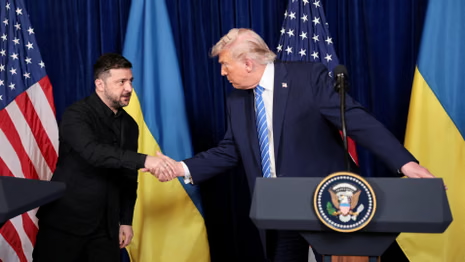
Negotiators from Russia, Ukraine and the United States are set to meet in the United Arab Emirates on Friday, marking what officials say will be the first talks involving all three countries since Russia began its full-scale invasion nearly four years ago. The Kremlin confirmed Russia’s participation following talks in Moscow between President Vladimir Putin and US representatives. Russian officials described those discussions as productive but stressed that any lasting peace agreement would depend on resolving territorial disputes. Speaking at the World Economic Forum in Davos, Ukrainian President Volodymyr Zelensky criticised European partners for what he described as insufficient political resolve in confronting Russia. Present at the Moscow meeting with Putin were three US representatives, including Steve Witkoff and Jared Kushner, the son-in-law of former US President Donald Trump. Kremlin adviser Yuri Ushakov said the Moscow discussions were open, detailed and constructive, but reiterated that a durable settlement would not be possible without agreement on territorial matters. He said Russia would continue pursuing the objectives of what it calls its “special military operation” until those issues were settled, while insisting Moscow remained genuinely interested in a diplomatic outcome. Ushakov also referenced an earlier framework agreed during a summit between Trump and Putin in Alaska last year, saying it remained central to Russia’s position on territorial resolution. Witkoff previously said Russia had indicated openness to allowing the US and European countries to provide Ukraine with strong security guarantees as part of a broader peace deal. After meeting Trump in Davos, Zelensky made clear that the future status of eastern Ukrainian territory remained unresolved ahead of the Abu Dhabi talks. He said land issues were the core obstacle and stressed that Russia, not only Ukraine, would need to make compromises. Among the key disputes is Moscow’s demand that Kyiv relinquish the remaining quarter of the Donetsk region still under Ukrainian control. Zelensky confirmed that senior Ukrainian officials would take part in the Abu Dhabi negotiations, underscoring the importance of the talks. Members of the delegation include national security and defence council chief Rustem Umerov, intelligence head Kyrylo Budanov, senior adviser David Arakhamia, and armed forces chief of staff Andrii Hnatov. Russia’s delegation will be led by General Igor Kostyukov, head of the GRU military intelligence agency. Separately, Russia’s investment envoy Kirill Dmitriev is expected to meet Witkoff to discuss economic matters. Zelensky said last month that a US-backed, 20-point peace plan was close to completion, adding that Ukraine’s position on the Donbas region differed sharply from Russia’s. He has proposed a mutual troop withdrawal of up to 40 kilometres to create an economic zone in the region, provided Russia agrees to the same terms. The US proposal reportedly envisions a demilitarised free economic zone in Ukraine’s industrial heartland in exchange for security guarantees for Kyiv. Zelensky also said he had reached an understanding with Trump on future US security commitments should a deal be finalised, though he noted that any agreement would require approval from both the US Congress and Ukraine’s parliament. The Ukrainian president had initially planned to skip the Davos forum to address the aftermath of Russian strikes on Kyiv’s power infrastructure, which left large parts of the capital without electricity, heating and water during one of the harshest winters of the war. Another unresolved issue remains control of the Zaporizhzhia nuclear power plant, which Russian forces seized in March 2022 and which continues to be a major point of contention in negotiations.
CARD-CC-1280x720.jpg

3min5540
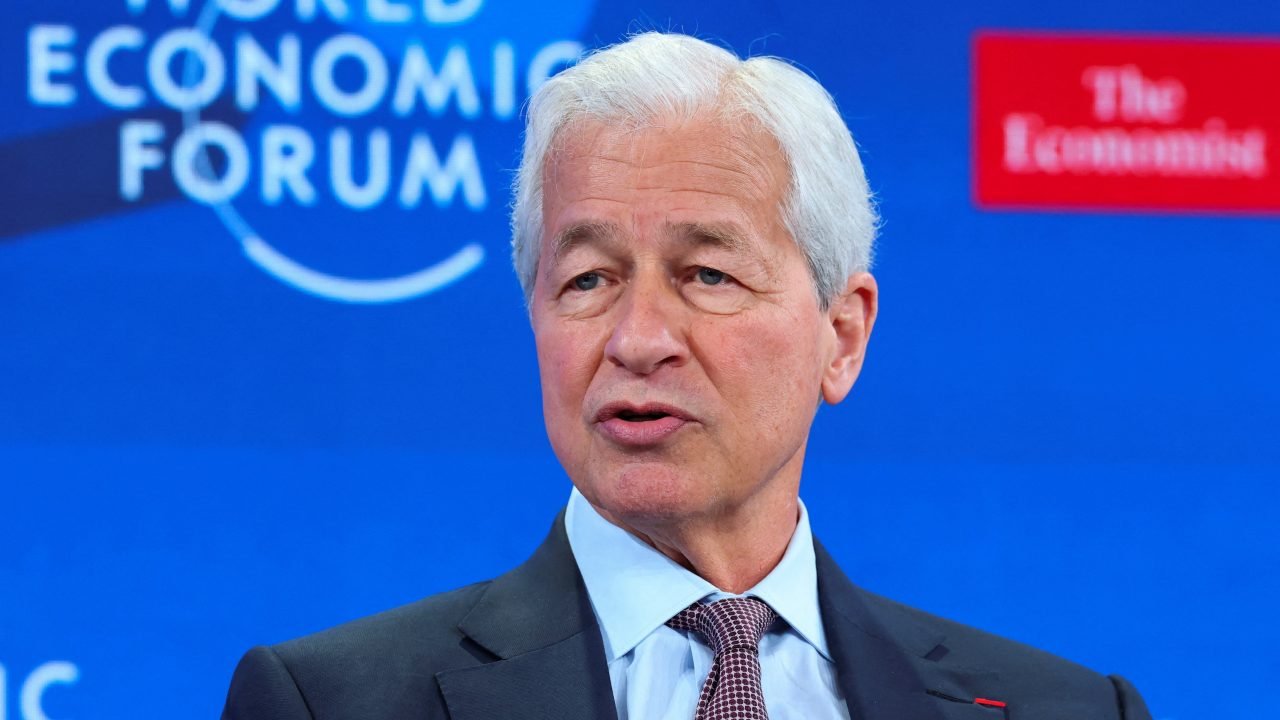
US President Donald Trump’s plan to cap credit card interest rates at 10% has been described as “an economic disaster” by JPMorgan Chase CEO Jamie Dimon. Dimon warned that the proposal would restrict access to credit for most Americans and negatively impact restaurants, retailers, travel companies, schools, and municipalities. Trump suggested on Truth Social that credit card interest rates be limited to 10% for one year starting January 20, 2026. The plan has not yet been implemented, and details on enforcement or legality remain unclear. Speaking at the World Economic Forum in Davos, Dimon said, “It would be an economic disaster… we would survive it, but it would be drastic for the majority of Americans.” He explained that about 80% of Americans rely on credit cards as backup financial resources. In a pointed remark at senators Bernie Sanders and Elizabeth Warren, who have backed interest rate caps, Dimon suggested that if Trump proceeds, the measure should first be tested in Vermont and Massachusetts. He added, “The people affected most won’t be the credit card companies. It will be restaurants, retailers, travel firms, schools, and local governments as people struggle to pay bills.” Other senior JPMorgan executives have also warned that a 10% cap could severely limit credit access and harm consumers, echoing broader criticism of the plan. Trump defended his proposal in a CNBC interview, saying, “I respect credit card companies—they make a lot of money—but they need to give people a break.” US banking associations have argued that such a cap would make credit harder to obtain and could be “devastating” for millions of families and small businesses. Currently, the average US credit card interest rate is around 20%. Trump first outlined the 10% interest rate cap during his 2024 presidential campaign. On January 13, he reiterated it on social media: “Effective January 20, 2026, I am calling for a one-year cap on Credit Card Interest Rates of 10%. The American public will no longer be ‘ripped off’ by credit card companies.” The announcement caused investor concern, leading to drops in shares of American Express, Visa, Mastercard, and Barclays in the UK.

united-kingdom.webp

4min8300
Foreign Secretary Yvette Cooper has announced that the UK will not immediately sign onto US President Donald Trump’s proposed Board of Peace, citing concerns about Russian President Vladimir Putin’s potential participation. Speaking to the BBC from Davos, Cooper said the UK had received an invitation to join the board but “won’t be one of the signatories today” during the planned ceremony at the World Economic Forum. She described the initiative as “a legal treaty that raises much broader issues” than its initial focus on ending the Israel-Hamas conflict in Gaza. The board’s founding charter, proposed by the White House, does not mention Gaza specifically and appears designed to take on functions that overlap with the United Nations. Countries such as Saudi Arabia, Turkey, Egypt, and Israel have already agreed to participate. President Trump claimed at Davos that Putin had accepted an invitation, though the Russian leader has not confirmed this and previously stated that Russia was still reviewing the proposal. Cooper said the UK supports Trump’s 20-point plan to end the Gaza conflict and intends to engage in “phase two” of the peace process. However, she stressed that London will hold off signing the charter due to its broader implications and concerns over Putin’s involvement in a peace initiative while Russia continues its war in Ukraine. She added: “Putin has shown no willingness to come and make that agreement, and that’s where the pressure needs to be now. But we will continue international discussions, including with our allies.” The announcement comes as US-UK relations face tensions following Trump’s previous threats to impose tariffs on European nations over Greenland. Trump has since stepped back, exploring a potential deal with NATO on the island and dropping plans for tariffs and military action. Cooper welcomed this apparent de-escalation, noting that the UK and European partners had presented “positive, constructive proposals” on Arctic security. The Board of Peace, originally unveiled as part of a plan to rebuild Gaza, has a founding charter that extends beyond the territory, outlining an international organisation tasked with promoting stability, governance, and peace in conflict-affected areas. The charter will come into force once three states formally agree, with renewable three-year terms and permanent seats available to those contributing $1 billion. Trump is listed as chairman and US representative, with authority to appoint executive board members and create subsidiary bodies. The White House has already named seven founding Executive Board members, including US Secretary of State Marco Rubio, Middle East envoy Steve Witkoff, Trump’s son-in-law Jared Kushner, and former UK Prime Minister Tony Blair. Additional countries joining include Pakistan, Turkey, Egypt, Saudi Arabia, and Qatar, while the Vatican has reportedly received an invitation.

trump-1.jpg

5min5480
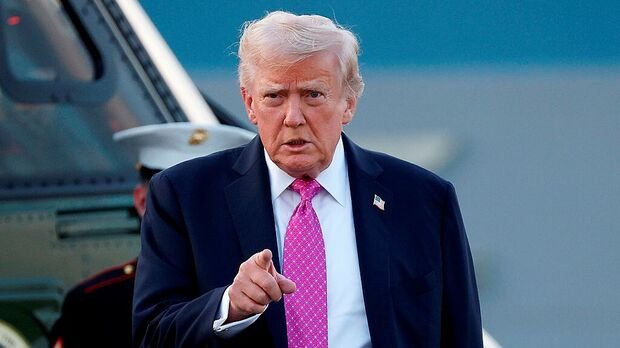
President Donald Trump said the United States is exploring a potential agreement regarding Greenland following discussions with NATO, as he backed away from threatened tariffs on European allies that opposed his plans to acquire the island. On social media, Trump offered limited details about the talks, which both he and NATO described as “very productive.” After weeks of tense rhetoric, the US president said the meeting had produced the “framework” of a potential deal. However, there was no indication of any arrangement granting the US ownership of Greenland, a goal Trump reiterated at the World Economic Forum in Switzerland while ruling out military action. On Truth Social on Wednesday, he stated: “We have formed the framework of a future deal with respect to Greenland and, in fact, the entire Arctic Region. This solution, if consummated, will be a great one for the United States of America, and all NATO nations.” Diplomatic sources told CBS that no agreement had been reached for US control over the autonomous Danish territory. Trump said Secretary of State Marco Rubio and Special Envoy Steve Witkoff would “report directly” to him as negotiations continue. Danish Foreign Minister Lars Løkke Rasmussen welcomed the talks, saying: “The day is ending on a better note than it began. Now, let’s sit down and find out how we can address American security concerns in the Arctic while respecting Denmark’s red lines.” Following his meeting with NATO Secretary-General Mark Rutte in Switzerland, Trump indicated the possible deal could involve mineral rights, while European allies might participate in his proposed Golden Dome defense system to protect the US from long-range missile threats. Greenland’s strategic location and untapped rare earth mineral reserves—critical for technologies such as mobile phones and electric vehicles—remain central to US interest. Trump described the arrangement as a “long-term deal” beneficial for security and mineral resources. NATO Secretary-General Rutte said Danish sovereignty over Greenland was not discussed in his talks with Trump. Meanwhile, Trump had previously dismissed leasing Greenland, saying, “You defend ownership. You don’t defend leases.” NATO spokeswoman Allison Hart added that negotiations involving Denmark, Greenland, and the US aim to prevent Russia and China from gaining economic or military footholds on the island. Some Greenlandic lawmakers, however, questioned NATO’s role in discussions over the island’s mineral wealth. Aaja Chenmitz said: “NATO has no right to negotiate anything without Greenland. Nothing about us without us.” Reports suggested the plan could allow the US to expand its military presence on Greenland, similar to the British sovereign bases in Cyprus, though Danish Prime Minister Mette Frederiksen stated that Denmark cannot negotiate away its sovereignty. Currently, the US already maintains more than 100 military personnel at Pituffik base in northwest Greenland. Trump had threatened tariffs of 10% starting February 1 on goods from several European NATO members, increasing to 25% from June, until a Greenland deal was reached—but he abandoned the trade war threat after meeting Rutte. In Davos, Trump reiterated that the US is seeking negotiations to acquire Greenland but emphasized that it would not be taken by force. “We probably won’t get anything unless I decide to use excessive force. We’d be unstoppable, but we won’t do that. I don’t want to use force,” he said. Trump also challenged world leaders to approve US control of Greenland voluntarily, saying: “You can say yes and we will be very appreciative. Or you can say no and we will remember.” French President Emmanuel Macron criticized Trump’s prior threat of tariffs, calling an “endless accumulation of new tariffs” unacceptable, while Trump responded by accusing France and Canadian Prime Minister Mark Carney of being ungrateful to the US.

tinubu-1280x631.jpg

4min10860
Major opposition parties have criticised President Bola Tinubu for awarding billionaire businessman and longtime associate Gilbert Chagoury the Grand Commander of the Order of the Niger (GCON), describing the move as an example of cronyism and a decline in national values. The criticism came amid concerns over the timing, optics, and justification for conferring Nigeria’s second-highest national honour on Chagoury. Ladipo Johnson, National Publicity Secretary of the New Nigeria People’s Party, said the decision reflects what he sees as Tinubu’s governing style, noting the President often ignores public opinion. He stated, “There is no need to be surprised. For the past two years, Tinubu has spent much of his time abroad. The Chagourys received contracts for the Lagos-Calabar Coastal Highway and also built Eko Atlantic. The President will act as he pleases, regardless of public opinion. His priorities have been clear—he was absent on Nigerian Armed Forces Day and Remembrance Day.” Mallam Bolaji Abdullahi, National Publicity Secretary of the African Democratic Congress, said while the President has the legal power to confer national honours, the award highlights the politicisation of the system. “National honours should reflect genuine service to the country, but this decision reduces them to personal favours,” he said. “It is unprecedented to see the second-highest national honour given to a business associate of the President.” Senator Nenadi Usman, acting National Chairman of the Labour Party, also questioned whether Chagoury’s contributions merit such a prestigious award. Speaking through her Special Adviser, Ken Asogwa, she said: “Receiving the second-highest national honour should be based on clear contributions to the nation. People like Aliko Dangote and Mike Adenuga earned theirs through job creation and significant impact. Awarding a close ally or business partner simply because of friendship is the highest form of cronyism.” President Tinubu recently conferred the GCON on Chagoury in recognition of his contributions to national development. In a letter dated January 8, the President cited Chagoury’s services to the country and conferred the honour under the powers granted by the National Honours Act. The award received public praise from billionaire Femi Otedola, who described it as well deserved, highlighting Chagoury’s role in major real estate and infrastructure projects, including Banana Island and Eko Atlantic, and their impact on job creation and urban development. Chagoury, a Lebanese-Nigerian born in Lagos, co-founded the Chagoury Group in 1971. The conglomerate has interests in construction, real estate, manufacturing, insurance, hospitality, telecommunications, IT, catering, and international financing. The award comes amid controversy surrounding the $11 billion Lagos-Calabar Coastal Highway project awarded to Chagoury’s company, Hitech, in 2024, which drew scrutiny due to the lack of a public bidding process and Tinubu’s long-standing ties with the businessman.

obaseenjo.jpeg

3min4980
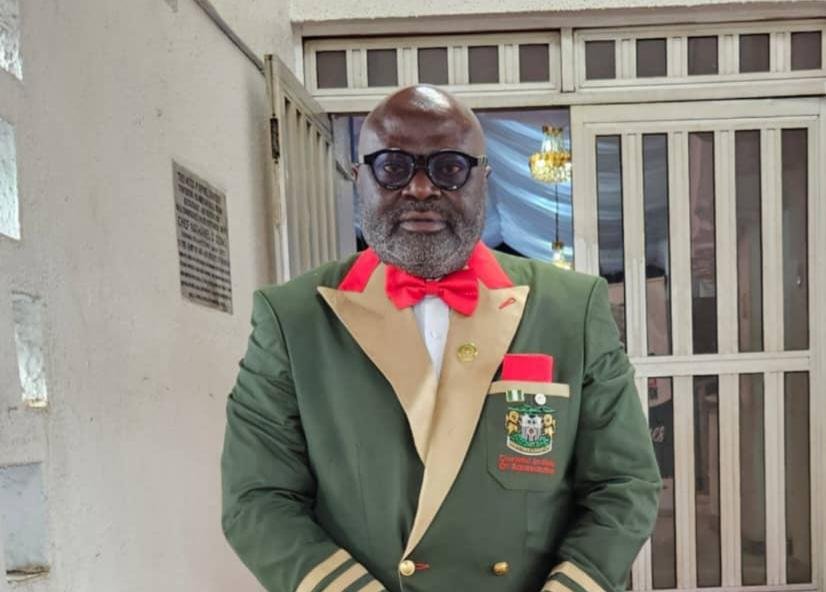
The Olusegun Obasanjo Leadership Institute has congratulated Deji Bolusemihi on his appointment as Chairman of the College of Fellows of the Chartered Institute of Administration of Nigeria (CIA). Bolusemihi was recently named Chairman of the College of Fellows by the CIA Governing Council. In its appointment letter, the council said he was selected to provide strong leadership for the College of Fellows and to ensure the effective management of its affairs and resources in line with its constitution. In a statement issued on Wednesday and signed by Elvis Otobo, Media Consultant to the Deputy Chief Executive Officer, Professor Samuel Daramola, the institute commended Bolusemihi on the appointment, describing it as well deserved. “Congratulations on your appointment. This honour reflects your integrity, leadership qualities, and years of dedicated service. The council acknowledges your longstanding commitment to professional excellence and expresses confidence in your ability to lead with distinction,” the statement said. The institute noted that the appointment is intended to provide the strategic direction required to guide the College of Fellows and ensure efficient administration in accordance with its governing framework. It also expressed confidence in Bolusemihi’s capacity to succeed in the role, wishing him wisdom and strength as he assumes the responsibility. The institute highlighted that, as an alumnus of the Olusegun Obasanjo Leadership Institute, Bolusemihi embodies its mission of developing transformational leaders who contribute meaningfully to national development and global leadership practice. According to the statement, his emergence as Chairman reflects his professional depth, ethical standards, and sustained commitment to excellence in administration. The institute added that it looks forward to his continued contributions within the Institute, the CIA, and the wider leadership community. Bolusemihi brings extensive experience spanning accounting, insurance, oil and gas, and diplomacy, which is expected to enhance his leadership of the College of Fellows. He is a fellow of several professional organisations, including the Chartered Institute of Insurance of Nigeria, the Chartered Institute of Arbitration (UK), the Chartered Risk Management Institute, the Chartered Institute of Directors of Nigeria, the Chartered Institute of Marketing (UK), and the Certified Management Consultants. He also holds fellowships with bodies such as the Africa Business School, the Commonwealth Academy of Leadership and Management (UK), the Africa Institute of Information Management, the Institute of Fraud Examiners, the Nigerian Institute of Management, the Chartered Institute of Peace and Governance, and the Chartered Institute of Administration.

cbnn.webp

2min6670
The Central Bank of Nigeria (CBN) has issued Finlogic an International Money Transfer Operator (IMTO) licence, authorising the cross-border payments company to process inward remittances directly into Nigeria as part of efforts to strengthen foreign exchange inflows. The approval enables Finlogic to receive international money transfers into the country without relying on additional intermediaries, bringing such transactions fully under the formal financial system regulated by the CBN. In a statement on Wednesday, the company said the licence aligns with the apex bank’s objective of increasing monthly diaspora remittances to about $1 billion by 2026, a target viewed as key to improving foreign exchange liquidity and supporting macroeconomic stability. With the IMTO licence, Finlogic can now settle inbound transfers directly within Nigeria’s financial system. The firm said this structure would result in faster transaction processing, better pricing for senders and recipients, and stronger partnerships with local banks. Founder and Chief Executive Officer of Finlogic, Joseph Afolabi, said the approval positions the company to better serve the diaspora while contributing to national economic stability. He noted that Finlogic’s operations are anchored on strict regulatory compliance and technology-driven efficiency. According to Afolabi, the company was established to address complex settlement challenges and is now leveraging its technology platform to simplify inward remittances and support the CBN’s drive for a more resilient foreign exchange market. He added that Finlogic also holds a money services business licence in Canada, providing a compliant remittance channel for inflows from North America into Nigeria. Nigeria remains one of Africa’s largest recipients of diaspora remittances, with regulators increasingly promoting policies that channel such funds through official platforms as part of broader foreign exchange reforms.

EFCC-2-768x432-1.jpeg

4min6940
The Economic and Financial Crimes Commission (EFCC) on Wednesday returned N1.28 billion recovered from Sujimoto Luxury Construction Limited to the Enugu State Government following the collapse of a contract for the construction of 22 Smart Green Schools across the state. The refund followed investigations into alleged fraud, contract violations and diversion of public funds linked to the abandoned school project. In a statement issued by the EFCC’s Head of Media and Publicity, Dele Oyewale, the recovery stemmed from a petition dated February 11, 2025, which accused Sujimoto Luxury Construction Limited of receiving public funds without executing the agreed scope of work. According to the petition, the Enugu State Government paid N2.29 billion as advance payment for the construction of the 22 schools, but the January 2, 2025 completion deadline passed with little or no progress. The company’s Group Managing Director, Olasijibomi Ogundele, was named in the petition and held jointly responsible for refunding the funds over alleged persistent non-performance and diversion of project resources. Following the complaint, operatives of the EFCC’s Special Task Fraud Section at the Enugu Zonal Directorate launched investigations, which resulted in the recovery of the funds on behalf of the state government. While presenting the recovered cheques and bank drafts at the EFCC Enugu Zonal Office, the Zonal Director, Daniel Isei, who represented the Commission’s Chairman, Ola Olukoyede, said the action was in line with the EFCC’s mandate to trace, recover and return public funds lost to economic and financial crimes. He disclosed that drafts totaling N1,234,350,000, alongside an additional N50 million, were recovered, bringing the total sum to N1,284,350,000 for the benefit of Enugu State. Isei reiterated the Commission’s commitment to accountability in public finance management, warning contractors handling government projects to strictly comply with the Public Procurement Act. He stressed that investigations were ongoing and that the recovery of funds did not mark the conclusion of the case, noting that prosecution would follow where criminal responsibility is established. Receiving the funds on behalf of the Enugu State Government, the Secretary to the State Government, Prof. Chidiebere Onyia, praised the EFCC for its professionalism and persistence despite public controversy surrounding the matter. Describing the recovery as a strong example of intergovernmental collaboration, transparency and accountability, Onyia said the administration of Governor Peter Mbah remained committed to prudent use of public resources. He assured that the recovered funds would be redirected to critical infrastructure projects aimed at improving residents’ welfare. He added that the state government turned to the EFCC after identifying gaps between project expectations and actual delivery, reaffirming its resolve to hold defaulting contractors accountable. The EFCC had earlier declared Ogundele wanted on September 5, 2025, over alleged fund diversion and money laundering, calling on the public to provide information on his whereabouts. On the same day, Ogundele released a video on social media, stating his intention to present himself to the Commission.

BBEER.webp

4min4970
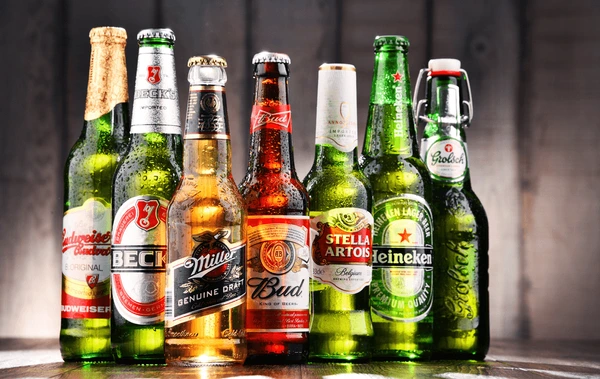
Major listed brewers in Nigeria earned a combined revenue of over N1.54 trillion from beer and other non-alcoholic beverages in the first nine months of 2025, reflecting the estimated spending of Nigerians on brewery products during this period, according to an analysis of company financial reports. Unaudited statements for Nigerian Breweries Plc, International Breweries Plc, and Champion Breweries Plc for the nine months ended September 30, 2025, show strong top-line growth, driven largely by beer sales. Nigerian Breweries Plc, the country’s largest brewer, posted net revenue of N1.05 trillion, up from N710.87 billion in the same period of 2024. With a cost of sales of N631.23 billion, the company recorded a gross profit of N415.15 billion. After accounting for selling and distribution expenses of N193.85 billion, administrative expenses of N59.58 billion, finance costs of N39.15 billion, and other charges, Nigerian Breweries reported a profit after tax of N85.51 billion, reversing a loss of N149.50 billion in 2024. Basic earnings per share rose to 275 kobo from a loss of 1,455 kobo in the previous year. In March, Nigerian Breweries had reported a 186% increase in net profit for Q1 2025, with revenue rising to N383.6 billion from N227.1 billion in Q1 2024. International Breweries Plc, operating in Nigeria and other West African markets, generated N472.57 billion in revenue for the nine months, up from N343.45 billion in the same period of 2024. The company posted a profit after tax of N57.83 billion, reversing a loss of N112.81 billion in 2024. Cost of sales increased to N311.64 billion, while administrative, marketing, and distribution expenses rose to N92.09 billion from N72.68 billion. Earlier, International Breweries had reported a Q2 2025 profit of N11.9 billion, up from a loss of N47.3 billion in Q2 2024, with revenue increasing to N167.4 billion from N120 billion. Champion Breweries Plc recorded revenue of N21.44 billion for the nine-month period, up from N14.02 billion in 2024, and posted a profit after tax of N2.05 billion, compared with N21.50 million the previous year. Cost of sales rose to N11.14 billion, while selling and distribution expenses increased to N4.24 billion from N3.25 billion. Together, the three companies generated total revenue of N1.54 trillion, with Nigerian Breweries accounting for the largest share. Analysts note that these figures highlight the resilience of Nigeria’s beer market, which continues to benefit from strong brand loyalty and extensive distribution networks despite rising production costs and economic pressures. Ayokunle Olubunmi, Head of Financial Institutions Ratings at Agusto & Co., said consumer spending patterns are gradually shifting, with some Nigerians reducing beer consumption, prompting breweries to adjust strategies. He added that following AB InBev’s acquisition of International Breweries, the company invested in new breweries and production facilities to expand capacity, prioritising operational efficiency to meet demand. Ayo Teriba, CEO of Economic Associates, cautioned that high sales do not necessarily equate to greater economic contribution. “Sales figures may be large, but what matters is the net value added to the economy. GDP reflects value created, not just total revenue,” he said.

health-j.webp

3min5350
Human resource professionals and health experts are set to gather in Lagos on Thursday for a one-day conference on Employee Assistance Programmes (EAPs), focusing on workplace wellness, employee wellbeing, and staff welfare. The event is being organised by Chevron Nigeria Limited in partnership with Sages and Scribes Consultants. Organisers said the conference will explore how EAPs can be used to enhance employee wellbeing and boost productivity in modern workplaces. A statement released on Tuesday noted that the mini-conference will bring together HR professionals, workplace counsellors, and wellness specialists to examine the role of EAPs in promoting employee health, welfare, and overall workplace satisfaction. Dr. Laila St Matthew Daniels, a psychologist, executive coach, and workplace counsellor, is expected to deliver the keynote address titled “The EAP Ecosystem: The Values and Benefits.” Speaking ahead of the event, the Managing Director of Sages and Scribes Consultants, Venerable Adelowo Adesina, described EAPs as essential tools for improving employee performance and organisational productivity. “Employee assistance is about employees’ wellness, wellbeing, and welfare. At its core, EAPs enhance wellness to drive productivity and performance,” he said. “This conference will explore the full EAP ecosystem, including prevention, early intervention, counselling, crisis response, and integration with organisational policies.” Adesina added that the conference will expose participants to best practices for implementing EAPs to achieve measurable outcomes, highlighting benefits for employees, employers, and the wider community. Participation is free, and the programme will be held in both physical and virtual formats. “We encourage HR professionals, EAP practitioners, workplace counsellors, wellness specialists, occupational health workers, and anyone interested in employee wellbeing to register online,” he said. The conference will feature expert presentations, interactive workshops, panel discussions, and stakeholder sessions designed to translate EAP concepts into actionable strategies. Key focus areas include demonstrating the business case for EAPs through improved productivity and reduced absenteeism; maintaining clinical and ethical standards; integrating EAPs with HR strategy and company culture; leveraging digital tools and tele-counselling; crisis preparedness; and case studies from local and international organisations. A stakeholders’ meeting will also be held to discuss ways to advance EAP practice, workplace wellness, employee wellbeing, and staff welfare across Nigeria.