
Author: Lifestyle & Wellness Desk

Sleep-vs1-1280x905.png

5min5350
We often treat sleep like a luxury, a leftover activity we squeeze in after the “real” work is done. We wear our caffeine-fueled all-nighters like badges of honor, oblivious to the fact that we are essentially trying to run a high-performance engine on an empty tank. But sleep isn’t just “downtime.” It is a sophisticated, active state of biological restoration that determines how you think, feel, and even how long you live. The Nightly Brain Wash and Physical Repair While you’re off in dreamland, your brain is doing the heavy lifting. Scientists have discovered the glymphatic system, a specialized waste-clearance pathway that kicks into high gear during deep sleep. Think of it as a nightly power-wash for your mind. It flushes out metabolic debris, including proteins linked to neurodegenerative diseases. Without this “rinse cycle,” your brain remains clouded by yesterday’s chemical leftovers, leading to brain fog and irritability. Simultaneously, your body enters a state of intense physical repair: Tissue Regeneration: Growth hormones are primarily released during deep sleep, repairing cells and building muscle. Immune Defense: This is when your immune system produces cytokines, the proteins that target infection and inflammation. Hormonal Balance: Quality rest regulates ghrelin and leptin—the hormones that control hunger. A tired brain is a hungry brain, specifically for sugar. The Cost of the “Sleep Debt” It’s easy to focus on what sleep gives us, but the darker reality is what a lack of it takes away. When we consistently shortchange our rest, we aren’t just tired; we are physiologically compromised. The Cognitive “Drunk” State Research shows that being awake for 19 hours straight produces cognitive impairment like having a Blood Alcohol Concentration (BAC) of 0.05%. Push that to 24 hours, and you are performing at the equivalent of 0.10%—well above the legal driving limit. Your reaction time slows, and your judgment falters. Cardiovascular and Metabolic Strain Without sleep, your blood pressure doesn’t get its natural nightly “dip,” putting immense strain on the heart. Chronic sleep loss is linked to hypertension, stroke, and Type 2 diabetes because it lowers your insulin sensitivity. Emotional Instability The “emotional brake” of the brain, the prefrontal cortex, weakens without sleep. Meanwhile, the amygdala (the brain’s emotional center) becomes hyper-reactive. This is why sleep-deprived individuals are more prone to anxiety, clinical depression, and sudden irritability. The Emotional Anchor and REM REM (Rapid Eye Movement) sleep serves as a form of overnight therapy, processing emotional experiences and dulling the sharp edges of stress. It’s the reason a massive problem at 11:00 PM often feels manageable by 8:00 AM. Reclaiming Your Vitality If you’re looking to exit the cycle of exhaustion, start with these non-negotiables: Consistency is King: Going to bed and waking up at the same time—even on weekends—anchors your circadian rhythm. The Digital Sunset: Blue light from screens suppresses melatonin. Try putting the phone away 60 minutes before bed. Cool and Dark: Your core temperature needs to drop to initiate sleep. Keep your bedroom like a “cave”: cool, quiet, and pitch black. “Sleep is the single most effective thing we can do to reset our brain and body health each day.” — Dr. Matthew Walker, Neuroscientist Sleep is not a credit card; you cannot “spend” it during the week and expect to pay it all back on Sunday without interest. The most productive thing you can do today might just be to go to bed early.  
zz-42.jpg

3min8960
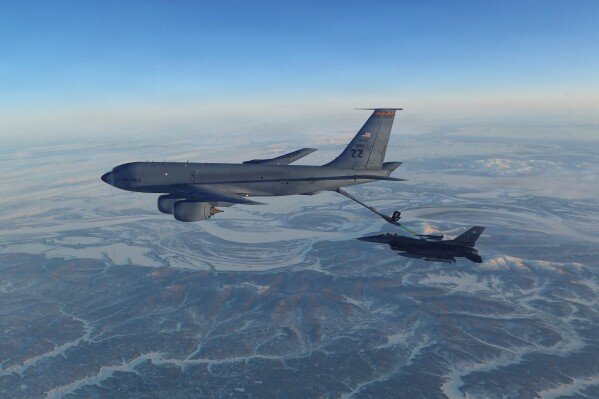
Rescue operations are ongoing after a US military refuelling aircraft crashed in western Iraq, according to US Central Command (Centcom). Centcom said the KC-135 aircraft went down over western Iraq and noted that neither hostile fire nor friendly fire was involved in the incident. The tanker had been supporting ongoing US operations linked to the conflict with Iran and was flying alongside another aircraft at the time. The second aircraft landed safely. The KC-135, manufactured by Boeing, is designed to refuel other aircraft midair and plays a key role in US military missions. The aircraft was widely used during the first Gulf War to extend the range of fighter jets and bombers. Typically, the KC-135 operates with a crew that includes a pilot, co-pilot and a boom operator responsible for managing the refuelling system. However, reports indicate that six service members were on board the aircraft that crashed. The condition of the crew members has not yet been confirmed. Centcom said the crash occurred in friendly airspace, though the region of Iraq where it happened is known to host pro-Iranian militia groups. Iran’s military claimed on state television that an allied group had targeted the aircraft with a missile. US Congressman Jim Himes, a member of the group of lawmakers regularly briefed on sensitive military operations, said it was too early to determine the exact cause of the crash. He noted that the KC-135 is commonly used for aerial refuelling and usually carries a small crew, expressing hope that those on board were safe. Himes added that such incidents can occur during conflicts, even for well-equipped militaries. Since the start of the war involving the United States, Israel and Iran, seven US soldiers have been confirmed killed. The latest crash brings the number of US aircraft lost during the conflict to at least four. Earlier this month, three F-15 fighter jets were shot down in what officials described as an apparent friendly fire incident over Kuwait. All six crew members on those aircraft were able to eject safely. The KC-135 Stratotanker was built for the US military in the 1950s and early 1960s and has remained a key part of the country’s aerial refuelling fleet, enabling combat aircraft to carry out extended missions without landing.

zz-18.webp

5min11970
The Global Vaccine Alliance and UNICEF on Thursday formally transferred the Primary Health Care Solarisation Project to the Federal Government of Nigeria. The initiative, coordinated by the National Primary Health Care Development Agency, includes 371 solar-powered primary health centres across 17 states. Speaking at the handover ceremony in Abuja, the Coordinating Minister of Health and Social Welfare, Prof. Ali Pate, said the project would expand access to essential services in off-grid communities, strengthen vaccine cold-chain systems, and ensure uninterrupted healthcare delivery at primary health centres nationwide. He noted that the foundation of a resilient health system was being reinforced through domestic funding from the Federal Government and states, supported by development partners. Pate said collaborations between the government and global health organisations had contributed to improved immunisation coverage and better primary healthcare services, with more than 47 million visits recorded at primary health centres. He added that Nigeria recently carried out one of the largest integrated vaccination campaigns in Africa, targeting over 100 million children with measles, rubella and other vaccines, with support exceeding $100m from Gavi. On the Human Papillomavirus vaccine supply, the minister said a new shipment was expected to address shortages reported in some states, noting that such supply gaps reflect the global demand for the vaccine rather than a Nigeria-specific issue. He commended the ministry’s leadership for fulfilling Nigeria’s vaccine co-financing commitments in 2024, which enabled the procurement of life-saving vaccines. Pate also highlighted improvements in coverage of the DTP3 vaccine since 2001 but said more efforts were needed to ensure that every child receives essential immunisation. He stressed that maintaining progress in the health sector would require greater investment by governments at all levels, as well as support from households. “Healthcare is not cheap; it is an investment. When governments invest and partners support those investments, the system becomes sustainable,” he said. The minister also praised development partners, including UNICEF and the World Health Organisation, for their continued support, noting that such partnerships remain crucial while domestic resources are limited. He expressed confidence that ongoing reforms would enable Nigeria to eventually take full responsibility for financing its health programmes. He said the handover of the solar-powered primary health centres would enhance service delivery in underserved communities and strengthen vaccine cold-chain management, contributing to a more resilient and self-sustaining healthcare system. The Executive Director and Chief Executive Officer of the NPHCDA, Dr Muyi Aina, said the collaboration with partners remained vital to efforts aimed at strengthening primary healthcare and delivering essential services to citizens. He explained that through the partnership with Gavi and UNICEF, 371 primary health centres across 17 states, including the Federal Capital Territory, had been equipped with solar power systems. According to him, the project focused on zero-dose communities, where many children have missed routine vaccinations. Aina said the development is helping the facilities reach what is known as level two status, which requires adequate infrastructure such as reliable power supply, water, sanitation services, and sufficient manpower. He added that the provision of equipment and commodities aligns with the Health Sector Renewal Investment Initiative launched by President Bola Ahmed Tinubu about two years ago. Also speaking at the event, the Mandate Secretary for Health at the Federal Capital Territory Administration, Dr Dolapo Fasawe, commended Gavi, UNICEF, the Foreign, Commonwealth and Development Office, the NPHCDA and other partners on behalf of the beneficiary states. She said the project represents not only the installation of solar systems but also stronger health systems, improved immunisation services, and renewed hope for communities that rely on primary health centres as their first point of care. The solar-powered facilities are expected to strengthen healthcare delivery, particularly in areas with unreliable electricity, while also supporting routine immunisation programmes. The project targets Nigeria’s 100 zero-dose local government areas, where many children remain unvaccinated and lack access to essential healthcare services.

zz-41.jpg

4min13670
A coalition of professionals under the Ajiyya Solidarity Forum has rejected claims that about N210tn is missing from the accounts of the Nigerian National Petroleum Company Limited. Speaking with journalists on Thursday, the forum’s National Coordinator, Usman Hamza, described the allegation as “mathematically impossible” and politically driven. The group was reacting to a recent statement by the Chairman of the Senate Public Accounts Committee, Ahmed Wadada, who said the NNPC Limited could not account for approximately N210tn. Hamza argued that the figure was misleading and unrealistic. “Senator Wadada’s claim of N210tn ‘unaccounted for’ funds is a mathematical impossibility designed to alarm the public,” Hamza said. He noted that the claim contradicts Nigeria’s fiscal realities, pointing out that the country’s entire 2024 national budget is about N28.7tn. “To suggest that a single entity ‘lost’ nearly eight times the national budget is an insult to the intelligence of Nigerians,” he added. The forum also criticised threats of arrest warrants against former NNPCL officials, including former Chief Financial Officer Umar Ajiya, describing the move as part of a coordinated campaign of political intimidation. According to the group, the Senate committee may have misread financial figures by combining accrued expenses with receivables in a way that falsely suggests missing funds. “We believe the committee may have mistakenly ‘netted’ N103tn in accrued expenses, largely joint venture liabilities, with N107tn in receivables owed to NNPCL. Describing money owed to a company as ‘missing funds’ is a serious professional error,” Hamza said. During its ongoing review of NNPCL’s financial records, the Senate Public Accounts Committee had raised concerns about discrepancies running into trillions of naira. However, the forum maintained that the allegations overlook the broader financial and structural reforms undertaken by the national oil company in recent years. Hamza also noted that Ajiya’s tenure coincided with the transition of the national oil company into a commercial entity under the Petroleum Industry Act, a reform that ended decades of opaque financial reporting. He said the period saw the publication of the company’s first audited financial statements in 43 years. The forum also defended the N5.9bn spent during the transition of NNPC to NNPC Limited, stating that the cost covered complex legal and structural processes required to transform the former state corporation into a limited liability company. It warned that politicising the Senate’s oversight responsibilities could harm Nigeria’s credibility with international investors. “Using the Senate’s platform to pursue personal vendettas could damage Nigeria’s reputation among international investors,” Hamza said. The group further called on the Senate leadership to launch an independent ethics investigation into an alleged demand for bribes linked to the ongoing oversight exercise. “We urge the Senate leadership and its Ethics Committee to investigate the reported bribe demand connected to this oversight process,” he said. Hamza also urged lawmakers to halt what he described as the harassment of officials who have already provided several technical responses to the committee. “Public accountability should be pursued through careful forensic examination of facts, not through sensational allegations and exaggerated figures,” he added.

iRON.png

3min4450
Editor’s Note: This article contains affiliate links. As an Amazon Associate, I earn from qualifying purchases. In the world of high-stakes international travel, high-level facilitation, and back-to-back board meetings, maintaining your “Executive Presence” is non-negotiable. Whether you are arriving for a keynote in London or a strategy session in New York, your presentation dictates how you are perceived as an authority. A crumpled suit or dress doesn’t just look sloppy; it subconsciously leaks a message of disorganization to your audience. The Quuejenl Travel Steamer Iron for Clothes is your tactical solution to maintaining a sharp, confident appearance, ensuring your message—not your wrinkles—takes center stage. This isn’t just an appliance; it is a meticulously coordinated Portable Ironing Machine System designed for those who demand efficiency and reliability from their travel gear. Compact Mobility: Engineered specifically for the global professional. This mini steamer’s small size fits effortlessly into your carry-on or executive gym bag, ensuring you have “Maximum Effect” polish wherever your career takes you. Rapid Dual Action: Functioning as both a standard iron and a powerful clothes steamer. This hybrid utility allows you to address tough creases on heavy fabrics or gently release wrinkles from delicate silks with total precision. The “College Dorm” Staple: A refined nod to the “Soft Life” aesthetic—bringing a touch of simplicity and class to a busy, high-pressure routine. Instant Confidence: In professional communication, we often discuss the “vocal authority” and “body language” that signal competence. Your physical presentation is the first data point your audience receives. By removing the distraction of wrinkles, you allow your confidence to flow naturally. When you are polished and put together, you project a “Cool” exterior that commands the room. The North American Essential For our community members across the US and Canada, where professional dress codes often meet unpredictable travel climates, the Quuejenl Mini Steamer has become a gold standard for its reliability and sophisticated “Pinterest-ready” versatility. It is the “Secret Weapon” for the modern edupreneur who refuses to let anything—even global travel—limit their mission. Get the Quuejenl Travel Steamer Iron on Amazon Here: https://amzn.to/40q3lgD (Paid Link)

zz-4.avif

5min12960
China has approved a far-reaching new law aimed at promoting what authorities describe as “ethnic unity,” a move that critics warn could further weaken the cultural and linguistic rights of minority groups. The legislation seeks to strengthen integration among China’s 56 officially recognised ethnic groups, the majority of which are dominated by the Han Chinese population. While the policy focuses on areas such as education and housing, critics argue that it may limit the ability of minority communities to preserve their languages and cultural traditions. Under the new law, children will be required to learn Mandarin from before kindergarten through the end of high school. In the past, many students in minority regions were able to study most subjects in their native languages, including Tibetan, Uyghur, or Mongolian. The measure was approved on Thursday at the National People’s Congress in Beijing, as the country’s annual parliamentary session concluded. Scholars and analysts say the policy reflects a broader shift in government strategy toward reducing ethnic diversity in favour of stronger national integration. Some academics argue that the approach may isolate younger generations from their traditional languages and cultural heritage. Chinese authorities, however, say promoting Mandarin will improve employment opportunities and social mobility for minority communities. Officials also describe the law on “Promoting Ethnic Unity and Progress” as essential to advancing modernisation and strengthening national cohesion. The legislation also allows authorities to take action against parents or guardians accused of promoting ideas considered harmful to ethnic harmony. In addition, it encourages the creation of “mutually embedded community environments,” a concept that some analysts believe could lead to the restructuring of neighbourhoods largely populated by minority groups. China began emphasising what it calls the “sinicisation” of minority communities in the late 2000s as part of efforts to build a stronger national identity centred on integration with the dominant Han culture. Han Chinese account for more than 90 per cent of the country’s population of about 1.4 billion people. For years, the Chinese government has faced accusations of restricting the rights of minority populations in regions such as Tibet, Xinjiang and Inner Mongolia. Critics say assimilation policies in these areas have often been implemented through state-led initiatives that intensified under President Xi Jinping’s leadership. In Tibet, authorities have taken control of monasteries and detained monks as part of efforts to limit influence from exiled spiritual leader the Dalai Lama. In Xinjiang, human rights organisations have reported the detention of large numbers of Uyghur Muslims in facilities the Chinese government describes as “re-education” centres. The United Nations has accused Beijing of serious human rights violations in the region, allegations the Chinese government denies. Protests have also occurred in Inner Mongolia. In 2020, ethnic Mongolians staged demonstrations after authorities introduced policies reducing the use of the Mongolian language in schools in favour of Mandarin. Some parents kept their children out of school in protest, arguing that the change threatened their cultural identity. Authorities responded by moving quickly to suppress the demonstrations. China’s constitution states that ethnic groups have the right to use and develop their own languages and exercise a degree of regional self-governance. However, critics argue that the new legislation may reinforce policies aimed at deeper assimilation into the dominant national culture. Some analysts believe the law reflects a broader vision of building a unified and powerful Chinese nation centred on the Han majority, with minority groups expected to integrate more closely into that framework. They warn that the policy could lead to increased control over minority communities and further pressure on traditional languages and cultural practices.

zz-38.jpg

3min2570
The Islamic Movement of Nigeria, popularly known as the Shi’ite group, on Wednesday dismissed allegations that it plans to attack American citizens or institutions in the country, maintaining that its activities are peaceful and lawful. The group also announced that it would mark this year’s Quds Day on Friday, March 13, 2026, while also observing the death of Iranian leader Ayatollah Ali Khamenei. The announcement follows a recent security advisory issued by the United States Embassy in Nigeria warning of a possible terrorist threat targeting American diplomatic facilities and US-affiliated schools in the country. In the alert released on Tuesday, the embassy advised American citizens in Nigeria to remain vigilant when visiting US diplomatic premises and institutions associated with the American government. Speaking with journalists in Abuja, the head of the IMN Resource Forum, Prof. Abdullah Danladi, rejected claims that the group or its members were planning attacks, insisting that the movement has never engaged in violence. He said the Islamic Movement, which began around 1977, has never directed its members to attack anyone. Danladi also questioned the decision of the US Embassy to issue a public warning rather than report its concerns to Nigerian security agencies for investigation. According to him, the movement’s annual processions are usually peaceful and only become violent when security agencies intervene. He explained that last year’s procession ended peacefully because it was not disrupted. Danladi said the planned Quds Day procession would involve members moving along designated routes, displaying placards and raising awareness about the Palestinian cause. He added that if security agencies allow the group to carry out the procession without interference, it would proceed peacefully. Danladi also maintained that the group does not need police permission to organise religious gatherings, arguing that the Constitution guarantees freedom of association and assembly. He assured residents of the Federal Capital Territory that the procession would remain peaceful, stressing that the group has always conducted its activities without violence. Security agencies had earlier increased deployment in parts of Abuja last week amid concerns that members of the Shi’ite movement might stage protests following developments in Iran, although the expected demonstrations did not take place. The Islamic Movement of Nigeria has previously clashed with security operatives during protests in the Federal Capital Territory. During a similar procession last year marking International Quds Day near Banex Roundabout in Wuse 2, a confrontation occurred between security personnel and members of the group. The movement claimed that several of its members were killed in the incident, while the police confirmed the death of one officer.

zz-37.jpg

6min4310
Oil prices climbed above $100 per barrel on Thursday while global stock markets declined, as renewed Iranian attacks on energy facilities in the Middle East and mounting concerns over the global economy overshadowed a record release of emergency crude reserves by the International Energy Agency. The IEA announced on Wednesday that its member countries had agreed to release 400 million barrels of oil from their strategic reserves the largest coordinated stock release in the agency’s history. Despite the move, markets remained uneasy about potential disruptions to oil supplies from the Middle East, particularly with the Strait of Hormuz a key passage for about one-fifth of the world’s crude shipments effectively shut. As tensions escalated, two tankers in Iraqi waters were reportedly struck on Thursday. Baghdad had earlier indicated plans to reduce oil production due to the crisis, a step that Kuwait and Saudi Arabia were also reported to be considering. Bahrain also said Iran carried out an attack on fuel storage tanks in the country. Saudi Arabia reported intercepting drones heading toward the Shaybah oil field, while drones struck fuel tanks at Oman’s Salalah port, forcing authorities to suspend operations there. In a separate development, the United Kingdom Maritime Trade Operations agency reported that a container ship near the United Arab Emirates had been hit by an “unknown projectile.” Brent crude climbed to a high of $101.59 per barrel, while West Texas Intermediate rose to nearly $96. Both benchmarks had previously surged by as much as 30 per cent on Monday, approaching $120 before easing somewhat. Although prices later moderated, analysts warned that continued hostilities could keep oil trading between $90 and $100 per barrel for an extended period. Iran signalled it was prepared for a prolonged confrontation, warning that a drawn-out conflict could severely damage the global economy and threatening vessels connected to the United States and its allies. The Islamic Revolutionary Guard Corps said it could target economic centres and financial institutions linked to US and Israeli interests. An adviser to the Guards’ commander-in-chief, Ali Fadavi, warned in comments broadcast on state television that a long war of attrition could damage both the American and global economies. Iran’s Tasnim news agency also published a list of potential technology-related targets, including offices belonging to major companies such as Amazon, Google, Microsoft and Nvidia located in Gulf countries and Israel. Analysts say any prolonged disruption to shipping through the Strait of Hormuz which also carries about one-third of the fertiliser used globally for food production could trigger a major economic shock, particularly for Asia and Europe. Airlines have been among the hardest hit sectors, with several carriers reconsidering routes through the Middle East while also dealing with rising fuel costs. Air New Zealand announced it would cancel about 1,100 flights over the next two months, while Hong Kong’s Cathay Pacific introduced new fuel surcharges on most routes, roughly doubling existing fees. New Zealand’s government said it was considering invoking emergency legislation that could restrict vehicle use if fuel shortages worsen. In Australia, authorities announced plans to temporarily ease fuel quality standards by allowing higher sulphur levels for about two months, a move expected to release around 100 million litres of fuel into the domestic market. The jump in oil prices has also revived fears of another surge in global inflation and the possibility that central banks may have to raise interest rates again, after many had been considering rate cuts only weeks earlier. Those concerns weighed on global equities, with markets across Asia declining on Thursday. Major indices in Tokyo, Hong Kong, Shanghai, Sydney, Seoul, Mumbai, Wellington, Singapore, Taipei, Manila and Jakarta all recorded losses, while European markets in London, Paris and Frankfurt opened lower. Stephen Innes of SPI Asset Management said the emergency oil release was unlikely to significantly calm markets while tensions around the Strait of Hormuz remained high. He noted that releasing oil from reserves may only briefly ease volatility but would not address the underlying risks posed by threats to one of the world’s most important shipping routes. US President Donald Trump, however, claimed recent military strikes had significantly weakened Iran. Speaking to reporters after addressing supporters, he said the conflict had already been largely decided in the early stages. Israel’s military, meanwhile, suggested the confrontation could continue, saying it still had a wide range of targets. Oil prices remained elevated in early trading on Thursday, with West Texas Intermediate rising to $90.72 per barrel and Brent North Sea crude reaching $96.04. Stock markets reflected investor caution. Japan’s Nikkei 225 fell 1.0 per cent to close at 54,452.96, Hong Kong’s Hang Seng dropped 0.7 per cent to 25,716.76, and the Shanghai Composite slipped 0.1 per cent to 4,129.10. In Europe, London’s FTSE 100 declined 0.6 per cent to 10,296.02, while the Dow Jones Industrial Average in New York had earlier ended 0.6 per cent lower at 47,417.27. Currency markets also showed signs of caution, with the euro trading at $1.1542, the pound at $1.3379, and the dollar at 158.89 yen.

SKIRT.png

3min4920
Editor’s Note: This article contains affiliate links. As an Amazon Associate, I earn from qualifying purchases. In the world of high-level leadership and global mobility, presence is often defined by the ability to transition seamlessly between diverse environments. Whether you are navigating a creative strategy session in Los Angeles, a weekend networking brunch in Toronto, or a long-haul flight between speaking engagements, your attire must work as hard as you do. For the modern high-achiever, the TARSE Women’s Flowy Skorts represent the perfect intersection of sophisticated aesthetics and functional design. The Design Specs: Style Meets Tactical Comfort This isn’t just another piece of fast fashion; it is a meticulously coordinated system designed for those who demand total comfort without compromising a sharp, executive look. The Skort Secret: Featuring a pleated mini-skirt exterior with built-in shorts. This provides the classic, feminine silhouette of a skirt with the total security and mobility required for a high-energy lifestyle. Structured High-Waist: The smocked waistband is engineered to provide a comfortable, flattering fit that stays in place. It’s a subtle nod to the “Soft Life” aesthetic—allowing for effortless movement throughout a busy schedule. Tiered Ruffle Flow: The pleated layers add a sophisticated visual lightness to your movement. It transitions perfectly from professional creative spaces to casual weekend social settings. Travel-Ready Fabric: Made for the mobile professional. The fabric is lightweight and packable, making it a staple for your executive carry-on. Facilitator’s Insight: The Power of “Comfort Authority” In professional communication, we often discuss how physical restriction can subconsciously leak into our body language. When you are uncomfortable, it appears as tension or agitation to your audience. By choosing a “Fluid” piece like the TARSE Skort, you remove those physical distractions. When you are comfortable in your environment, you can lean fully into your message, allowing your confidence to take center stage. The North American Essential For our community members across the US and Canada, where the boundaries between professional and lifestyle spaces are increasingly fluid, the TARSE Flowy Skort has become a gold standard for its reliability and “Pinterest-ready” versatility. It’s the secret weapon for the modern woman who refuses to let her wardrobe limit her mission. Get the TARSE Flowy Skorts on Amazon Here: https://amzn.to/3PxK2iX (Paid Link)

zz-3.avif

1min8080
At least six people have died and several others injured after a bus caught fire in western Switzerland, authorities say. The incident occurred around 18:25 local time (19:25 GMT) on Tuesday in the centre of Kerzers known in French as Chiètres in Fribourg canton, roughly 20 km (12 miles) from Bern. Police reported that at least three victims were taken to hospital, and a rescuer was also reportedly injured. The cause of the fire remains unknown, though investigators are examining whether it may have been deliberately set. There have been unverified reports that someone may have doused themselves in gasoline, but authorities have not confirmed this. Local media videos show the bus engulfed in flames, and residents described seeing a thick column of smoke rising from the scene. The bus was reportedly travelling from the Düdingen municipality, about 17 km south of Kerzers. Swiss President Guy Parmelin expressed his sorrow on X, saying the tragedy “shocks and saddens me that people have lost their lives in a serious fire in Switzerland.” The incident comes amid memories of a deadly fire at a Swiss ski resort on New Year’s Eve, which claimed 41 lives.