Author: Lifestyle & Wellness Desk

zz-30.jpg

5min3730
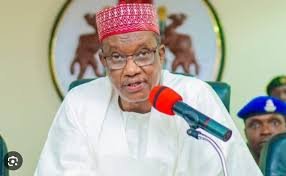
The Chief of the Air Staff, Sunday Aneke, has acknowledged the difficulties of securing Nigeria’s vast territory while emphasising the need to safeguard students in tertiary institutions. Speaking during a visit to the headquarters of the Tertiary Education Trust Fund (TETFund) in Abuja on Tuesday, Aneke said the Nigerian Air Force was collaborating with relevant authorities to ensure swift response to security threats in schools. According to him, the Air Force is working on a system that would allow the nearest military unit to be activated instantly in the event of a security emergency. “Security is not something to be fully discussed in public, but Nigeria is a very large country with difficult terrain. However, children must go to school,” Aneke said. He noted that reducing response time remains a key challenge, especially in remote areas where incidents may occur. “The major issue is usually the time between when an incident happens and when help arrives. Fortunately, the Air Force has speed and reach,” he added. The Air Chief explained that arrangements were being made with relevant authorities to ensure that, in the event of a crisis, the closest Air Force unit could be deployed immediately “with the push of a button.” Aneke also appealed to Nigerians to remain patient and appreciate the sacrifices made by security personnel across the country. “While many Nigerians sleep, our officers and men are risking their lives, flying at night and responding to emergencies. I urge Nigerians to be patient because many people are making significant sacrifices,” he said. Meanwhile, the Executive Secretary of TETFund, Sonny Echono, outlined measures being implemented to strengthen security in universities and other higher institutions. Echono said efforts are focused on improving basic security infrastructure across campuses, including perimeter fencing, better lighting systems and enhanced communication equipment for security personnel. He disclosed that the Fund was also developing a comprehensive security master plan in collaboration with the Office of the National Security Adviser and other security agencies. According to him, the government is expanding the Safe Schools Initiative initially introduced for primary and secondary schools to include tertiary institutions. Echono further revealed that security coordination units have been created within institutions to work with agencies such as the Army, Navy, police, Civil Defence and the Air Force. He added that TETFund has established a special intervention fund dedicated to strengthening security infrastructure and supporting security agencies operating within educational institutions. Security concerns have intensified in recent years following incidents of kidnappings and violent attacks targeting schools, which have disrupted academic activities and heightened fear among students and staff. Authorities say expanding the Safe Schools Programme to universities and colleges is part of broader efforts to improve surveillance, emergency response and overall safety across Nigeria’s education sector.

zz-28.jpg

2min8140
Babajide Sanwo-Olu has said the installation of new streetlights and the replacement of defective fittings along major roads and highways in Lagos State are part of efforts to improve security and ease movement across the state. In a post shared on his Facebook page on Sunday, the governor explained that the initiative forms part of the government’s Light-Up Lagos project, which he noted has been making steady progress. Sanwo-Olu stated that government teams recently carried out installation and maintenance works in several areas across the state, covering locations on both the Mainland and the Island. According to him, the project is designed to enhance visibility and safety along major routes, especially for residents travelling late at night or leaving home early in the morning. “We have been recording steady progress with the Light-Up Lagos project. Our teams have been installing streetlights and replacing old, unreliable fittings along major roads and highways across the state,” he said, adding that residents may have noticed the work taking place in different parts of Lagos. He further explained that improved lighting would help residents move around more safely while also strengthening security along key transport corridors. The governor added that the installation and replacement of streetlights will continue, with plans to extend the project to more communities across the state. He emphasised that adequate street lighting plays an important role in improving road safety and security, whether residents are returning home late from work or beginning their day before dawn.

zz-13-1280x870.webp

6min7330
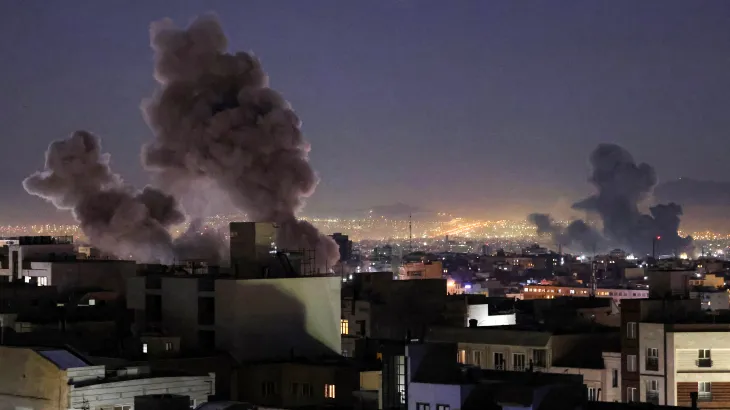
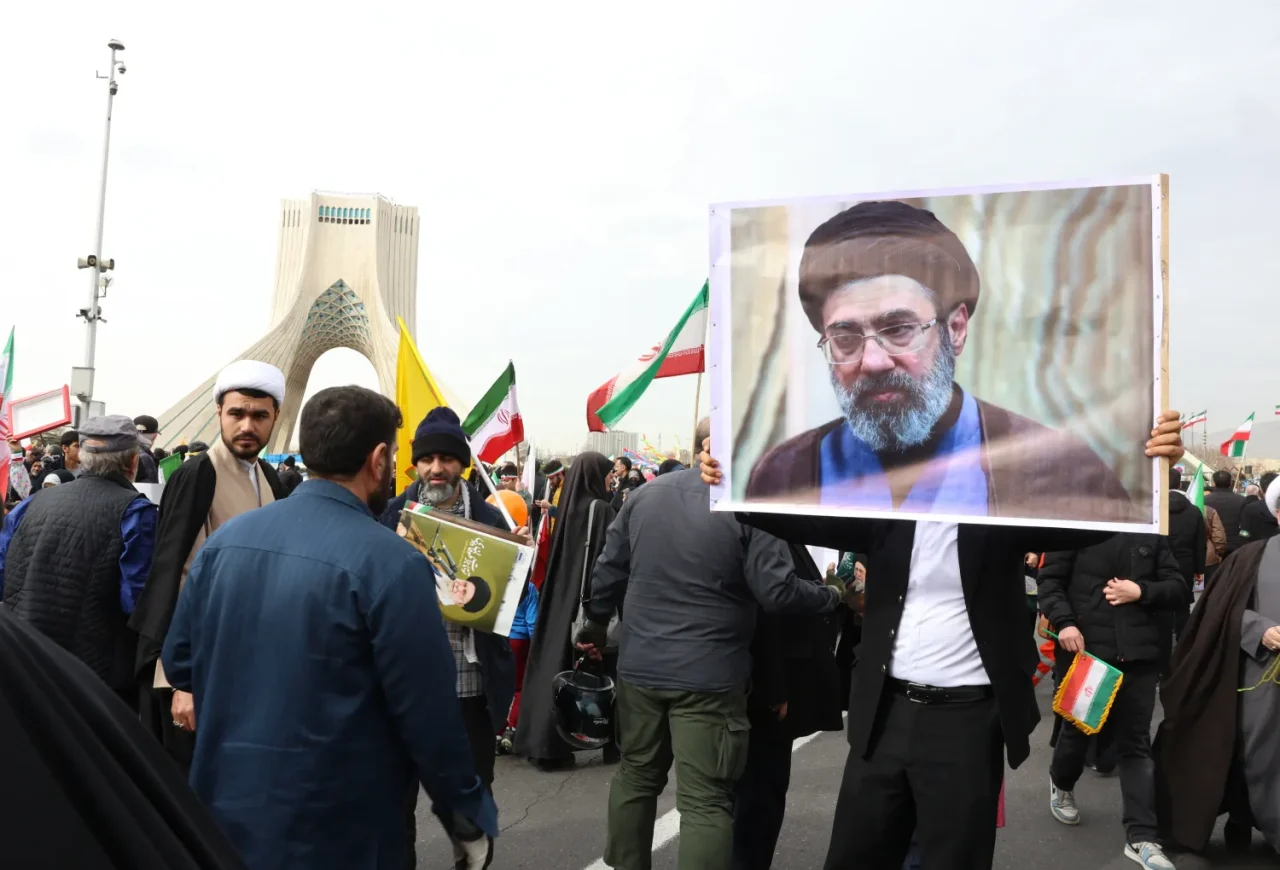
Iran launched missiles toward Israel and several Gulf nations early Monday after the Islamic Republic appointed Mojtaba Khamenei as its new supreme leader, succeeding his late father, Ali Khamenei. The development came despite warnings from the United States and Israel that any successor could also become a target. Nine days after joint US-Israeli strikes killed Ali Khamenei and pushed the Middle East into a wider conflict, Iranian clerics selected the country’s third supreme leader since the 1979 Islamic Revolution. Israel responded with another round of strikes, this time targeting infrastructure in central Iran. The escalating conflict triggered sharp reactions in global markets, with stock prices falling and oil prices surging by about 30 percent over fears of supply disruptions. Saudi Arabia said it intercepted drones heading toward an eastern oil facility, while the United Arab Emirates and Kuwait reported missile incidents. Bahrain also confirmed that warning sirens had been activated. The appointment of Mojtaba Khamenei was announced on Iranian state television, where a presenter read a statement from the Assembly of Experts beside an image of the 56-year-old cleric. According to the statement, Khamenei was selected as the third leader of the Islamic Republic following a decisive vote by members of the Assembly. The body said it acted quickly to appoint a new leader despite what it described as aggression from the United States and Israel. State media later aired footage of a missile reportedly launched toward Israel bearing the slogan “At Your Command, Sayyid Mojtaba,” using an Islamic honorific. The conflict erupted weeks after Iranian security forces suppressed nationwide protests against the government. The younger Khamenei is widely viewed as a hardliner expected to maintain his father’s strict stance against dissent. Earlier, former US president Donald Trump had dismissed Mojtaba Khamenei as a “lightweight” and reiterated that Washington should have influence over the choice of Iran’s next leader. “If he doesn’t get approval from us, he’s not going to last long,” Trump told ABC News before the appointment was announced. Israel’s defence minister had previously warned that any new Iranian supreme leader could become a military target, while the Israeli military said it would pursue any successor. Oil prices surge As Iran retaliated against Gulf states hosting US forces, global oil markets reacted sharply. The benchmark prices for Brent crude and WTI crude climbed above $100 per barrel for the first time since 2022 Russian invasion of Ukraine. Trump downplayed the price spike, describing it as a “small price to pay” for addressing what he called the threat posed by Iran’s nuclear programme. However, markets in Asia reacted negatively, with stock exchanges in Japan and South Korea falling sharply as both economies rely heavily on imported energy. The United States Department of State also ordered non-essential embassy staff and their families to leave Saudi Arabia following security concerns, days after a drone strike hit the US embassy. Trump later told an Israeli news outlet that any decision to end the conflict would be made jointly with Israeli Prime Minister Benjamin Netanyahu, although Washington would ultimately make the final call. Few analysts expect major policy shifts under Mojtaba Khamenei, who is seen as closely aligned with the powerful Islamic Revolutionary Guard Corps. The Guards quickly pledged loyalty to the new leader, promising obedience and sacrifice in carrying out his directives. Iran’s foreign minister, Abbas Araghchi, said the appointment would safeguard the country’s sovereignty and territorial integrity, as diplomats expressed their allegiance to the new leader. Intensifying clashes The conflict has also escalated in Lebanon, where the Iran-backed militant group Hezbollah said it was confronting Israeli forces who landed in eastern Lebanon by helicopter from Syria. Lebanon became directly involved in the conflict last week after Hezbollah launched attacks on Israel following the death of Ali Khamenei. Hezbollah said its fighters were engaging the helicopters and the troops that crossed the border, adding that the confrontation was ongoing. Lebanon’s National News Agency earlier reported intense fighting near the town of Nabi Sheet, where an Israeli operation over the weekend left 41 people dead. Israeli forces had also struck a hotel in central Beirut on Sunday, targeting commanders from the Revolutionary Guards’ external operations unit, the Quds Force, during a meeting. Lebanon’s health ministry said the strike killed four people and injured 10 others. Since the conflict began, Israeli attacks in Lebanon have reportedly killed at least 394 people, including dozens of women and children. Elsewhere, Bahrain’s health ministry said 32 people were injured after an Iranian drone strike hit the island of Sitra overnight, including a teenage girl with serious head injuries and a two-month-old baby. Saudi authorities also reported that two people were killed and 12 wounded when a projectile struck Al-Kharj. Iran’s health ministry said the conflict has killed at least 1,200 civilians and injured about 10,000 people, although the figures could not be independently verified. In Israel, officials say Iranian missile strikes have killed 10 people. Two Israeli soldiers were also killed during fighting in Lebanon, according to the military.

zz-12.webp

5min7000
Bahrain oil facility declares force majeure An Iranian strike targeting Bahrain’s extensive Al Ma’ameer oil complex triggered a fire and caused material damage, according to state media reports. Following repeated Iranian attacks on the country’s energy infrastructure, the state-owned Bapco Energies declared force majeure. Saudi Arabia intercepts drone attack Saudi Arabia’s defence ministry announced it had successfully intercepted a drone aimed at the Shaybah Oil Field in the eastern part of the kingdom near the UAE border. Meanwhile, the Saudi foreign ministry strongly condemned Iran’s retaliatory strikes, describing them as unacceptable. Human Rights Watch accuses Israel of using white phosphorus Human Rights Watch alleged that Israel used white phosphorus over residential areas of the southern Lebanese town of Yohmor last week. White phosphorus ignites when exposed to oxygen and can act as an incendiary weapon, potentially causing severe burns, fires, respiratory damage, organ failure, and death. Drone attack injures civilians in Bahrain Bahrain’s health ministry reported that 32 civilians were injured after an Iranian drone strike hit the island of Sitra overnight. All those wounded were Bahraini nationals. Israel and Iran exchange attacks Iran launched its first missile strikes toward Israel following the appointment of a new supreme leader, according to state broadcaster Islamic Republic of Iran Broadcasting. Israeli emergency responders said one woman was injured. In response, the Israel Defense Forces said it conducted a fresh round of airstrikes targeting government infrastructure in central Iran, including internal security command centres and missile launch facilities. Explosions reported across Gulf region Multiple explosions were reported in Doha, according to journalists on the ground. Authorities in Qatar, Saudi Arabia, United Arab Emirates and Kuwait also confirmed new attacks. Trump says ending war requires joint decision with Israel Donald Trump said in an interview that any decision to end the conflict would be taken jointly with Benjamin Netanyahu, though he noted that Washington would ultimately have the final say. Mojtaba Khamenei named Iran’s new leader Mojtaba Khamenei, the 56-year-old son of Iran’s late leader Ali Khamenei, has been chosen by the Assembly of Experts to succeed his father. The Islamic Revolutionary Guard Corps quickly pledged loyalty to the new leader, while senior official Ali Larijani described the selection as lawful. Earlier, Trump told ABC News that any new Iranian leader lacking US approval “would not last long.” Clashes in eastern Lebanon and strike on Beirut The Iran-backed militant group Hezbollah said it was confronting Israeli forces that crossed into eastern Lebanon overnight by helicopter from Syria. Meanwhile, Israeli forces reported carrying out airstrikes on targets linked to Hezbollah in Beirut early Monday. US orders partial embassy evacuation in Saudi Arabia The United States Department of State ordered non-essential government staff and their families to leave Saudi Arabia because of increasing security risks. Oil prices surge past $100 per barrel Global oil benchmarks WTI crude and Brent crude rose more than 30 percent, climbing above $100 per barrel amid fears that the war could disrupt oil supply for an extended period. Trump downplayed the surge on social media, calling it “a very small price to pay” for addressing Iran’s nuclear threat. Asian markets fall sharply Stock markets in South Korea and Japan dropped significantly in early Monday trading after oil prices crossed the $100-per-barrel mark for the first time in nearly four years. Seventh US service member killed The US military confirmed its seventh combat fatality since the conflict began after a service member died from injuries sustained during an attack in Saudi Arabia during Iran’s first wave of retaliatory strikes. Six other American personnel were earlier killed in a drone strike on their base in Kuwait.

LONG-BRIDGE.webp

2min9930
The Federal Government has announced a temporary traffic diversion along the Lagos–Ibadan Expressway to allow repair works on the Kara Bridge. In a travel advisory issued by the Federal Ministry of Works, motorists were informed that damaged expansion joints on the Kara Bridge, outbound Lagos, will be replaced as part of ongoing maintenance efforts. According to a statement signed by the Federal Controller of Works in Ogun State, Olayiwola Komolafe, the repair work will commence on Tuesday, March 10, 2026, and is expected to last about two weeks, ending on March 24, 2026. To reduce traffic congestion during the repairs, motorists have been advised to use alternative routes. Drivers travelling from Ikorodu to Mowe, Sagamu, and Ibadan are encouraged to go through Shimawa or Mosinmi, while those coming from Lagos Island can use the Epe corridor via Ijebu Ode to connect to Sagamu, Ibadan, or Mowe. The ministry also warned motorists that shorter routes may not necessarily be faster and urged road users to plan their trips ahead, follow traffic management instructions, and drive carefully around the construction area. The statement added that the ministry regrets any inconvenience the temporary partial closure may cause and appreciates the patience and cooperation of motorists as it works to improve the safety and durability of the country’s road infrastructure. Earlier in February, the ministry announced a six-week partial closure of sections of the Lagos–Ibadan Expressway to carry out urgent repairs on expansion joints at Kara Bridge, Magboro Bridge and Arepo–Punch Bridge. The repairs became necessary after earlier rehabilitation works on the Lagos-bound section of Kara Bridge were suspended due to public complaints about prolonged traffic congestion. Authorities explained that the expansion joints on the affected bridges had significantly deteriorated, posing safety risks and contributing to road accidents.

zz-23.jpg

2min10410
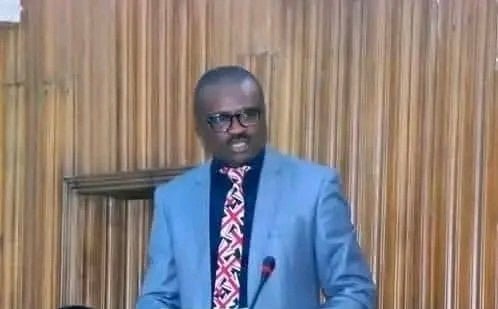
The Cross River State House of Assembly has suspended the lawmaker representing Obubra I State Constituency, Dickson Agbor, indefinitely over allegations of domestic assault. The decision followed a motion moved by Davies Etta and seconded by Francis Bassey Asuquo during plenary on Thursday. Presenting the motion, Etta criticised the alleged conduct involving Agbor, describing it as inappropriate for a member of the legislature and inconsistent with the ethical standards expected of lawmakers. He stressed that the Assembly must take firm action to protect its credibility and public image, noting that members are expected to act in ways that reflect the trust placed in them by the public. After deliberations, the House resolved to suspend Agbor indefinitely from all legislative activities while further investigations into the allegation continue. The Assembly also approved the formation of an ad hoc committee tasked with probing the matter and submitting its findings to the House for possible further legislative action. Following the resolution, Agbor was escorted out of the chamber by the Sergeant-at-Arms in line with the Assembly’s directive. Reacting to the development, the Speaker of the House, Elvert Ayambem, said the legislature remains committed to maintaining discipline, dignity and the integrity of the institution. Ayambem emphasised that lawmakers must conduct themselves in a manner that reflects the confidence placed in them by the people. He added that the Assembly would not tolerate any behaviour capable of undermining the reputation of the legislature. According to the House, the suspension will remain in effect pending the outcome of the investigation by the committee set up to examine the allegation.

zz-22.jpg

2min8380
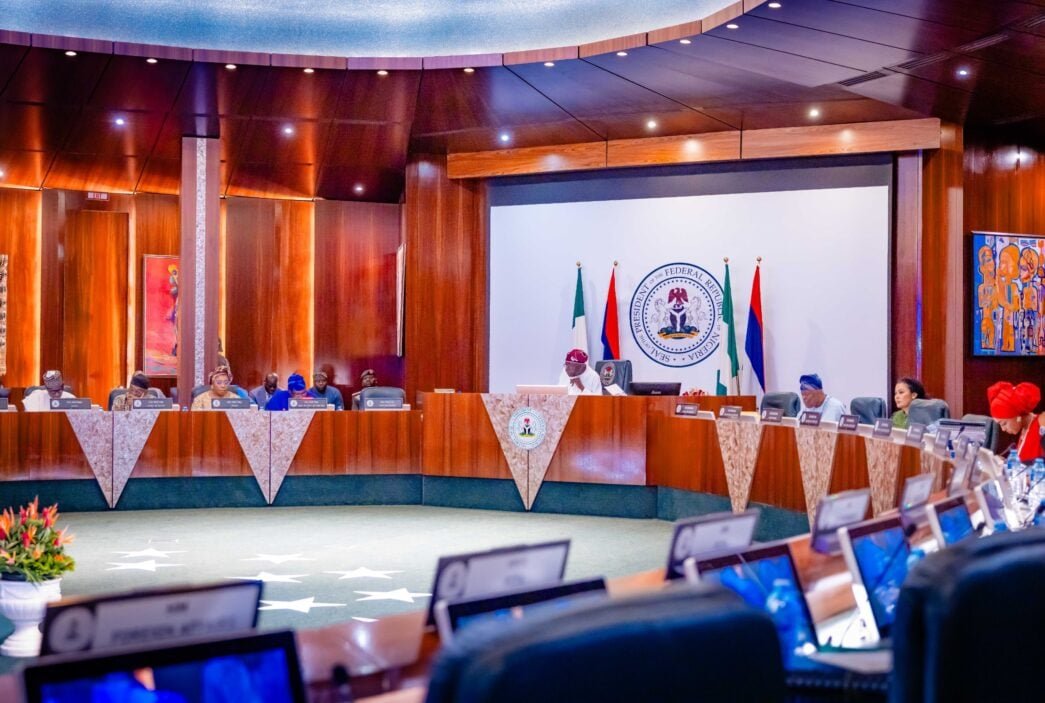
The Federal Executive Council has approved the introduction of a new Exit Benefit Scheme that will grant retiring federal civil servants a gratuity equivalent to 100 per cent of their total annual emolument. The scheme, which takes effect from January 1, 2026, represents a major step in the Federal Government’s effort to strengthen the welfare system within the civil service, ensuring that officers who have served for at least 10 years retire with improved financial security. This was disclosed in a statement issued by the Director of Public Relations in the Office of the Head of the Civil Service of the Federation, Eno Olotu. According to the statement, the approval followed extensive consultations and technical contributions from an Inter-Ministerial Technical Committee set up by the Office of the Head of the Civil Service of the Federation. The committee worked alongside the National Pension Commission, the Budget Office of the Federation, and the Office of the Accountant-General of the Federation to develop a sustainable framework for implementing the scheme. The Exit Benefit Scheme is designed to complement the existing Contributory Pension Scheme by providing additional financial support for retiring officers in treasury-funded ministries, extra-ministerial departments and agencies. The Didi Walson-Jack commended the council for what she described as a landmark approval, noting that it demonstrates the government’s recognition of the dedication and contributions of federal civil servants. She said the new scheme would significantly improve the retirement benefits of public servants and strengthen confidence in the government’s commitment to their welfare. Walson-Jack added that the initiative aligns with ongoing reforms aimed at building a more motivated, performance-driven and people-focused civil service. She also assured that detailed implementation guidelines would be released in due course. The introduction of the gratuity payment comes 22 years after the adoption of the Contributory Pension Scheme and underscores the Federal Government’s continued efforts to enhance the welfare and future security of civil servants.

zz-21.jpg

2min7680
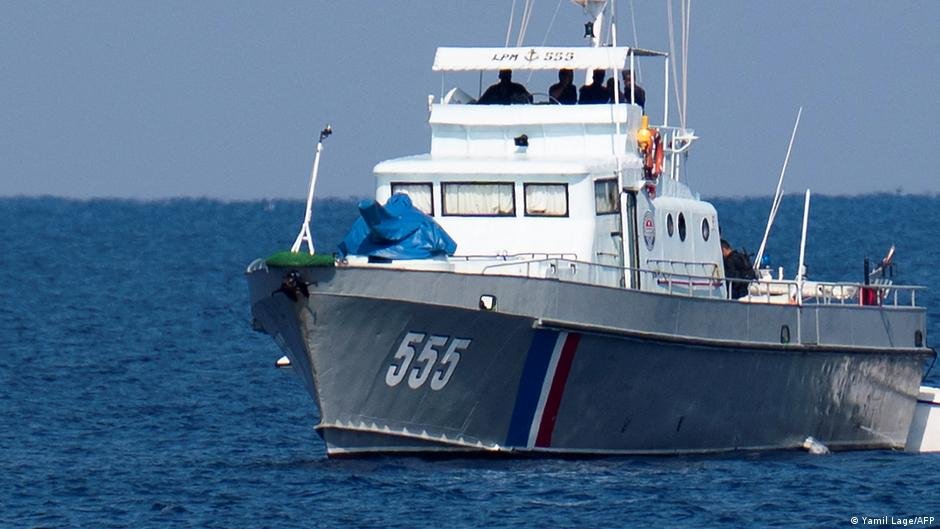
Cuban authorities said on Thursday that a fifth crew member from a U.S.-flagged speedboat involved in an exchange of gunfire with the coast guard last week has died from injuries sustained during the incident. Prosecutors have filed terrorism charges against the surviving crew members, who are suspected of attempting to smuggle weapons into Cuba in a bid to destabilise the communist government in Havana. In a statement broadcast on state television, the Interior Ministry said one of the injured survivors, Roberto Alvarez Avila, died on March 4 as a result of the wounds he suffered. The confrontation occurred on February 25 when a Cuban coast guard vessel approached the speedboat to request identification. Authorities said the crew of the vessel responded by opening fire, prompting a response from the coast guard. Four other people aboard the boat were killed during the clash, which took place less than a nautical mile from Cuba’s coastline. Officials said the speedboat, registered in the United States, was carrying multiple firearms, including 14 rifles, 11 pistols and nearly 13,000 rounds of ammunition. The Interior Ministry added that investigations into the incident were ongoing and being conducted with cooperation from U.S. authorities, including the sharing of evidence and other joint efforts. At least two of those on board the vessel were reported to be U.S. citizens, with one among those killed. The administration of U.S. President Donald Trump has previously expressed support for political change in Cuba and imposed strict measures on the island, including an energy blockade following the removal of Venezuelan leader Nicolás Maduro, who had been Cuba’s main oil supplier.

zz-20.jpg

2min2640
A lecturer at Akwa Ibom State Polytechnic, Abel Udo Jacob, and his accomplice, Innocent Nicholas Ntokon, have been sentenced to a combined 11 years in prison by the Akwa Ibom State High Court sitting in Ikot Ekpene for their roles in a N50 million extortion scheme. Delivering judgment on Wednesday, Justice Augustine Odokwo found the two men guilty of subjecting businessman Edikan Jacob Jackson to years of threats, intimidation and financial exploitation, which led to losses exceeding N50 million. The court heard that between 2016 and 2020, Ntokon, identified as a leader of the Klans Confraternity, allegedly led a prolonged campaign of intimidation against the victim. He was said to have sent armed associates to the businessman’s shops and issued threats against members of his family in order to force him into making monthly payments. Jacob, the lecturer, was found to have played a key role in the operation by acting as the group’s financial intermediary, allowing the extorted money to pass through his bank account. In a judgment that lasted about two hours, Justice Odokwo described Ntokon as someone who concealed his activities behind the appearance of being a trader while engaging in cult-related and extortion activities. Ntokon received an eight-year prison sentence on charges including demanding with menace, stealing, terrorism and cultism, while Jacob was sentenced to three years for demanding with menace, stealing and terrorism. The sentences are to run concurrently, bringing their combined jail term to 11 years. The court also ordered the convicts to jointly pay N25 million in restitution to the victim, stressing that criminal activity must not yield benefits. In addition, a Toyota Avensis and a Mercedes-Benz identified as proceeds of the crime were ordered forfeited to the state and will be auctioned, with the proceeds used as part compensation for the victim.

zz-19.jpg

1min7830
The Kano State House of Assembly on Thursday began impeachment proceedings against the state’s Deputy Governor, Aminu Abdulsalam, over allegations of misconduct, abuse of office, and breach of public trust. The impeachment notice was presented during plenary by the Majority Leader, Lawan Dala, and read by the Speaker, Ismail Falgore. Lawmakers said the action is based on Section 188 of the Constitution of the Federal Republic of Nigeria (1999), which empowers a state legislature to initiate impeachment proceedings against a deputy governor accused of gross misconduct. A total of 38 lawmakers signed the impeachment notice, and the Speaker directed that Abdulsalam be formally served in accordance with constitutional procedures. The development comes amid ongoing political tensions in Kano State following the defection of Governor Abba Yusuf from the New Nigeria Peoples Party to the All Progressives Congress last year. Abdulsalam declined to follow the governor in the defection and chose to remain with the NNPP. His decision reportedly intensified divisions within the state government, fueling speculation about his political future and contributing to the ongoing impeachment process.