

 Lifestyle & Wellness Desk
Iran Fires Missiles as Khamenei’s Son Assumes Leadership
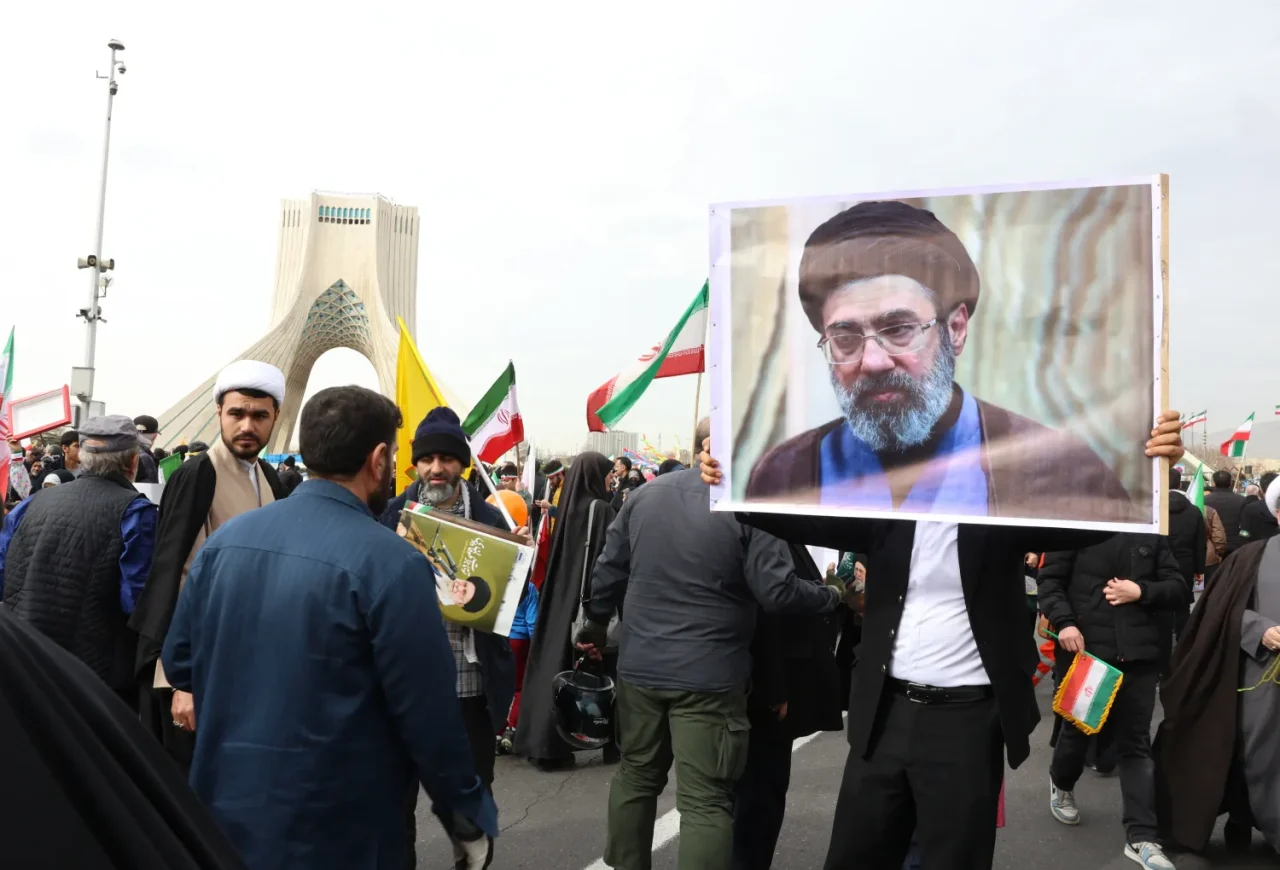
Iran launched missiles toward Israel and several Gulf nations early Monday after the Islamic Republic appointed Mojtaba Khamenei as its new supreme leader, succeeding his late father, Ali Khamenei. The development came despite warnings from the United States and Israel that any successor could also become a target.
Nine days after joint US-Israeli strikes killed Ali Khamenei and pushed the Middle East into a wider conflict, Iranian clerics selected the country’s third supreme leader since the 1979 Islamic Revolution.
Israel responded with another round of strikes, this time targeting infrastructure in central Iran. The escalating conflict triggered sharp reactions in global markets, with stock prices falling and oil prices surging by about 30 percent over fears of supply disruptions.
Saudi Arabia said it intercepted drones heading toward an eastern oil facility, while the United Arab Emirates and Kuwait reported missile incidents. Bahrain also confirmed that warning sirens had been activated.
The appointment of Mojtaba Khamenei was announced on Iranian state television, where a presenter read a statement from the Assembly of Experts beside an image of the 56-year-old cleric.
According to the statement, Khamenei was selected as the third leader of the Islamic Republic following a decisive vote by members of the Assembly. The body said it acted quickly to appoint a new leader despite what it described as aggression from the United States and Israel.
State media later aired footage of a missile reportedly launched toward Israel bearing the slogan “At Your Command, Sayyid Mojtaba,” using an Islamic honorific.
The conflict erupted weeks after Iranian security forces suppressed nationwide protests against the government. The younger Khamenei is widely viewed as a hardliner expected to maintain his father’s strict stance against dissent.
Earlier, former US president Donald Trump had dismissed Mojtaba Khamenei as a “lightweight” and reiterated that Washington should have influence over the choice of Iran’s next leader.
“If he doesn’t get approval from us, he’s not going to last long,” Trump told ABC News before the appointment was announced.
Israel’s defence minister had previously warned that any new Iranian supreme leader could become a military target, while the Israeli military said it would pursue any successor.
Oil prices surge
As Iran retaliated against Gulf states hosting US forces, global oil markets reacted sharply. The benchmark prices for Brent crude and WTI crude climbed above $100 per barrel for the first time since 2022 Russian invasion of Ukraine.
Trump downplayed the price spike, describing it as a “small price to pay” for addressing what he called the threat posed by Iran’s nuclear programme.
However, markets in Asia reacted negatively, with stock exchanges in Japan and South Korea falling sharply as both economies rely heavily on imported energy.
The United States Department of State also ordered non-essential embassy staff and their families to leave Saudi Arabia following security concerns, days after a drone strike hit the US embassy.
Trump later told an Israeli news outlet that any decision to end the conflict would be made jointly with Israeli Prime Minister Benjamin Netanyahu, although Washington would ultimately make the final call.
Few analysts expect major policy shifts under Mojtaba Khamenei, who is seen as closely aligned with the powerful Islamic Revolutionary Guard Corps.
The Guards quickly pledged loyalty to the new leader, promising obedience and sacrifice in carrying out his directives.
Iran’s foreign minister, Abbas Araghchi, said the appointment would safeguard the country’s sovereignty and territorial integrity, as diplomats expressed their allegiance to the new leader.
Intensifying clashes
The conflict has also escalated in Lebanon, where the Iran-backed militant group Hezbollah said it was confronting Israeli forces who landed in eastern Lebanon by helicopter from Syria.
Lebanon became directly involved in the conflict last week after Hezbollah launched attacks on Israel following the death of Ali Khamenei.
Hezbollah said its fighters were engaging the helicopters and the troops that crossed the border, adding that the confrontation was ongoing.
Lebanon’s National News Agency earlier reported intense fighting near the town of Nabi Sheet, where an Israeli operation over the weekend left 41 people dead.
Israeli forces had also struck a hotel in central Beirut on Sunday, targeting commanders from the Revolutionary Guards’ external operations unit, the Quds Force, during a meeting.
Lebanon’s health ministry said the strike killed four people and injured 10 others.
Since the conflict began, Israeli attacks in Lebanon have reportedly killed at least 394 people, including dozens of women and children.
Elsewhere, Bahrain’s health ministry said 32 people were injured after an Iranian drone strike hit the island of Sitra overnight, including a teenage girl with serious head injuries and a two-month-old baby.
Saudi authorities also reported that two people were killed and 12 wounded when a projectile struck Al-Kharj.
Iran’s health ministry said the conflict has killed at least 1,200 civilians and injured about 10,000 people, although the figures could not be independently verified.
In Israel, officials say Iranian missile strikes have killed 10 people. Two Israeli soldiers were also killed during fighting in Lebanon, according to the military.

