Author: Lifestyle & Wellness Desk

aa-26.jpeg

3min8300
According to him, the airlines acknowledged that they do not remit the levels of taxes being claimed. He said he could not make sense of the figures being circulated but maintained that, given the support domestic carriers have received from President Bola Ahmed Tinubu, the Minister of Aviation, Festus Keyamo, and the Director General of Civil Aviation, Capt. Chris Najomo, there was no justification for repeatedly blaming the government through such claims. This clarification followed remarks by Air Peace Chairman, Allen Onyema, who noted that many return flights on South-East routes operate with very low passenger numbers, even though airlines must still cover the full cost of both legs of the journey. Onyema stated that about 65 to 70 per cent of ticket revenue does not go to airlines but is absorbed by levies, taxes, and other charges, describing airlines as bearing a disproportionate burden within the industry. He emphasized that high fares are driven by operational realities rather than exploitation, adding that ticket prices fluctuate based on demand and booking time, with cheaper options available for early purchases. He also observed that Nigeria’s domestic airfares remain comparatively low by global standards. Achimugu challenged allegations of profiteering, pointing out that there had been no recent increases in taxes or jet fuel prices. He described it as contradictory to claim that Nigerians enjoy some of the lowest domestic airfares worldwide while also defending the sharp rise in ticket prices during December, despite the absence of new cost pressures. He questioned why fares rose to as much as ₦500,000 for short flights if taxes were supposedly responsible for prices in the ₦150,000–₦200,000 range, noting that those taxes had not changed. In conclusion, he attributed the December spike in airfares to basic market dynamics, stressing that the increase affects only certain high-demand routes. He noted that similar seasonal price surges occur across other sectors, including road transport, accommodation, and food, and argued that these trends are driven by demand rather than government policy.

aa-8.jpeg

2min4230
Manufacturers have expressed optimism about the proposed tax reforms, saying they expect significant relief from what they described as multiple nuisance taxes imposed by sub-national authorities. According to industry leaders, the reforms are expected to end the persistent harassment of businesses through official and unofficial levies, allowing companies to operate more freely and efficiently. They noted that the changes would eliminate roadblocks and other disruptions associated with tax collection, adding that the broader economy would benefit from a more orderly and predictable tax environment. Manufacturers said they are looking forward to the implementation of the new tax laws from January 1, 2026, stressing that they actively participated in stakeholder consultations and believe the framework is well designed to support both small-scale and large businesses. It was further explained that the reforms would provide substantial relief for small businesses, particularly those with annual turnovers below ₦100 million, which would be exempted from company income tax, value-added tax and withholding tax. This, they said, would ease the burden on struggling enterprises and encourage growth. The reduction in company income tax was also described as a step that would align Nigeria with global best practices, create room for business reinvestment and improve the country’s attractiveness to investors. In addition, low-income earners are expected to be fully exempt from tax, while middle-income earners would benefit from lower liabilities due to enhanced reliefs. Manufacturers also welcomed the planned introduction of a tax ombuds, describing it as a major safeguard for taxpayers. They said the office would offer protection against arbitrary tax practices and provide a fair channel for dispute resolution. Overall, they expressed confidence that the reforms would not leave any category of earners worse off, noting that even higher-income earners would benefit indirectly through improved business performance under the new tax regime.

aa-14.webp

3min2550
About 2,725 mobile subscribers left T2 between August and October 2025, despite the company’s rebrand from 9mobile, according to recent Mobile Number Portability data released by the Nigerian Communications Commission (NCC). The data shows that 1,111 subscribers exited the network in August, 724 in September, and 890 in October 2025. Within the same three-month period, only 61 subscribers joined T2, resulting in a net loss of 2,664 customers. These figures indicate that the rebrand has yet to slow the rate at which customers are leaving the operator. In October alone, 890 users departed T2, compared with 289 from Airtel, 193 from Globacom, and 225 from MTN. Out of the 1,597 subscribers who switched networks that month, T2 accounted for more than half of all exits. This pattern has remained consistent throughout 2025. Outgoing porting which tracks subscribers who switch networks while keeping their phone numbers shows T2 recording significantly higher losses than its competitors from the beginning of the year. The year began with particularly heavy losses: 6,716 subscribers left in January, followed by 3,817 in February, 1,992 in March, 5,042 in April, 3,863 in May, and 3,372 in June. Although the pace slowed in the second half of the year, departures remained notable, with 646 exits in July, 1,111 in August, 724 in September, and 890 in October. Incoming subscriber data reflects a similar trend. In October 2025, only 26 subscribers switched to T2, compared with 937 who joined MTN, 357 who moved to Airtel, and 277 to Globacom. September and August recorded just 20 and 15 incoming subscribers respectively, continuing a pattern observed since January. MTN, by contrast, consistently attracted the highest number of new subscribers throughout the year. Overall, between January and October 2025, a total of 28,173 subscribers ported out of T2, while only 87 joined the network. This highlights ongoing customer dissatisfaction despite the introduction of a new brand identity. Mobile Number Portability allows users to change service providers without changing their phone numbers, and the NCC’s monthly reports are widely regarded as a key indicator of consumer sentiment in the telecommunications sector. T2’s rebrand followed its acquisition in 2023 by Lighthouse Telecoms as part of a broader recovery strategy built around stabilisation, modernisation, transformation, and growth. Since then, the company has restructured its leadership, reconstituted its board, and entered into a national roaming agreement with MTN Nigeria to improve coverage and service quality. Despite these measures and regulatory approvals supporting infrastructure sharing and spectrum leasing, NCC data shows that T2 continued to lead the industry in outgoing subscriber porting throughout 2025, suggesting that the network’s challenges extend beyond branding changes alone.

aa-20.jpeg

2min4080
Most smart building systems today rely on closely monitoring people in order to understand how spaces are used. This work is grounded in a different philosophy: intelligent and responsive buildings can be designed in ways that strongly respect human privacy. By using rich, privacy-preserving data, graph-based deep learning models are being developed to detect occupancy, estimate the number of people in a space, and infer basic activities such as sitting, walking, presenting, or group discussions. These insights are then linked to indoor air quality and energy consumption, enabling smarter and more efficient control of ventilation and HVAC systems. The engineer explained that this research represents a new direction for smart buildings spaces that adapt to people in real time, improve health and comfort, and significantly reduce energy waste. Emphasising the relevance of privacy-preserving activity sensing for Nigeria and across Africa, he noted that such systems are better aligned with local values and realities. Many communities are understandably wary of heavy surveillance, and solutions that rely on non-camera sensors can build trust while still improving comfort, safety, and efficiency. Energy costs are often high and power supply can be unstable. As a result, schools, hospitals, and offices stand to benefit greatly from buildings that automatically adjust ventilation and cooling based on real activity rather than fixed schedules, reducing energy use while maintaining healthy indoor environments. He added that just as African countries have leapfrogged to mobile banking and distributed solar power, they can also leapfrog to privacy-respecting smart buildings instead of adopting camera-heavy systems developed elsewhere. The methods being developed graph-based models, multimodal sensing, and privacy-aware algorithms can be adapted to low-cost sensors and deployed in classrooms, clinics, and offices across the continent.

aa-13.webp

5min3740
Outstanding bank exposure rose marginally to N2.59tn in February 2025 before easing to N2.55tn in March. By April and May, the balance stabilised at around N2.44tn–N2.45tn, followed by a sharp drop to N2.13tn in June 2025 the largest single-month adjustment recorded during the year. June marked the most pronounced year-on-year shift. Outstanding obligations declined from N2.68tn in June 2024 to N2.13tn a year later, representing a reduction of more than half a trillion naira. On a month-on-month basis, the fall from May’s N2.45tn to June’s N2.13tn amounted to approximately N313bn, pointing to an accelerated effort to reduce bank liabilities toward the end of the second quarter, amid elevated interest rates and stronger statutory revenue inflows. Throughout 2024, the Central Bank of Nigeria’s Monetary Policy Committee maintained an aggressive tightening stance, raising the Monetary Policy Rate from 18.75 per cent at the beginning of the year to about 27.50 per cent by November, as part of efforts to curb inflation and stabilise the exchange rate. In 2025, the committee largely kept rates unchanged at 27.50 per cent for most of the year, reflecting a pause following the earlier tightening cycle as inflationary pressures began to ease. In September 2025, the MPC implemented its first rate cut in five years, reducing the benchmark to 27.00 per cent, a move sustained in November as policymakers sought to balance disinflation with financial stability. High borrowing costs appear to have encouraged sub-national governments to scale back bank borrowing as statutory allocations improved. Records show a significant increase in the funds received by state governments and local government councils in 2025 compared with 2024, underscoring the scale of revenue gains flowing through the federation account. States and local governments jointly received N12.67tn in 2025, up from N8.96tn in 2024, excluding the 13 per cent derivation fund. This represents a year-on-year increase of N3.71tn, or 41.4 per cent. Including derivation, total receipts rose from N10.31tn in 2024 to N14.28tn in 2025 an increase of N3.98tn, or 38.6 per cent. The derivation component alone increased from N1.35tn to N1.62tn over the same period. State governments accounted for the largest absolute gains, with their allocations rising from N5.19tn in 2024 to N7.31tn in 2025, an increase of N2.13tn, or 41 per cent. Allocations to local government councils grew from N3.77tn to N5.35tn, a rise of N1.58tn, or 41.8 per cent. The monthly distribution data reflect this shift. State allocations increased from N396.69bn in January 2024 to N498.50bn in January 2025, peaking at N727.17bn in October 2025 before closing the year at N601.73bn, well above the N549.79bn recorded in December 2024. Local government councils followed a similar trajectory, with allocations rising from N288.93bn in January 2024 to N361.75bn in January 2025, surpassing N500bn in the final quarter of 2025 and ending the year at N445.27bn, compared with N402.55bn a year earlier. In 2024, monthly allocations to councils largely ranged between N267bn and N294bn, while state allocations hovered around N366bn to N403bn. By contrast, 2025 figures show that councils rarely received less than N387bn in any month, while state allocations seldom fell below N498bn. Overall, total allocations to all three tiers of government rose from N13.91tn in 2024 to N20.28tn in 2025, while total distributable revenue, including derivation, increased from N15.26tn to N21.89tn, with states and councils accounting for most of the growth. The surge in statutory inflows appears to have contributed to the decline in bank debt among states and local governments. However, fiscal pressures persist for some sub-nationals, particularly those with high debt burdens and weaker revenue profiles, raising concerns about long-term sustainability and the capacity to fund critical development projects. In response, debt management authorities have urged state governments to prioritise revenue mobilisation and explore alternative financing models, such as public-private partnerships, rather than relying heavily on borrowing. Such approaches are seen as a way to attract private capital, reduce fiscal strain, accelerate infrastructure delivery, and support broader economic growth.

aa-19.jpeg

3min7720
President Bola Tinubu has welcomed the successful securing of $1.126bn in funding for Phase 1, Section 2 of the Lagos–Calabar Coastal Highway, describing it as a significant milestone that ensures uninterrupted progress on one of Africa’s most ambitious infrastructure developments. The funding package, fully underwritten by First Abu Dhabi Bank and the African Export-Import Bank, with partial risk coverage from the Islamic Corporation for the Insurance of Investment and Export Credit, raises total financing secured for Phase 1 of the project to $1.873bn. In a statement issued by his Special Adviser on Information and Strategy, Bayo Onanuga, the President praised the Federal Ministries of Finance and Works, as well as the Debt Management Office, for their coordinated efforts in concluding the deal, which was signed on December 19, 2025. Tinubu said the successful closure of the transaction guarantees continued work on the highway and reaffirmed his administration’s commitment to exploring diverse funding options for priority economic and infrastructure projects nationwide. Phase 1, Section 2 spans about 55.7 kilometres, linking Eleko in Lekki to Ode-Omi routes described by the Presidency as vital economic corridors that will boost trade efficiency and logistics connectivity. The latest financing follows the earlier $747m secured for Phase 1, Section 1 in July 2025, reinforcing what officials described as the project’s scalability and strong bankability. The Minister of Finance and Coordinating Minister of the Economy, Wale Edun, called the December 19 signing a landmark moment in Nigeria’s infrastructure development. Edun noted that the transaction represents the first fully underwritten financing of this scale for a Nigerian road project, adding that ICIEC’s participation marked its largest deal since Nigeria’s recent institutional and regulatory reforms, underscoring growing investor confidence in the country. Minister of Works, David Umahi, had earlier opened Section 1 of the highway temporarily to traffic on December 12, 2025. The 47-kilometre stretch from Ahmadu Bello Way to Eleko village junction in Lagos was opened to ease movement during the Christmas period. Originally conceived in the 1970s, the Lagos–Calabar Coastal Highway gained renewed momentum under President Tinubu in February 2024. The 700-kilometre road is designed to run from Lagos through Ogun, Ondo, Edo, Delta, Bayelsa, Rivers and Akwa Ibom states, ending in Calabar, Cross River State. Additional spurs are planned to link northern corridors, including the Sokoto–Badagry and a trans-Saharan route to Cameroon. Estimated to cost between $11bn and $13bn, the project has attracted controversy since construction began in March 2024, particularly over demolitions and compensation issues in parts of Lagos. Legal challenges have also emerged, including a $250m lawsuit filed in June 2025 by a group of foreign investors alleging constitutional and procedural breaches by the Federal Government.

aa-15.jpeg

3min8230
Former US President Donald Trump has said American forces carried out what he described as “powerful and deadly” strikes against Islamic State (IS) militants in north-western Nigeria. In a post on Truth Social, Trump said the US military had executed “numerous perfect strikes” against the group, which he labelled “terrorist scum”. He accused IS of killing civilians, claiming Christians were the primary targets. US Africa Command (Africom) later confirmed that the operation took place on Thursday in Nigeria’s Sokoto State and was conducted in coordination with Nigerian authorities. Nigeria’s Foreign Minister, Yusuf Maitama Tuggar, told the BBC the action was a joint operation aimed at “terrorists” and stressed it was not linked to any religion. He said the strike had been planned for some time and relied on Nigerian intelligence, adding that further operations would depend on decisions by leaders of both countries. US Defence Secretary Pete Hegseth thanked the Nigerian government for its cooperation, while the Pentagon released a short video appearing to show a missile launch. Nigeria’s foreign ministry later confirmed that air strikes in the North West had resulted in “precision hits on terrorist targets” as part of ongoing security cooperation with international partners. Trump has previously claimed Nigeria’s Christians face an “existential threat” and earlier designated the country a “country of particular concern” over religious freedom, a move that can trigger US sanctions. Nigerian officials have rejected those claims, insisting violence affects people of all faiths and regions. Independent monitors and human rights groups say there is no evidence that Christians are being disproportionately targeted, noting that most victims of jihadist violence in Nigeria over the past decade have been Muslims. Islamist groups such as Boko Haram and Islamic State West Africa Province have killed thousands, particularly in the north-east, while central Nigeria has also seen deadly clashes between herders and farming communities. The strikes in Nigeria come days after the US announced it had carried out large-scale attacks against Islamic State targets in Syria, hitting more than 70 locations with fighter jets, helicopters and artillery.

aa-14.jpeg

3min4600
Residents of Obodoaba and Ikpele villages in the Obeagu community of Ishielu Local Government Area, Ebonyi State, have raised concerns over a prolonged electricity outage they say has lasted for about five years, following the removal of a faulty transformer by the Enugu Electricity Distribution Company (EEDC). According to the communities, the outage began after Obeagu Transformer 1 developed a fault and was taken away by EEDC officials. Despite repeated appeals and financial contributions by residents, electricity supply has not been restored, affecting economic activities and daily life in the area. A community representative, Mr Calaminus Ogbuabor, said the lack of power has severely affected small businesses that rely on electricity, forcing some residents to relocate in search of better living conditions. He noted that festive periods have become especially difficult, as many households cannot afford the cost of running generators due to rising fuel prices. Ogbuabor alleged that the community met all financial requirements requested by EEDC, including payments exceeding ₦900,000, deducted from accumulated electricity bills, based on assurances that a new 300KVA transformer would be installed. He claimed, however, that an older 200KVA transformer was eventually provided instead, which reportedly failed within a month due to overload. He further alleged that the original 300KVA transformer, which was initially provided through government intervention, was removed and reassigned to another location. According to him, EEDC later informed the community that the faulty transformer had been repaired but requested a full drum of transformer oil before reinstalling it, a request he said has not led to any action more than a year later. Other residents said they have visited EEDC offices in Nsukka and Eha-Amufu, under the MainPower subsidiary, on several occasions without any resolution. They added that the prolonged outage has led to the closure of businesses such as welding workshops, barber shops, cold rooms and other small-scale enterprises. Some residents also expressed dissatisfaction over the continued issuance of estimated bills despite the absence of electricity supply, calling for greater accountability and improved service delivery. The communities are now appealing to the Ebonyi State Government, the National Electricity Regulatory Commission (NERC) and other relevant authorities to intervene. They maintain that a 500KVA transformer would be required to adequately serve both villages. Efforts to obtain a response from the Head of Corporate Communications at EEDC, Mr Emeka Ezeh, were unsuccessful as of the time of filing this report, as calls and text messages sent to him had not been returned.

aa-1280x412.png

3min2560
No fewer than 50 residents of Ikeja Local Government Area, Lagos State, received free medical services during an end-of-year community health outreach organised by the Elijah Tobi Obishakin Foundation. The outreach, held near Ikeja Bridge, provided beneficiaries with free health screenings, medical consultations, prescribed medications, and meals. Tests conducted included checks for hypertension, malaria, peptic ulcer disease, blood sugar levels, and other basic health indicators, with medical professionals offering immediate diagnoses and health advice. Participants commended the initiative, noting that it helped bridge critical healthcare gaps, particularly amid difficulties accessing public health facilities. One beneficiary, Kunmi Taiwo, said the screening revealed dangerously high blood pressure levels. “I wasn’t aware my blood pressure had risen so much. This check-up has really helped me and saved me money, especially given the current economic situation,” he said. Another participant highlighted the impact of industrial actions in public hospitals. “Because of the strike in general hospitals, I haven’t been able to do any medical check-up. I’m grateful for this opportunity and for the medications provided,” she said. Founder of the foundation, Elijah Obishakin, described the outreach as part of the organisation’s commitment to supporting vulnerable members of society. “It’s about touching lives and restoring hope. We want to ensure that youths, children, and women are well catered for, and we are simply doing our part,” he said. Obishakin explained that the youth-led foundation, established three years ago at the MUSON Centre, Lagos Island, focuses mainly on health, education, and empowerment initiatives. While its primary beneficiaries are youths, women, and children, some programmes are extended to the elderly. He added that the foundation operates without external funding, relying solely on personal contributions from its members. According to him, over 200 people have benefited from the foundation’s various interventions, including skills empowerment initiatives such as the distribution of sewing machines. “We hope to expand our impact and reach more people in the coming year,” he added. The foundation conducts community outreaches on a quarterly basis, with plans to organise leadership training programmes in areas such as Ojolowo and Ikeja in February. Beneficiaries left the event with food packs and prescribed drugs, describing the outreach as a timely and impactful intervention.

aa-13.jpeg

2min11150
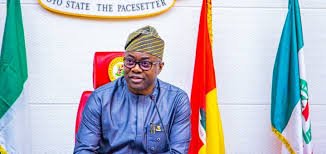
Oyo State Governor, Seyi Makinde, has said he possesses the experience and credentials needed to lead Nigeria, amid growing speculation about his possible interest in the 2027 presidential election. The governor made the remarks on Tuesday during a media interaction with selected journalists in Ibadan, pointing to his years in public office and private-sector background as proof of his readiness. “Let me be clear: I am qualified to serve this country at the highest level in fact, I am more than qualified,” Makinde said. He noted that by May 2027, he would have completed two full terms as governor of Oyo State, drawing a comparison with the current president, whose path to office included serving two terms as governor of Lagos State. Makinde also highlighted his professional journey, explaining that he built and ran a company at a young age without relying on government patronage. According to him, he worked with major multinational oil firms such as Shell, ExxonMobil and Chevron. Despite his confidence in his credentials, the governor stressed that discussions about the 2027 presidential contest were premature. He further stated that Nigerians deserve a strong and competitive democratic system, expressing concern over the wave of defections by governors and prominent politicians to the ruling All Progressives Congress. Makinde questioned whether such political realignments had translated into improvements in the living conditions of citizens, noting that hardship and public frustration remain widespread.