Author: Lifestyle & Wellness Desk

3-1.jpg

3min4480
The Nigerian Electricity Regulatory Commission (NERC) has unveiled a series of events to celebrate its 20th anniversary, marking two decades of reform, oversight, and transformation in Nigeria’s electricity supply industry. Established on October 31, 2005, under the former Electric Power Sector Reform Act—now replaced by the Electricity Act 2023—NERC has played a central role in steering the country’s power sector through major transitions and reforms. In a statement issued on Wednesday, the Commission said the anniversary celebration would highlight its journey from inception, through the unbundling of the Power Holding Company of Nigeria, the privatisation of generation and distribution companies in 2013, and its continued regulation of the electricity market from the post-privatisation phase to the current Transition Market stage. “This 20th anniversary is not just a milestone; it’s a reaffirmation of our mandate to protect consumers, promote investment, and ensure a fair and competitive electricity sector,” said NERC Vice-Chairman, Dr. Musiliu Oseni. “We remain committed to reforms that deliver real value to Nigerians.” Over the past two decades, NERC has driven key regulatory reforms promoting transparency, accountability, and sustainability in the power sector. The Commission has introduced market rules, performance benchmarks, consumer protection measures, and tariff structures that balance investor confidence with public interest. It has also advanced off-grid electrification, renewable energy initiatives, and energy transition policies in line with Nigeria’s development and climate goals. To commemorate the anniversary, NERC has lined up a week-long programme of events, including technical panel sessions featuring energy experts, a health and wellness programme for staff, and a secondary school debate on energy conservation. A gala dinner will also be held to honour past leaders, pioneer staff, and deceased members who contributed to the Commission’s legacy. “These activities are designed to encourage collaboration, innovation, and public participation as we reflect on our journey and envision the future of Nigeria’s power industry,” the statement added. The anniversary comes at a pivotal time for Nigeria’s electricity sector, which is undergoing significant transformation under the Electricity Act 2023. The new legislation decentralises electricity regulation, empowering states to establish their own regulatory agencies—a move NERC has pledged to support through technical assistance and policy guidance. Looking ahead, the Commission reaffirmed its commitment to building a fully competitive electricity market defined by improved service delivery, market discipline, and consumer protection. As NERC marks 20 years of impact, it remains dedicated to ensuring that Nigerians enjoy reliable, affordable, and sustainable power supply, guided by its mission to regulate the electricity industry in the public interest.

10-1.jpg

4min4700
The Nigerian Medical Association (NMA) has expressed full support for the nationwide indefinite strike declared by the Nigerian Association of Resident Doctors (NARD), describing the doctors’ demands as justified and long overdue. According to the NMA, the Federal Government has consistently failed to fulfil its promises and address pressing issues affecting healthcare workers and the system at large. NARD announced the indefinite strike after the expiration of its 30-day ultimatum, effective Saturday, November 1. Speaking on the development, NMA Secretary-General Dr. Ben Egbo said the association stands firmly behind NARD, noting that both groups share the same concerns. “We are fully in support of NARD’s decision. Their demands are essentially the same as ours. The government has not treated healthcare workers fairly and continues to make promises it never keeps,” Egbo said. He criticised the government’s handling of the situation, adding that strikes appear to be the only language the authorities understand. “Resident doctors have 19 legitimate demands. The NMA, as their parent body, fully supports them. Each time we engage with the government, they promise action but fail to deliver. It’s a cycle of unfulfilled commitments,” he added. Confirming reports that healthcare workers are owed over ₦38 billion in various allowances, Egbo questioned the government’s priorities. “The government knows it owes that amount. You never hear of lawmakers being owed such sums, yet essential healthcare workers are left unpaid despite the enormous workload they bear. The system is failing and needs urgent attention,” he said. When contacted, the Federal Ministry of Health and Social Welfare’s Head of Information and Public Relations, Mr. Alaba Balogun, said he was not authorised to comment on the issue. NARD’s 19-point demand includes the immediate payment of outstanding 25–35 per cent CONMESS salary arrears, withheld allowances, and the reinstatement of five resident doctors dismissed by the Federal Teaching Hospital, Lokoja. Other demands include implementing an internationally accepted working-hours policy, recruiting more doctors under a one-for-one replacement plan, upgrading hospital facilities and equipment, paying specialist allowances promptly, correcting placement levels for house officers, and ensuring all junior doctors are properly included in the public service salary structure. NARD also called for a speedy review of the Consolidated Medical Salary Structure through the Collective Bargaining Agreement Committee, payment of promotion arrears, ending staff casualisation, and enforcing uniform salary circulars across all levels. The association further demanded the proper recognition of certificates issued by professional bodies and faster issuance of postgraduate qualifications.

9.webp

7min3940
Health remains the true foundation of wealth and national progress. No nation can rise above the health of its people. As Mahatma Gandhi wisely said, “It is health that is real wealth and not pieces of gold and silver.” Yet today, Nigeria faces a health crisis that is denying millions this very wealth. Nigeria’s health indicators paint a troubling picture. The average life expectancy stands at just 55 years for men and 58 for women. Maternal mortality remains among the highest globally, with one in every four maternal deaths occurring in Nigeria. Far too many women enter delivery rooms but never return home. Children are equally vulnerable — one in ten will not live to see their fifth birthday, while over 30 per cent of those under five suffer stunted growth due to malnutrition. Communicable diseases still dominate the landscape. Malaria claims about 200,000 lives every year; HIV affects nearly two million Nigerians; and tuberculosis continues to spread. Outbreaks of preventable diseases such as measles and meningitis persist. Meanwhile, non-communicable diseases are rising sharply. Nearly four in ten adults live with hypertension, diabetes is increasing, and cancers are often detected late. Stroke and heart disease now claim thousands of lives annually. Behind these figures is a fragile health system — fewer than 40,000 doctors serve a population of over 200 million, with most concentrated in urban centres. Rural dwellers travel long distances for basic care. Out-of-pocket spending accounts for more than 70 per cent of healthcare financing, driving families into poverty. To make matters worse, many healthcare professionals are emigrating in search of better opportunities. Arthur Schopenhauer once warned, “The greatest of follies is to sacrifice health for any other kind of happiness.” Nigeria can no longer afford to sacrifice the health of its citizens. Artificial Intelligence (AI) — the science of teaching machines to think and act like humans, but faster and more accurately — offers a new path forward. It’s already part of daily life through tools like Siri, Google Assistant, and fraud detection systems. In healthcare, AI is diagnosing diseases from scans, analysing records, and recommending treatments with unmatched precision. Kofi Annan aptly said, “Knowledge is power. Information is liberating. Education is the premise of progress in every society.” AI represents this liberating knowledge. Across the world, AI is already saving lives — from detecting diabetic eye disease in India to identifying breast cancer earlier in the UK. During the COVID-19 pandemic, it accelerated vaccine development. In the U.S., AI-powered chatbots help triage patients before they reach hospitals. As Albert Einstein once said, “In the middle of every difficulty lies opportunity.” For Nigeria, AI represents that opportunity. Potential Benefits of AI in Nigerian Healthcare: Early diagnosis: AI can analyse malaria slides, X-rays, and CT scans with great accuracy, ensuring timely treatment. Telemedicine: With mobile technology, rural patients can access AI-powered consultations, reducing the strain on urban hospitals. Personalised medicine: AI can recommend treatments based on a patient’s genetics and lifestyle. Hospital efficiency: AI can predict patient flow, optimise bed use, and reduce waiting times. Counterfeit drug detection: AI can trace medicines through supply chains to curb fake drugs. Disease surveillance: AI can forecast outbreaks of malaria or cholera using environmental and health data. Nigeria’s youthful and tech-savvy population can build local AI tools tailored to our health challenges. Just as we skipped landlines and embraced mobile phones, we can leap into AI-powered healthcare. This could mean reduced costs, fewer unnecessary hospital visits, and enhanced medical training. As Alan Kay said, “The best way to predict the future is to invent it.” However, challenges remain — unreliable health data, weak infrastructure, poor internet access, and ethical concerns about patient privacy. Without data and policies, AI cannot thrive. William S. Burroughs reminds us that “The purpose of technology is not to confuse the brain but to serve the body.” AI should not replace healthcare workers but empower them. To make this vision real, Nigeria needs a national policy on AI in healthcare, strong public–private partnerships, training programmes for healthcare professionals, and support for local innovators tackling diseases like malaria and sickle cell. Robust data protection laws are also essential to ensure ethical use. As John Maxwell said, “The true measure of leadership is to see possibility in the impossible.” Imagine a Nigeria where no mother dies in childbirth because AI flagged her risk early, no child dies of malaria due to timely diagnosis, and no family falls into poverty because AI made healthcare efficient and affordable. Gandhi’s words ring true: “The future depends on what you do today.” AI is not here to replace doctors, nurses, or pharmacists — it’s here to strengthen their work. With wisdom, vision, and commitment, Nigeria can transform its health system from one of scarcity to one of innovation, efficiency, and hope. The future of healthcare in Nigeria depends on the choices we make today. — Dr. Lolu Ojo, Consultant Pharmacist

8.jpeg

3min3660
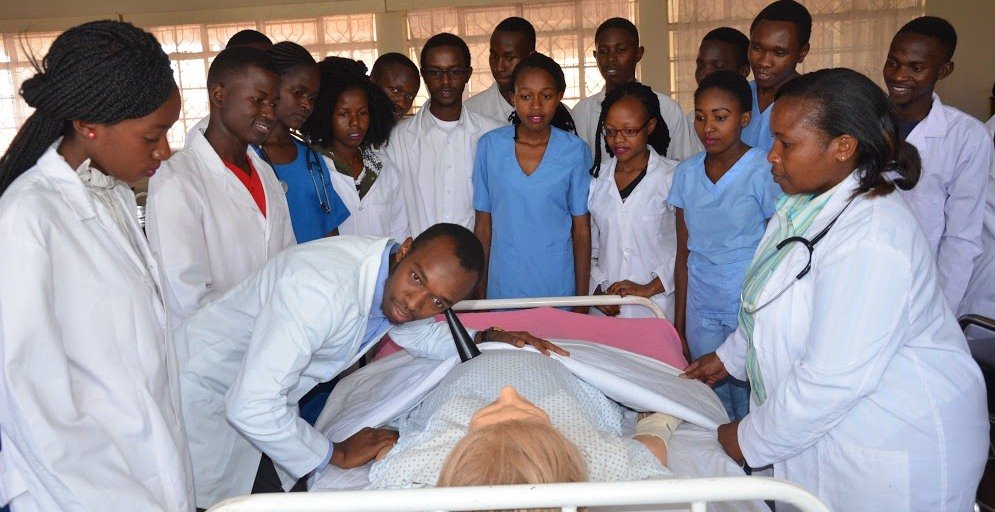
The Golden Lamp Leadership Initiative Africa (GLLIA) Undergraduate Nursing Research Summit & Awards recently honoured the groundbreaking research of final-year nursing students from across Nigeria. Held at LTV Combo Hall in Ikeja, Lagos, the event was themed “From Basics to Cutting Edge: Advancing Nursing Through Research.” It gathered nursing students from universities in the Southwest and Southeast for a day of keynote sessions, research presentations, and mentorship designed to promote leadership and innovation in healthcare. Led by GLLIA CEO Oluyemisi Otitoloju, the summit brought together academic and healthcare professionals to celebrate research addressing critical health challenges across Africa. Distinguished speakers, including Professor Prisca Adejumo and Professor Omolola Irinoye, Vice Chancellor of Achievers University, discussed global health trends and cancer prevention. Research projects were evaluated by Professor Adekemi Olowokere of Obafemi Awolowo University and Dr Rafiat Anokwuru of Babcock University, ensuring high academic standards. The event attracted notable guests from Lagos State’s health sector, including the Director of Nursing Services, Olusola Aketi, and representatives of the Special Adviser to the Governor on Health, Dr Kemi Ogunyemi, underscoring the importance of research-driven healthcare policy. Top honours went to students from Redeemer’s University and Obafemi Awolowo University (OAU). Redeemer’s University student Victor Saliu emerged as the overall winner, receiving ₦2 million for his project, while his classmate Uba Paul took third place with ₦250,000. The university’s Department of Nursing Science also received ₦1 million for its outstanding contribution. OAU students claimed second place, highlighting the institution’s strong research culture. In his remarks, Victor Saliu said, “This is for every nurse who dreams of making a difference. Research helps us touch lives in new and powerful ways.” His colleague, Uba Paul, added, “Our mentors believed in us, and that belief pushed us beyond limits.” The 2025 GLLIA Summit brought together participants from various universities, fostering collaboration, mentorship, and innovation. It reinforced the vital role of nursing research in transforming healthcare across Africa and celebrated the emergence of a new generation of nurse leaders dedicated to impact and excellence.

Court-gavel-1-750x422-1.webp

3min4570
Justice Alexander Owoeye of the Federal High Court in Lagos has ordered the permanent forfeiture of a four-bedroom duplex with two sitting rooms and boys’ quarters in Lekki to the Federal Government, after determining that the property was used for drug trafficking operations. The property, located at Block 11, House 2, Mobolaji Johnson Estate, Lekki Phase 1, was linked to a suspected drug trafficker based in Canada and served as the syndicate’s operational hub for smuggling and distributing Canadian Loud — a potent strain of cannabis — into Nigeria. Counsel to the National Drug Law Enforcement Agency (NDLEA), Buhari Abdulahi, informed the court that an interim forfeiture order had earlier been issued on March 20, 2024. In compliance with court directives, public notices were published in national newspapers to allow any interested parties to contest the forfeiture, but none came forward. Abdulahi urged the court to issue a final forfeiture order under the provisions of the NDLEA Act, noting that the property was purchased and maintained with proceeds from drug trafficking. After reviewing the evidence and submissions, Justice Owoeye granted the application, ruling that the property and all items within it were used in committing drug-related offences. According to an affidavit filed by NDLEA Deputy Commander of Narcotics, Nasir Garba Bungudu, the agency received intelligence in 2023 about a syndicate smuggling high-grade cannabis from Canada into Nigeria. Surveillance traced their base to the Lekki property, which was used as a warehouse and coordination centre. During a raid on February 5, 2023, NDLEA operatives seized 1.088 kilograms of Canadian Loud and arrested five suspects: Tijani Hakeem, Eric Makuo, Adaobi Fortune, Ahmed Jubril, and Ekwejunor Oritsematosan. Four of them were later convicted, while one suspect remains on trial along with a company, Femaffix Global Services Limited. Investigations revealed that the ringleader, identified as Adebanjo, purchased the property to accommodate his associates and manage the syndicate’s operations, using a company to launder the illicit proceeds. Justice Owoeye concluded that all due legal procedures had been followed and ordered the property’s final forfeiture to the Federal Government as proceeds of crime.

Police-3-e1761573426871.webp

2min2910
The Anambra State Police Command has rescued a newborn baby and arrested four women over alleged child trafficking in Ifite-Awkuzu, Oyi Local Government Area. Police spokesperson SP Tochukwu Ikenga disclosed this in a statement issued in Awka on Tuesday, noting that operatives of the Rapid Response Squad, Awkuzu, acted on credible intelligence to carry out the operation in the early hours of the day. According to Ikenga, the officers raided a facility identified as Mama Maternity in Ifite-Awkuzu, where they rescued a one-week-old baby girl and apprehended four female suspects linked to a case of conspiracy and child trafficking. Those arrested were identified as 62-year-old Elizabeth Okafor, 48-year-old Esther Nweke, 45-year-old Ngozi Maanfa, and 25-year-old Peace Elijah Moses. Preliminary investigations revealed that the suspects conspired to purchase the newborn for ₦1.7 million. An advance payment of ₦350,000 was allegedly made to the baby’s biological mother, identified as Peace Elijah Moses, who is among the arrested suspects. Ikenga confirmed that the rescued baby is now in protective custody, while the Commissioner of Police, CP Ikioye Orutugu, has directed that the case be transferred to the State Criminal Investigation Department’s Gender Unit in Awka for further investigation and prosecution. He reaffirmed the Command’s firm stance on child protection and its ongoing efforts to combat human trafficking across the state. This development follows a similar operation in July 2025, when the Command uncovered an interstate child trafficking network in Uruagu, Nnewi North LGA, leading to the arrest of one suspect and the rescue of 11 children — five boys and six girls — who were reportedly abducted from Adamawa State and sold to unsuspecting adopters for amounts ranging from ₦800,000 to ₦1.5 million.

3.avif

3min2920
Gaza’s civil defence agency reported on Wednesday that overnight Israeli airstrikes killed at least 50 people across the Palestinian territory, following a series of attacks launched in response to the death of an Israeli soldier. Agency spokesman Mahmud Bassal condemned the strikes as “a clear and flagrant violation of the ceasefire agreement,” while U.S. President Donald Trump maintained during his visit to Asia that “nothing” would endanger the truce he helped facilitate. According to the agency, 22 children were among the victims, along with several women and elderly people. Around 200 others were injured in the bombardments, which reportedly struck tents sheltering displaced families, residential homes, and areas near hospitals. Israeli forces began their strikes on Tuesday after accusing Hamas of violating the ceasefire by attacking its troops in Gaza. The Israeli military confirmed that a 37-year-old soldier, Yona Efraim Feldbaum, was killed in Rafah when his vehicle came under fire. Hamas, however, denied involvement in the incident and reaffirmed its commitment to the U.S.-brokered truce. Residents described renewed fear and chaos as explosions hit parts of the Strip. “We had just started to breathe again, trying to rebuild our lives, when the bombardment came back,” said Khadija al-Husni, a displaced woman in Al-Shati camp. Hospitals across Gaza, including Al-Shifa and Al-Awda, reported receiving numerous casualties, including children. Medical officials and humanitarian workers have warned that the escalation threatens fragile progress made under the ceasefire agreement. Meanwhile, tensions over the return of Israeli hostage remains continue to strain the truce, with both sides trading accusations over delays and alleged violations of the agreement. The conflict, which began after the Hamas-led attack on Israel in October 2023, has so far claimed more than 68,000 lives in Gaza, according to local health authorities. Despite the ceasefire, deaths continue to rise as rescue teams recover bodies from beneath the rubble.

12-1.webp

2min2990
United Bank for Africa (UBA) Plc has announced the next edition of its quarterly UBA Business Series, themed “Content that Converts: Building Influence and Driving Growth Through Strategic Marketing.” The event, scheduled for Thursday, November 6, 2025, at the UBA Head Office in Marina, Lagos, marks the final edition of the series for the year. It reflects the bank’s ongoing commitment to empowering entrepreneurs and small business owners with practical knowledge to excel in today’s highly competitive digital economy. According to a statement from the bank, the session will feature top industry experts and digital marketing professionals who will share actionable insights on how businesses can craft engaging content that fosters trust, boosts visibility, and drives measurable growth. Notable panelists include digital creator and actor Elozonam Ogbolu; digital health educator Chinonso Egemba (popularly known as Aproko Doctor); Kenyan actress and media entrepreneur Catherine Kamau; content creator Nasiru Lawal (Nasboi); and digital influencer Enioluwa Adeoluwa — all of whom will discuss their experiences in building thriving online communities across Africa. Speaking ahead of the event, UBA’s Group Head of Retail and Digital Banking, Shamsideen Fashola, stated, “Content is the new oil, and at UBA, we recognise the content creation and digital influence sector as a key driver of Nigeria’s modern economy.” UBA’s Group Head of Marketing and Corporate Communications, Alero Ladipo, added that effective content creation requires more than just producing videos — it demands strategic planning and adherence to core marketing principles, which the session aims to highlight.

110.jpg

2min4600
First Bank of Nigeria Limited (FirstBank), a pioneer in West African banking and a leading provider of financial inclusion services, has announced the successful redemption of its $350 million Eurobond, which matured on October 27, 2025. The Eurobond, issued in October 2020 as Senior Notes at 8.625% with semi-annual coupon payments, was 70% oversubscribed at issuance — a testament to the bank’s strong market credibility and investor confidence. Proceeds from the bond were utilised to support various customer projects, including those of significant national and economic impact. The successful redemption underscores FirstBank’s prudent liability management strategy, solid foreign currency liquidity, and strong institutional franchise. It also reinforces the bank’s standing as a trusted issuer in the global financial market. With this latest redemption, FirstBank has now fully redeemed a total of $1.275 billion across four maturities since its first Eurobond issuance in 2007. Group Chief Executive Officer, Olusegun Alebiosu, described the milestone as a reflection of the bank’s financial strength and commitment to excellence. “This redemption, fully funded from our balance sheet, highlights FirstBank’s strong asset and liability management, franchise strength, and the confidence investors continue to place in us,” he stated. Alebiosu reaffirmed the bank’s 131-year legacy of leadership in corporate banking across Nigeria and Sub-Saharan Africa. He also reiterated FirstBank’s commitment to delivering exceptional transaction banking, treasury, and cash management solutions through innovative, technology-driven services designed to enhance customer experience. Recently, Fitch Ratings affirmed FirstBank’s Long-Term Issuer Default Ratings (IDRs) at ‘B’ and upgraded its National Long-Term Ratings to ‘A+(nga)’ from ‘A(nga)’, both with stable outlooks — further validating the bank’s financial resilience and credit quality. In recognition of its leadership in corporate and transaction banking, FirstBank was honoured as the Best Bank for Corporates in 2024 by Euromoney, Global Finance, and World Economic Magazine

9.jpg

3min2270
The Director-General of the Securities and Exchange Commission (SEC), Dr. Emomotimi Agama, has hailed Nigeria’s removal from the Financial Action Task Force (FATF) grey list, describing it as a testament to the nation’s renewed commitment to transparency, sound governance, and global financial standards. The FATF, which monitors global compliance with anti-money laundering and counter-terrorism financing standards, maintains “grey” and “black” lists for countries with identified deficiencies. Nations on the grey list are those working with the organisation to improve their frameworks. On Friday, FATF officially announced Nigeria’s delisting after confirming that the country had addressed the identified strategic gaps in its anti-money laundering and counter-terrorism financing systems. Speaking during an interview on Channels Television, Dr. Agama said the move would greatly strengthen investor confidence and attract increased foreign investment inflows. “This is a significant milestone for Nigeria’s financial system and capital market,” he said. “Being removed from the FATF grey list sends a strong message to global investors and trading partners that Nigeria has made remarkable progress in fortifying its regulatory and institutional structures. It boosts confidence, credibility, and trust in our markets.” He further described the delisting as “a welcome call to new investments,” noting that it will enhance productivity, deepen market participation, and foster sustainable economic growth. The FATF’s decision follows Nigeria’s successful implementation of a 19-point action plan over two years, demonstrating tangible progress in strengthening its Anti-Money Laundering and Combating the Financing of Terrorism (AML/CFT) framework. Dr. Agama commended the Director and Chief Executive Officer of the Nigerian Financial Intelligence Unit (NFIU), Mrs. Hafsat Abubakar Bakari, and her team for their outstanding efforts in executing the reforms, adding that the achievement marks a new chapter in Nigeria’s drive toward economic integrity and international credibility.