Author: Lifestyle & Wellness Desk

13-4.jpeg

3min2980
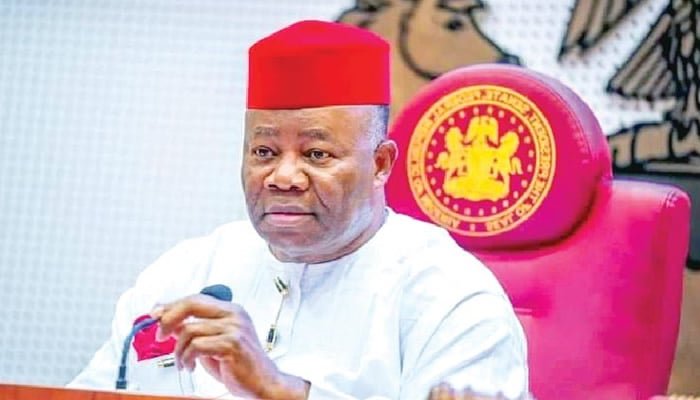
Senate President Godswill Akpabio has declared that the National Assembly will not be undermined by the disruptive actions of any lawmaker, emphasizing the need for discipline and adherence to legislative rules to protect Nigeria’s democracy. In a statement released Saturday by his media aide, Eseme Eyiboh, titled “The Trials and Triumphs of a Resilient Nigeria’s 10th Senate,” Akpabio stressed that enforcing Senate rules is not about stifling dissent, but about maintaining order and institutional integrity. “The Senate cannot and will not be held hostage by the disruptive instincts of any of its members,” Akpabio said. “Democracy thrives only when its institutions are respected and its rules upheld.” Though he did not mention anyone by name, his comments come as tensions simmer around Senator Natasha Akpoti-Uduaghan (Kogi Central), who recently returned from a contested six-month suspension. Akpabio highlighted that parliamentary discipline is a cornerstone of every mature democracy, noting that legislative chambers in the UK, Canada, and Australia operate under similar principles. “The authority of the Speaker in the UK’s House of Commons, for example, is absolute — no member can defy it without facing consequences,” he added. He rejected the notion that Senate rules are outdated or merely symbolic, insisting they are essential tools for maintaining fairness and order. “Our Standing Orders are not ceremonial relics — they are vital to the consistency and sanctity of our legislative process.” The Senate President defended the institution’s right to sanction members who violate procedure, citing international examples where lawmakers are suspended or expelled to preserve the dignity of parliament. “In respected democracies, disciplinary action is routine when a member undermines parliamentary order. Nigeria’s Senate is no different and must uphold similar standards,” Akpabio said. He described the 10th Senate as a “chamber of resilience and balance,” committed to demonstrating that true democracy allows freedom within the framework of order. “When we say the Senate won’t be held hostage, we affirm that collective responsibility must outweigh individual grandstanding,” he said. “Strong legislatures don’t silence dissent they ensure dissent operates within the bounds of the rules.” Akpabio concluded by stating that his leadership prioritizes stability and inclusion, especially at a time of growing populism and public distrust. “This isn’t about seeking applause,” he said. “It’s about protecting the Senate’s moral authority. When rules are properly enforced, they become a shield not a weapon.” His remarks come amid broader discussions on legislative discipline and the boundaries of free expression within Nigeria’s parliamentary system.

abcdefgh.jpeg

2min3390
The Nigerian Navy, operating under the Forward Operating Base (FOB) Escravos, has shut down six illegal refining sites in the Niger Delta creeks as part of its ongoing efforts to curb crude oil theft and strengthen national oil production. During the operation, naval personnel also recovered approximately 11,200 litres of stolen crude oil, discovered in 28 dugout pits and six polythene sacks, alongside a pumping machine used for the illicit activity. Speaking to journalists in Warri on Friday, the Commanding Officer of FOB Escravos, Navy Captain Ikenna Okoloagu, said the success was achieved through credible intelligence under Operation Delta Sanity II. He noted that the operation reflects the Nigerian Navy’s strategic directive, led by Vice Admiral Emmanuel Ikechukwu Ogalla, which focuses on maintaining pressure on oil thieves, pipeline vandals, and other economic saboteurs. Providing details, Okoloagu said: “Between October 2 and 6, 2025, our operatives carried out coordinated operations that led to the deactivation of six illegal refining sites at Obodo Omadino in Warri South-West Local Government Area of Delta State.” He explained that the sites dismantled on October 2 contained 3,750 litres of stolen crude oil, while those taken down on October 4 and 6 yielded an additional 7,450 litres, bringing the total to 11,200 litres. Okoloagu reaffirmed the base’s commitment to safeguarding national oil assets, stressing that the Navy will continue to sustain the fight against crude oil theft and illegal refining activities across the Niger Delta. He added that the operations were part of the Navy’s wider mission to support the Federal Government’s drive to boost crude oil production and eliminate economic sabotage in the region.

a-bcd.jpg

3min3510
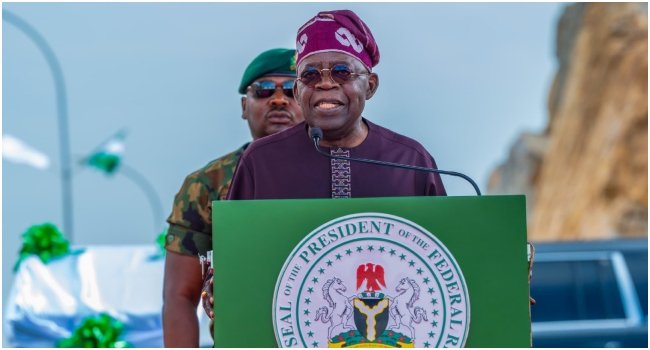
The Council of State has approved the exercise of the presidential prerogative of mercy for 175 individuals across various categories. The decision followed a presentation by the Attorney-General of the Federation and Minister of Justice, Lateef Fagbemi (SAN), who relayed President Bola Tinubu’s recommendations based on the report of the Advisory Committee on the Prerogative of Mercy. The approval was granted during Thursday’s Council of State meeting held at the State House, Abuja. Although the full list of beneficiaries has not yet been released, it was learned that the late nationalist Herbert Macaulay and former Federal Capital Territory Minister Maj. Gen. Mamman Vatsa (retd.) were among those granted presidential pardon. Members of the Ogoni Nine and Ogoni Four were also listed among the recipients. Macaulay, widely regarded as the father of Nigerian nationalism, was twice convicted under British colonial rule. In 1913, he was sentenced for alleged misappropriation of estate funds, and in 1928, he was jailed for sedition following publications in his Lagos Daily News during the Eleko of Lagos agitation. Both convictions have long been viewed as politically motivated. Maj. Gen. Vatsa, a poet, soldier, and member of the Supreme Military Council, served as Minister of the Federal Capital Territory under the Babangida administration. He was executed by firing squad on March 5, 1986, after being convicted by a secret military tribunal for alleged involvement in a coup attempt against then Head of State, Gen. Ibrahim Babangida, his longtime friend. The case has remained one of Nigeria’s most controversial military trials, with frequent calls for a posthumous pardon. Out of the 175 beneficiaries, 82 inmates received full pardons, 65 had their sentences reduced, and seven death sentences were commuted to life imprisonment. Briefing journalists after the meeting, Kaduna State Governor Uba Sani said the move reflected the President’s dedication to justice reform and humane correctional policies. “Eighty-two inmates were granted full pardon, sixty-five had their sentences reduced, while seven death sentences were commuted to life imprisonment,” Sani stated. “The decision underscores the President’s commitment to justice and correctional reform.” The Council of State meeting, chaired by President Tinubu, also ratified several appointments, including Dr. Aminu Yusuf from Niger State as Chairman of the National Population Commission, and Tonge Bularafa as Federal Commissioner representing Yobe State on the commission. Both appointments received unanimous endorsement.

a-bd.png

4min5270
Asian equities ended the week on a cautious note Friday, as optimism over new artificial intelligence investments and a Middle East ceasefire was offset by fears of a US government shutdown and growing talk of an overheated tech sector. While gold, bitcoin, and some equity markets reached record highs during the week, concerns have mounted that valuations in parts of the technology industry have climbed too fast, fueling warnings of a possible correction. Investor enthusiasm received a fresh boost after reports that OpenAI, the maker of ChatGPT, had signed multibillion-dollar chip supply deals with South Korean tech giants Samsung and SK hynix, alongside US semiconductor firm AMD. The announcement added to the wave of massive investments pouring into AI, sending tech stocks soaring and pushing US chip leader Nvidia past a $4 trillion market capitalisation. However, analysts warned that momentum may be cooling. “Some areas of the market appear overheated,” noted Keith Lerner of Truist Advisory Services, as traders turned cautious heading into the weekend. Across Asia, Hong Kong, Tokyo, and Shanghai led losses, while markets in Sydney, Singapore, Wellington, Bangkok, and Manila also declined. London slipped slightly, though Paris advanced, and Frankfurt posted gains. Seoul, meanwhile, rose more than one per cent, driven by a surge of over six per cent in Samsung Electronics shares, buoyed by optimism about its AI chip and memory business. Mumbai and Jakarta also ended the day higher. In currency markets, the Japanese yen strengthened against the dollar after Japan’s junior coalition partner announced its exit from the ruling alliance with the Liberal Democratic Party (LDP). The move came just days after the LDP elected stimulus-leaning Sanae Takaichi as its new leader, positioning her to become prime minister. Reports indicated that Komeito leader Tetsuo Saito withdrew support over dissatisfaction with Takaichi’s handling of a recent slush fund scandal — a development that could complicate the LDP’s efforts to pass spending legislation. Tokyo’s Nikkei 225 index, which had surged earlier in the week on stimulus hopes, slipped one per cent by Friday’s close. Adding to investor unease, the standoff in Washington deepened as the US government shutdown stretched into its third week, with lawmakers showing little sign of compromise. Senate Majority Leader John Thune said a weekend session was unlikely, while a scheduled vote on the House-passed funding bill was expected to fail. Former President Donald Trump reiterated his criticism of Democrats, accusing them of prolonging the shutdown and threatening cuts to several government programmes. Meanwhile, Democrats were reportedly preparing for a protracted budget impasse that could extend for weeks if no agreement is reached on health care subsidy extensions due by year-end. Market snapshot (as of 08:10 GMT): Tokyo (Nikkei 225): ↓ 1.0% at 48,088.80 Hong Kong (Hang Seng): ↓ 1.7% at 26,290.32 Shanghai Composite: ↓ 0.9% at 3,897.03 London (FTSE 100): ↓ 0.1% at 9,497.77 Euro/Dollar: ↑ $1.1577 Pound/Dollar: ↑ $1.3301 Dollar/Yen: ↓ 152.87 Brent Crude: ↓ 0.6% at $64.84 per barrel WTI Crude: ↓ 0.4% at $61.25 per barrel Dow Jones: ↓ 0.5% at 46,358.42

a-bc.jpg

4min3260
The European Union has demanded that major digital platforms, including Snapchat and YouTube, provide detailed explanations of how they protect minors from online harm, as the bloc considers introducing continent-wide restrictions on social media access for children. The EU already enforces strict digital regulations, including provisions on what minors can view online, but officials say growing concerns over children’s exposure to harmful content call for stronger action. Following Australia’s decision to ban social media use for those under 16, the European Commission is now assessing whether a similar approach could work across the 27-member bloc. Countries such as France and Spain have also urged for limits on minors’ access to social platforms. Under the Digital Services Act (DSA) — the EU’s main tool for ensuring online platforms curb illegal content and enhance child safety — the Commission has launched new “investigative actions.” It has requested information from Snapchat on its efforts to restrict access for users under 13, and from Apple’s App Store and Google Play on measures to prevent children from downloading harmful or illegal applications. Specifically, the EU is seeking clarification on how Apple and Google enforce app age ratings and block access to “nudify” tools that generate non-consensual sexualised content. “Privacy, security, and safety must be guaranteed — and that is not always the case,” said EU technology chief Henna Virkkunen, ahead of a meeting of EU ministers in Denmark. The Commission noted that while these requests for information do not imply any breach of the law, they may lead to further investigations and potential sanctions if violations are found. In Snapchat’s case, Brussels has also sought details on how the platform prevents the sale of drugs and vaping products to minors — an issue raised by Danish Digital Minister Caroline Stage Olsen. Meanwhile, YouTube has been asked to explain how its recommendation algorithms manage potentially harmful content aimed at young audiences. The new requests form part of a broader EU effort to enforce online safety standards. Similar probes are ongoing into Meta’s Facebook and Instagram, as well as TikTok, amid growing concern about the addictive design of social media platforms. In parallel, EU telecommunications ministers are discussing continent-wide measures to improve child protection online, including age verification systems and a potential digital age of majority for social media access. EU Commission President Ursula von der Leyen has publicly supported the idea and plans to establish an expert panel to explore feasible approaches at the European level. Denmark, which currently holds the rotating EU presidency, has been leading the charge for stricter online protection measures. Danish Prime Minister Mette Frederiksen announced earlier this week that Denmark intends to ban social media use for children under 15, while France already requires parental consent for users below that age.

Donald-Trump-2.webp

2min4340
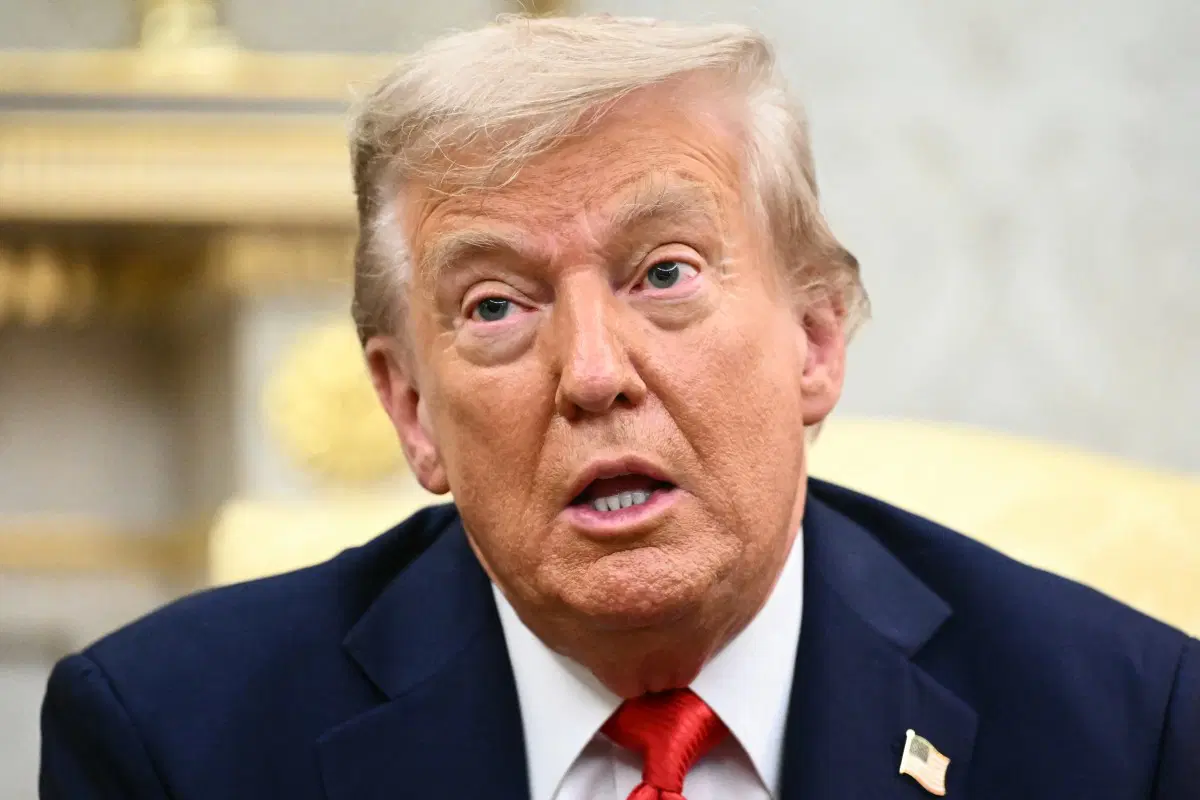
Israel’s President, Isaac Herzog, has commended US President Donald Trump for his role in facilitating a peace agreement between Israel and Hamas, describing him as deserving of the Nobel Peace Prize. In a post shared on X on Thursday, Herzog said Trump’s intervention created “a chance to mend, to heal, and to open a new horizon of hope for our region,” adding that “there is no doubt he deserves the Nobel Peace Prize for this.” Trump had earlier announced that indirect talks held in Egypt resulted in a breakthrough. The initial phase of the peace plan includes the release of all hostages held in Gaza and the withdrawal of Israeli forces to an agreed boundary. Hamas has confirmed its commitment to the deal. During his recent address at the United Nations General Assembly in New York, Trump stated that his administration had already ended several conflicts since taking office earlier this year and argued that he should be considered for the Nobel Peace Prize. The Nobel Committee is expected to reveal this year’s winner on Friday.

ay7.jpg

3min2890
The Academic Staff Union of Universities has criticised the Federal Government’s last-minute plea for it to halt its planned warning strike, describing the move as “too late to make a difference.” ASUU President, Prof. Chris Piwuna, made the remark on Thursday during an interview on Channels Television’s The Morning Brief, accusing the government of neglecting the union’s demands until the eleventh hour. “The challenge we have with this administration and the Ministry of Education is their slow response to our issues,” Piwuna said. He explained that after a previous meeting held in Sokoto, the union granted the government three weeks to address its grievances but received no feedback during that period. “We met in Sokoto when we were about to embark on strike action. They requested three weeks, and we agreed. But we didn’t hear from them until the time elapsed — not even a courtesy message to say, ‘Gentlemen, we are running out of time.’ Nothing happened until we threatened to act,” he said. Piwuna added that the government’s appeal came only two working days before the planned strike. “Yesterday, they asked us not to go ahead with the strike. Yet, our 2009 agreement is still under renegotiation after eight years. Two days to a strike, they come to appeal to us — I think it’s a bit late,” he stated. He emphasised that ASUU would proceed with its two-week warning strike once its ultimatum expires on Sunday, unless the government makes tangible progress on the pending issues. “Our ultimatum ends on Sunday. If nothing substantial happens before then, we’ll commence a warning strike. We expect something concrete from the government within the next 48 hours,” Piwuna said. He noted that the union’s decision would ultimately depend on feedback from its members after reviewing any new government proposals. The Minister of Education, Dr. Tunji Alausa, had earlier stated in Abuja that the government was in the final phase of negotiations with ASUU and other university unions to address disputes over funding, welfare, and the long-standing 2009 ASUU-FGN agreement.

ay3.png

3min2450
The Independent Corrupt Practices and Other Related Offences Commission (ICPC) has secured the conviction of Mr. Garuba Duku, a retired Director of Finance and Administration with the Abuja Metropolitan Management Council under the Federal Capital Territory Administration, sentencing him to 24 years imprisonment for a ₦318 million fraud. This was contained in a statement released on Thursday by the Director of Public Enlightenment and Education of the ICPC, Mr. Demola Bakare. According to the commission, the judgment was delivered by Justice James Omotosho of the Federal High Court, Abuja, who found Duku guilty on a six-count charge bordering on corruption and money laundering in suit number FHC/ABJ/CR/608/2022. Investigations by the ICPC revealed that between 2012 and 2013, Duku fraudulently diverted ₦318,250,000 belonging to the AMMC into his personal account with Fidelity Bank Plc. The funds were reportedly received in instalments of ₦56.25 million, ₦71 million, ₦53 million, ₦54 million, ₦46 million, and ₦36.3 million, and later channelled to Bureau de Change operators for unauthorized transactions. Prosecutors told the court that Duku’s actions violated financial regulations and constituted a gross abuse of public trust. During the trial, the defendant claimed the funds were handed over to his superiors, but the court dismissed the argument for lack of evidence. In his ruling, Justice Omotosho stated that the prosecution had proven its case beyond reasonable doubt, adding that the evidence presented was credible and sufficient to establish the offences charged. Consequently, Duku was sentenced to four years imprisonment on each of the six counts or an option of fine equivalent to five times the amount involved in each count — totaling approximately ₦1.6 billion. The sentences are to run concurrently. Reacting to the judgment, Bakare described the conviction as a significant victory in the commission’s fight against corruption, emphasizing that it reaffirms the ICPC’s commitment to holding public officials accountable. “This verdict reinforces the principle that no one entrusted with public funds is above the law,” Bakare stated. “The commission will continue to pursue corruption cases with diligence to protect public resources.” The ICPC noted that it has recorded several similar convictions in recent years, including that of a former Nigeria Security and Civil Defence Corps commandant in 2024 and two former officials convicted for bribery in 2019.

Atiku-Sowore.jpg

3min5030
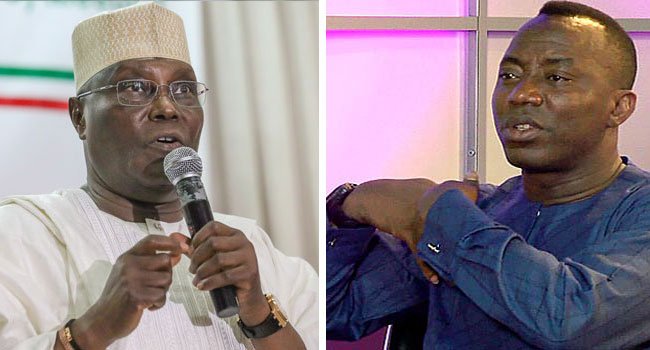
Former Vice President Atiku Abubakar has demanded the immediate release of Nnamdi Kanu, leader of the Indigenous People of Biafra, describing his continued detention as a violation of the rule of law and a blight on Nigeria’s justice system. In a statement shared on his X handle on Thursday, Atiku expressed full support for the campaign initiated by human rights activist and 2023 African Action Congress presidential candidate, Omoyele Sowore, advocating Kanu’s freedom. “The continued detention of Mazi Nnamdi Kanu remains an open sore on our nation’s conscience and a stain on our belief in the rule of law. Defying court orders that granted him bail is an abuse of power and an assault on justice,” Atiku wrote. He added, “I lend my voice in full support of the campaign led by @YeleSowore for his immediate release or due prosecution. We fail as patriots if we allow Kanu’s case to fester as another unhealed wound in our nation.” Sowore had earlier urged South-East governors, lawmakers, traditional and religious leaders to join a planned demonstration calling for Kanu’s release. He noted that he had reached out to several prominent figures, including Anambra State Governor, Prof. Chukwuma Soludo; Abia State Governor, Dr. Alex Otti; Senator Enyinnaya Abaribe; and Labour Party presidential candidate, Peter Obi, seeking their participation in the movement. According to Sowore, he also contacted Atiku through his aides, while Senator Abaribe promised to revert. He added that members of the Abia State House of Assembly were considering a visit to the Attorney General of the Federation before taking further action. “This is not the time for hesitation. If we truly believe that Mazi Nnamdi Kanu deserves freedom, then every leader of conscience must act now, not later,” Sowore stated. Kanu has remained in the custody of the Department of State Services since his arrest and extradition from Kenya in 2021. Despite multiple court orders, including an October 2022 ruling by the Court of Appeal that discharged and acquitted him, the Federal Government has yet to release him. The IPOB leader still faces charges of terrorism, treasonable felony, and incitement before the Federal High Court in Abuja, all of which he has denied.

Abba-Aliyu.png

5min3150
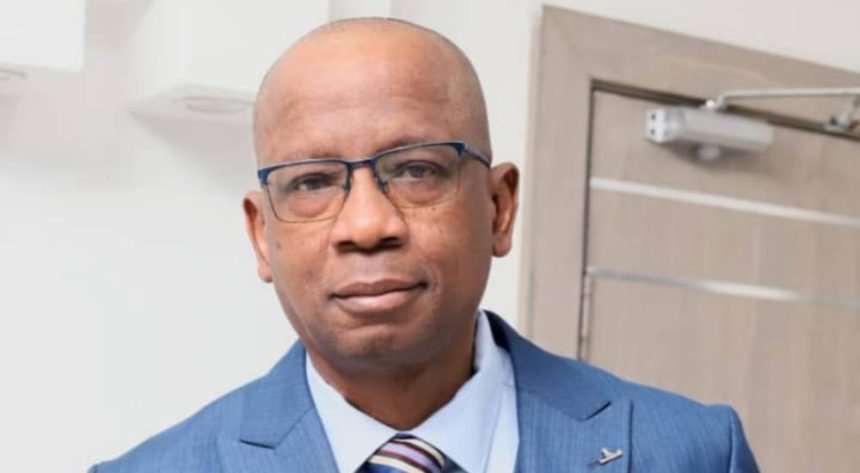
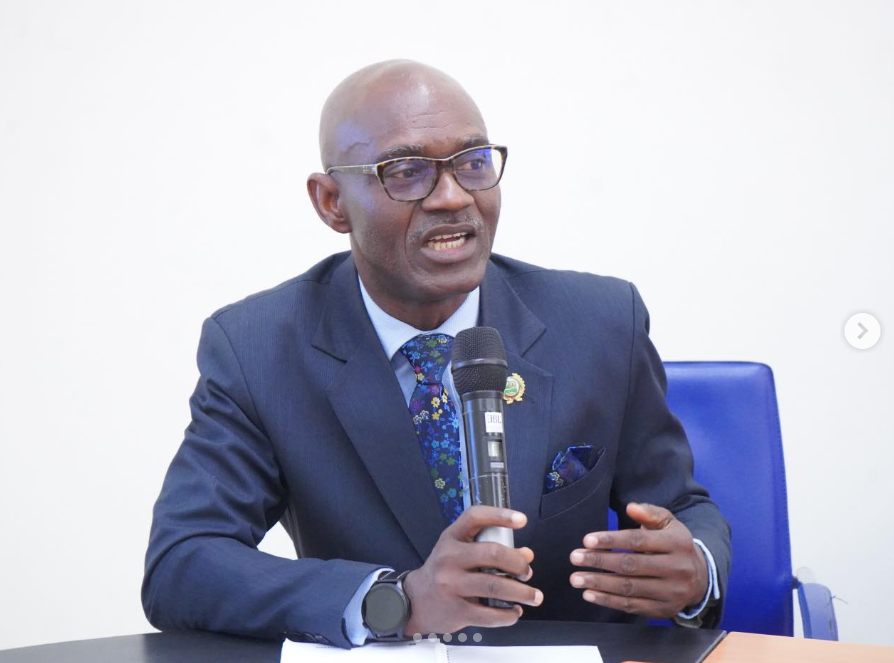
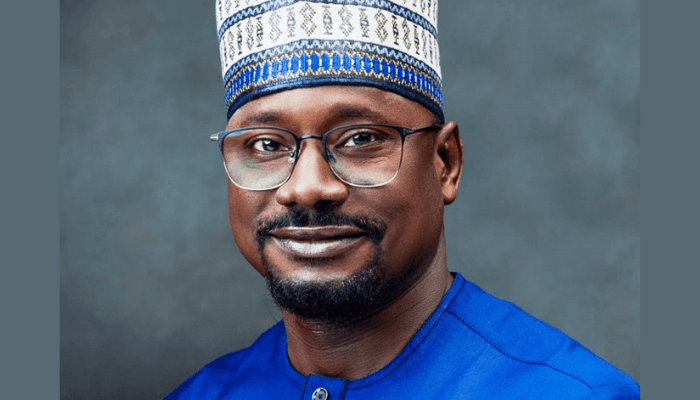
The Managing Director of the Rural Electrification Agency (REA), Abba Aliyu, has announced that the agency is implementing several initiatives to provide electricity access to at least 17.5 million Nigerians. Aliyu disclosed this on Wednesday in Abuja during activities marking the 2025 Customer Service Week, organised by the agency in collaboration with SERVICOM. He said the REA had already deployed numerous mini-grids across the country and was executing multiple programmes to expand electricity access in rural and underserved communities. “We are working on a programme to provide electricity access to 17.5 million Nigerians. It’s an ambitious goal,” he said. “Under the Rural Electrification Fund, we have deployed more than 50 mini-grids, while the Interconnected Mini-Grid Acceleration Scheme has delivered 11 mini-grids so far. These are in addition to several transformers, power lines, and solar home systems.” Aliyu added that over 10 million Nigerians have already benefited from the agency’s interventions in the last five years under the Nigeria Electrification Programme, noting that the impact will continue to grow as new projects are rolled out. He described Customer Service Week as an opportunity for reflection and performance evaluation, saying the agency’s mandate is to deliver reliable electricity to over 80 million Nigerians who currently lack access. “This week allows us to ask ourselves critical questions: Are we providing quality service? Are we efficient and affordable? We take pride in the progress we’ve made, which aligns with President Bola Tinubu’s vision of expanding electricity access nationwide,” he said. Aliyu cited a recent success in Balanga, Gombe State, where a rural community without power for more than three decades is now being electrified through a 620-kilowatt project implemented in partnership with the United Nations Industrial Development Organisation. REA’s Executive Director of Technical Services, Umar Umar, highlighted the agency’s growing achievements, noting that in the past year alone, it deployed more mini-grids than ever before. “For the first time, we are delivering 40 megawatts of mini-grid power within a single budget year. We are also installing solar home systems, streetlights, and electric vehicle charging stations — all of which are improving the lives of millions of Nigerians,” he said. The Executive Director of the Rural Electrification Fund, Doris Ubo, said the agency executed about 50 mini-grid projects between 2016 and 2022, expanding to more than 124 mini-grids nationwide. “We have developed both interconnected and isolated mini-grids and solar home systems to reach last-mile communities. Recently, we launched a project covering 3,700 communities, expected to deliver 370 megawatts of clean energy and impact over 40 million people,” Ubo said. REA’s Executive Director of Corporate Services, Ayo Adegboyega, reaffirmed that the agency’s mission is to close the energy access gap by reaching unserved and underserved populations. “Our goal is to ensure that no community is left in darkness. We continue to extend the grid and deploy renewable energy solutions nationwide,” he said. Adegboyega also spoke on the agency’s Energising Education Programme, which provides dedicated power supply to universities and polytechnics. “We have delivered power projects at the University of Benin, University of Lagos, University of Ibadan, and the University of Calabar, and we’re extending the initiative to Obafemi Awolowo University and several polytechnics,” he said. The Acting Director of Monitoring and Evaluation, and REA SERVICOM Focal Officer, Eworo Echeng, commended the agency’s staff for their dedication to improving the quality of life in rural areas. “In celebrating Customer Service Week, we acknowledge the individuals and teams delivering exceptional results. Beyond electricity, our work is about transforming lives and empowering communities through sustainable energy,” he said.