Author: Lifestyle & Wellness Desk

a-13.jpg

2min4810
Lagos, Rivers, and the Federal Capital Territory (FCT) emerged as the top-performing states in internally generated revenue (IGR) for 2024, as total IGR across the 36 states and the FCT rose by 49.7 percent to N3.63 trillion — up from N2.43 trillion in 2023. According to the latest report from the National Bureau of Statistics (NBS), Lagos recorded the highest IGR with N1.26 trillion, followed by Rivers with N317.30 billion, and the FCT with N282.36 billion. At the lower end of the ranking, Yobe, Ebonyi, and Kebbi states posted the least revenues, generating N11.08 billion, N13.18 billion, and N16.97 billion, respectively. The NBS report classified revenues into two major categories — tax revenue and income from Ministries, Departments, and Agencies (MDAs). Tax components included Pay-As-You-Earn (PAYE), direct assessment, road taxes, stamp duties, capital gains tax, withholding tax, other taxes, and local government revenues. PAYE accounted for the largest share of tax revenue during the period, contributing N1.86 trillion, or 69.84 percent of total taxes collected. In contrast, capital gains tax contributed the least, at N10.57 billion. Overall, tax revenue represented about 73.35 percent of the nation’s total IGR in 2024.

a-18.jpg

2min3550
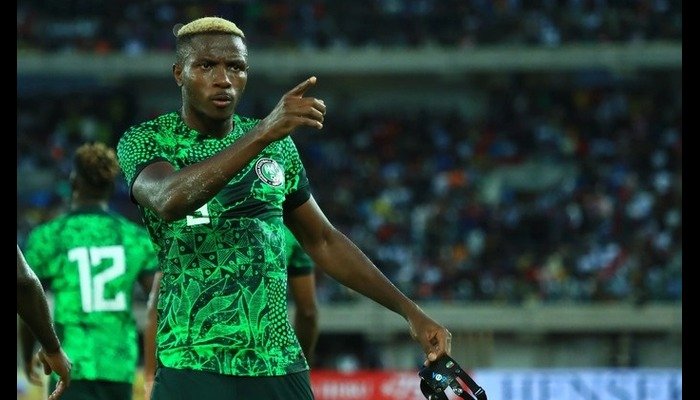
At least 17 Super Eagles players, including key forwards Victor Osimhen and Ademola Lookman, have arrived in Polokwane, South Africa, as Nigeria steps up preparations for Friday’s decisive 2026 FIFA World Cup qualifier against Lesotho. The players reported to camp on Tuesday, a day after the arrival of the coaching and backroom staff, officially marking the start of the team’s training programme. Those already in camp include William Troost-Ekong, Wilfred Ndidi, Bruno Onyemaechi, Terem Moffi, Moses Simon, Calvin Bassey, Alex Iwobi, Samuel Chukwueze, Frank Onyeka, and Tolu Arokodare. They are joined by returnee defender Semi Ajayi and goalkeepers Stanley Nwabali, Adebayo Adeleye, and Amas Obasogie, all of whom have linked up with the technical crew ahead of full team training sessions. Nigeria currently sit third in Group C of the CAF World Cup qualifying series, with 11 points from eight matches. The Super Eagles must win their remaining two games and rely on favourable outcomes from South Africa and Benin Republic to keep their qualification chances alive. The three-time African champions will take on Lesotho on Friday in Polokwane in what is widely seen as a must-win encounter.

a-16.png

3min5110
Nigeria’s leading labour union has called on the Federal Government to increase funding for education and improve the welfare of teachers, warning that continued neglect of the sector poses a grave risk to the nation’s future. President of the Nigeria Labour Congress (NLC), Joe Ajaero, made the appeal during the 2025 World Teachers’ Day celebration in Abuja. He lamented that despite their vital role in shaping society, teachers remain among the most underpaid and undervalued professionals. “The paradox is glaring: while society praises teachers, they remain the most neglected and deprived profession. They are celebrated in words but abandoned in reality,” Ajaero stated. He urged the government to meet the United Nations Educational, Scientific and Cultural Organisation (UNESCO) benchmark, which recommends allocating at least six percent of a nation’s Gross Domestic Product (GDP) and 20 percent of public spending to education. Nigeria’s current allocation, he said, falls far short of this standard, worsening the shortage of qualified teachers and inflating the student–teacher ratio. Ajaero also condemned the poor treatment of teachers in private schools, many of whom, he said, are denied fair wages, basic rights, and social protection. He called on the Ministers of Labour and Education to enforce teachers’ rights to unionize in accordance with Nigeria’s Constitution and International Labour Organisation (ILO) Conventions 87 and 98. He warned that failure to address poor working conditions could deepen the ongoing brain drain in the education sector, with teachers leaving for better opportunities abroad or in other industries. “You cannot give what you do not have. Teachers who are not properly trained, motivated, and supported cannot deliver quality education. If this continues, the future of our children—and our nation—is at risk,” Ajaero cautioned. He further called for a national framework to retrain unqualified teachers, strengthen professional development, and reduce Nigeria’s high pupil-to-teacher ratios, which exceed global standards. World Teachers’ Day 2025 was marked under the theme, “The Teachers We Need for the Education We Want: The Global Imperative to Reverse Teacher Shortages,” a message Ajaero described as especially relevant to Nigeria’s current realities.

a-8.jpg

3min5240
The African Democratic Congress (ADC) governorship candidate for the November 8 election in Anambra State, John Nwosu, has pledged to overhaul the state’s revenue collection system and eliminate multiple taxation. Nwosu, speaking during a virtual interactive session with Anambra indigenes in the diaspora under the ASA USA platform, condemned the actions of some revenue agents, describing them as “street terrorists” who inflict hardship on citizens. He vowed to remove all revenue enforcers from the streets immediately upon assuming office. According to him, “Multiple taxation is a major problem in Anambra State, and I will end it. My administration will implement a fully digital E-government system to streamline revenue collection and remove the need for physical enforcement.” He further explained that under his proposed E-transport system, all registered operators would be exempt from any form of harassment. “No one will have the right to stop or intimidate transporters on the road. We will clear them completely from the streets,” he said. Nwosu emphasized that a technology-driven framework would not only stop harassment but also curb corruption and enhance transparency in government operations. On interstate taxation affecting transporters, he proposed a collaborative policy through the South-East Governors Forum. The plan includes introducing a computerized sticker system, similar to one used in the South-West, to prevent multiple levies across the region. “The arrangement will ensure that if a vehicle registers in Anambra, 50 percent of the tariff goes to the state, while the remaining 50 percent is shared among other participating states. Each sticker will carry security features that can be verified using a smartphone,” he explained. An ICT professional by background, Nwosu also reaffirmed his commitment to a modern governance approach and said his administration would partner with experts and consultants from the diaspora to drive transformative reforms.

a-6.png

4min2140
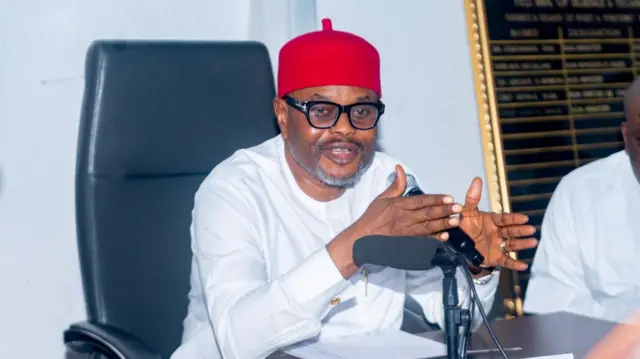
The Senior Staff Association of Nigerian Universities (SSANU) and the Non-Academic Staff Union of Educational and Associated Institutions (NASU) have announced plans to stage a one-day protest on Thursday in response to the Federal Government’s continued delay in addressing their demands. Operating under the Joint Action Committee (JAC), the unions have instructed all branches to hold emergency joint meetings on Wednesday to mobilise members for the demonstration, which will feature campus marches, placard displays, and press briefings. The decision followed a review of government actions during JAC’s meeting on October 6, after multiple expired ultimatums produced no tangible results. Among the unresolved issues are alleged unfair distribution of the N50 billion earned allowances, delays in renegotiating the 2009 FGN/NASU/SSANU agreements, unpaid two-month salary arrears, outstanding 25 and 35 percent wage increments, and non-remittance of third-party deductions for May and June 2022. JAC had earlier issued a seven-day ultimatum to the government on September 15, later extending it by another 14 days, which lapsed on October 6. In a circular dated October 6 and titled “Commencement of Protest Actions,” signed by NASU General Secretary Prince Peters Adeyemi and SSANU National President Comrade Mohammed Ibrahim, the unions ordered full participation from all members. The memo stated that despite two meetings of the Joint Consultative Committee inaugurated by the Minister of Education — held on September 19 and October 6, 2025 — there was minimal progress, as the unions’ key demands remained unresolved. Consequently, the National JAC directed all branch leaders in universities and inter-university centres across the country to convene joint congresses on Wednesday, October 8, to prepare for a nationwide protest on Thursday, October 9. The circular further emphasized that members in both federal and state-owned universities must comply strictly with the directive, underscoring the importance of unity and participation. SSANU President Mohammed Ibrahim recently accused the government of lacking sincerity and cautioned that the unions might resort to an indefinite strike if their grievances persist. “Ours will not be the mother of all strikes; it will be the grandfather of all strikes,” he declared, stressing the impact such an action would have. He also lamented the deteriorating welfare of non-academic university staff, describing them as the most financially, economically, and psychologically distressed group in the education sector. Like their academic counterparts in ASUU, SSANU and NASU have long been in dispute with the Federal Government over issues of welfare and university funding.

a-4.webp

4min8590
President Bola Tinubu has accepted the resignation of the Minister of Innovation, Science and Technology, Geoffrey Nnaji, following allegations of certificate forgery against him. According to a statement released on Tuesday by the President’s Special Adviser on Information and Strategy, Bayo Onanuga, Nnaji tendered his resignation in a letter expressing gratitude for the opportunity to serve. “He resigned today in a letter thanking the President for allowing him to serve Nigeria,” the statement read, adding that President Tinubu thanked the outgoing minister for his service and wished him success in his future endeavours. Presidency sources confirmed that the President had advised Nnaji to step down honourably rather than face dismissal, with the decision finalised on Tuesday evening at the State House in Abuja after consultations with key advisers. Nnaji’s resignation comes just days after an investigative report alleged that he submitted forged academic and NYSC certificates during his ministerial nomination in 2023. The report claimed that the University of Nigeria, Nsukka (UNN) disowned the degree certificate he presented, stating that while he was admitted in 1981, he did not complete his studies or graduate. A letter from the UNN Vice-Chancellor, Professor Simon Ortuanya, reportedly confirmed that Nnaji was not listed among the university’s graduates, contradicting an earlier 2023 letter from the school’s registrar that had affirmed his graduation. The controversy deepened after Nnaji admitted in a court affidavit that the university never issued him a certificate, though he maintained he completed his studies. In September, Nnaji filed a suit at the Federal High Court against the Minister of Education, the National Universities Commission, UNN, and others, seeking to stop the university from tampering with his academic records. The case, which came up for hearing on Monday, is still ongoing. At a press briefing in Abuja, Nnaji, represented by his spokesperson Dr. Robert Ngwu, described the allegations as politically motivated and denied any wrongdoing. He maintained that he earned a BSc in Microbiology/Biochemistry (Second Class Lower Division) from UNN in 1985 and accused the university of withholding his transcript for political reasons. “It is increasingly clear that this entire episode is not about education or integrity; it is about political desperation disguised as academic inquiry,” he said. He presented what he described as evidence of his graduation, including a 1985 university brochure listing his name, “Nnaji Uchenna G,” alongside other graduates. His spokesperson also dismissed concerns about name discrepancies, explaining that variations in Igbo names are common and interchangeable. Despite his defence, a senior government source described the matter as “an embarrassment” to the administration. Nnaji becomes the eighth minister to leave President Tinubu’s cabinet since its inauguration in August 2023. His resignation follows a series of cabinet changes and suspensions, including that of former Humanitarian Affairs Minister Betta Edu, who was suspended in early 2024 amid an investigation into alleged financial irregularities.


Ethiopia-3.jpg

3min20040
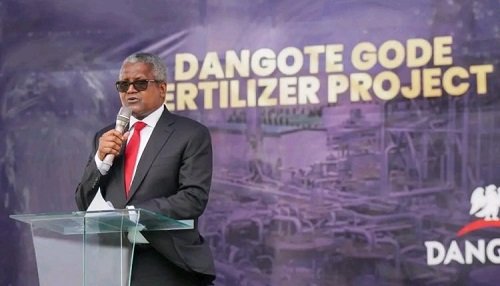
The President and Chief Executive of the Dangote Group, Aliko Dangote, has officially flagged off the construction of a $2.5bn fertiliser plant in Gode, Ethiopia. According to a statement from the company, the facility is being developed in partnership with Ethiopian Investment Holdings and will produce three million metric tonnes of urea annually, making it one of the largest fertiliser complexes in the world. Situated in Ethiopia’s South-East, the plant will utilise natural gas from the Hilal and Calub reserves to drive agricultural growth, create jobs, and strengthen food security across the Horn of Africa. At the groundbreaking ceremony, Prime Minister Abiy Ahmed described the project as a symbol of cooperation, shared responsibility, and peace, stressing that it represents Ethiopia’s determination to rise on the global stage. Dangote commended the Ethiopian government for its reforms and investments in infrastructure, including transport, energy, and the Grand Ethiopian Renaissance Dam, which he noted laid the foundation for industrial growth. He explained that the Gode plant is the first phase of a broader plan to diversify into other fertiliser types, including ammonium nitrate, ammonium sulphate, NPK, and calcium ammonium nitrate, positioning Ethiopia as a regional hub within five years. “This partnership reflects our commitment to industrialising Africa and ensuring food security across the continent,” Dangote said, adding that Africans themselves must lead the transformation of Africa. The project also highlights Dangote’s second major investment in Ethiopia after its cement plant in Mugher, with plans to double capacity through an additional $400m investment. Dangote acknowledged the support of institutions such as Afreximbank, Africa Finance Corporation, Access Bank, First Bank, and Zenith Bank in financing the project. Meanwhile, Somali Region President Mustafa Omar hailed Dangote as “the anchor investor Ethiopia has been looking for,” while the Chairman of the Nigerian Exchange Group, Dr. Umaru Kwairanga, praised Ethiopia’s economic progress and expressed optimism about stronger ties between Nigeria and Ethiopia.

Maritime-sector-1.jpg

3min1750
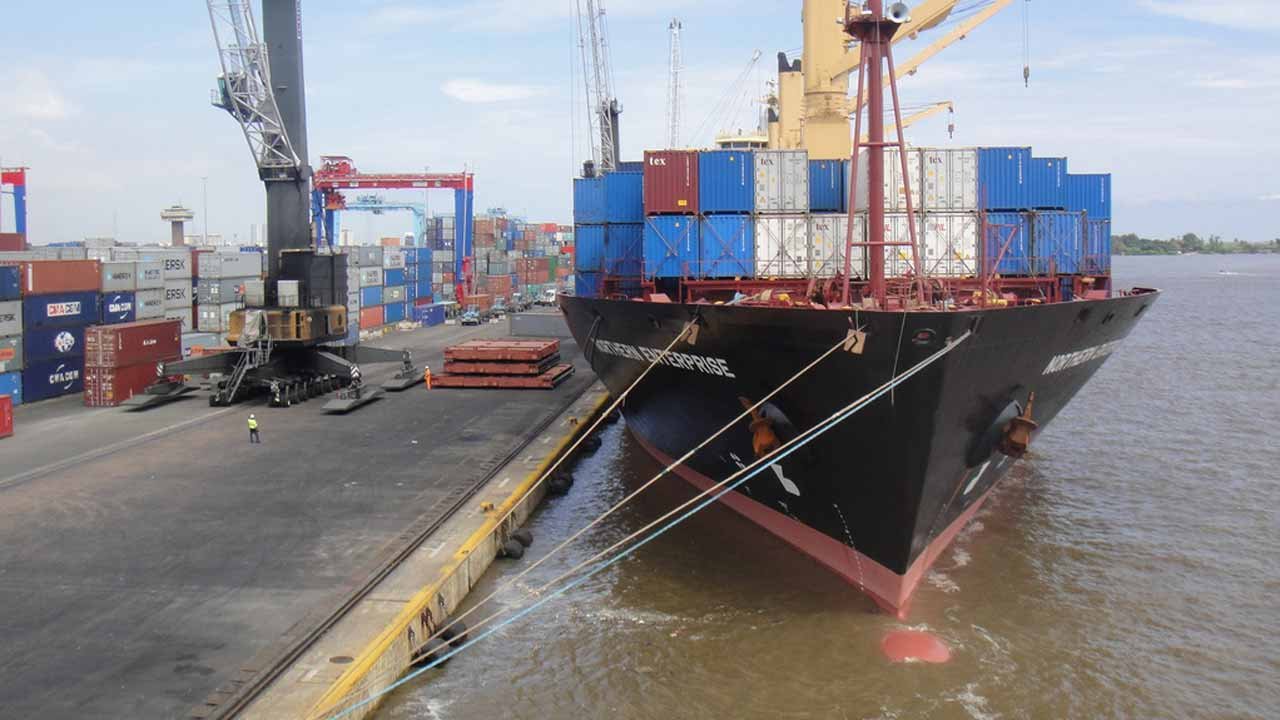
Maritime experts have expressed concern that Nigeria currently lacks both the raw materials and technical expertise required to establish a functional shipbuilding industry. President of the African Shipowners Association (Nigeria), Ladi Olubowale, said the country does not yet have the industrial base, skilled workforce, or shipyards capable of undertaking large-scale vessel construction. Despite being Africa’s most populous nation and one of its largest economies, Nigeria still struggles to build a competitive shipbuilding sector. Structural challenges such as inadequate dry docks, limited shipyard facilities, and weak heavy industries — especially steel production — have stalled progress. At present, most local facilities are restricted to ship repair and maintenance rather than full-scale construction. Olubowale explained that dependence on imported raw materials, particularly steel and aluminium, remains a key barrier. “The backbone of any shipbuilding industry is steel or aluminium. But do we have the iron ore or steel industries in Nigeria that can provide these materials? The answer is no,” he said. He added that heavy reliance on imports drives up costs and undermines competitiveness. “If you want to build a ship in Nigeria today, you’ll have to import steel. Even what we produce locally is not suitable for shipbuilding,” he noted, stressing that a strong domestic steel base is vital for the country to realise its shipbuilding ambitions. Supporting this view, Head of Research at the Sea Empowerment and Research Centre, Eugene Nweke, argued that without a functional steel industry, Nigeria’s shipyards will remain import-dependent and unable to support large-scale ship construction or repairs. Nweke also cautioned that having a national shipping operator alone does not make a country a maritime power. He emphasised the need for transparent governance, private-sector investment, and improvements in infrastructure such as rail and inland waterways to reduce dependence on road transport. He further warned that Nigeria risks falling behind in global decarbonisation efforts if environmental sustainability is not integrated into port operations.

aaaa.webp

2min5450
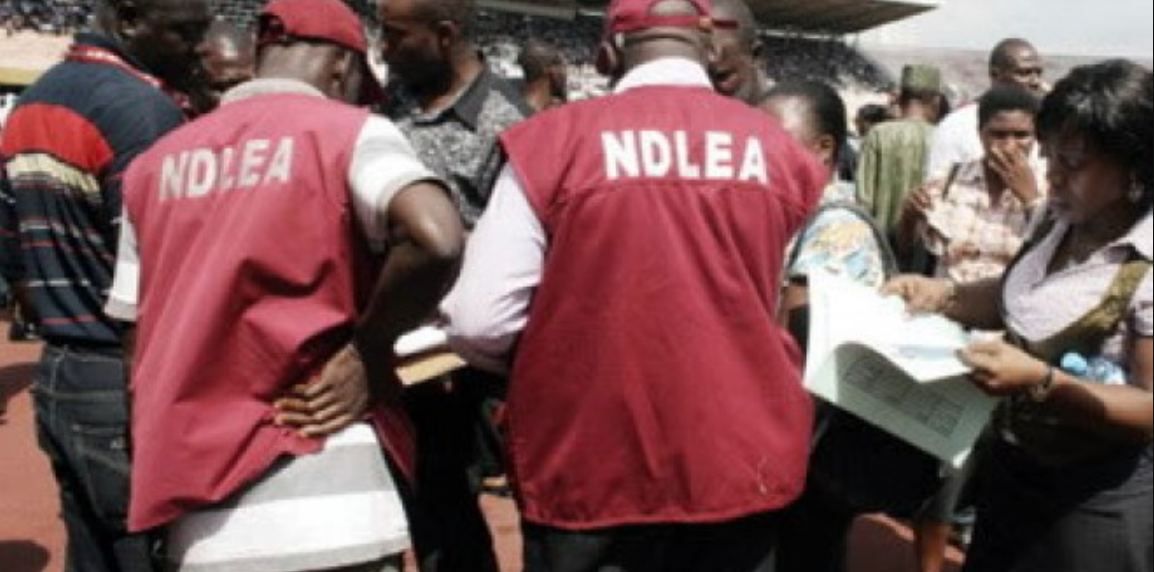
The National Drug Law Enforcement Agency (NDLEA) has dismantled two major drug cartels behind six separate cocaine shipments concealed in stainless cups, body creams, and hair gel containers destined for the United Kingdom. The three-week intelligence-led operations in Lagos led to the arrest of five suspects, including the alleged kingpin, Alhaji Hammed Taofeek Ode, who presented himself as a businessman and property developer. According to NDLEA spokesperson Femi Babafemi, the first breakthrough came on September 16, 2025, when operatives at the Murtala Muhammed International Airport (MMIA), Ikeja, intercepted 174 parcels of cocaine weighing 13.40kg hidden inside cocoa butter body cream containers. “A cargo agent was arrested immediately, and investigations linked the consignment to Alhaji Hammed Ode. After weeks of surveillance, he was traced and arrested with support from the police,” Babafemi said. Ode reportedly admitted ownership of the drugs, claiming he purchased them for over ₦150 million. He had lived in several European countries for more than 27 years before returning to Nigeria in 2024. In a related operation, NDLEA foiled five additional UK-bound cocaine shipments hidden in hair cream containers. The crackdown led to the arrest of Smith David Korede, a furniture maker, found with 1.4kg of cocaine at his Mafoluku, Oshodi residence. Two others, Ogunbiyi Oluseye Taiwo and Popoola Francis Olumuyiwa, were later apprehended after 2.6kg of cocaine concealed in crayfish and hair cream containers was recovered. The agency also intercepted 6.3kg of “Loud,” a potent strain of cannabis, concealed in bed sheets and hibiscus flowers from Thailand. Separately, NDLEA operatives across Kano, Lagos, Kwara, Ogun, Kaduna, Osun, and Edo States seized large quantities of tramadol, skunk, codeine syrup, and nitrous oxide from different suspects.

Oshiomhole-Jonathan.webp

2min2150
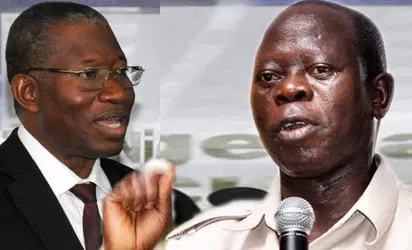
Former Edo State governor, Adams Oshiomhole, has cautioned former President Goodluck Jonathan against yielding to pressure to contest the 2027 presidential election, arguing that doing so would tarnish his legacy. Speaking on a television programme on Sunday, Oshiomhole said that only those who do not have Jonathan’s best interest at heart would encourage him to re-enter the race, stressing that the All Progressives Congress (APC) would easily defeat him if he did. “How can Jonathan be a threat? We defeated him before when PDP was at its strongest,” Oshiomhole remarked. “If he couldn’t win at the peak of the party, then only his enemies would urge him to contest again.” The former APC national chairman urged Jonathan to preserve his image as a statesman, highlighting the respect he earned by conceding defeat in 2015. “If I were to advise him, I’d say, Sir, maintain this status. You governed for eight years; you don’t need to govern for nine,” he said. Oshiomhole commended Jonathan’s concession speech in 2015 as one of his most defining legacies, describing it as a memorable act of patriotism. “That statement about no Nigerian blood being worth his ambition is historic. He should allow those legacies to stand,” he added. He also argued that Jonathan’s political base in the South-South has weakened since leaving office, making a comeback unfeasible. “We will defeat him flatly if he runs because the South-South is no longer firmly PDP. So where will he start from?” Oshiomhole asked. Jonathan, who ran on the platform of the Peoples Democratic Party (PDP), lost the 2015 presidential election to the late Muhammadu Buhari of the APC.