Author: Lifestyle & Wellness Desk

Farmers-at-Work-in-their-Various-Farms.webp

2min2780
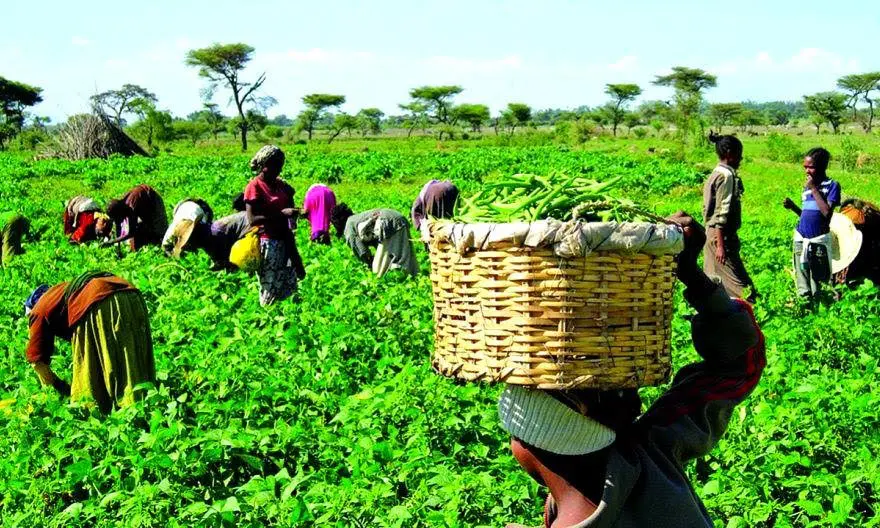
The Lagos State Agricultural Input Supply Authority (LAISA) has engaged more than 500 farmers and fishermen in the Ikorodu Division as part of its renewed focus on food security. The one-day forum, held at the Ikorodu Local Government Secretariat, was designed not only to equip participants with innovative farming and fishing techniques but also to serve as a platform for direct engagement between government and local producers. General Manager of LAISA, Olufolake Oluyemi, said the event was a shift from traditional training models, highlighting its role in listening to farmers’ needs and co-creating solutions. Speaking on the theme “Harvesting Success: Innovative Solutions for Lagos Farmers,” she explained, “The challenges faced by farmers in Ikorodu are different from those in Badagry or Epe. This forum is both a capacity-building session and an opportunity for us to learn from you.” In her keynote address, Commissioner for Agriculture and Food Systems, Abisola Olusanya, emphasised that food security goes beyond agriculture, linking it to economic stability, public health, and urban resilience. Represented by the Director of Agribusiness, Aramide Gansalo, she stressed that access to quality inputs such as certified seeds, fertilisers, and modern implements is key to achieving self-sufficiency. “As a government, we know that the foundation of food security lies in access to the right inputs, and that is where LAISA plays a critical role,” she noted. The Chairman of the All Farmers Association of Nigeria (AFAN), Lagos State chapter, Femi Oke, commended LAISA and the Ministry for consistently prioritising the welfare of farmers and fishermen across the state.

23-1280x720.jpg

3min4350
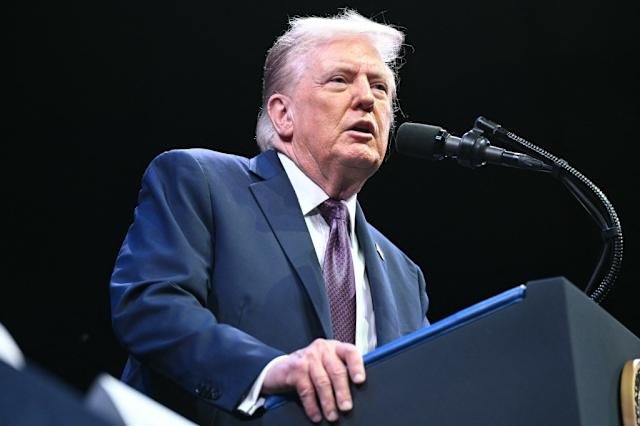
Former President Donald Trump has approved the deployment of 300 National Guard troops to Chicago, citing escalating crime and unrest in the city. The decision follows a clash between immigration authorities and protesters, during which a woman allegedly rammed a law enforcement vehicle and was shot after being found armed. The move has sparked backlash from Illinois leaders, with Governor JB Pritzker accusing Trump of “manufacturing a crisis.” Local officials argue the deployment is an overreach of federal power and could trigger legal challenges, as National Guard troops are traditionally mobilized by state governors, not the president. The announcement came shortly after a federal judge in Oregon blocked a similar deployment of federal agents to Portland, calling the action unconstitutional. Judge Karin Immergut said Trump’s use of military force in Democratic-led cities undermined state sovereignty and inflamed tensions. Chicago is the latest in a series of Democrat-led cities including Washington, D.C., Portland, Los Angeles, and Memphis to face controversial federal troop deployments under Trump’s directive. The deployments have raised constitutional concerns, especially regarding the long-standing Posse Comitatus Act, which limits military involvement in domestic law enforcement. A White House spokesperson defended the action, stating that Trump is committed to restoring order in cities where local leaders have “failed to act.” The Department of Homeland Security confirmed that Saturday’s shooting incident in Chicago involved a group allegedly attacking federal vehicles, prompting agents to respond with force. Trump has long criticized Chicago’s crime rates and recently told military leaders he sees U.S. cities as potential “training grounds” for troops to confront what he called the “enemy from within.” He vowed to “straighten out” Democrat-led cities, saying the unrest provides an opportunity for military engagement. Despite a recent drop in Chicago’s homicide rate down by a third in the first half of the year overall violence in the city remains higher than national averages. Over the recent Labor Day weekend alone, 58 people were shot, eight fatally. Legal experts warn that further deployments could deepen the constitutional debate over federal authority versus state control in matters of domestic security.

trum-1.jpg

2min8360
The U.S. Department of Homeland Security is set to launch a pilot program offering unaccompanied migrant teens a one-time payment of $2,500 if they agree to voluntarily return to their home countries, according to a report by CNN. The initiative, which would initially apply to 17-year-olds, requires the approval of an immigration judge and is designed to support the teen’s reintegration after arriving back home. Payments would be made only upon their return. This plan builds on an earlier program introduced under the Trump administration, which currently offers $1,000 “exit bonuses” to undocumented adults who choose voluntary departure. U.S. Immigration and Customs Enforcement (ICE) describes the program as a cost-effective, humane alternative to extended detention and formal deportation proceedings. “The program is strictly voluntary and allows minors to make informed decisions about their future,” an ICE spokesperson stated. As of October 2, roughly 2,100 unaccompanied minors remain in federal custody, awaiting placement or immigration proceedings. However, the proposed payments have sparked criticism from immigrant rights advocates, who argue the initiative risks violating protections for vulnerable children. Neha Desai of the National Center for Youth Law called it “a troubling precedent,” warning that financial incentives could pressure minors into returning to dangerous or unstable conditions. Critics contend the move undermines the humanitarian framework guiding the care of migrant children and raises serious ethical and legal concerns. The proposal has added fuel to the broader debate over how the U.S. manages rising numbers of unaccompanied minors at the border, many of whom are fleeing violence or seeking family reunification. While DHS defends the plan as a way to reduce costs and streamline immigration processes, advocacy groups insist that migrant children deserve protection—not payouts to leave.

14.webp

3min5620
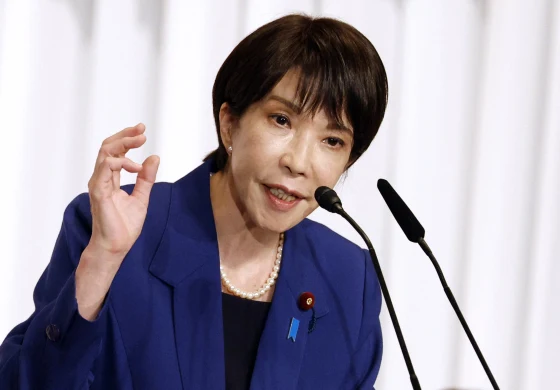
Japan’s ruling conservative party has elected 64-year-old Sanae Takaichi as its new leader, positioning her to become the country’s first female prime minister a historic but controversial choice. A prominent figure within the Liberal Democratic Party (LDP), Takaichi is known for her staunch right-wing views, her past roles as a government minister, and her unconventional personal interests including a passion for heavy metal drumming and a background in television. Takaichi faces a difficult road ahead. She inherits a sluggish economy burdened by persistent inflation, stagnant wages, and growing public dissatisfaction. In foreign policy, she must manage an increasingly complex relationship with the United States and follow through on a tariff agreement negotiated by the previous administration with the Trump White House. Her rise comes after Prime Minister Shigeru Ishiba resigned last month following a string of electoral defeats that cost the LDP and its coalition their majority in both chambers of parliament. One of Takaichi’s major challenges will be to reunite a deeply fractured party. According to Professor Jeff Kingston, Director of Asian Studies at Temple University in Tokyo, she is unlikely to bridge the internal divisions effectively. “She’s well-positioned to win back right-wing voters, but at the cost of broader appeal, especially if the party faces a general election,” Takaichi is closely aligned with the party’s nationalist wing and has long championed a return to traditional values. She opposes same-sex marriage and legislation allowing women to retain their maiden names after marriage stances that have drawn criticism, particularly from women who feel she does not represent progress on gender equality. A self-proclaimed admirer of Margaret Thatcher, Takaichi has styled herself after the former British prime minister. However, critics argue the comparison is superficial. “She’s not much of a fiscal disciplinarian or a unifier, and she hasn’t done much to promote women’s empowerment,” Prof Kingston added. A protégé of former Prime Minister Shinzo Abe, Takaichi has pledged to revive his economic strategy, known as Abenomics, which promotes aggressive fiscal spending and low interest rates. She also supports revising Japan’s pacifist constitution and is known for her hardline stance on national security. Takaichi frequently visits the Yasukuni Shrine a controversial site honoring Japan’s war dead, including convicted war criminals a move likely to provoke tensions with neighboring countries. While she is expected to be confirmed as prime minister by the Japanese parliament, it won’t be a guaranteed process as it was for her predecessors. The LDP’s weakened position means her leadership faces immediate political tests. If confirmed, Takaichi will make history but her deeply conservative platform may polarize a nation seeking both stability and reform.

13-2.jpeg

3min5170
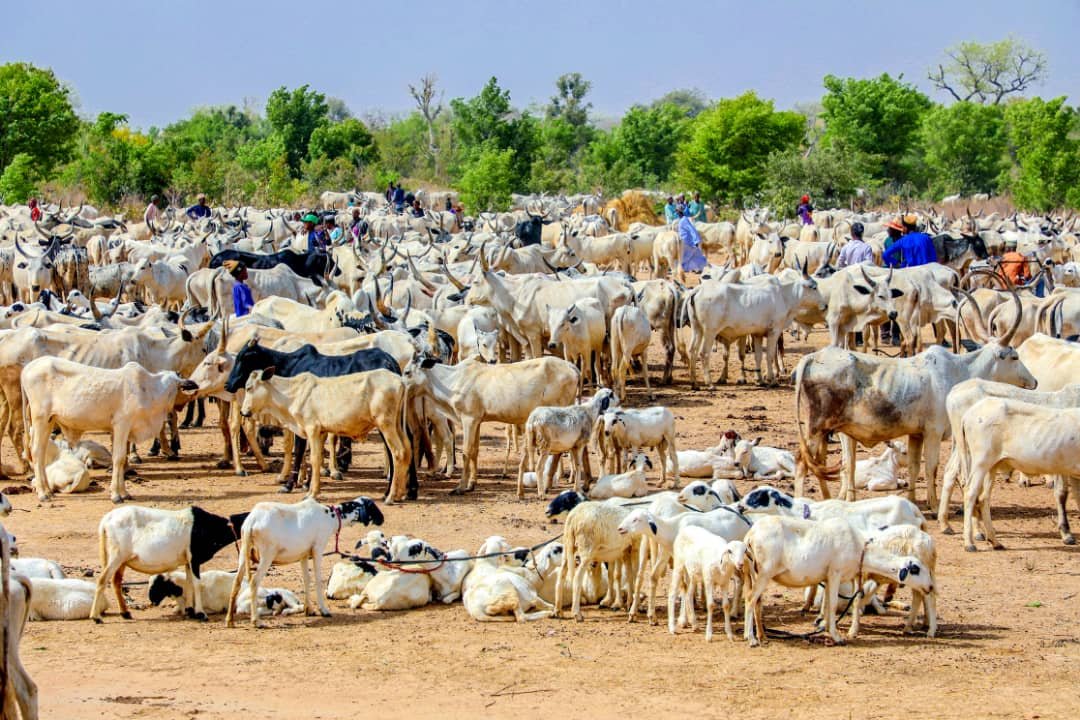
The Kano State Agro-Pastoral Development Project (KSADP) has invested approximately ₦800 million in capacity-building initiatives aimed at training stakeholders, including project beneficiaries and staff, to enhance the sustainability and impact of the programme. This was revealed in a statement released on Saturday by the KSADP Communication Specialist, Ameen Yassar. According to the statement, the KSADP Project Coordinator, Ibrahim Muhammad, made the disclosure during the launch of a training session at the Kadawa Artificial Insemination Centre. The current training focuses on artificial insemination for animal husbandry technicians and livestock personnel from the state Ministry of Agriculture. Muhammad explained that the programme is part of a wider effort to reintroduce and institutionalise artificial insemination in Kano to support long-term livestock development. “These training sessions are designed to strengthen the knowledge, skills, and resources of participants, empowering them to contribute meaningfully to the project’s goals,” he stated. Kano plays a critical role in Nigeria’s livestock industry, with over 1.21 million households involved in cattle rearing, 1.46 million in goat farming, and 1.15 million in sheep production. In 2023, the livestock sector contributed over ₦1.73 trillion to the state’s sub-national GDP. Beyond training, the KSADP has renovated the Kadawa centre, provided five exotic bulls, and equipped it with modern tools. The project, jointly funded by the Islamic Development Bank and the Lives and Livelihoods Fund, aims to ensure efficient service delivery and long-term sustainability of the once-abandoned facility. Muhammad also disclosed that an additional ₦125 million has been allocated to further upgrade the centre, including input supplies, fencing, and the establishment of a two-hectare fodder farm to provide feed for livestock. He urged participants to fully engage in the workshop, noting that the project’s goals of improved breeding and higher milk yields depend on their performance. A trainee, Sulaiman Audu, expressed appreciation to the funders, saying the training would significantly enhance their skills and career prospects. The intensive workshop, delivered in partnership with the Federal College of Agricultural Produce Technology, Kano, includes both theoretical and hands-on training in semen collection, freezing and storage, breed selection, animal health, and record-keeping. Earlier in August 2025, KSADP also signed a revised Memorandum of Understanding worth over $12.3 million with Sasakawa Africa Association to procure agricultural machinery aimed at boosting mechanisation and improving food security across the state.

aaaiii-1280x720.jpg

3min1890
Artificial intelligence, already transforming nearly every sector of society, is making its way into religion, offering virtual sermons, faith-based chatbots, and even a “Text with Jesus” app — a trend that has drawn mixed reactions from believers. Religious chatbots and digital tools are increasingly being used to provide comfort, guidance, and spiritual support in an age of fast-changing social engagement. One such app, Text with Jesus, created by Catloaf Software, allows users to pose questions to Jesus, Mary, Joseph, and nearly all of the 12 apostles. The app, which has thousands of subscribers, aims to make religious discussions more interactive, according to the company’s CEO, Stephane Peter. Despite clarifications that the app relies on AI, virtual biblical figures often do not admit to being bots when directly asked. Peter said the program is built on the latest version of ChatGPT, GPT-5, which is more convincing in maintaining character roles. Though some users have branded the tool blasphemous, it maintains a 4.7 out of 5 rating on the App Store. Other religious groups have also tested AI tools. Catholic Answers launched an animated priest-like chatbot called “Father Justin” but later dropped the clerical title after backlash. “We don’t want to replace humans. We just want to help,” said Christopher Costello, the ministry’s IT director. Similar AI applications exist across faiths, including Deen Buddy for Muslims, Vedas AI for Hindus, and AI Buddha. While some worshippers welcome these tools as convenient learning aids, others warn they lack the “heart and spirit” of true religious practice. Rabbi Gilah Langner stressed that Jewish teachings require human interpretation and community connection. “AI might be nuanced, but the emotional bond and living tradition are missing,” she said. In Austin, Texas, Pastor Jay Cooper of Violet Crown City Church experimented with an AI-generated sermon in 2023. The move drew mixed reactions — some parishioners were unsettled, while others who rarely attended church found it appealing. “I’m glad we did it,” Cooper said, “but it missed the heart and spirit of what we usually do.” As religious leaders debate its role, AI continues to blur the lines between faith and technology, leaving worshippers divided on whether it can ever truly guide the soul.

shiiiii.webp

4min3160
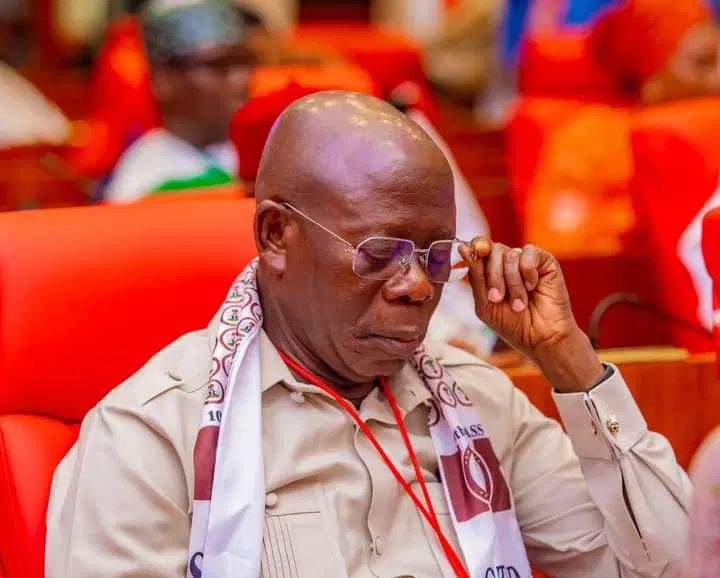
Former Nigeria Labour Congress (NLC) president and senator, Adams Oshiomhole, has faulted the Petroleum and Natural Gas Senior Staff Association of Nigeria (PENGASSAN) for turning its dispute with the Dangote Refinery into a nationwide shutdown of oil facilities, calling the action hasty and unfair to other workers. Speaking in an interview with Arise Television on Friday, Oshiomhole said while unions have the right to defend employees, they must do so without inflicting broader economic hardship. “In seeking to protect a particular set of workers, you do not then risk the jobs of several others. The tools deployed in any dispute must not undermine people’s livelihoods,” he said. He criticised the union’s decision to shut down facilities belonging to the Nigerian National Petroleum Company Limited (NNPC) and other firms because of issues at Dangote, saying the move triggered unnecessary fuel queues. “People asked why the oil industry was shut down, and the answer was because PENGASSAN decided NNPC and several companies should stop operations—all because of a problem in one refinery,” he noted. Drawing from his time as NLC president, Oshiomhole argued that industrial disputes should remain targeted. “We had a serious disagreement with Union Bank over their policy on married couples, but even though we had the power to shut down all banks, we didn’t, because their offence couldn’t be applied to others,” he explained. He cautioned against strikes that cause unintended hardship, stressing that innocent citizens such as traders were bearing the brunt. “In pursuing war, you must recognise that your actions should not hurt tomato sellers who cannot move their goods because of a quarrel between one refinery and one union,” he said. Oshiomhole affirmed the importance of union rights but urged moderation. “Freedom of association is both a constitutional and God-given right. But with that freedom comes responsibility—both employer and employee must act fairly,” he said. He also advised giving new private sector investors like Dangote Refinery time to stabilise. “An employer has to mature and be strong enough to guarantee good-paying jobs. If you cripple a business before it finds its feet, you are also destroying the jobs you claim to protect,” he warned. Commissioned in May 2023, the Dangote Refinery is Africa’s largest single-train refinery, with a capacity of 650,000 barrels per day. PENGASSAN last month ordered members to shut down operations in protest against alleged anti-labour practices at the facility, a move that led to fuel shortages across several states and drew sharp criticism from industry stakeholders and government officials.

apple-33.webp

2min4320
Apple on Thursday pulled several apps from its App Store that were used to anonymously track the movements of US Immigration and Customs Enforcement (ICE) agents, reportedly after pressure from the Trump administration. The apps had gained popularity as the administration intensified nationwide deportation operations. Officials, however, criticised them as a threat to officer safety, particularly after a deadly shooting at an ICE facility in Texas last month. Investigators said the gunman had accessed one of the apps in the days before his attack, which left two detainees dead and another injured. Authorities believe the shooter was targeting ICE personnel. Protests have also erupted outside ICE facilities and during enforcement operations across the country, as agents carry out large-scale deportations. By late Thursday, ICE-tracking apps, including the widely used ICEBlock, were no longer available on Apple’s App Store. Fox Business reported that the Justice Department had contacted Apple earlier in the day, with Attorney General Pam Bondi confirming that officials urged the company to remove ICEBlock. “Apple did so,” she said. Apple did not immediately respond to requests for comment. However, in a statement to NBC News, the company said: “Based on information we’ve received from law enforcement about the safety risks associated with ICEBlock, we have removed it and similar apps from the App Store.”

best-uk-security-photo.jpg

3min5200
Britain raised its security level on Friday to protect Jewish communities after a terror attack outside a Manchester synagogue during Yom Kippur left two people dead and three others seriously injured. Police said the attacker, identified as a UK citizen of Syrian origin, carried out a car-ramming and stabbing assault outside the Heaton Park Hebrew Congregation Synagogue on Thursday. Armed officers shot him dead within minutes. Three suspects were later arrested on terrorism-related charges. Interior Minister Shabana Mahmood confirmed that security had been stepped up at synagogues across the country. “We are absolutely on high alert,” she said, noting increased police presence nationwide. “Our priority is making sure our citizens are safe and can go about their lives within the Jewish community and beyond.” Authorities named the victims as Adrian Daulby, 53, and Melvin Cravitz, 66, both residents of Crumpsall, one of Manchester’s largest Jewish neighborhoods. Emergency services responded swiftly after reports that a car had driven into worshippers and a security guard had been stabbed. The attacker, later identified as Jihad al-Shamie, was wearing a vest resembling an explosive device, though police confirmed it was non-functional. Prime Minister Keir Starmer cut short his trip to Denmark to chair an emergency security meeting and vowed to “do everything in my power” to safeguard the Jewish community. The incident, one of the deadliest antisemitic attacks in Europe since October 7, 2023, has reignited concerns about antisemitism in Britain. Israel’s Foreign Minister Gideon Sa’ar accused UK authorities of failing to address “rampant antisemitic and anti-Israeli incitement.” Thursday evening saw pro-Palestinian rallies in London, where 40 people were arrested, including six for assaulting police officers. Metropolitan Police have asked organizers to postpone another planned demonstration, but their requests have been rejected so far. Chief Rabbi Ephraim Mirvis condemned the Manchester attack as the “tragic result of Jew hatred,” warning that antisemitism has been steadily growing across streets, campuses, and online platforms. Community members expressed shock but not surprise. “Of course, everyone in the community in recent years has experienced some sort of antisemitism,” said Alex, a 31-year-old resident near the synagogue. “The conflict in Israel has definitely exacerbated the feelings of resentment.”

Tinubu.png

3min4990
President Bola Tinubu is set to commission the $400 million Otakikpo Onshore Crude Oil Export Terminal in Rivers State on October 8, marking the first new crude export facility to be established in Nigeria in more than five decades. Developed by Green Energy International Limited (GEIL), operators of the Otakikpo field in OML 11 at Ikuru town, Andoni Local Government Area, the terminal is the first wholly indigenous onshore crude export facility in the country. The last such infrastructure, the Forcados Terminal, was inaugurated in 1971. The commissioning is expected to draw key figures, including the Minister of State for Petroleum (Oil), Senator Heineken Lokpobiri; Rivers State Governor, Siminalayi Fubara; and other stakeholders across the oil and gas sector. In a statement on Thursday, GEIL’s Executive Director of Legal and Corporate Services, Olusegun Ilori, said the terminal aligns with the Federal Government’s efforts to boost crude production and tackle long-standing evacuation challenges. “This project is a strategic infrastructure that supports the administration’s commitment to raising output while reducing costs,” he noted. For years, industry operators have identified crude evacuation constraints as a major hindrance to achieving the government’s production target of three million barrels per day. The Otakikpo terminal is designed to provide an export solution for more than 40 stranded oil fields, unlocking previously untapped reserves. With an initial storage capacity of 750,000 barrels, expandable to three million barrels, and a daily loading capacity of 360,000 barrels, it is expected to significantly cut production costs for indigenous producers. GEIL’s Chairman and Chief Executive, Professor Anthony Adegbulugbe, described the project as “a game-changing national infrastructure.” He said: “What we have achieved here is not just a storage solution, but a pathway for about 40 stranded oil fields to finally contribute to the economy.” The project comes as part of renewed government efforts to restore investor confidence in the oil sector, which has faced declining production, pipeline vandalism, oil theft, and rising operational costs in recent years.