Author: Lifestyle & Wellness Desk

Dangote-Refinery.jpg

4min2660
The President and Chief Executive of Dangote Petroleum Refinery, Aliko Dangote, has stated that Nigeria’s long-standing struggle with fuel queues has come to an end since the refinery began producing petrol a year ago. Speaking at a conference to mark the first anniversary of the 650,000 barrels-per-day facility, Dangote noted that Nigerians had faced persistent fuel shortages and queues since 1975, but the situation has steadily improved since the refinery commenced production on September 3, 2024. “We have been battling fuel queues since 1975, but today Nigerians are witnessing a new era,” he said. Dangote acknowledged the difficulties encountered during the establishment of the refinery but emphasised that the company remained committed to Nigeria and Africa. He explained that some critics believed the refinery project threatened existing businesses, but insisted its purpose was to strengthen the downstream sector, reduce reliance on imports, and build national and continental pride. He disclosed that constructing the refinery involved significant risks, with warnings from industry experts, investors, and officials who argued that such projects were typically undertaken only by sovereign nations. Dangote admitted that if the venture had failed, he would have lost all his assets to lenders. “The decision to build the refinery was not easy. If it had gone wrong, lenders would have taken our assets. But we believed in Nigeria and Africa,” he said. Despite economic challenges and opposition, Dangote explained that the refinery has already contributed to lowering petrol prices, which fell from nearly N1,100 before production began to about N841 in the Southwest, Abuja, Delta, Rivers, Edo, and Kwara. He added that the gradual introduction of compressed natural gas (CNG) trucks would help extend the price reduction across the country. The refinery, according to Dangote, has the capacity to meet Nigeria’s domestic demand and generate foreign exchange through exports. Between June and early September 2025, the facility exported over 1.1 billion litres of Premium Motor Spirit (PMS). On job creation, Dangote stressed that the refinery is not displacing workers but generating new opportunities. The planned deployment of 4,000 CNG-powered trucks is expected to create at least 24,000 jobs nationwide. He noted that employees receive salaries well above the minimum wage, alongside health insurance, life insurance, pensions, and other benefits. He clarified that while the company respects trade unions, joining them is a matter of personal choice for its drivers. Dangote also reaffirmed his commitment to Nigeria’s industrialisation, describing it as the foundation for sustainable economic growth. He cautioned against the dumping of cheap foreign goods, citing the collapse of the textile sector as an example of the consequences of weak protection for local industries. “Other nations were not industrialised by outsiders. We must build and industrialise our own economies. Without this, how can others invest? That is why I believe the National Assembly should enact legislation to support the Federal Government’s ‘Nigeria First’ policy. My goal is to see Africa prosper, as we have the fastest-growing population in the world. Relying on imports means exporting jobs and importing poverty,” he said. Dangote concluded by stressing that many sectors of the Nigerian economy remain in urgent need of industrialisation, adding that strengthening local industries is vital to sustaining economic progress.


Access-Bank.jpg

2min3100
Access Bank Plc, in partnership with the Akwa Ibom State government and Help the Woman Initiative, has launched Project UWUS (Unstoppable Woman, Unbreakable Spirit), a cervical cancer awareness and screening campaign designed to save lives and empower women in Akwa Ibom State. Cervical cancer is the second most common cancer among women in the state, with a prevalence rate of 22.1 percent. Experts say the high mortality rate is largely due to limited access to healthcare, cultural barriers, and low awareness, which often result in late diagnosis and treatment. Speaking at the launch, Nene Kunle-Ogunlusi, Head of Women Banking at Access Bank, said the initiative demonstrates the bank’s commitment to improving health outcomes and supporting women. “At Access Bank, we believe that empowering women begins with protecting their health. Project UWUS reflects our dedication to promoting gender equality and creating sustainable impact in the communities we serve,” she said. According to a statement from Access Bank, the project will focus on five areas: awareness campaigns to reach over one million women through radio, social media, markets, and community outreaches; free screenings in rural and urban areas; humanitarian support, including welfare packages for over 1,000 underserved women; capacity building for health workers and volunteers; and policy engagement with government agencies to ensure long-term sustainability. Also speaking at the event, Esther Graham from Access Holdings’ Sustainability team underscored the importance of partnerships in tackling health challenges. “By working with communities, government, and civil society, we are not just raising awareness but saving lives,” she said.

air-peace-2.png

2min6730
Air Peace has announced delays on some of its flights nationwide following heavy rainfall in Lagos on Tuesday morning. The airline disclosed this in a statement signed by its spokesperson, Osifo-Whiskey Efe. It explained that the adverse weather conditions disrupted flight schedules but emphasised that passenger safety remained its priority. “We wish to inform you that due to the heavy downpour of rain in Lagos this morning, some flights across our operating networks will be delayed,” the statement read. The airline added that while the weather was beyond its control, efforts were being made to reduce disruptions. “While weather is beyond our control and safety remains our utmost priority, we appeal for your understanding as we manage the disruptions as best as we can and get you to your destinations safely,” the airline stated. Passengers seeking updates on schedules were advised to contact the airline by email or phone. Air Peace further reaffirmed its safety record, describing safety as a core commitment and pledging to maintain the highest standards for passengers and crew. The development comes as the Nigerian Meteorological Agency (NiMet) forecasted thunderstorms and rainfall across the country from Monday to Wednesday. According to NiMet’s outlook, released on Sunday in Abuja, isolated thunderstorms with moderate rain were expected on Monday morning in Kaduna, Gombe, Bauchi, Kebbi, Adamawa, and Taraba states, with further thunderstorms anticipated across the northern region in the afternoon and evening. Flash floods were also projected in Adamawa, Taraba, and Gombe states. For the central region, NiMet predicted a cloudy atmosphere with periods of sunshine on Monday morning, along with moderate rainfall in Niger, Kogi, Kwara, the FCT, and Benue.

SickleCell_3_MAIN-996x567-2.jpeg

5min5340
Medical experts, genetic counsellors, and sickle cell advocates have called for the enforcement of mandatory newborn screening and improved genetic counselling to reduce the burden of sickle cell disease in Nigeria. They also recommended including sickle cell care in health insurance schemes to ease the rising cases and reduce the emotional and financial strain on affected families. The stakeholders highlighted that weak policy enforcement, poor public awareness, and limited access to healthcare have contributed to the growing prevalence and poor management of the condition in the country. Speaking at a sickle cell leadership lecture series organised by the Sickle Cell Advocacy and Management Initiative in Lagos, they urged government action through legislation on universal newborn screening, subsidised health insurance for patients, strict quality controls in laboratory testing, and inclusive conversations on prevention and care. Sickle cell disease, a genetic disorder caused by abnormally shaped red blood cells that disrupt blood flow and oxygen supply, remains one of Nigeria’s most pressing public health concerns. The World Health Organisation estimates that about 150,000 babies are born with the condition annually in Nigeria, the highest figure worldwide. Speakers at the lecture called on policymakers to introduce urgent and sustained interventions, warning that without decisive action, thousands of children would continue to be born into preventable suffering. Dr. Michael Adeseye, a consultant paediatric haemato-oncologist at the Lagos University Teaching Hospital, noted that despite increasing awareness, inaccurate laboratory results, inadequate insurance coverage, and limited specialist care remain major challenges. He emphasised the need for government support in making drugs more accessible, improving blood transfusion services, and strengthening infrastructure for advanced treatments such as stem cell transplants. Adeseye stressed that families raising children with sickle cell disease face heavy psychological, financial, and logistical burdens. He recommended structured insurance coverage and early referral to paediatric haematologists. He also urged government enforcement of strict laboratory quality controls to curb inaccurate test results, which he said affect up to 40 per cent of screenings in some centres. Osasele Esangbedo, a genetic counsellor and sickle cell survivor, highlighted the emotional complexities surrounding reproductive decisions among couples carrying the sickle cell gene. She advocated for wider acceptance of adoption, increased use of prenatal diagnosis, and public sensitisation to empower families to make informed choices. She further stressed the need for mandatory newborn screening in public hospitals to ensure early diagnosis and care. Abayomi Oyelami, Communications Officer of the Sickle Cell Advocacy and Management Initiative and also a sickle cell survivor, called for compulsory newborn and school entry screenings as a national policy. He said this would instill awareness from childhood and reduce cases in the long term. He also urged inclusion of sickle cell care in health insurance and stronger partnerships between government and civil society to expand access to testing, counselling, and treatment. The leadership lecture, launched to commemorate the 60th birthday of the initiative’s founder, Mrs. Toyin Ibidunni Adesola, was created to amplify the voices of people living with sickle cell and other chronic conditions. According to Oyelami, the forum provides patients with a platform to share their experiences and challenges, while also influencing policies that could improve their quality of life. He emphasised that institutionalised policies on newborn screening, genotype testing, and insurance coverage would ensure sustainable care and protection for patients beyond short-term interventions.

korean-1.webp

3min3760
A new UN report has revealed that North Korea is increasingly resorting to the death penalty, including for offenses such as watching or sharing foreign films and TV dramas, while also forcing citizens into hard labor. According to the UN Human Rights Office, the regime has tightened control over “all aspects of citizens’ lives” in the past decade, with surveillance becoming “more pervasive.” The report concluded, as quoted by the BBC: “No other population is under such restrictions in today’s world.” UN human rights chief Volker Türk warned that unless conditions change, North Koreans “will be subjected to more of the suffering, brutal repression and fear that they have endured for so long.” Based on 300 interviews with recent escapees, the report found that at least six laws enacted since 2015 permit executions for acts such as distributing foreign media. Witnesses said public executions by firing squad have risen since 2020. Kang Gyuri, who fled North Korea in 2023, said three of her friends were executed for watching South Korean content. “He was tried along with drug criminals. These crimes are treated the same now,” she recounted. Escapees also described worsening hunger and repression since Kim Jong Un abandoned diplomacy in 2019 to focus on weapons development. “In the early days of Kim Jong Un, we had some hope, but that hope did not last long,” said a woman who escaped in 2018. “The government gradually blocked people from making a living independently, and the very act of living became a daily torment.” The report further detailed the regime’s use of “shock brigades,” recruiting poor citizens and even orphans into dangerous labor. It also confirmed that at least four political prison camps remain in operation, where torture and deaths from abuse are common, despite a reported “slight decrease in violence by guards.” The UN urged that the situation be referred to the International Criminal Court, calling on Pyongyang to abolish prison camps, end executions, and educate citizens about human rights. “Our reporting shows a clear and strong desire for change, particularly among North Korea’s young people,” Türk said.

Teachers_Council_law_large-TRCN-1280x809.webp

2min1630
The Federal Government has declared that no teacher will be allowed to practice without certification from the Teachers Registration Council of Nigeria (TRCN). To this end, the Ministry of Education has redefined the roles of the TRCN and the National Teachers’ Institute (NTI) to strengthen professionalism in the teaching sector and improve education delivery nationwide. In a statement released on Sunday via its official X handle, the ministry announced that while NTI will now focus on in-service training and community-based professional development, TRCN will be responsible for the regulation and licensing of teachers across the country. Education Minister, Dr. Maruf Alausa, unveiled the new framework covering teacher registration, professional growth, compliance monitoring, welfare, and curriculum standards. “No teacher will be allowed in a Nigerian classroom without TRCN registration and licensing. This guarantees competent and professional teaching for every child,” Alausa said. He added that the reform is designed for long-term results, ensuring that Nigerian children are taught, prepared, and supported by the best educators. The minister also reminded secondary schools to ensure their staff are properly certified, warning that uncertified schools will no longer be approved as examination centres. From 2027, he explained, accreditation of both public and private schools for national exams—including WASSCE, NABTEB, NECO, and NBIAS—will be strictly tied to TRCN certification of teachers.

Doctors_Strike_NARD.jpg

4min2950
The Nigerian Association of Resident Doctors (NARD) has suspended its ongoing five-day warning strike after two days, giving the Federal Government a two-week window to meet its outstanding demands. The association said it would reconvene on September 26 during its Annual General Meeting to decide whether to resume the industrial action. NARD President, Dr. Tope Osundara, explained that the suspension was a gesture of goodwill to Nigerians and an opportunity for the government to address welfare concerns affecting doctors. “It is because we want the government, having negotiated with us, to give them ample time to perfect their plans in addressing all the other concerns,” Osundara told our correspondent on Sunday. “Our members felt that since we’ve also extended a friendly hand, we should extend a hand of goodwill, especially to the Nigerian populace, who are grappling with harsh economic conditions.” He stressed that the doctors were not retreating from their demands but only pausing their action. “We just want to give a human face and extend this olive branch to the government. We hope that within this two-week period, they will attend to everything in our list of demands,” he said. Resident doctors had declared the strike last Friday after a series of ultimatums, including a 21-day notice in July, a 10-day extension, and a final 24-hour deadline that expired on September 10. Their demands include immediate payment of the 2025 Medical Residency Training Fund (MRTF), settlement of five months’ arrears from the 25–35 per cent CONMESS review, payment of 2024 accoutrement allowance arrears, prompt release of specialist allowances, and recognition of West African postgraduate membership certificates by the Medical and Dental Council of Nigeria. They are also pushing for the National Postgraduate Medical College of Nigeria to issue membership certificates to all qualified candidates, full implementation of the 2024 CONMESS, resolution of welfare issues in Kaduna State, and redress of grievances of resident doctors at LAUTECH Teaching Hospital, Ogbomoso. So far, Osundara disclosed, the government has only paid the 2025 MRTF to previously omitted members, leaving other demands unaddressed. “That’s the only thing the government has done. Aside from the MRTF, they’ve not done anything else. We still have unpaid arrears, and we are facing manpower shortages,” he said. He also cited delays in the release of a corrected circular from the National Salaries, Incomes and Wages Commission, accusing authorities of shortchanging doctors for more than a decade. Osundara warned that the union would escalate its action if the government failed to act before September 26. “By then, our AGM—which is the highest decision-making body—will determine the next line of action,” he said. On the separate strike by resident doctors in Oyo State, the NARD president clarified that the national suspension does not affect LAUTECH-TH, Ogbomoso. “We’ve allowed them to continue and given the Oyo State Government 15 days to meet their demands. After that, we will direct all members in Oyo State to shut down,” he stated.

Falana-Fuel-1024x552-1.jpg

3min4510
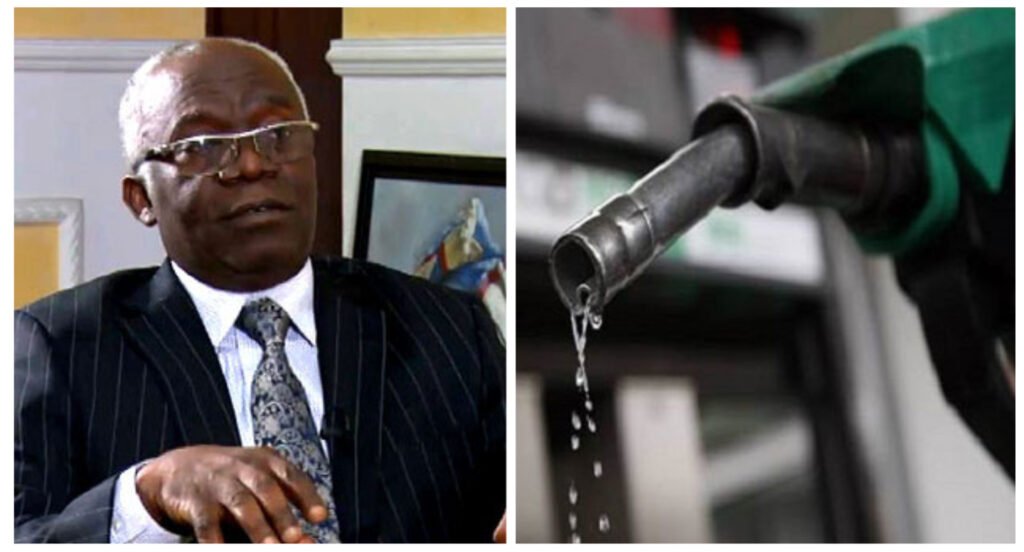
Human rights lawyer and Senior Advocate of Nigeria (SAN), Femi Falana, has criticised President Bola Tinubu’s removal of fuel subsidy, describing it as a grave economic misstep that has deepened hardship across the country. Falana, who was a prominent voice during the 2012 Occupy Nigeria protests against fuel subsidy removal under former President Goodluck Jonathan, argued that Tinubu’s policy has brought more suffering rather than relief. Speaking on Channels Television’s Politics Today on Sunday, the rights activist noted that Nigeria’s subsidy debate is tied to decades of prescriptions from the International Monetary Fund (IMF) and the World Bank, which he said have often left developing nations worse off. “I have consistently opposed fuel subsidy removal since 2012. No country in the world has abolished subsidies completely. Even leading Western nations like the United States, the United Kingdom, and France subsidise electricity, agriculture, and other critical aspects of life,” he said. Falana accused the IMF and World Bank of dictating Nigeria’s economic policies, including subsidy removal and naira devaluation, and urged President Tinubu to chart an independent path. According to him, the government’s decision has created widespread social tension. “We have asked the government to muster the courage to tell these Western institutions that no country has succeeded by following Bretton Woods prescriptions. That is why Nigeria must review its economic programme holistically. You cannot devalue the currency, dollarise the economy, and remove subsidies at the same time,” he cautioned. The SAN also condemned the increasing dollarisation of Nigeria’s economy, faulting President Tinubu’s practice of gifting footballers cash in foreign currency. He further warned that bribes, tuition fees, property transactions, and utility bills are now being settled in dollars—a trend he described as illegal under Section 20 of the Central Bank Act, which recognises the naira as the sole legal tender. As a solution, Falana urged the government to promote and strengthen the naira while exploring membership in BRICS, a bloc of emerging economies originally formed by Brazil, Russia, India, China, and South Africa. He argued that BRICS offers an opportunity to reduce Nigeria’s dependence on the dollar and Western financial institutions while amplifying the influence of the Global South in global affairs. “You cannot run a stable economy in the interest of the people if you keep devaluing your currency, especially in an import-dependent country like Nigeria. Such a policy damages the economy,” he said.

officials-greet-newly-elected-prime-minister-of-nepal-s-interim-government-sushila-karki-r-as-she-arrives-at-the-prime-ministe.webp

2min3090
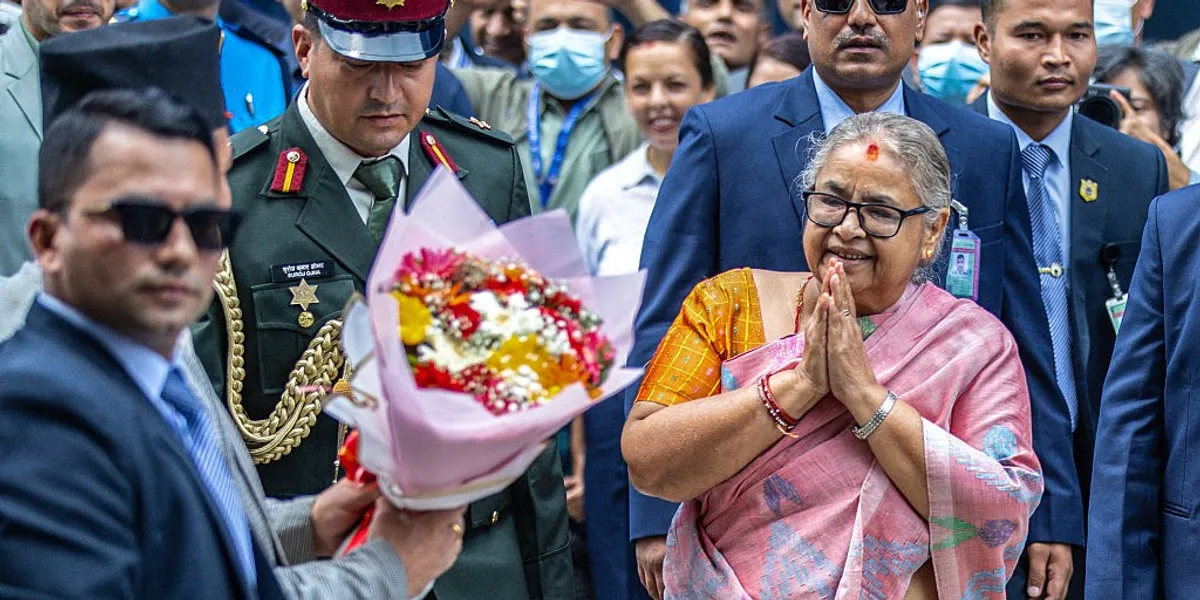
Nepal’s new interim prime minister unveiled her first cabinet on Monday, as the country works to restore calm after deadly youth-led anti-corruption protests toppled the previous government. In a ceremony held under an outdoor canopy against the backdrop of the fire-damaged presidential office, President Ram Chandra Paudel administered the oath of office to three key ministers, with the event broadcast live on television. The protests, which erupted on September 8 after a ban on social media, quickly escalated into nationwide unrest fueled by longstanding economic frustrations. Demonstrators set parliament and several government buildings ablaze, in what became Nepal’s worst violence since the civil war and abolition of the monarchy in 2008. At least 72 people were killed within two days, while 191 remain hospitalized, according to official figures. Prime Minister Sushila Karki, 73, a former chief justice, now faces the challenge of meeting protesters’ demands for a corruption-free future ahead of elections scheduled for March. She appointed Om Prakash Aryal—an advocate renowned for fighting corruption and governance issues—as home minister, while also overseeing law, justice, and parliamentary affairs. Kulman Ghising, credited with ending Nepal’s chronic power shortages during his time as director of the Nepal Electricity Authority, was assigned the energy, infrastructure, transport, and urban development portfolios. Respected economist and former finance secretary Rameshwor Khanal was named finance minister, tasked with addressing the unemployment crisis that helped fuel the uprising. According to World Bank data, one in five Nepalis aged 15 to 24 is jobless, while GDP per capita remains at just $1,447.

hh.jpeg

2min4450
The Cowpea and Beans Farmers, Processors and Marketers Association of Nigeria (C&BFPMAN) has strongly denied claims that cement is being used to preserve beans. Mr. Kabir Shuaibu, National President of C&BFPMAN, clarified this in an interview with the News Agency of Nigeria (NAN) on Sunday in Lagos. The denial comes in response to a video circulating on social media showing some youths allegedly mixing beans with a substance resembling cement. Shuaibu emphasized that no legitimate member of the association would engage in such unethical practices. “We are unaware of any use of cement in beans preservation. As an association, we follow international best practices for preserving beans and related products,” he said. He added, “Our member-farmers do not engage in any unscrupulous methods when it comes to preserving beans or cowpea. Recently, we discontinued the use of additives in bean preservation altogether.” According to Shuaibu, the current method involves packaging beans in thick nylon bags purchased from sack companies. “These nylons are placed inside sacks, and beans are poured directly into the nylon bags before the sacks are sealed. The nylon bags create an airtight seal that prevents weevils or insects from penetrating,” he explained. He further disclosed that farmers sometimes use safe additives like ‘Topstoxin’ to protect older beans from weevils. “The bags of beans are divided into sections where the additive is applied. This substance is harmless to humans and does not damage the produce.” In some cases, dried peppers are placed alongside bean bags to deter weevil infestations. Shuaibu concluded, “Currently, the use of nylon bags inside sacks remains the most effective way to preserve beans. It is obvious that using cement would be easily detected and consumers would reject such produce. Therefore, we would never resort to such harmful practices.”