Author: Lifestyle & Wellness Desk

spain-govt-2-1280x720.avif

2min5100
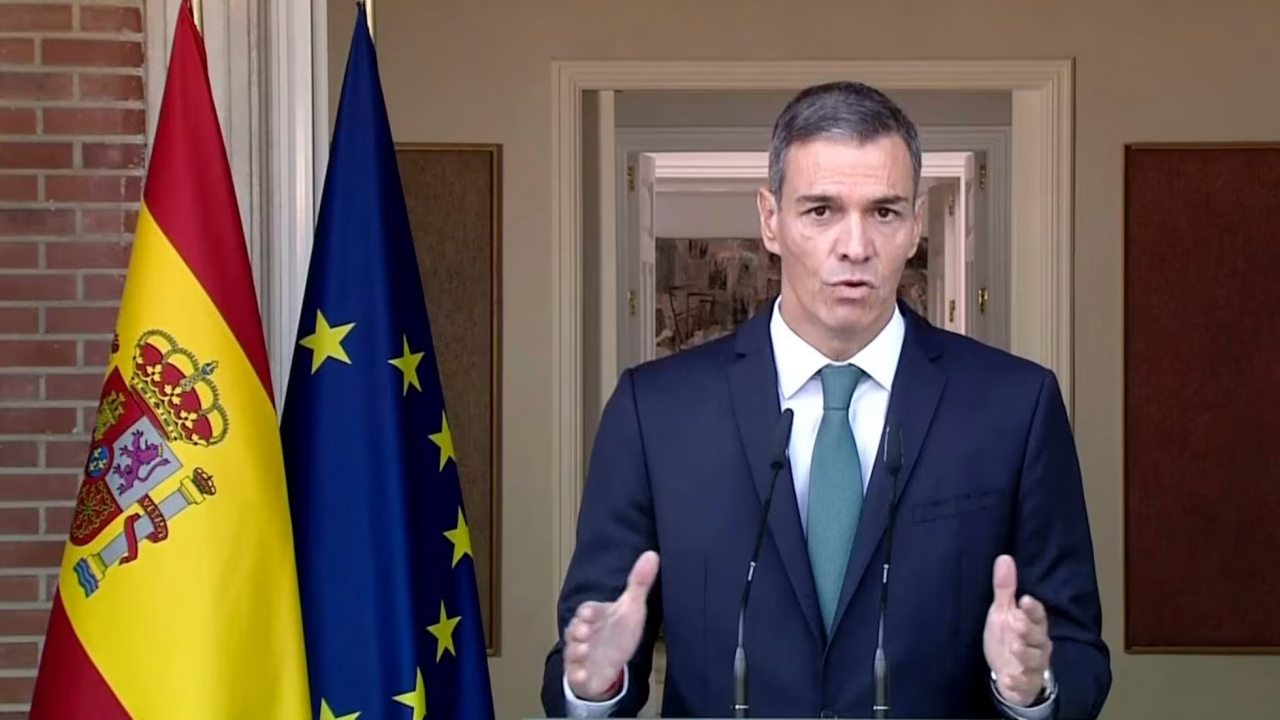
Spanish Prime Minister Pedro Sánchez has announced an arms embargo on Israel as part of a package of measures aimed, in his words, at “stopping the genocide in Gaza.” The nine measures, which take effect immediately, include a travel ban on individuals directly linked to what Sánchez described as a “massacre,” increased humanitarian aid for Gaza, additional funding for the UN Relief and Works Agency for Palestine Refugees (UNRWA), and a ban on imports from Israeli settlements. “Spain will be on the right side of history,” Sánchez said, reaffirming his strong criticism of Israel’s military operations in Gaza. He added: “This is no longer a defence, it is not even an attack, it is the extermination of a defenceless people.” He also condemned what he called the “indifference” and “complicity” of the international community. The Spanish government said its aim is to both support Palestinians and ensure accountability for those responsible for civilian attacks. The United Nations defines genocide as acts committed with the intent to destroy, in whole or in part, a national, ethnic, racial, or religious group. South Africa has already filed a case against Israel at the International Court of Justice, accusing it of violating the Genocide Convention in Gaza. Israel has rejected the genocide accusation, insisting that Hamas uses civilians as human shields and bears responsibility for the humanitarian crisis.
Dangote-1.jpg

3min10410
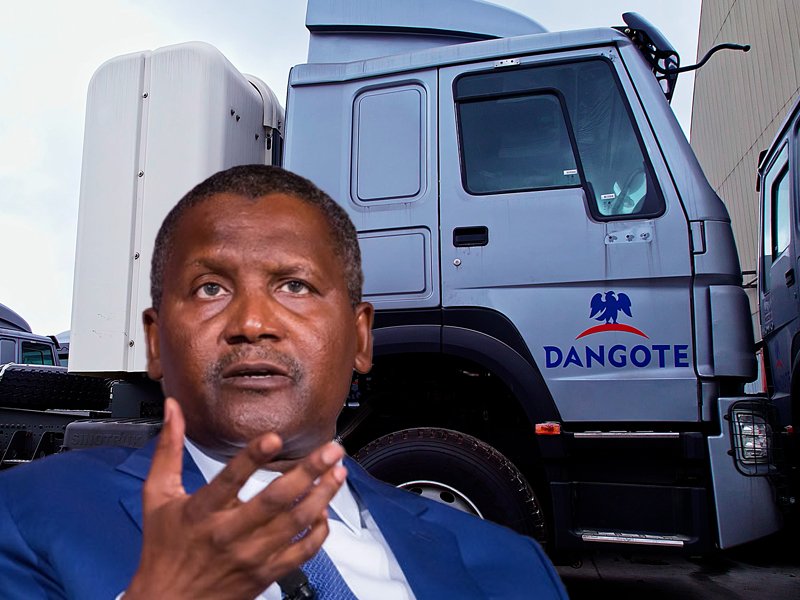
The Nigerian Association of Road Transport Owners (NARTO) has thrown its weight behind the Nigeria Union of Petroleum and Natural Gas Workers (NUPENG) in its ongoing dispute with the Dangote Group over alleged monopolistic practices in the downstream oil and gas sector. NUPENG had on Friday announced plans to begin a nationwide strike on Monday, September 8, protesting what it described as anti-union labour practices linked to the Dangote Refinery’s deployment of newly imported Compressed Natural Gas (CNG) trucks for direct distribution of petroleum products. According to Dangote, the initiative is designed to cut logistics costs, improve efficiency, promote sustainability, and boost Nigeria’s economic development. However, NARTO, in a statement signed by its National President, Othman Yusuf, on Sunday, rejected the plan, warning that the free distribution model is unsustainable and threatens the survival of over 30,000 independent transporters operating across the country. “NARTO wishes to inform all stakeholders and the general public of its firm support for NUPENG in the struggle against monopolistic and anti-competition practices being advanced by the Dangote Group in the downstream sector. While we acknowledge new investments in petroleum distribution, we categorically reject any plan for free distribution of petroleum products,” the statement read. The association stressed that such a move would undermine Nigeria’s petroleum distribution network, jeopardize investments financed by local and international banks, and wipe out jobs for drivers, mechanics, loaders, and others who depend on the sector for survival. It warned that large-scale unemployment resulting from this could fuel insecurity and instability nationwide. NARTO further cautioned that concentrating petroleum distribution in the hands of one company could compromise energy security, create a monopoly, and enable future price manipulation and supply restrictions. Citing Section 212 of the Petroleum Industry Act (PIA) and the regulatory guidelines of the Nigerian Midstream and Downstream Petroleum Regulatory Authority (NMDPRA), NARTO emphasized the need for a level playing field in the downstream sector to safeguard fair competition and consumer protection. The group therefore urged the federal government, its relevant agencies, the Office of the National Security Adviser (NSA), and the Dangote Group to engage in dialogue with all stakeholders to prevent unfair competition and protect the welfare of millions of Nigerians who rely on the petroleum transport and distribution chain. “NARTO reiterates its full support for NUPENG in this struggle. Our collective action is not against investment or industrial growth, but against monopolistic practices that endanger jobs, national security, and the overall economy,” the statement concluded.

whatsapp-400x240-1.webp

2min6480
The Military Pensions Board (MPB) has distanced itself from a fake WhatsApp group operating under its name and has cautioned pensioners as well as the general public against engaging with it. In a statement issued on Monday in Abuja, the Board’s Public Relations Officer, Aliyu Mohammed, clarified that the group, titled Military Pensions Board, was created by unidentified individuals and does not reflect the official stance of the Board. He noted that fraudsters have increasingly resorted to using social media and messaging platforms like WhatsApp to impersonate government agencies and exploit unsuspecting people. Military pensioners and veterans, he added, are often targeted with misinformation, false promises, or financial scams disguised as official communication. Mohammed stressed that the MPB has not created or endorsed any WhatsApp group for pensioners or veterans. He described such platforms as fraudulent and warned pensioners to avoid them. “For the avoidance of doubt, the MPB communicates with pensioners and stakeholders solely through its verified social media handles, press releases, official statements, and recognized communication channels,” he stated. The spokesperson reaffirmed the Board’s commitment to prioritizing the welfare of pensioners and urged them to always seek clarification through official contacts whenever in doubt. The Military Pensions Board is the Nigerian government agency mandated to manage and disburse pensions and gratuities to retired military personnel. Beyond payments, it also serves as a key channel for addressing pension-related concerns. Over the years, the MPB has modernized its operations through digital payment systems and improved communication channels. However, the growing misuse of social media by fraudsters impersonating government institutions continues to pose a risk, particularly to vulnerable groups such as retirees.

Sanwo-Olu-e1735072695180.webp

4min6160
Governor Babajide Sanwo-Olu has welcomed the nomination of Lagos as Nigeria’s host city for the 2027 Intra-African Trade Fair (IATF). In a statement released Monday by Mr. Adewale Akodu, spokesperson for the Lagos State Ministry of Commerce, Cooperatives, Trade, and Investment, it was confirmed that the African Export-Import Bank (Afreximbank), the African Union, and the AfCFTA Secretariat jointly made the announcement during the ongoing IATF 2025 in Algiers. Akodu described the nomination as a historic milestone for Nigeria and the wider West African sub-region. Responding to the announcement, Sanwo-Olu said the choice of Lagos highlights Nigeria’s central role in Africa’s economic integration and affirms the state’s status as a leading commercial and financial hub. “We are very excited about this recognition. It reflects our resilience, strength, and commitment to the Greater Lagos vision under the T.H.E.M.E.S Plus Agenda,” he said. “This will further support our drive to position Lagos as a global financial hub. Having recently hosted GITEX, the global tech expo, and preparing for Africa’s first-ever E1 electric boat race, Lagos continues to make history. It is the Spirit of Lagos at work.” The governor added that the nomination is also a testament to Lagos’ alignment with President Bola Tinubu’s Renewed Hope Agenda, which is reshaping Nigeria’s economic trajectory. Commissioner for Commerce, Cooperatives, Trade, and Investment, Mrs. Folashade Ambrose, described hosting the biennial event as a strategic achievement for Lagos, Nigeria, and West Africa. She noted that the fair is expected to attract over 1,600 exhibitors, 35,000 visitors, and generate billions of dollars in trade and investment deals. “Hosting IATF 2027 puts Lagos at the forefront of Africa’s trade future and reinforces our commitment to regional collaboration, investment, and innovation,” Ambrose said. “It aligns perfectly with the Lagos State Development Plan 2052. With a population of over 23 million, strategic coastal access, and a diverse economy, Lagos is an ideal setting for shaping Africa’s trade future.” She further explained that Lagos’ selection reflects confidence in Nigeria’s leadership and Lagos State’s preparedness to deliver a world-class event. Preparations, in partnership with the Federal Government, Afreximbank, the AU, and the AfCFTA Secretariat, will focus on infrastructure, logistics, security, and hospitality. “As Africa builds toward an integrated, borderless trade environment, IATF 2027 in Lagos will be a landmark platform to unlock new markets, strengthen business ties, and drive sustainable growth,” she added. Ambrose is currently leading a delegation of 20 SMEs, selected from 253 trained under the Lagos Export Readiness Programme, to the 2025 IATF in Algiers, where she also delivered the keynote address at the SME Pavilion for Africa and participated in the Nigeria Pavilion.

Donald-Trump-2.webp

4min4850
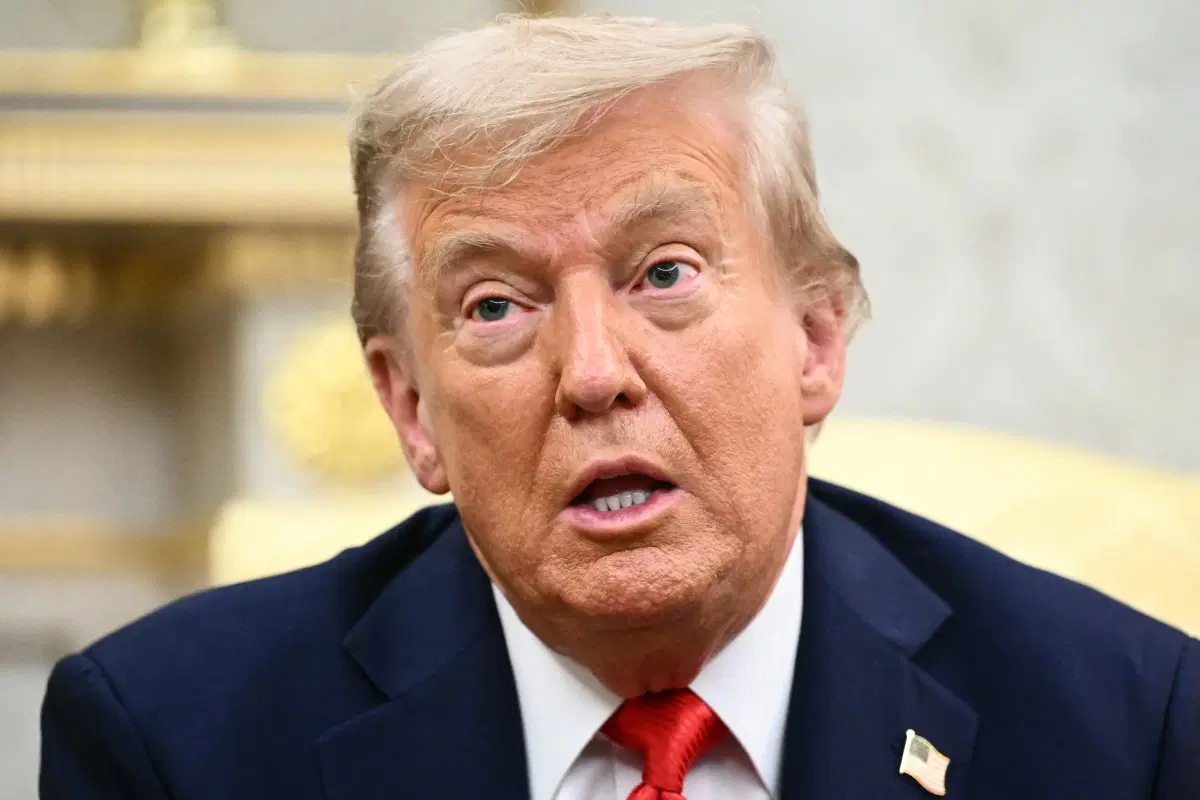
Former U.S. President Donald Trump has issued a stern warning to Venezuela, stating that any military aircraft that endangers U.S. naval ships will be shot down. The warning came after Venezuelan military jets reportedly flew close to a U.S. vessel near South America for the second time in two days, according to U.S. officials cited by CBS News, a partner of the BBC. The incident follows a recent U.S. military strike on what officials described as a drug-smuggling vessel linked to Venezuelan criminal networks, which resulted in the deaths of 11 people. In response to the growing tensions, Venezuelan President Nicolás Maduro dismissed the U.S. claims, calling them baseless and asserting that disagreements between the two nations do not justify military confrontation. “Venezuela has always been open to dialogue,” Maduro said, “but we demand respect.” Trump: “They’ll Be Shot Down” When questioned in the Oval Office on Friday about how the U.S. would respond if Venezuelan jets flew over American ships again, Trump said Venezuela would be in “serious trouble.” He added that his military commanders had full authority to act if the situation escalated. “If they put us in a dangerous position, they’ll be shot down,” Trump stated. Since returning to office in January, Trump has ramped up anti-drug trafficking operations in Latin America, with a particular focus on Venezuela, which he claims is a major transit point for narcotics entering the United States. Maduro Responds to Accusations President Maduro has accused the U.S. of pursuing “regime change through military threats,” a charge Trump sidestepped when asked, though he did cast doubt on Venezuela’s democratic processes, referring to a “very strange election” in which Maduro was re-elected for a third term. Trump further claimed that drugs were “pouring” into the U.S. from Venezuela, and reiterated that members of Tren de Aragua a Venezuelan gang designated as a terrorist group by the U.S. were active in the country. U.S. Military Buildup in the Caribbean The United States has reinforced its presence in the southern Caribbean, deploying additional naval vessels, as well as thousands of Marines and sailors, as part of efforts to combat drug trafficking. On Friday, the White House announced that 10 F-35 fighter jets would be deployed to Puerto Rico, further strengthening the U.S. military posture in the region. “We’re strong on drugs,” Trump said. “We don’t want drugs killing our people.” Ongoing Pressure on Maduro Trump, a long-time critic of Maduro, doubled the U.S. reward for information leading to his arrest to $50 million in August, calling him “one of the largest narco-traffickers in the world.” During Trump’s previous term, the U.S. Justice Department charged Maduro and several top Venezuelan officials with narco-terrorism, corruption, and drug trafficking. Maduro has consistently rejected these allegations.

03.avif

4min9370
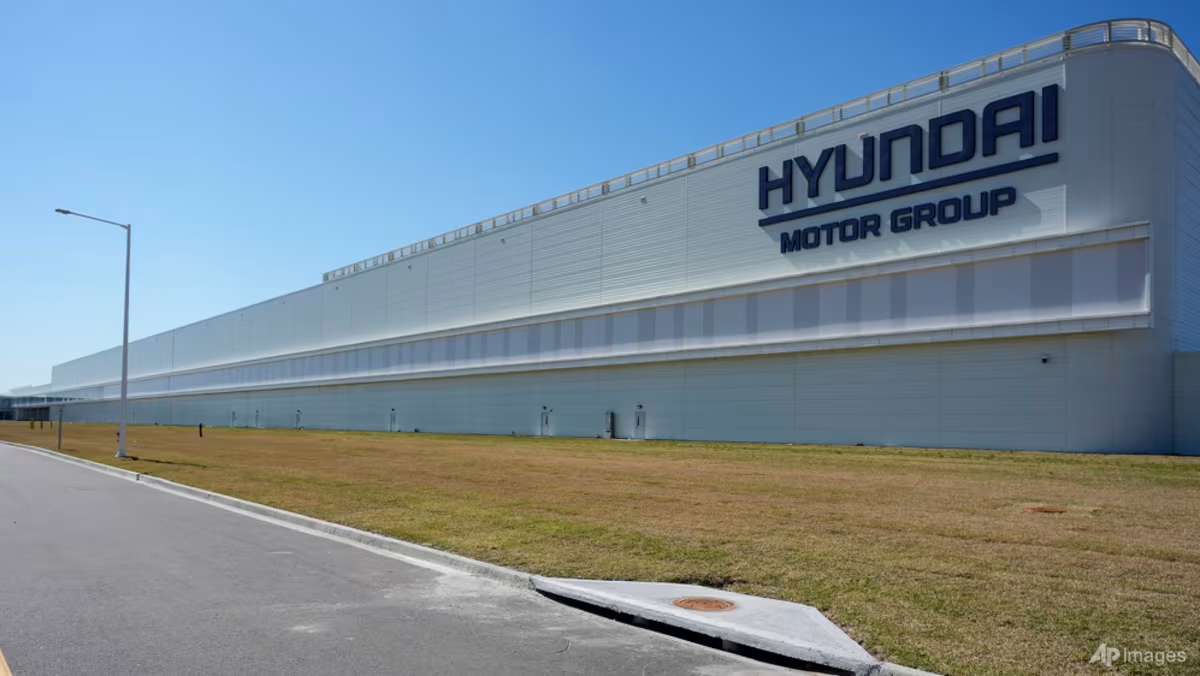
More than 300 South Korean nationals were among 475 individuals arrested during a U.S. immigration raid at a Hyundai-LG Energy Solution battery plant construction site in Georgia, according to South Korea’s Foreign Minister, Cho Hyun. The raid, conducted on Thursday in the town of Ellabell, marks the largest single-site immigration enforcement action under former U.S. President Donald Trump’s anti-illegal immigration campaign, said Steven Schrank, a special agent with Homeland Security Investigations in Atlanta. According to Schrank, the operation followed months of criminal investigation into “unlawful employment practices and serious federal violations” at the joint-venture plant between Hyundai Motor and LG Energy Solution. “This was not a random immigration sweep,” Schrank clarified. “It was the result of a detailed, ongoing criminal investigation. Agents did not simply round up workers; this was targeted based on evidence.” South Korean Government Responds At an emergency press briefing in Seoul, Foreign Minister Cho Hyun said the government was “deeply concerned” by the incident. “Out of the 475 individuals arrested, more than 300 are believed to be South Korean nationals,” he confirmed. “We feel a strong sense of responsibility. If necessary, I am prepared to travel to Washington for direct talks.” South Korea’s Foreign Ministry had previously urged the U.S. to ensure the rights of its citizens are respected during law enforcement actions. “The economic activities of Korean investors and the legitimate rights of our nationals should not be unjustly violated,” said spokesperson Lee Jae-woong. Details on the Arrests Schrank stated that those detained were found to be either illegally present in the U.S., working in violation of their visa status, or had overstayed their authorized stay. The arrested individuals have since been transferred to U.S. Immigration and Customs Enforcement (ICE) for potential deportation proceedings. Former President Trump, when asked about the raid, responded: “They were illegal aliens, and ICE was just doing its job.” Schrank added that the operation was intended to protect American jobs and ensure compliance with federal labor laws. “This effort reflects our commitment to safeguarding lawful employment opportunities, protecting workers from exploitation, and maintaining a level playing field for companies that follow the rules,” he said. Impact on Hyundai and LG Operations While Hyundai said that none of the arrested individuals were directly employed by the company, LG Energy Solution confirmed that 47 of its employees were detained—46 South Koreans and one Indonesian. The company further stated that around 250 of those arrested were working for a third-party contractor, and that the majority were South Korean nationals. As a precautionary measure, LG has temporarily suspended all non-essential business trips to the U.S. “Those currently in the U.S. on assignments will either return home or remain in place, depending on their specific roles,” said a company spokesperson. Broader Implications South Korea is Asia’s fourth-largest economy and a major player in the global automotive and electronics sectors. Its companies have invested billions of dollars in U.S. manufacturing plants, both to tap into the American market and to avoid tariffs under protectionist policies pursued during Trump’s presidency. In July, Seoul pledged $350 billion in new U.S. investments, and South Korean President Lee Jae-myung met with Trump just last month to reaffirm economic ties. The Ellabell plant targeted in the raid is part of a broader push by Hyundai and LG to supply electric vehicle batteries for the growing U.S. EV market.

kk.webp

1min5210
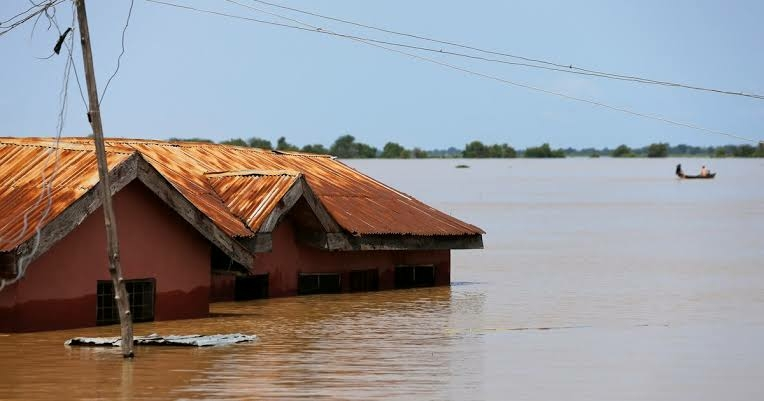
The Kano State Government has assured residents of its dedication to addressing urban flooding through sustainable strategies aimed at protecting lives and property. Dr. Dahiru Hashim, the Commissioner for Environment and Climate Change, made this statement on Friday in Kano, following heavy rainfall on Thursday that caused flooding in various parts of the city. Hashim described the downpour, which lasted over three hours in several areas, as unusually intense and prolonged. He explained that such events are well-documented effects of climate change, as rising global temperatures increase atmospheric moisture and lead to extended periods of rainfall. The commissioner noted that ahead of the rainy season, the government had cleared major drains to facilitate smooth water flow and supported community groups across the city in clearing smaller drainage channels. Additionally, he highlighted ongoing efforts to improve waste management systems to prevent drainage blockages, as well as tree planting initiatives along main roads to boost water absorption and minimize runoff.

nyon.jpg

1min4980
The Northern Youth Council of Nigeria (NYCN) has criticised the Federal Government’s plan to establish state police, describing it as a “misplaced priority” that could worsen Nigeria’s already fragile security system. In a Thursday statement from Kaduna, NYCN President Isah Abubakar argued that creating state police would only add to existing problems of underfunding, manpower shortages, poor welfare, inadequate equipment, and corruption in security agencies. He warned that state-controlled police could easily become a political tool for intimidation and abuse, stressing that Nigerian politicians lack the maturity to manage such a structure without federal oversight. Abubakar urged the government to focus instead on reforming and strengthening the Nigeria Police Force, including robust recruitment drives and improved welfare. He proposed expanding the force to at least five million officers to meet Nigeria’s security demands. President Bola Tinubu had earlier disclosed plans to establish state police as part of broader efforts to tackle insecurity, sparking debates nationwide. Critics, however, insist the government should prioritise fixing the systemic issues within the existing police force before creating new agencies.

who.jpeg

3min26880
The World Health Organisation (WHO) has urged Nigeria to increase its health budget allocation to at least 20 per cent of total expenditure. WHO Regional Director, Prof. Mohamed Janabi, made the appeal on Thursday in Abuja at the National Health Financing Dialogue themed “Reimagining the Future of Health Financing in Nigeria.” Janabi described sustainable healthcare financing as the backbone of resilient health systems, stressing that higher investment would cut out-of-pocket expenses, protect households, and strengthen prepayment and pooling mechanisms. He added that evidence-based decision-making, guided by cost-effectiveness and equity analyses, should drive resource allocation. While commending Nigeria’s recent reforms — including the Basic Healthcare Provision Fund, the National Health Insurance Authority Act, and state-level insurance expansion — Janabi noted that financing healthcare for over 223 million citizens was critical for both national well-being and Africa’s future. He said healthier populations were more productive, resilient to shocks, and better positioned to drive inclusive growth. He also pointed to Nigeria’s equity and investment units, and parliamentary engagement through the Legislative Network for Universal Health Coverage, as models for other African countries. Ambassador Amma Twum-Amoah, AU Commissioner for Health, Humanitarian Affairs, and Social Development, stressed that Africa must prioritise health security with its own resources. She cited the African Medicines Agency and stronger regulatory frameworks as vital for handling pandemics, floods, and droughts. She commended Nigeria’s approval of $1.7 billion for HOPE Projects to boost governance, expand primary healthcare, and strengthen nationwide service delivery, calling it a bold and visionary step. She reminded participants of the 2001 Abuja Declaration and the 2013 Abuja+12 Declaration, where African leaders committed to dedicating at least 15 per cent of national budgets to health. Also speaking, Ms. Daju Kachollom, Permanent Secretary at the Ministry of Health and Social Welfare, revealed that President Bola Tinubu had directed the issuance of a service-wide circular mandating all Ministries, Departments, and Agencies (MDAs) to implement health insurance in line with the National Health Insurance Authority Act, 2022. She assured stakeholders that the ministry would lead the effort, emphasising that mandatory health insurance is now a permanent policy. The four-day dialogue, which ended Thursday, brought together policymakers, experts, development partners, civil society, academia, insurers, and the media to build evidence and data-driven strategies for sustainable health financing.

TINUBU3-.jpg

3min3440
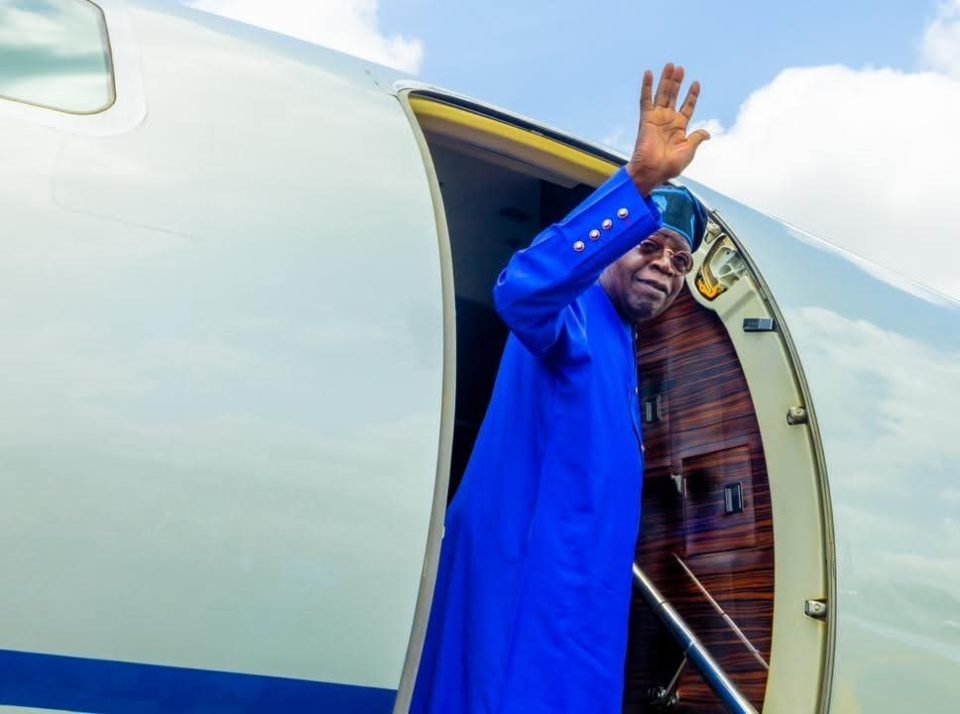
President Bola Tinubu on Thursday began a 10-day vacation as part of his 2025 annual leave, the Presidency announced. According to a statement issued by his Special Adviser on Information and Strategy, Bayo Onanuga, the President will spend the period between France and the United Kingdom before returning to Nigeria. “President Bola Ahmed Tinubu will depart Abuja today, September 4, to commence a working vacation in Europe, as part of his 2025 annual leave. The vacation will last 10 working days. He will spend the period between France and the UK and then return to the country,” Onanuga stated. The statement did not, however, indicate whether Tinubu had formally notified the National Assembly in line with Section 145(1) of the 1999 Constitution (as amended), which requires a letter empowering Vice President Kashim Shettima to act in his absence. Both chambers are currently on recess. This is not the first time Tinubu has taken a “working vacation” without a formal handover. In October 2024, he spent more than two weeks in France and the UK under similar circumstances. Since taking office in May 2023, Tinubu has become one of Nigeria’s most travelled leaders. A report by PUNCH Online in October 2024 revealed that in his first 17 months in office, he and Vice President Shettima made 41 foreign trips across 26 countries, spending a combined 180 days abroad. Of these, Tinubu personally logged 124 days across 29 trips to 16 countries. His latest foreign engagement was in Brazil in August 2025, where he met with President Luiz Inácio Lula da Silva. Both countries signed agreements covering trade, aviation, energy, and security, including plans to revive Petrobras’ operations in Nigeria and establish a Lagos–São Paulo direct air route. Tinubu has also travelled to the United States, China, South Africa, Germany, Tanzania, the UAE, and Japan, attending summits, state visits, and diplomatic meetings aimed at securing investment and strengthening bilateral ties. Critics, however, argue that despite these extensive trips, Nigerians continue to face worsening economic hardship, high inflation, insecurity, and falling living standards.