
Author: Lifestyle & Wellness Desk

IMG_0056-scaled-770x400-1.jpg

2min6490
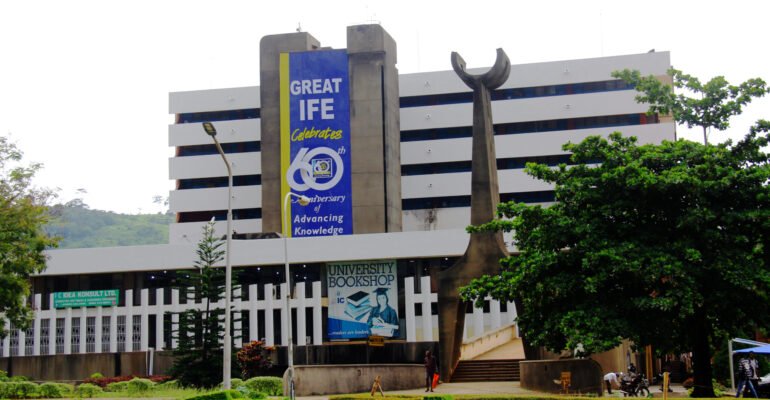
The Obafemi Awolowo University (OAU) community is mourning a dentistry student who reportedly died by suicide shortly after the release of examination results, according to a statement issued by the university’s Dental Students’ Association (IFUDSA). In its message signed by IFUDSA President Adebayo Idris, the association described the loss as “devastating,” urged students to look out for one another, and emphasized the importance of seeking professional help during periods of distress. Multiple outlets reproduced the statement on Wednesday, noting the timing of the tragedy in relation to the results release. Several reports identified the student as Ajibola Ibitayo (also reported as Ibitayo Ajibola). While IFUDSA’s statement did not publish the name, local media citing campus sources have done so. Coverage by regional and national platforms has focused on the mental-health pressures faced by students in competitive programmes such as dentistry, with the association pledging continued advocacy for student welfare and counselling support. Statement excerpts and timeline IFUDSA confirmed the death in a Wednesday statement and linked it to the period following the release of examination results. The association called the loss “a painful reminder of the silent battles many students face,” and encouraged students to seek professional help when needed. If you need to talk to someone (Nigeria) Safe Place Nigeria (She Writes Woman) — 24/7 toll-free: 0800 800 2000. Mentally Aware Nigeria Initiative (MANI) — 24/7 lines: 0809 111 6264 / 0811 168 0686. SURPIN (Suicide Research & Prevention Initiative) — national helpline (toll-free line and additional numbers listed). Editor’s note: Details such as the student’s identity and background continue to appear in media reports; this article relies on IFUDSA’s formal statement and on named outlets that have cited the identity above.


Ibom_Ahhhh_sleeves_red.jpg

2min5250
Comfort Emmanson—the Ibom Air passenger recently discharged by an Ikeja Magistrate’s Court—has spoken publicly for the first time since leaving the Kirikiri Correctional Centre, saying she is grateful for the outpouring of support but remains in pain. In an Instagram post on Wednesday, Emmanson thanked friends, family, and well-wishers for their prayers during her detention. She disclosed that she is still dealing with both physical discomfort and emotional strain arising from the ordeal and would need time to rest and undergo medical care before sharing a detailed account of what happened. Her statement came just hours after an Ikeja Magistrate’s Court sitting in Ogba struck out the five-count charge filed against her. The case had alleged that she disrupted peace aboard an Ibom Air flight, assaulted a crew member, and acted in a manner capable of breaching public order. According to the court record, the charges were withdrawn after both the complainant and the airline indicated they were no longer interested in pursuing the matter. Presiding Magistrate Olanrewaju Salami consequently ordered Emmanson’s discharge. While expressing profound appreciation to supporters—whom she credited with sustaining her morale throughout the process—Emmanson maintained that her priority now is recovery. She noted that she will present her side of the story once she has received appropriate medical treatment and is in a position to speak comprehensively. The development brings a temporary close to a case that drew wide attention on social media and within Nigeria’s aviation community. With the charges dropped, attention is likely to shift to Emmanson’s promised account of the incident, as well as to any response that may follow from industry stakeholders. Emmanson did not provide a timeline for when she will release her full statement, but emphasized that she intends to do so after convalescing.

A220-300_Ibom-Air-600x315-1.jpg

4min4680
A passenger on Ibom Air’s July Uyo–Lagos service, lawyer David Ogede, says an onboard confrontation over a mobile phone spiralled after a flight attendant addressed fellow traveller Comfort Emmanson in a combative manner. Speaking on Channels Television’s The Morning Brief, Ogede alleged that while one hostess handled pre-flight instructions professionally, a second hostess escalated the situation with curt remarks and threats. According to Ogede, the cabin crew initially briefed passengers to switch off (not airplane mode) all phones for take-off and indicated they could power them back on after departure. When Emmanson said her phone’s power button was faulty, a second hostess intervened and insisted she shut it down. Emmanson asked for help, saying she didn’t know how to do it without the button. “The second hostess said, ‘You’re using an iPhone—you don’t need a button,’” Ogede recounted. “The passenger replied that she didn’t know how and asked the hostess to assist. The hostess refused, then began directing her to go through Settings → General.” Ogede said Emmanson explained she couldn’t follow the steps and asked the hostess to spell ‘General’. At that point, Ogede and another passenger appealed for calm and sought help from a seatmate who was familiar with iPhones. “While he was trying to sort the phone, the passenger asked, ‘Why are you embarrassing me?’ The hostess replied, ‘You had better keep quiet now. If you say another word, I will deal with you.’ That was when the passenger flared up and used strong language,” Ogede said, adding that the hostess then walked away and did not return. The lawyer described a tense cabin for the remainder of the flight. As the aircraft began its descent, the first hostess—the one Ogede called “polite and professional”—returned to ensure bags were stowed and assisted Emmanson by placing her purse in the overhead bin. After landing in Lagos, passengers disembarked and the incident ended without further disruption. Ogede argued the exchange was avoidable: “With a little humility and humaneness, things might have turned out differently. If the first, professional hostess had handled the issue from the start, it wouldn’t have escalated.” What the eyewitness says happened — timeline Pre-flight: Crew instructs passengers to fully switch off phones for take-off; “no airplane mode.” Initial interaction: First hostess issues instructions politely and explains exit protocols. Escalation: Second hostess insists Emmanson shut down her iPhone; passenger reports a faulty power button and asks for help. Failed de-escalation: Hostess refuses to handle the device, offers menu navigation steps; passenger says she can’t follow; exchange turns confrontational. Passenger reaction: Emmanson becomes upset and uses strong language after an alleged threat from the hostess. Landing & exit: Cabin remains tense; first hostess assists with stowage; passengers disembark in Lagos. Ogede’s account centres on tone, empathy, and assistance: he believes a calmer approach—such as briefly helping the passenger navigate the settings or assigning another crew member to assist—could have resolved the phone-shutdown requirement without conflict.

DANIEL-BWALA.jpg

1min2940
President Bola Tinubu’s Special Adviser on Policy Communication, Daniel Bwala, says the president could post a major surge in the South-East in 2027, projecting “up to two million” votes from the region—at least four to six times his 2023 tally. Speaking on Channels Television, Bwala argued that the South-East’s large voting population and shifting political dynamics would boost Tinubu’s numbers. He claimed Peter Obi’s influence has declined and suggested Obi may not clinch a presidential or vice-presidential ticket in any party. Bwala also pointed to recent defections to the APC and endorsements from opposition governors as factors that could lift Tinubu’s support in the zone. In 2023, Tinubu polled 127,370 votes in the South-East.

Rauf-Aregbesola-1.jpg

2min2740
Ahead of the 2027 elections, Interim National Secretary of the African Democratic Congress (ADC), Ogbeni Rauf Aregbesola, launched a mass membership drive in Lagos, urging Nigerians to vote out the All Progressives Congress (APC). Speaking in Kosofe during a mobilisation tour, he argued that the APC, Peoples Democratic Party (PDP) and Labour Party (LP) had failed the country, while the ADC offers “a new deal” to reset Nigeria on a path of development. Aregbesola tasked supporters to “spread the gospel of the ADC” across local governments and promised incentives to aid recruitment. He also called on citizens to vote and protect their votes through vigilance. The Lagos APC, in a swift response, accused Aregbesola of betrayal. Party spokesman Seye Oladejo said his remarks smacked of “desperation and opportunism,” noting Aregbesola benefited from the APC platform for over two decades—from serving as Lagos commissioner to Osun governor and later a federal minister. He added that the APC in Lagos remains united and focused on delivering governance. In a related development, the South-West APC said it plans to recruit over 2,000 canvassers across all wards in the zone to bolster President Bola Tinubu’s 2027 re-election bid, according to Zonal Chairman Isaacs Kekemeke.

PERPLEXITY-AI-FUNDING-4_1710913720829-1280x830.jpg

3min28660
AI start-up Perplexity has made a surprise $34.5bn (£25.6bn) offer to acquire Google Chrome, the world’s most-used web browser—an audacious move that has split Silicon Valley watchers between “serious strategy” and “headline stunt.” The three-year-old company, backed by Jeff Bezos and Nvidia and led by ex-Google/OpenAI alum Aravind Srinivas, framed the bid as a pledge to the open web, user choice, and continuity for Chrome’s ~3bn users. Skeptics pounced. One tech investor called the proposal “a stunt” that undervalues Chrome; venture capitalist Tomasz Tunguz suggested Chrome could be “ten times” pricier. Judith MacKenzie of Downing Fund Managers praised the boldness but noted the bid is unsolicited and unfunded, while investor Heath Ahrens argued it’s “nowhere near” Chrome’s true value—though he mused a far larger offer from a heavyweight could reshape AI dominance. The timing is combustible. A U.S. federal judge may soon rule on remedies in a landmark antitrust case against Google, potentially forcing structural changes to its search business. Google has signaled it would appeal any breakup order and says spinning off Chrome is an “unprecedented proposal” that would harm consumers and security. Perplexity, valued around $18bn in July, did not detail financing. The company recently launched Comet, an AI-powered browser, and has pitched keeping Google as the default search inside Chrome post-deal (users could change settings). It also pledged continued support for Chromium, the open-source engine behind Chrome, Edge, and Opera. But Perplexity carries baggage. Media outlets have accused it of reproducing content without permission; the firm denies wrongdoing and has fired back rhetorically, further polarizing sentiment around its scrappy, growth-at-all-costs posture. Whether the bid is a negotiating gambit, a regulatory provocation, or a genuine moon-shot, it thrusts the browser—long treated as plumbing—back into the center of the AI race. For now, all eyes are on the court docket and Google’s boardroom: if Chrome ever came into play, the price—and the politics—would likely escalate fast.

shutterstock_Rococo2018-stethoscope-1-1024x683-1.jpg

3min12550
A leading charity says too many men in the UK are receiving aggressive treatment for prostate cancer that would likely never cause them harm. Prostate Cancer UK estimates around 5,000 men each year undergo surgery or radiotherapy—treatments that can result in incontinence and erectile dysfunction—when many could safely choose active surveillance (regular PSA tests, scans and check-ups). Of roughly 56,000 annual diagnoses, about 6,500 men already opt for monitoring, typically those classed at the lowest risk. The charity argues that evidence now supports extending surveillance to the next-lowest risk group as well—where about 8 in 10 show no sign of spread after five years—potentially sparing thousands the side-effects of radical treatment. It says outdated clinical guidance is a key reason uptake varies widely by hospital, with over-treatment rates ranging from 2% to 24% in England. The National Institute for Health and Care Excellence (NICE) currently recommends surveillance only for the lowest risk cases in England and Wales but confirms it is reviewing the guideline. Prostate Cancer UK says many trusts have already expanded surveillance policies, while a quarter have not—creating a postcode lottery that leaves men facing very different choices depending on where they’re diagnosed. Some over-treatment reflects patient preference: even low-risk patients are usually offered all options. But the charity argues that normalising surveillance would reduce harm and strengthen the case for a national screening programme—a long-debated goal that has gained fresh attention amid high-profile diagnoses. Critics of screening often cite the PSA test’s limitations and the risk of triggering unnecessary procedures. Advocates counter that better risk stratification and modern imaging can make screening safer and more targeted. Real-world experiences underscore the trade-offs. Men who start on surveillance can still move to treatment if the disease progresses—often preserving years of quality of life before any intervention. With NICE’s update pending, the debate turns on a simple question: for men with slow-growing disease, should “less can be more” become the national default? BBC

Atiku_green_enhanced_2x.png

2min4480
Former Vice President Atiku Abubakar has accused the Tinubu administration of weaponising Nigeria’s anti-graft agencies to cow the opposition, following the EFCC’s detention of ex-Sokoto governor Aminu Tambuwal over alleged ₦189bn withdrawals. In a statement, Atiku claimed the move targets a key member of an opposition coalition gearing up to challenge the president in 2027, arguing that the anti-corruption fight has been “objectified” to pressure rivals into defecting to the ruling APC. He urged civil society and international partners to reject what he called the politicisation of the EFCC. The African Democratic Congress (ADC) echoed the charge, warning against “media trials” it says are designed to scandalise opposition figures. Citing ongoing probes of Tambuwal, Emeka Ihedioha, and others who have long left office, the ADC questioned the timing and selectivity of investigations ahead of election season. “A fight against corruption that begins and ends with the opposition is not justice; it is persecution,” the party said, asking why files involving “APC big men” appear to be “gathering dust.” The EFCC pushed back, insisting it is non-partisan and driven solely by evidence. In a statement signed by Head of Media and Publicity Dele Oyewale, the commission said “fraud is fraud,” with no sacred cows. It described the ADC’s claims as “self-serving” and “diversionary,” stressing that corruption probes are not constrained by time or political calendars and noting it is also investigating senior APC figures, including sitting governors and ministers. Analysts say the confrontation underscores a familiar dilemma: how to sustain a credible anti-corruption drive in a hyper-political environment. While opposition parties frame recent arrests as selective justice, the EFCC argues that only the courts—not headlines—will settle the facts. For now, the political stakes are rising: the Tambuwal case will test public confidence in Nigeria’s institutions and shape perceptions of fairness as 2027 looms.

Agbu-Kefas.jpeg

3min4070
Taraba State Governor Agbu Kefas has appealed to residents to set aside political differences and pray for the recovery of his deputy, Aminu Alkali, who has been ill for several months. In a statewide broadcast on Monday, Kefas described the moment as a test of shared humanity: “This is not a political matter; it is a human one. We must lift him in prayers.” To underscore the call for compassion, the governor quoted Galatians 6:2—“bear one another’s burdens”—and Qur’an 5:32, which teaches that saving one life is akin to saving all of humanity. A retired military officer, Kefas likened the situation to the esprit de corps of the armed forces, urging unity and restraint in public discourse. “Above all, let us be humane,” he said. Even as he stressed empathy, the governor acknowledged constitutional guardrails. He noted that any consideration of replacing an incapacitated deputy would be taken “only if the need arises,” and only through lawful channels. That position, however, drew pushback from Jalingo-based lawyer Bilyaminu Maihanci, who argued that sympathy should not delay constitutional action. Citing Sections 189 and 191 of the 1999 Constitution, he reminded both the Executive and the State Assembly that governance continuity is non-negotiable. “Conscience cannot substitute the constitution,” he said. Public reaction has been mixed. Community groups and faith leaders have launched prayer sessions for Alkali, while civil society voices are pressing for transparency about his health status and a clear timeline for any constitutional steps, should they become necessary. Political watchers say the episode highlights a recurring dilemma in Nigerian subnational governance: balancing empathy for an ailing officeholder with the legal imperative to keep the machinery of state running smoothly. What comes next may depend on medical assessments and formal notifications that could trigger constitutional procedures, including an Assembly-led process if incapacity is established. For now, Kefas is asking Tarabans to keep the focus on compassion—while promising to keep the state informed.

APC-Jigawa-state-candidate-Umar-Namadi-1.jpg

2min4620
Liberia is moving to partner with Nigeria’s Jigawa State on rice farming, aiming to curb heavy import dependence and strengthen food security across West Africa. The plan took shape during a visit to Dutse by Liberia’s Deputy Minister of Agriculture, David Akoi, who said his delegation came to “study the rice value chains and learn from Jigawa’s success story.” Why Liberia cares Rice is Liberia’s staple—consumed multiple times a day—yet the country imports roughly 70% of its needs. Akoi said the government’s goal is to flip that ratio, producing at least 70% domestically to lower costs, reduce pressure on foreign reserves, and shield households from global supply shocks. He also referenced Liberia’s historic “rice riots,” underscoring the grain’s political and economic sensitivity. What Jigawa brings Governor Umar Namadi highlighted Jigawa’s rapid scaling: cultivated rice area climbed from 60–70k hectares in 2023 to over 200k in 2024, with a target near 300k this year. He credited irrigation-first policies—revamping dams that added 4,500+ hectares—and mechanization investments: 300 tractors, 60 combine harvesters, and 150 planters. Each of the state’s 30 constituencies, he added, has at least 10 tractors available on subsidized hire to smallholders. What a partnership could look like Liberia is exploring practical knowledge transfer—irrigation development, mechanized land prep and harvesting, farmer services (input access, extension), and value-chain organization from paddies to mills. Officials say the goal is a full transformation of Liberia’s rice chain, not one-off projects. The regional angle If successful, the tie-up could cut Liberia’s import bill, stabilize local prices, and improve resilience to climate and market shocks—benefits that ripple across the Mano River and Sahel corridors. For Nigeria, it bolsters subnational diplomacy and showcases a state-led model of agrifood scaling. By the numbers (Jigawa) Rice area: ~60–70k ha (2023) → 200k+ ha (2024); targeting ~300k ha (2025) Irrigation boost: +4,500 ha from dam rehabilitation Mechanization: 300 tractors, 60 combines, 150 planters; subsidized hire across 30 constituencies