Blog - Edupreneur Select

Bring to the table win-win survival strategies to ensure proactive domination. At the end of the day, going forward, a new normal that has evolved from generation.
images-7.jpeg

2min4140
Senegal’s National Assembly is set to debate a controversial bill on Wednesday that would double the maximum penalty for same-sex relations, raising the punishment to up to 10 years in prison. The proposed legislation comes amid an intensified crackdown on alleged same-sex activities in the West African nation, with several arrests reported in recent weeks and a surge of online attacks that have drawn criticism from human rights groups. According to an official National Assembly document signed on Friday, lawmakers have been summoned to a plenary session on March 11, 2026, to review the bill. A vote is typically held on the same day as the debate. The proposal was introduced late last month by Prime Minister Ousmane Sonko and focuses on what remains a highly sensitive issue in the predominantly Muslim and deeply religious country. Earlier in February, authorities arrested about a dozen men, including two local celebrities, on accusations of committing “acts against nature,” a term commonly used in the country’s laws to describe same-sex relations. The arrests reportedly triggered further detentions almost daily, with local media estimating that at least 30 people have been taken into custody based on accusations and phone searches. Names of several detainees were also made public. Some of those arrested have faced allegations of deliberately transmitting HIV, a claim that has further intensified public debate around same-sex relations in the country. Beyond increasing prison terms for individuals convicted of same-sex relations, the bill also proposes prison sentences of three to seven years for people who advocate for LGBTQ rights.

zz-20.jpg

2min4590
A United States District Court has sentenced 34-year-old Nigerian Adepoju Babatunde Salako to six and a half years in prison for his involvement in a $5 million COVID-19 relief fraud scheme. According to a statement on the U.S. Department of Justice website, Salako, a resident of Philadelphia, Pennsylvania, received a 78-month federal prison term after pleading guilty to conspiracy to commit wire fraud and conspiracy to commit money laundering. As part of his plea agreement, Salako also admitted guilt to seven additional counts of wire fraud in the District of Alaska. The court ordered him to pay $2,581,002.50 in restitution to victims of the scheme. The statement said that Salako participated in the scheme throughout most of 2021, exploiting economic relief programs introduced during the COVID-19 pandemic. The fraud targeted the Paycheck Protection Program, the Economic Injury Disaster Loan program, and 30 state unemployment programs, resulting in losses exceeding $5 million. Salako and two accomplices used stolen identities to obtain fraudulent loans and unemployment benefits. His role involved receiving funds from victims and government agencies and laundering the proceeds, primarily to China and Nigeria, for a fee of about 25 percent. United States Attorney for the District of Colorado, Peter McNeilly, condemned the scheme, stating that Salako and his co-conspirators exploited innocent people and stole millions from American taxpayers. He emphasised that the government is committed to prosecuting fraudsters and ensuring they face severe consequences. Matthew Modafferi, Special Agent in Charge of the United States Postal Service Office of Inspector General, Northeast Area Field Office, warned that the sentence serves as a strong warning to anyone who abuses public resources for criminal activity. The case highlights the federal government’s ongoing efforts to hold accountable individuals who exploit pandemic relief programs for personal gain.

zz-23.jpg

2min10650
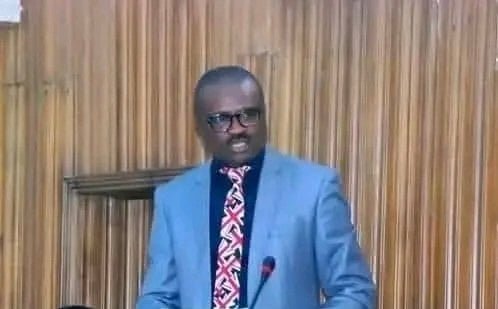
The Cross River State House of Assembly has suspended the lawmaker representing Obubra I State Constituency, Dickson Agbor, indefinitely over allegations of domestic assault. The decision followed a motion moved by Davies Etta and seconded by Francis Bassey Asuquo during plenary on Thursday. Presenting the motion, Etta criticised the alleged conduct involving Agbor, describing it as inappropriate for a member of the legislature and inconsistent with the ethical standards expected of lawmakers. He stressed that the Assembly must take firm action to protect its credibility and public image, noting that members are expected to act in ways that reflect the trust placed in them by the public. After deliberations, the House resolved to suspend Agbor indefinitely from all legislative activities while further investigations into the allegation continue. The Assembly also approved the formation of an ad hoc committee tasked with probing the matter and submitting its findings to the House for possible further legislative action. Following the resolution, Agbor was escorted out of the chamber by the Sergeant-at-Arms in line with the Assembly’s directive. Reacting to the development, the Speaker of the House, Elvert Ayambem, said the legislature remains committed to maintaining discipline, dignity and the integrity of the institution. Ayambem emphasised that lawmakers must conduct themselves in a manner that reflects the confidence placed in them by the people. He added that the Assembly would not tolerate any behaviour capable of undermining the reputation of the legislature. According to the House, the suspension will remain in effect pending the outcome of the investigation by the committee set up to examine the allegation.

zz-22.jpg

2min8720
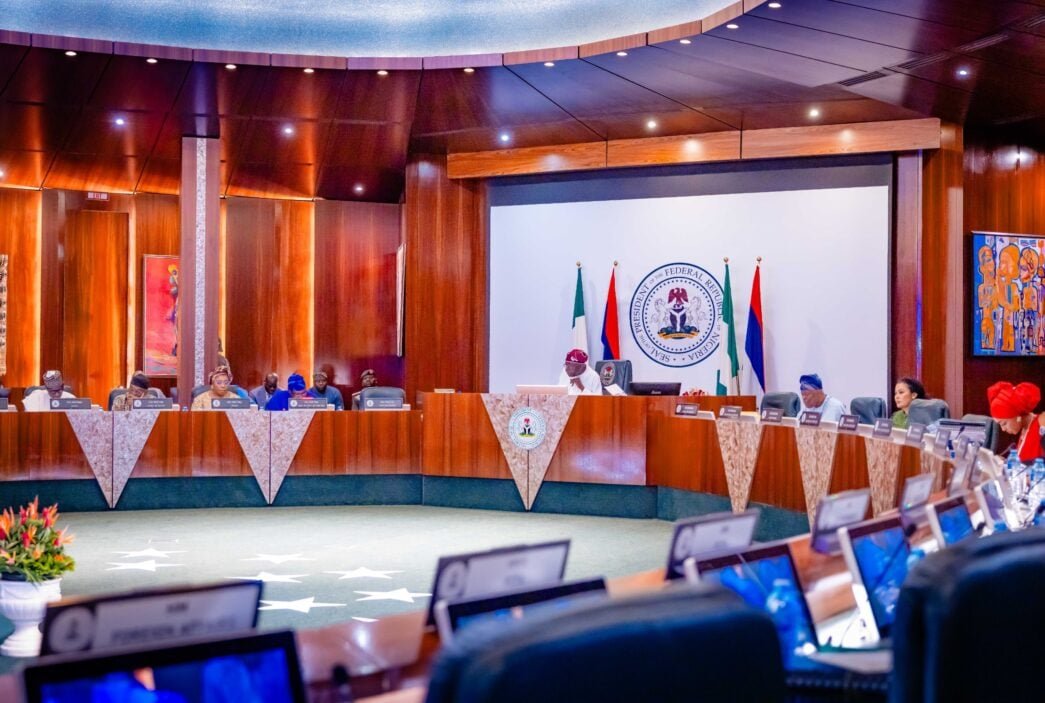
The Federal Executive Council has approved the introduction of a new Exit Benefit Scheme that will grant retiring federal civil servants a gratuity equivalent to 100 per cent of their total annual emolument. The scheme, which takes effect from January 1, 2026, represents a major step in the Federal Government’s effort to strengthen the welfare system within the civil service, ensuring that officers who have served for at least 10 years retire with improved financial security. This was disclosed in a statement issued by the Director of Public Relations in the Office of the Head of the Civil Service of the Federation, Eno Olotu. According to the statement, the approval followed extensive consultations and technical contributions from an Inter-Ministerial Technical Committee set up by the Office of the Head of the Civil Service of the Federation. The committee worked alongside the National Pension Commission, the Budget Office of the Federation, and the Office of the Accountant-General of the Federation to develop a sustainable framework for implementing the scheme. The Exit Benefit Scheme is designed to complement the existing Contributory Pension Scheme by providing additional financial support for retiring officers in treasury-funded ministries, extra-ministerial departments and agencies. The Didi Walson-Jack commended the council for what she described as a landmark approval, noting that it demonstrates the government’s recognition of the dedication and contributions of federal civil servants. She said the new scheme would significantly improve the retirement benefits of public servants and strengthen confidence in the government’s commitment to their welfare. Walson-Jack added that the initiative aligns with ongoing reforms aimed at building a more motivated, performance-driven and people-focused civil service. She also assured that detailed implementation guidelines would be released in due course. The introduction of the gratuity payment comes 22 years after the adoption of the Contributory Pension Scheme and underscores the Federal Government’s continued efforts to enhance the welfare and future security of civil servants.

zz-21.jpg

2min7840
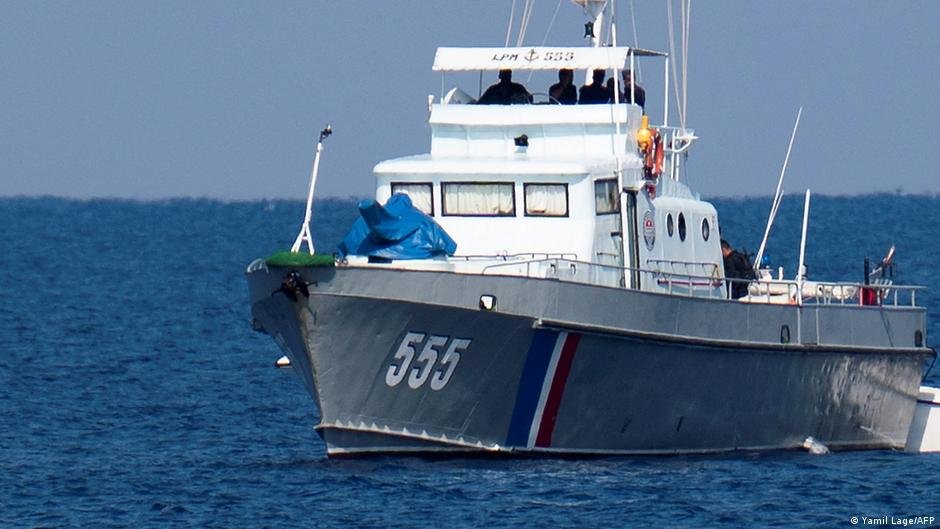
Cuban authorities said on Thursday that a fifth crew member from a U.S.-flagged speedboat involved in an exchange of gunfire with the coast guard last week has died from injuries sustained during the incident. Prosecutors have filed terrorism charges against the surviving crew members, who are suspected of attempting to smuggle weapons into Cuba in a bid to destabilise the communist government in Havana. In a statement broadcast on state television, the Interior Ministry said one of the injured survivors, Roberto Alvarez Avila, died on March 4 as a result of the wounds he suffered. The confrontation occurred on February 25 when a Cuban coast guard vessel approached the speedboat to request identification. Authorities said the crew of the vessel responded by opening fire, prompting a response from the coast guard. Four other people aboard the boat were killed during the clash, which took place less than a nautical mile from Cuba’s coastline. Officials said the speedboat, registered in the United States, was carrying multiple firearms, including 14 rifles, 11 pistols and nearly 13,000 rounds of ammunition. The Interior Ministry added that investigations into the incident were ongoing and being conducted with cooperation from U.S. authorities, including the sharing of evidence and other joint efforts. At least two of those on board the vessel were reported to be U.S. citizens, with one among those killed. The administration of U.S. President Donald Trump has previously expressed support for political change in Cuba and imposed strict measures on the island, including an energy blockade following the removal of Venezuelan leader Nicolás Maduro, who had been Cuba’s main oil supplier.

Tech & Tools Desk6 March 2026
zz-9-1280x819.webp

2min8630
A fresh barrage of Iranian missiles triggered multiple explosions across Tel Aviv on Friday, as firefighters battled a fire at a residential building near Israel’s commercial centre. The developments followed Israel’s expansion of its campaign against Hezbollah, with the Israeli government pledging retaliation against the Tehran-backed group after it joined the conflict in the wake of the killing of Iran’s Supreme Leader, Ali Khamenei, on Saturday. Iran’s state broadcaster reported that Tehran had launched missiles at targets in central Tel Aviv, while Israel’s military said it was working to intercept incoming projectiles late Thursday. Journalists in Tel Aviv reported hearing two almost simultaneous waves of explosions across the city. Streaks from rockets were also visible in the skies over Netanya, located north of Tel Aviv along the Mediterranean coast. Following the incident, Israel’s emergency service, Magen David Adom, said its teams inspected several reported impact sites but recorded no casualties. The Israeli police also confirmed they were responding to incidents involving fallen projectiles in central Israel, noting that while some property damage was reported, there were no injuries. One projectile struck a building on the outskirts of Tel Aviv, prompting residents to evacuate. At another residential location near the city’s economic district, firefighters worked to extinguish a fire caused by debris after an Iranian rocket was intercepted. Meanwhile, Israel’s Home Front Command issued several rocket alerts early Friday for communities near the Lebanon border.

zz-8.webp

2min3740
The United States government on Thursday temporarily eased certain economic sanctions on Russia to allow Russian oil currently stranded at sea to be sold to India. In a statement, the U.S. Treasury Department said its Office of Foreign Assets Control had issued a Russia-related licence authorising the delivery and sale of crude oil and petroleum products of Russian origin that were already loaded on vessels as of March 5, 2026, to India. According to the department, the authorised transactions, including those involving vessels affected by various sanctions regimes, will be permitted until the end of April 3, 2026. U.S. Treasury Secretary Scott Bessent said the waiver was introduced to ensure that oil continues to flow into the global market. He explained that the short-term measure would not provide significant financial gains for the Russian government, as it only covers oil that was already stranded at sea. Bessent also noted that the move is intended to ease pressure created by Iran’s attempts to disrupt global energy supply, even though India has indicated it plans to halt purchases of Russian oil as part of a trade agreement with the United States. Last November, U.S. President Donald Trump imposed sanctions on major Russian oil companies, including Lukoil and Rosneft, in a rare effort to increase pressure on Russia over its invasion of Ukraine. The sanctions prompted several major buyers of Russian oil to look for alternative suppliers. Reports have also indicated that Russia has assembled a fleet of ageing oil tankers with unclear ownership structures to bypass sanctions imposed by the United States, the European Union, and the G7 following Moscow’s full-scale invasion of Ukraine in 2022.

zz-20.jpg

2min2870
A lecturer at Akwa Ibom State Polytechnic, Abel Udo Jacob, and his accomplice, Innocent Nicholas Ntokon, have been sentenced to a combined 11 years in prison by the Akwa Ibom State High Court sitting in Ikot Ekpene for their roles in a N50 million extortion scheme. Delivering judgment on Wednesday, Justice Augustine Odokwo found the two men guilty of subjecting businessman Edikan Jacob Jackson to years of threats, intimidation and financial exploitation, which led to losses exceeding N50 million. The court heard that between 2016 and 2020, Ntokon, identified as a leader of the Klans Confraternity, allegedly led a prolonged campaign of intimidation against the victim. He was said to have sent armed associates to the businessman’s shops and issued threats against members of his family in order to force him into making monthly payments. Jacob, the lecturer, was found to have played a key role in the operation by acting as the group’s financial intermediary, allowing the extorted money to pass through his bank account. In a judgment that lasted about two hours, Justice Odokwo described Ntokon as someone who concealed his activities behind the appearance of being a trader while engaging in cult-related and extortion activities. Ntokon received an eight-year prison sentence on charges including demanding with menace, stealing, terrorism and cultism, while Jacob was sentenced to three years for demanding with menace, stealing and terrorism. The sentences are to run concurrently, bringing their combined jail term to 11 years. The court also ordered the convicts to jointly pay N25 million in restitution to the victim, stressing that criminal activity must not yield benefits. In addition, a Toyota Avensis and a Mercedes-Benz identified as proceeds of the crime were ordered forfeited to the state and will be auctioned, with the proceeds used as part compensation for the victim.

zz-19.jpg

1min8090
The Kano State House of Assembly on Thursday began impeachment proceedings against the state’s Deputy Governor, Aminu Abdulsalam, over allegations of misconduct, abuse of office, and breach of public trust. The impeachment notice was presented during plenary by the Majority Leader, Lawan Dala, and read by the Speaker, Ismail Falgore. Lawmakers said the action is based on Section 188 of the Constitution of the Federal Republic of Nigeria (1999), which empowers a state legislature to initiate impeachment proceedings against a deputy governor accused of gross misconduct. A total of 38 lawmakers signed the impeachment notice, and the Speaker directed that Abdulsalam be formally served in accordance with constitutional procedures. The development comes amid ongoing political tensions in Kano State following the defection of Governor Abba Yusuf from the New Nigeria Peoples Party to the All Progressives Congress last year. Abdulsalam declined to follow the governor in the defection and chose to remain with the NNPP. His decision reportedly intensified divisions within the state government, fueling speculation about his political future and contributing to the ongoing impeachment process.

Tech & Tools Desk5 March 2026
zz-17.jpg

2min3430
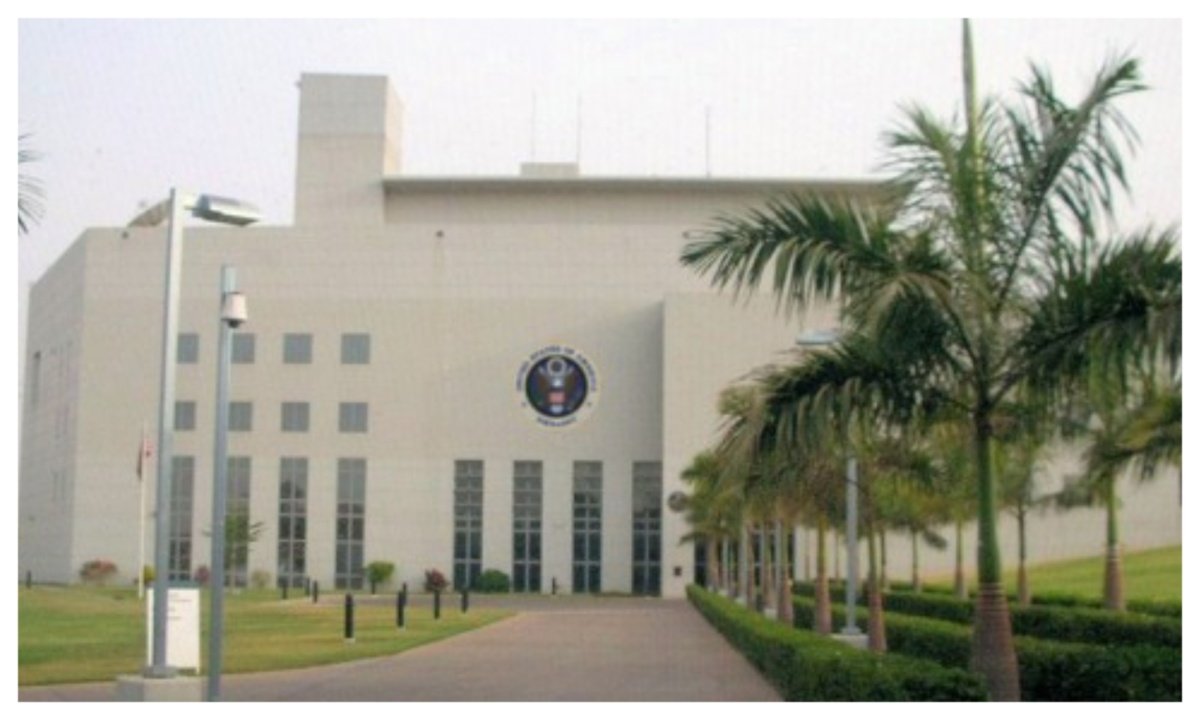
The United States Mission in Nigeria has announced the temporary closure of the U.S. Embassy Abuja for routine services, citing concerns about possible protests in the nation’s capital. In a notice posted on its official account on X (formerly Twitter) on Thursday, the mission said the embassy would remain closed for routine business until Monday, March 9, 2026. The statement explained that visa appointments scheduled for March 4 and 5, along with American Citizen Services appointments set for March 5, had been moved to new dates next week. Applicants seeking visas were advised to check their email or their AVITS account for updated appointment details, while those with American Citizen Services appointments were also urged to review their email notifications for rescheduling information. The mission added that visa applicants who do not receive a new appointment date should request assistance through the Visa Navigator platform and encouraged the public to monitor its official website and social media channels for further updates. The development follows earlier reports that visa appointments scheduled for March 4 had been cancelled due to security concerns linked to planned demonstrations in Abuja amid tensions related to the ongoing conflict involving Iran. Security agencies were reportedly heavily deployed across Abuja on Wednesday over the possibility of protests by members of the Islamic Movement in Nigeria. Similar demonstrations had previously taken place in states including Niger State, Sokoto State, Kaduna State, Yobe State, Bauchi State, Gombe State, and Lagos State. The group was reported to have described the demonstrations as a peaceful show of solidarity with Iran following reports about the death of the country’s Supreme Leader, Ali Khamenei, in airstrikes allegedly carried out by the United States and Israel.