Blog - Edupreneur Select

Bring to the table win-win survival strategies to ensure proactive domination. At the end of the day, going forward, a new normal that has evolved from generation.
Ifeanyi Enukorah1 February 2026

Valentine-Gift-Ideas-Final-1280x905.jpg

7min10290
As an Amazon Associate, Edupreneur earns from qualifying purchases. In my role as a facilitator, I often emphasize that the strongest communities—whether in schools or homes—are built on intentional appreciation. Valentine’s Day isn’t just for romance; it’s a vital “Season of Appreciation” to acknowledge the educators who inspire, the parents who support, and the students who strive every day. To build a more connected and supportive environment in 2026, we must prioritize gestures that foster well-being, focus, and joy. Here are the curated essentials for every member of your learning community. For Educators: The “Self-Care & Sanctuary” Kit Teaching is a high-output profession that requires significant emotional and physical energy. The best gift for an educator is one that facilitates a moment of sensory reset and professional comfort. Top Recommendation: Soy Wax Aromatherapy Candle Set. Why it works for you: These natural candles provide a calming atmosphere for grading or unwinding. Scents like lavender or eucalyptus help lower stress levels after a long day of instruction. Facilitator Insight: We call this “Environment Engineering.” In leadership workshops, I teach that your physical space dictates your mental state. A small aesthetic upgrade, like a high-quality candle or a sleek desk organizer, acts as a “micro-moment” of peace. Check on Amazon for the following suggested products: (As an Amazon Associate, Edupreneur earns from qualifying purchases) Aromatherapy Candle Sets Natur IX Calming Soy Scented Candles for Women | Non Toxic Soy Candles for Home, Birthday, Christmas Gifts & Aromatherapy | Organic Essential Oil, 50 H Burning | Lavender, Basil & Jasmine, 8.5 oz https://amzn.to/3NMJipz Professional Desk Decor Set of 4 – Concrete Desk Accessories For Modern, Industrial, Minimalist Office Decor- Aesthetic Desk Organizers Accessories For Women or Men- Pen, Business Card Holder & Sticky Note, Paper Clip Holder https://amzn.to/4br1dvG   For Parents & Guardians: Tools for Connection For parents, Valentine’s Day is an opportunity to strengthen family bonds through shared experiences. Moving beyond traditional candy allows for deeper engagement and the development of critical life skills. Top Recommendation: The Monopoly Family Board Game (8+ Edition). Why it works for you: It turns essential concepts like budgeting, risk assessment, and negotiation into a fun, hands-free evening. It’s an investment in your child’s financial literacy. Facilitator Insight: Game-based learning is one of the most effective ways to teach resilience. Facing “bankruptcy” in a game is a safe way for children to practice coping with losses and celebrating wins alongside their guardians. Check on Amazon for the following suggested products: (As an Amazon Associate, Edupreneur earns from qualifying purchases) Monopoly Board Game Hasbro Gaming Monopoly Sparkle Edition Board Game, Family Games, with Glittery Tokens, Pearlescent Dice, Sparkly Look, (Amazon Exclusive)  https://amzn.to/46fQeBL Family Connection Games 200 Family Conversation Cards – Put Down The Phones & Connect with Family – Get to Know Each Other Better with Meaningful Talk – Let Kids Express Themselves, Great for Dinner Table & Road Trips https://amzn.to/4k98kuV   For Students: The “Focus & Affirmation” Bundle Students thrive when their hard work is recognized. Providing tools that make their study environment more inviting and organized can directly impact their academic confidence and focus. Top Recommendation: Heart-Shaped Super Sticky Notes. Why it works for you: These are vibrant and functional, perfect for marking key concepts in textbooks or leaving positive affirmations on a study desk. Facilitator Insight: Visual cues are powerful memory aids. Encouraging students to use unique shapes for their most important goals helps with retention and makes long study sessions feel more personalized and engaging. Check on Amazon for the following suggested products: (As an Amazon Associate, Edupreneur earns from qualifying purchases) Heart-Shaped Post-its Teling 24 Pack Valentine’s Day Sticky Notes Heart Lined Sticky Notes Self Adhesive Love Memo Pads for Valentines Party Exchange Gifts Office Home School 3×3 Inch(Bright Color,Classic) https://amzn.to/4roObDF Student Productivity Tools Rotating Pomodoro Timer 5, 25, 10 50 Minutes Preset, Desk Productivity Flip Timer, ADHD Tool Cube Countdown Stopwatch, Vibration/High/Low Volume/Custom Modes, for Work, Study, Back to School, Kitchen https://amzn.to/4tb4ANF  

aa-10.jpg

2min8220
Chairman of the Presidential Committee on Fiscal Policy and Tax Reforms, Taiwo Oyedele, has called on Nigerians to ensure they file their annual tax returns on or before March 31, stressing that compliance is mandatory for both employers and individual taxpayers. Oyedele made the appeal during a webinar organised for HR managers, payroll officers, CFOs and tax managers in partnership with the Joint Revenue Board. Speaking in the session, he noted that while some employers have already submitted annual returns for their employees, others still have only a short window to do so, including filing projections of staff remuneration. He expressed concern over the low level of compliance with self-assessment filing among individuals, describing it as a major weakness in Nigeria’s tax system. According to him, in many states, even the most advanced, fewer than five per cent of taxpayers file their returns. Oyedele clarified that employees are still required to file tax returns even when their employers deduct taxes at source, stressing that this obligation exists under both the old and new tax laws. He assured taxpayers that efforts are ongoing to simplify the filing process, adding that everyone regardless of income level is required to submit returns for the previous fiscal year by March 31. Oyedele also disclosed that under the new tax regime, businesses benefiting from tax incentives must now declare such incentives in their filings, in line with new disclosure requirements aimed at improving transparency and compliance.

aa-9.jpg

4min4860
Chairman of the Presidential Committee on Fiscal Policy and Tax Reforms, Taiwo Oyedele, has said the widely discussed “power of substitution” in Nigeria’s tax framework is neither new nor unusual, noting that it has long existed in the law. Oyedele made the clarification during a webinar on the implementation of the Tax Reform Acts for HR professionals, payroll managers, CFOs and tax managers, organised in collaboration with the Joint Revenue Board. Speaking during the session, he explained that the power of substitution enables tax authorities to act when taxpayers fail to file returns or when declared income does not align with available information such as bank transactions, property purchases or foreign travel records. According to him, misconceptions around the provision stem from a lack of awareness. He said the power has been part of tax legislation for decades and is a standard practice globally, though it may be referred to by different names such as garnishment orders or third-party agency in other jurisdictions. Oyedele outlined the procedure, noting that tax administration begins with self-assessment. If a taxpayer fails to file returns or provides information that conflicts with verified data, the tax authority is required to notify the individual and request an explanation. Where no response is provided or the explanation is unsatisfactory, the authority may issue an assessment based on available information, which the taxpayer has the right to challenge. He explained that taxpayers can object to an assessment within a specified period, and the tax authority is obliged to review the objection and amend the assessment where necessary. If disagreement persists, the matter can be taken to the tax tribunal, and subsequently to higher courts, including the High Court, Court of Appeal and, in some cases, the Supreme Court, before any tax liability becomes final and enforceable. Oyedele stressed that only after all appeal processes are exhausted and a taxpayer still fails to pay within the stipulated time can the tax authority direct third parties, including banks holding the taxpayer’s funds, to remit the owed amount to the government. He dismissed claims that tax authorities can arbitrarily debit bank accounts, insisting the process cannot occur without the taxpayer’s knowledge, as multiple notices and opportunities to respond are provided. He added that the new tax legislation strengthens safeguards against abuse by expanding access to dispute-resolution mechanisms such as tax tribunals. On compliance, Oyedele urged employers to file annual tax returns for their employees and encouraged individuals to submit their self-assessments, noting that compliance levels remain extremely low across many states. He emphasised that employees are still required to file returns even if taxes have already been deducted by their employers. He also said businesses benefiting from tax incentives must now disclose such incentives in their tax filings. Oyedele concluded that successful implementation of the reforms would benefit individuals, businesses and investors alike, adding that households would gain from lower income taxes and the removal of VAT on basic consumption items.

aa-7.jpg

3min4300
The King Kosoko Royal Family has rejected as false and misleading a petition challenging the appointment of veteran actor Babajide “Jide” Kosoko as the Oloja of Lagos-elect, insisting the process followed tradition, family consensus and due procedure. In a statement, the family said the petition submitted to the Lagos State Government by a faction of the Akinsanya Olojo-Kosoko ruling house does not represent the position of the King Kosoko Royal Family and should be ignored. According to the family, there is no dispute over the Oloja stool. They explained that Jide Kosoko’s appointment was a lawful step taken to resolve a long-standing irregularity after Prince Abiola Olojo Kosoko, named Oloja-elect in 2020, was not installed as of 2026. The statement said the decision to withdraw Abiola and appoint Jide Kosoko was reached collectively by the heads of the family branches after careful deliberation on the matter and its impact on the family’s unity and legacy. It also described the petition as “hypocritical and misleading,” noting that its alleged authors, Prince Surajudeen Abiodun Olojo-Kosoko and Prince Theophilus Olojo-Kosoko, were present at the meeting where the decision was unanimously taken. The family disclosed that the meeting was held on Saturday, January 24, 2026, at the residence of the Olori Ebi General, Mutiat Ashabi Ali-Balogun, and was attended by key family stakeholders, including Prince Olojo Kosoko. Jide Kosoko was subsequently presented to the wider family at a general meeting at Iga Kosoko on Tuesday, January 27, 2026. Responding to claims of external influence, the family dismissed suggestions that the Oba of Lagos played any role in the appointment, stressing that Oba Rilwanu Akiolu neither selected nor imposed the Oloja-elect on the family. The King Kosoko Royal Family called on Lagos State Governor Babajide Sanwo-Olu and the public to disregard the petition, describing it as driven by personal grievances rather than tradition or law. While acknowledging the right of aggrieved parties to seek legal redress, the family maintained that its decisions remain final and binding.

Tech & Tools Desk31 January 2026
aa-6-1280x720.jpg

5min4290
One of the first people in the UK to receive Elon Musk’s Neuralink brain implant has described the experience as “magical”, saying the technology has given him renewed hope and could transform life for people with severe paralysis. Sebastian Gomez-Pena, a volunteer in the UK’s first trial of the Neuralink device, said the implant has been life-changing since an accident left him paralysed from the neck down. “It’s a massive change in your life when you suddenly can’t move any of your limbs,” he said. “This kind of technology gives you a new piece of hope.” Seb was studying medicine when the accident happened. He is now one of seven participants in the UK safety and reliability trial. The Neuralink chip, connected to 1,024 electrodes implanted in his brain, was fitted during a five-hour operation at University College London Hospital. The procedure involved British surgeons and Neuralink engineers, with the electrodes inserted by the company’s specialised robotic system designed to place microscopic threads into delicate brain tissue. The electrodes were positioned around four millimetres into the part of Seb’s brain that controls hand movement. Signals from his brain are transmitted through ultra-thin threads to the chip, which sends data wirelessly to a computer. Artificial intelligence software then learns to interpret those signals, allowing Seb to control a cursor on a screen simply by thinking about moving his hand or fingers. “When I think about moving my hand, it’s amazing to see that something actually happens,” he said. “You just think it and it does it.” During a demonstration, Seb navigates his laptop with ease, opening files, highlighting text and scrolling through documents as smoothly as someone using a mouse or trackpad. The neurosurgeon leading the UK trial, Mr Harith Akram, said the level of control achieved so far is remarkable. “It’s mind-blowing to see how much control he has,” he said, adding that the technology could become a “game-changer” for people with severe neurological disabilities who currently have very limited options to regain independence. Neuralink’s technology has taken nearly a decade to develop, combining advanced implants, surgical robotics and AI systems. The first human implant took place in the US two years ago, and a total of 21 people across the US, Canada, the UK and the UAE have now received the device. All participants have severe paralysis caused by spinal injuries, strokes or neurodegenerative conditions such as ALS. While results from the trials have not yet been published in peer-reviewed journals or submitted to regulators, early indications are encouraging. Some users can already type on virtual keyboards by thought alone, while others have used robotic arms to feed themselves. In addition to restoring movement, other trials are exploring whether similar implants could help people regain speech after stroke or brain injury. The company has also outlined longer-term ambitions, including research into restoring vision and even allowing users to control humanoid robots remotely. Despite its promise, experts caution that larger and longer trials are still needed to prove the technology’s safety, reliability and long-term benefits before it can be approved for widespread use. For now, progress depends on volunteers like Seb, whose determination is helping to push the boundaries of what brain-computer technology might one day achieve.

Ifunanya Okafor31 January 2026
aa-4.jpg

3min4790
The United Nations is facing the threat of an “imminent financial collapse” as member states fail to pay their mandatory contributions, Secretary-General António Guterres has warned. In a letter to all 193 member states, Guterres said the UN’s financial crisis is deepening and could leave the organisation without sufficient funds by July, severely disrupting programme delivery. He urged countries to either settle their assessed fees in full and on time or agree to a fundamental overhaul of the UN’s financial rules to avert collapse. The warning follows decisions by several countries to withhold payments, including the United States the UN’s largest contributor which has refused to fund the organisation’s regular and peacekeeping budgets and withdrawn from multiple UN agencies it has described as a waste of taxpayer money. Other member states are also in arrears or have declined to pay altogether. Although the UN General Assembly approved limited reforms to the organisation’s financial system in late 2025, the UN continues to face a severe cash shortage. The situation has been worsened by a rule requiring the UN to refund unspent funds, even when those funds were never received. Guterres described this as a “double blow” that forces the organisation to return money it does not have. According to the secretary-general, only 77% of assessed contributions were paid in 2025, leaving a record level of unpaid dues. “We cannot execute budgets with uncollected funds, nor return funds we never received,” he said, noting that the UN was compelled this month to return $227m as part of its 2026 assessment. At UN offices in Geneva, cost-cutting measures are already visible, with escalators switched off and heating reduced in an effort to conserve cash. The funding crisis is having tangible consequences across the UN system. The human rights office has warned that serious abuses may go uninvestigated due to a lack of resources. In Afghanistan, UN Women has shut down mother and baby clinics, while the World Food Programme has reduced food rations for refugees fleeing the conflict in Sudan. Guterres said the UN has weathered financial crises before, but stressed that the current situation is “categorically different” and poses a direct threat to the integrity and functioning of the entire organisation.

asia-markeet.avif

5min4470
Asian stocks fell on Friday amid renewed concerns over heavy investments in artificial intelligence, while gold and silver pulled back after hitting record highs. Oil prices also eased on hopes of a de-escalation in US-Iran tensions. Markets have experienced significant volatility this week as investors navigated a weaker dollar, renewed tariff warnings, potential US government shutdown risks, and geopolitical uncertainty. Optimism in the tech sector around AI had supported equities earlier, boosted by strong earnings reports from companies including Meta, Samsung, and SK hynix. However, sentiment was dented on Thursday after Microsoft reported a surge in AI infrastructure spending, raising concerns about the time it might take for firms to see returns on these investments. Analysts also cautioned that tech valuations could be stretched following a long rally. “Microsoft suffered its worst session since the COVID-era crash, falling 12 percent and accounting for over two-thirds of the S&P 500’s decline,” noted Rodrigo Catril of National Australia Bank, citing rising investment costs, slower growth in Azure cloud services, and a longer path to monetising AI. Wall Street closed mostly lower, with the Dow being the sole gainer. Asian markets also struggled amid speculation that US President Donald Trump may nominate former Fed governor Kevin Warsh—known for his hawkish stance on interest rates—as the next Federal Reserve Chair. Major Asian indices in Hong Kong, Shanghai, Tokyo, Sydney, Singapore, Taipei, and Bangkok all declined, while Seoul, Manila, and Wellington posted gains. European markets were mixed, with Paris flat following slower-than-expected growth in France, London opening lower, and Frankfurt rising. In Indonesia, Jakarta rebounded after a two-day sell-off triggered by MSCI concerns over market transparency. MSCI warned that if sufficient improvements were not made by May 2026, it could reduce Indonesia’s weighting in its Emerging Markets Indexes and potentially reclassify the country from Emerging Market to Frontier Market status. Gold eased to around $5,150 an ounce after reaching a peak above $5,595, while silver fell to $106 from over $121. Precious metals were also pressured by a slightly stronger dollar, despite recent weakness influenced by Trump’s comments supporting a lower dollar. Investors remain alert to developments in the Middle East after the US sent a naval presence to the region and issued warnings to Iran over nuclear negotiations. Crude contracts fell over 1 percent after spiking as much as 5 percent the previous day, reflecting ongoing fears of conflict in the oil-rich region, which could drive prices higher and increase inflationary pressures. In Washington, the US Senate moved closer to a vote on a funding bill to prevent a government shutdown after a standoff over immigration policy. Current federal funding is set to lapse at midnight Friday. Key figures: Tokyo – Nikkei 225: DOWN 0.1% at 53,322.85 Hong Kong – Hang Seng: DOWN 2.1% at 27,387.11 Shanghai – Composite: DOWN 1.0% at 4,117.95 London – FTSE 100: DOWN 0.2% at 10,150.97 WTI crude: DOWN 1.7% at $64.32 per barrel Brent crude: DOWN 1.6% at $68.50 per barrel Euro/USD: DOWN at $1.1940 from $1.1962 Pound/USD: DOWN at $1.3781 from $1.3800 Dollar/Yen: UP at 153.74 from 153.04 Euro/Pound: DOWN at 86.63p from 86.67p New York – Dow: UP 0.1% at 49,071.56

stamerr.webp

5min3560
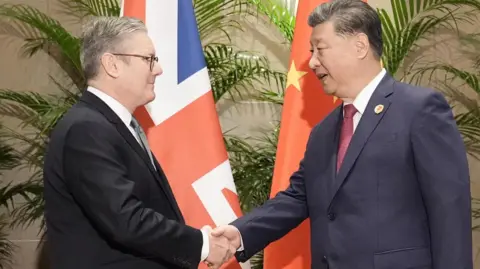
Sir Keir Starmer’s visit to China this week signals a potential end to the diplomatic “ice age” that has characterised UK–China relations in recent years. Both leaders are facing domestic economic pressures and are exploring new opportunities for trade and investment. For Sir Keir, the first UK prime minister to visit China since Theresa May in 2018, the trip offered a platform to showcase British strengths in sectors such as finance, pharmaceuticals, healthcare, clean energy, and automotive manufacturing. President Xi Jinping sought to demonstrate that China remains a reliable partner for Western economies amid ongoing global trade tensions. While no comprehensive free trade agreement was reached, the visit marked a cautious but tangible reset of UK–China economic ties. Agreements covering visas, services, healthcare, green technology, and finance, combined with revived dialogue, could enhance access for British firms to Chinese markets and attract greater Chinese investment in the UK. Key agreements and deals AstraZeneca announced plans to invest $15 billion (£11 billion) in China over the next four years, expanding research and pharmaceutical manufacturing—its largest investment in the country to date. In the energy sector, British company Octopus Energy is entering the Chinese market through a partnership with local firm PCG Power, developing a digital platform for trading electricity. The project aims to improve efficiency in the power system and support China’s renewable energy expansion. The deal allows Octopus Energy to access China’s growing market for clean energy and digital trading solutions. China also agreed to halve tariffs on Scotch whisky, a move projected to generate £250 million for the UK economy over five years. Sir Keir described the reduction as “proof that pragmatic international engagement brings benefits at home,” highlighting whisky’s importance to Britain’s drinks sector, with exports exceeding £5 billion annually. Another outcome of the trip was visa-free travel for British citizens visiting China for up to 30 days for holidays or business, putting the UK on par with around 50 other countries. Both sides also committed to cooperate on disrupting migrant-smuggling networks, a key priority for the UK government. Benefits for China For Beijing, renewed ties with the UK signal that it remains a dependable partner for Western economies, despite US trade tensions. The reset ensures Chinese exporters of high-value goods, including electric vehicles, solar panels, and clean energy products, maintain access to the UK market, while also creating opportunities for Chinese investment in British services, finance, and green technology. Chinese media framed the visit as a step toward transforming the “potential of China–UK cooperation into tangible achievements” benefiting both countries. British firms highlighted the mutual benefits of expanded partnerships, including opportunities to deliver affordable, secure, and clean energy solutions to both markets. Challenges remain Foreign businesses continue to note challenges in operating in China, citing red tape, complex regulations, and limited transparency, which can complicate investment and create uncertainty. Despite these challenges, Sir Keir’s visit reflects a pragmatic approach to boosting economic growth while managing geopolitical risks. He has emphasised that the UK does not need to choose between Washington and Beijing, framing the reset as a way to strengthen domestic growth while balancing international relationships. At the UK–China Business Forum in Beijing, Sir Keir described his meetings with Xi as “very warm” and stressed the significance of agreements on visa-free travel and whisky tariffs, which provide British firms with enhanced access to the Chinese market and help build mutual trust and respect. The visit is part of a broader trend of European and Commonwealth leaders engaging with Beijing to diversify trade partners and secure new markets amid US trade unpredictability. Countries including France, Canada, and Finland are closely monitoring the deals the UK and others are negotiating with China to remain competitive in attracting investment and accessing the world’s second-largest economy.

uk-starmeer-1280x839.jpg

5min6370
Donald Trump described it as “very dangerous” for the UK to engage in business with China, as Prime Minister Sir Keir Starmer arrived in Shanghai on the third day of his visit to the country. The US president’s comments followed the announcement of agreements aimed at boosting trade and investment between the UK and China, made after Sir Keir’s meeting with Chinese President Xi Jinping. Speaking at the premiere of a documentary about his wife Melania on Thursday, Trump referred to Xi as a “friend” and said he knew the Chinese president “very well.” UK Business Minister Sir Chris Bryant countered Trump’s warning, calling it “wrong” and describing it as “bonkers, frankly, for the UK to ignore China’s role on the world stage.” He added, “Of course, we engage with China with our eyes wide open.” Bryant also noted that Trump is scheduled to visit China in April. Downing Street stated that Washington had been informed in advance of Sir Keir’s trip and its objectives. At the Melania film premiere, a reporter asked Trump about UK-China business ties, to which he gave only brief remarks before pivoting to a warning about Canada. “It’s even more dangerous, I think, for Canada,” Trump said, adding that the country “is not doing well” and “you can’t look at China as the answer.” Earlier this week, Trump threatened tariffs on Canada over deals struck with China during Prime Minister Mark Carney’s visit to Beijing. Meanwhile, Sir Keir described the UK-China relationship as being in a “good, strong place” following his talks with Xi at the Great Hall of the People. “The meetings provided just the level of engagement we hoped for,” he said on Friday at the UK-China Business Forum in Beijing. “We warmly engaged and made real progress, because the UK has a huge amount to offer.” Several agreements emerged from Sir Keir’s visit, including visa-free travel arrangements, lower tariffs on UK whisky, and a £10.9 billion investment by AstraZeneca to build manufacturing facilities in China. Another agreement on tackling organised crime and illegal immigration will see the UK and China share intelligence to track people-smuggling networks, noting that inflatable dinghies used in small boat crossings often contain parts sourced from China. Other deals included cooperation to reduce red tape for UK exporters and collaboration on health challenges such as antimicrobial resistance. In 2025, the US was the UK’s largest single-country trading partner, with China ranking fourth, according to the Department for Business and Trade. Chris Torrens, chair of the British Chamber of Commerce in China, described Sir Keir’s visit as “successful” and said it made sense for the UK to engage China, one of its largest trading partners. He also noted that other Western leaders had recently visited Beijing or planned to do so, and highlighted that the US itself may conduct trade deals with China this year. Sir Keir arrived in Shanghai on Friday morning, concluding his China visit before traveling to Tokyo to meet Japanese counterpart Sanae Takaichi for a working dinner. The visit has drawn criticism from opposition MPs over potential risks to UK national security and concerns over Xi’s human rights record. China has faced UN accusations of serious human rights violations against Uyghurs and other mostly Muslim ethnic groups and has been criticised over the treatment of Hong Kong media tycoon Jimmy Lai, who is facing life imprisonment. Shadow Home Secretary Chris Philp accused Sir Keir of “kowtowing to President Xi” and trading “national security for economic crumbs off the Chinese table.” Earlier this month, the government faced similar criticism for approving China’s plans for a large new embassy in central London. Security Minister Dan Jarvis said intelligence agencies were “integral” to that decision and confirmed that any associated risks were being appropriately managed.

Tech & Tools Desk30 January 2026
Police-Service-Commission-1.webp

4min5190
The Police Service Commission (PSC) has approved the promotion of 26,119 Inspectors to the rank of Assistant Superintendent of Police II, alongside the advancement of senior officers to higher positions. The announcement was made on Thursday by PSC spokesperson Torty Kalu, following the commission’s third plenary meeting. According to the statement, the commission also ratified the promotion of Assistant Inspector-General of Police Funsho Adegboye to Deputy Inspector-General of Police, as well as the elevation of Commissioners of Police Danjuma Aboki and Dansabo Idi to the rank of Assistant Inspector-General of Police. “The Police Service Commission has approved the elevation of one DIG, two AIGs, and over 26,000 Inspectors following its third plenary meeting,” the statement read. It added, “Assistant Inspector-General of Police Funsho Adegboye has been promoted to Deputy Inspector-General of Police. Commissioners of Police Danjuma Aboki and Dansabo Idi were promoted to Assistant Inspector-General of Police after a rigorous merit-based process, including written examinations and oral interviews conducted by the Commission.” Kalu noted that the promotion of the 26,119 Inspectors was based on their performance in the recently concluded Departmental Selection Board Examination. “In a landmark decision reflecting its commitment to career progression, the Commission also approved the promotion of 26,119 Inspectors to Assistant Superintendent of Police II,” he said. Before his promotion, Adegboye served as Assistant Inspector-General of Police in charge of the Police Mobile Force at the Force Headquarters, Abuja. His career includes roles in Operations, Training, and Administration, as well as command positions such as Divisional Police Officer, Area Commander in Ijero and Ile-Ife, Deputy Commissioner of Police Operations in Ondo State, and Commissioner of Police in Homicide, the Force Intelligence Department, and Edo State Command. He has also participated in United Nations missions in Kosovo, Liberia, Timor, and Somalia. Aboki previously served as Commissioner of Police in charge of the Imo State Police Command, while Idi was Acting Assistant Inspector-General of Police overseeing Research and Planning at Force Headquarters, Abuja. Idi’s prior postings include Divisional Police Officer in Kebbi and Kaduna, Officer-in-Charge of the Criminal Investigation Branch in Kebbi, Area Commander in Yauri, Owo, Awe, and Kosoboso, Commander of the 63 Police Mobile Force in Ikorodu, Deputy Commissioner of Operations for Zone 1, Lagos, Commandant of the Police College, Kaduna, and Commissioner of Police, Investment, Force Headquarters, Abuja. Congratulating the newly promoted officers, PSC Chairman DIG Hashimu Salihu Argungu (retd.) reaffirmed the Commission’s commitment to transparency and merit-based promotions, urging the officers to view their elevation as a call to greater responsibility and service. He also commended the PSC Standing Committee on Nigeria Police Force Matters, led by DIG Taiwo Lakanu (retd.), for its role in the examinations and interview processes. In December 2025, the PSC had approved the promotion of 774 senior police officers to higher ranks.