Blog - Edupreneur Select

Bring to the table win-win survival strategies to ensure proactive domination. At the end of the day, going forward, a new normal that has evolved from generation.
Ifunanya Okafor2 February 2026
Tinubu-1.webp

4min6290
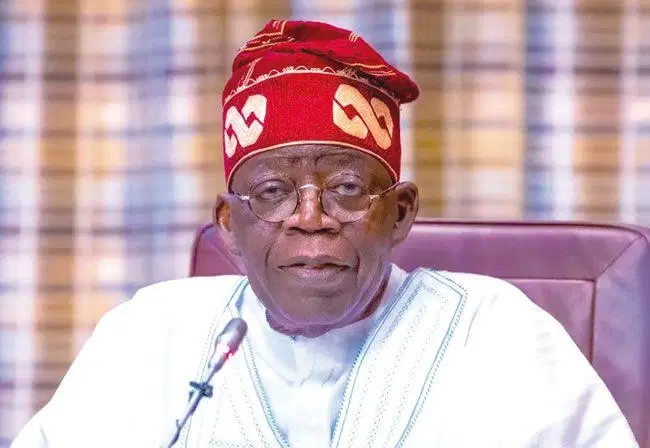
The Road Transport Employers Association of Nigeria (RTEAN) has officially endorsed President Bola Tinubu for the 2027 presidential election, pledging to mobilise support across all 774 local government areas and deliver at least five million votes for his re-election. RTEAN President Musa Maitakobi made the announcement on Sunday in Abuja while hosting a delegation of the All Progressives Congress Jagaban Squad. During the visit, he was formally installed as Life Patron of the group. Maitakobi highlighted RTEAN’s nationwide network and strong membership as key factors enabling the association to play a decisive role in the 2027 polls. “RTEAN chairmen in every state are fully committed to ensuring victory for the APC. Once the campaign officially begins, our mobilisation efforts will intensify,” he said. As part of the association’s support, Maitakobi announced the donation of a fully branded bus to the Jagaban Squad to enhance its visibility and mobility within the Federal Capital Territory. The bus will display the group’s insignia alongside photographs of President Tinubu and will serve as a mobile platform for the Abuja coordinator to showcase activities. He added that discussions are ongoing with APC stakeholders to secure additional buses to strengthen nationwide mobilisation ahead of the general election. Describing RTEAN as one of the country’s most organised political support structures, Maitakobi noted that the association has functional leadership in all local government areas and over five million registered members. Plans are also underway to convene a national convention to publicly reaffirm RTEAN’s political direction and continued support for President Tinubu. Recalling RTEAN’s early endorsement of Tinubu ahead of the 2023 presidential election, Maitakobi said members actively participated in campaign rallies across the country, including in Jos, Kano, Ogun, and Jigawa. He revealed that his loyalty to the APC came at personal cost, including the demolition of his house in his home state. Looking forward to 2027, Maitakobi assured that the association’s mobilisation efforts would surpass previous elections. “By the grace of God, our focus is now on 2027. Compared to the past, our efforts this time will be doubled and multiplied,” he said. Maitakobi also praised the Tinubu administration for initiatives in the transport sector, particularly the rollout of Compressed Natural Gas (CNG) vehicles and filling stations, which have benefited transport unions, including RTEAN, and other labour centres. He expressed optimism about the establishment of a dedicated Transport Bank to support operators, similar to the Bank of Industry and the Bank of Agriculture. In his remarks, APC Jagaban Squad National Coordinator Adekunle Alebiosu thanked RTEAN for its support, describing the association as a formidable organisation capable of significantly boosting grassroots mobilisation ahead of the 2027 elections. “RTEAN is a formidable organisation with a strong nationwide structure. Its support will greatly enhance grassroots mobilisation for the APC in the 2027 presidential election,” Alebiosu said.

Nigeria-seeks-USD-60-billion-to-grow-oil-and-gas-sector.jpg

9min3670
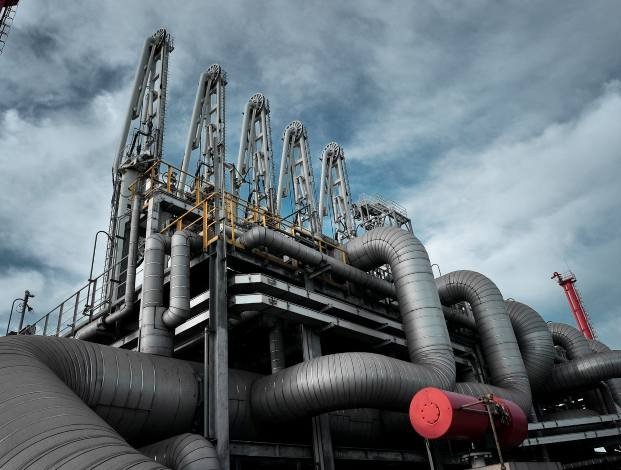
Nigeria is moving to fast-track gas-led industrial growth with plans to execute more than 60 high-priority gas demand projects over the next decade, according to the Nigerian National Petroleum Company Limited’s Gas Master Plan 2026. The plan shows that 30 priority projects are expected to be delivered within the next three years, forming the foundation of near-term gas expansion, while another 30 projects are scheduled to come onstream over the following ten years. Together, the projects are designed to significantly boost domestic gas utilisation and expand export capacity. Classified under Category A (near-term) and Category B (medium-term), the projects are projected to deliver a combined 13,960 million standard cubic feet per day (mmscf/d), supporting Nigeria’s industrial growth, domestic energy needs and export ambitions. The Gas Master Plan 2026 serves as a strategic roadmap aimed at converting Nigeria’s vast natural gas resources into economic growth, improved energy security and industrial development. It was formally unveiled on January 30, 2026, at the NNPC Towers in Abuja, marking a shift from policy planning to commercially focused and disciplined execution. The plan aligns with the Federal Government’s Decade of Gas Initiative and reforms introduced under the Petroleum Industry Act. Building on the original 2008 Gas Master Plan, which faced implementation and infrastructure challenges, the 2026 version prioritises increased gas production, expanded infrastructure and stronger market linkages across LNG, power generation, industrial offtakers, pipelines and compressed natural gas. It targets national production levels above 10 billion cubic feet per day by 2027 and 12 billion cubic feet per day by 2030, while unlocking over $60bn in new investments. At the launch, the Minister of State for Petroleum Resources (Gas), Rt. Hon. Ekperikpe Ekpo, described the plan as a deliberate move from policy formulation to implementation, driven by commercial viability and sector-wide coordination. He said the initiative reflects a broader effort to translate Nigeria’s gas potential into tangible economic outcomes, stressing that the challenge has always been execution rather than resource availability. Officials and industry stakeholders at the event described the plan as a major milestone in Nigeria’s energy transition, aimed at delivering reliable domestic supply, strengthening export capacity and generating broad socio-economic benefits. The plan outlines targets to raise commercialised gas production to 75 per cent by 2027 and 80 per cent by 2030, eliminate routine gas flaring, and meet presidential production goals of 10 Bcf/d by 2027 and 12 Bcf/d by 2030. An analysis of the document indicates that near-term gas demand under Category A projects is estimated at 8,110 mmscf/d. This demand will be driven by a mix of LNG, power, industrial, pipeline and CNG projects. LNG projects account for the largest share, led by OKLNG at 1,800 mmscf/d and NLNG Trains 7 and 8 at 1,350 mmscf/d, alongside UTM, NNPC-Chevron LNG and several modular LNG developments expected to commence operations within three years. The power sector is projected to consume about 470 mmscf/d through projects such as GIPP Phase I, Kano IPP, Abuja IPP and Okpai II. Gas-based industries, including fertiliser and chemical plants such as Brass Fertiliser, NSIA-OCP and Blackrose, are expected to require more than 700 mmscf/d. Smaller, fast-deploying CNG projects across Abuja, Kaduna, Kano and Imo are projected to absorb about 45 mmscf/d, providing quick domestic demand activation. The largest single demand driver, however, is the African Atlantic Gas Pipeline Phase 1 expansion, expected to transport 3,000 mmscf/d within three years, strengthening regional gas trade and domestic utilisation. For the medium term, Category B projects are expected to require about 5,850 mmscf/d and include LNG, power, gas-based industries, industrial parks and pipeline developments. Key projects include Golar Mark II LNG, the Trans-Saharan Gas Pipeline, and multiple fertiliser and methanol plants in Abuja, Kano and Kaduna. LNG developments such as Golar Mark II, Transoceanic, ACE and Kora together account for more than 2,000 mmscf/d, with many targeted for completion within three years. The power sector is projected to absorb 100 mmscf/d through the MBH Alero and Ikorodu IPPs, while large-scale fertiliser and methanol plants, including Dangote Fertiliser and Indorama, are expected to drive gas demand in the industrial sector. Industrial parks in Golden Bridge and Awka are also expected to deepen domestic gas usage. The Trans-Saharan Gas Pipeline, with an estimated demand of 2,000 mmscf/d, stands out as the largest Category B project, positioning Nigeria for expanded regional gas exports. Combined, Category A and B projects target nearly 14,000 mmscf/d of gas demand across LNG, power, industrial parks, CNG and pipelines, aligning supply planning with industrialisation, electricity growth and export expansion. Nigeria holds about 210 trillion cubic feet of proven gas reserves—the largest in Africa and among the top ten globally—yet current production stands at roughly 7.5 Bcf/d, with only about 60 per cent commercialised. Key supply hubs such as Gbaran, Utorogu, Assa North, Escravos and Anyala have been mapped to demand centres, supported by pipelines including AKK, ELPS-Lekki and GTS-4. Planned investments in infill drilling, facility upgrades and midstream infrastructure are expected to unlock additional capacity. With more than 60 major projects planned or underway, Nigeria is positioning itself to unlock its gas potential, expand manufacturing, improve electricity access and strengthen its role in the global gas market. However, economist and Dairy Hills Co-founder and Chief Executive Officer, Kelvin Emmanuel, has cautioned that government control of gas pricing and output could undermine these ambitions by discouraging private investment. Speaking in an interview on Sunday, he argued that regulated gas prices have distorted the domestic market and reduced incentives to invest in pipelines, processing facilities and offshore evacuation infrastructure. According to Emmanuel, about 45 per cent of gas supplied to the domestic market is sold at regulated prices rather than under a willing-buyer, willing-seller framework, effectively creating a subsidy regime that limits commercial returns. He noted that Nigeria’s gas reserves are heavily weighted toward non-associated gas, which requires significant investment to develop. He explained that much of the associated gas produced is either trapped, reinjected or flared, while developing deep offshore gas requires costly pipeline infrastructure and central processing


2026_grammys.webp

4min3710
Nigeria recorded no wins at the 2026 Grammy Awards despite multiple nominations in major music categories, while an ongoing strike by health workers has caused major disruptions across public hospitals nationwide. In governance and sports, the Presidency spent N34bn on foreign exchange for official travels over the last two years, Super Eagles striker Victor Osimhen reached the 200-goal milestone in his career, and Nigerian women footballers impressed in leagues abroad. Meanwhile, South Africa is set to replace Morocco as host of the 2026 Women’s Africa Cup of Nations, and Defence Minister, General Christopher Musa, revealed he was among those targeted in a recently foiled coup plot. Here are the top stories this morning: 1. Grammys 2026: Nigeria leaves without an award, Tyla wins againNigerian artistes including Burna Boy, Davido, Omah Lay, Ayra Starr and Wizkid failed to secure competitive awards at the 2026 Grammy Awards despite strong nominations. South African singer Tyla won Best African Music Performance for Push 2 Start, marking her second win in the category. Late Afrobeat legend Fela Anikulapo-Kuti was honoured with a Lifetime Achievement Award. 2. Health workers’ strike cripples public hospitalsThe ongoing industrial action by health workers in federal institutions has severely affected service delivery, forcing many public hospitals to operate at limited capacity. Patients have struggled to access care, with laboratory, pharmacy and diagnostic services disrupted in several teaching hospitals. 3. Presidency spends N34bn on forex for official travelsOver the past two years, the Presidency expended N34bn on foreign exchange for official international travels. The spending reflects the rising cost of overseas engagements by the President and other government officials. 4. Osimhen reaches 200 career goals as Nigerian women excel abroadVictor Osimhen hit the 200-goal mark in his professional career, underlining his status as one of Nigeria’s most prolific forwards. At the same time, Nigerian women footballers continued to shine in various international leagues and competitions. 5. South Africa to host 2026 WAFCONSouth Africa is expected to take over as host of the 2026 Women’s Africa Cup of Nations following Morocco’s withdrawal, ensuring continued preparations for the continental tournament. 6. Failed coup plot: Defence minister says he was a targetDefence Minister, General Christopher Musa, disclosed that he was marked for arrest or assassination in a recently uncovered coup plot. He said the plotters intended to detain him and would have killed him if he resisted, but he reaffirmed confidence in Nigeria’s democratic stability.

BANDICT-3.webp

4min3910
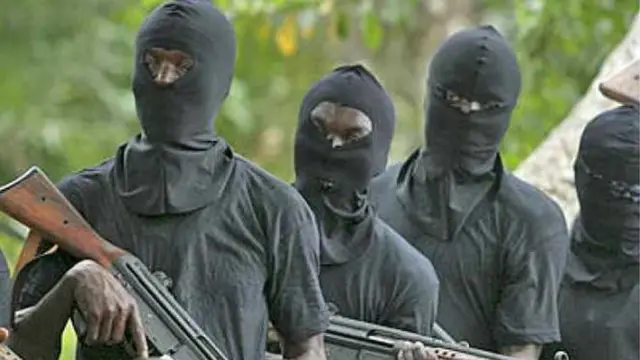
Terrorists have once again attacked Niger State, killing one person, abducting five others, and setting fire to a church building and a police station in Agwarra Local Government Area. During the attack, the assailants reportedly razed the United Missionary Church of Africa in Agwarra and also torched the local police station. The church was said to have been set ablaze around 6 a.m., after which the attackers moved to Sokonba village, which borders Kabe, a community that was recently targeted. The attackers allegedly looted food items and other valuables before killing an elderly woman in Kabe town and abducting five individuals. Speaking on Sunday, the son of the late Emir, Murtala Dantoro, said the repeated attacks had transformed previously peaceful communities into areas marked by fear and uncertainty. According to him, innocent lives are being lost, farmers are abandoning their farmlands, economic activities have stalled, and families are fleeing their homes in search of safety. He described the attacks as persistent and escalating, blaming the situation on the absence of a permanent and well-equipped military presence in Agwarra. He appealed to both the state and federal governments to intervene urgently, warning that the continued security vacuum had emboldened criminals to operate with little resistance, worsening the humanitarian and economic crisis in the area. He added that Agwarra, a strategic part of Niger State, had suffered multiple attacks in recent times, noting that continued neglect posed serious risks to residents and neighbouring communities. Also reacting, the Catholic Bishop of Kontagora Diocese and Chairman of the Christian Association of Nigeria in Niger State, Most Rev. Bulus Yohanna, urged the Federal Government, the Nigerian Army, and other security agencies to establish a permanent military formation in Agwarra. He said a stationed military presence was essential to deter criminal activity, restore confidence among residents, enable displaced persons to return home, and allow farmers to safely resume farming. He stressed that peace and security were fundamental to development, warning that without decisive action, meaningful progress would remain impossible. The bishop expressed concern over the deteriorating security situation, noting that armed groups now move freely without challenge, while the rule of law has weakened across Borgu and surrounding areas. He warned that continued attacks risk turning the once-peaceful Borgu Emirate into a haven for terrorists. Meanwhile, the spokesperson for the Niger State Police Command, Wasiu Abiodun, confirmed the attack, stating that police operatives engaged the attackers, who reportedly used suspected dynamite to set the police station on fire. According to him, the incident occurred in the early hours of February 1, 2026, when armed men invaded Agwarra and attacked the police station. He said the attackers overpowered officers on duty, burned part of the station, later moved to the church, and abducted about five persons whose identities are yet to be confirmed. He added that security monitoring in the area is ongoing. The attack comes just over two months after terrorists abducted 315 pupils from a school in Papiri, Niger State.

Tech & Tools Desk2 February 2026
Sanwo.png

3min7150
Governor Babajide Sanwo-Olu has said Lagos State is prepared to collaborate with the World Bank Group across key sectors including energy, agriculture, tourism and human capital development. He stated that the state was open to deeper partnerships and investment opportunities aimed at improving infrastructure and enhancing the standard of living for residents. Sanwo-Olu made this known on Sunday at Lagos House, Marina, while hosting a World Bank delegation led by the Managing Director for Operations, Ms Anna Bjerde. The delegation also included the International Finance Corporation (IFC) Regional Vice President for Africa, Mr Ethiopia Tafara. The governor reaffirmed Lagos’ commitment to reforms that attract international support, noting that the state was ready to meet the requirements for expanded World Bank assistance. “Lagos is prepared to do more to attract investments and partnerships that will deliver real benefits to our people. We welcome collaborations that strengthen infrastructure and drive inclusive growth,” he said. Sanwo-Olu highlighted the progress recorded under the THEMES+ agenda, explaining that its implementation had produced tangible benefits for millions of residents. He revealed that Lagos moved from 29th to first place in the national Ease of Doing Business ranking within four years. “We achieved this by doubling our performance in critical areas through deliberate reforms and improved efficiency,” he added. Earlier, Ms Bjerde said the World Bank Group was eager to deepen engagement with Lagos because of its strategic role and reform-focused approach. She described the state as a key stakeholder, pointing to the stability created by recent economic and policy reforms. According to her, the initiatives being implemented in Lagos reflect solutions that can be applied nationally, while policy consistency in Nigeria has improved predictability for investors. Bjerde commended the state for cutting down bureaucratic hurdles and strengthening the Ease of Doing Business environment. She disclosed that the World Bank planned a five-year country review to evaluate progress at both national and subnational levels, including Lagos. She added that the institution was ready to build on Lagos’ capacity to boost private sector financing across critical sectors.

Ifunanya Okafor2 February 2026
trucck.jpeg

3min4800
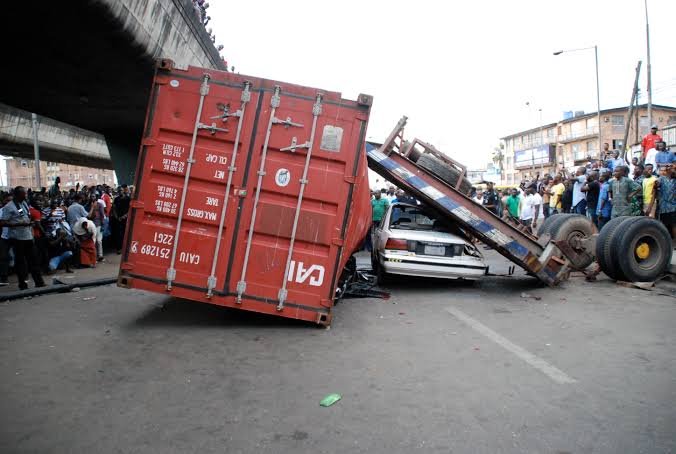
The Lagos State Government has cautioned operators of articulated vehicles, tankers and trucks to adhere strictly to traffic regulations and prescribed speed limits. The warning was issued on Sunday in Lagos by the Special Adviser to Governor Babajide Sanwo-Olu on Transportation, Mr Sola Giwa, following a crash involving a speeding heavy-duty truck transporting Compressed Natural Gas and a privately owned vehicle. The accident occurred at the crest of Apakun Bridge, inward Oshodi. Giwa said preliminary security findings showed that the truck, with registration number EKY 120 YK, was travelling at excessive speed, contrary to traffic safety rules, before colliding with a moving silver Toyota Corolla bearing registration number EKY 289 HM. He noted that the impact caused severe traffic disruption and posed a serious threat to lives and property in the area. During the incident, two pedestrians were hit, while the driver of the Toyota Corolla sustained critical injuries. According to Giwa, officers of the Lagos State Traffic Management Authority promptly responded to the scene, rescuing and extricating the injured victims from the wreckage. The injured pedestrians and driver were immediately taken to a nearby medical facility, where they are currently receiving intensive medical care. He added that personnel from the Ajao Estate Police Division were deployed to provide security during the rescue and evacuation operations, preventing further incidents and ensuring a smooth emergency response. Given the highly combustible nature of the truck’s cargo, operatives of the Rapid Response Squad and the Lagos State Fire and Rescue Service were also deployed to the scene as a precautionary measure. Giwa condemned the rising cases of road accidents linked to excessive speeding, particularly among drivers of trucks, tankers and other articulated vehicles, describing such behaviour as reckless, negligent and contrary to the state government’s goal of ensuring a safe, orderly and well-regulated transport system.

aa-2.jpg

3min5800
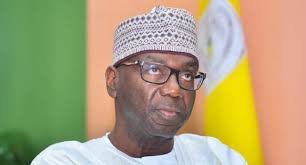
The Kwara State Government has announced the reopening of schools across the state from Monday, citing significant improvements in the security situation following sustained operations by security forces against bandits and other criminal elements. The decision was disclosed in a statement issued on Sunday by the Press Secretary of the Ministry of Education and Human Capital Development, Peter Amogbonjaye, quoting the Commissioner for Education, Lawal Olohungbebe. School authorities across the state have since been formally notified. According to the statement, the government believes the situation has improved considerably, though vigilance remains necessary. It noted that security operations are ongoing to consolidate recent gains, while efforts are also being made to strengthen community resilience alongside kinetic operations by security agencies. The reopening comes months after the state government ordered the closure of schools in November 2025 due to rising security concerns, particularly in border communities and forested areas affected by banditry and kidnapping. At the time, the government said the closures were a precautionary measure aimed at protecting students, teachers and school workers amid fears of possible attacks on educational institutions. The security situation had deteriorated late last year, prompting increased troop deployment and joint security operations in affected local government areas. Only weeks ago, the Kwara State College of Education, Oro, was also shut down following security threats in the area, forcing students to vacate the campus and disrupting academic activities. The development heightened concerns among parents, education stakeholders and residents about the safety of schools in the state. However, the state government said recent sustained military and security operations have led to the neutralisation of several criminal elements and the restoration of relative calm in previously affected areas. Security agencies are maintaining a strong presence in vulnerable communities, while intelligence gathering and community engagement have been intensified to prevent a resurgence of attacks. The government urged parents, teachers and school administrators to cooperate with security agencies and remain alert, assuring residents that measures have been put in place to guarantee the safety of learners and education workers across the state.

Tech & Tools Desk1 February 2026
aa-1.jpg

3min3730
French technology giant Capgemini has announced plans to sell its US subsidiary following backlash over its work for the US Immigration and Customs Enforcement (ICE) agency. The decision comes after mounting pressure from French lawmakers over a contract signed by Capgemini Government Solutions, which provided services to help locate individuals for ICE enforcement operations. The controversy has intensified amid international scrutiny of ICE’s activities, particularly in Minnesota. Public outrage has grown following the fatal shootings of US citizens Renee Nicole Good and Alex Pretti by immigration agents in Minneapolis, incidents that sparked nationwide protests and renewed criticism of ICE practices. Records show that since 18 December, Capgemini Government Solutions has been contracted to provide “skip tracing services for enforcement and removal operations” a process used to track individuals whose whereabouts are unknown. The subsidiary was due to receive more than $4.8m (£3.5m) for the contract, which runs until 15 March, and holds a total of 13 contracts with ICE. In a statement, Capgemini said it had been unable “to exercise appropriate control over certain aspects of this subsidiary’s operations to ensure alignment with the Group’s objectives,” adding that the divestment process would begin immediately. Criticism of ICE has intensified in recent weeks, particularly after the killing of 37-year-old Alex Pretti, the second US citizen fatally shot since immigration agents expanded enforcement operations in several cities under President Donald Trump’s renewed push to increase deportations. While Pretti was killed by Border Patrol officers an agency that works alongside ICE Good was shot by an ICE agent. ICE has detained thousands since Trump returned to the White House, with enforcement actions increasingly carried out in public spaces, often triggering confrontations with protesters. Capgemini CEO Aiman Ezzat said on LinkedIn that the company had recently become aware of the nature of the ICE contract through public sources, noting that its scope “raised questions compared to what we typically do as a business and technology firm.” The revelations drew sharp reactions in France. Finance Minister Roland Lescure called on Capgemini to be transparent about its dealings with ICE, while left-wing MP Hadrien Clouet urged sanctions against French companies collaborating with the agency. Founded in 1967, Capgemini is one of France’s largest listed companies, employing more than 340,000 people worldwide and valued at about €22bn (£19bn).

Tech & Tools Desk1 February 2026
aa.avif

4min9000
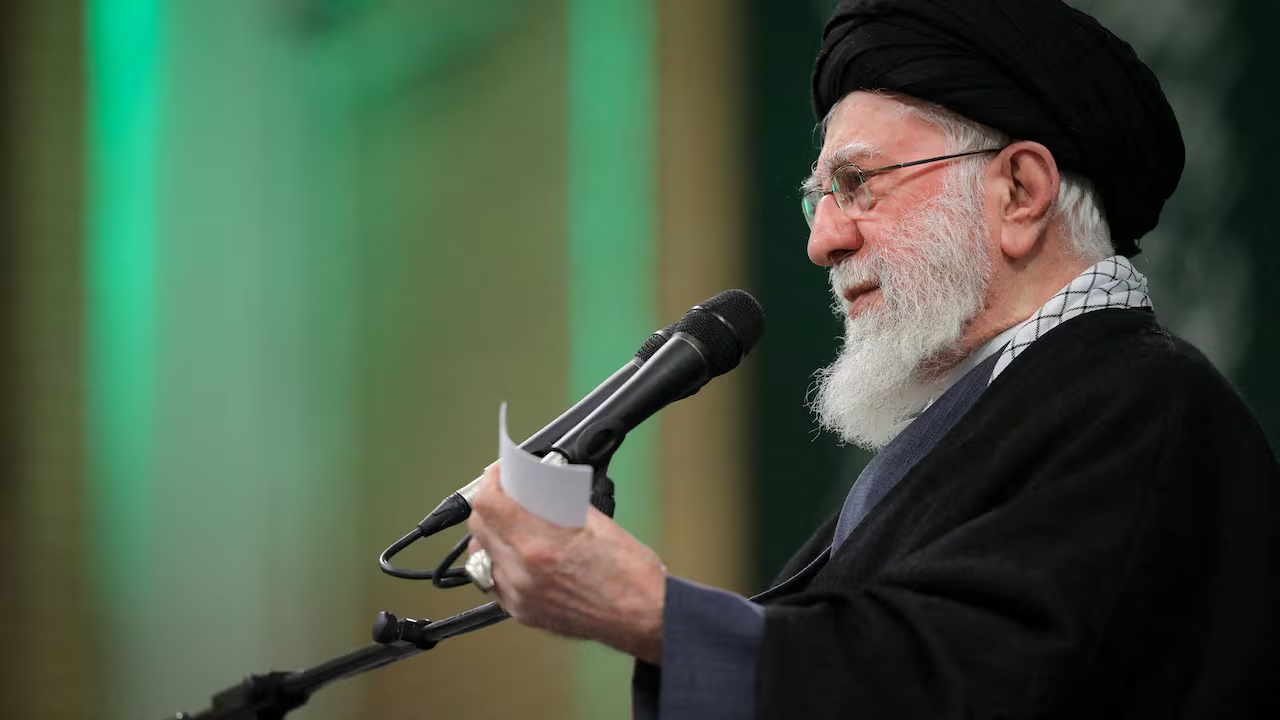
Iran’s Supreme Leader, Ayatollah Ali Khamenei, has warned that any military attack on the country would trigger a wider regional conflict, amid continued US military build-up near Iran. “The Americans should know that if they start a war, this time it will be a regional war,” Khamenei was quoted as saying by the semi-official Tasnim news agency. The warning comes as US President Donald Trump said Iran was engaged in “serious discussions” that he hoped would lead to an “acceptable” outcome. Iran’s top security official, Ali Larijani, also confirmed that a framework for negotiations was progressing. Tensions have risen after Trump threatened intervention over Iran’s nuclear ambitions and its violent crackdown on anti-government protests. As part of its military posture, the US has deployed the aircraft carrier USS Abraham Lincoln to the region, with US Central Command confirming operations in the Arabian Sea. Khamenei dismissed the US show of force, saying Iran would not be intimidated. “[Trump] regularly says that he brought ships… The Iranian nation shall not be scared by these things,” he said. Iran had earlier been expected to conduct a two-day live-fire naval exercise in the Strait of Hormuz, a vital global shipping route. However, Reuters quoted an Iranian official on Sunday as saying the Revolutionary Guards Corps (IRGC) navy had no plans for such drills. About one-fifth of the world’s traded oil passes through the Strait of Hormuz, which at its narrowest point is about 33 kilometres wide between Iran and Oman. Iran has previously threatened to close the waterway if attacked. The US has cautioned Iran against any “unsafe and unprofessional behaviour” near American forces in the region, a warning dismissed by Iran’s Foreign Minister, Abbas Araghchi. He accused Washington of attempting to dictate how Iran’s armed forces operate within their own territory. Meanwhile, two explosions in Iran over the weekend heightened public anxiety. Local authorities said a blast in the southern port city of Bandar Abbas, which killed one person and injured 14 others, was caused by a gas leak. Tasnim denied social media claims that an IRGC naval commander was targeted. In a separate incident in the south-western city of Ahvaz, at least four people were killed in another explosion, which officials also blamed on a gas leak, according to Iran’s Tehran Times. On Thursday, Trump said he had warned Iran it must meet two conditions to avoid US military action: abandon nuclear ambitions and stop killing protesters. The US-based Human Rights Activists News Agency says it has confirmed more than 6,300 deaths since unrest began in late December, while another 17,000 reported deaths are under investigation. The Norway-based Iran Human Rights group has warned the final toll could exceed 25,000. Protesters have told the BBC that the crackdown by security forces was unprecedented. Khamenei, however, accused protesters of attacking police, the IRGC and public facilities, saying, “The coup was suppressed.”

Ifunanya Okafor1 February 2026
aa.jpg

3min8440
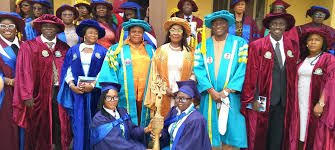
Delta State Governor, Mr Sheriff Oborevwori, has urged graduates of the Delta State College of Health Sciences and Technology, Ofuoma-Ughelli, to deploy their skills in service to humanity, professionalism and compassion. The governor gave the charge during the institution’s 8th convocation ceremony held on Saturday. He was represented by the Commissioner for Higher Education, Prof. Nyerhovwo Tonukari, who congratulated the graduands on the successful completion of their programmes and encouraged them to contribute meaningfully to society. Oborevwori also advised the graduates to pursue further academic and professional development, while commending the Governing Council and management of the college for organising a convocation ceremony after a long interval. Speaking at the event, Prof. Tonukari conveyed the goodwill of the governor and expressed optimism that Oborevwori would personally attend the institution’s next convocation ceremony. In her welcome address, the Provost of the college, Dr Odiete Eravweroso, described the ceremony as historic, noting that it was the first convocation held under her leadership since her appointment in August 2025. She said the event brought together graduates from 2017 to 2025, many of whom had waited several years to formally receive their certificates. “This convocation represents closure, restoration and the fulfilment of a long-awaited academic right,” she said, while thanking the Delta State Government and other stakeholders for their support. Dr Odiete disclosed that a total of 5,922 students graduated during the period, urging them to uphold professionalism, discipline and compassion in their careers. She assured that the college would continue to strengthen accreditation standards, improve infrastructure and promote staff development. Earlier, the Chairman of the Governing Council, Dr Chris Oharisi, congratulated the graduates, describing the ceremony as a celebration of diligence and perseverance. He reminded them that health practice is both a privilege and a sacred trust, as their decisions directly affect lives. Highlights of the ceremony included the conferment of certificates, National Diplomas and Higher National Diplomas on 5,922 graduates, presentation of awards to best graduating students, conferment of fellowship and distinguished personality awards, and group photographs.