

 Lifestyle & Wellness Desk
Nigeria Plans 60 Gas Projects to Ramp Up Production.
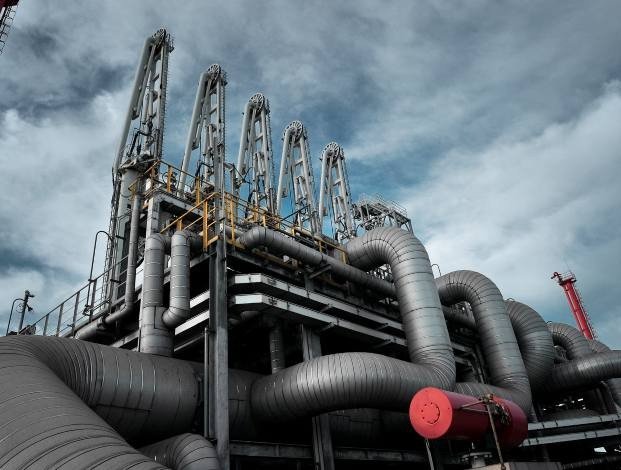
Nigeria is moving to fast-track gas-led industrial growth with plans to execute more than 60 high-priority gas demand projects over the next decade, according to the Nigerian National Petroleum Company Limited’s Gas Master Plan 2026.
The plan shows that 30 priority projects are expected to be delivered within the next three years, forming the foundation of near-term gas expansion, while another 30 projects are scheduled to come onstream over the following ten years. Together, the projects are designed to significantly boost domestic gas utilisation and expand export capacity.
Classified under Category A (near-term) and Category B (medium-term), the projects are projected to deliver a combined 13,960 million standard cubic feet per day (mmscf/d), supporting Nigeria’s industrial growth, domestic energy needs and export ambitions.
The Gas Master Plan 2026 serves as a strategic roadmap aimed at converting Nigeria’s vast natural gas resources into economic growth, improved energy security and industrial development. It was formally unveiled on January 30, 2026, at the NNPC Towers in Abuja, marking a shift from policy planning to commercially focused and disciplined execution. The plan aligns with the Federal Government’s Decade of Gas Initiative and reforms introduced under the Petroleum Industry Act.
Building on the original 2008 Gas Master Plan, which faced implementation and infrastructure challenges, the 2026 version prioritises increased gas production, expanded infrastructure and stronger market linkages across LNG, power generation, industrial offtakers, pipelines and compressed natural gas. It targets national production levels above 10 billion cubic feet per day by 2027 and 12 billion cubic feet per day by 2030, while unlocking over $60bn in new investments.
At the launch, the Minister of State for Petroleum Resources (Gas), Rt. Hon. Ekperikpe Ekpo, described the plan as a deliberate move from policy formulation to implementation, driven by commercial viability and sector-wide coordination. He said the initiative reflects a broader effort to translate Nigeria’s gas potential into tangible economic outcomes, stressing that the challenge has always been execution rather than resource availability.
Officials and industry stakeholders at the event described the plan as a major milestone in Nigeria’s energy transition, aimed at delivering reliable domestic supply, strengthening export capacity and generating broad socio-economic benefits.
The plan outlines targets to raise commercialised gas production to 75 per cent by 2027 and 80 per cent by 2030, eliminate routine gas flaring, and meet presidential production goals of 10 Bcf/d by 2027 and 12 Bcf/d by 2030.
An analysis of the document indicates that near-term gas demand under Category A projects is estimated at 8,110 mmscf/d. This demand will be driven by a mix of LNG, power, industrial, pipeline and CNG projects.
LNG projects account for the largest share, led by OKLNG at 1,800 mmscf/d and NLNG Trains 7 and 8 at 1,350 mmscf/d, alongside UTM, NNPC-Chevron LNG and several modular LNG developments expected to commence operations within three years. The power sector is projected to consume about 470 mmscf/d through projects such as GIPP Phase I, Kano IPP, Abuja IPP and Okpai II. Gas-based industries, including fertiliser and chemical plants such as Brass Fertiliser, NSIA-OCP and Blackrose, are expected to require more than 700 mmscf/d.
Smaller, fast-deploying CNG projects across Abuja, Kaduna, Kano and Imo are projected to absorb about 45 mmscf/d, providing quick domestic demand activation. The largest single demand driver, however, is the African Atlantic Gas Pipeline Phase 1 expansion, expected to transport 3,000 mmscf/d within three years, strengthening regional gas trade and domestic utilisation.
For the medium term, Category B projects are expected to require about 5,850 mmscf/d and include LNG, power, gas-based industries, industrial parks and pipeline developments. Key projects include Golar Mark II LNG, the Trans-Saharan Gas Pipeline, and multiple fertiliser and methanol plants in Abuja, Kano and Kaduna.
LNG developments such as Golar Mark II, Transoceanic, ACE and Kora together account for more than 2,000 mmscf/d, with many targeted for completion within three years. The power sector is projected to absorb 100 mmscf/d through the MBH Alero and Ikorodu IPPs, while large-scale fertiliser and methanol plants, including Dangote Fertiliser and Indorama, are expected to drive gas demand in the industrial sector.
Industrial parks in Golden Bridge and Awka are also expected to deepen domestic gas usage. The Trans-Saharan Gas Pipeline, with an estimated demand of 2,000 mmscf/d, stands out as the largest Category B project, positioning Nigeria for expanded regional gas exports.
Combined, Category A and B projects target nearly 14,000 mmscf/d of gas demand across LNG, power, industrial parks, CNG and pipelines, aligning supply planning with industrialisation, electricity growth and export expansion.
Nigeria holds about 210 trillion cubic feet of proven gas reserves—the largest in Africa and among the top ten globally—yet current production stands at roughly 7.5 Bcf/d, with only about 60 per cent commercialised. Key supply hubs such as Gbaran, Utorogu, Assa North, Escravos and Anyala have been mapped to demand centres, supported by pipelines including AKK, ELPS-Lekki and GTS-4. Planned investments in infill drilling, facility upgrades and midstream infrastructure are expected to unlock additional capacity.
With more than 60 major projects planned or underway, Nigeria is positioning itself to unlock its gas potential, expand manufacturing, improve electricity access and strengthen its role in the global gas market.
However, economist and Dairy Hills Co-founder and Chief Executive Officer, Kelvin Emmanuel, has cautioned that government control of gas pricing and output could undermine these ambitions by discouraging private investment. Speaking in an interview on Sunday, he argued that regulated gas prices have distorted the domestic market and reduced incentives to invest in pipelines, processing facilities and offshore evacuation infrastructure.
According to Emmanuel, about 45 per cent of gas supplied to the domestic market is sold at regulated prices rather than under a willing-buyer, willing-seller framework, effectively creating a subsidy regime that limits commercial returns. He noted that Nigeria’s gas reserves are heavily weighted toward non-associated gas, which requires significant investment to develop.
He explained that much of the associated gas produced is either trapped, reinjected or flared, while developing deep offshore gas requires costly pipeline infrastructure and central processing facilities to treat wet gas before use.
Emmanuel added that investors are reluctant to commit capital without a clear path to cost recovery under the current pricing regime, warning that without reforms, infrastructure investment will remain stalled. He also linked gas sector challenges to structural weaknesses in the power sector, including poor revenue assurance and widespread illiquidity among distribution and transmission companies.
He questioned how NNPC plans to finance the large-scale infrastructure outlined in the Gas Master Plan, describing the company’s financial position as constrained and urging clarity on funding strategies, including joint ventures or sole-risk investments.
Emmanuel concluded that without pricing reform, open-access pipeline models and a clear financing framework, Nigeria’s gas ambitions risk remaining unrealised, stressing that the long-standing challenge has been translating plans into action.

