Blog - Edupreneur Select

Bring to the table win-win survival strategies to ensure proactive domination. At the end of the day, going forward, a new normal that has evolved from generation.
trump1-1-1280x853.avif

4min3860
US President Donald Trump on Tuesday announced a trade agreement that lowers tariffs on Indian goods, sparking a surge in Mumbai stocks, as he said Prime Minister Narendra Modi had pledged to stop importing Russian oil amid the Ukraine war. Trump said tariffs on Indian products would be reduced to 18 per cent, down from the earlier 25 per cent “reciprocal” duties. An extra 25 per cent levy imposed over India’s purchase of Russian oil would also be removed. The agreement appears to ease months of strain between Washington and New Delhi over India’s energy ties with Moscow, which the US says help finance the conflict in Ukraine. Trump said the deal also renewed the close relationship between him and Modi, whom he has described as one of his closest friends. While Modi welcomed the tariff reduction and described his phone conversation with Trump as “wonderful,” he did not refer to Trump’s claim that India would halt Russian oil imports. Trump said the new arrangement followed Modi’s request and would take effect immediately, adding that India had agreed to buy significantly more goods from the United States, including energy, technology, agricultural products and coal. He said total purchases could exceed $500 billion, though he did not provide details. According to Trump, Modi also agreed to stop buying Russian oil and instead increase purchases from the United States and possibly Venezuela, which he said would help bring an end to the Ukraine war. Indian markets reacted positively, with Mumbai’s Nifty index jumping nearly five per cent at the opening of trading. Modi was among the earliest world leaders to visit the White House after Trump returned to office, but negotiations on a trade deal had stalled largely due to India’s continued imports of Russian oil. Russia remains a major supplier, accounting for about 36 per cent of India’s crude oil imports in 2024, roughly 1.8 million barrels per day. Trump has previously claimed that Modi made similar promises last year, though no agreement followed at the time. In contrast, Modi said on social media that he was pleased Indian-made products would now face an 18 per cent tariff, without mentioning oil. Analysts say a recent trade agreement between India and the European Union may have helped prompt Washington’s move. However, experts caution that the impact of the deal will depend on the final details and how India balances its longstanding relationship with Russia. Modi added that Trump’s leadership was important for global peace, stability and prosperity. Trump has also repeatedly said he played a key role in ending a brief military clash between India and Pakistan earlier this year.

Gold-bar-707x424-1.jpg

3min5140
Gold and silver prices continued their steep decline after a dramatic reversal of the recent rally that had pushed both metals to record highs. In Monday’s Asian trade, spot gold fell more than 9% to $4,403 an ounce, while silver dropped 15% to below $72 an ounce. Earlier this year, investors had driven prices higher, seeking “safe haven” assets amid geopolitical uncertainty. Concerns about the independence of the US Federal Reserve also contributed to the surge. However, prices tumbled on Friday after former Fed governor Kevin Warsh was nominated to chair the central bank, a move generally welcomed by financial markets. The US dollar rose 1% against a basket of currencies, adding pressure on precious metals. Gold experienced its sharpest single-day drop since 1983, falling over 9%, while silver slumped by 27% in one session. Analysts at Deutsche Bank cited Warsh’s nomination as the primary catalyst for the sell-off. The decline extended to other markets on Monday. Asian stocks fell sharply, with South Korea’s Kospi down more than 5%, Hong Kong’s Hang Seng down 3%, and Japan’s Nikkei 225 losing over 1%. In Europe, the UK’s FTSE 100 opened 0.4% lower, with mining companies like Fresnillo and Endeavour Mining losing roughly 7%. Crude oil prices also dropped over 5%, influenced by output decisions from major producers and signs of easing US-Iran tensions. A stronger US dollar further weighed on oil, making it more expensive for international buyers. Precious metals had a record-breaking 2025, with gold posting its largest annual gain since 1979. Gold hit $5,500 and silver topped $120 earlier this year, driven by concerns over US tariffs and volatile tech stocks. Analysts anticipate at least two Federal Reserve rate cuts in 2026, which could support gold’s appeal as an investment. The scarcity of gold adds to its attractiveness, with just over 216,000 tonnes mined worldwide according to the World Gold Council. Central bank purchases over recent years, combined with geopolitical uncertainty, boosted demand even further. Mark Matthews, head of research for Asia at Bank Julius Baer, told Reuters that recent steep losses are partly due to profit-taking after prices had risen sharply. “Once profit taking started, it just snowballed,” he said.

costa-rica-president-laura-fernandez-wins.jpg

3min7060
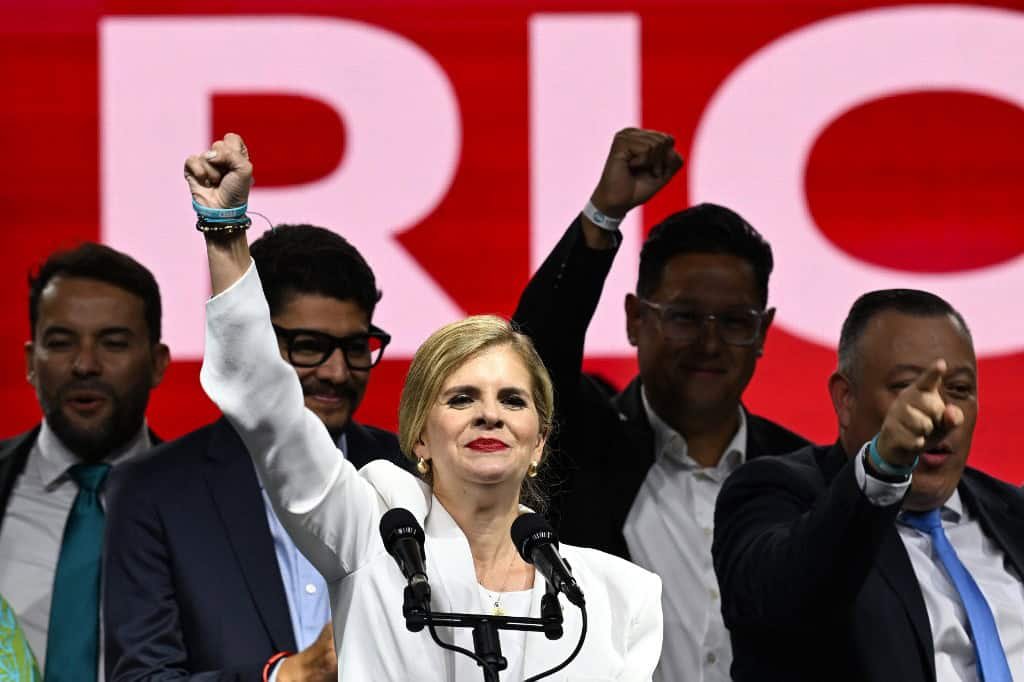
Laura Fernández, the candidate of Costa Rica’s governing conservative Sovereign People’s Party, has won the country’s presidential election. With more than 88% of votes counted, Fernández secured over 48%, well ahead of centrist rival Álvaro Ramos, who conceded defeat. Her margin surpassed the 40% threshold required to win outright in the first round, eliminating the need for a run-off. She is scheduled to be sworn in on 8 May. Fernández ran on a promise to continue the hardline crime policies of outgoing President Rodrigo Chaves, who had endorsed her as his successor. Concern over rising drug-related violence played a key role in her campaign. In her victory speech, the 39-year-old pledged to pursue the strategies introduced by Chaves, for whom she previously served as chief of staff. She also hinted at potentially appointing him to a cabinet position. Costa Rica, traditionally one of Central America’s safest nations and a stable democracy, has experienced increasing gang activity and crime in recent years. Drawing inspiration from El Salvador’s President Nayib Bukele, Fernández plans to declare states of emergency in areas dominated by gangs and complete the construction of a high-security prison modeled after El Salvador’s Cecot facility. Addressing critics concerned that her measures could infringe on civil rights, Fernández emphasised that her administration would uphold the rule of law, promote dialogue, and pursue national harmony. Yet she also criticised opposition lawmakers for “obstruction and sabotage,” referring to the challenges Chaves faced in passing policies in a legislature dominated by rival parties. Her party currently holds 30 of the 57 seats in parliament, giving her stronger legislative backing than her predecessor. Fernández previously served as planning minister and in other government roles. She is widely seen as Chaves’ political heir, sharing his direct and sometimes confrontational style, and is expected to maintain Costa Rica’s close ties with the United States. During Chaves’ administration, Costa Rica signed a “safe third-country” agreement with the US, allowing migrants from other nations to be sent to Costa Rica. The US has also cited Costa Rica as a key transit point for cocaine trafficking. Fernández has stated she is prepared to declare states of emergency and temporarily restrict some citizen rights if organized crime intensifies in certain regions. Her election marks her as the second woman to lead Costa Rica, following Laura Chinchilla, who was elected in 2010.

AI-MEDIAAAA.png

7min4950
Théodore remembers the AI-generated content that finally pushed him over the edge. The post showed two malnourished South Asian children. Despite their youth, both had thick beards. One had no hands and only one foot, while the other held a sign claiming it was his birthday and asking for likes. Strangely, they were sitting in the middle of a busy road in pouring rain, with a birthday cake in front of them. Every detail suggested the image was AI-created, yet it went viral on Facebook, attracting nearly a million likes and heart emojis. “It blew my mind. These absurd AI images were everywhere, gaining massive attention without anyone questioning them—it was insane,” says the 20-year-old Paris student. In response, Théodore created an X account called Insane AI Slop, highlighting and mocking misleading AI content. His inbox quickly filled with submissions from others who noticed similar patterns—religion, military, or impoverished children performing extraordinary acts. “Kids in the developing world doing impressive things is always popular. People see it as wholesome, so creators think, ‘Great, let’s make more,’” he explains. His account grew to over 133,000 followers. The flood of AI slop—quickly made, low-quality, unconvincing images and videos—is now unstoppable. Social media platforms have embraced AI, and while some companies claim to be addressing low-quality content, feeds remain filled with it. The rise of AI-driven social media In a recent earnings call, Meta CEO Mark Zuckerberg described social media as entering a “third phase,” now dominated by AI. “First, content came from friends and family. Then creator content was added. Now, AI makes it easy to generate and remix content, creating a massive new layer,” he said. Meta, which owns Facebook, Instagram, and Threads, not only allows AI-generated content but has launched tools to create more of it, including image and video generators and advanced filters. YouTube CEO Neal Mohan reported that in December 2026 alone, over a million channels used the platform’s AI tools. He acknowledged concerns about low-quality AI content and said efforts are underway to limit repetitive or poor-quality videos, though he avoided defining what should or shouldn’t thrive. Research by AI company Kapwing found that 20% of content shown to a new YouTube account is low-quality AI video. Short-form videos are particularly dominated by it. Channels like India’s Bandar Apna Dost have amassed 2.07 billion views, earning creators an estimated $4 million annually. Backlash emerges At the same time, users are pushing back. Under viral AI videos, furious comments now appear frequently. Théodore has been part of this movement. On X, he reported bizarre and disturbing AI videos to YouTube, especially those appearing aimed at children. Examples include clips like Mum cat saves kitten from deadly belly parasites and a short showing a woman eating a parasite, turning into a giant monster, and being healed by Jesus. YouTube removed the channels for violating community guidelines, saying it is focused on providing high-quality content and reducing the spread of low-quality AI material. Yet the relentless flow of AI slop continues. Even lifestyle platforms like Pinterest have been affected, prompting the introduction of an opt-out system for AI-generated content, which relies on users admitting their images are AI-made. Audience reactions and mental impact Emily Thorson, associate professor at Syracuse University, says reactions depend on how people use social media. Entertainment-focused users may only care whether content is engaging, while those seeking information or community may see AI slop as more problematic. “If something is clearly a joke, people accept it. But content designed to deceive can anger users,” she explains. Constant exposure to low-quality AI content may reduce attention spans and contribute to “brain rot,” making users quickly consume content that is unlikely to be real or meaningful. Risks beyond harmless slop Some AI-generated material can be more harmful. For instance, digital manipulation was recently used to target vulnerable groups online, while fake videos circulated during geopolitical events can mislead the public. Experts argue that platforms need systems allowing authentic content to prove its origin. Social media companies, however, have reduced moderation teams and increasingly rely on users to flag false or misleading content. Is a slop-free social media possible? Creating a platform free from AI slop seems difficult. Machines struggle to detect AI content accurately, and judging what counts as low-quality is subjective. Yet if a new platform emerged and attracted enough users, it might push existing platforms to change, similar to how BeReal encouraged more authentic social media sharing. For now, Théodore sees AI slop as the new normal. Despite submissions from his followers, he posts less frequently and has mostly accepted the reality of online life. “I’m not against AI itself,” he says. “I’m against the pollution online of AI slop created purely for quick views and entertainment.”

Tech & Tools Desk2 February 2026
Ms-ifunanya.webp

5min6280
Ifunanya Nwangene, a rising Abuja-based singer, has died after being bitten by a snake, sparking renewed concern about emergency medical preparedness in the Federal Capital Territory. The 26-year-old soprano, a member of the Amemuso Choir, passed away on Saturday at the Federal Medical Centre (FMC), Abuja, after efforts to treat her were reportedly hampered by the limited availability of antivenom. Confirming her death, the Amemuso Choir released a statement on Sunday signed by its music director, Sam Ezugwu, mourning the loss of the talented singer. “We deeply regret to announce the sudden passing of our beloved soprano, Ifunanya Nwangene, who died yesterday, 31st January 2026, at the Federal Medical Centre due to a snakebite,” the statement read. The choir described Nwangene as a fast-rising talent within Abuja’s music scene, noting her death occurred at a pivotal stage of her career. “A rising star, Ifunanya was poised to share her remarkable talent with the world. Her voice and presence will be profoundly missed,” the statement added, while indicating that funeral arrangements would be announced later. Speaking on how the incident unfolded, Ezugwu explained that Nwangene was bitten while asleep in her residence and initially sought treatment at a private hospital in Lugbe. “She was bitten at home and rushed to Divine Health Hospital in Trademore, Lugbe. Unfortunately, the hospital did not have the antivenom,” he said. Transportation and antivenom shortages further delayed her transfer to FMC. “Her landlord tried to take her to FMC, Jabi, but the car failed. She then booked a Bolt to the hospital and explained her situation to the medical team,” Ezugwu added. Although she received care at FMC, the hospital reportedly had only one vial of antivenom available. Efforts to obtain a second vial were unsuccessful in time. “While we were trying to get the second vial, she unfortunately passed away,” he said. Following her death, a snake charmer was called to identify the snake species. The cobra that bit Nwangene was found inside her residence, while another snake was killed near the entrance. The incident occurred in the morning, and she died around 12:20 pm. The case has prompted public debate about emergency healthcare in Nigeria. Health advocates have criticised the lack of readily available antivenom in hospitals. Popular social media health commentator Aproko Doctor highlighted the systemic issues, noting that locally developed antivenom for Nigerian snakes, such as Echi-Tab, exists but is not sufficiently stocked in hospitals. “The lack of basic emergency supplies, not the snake itself, caused her death,” he stated. He also pointed to broader healthcare gaps, including poor infrastructure, strikes, and insufficient emergency response systems. This incident mirrors other recent snakebite fatalities in the FCT. In a separate case, the Jamigbe community in Abaji Area Council reported that a head teacher, Usman Mohammed, died after being bitten by a venomous snake in his office. Globally, snakebite envenoming causes up to 138,000 deaths and 400,000 permanent disabilities each year. Recognised by the World Health Organization as a priority neglected tropical disease, snakebite continues to disproportionately affect rural and vulnerable communities. In Nigeria, healthcare workers report widespread challenges in treating snakebite victims, including delays in patient arrival, poor hospital infrastructure, and gaps in clinical training, all contributing to preventable deaths.

Ifunanya Okafor2 February 2026
Anti-Snake-Venomm.jpeg

5min5910
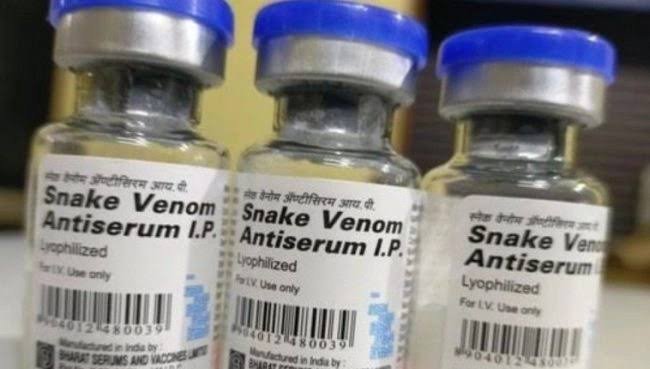
The Medical Director of the Snakebite Hospital and Research Centre, Kaltungo, Gombe State, Dr. Nicholas Amani, has described anti-snake venom as a scarce resource worldwide, citing that most victims are poor, rural farmers with limited social or political influence. Amani made the remarks in a telephone interview on Sunday while responding to the death of aspiring singer Ifunanya Nwangene, who reportedly died from a snakebite in Abuja on Saturday. Nwangene, 26, gained national recognition after appearing on The Voice Nigeria in 2021 and was known for her unique mix of jazz, opera, classical music, and soul. Discussing the challenges of snakebite management in Nigeria and globally, Amani said: “Anti-snake venom is a scarce commodity everywhere. Snakebites mainly affect the less privileged—farmers and rural dwellers—people who do not have a strong voice.” He explained that the marginalisation of victims has led to chronic underinvestment in the production and distribution of anti-snake venom worldwide. “At conferences and international meetings, the issue is always the same: scarcity. Free anti-snake venom is almost nonexistent, and most are sold through pharmacies,” he added. Amani noted that even specialised hospitals lack sufficient supplies. “Even in specialised facilities, we currently do not have anti-snake venom. The government is making efforts to provide it, but the process is still ongoing,” he said. Using Kaltungo as an example, he added that patients often have to source the life-saving drug from private vendors. The hospital treats patients from across Nigeria’s North-East and neighbouring countries, including Cameroon. “Even here, pharmacists and business people supply the anti-venom. Patients must buy it themselves. Scarcity is real,” Amani said. He stressed that the core problem is the lack of advocacy for those most affected. “The victims don’t have a voice. We raise awareness so the government and NGOs will listen and understand the situation,” he added. While acknowledging government efforts, Amani said public intervention alone is insufficient. “Government is doing a lot, but once anti-snake venom arrives, it is quickly exhausted. NGOs and other organisations must step in as well,” he said. He also highlighted the challenges of local production. “Producing anti-snake venom locally requires huge financial and technical investment, technology transfer, overseas training, specialised equipment, and sustained funding. This isn’t like producing a COVID-19 vaccine overnight,” he explained. Regarding the cost to patients, Amani described it as devastating. “A vial currently costs about ₦250,000, and some patients need two or three vials. Many victims are very poor and sell land or belongings just to afford one vial,” he said. Amani emphasized that the deaths of young Nigerians, such as Ifunanya Nwangene, highlight the urgent need to address snakebite as a neglected public health emergency. “We are taking steps, but we need sustained commitment, more funding, local production, and strong partnerships to effectively tackle this problem,” he added. The Toxinological Society of Nigeria has previously urged the Federal Government to fund snakebite control, noting that Nigeria records around 43,000 cases annually, with 1,900 deaths. At the society’s 2nd Annual General Meeting on Snakebite Management and Research Interventions, held from September 14–17, 2025, at Gombe State University, over 1,000 participants—including policymakers, researchers, clinicians, traditional leaders, and students—discussed the issue through 34 scientific papers and two plenary presentations. The society warned that snakebite envenoming continues to cause preventable deaths, amputations, kidney failure, and disabilities in vulnerable communities. Without decisive action, the cycle of poverty and suffering will persist.

house-of-rep.png

4min3910
The House of Representatives Public Accounts Committee (PAC) has pledged to address the long-standing backlog of federal audit reports, committing to secure and review the 2023, 2024, and 2025 reports from the Office of the Auditor-General for the Federation. Chairman Bamidele Salam made the announcement during a weekend retreat in Ghana attended by PAC members, staff, and key stakeholders. He noted that when the current panel assumed office in 2023, the most recent audit report available was from 2019, highlighting a significant accountability gap. “Through sustained engagement with the Auditor-General and Accountant-General, we have obtained the 2020, 2021, and 2022 reports. While this marks progress, it still falls short of expectations, as we are already in 2026,” Salam said. The committee plans to convene a high-level stakeholders’ meeting immediately after the retreat, involving the Auditor-General, Accountant-General, Financial Reporting Council, and other relevant institutions, to establish a clear timeline for clearing the outstanding reports. Salam expressed optimism that significant progress would be made before the end of the year, particularly regarding the 2023–2025 audits. He described the retreat as a key platform for stock-taking, performance evaluation, and strategic planning, allowing the committee to set clear objectives and metrics for the 2026 legislative year. Delays in audit submissions have long hindered PAC’s oversight role, limiting its ability to examine government accounts, probe financial irregularities, and hold Ministries, Departments, and Agencies (MDAs) accountable. Such delays reduce the deterrent effect of legislative scrutiny and undermine fiscal discipline and transparency. Deputy Chairman Jeremiah Umaru emphasised PAC’s role in revenue recovery and curbing financial leakages. “Financial leakages within the system remain alarming. This retreat strengthens our capacity to engage stakeholders and ensure our oversight delivers tangible outcomes,” he said. Clerk of the committee, Ogunsanya Titus, described the retreat as a strategic move to enhance PAC’s effectiveness. “Thorough preparation yields better results than hasty action. The retreat allowed us to review past performance, assess challenges, and plan a clearer path forward,” he said. PAC consultant Dr Samuel Ibrahim added that the training sessions were designed to boost both technical skills and soft skills, including stakeholder engagement, critical for effective oversight and collaborative problem-solving. The committee’s renewed focus signals a determined effort to reinforce fiscal accountability and ensure that government agencies properly account for public funds.

Tax-illustration-1.webp

3min3340
A heated verbal exchange erupted on Sunday between Senator Ali Ndume (Borno South) and the Deputy Spokesman of the House of Representatives, Philip Agbese, over alleged inconsistencies in recently passed tax legislation. Agbese accused Ndume of being mischievous in claiming the tax laws were altered, while Ndume fired back, calling Agbese “disrespectful” and “too junior,” noting he was old enough to be Agbese’s father. The dispute began after Ndume raised concerns that the version of the tax laws signed by President Bola Tinubu differed from what the National Assembly had passed. In a television interview last week, Ndume suggested that certain provisions had been changed during harmonisation and gazetting. Responding on Sunday in Abuja, Agbese dismissed the claims as “sheer mischief,” insisting that all legislative procedures had been properly followed. He stressed that the House had already set up a committee to investigate concerns around the tax legislation and warned that unverified claims could undermine public trust. Ndume described Agbese’s remarks as “unfortunate” and called on House leadership to rein in the deputy spokesman. Speaking to journalists, he said, “Agbese is too junior to challenge me on this matter. The issue is under review by the Betara-led committee, which alone has the authority to determine if there are any differences between the parliamentary version and the gazetted copy.” The senator maintained that his concerns were procedural, not personal. He explained, “I carefully reviewed the votes and proceedings, clause by clause. If the harmonised version says ‘this shall be’ and the gazetted copy says ‘this will be,’ these are two different things subject to interpretation.” Ndume also suggested that Agbese’s comments were driven by personal motives to gain favour with House leadership, adding that the deputy spokesman had only embarrassed himself and the institution. Agbese, however, reiterated that the focus on alleged falsification was misplaced and that the committee’s work would clarify the matter. “It is sheer mischief to suggest the tax laws were falsified. Lawmaking must be based on facts and due process,” he said. The controversy first emerged late last year when Ndume and House member Abdussamad Dasuki raised concerns about discrepancies between versions circulated during plenary sessions and those sent for presidential assent. Both called for independent verification to ensure legislative integrity. The ongoing investigation is expected to determine whether differences arose during harmonisation, transmission, or gazetting of the legislation.

tinubu-and-Daniel-Bwala-.webp

3min4560
A pro-Wike political faction, the Rivers Restoration Movement (RRM), has urged President Bola Tinubu to remove his media aide, Daniel Bwala, over what it described as an “unwarranted” verbal attack on the Federal Capital Territory Minister, Nyesom Wike. The RRM, together with 40 affiliated groups in Rivers State, accused Bwala—Special Adviser to the President on Media and Policy Communications—of undermining the Presidency with his remarks on the Rivers political crisis. In a statement issued on Sunday in Port Harcourt and signed by Johnson Georgewill and Sarima Akpata, Director-General and Secretary of the RRM, respectively, the group alleged that Bwala still maintained loyalty to his former principal, Alhaji Atiku Abubakar, despite serving in Tinubu’s administration. “As a group, we are not surprised by this recent public embarrassment by a supposed spokesman of the President on the Rivers State political matter, because we know Mr. Daniel Bwala as someone who speaks from both sides of his mouth,” the statement read. The group questioned Bwala’s role during the 2023 general election, pointing out that Rivers was the only state in the South-South and South-East won by President Tinubu. They also claimed that Bwala targeted Wike due to the minister’s influence in Atiku’s 2023 defeat. “Mr. Bwala appears to be on a mission to undermine the FCT minister, as Atiku’s loss in 2023 was significantly influenced by Minister Wike,” the statement said. The RRM further criticised Bwala for commenting on Rivers politics despite not being involved in the agreements between Governor Siminalayi Fubara and Wike following the lifting of emergency rule in the state. “It is disappointing that Bwala, who has no political weight in Nigeria, would publicly denigrate the FCT minister and discredit his achievements, which ultimately impacts the President’s image,” the group added. The RRM reaffirmed Wike’s leadership in Rivers State politics and his role as head of President Tinubu’s “Renewed Hope” structure in the state, warning Bwala to avoid involvement in Rivers affairs. “RRM therefore calls on President Tinubu to dismiss Mr. Daniel Bwala for misrepresenting the Presidency on issues concerning Rivers State, which the President has already addressed through agreements,” the statement concluded. The group also rejected claims that Bwala sympathised with Atiku and vowed to rally support for President Tinubu ahead of the 2027 elections in Rivers State, the South-South, and beyond.

Tech & Tools Desk2 February 2026
Doctors-strike.jpg

5min7630
The ongoing industrial action by the Joint Health Sector Unions (JOHESU) has entered its third month, severely disrupting services in government-owned hospitals nationwide. Patients have been left stranded, with many forced to seek care in private facilities. Critical departments such as hospital pharmacies, laboratories, and support services have been largely inactive, significantly affecting healthcare delivery. While federal health institutions have been most affected, state-owned hospitals in Ekiti and Benue have largely remained operational, easing the pressure on patients. In some state facilities, including the Benue State University Teaching Hospital, resident doctors, nurses, and midwives have also embarked on separate strikes over unpaid salaries, pension disputes, and poor infrastructure. At the Federal Teaching Hospital, Ido Ekiti, doctors and nurses continued to work, but other health staff stayed away. Ayodeji Ogunrinu, former JOHESU chairman at FETHI and current Chairman of the Nigeria Union of Allied Health Professionals, Ekiti State Council, described the strike as unfortunate, noting that it deprives both patients and hospital staff of essential medical services. He emphasized that all hospital personnel, from cleaners to health assistants, play vital roles in service delivery. Ogunrinu lamented that FETHI now resembled a “ghost town,” with no water, electricity, drugs, or functional laboratories. Ogunrinu urged the Federal Government to implement the 2018 circular from the Ministry of Labour regarding adjustments to the Consolidated Health Salary Scale (CONHESS) for JOHESU members, which forms the basis of the ongoing strike. In contrast, JOHESU members at Ekiti State University Teaching Hospital (EKSUTH), Ado Ekiti, have continued working as a mark of respect for Governor Biodun Oyebanji. Adewale Adeosun, acting JOHESU chairman at the facility, said patient turnout had increased as federal hospitals remained largely inactive. Oluwafemi Ajoloko, JOHESU State Chairman, expressed hope that the federal government would approve the requested CONHESS adjustment within one to two weeks. He noted that while federal health workers remain on strike, staff at state hospitals and primary healthcare centres have maintained services, but with increased workload. At Obafemi Awolowo University Teaching Hospital (OAUTHC), Ile-Ife, services have been scaled down, affecting medical training and postponing surgeries. JOHESU chairman Abdullateef Adeyeni reported that the facility had lost up to N1.5 billion in internally generated revenue over three months due to the strike, criticizing perceived inaction by the Coordinating Minister of Health. Similarly, hospitals in Ondo State, including the University of Medical Sciences Teaching Hospital, Akure, have seen reduced patient turnout. Offices of JOHESU staff, pharmacies, and laboratories remain closed, pushing patients toward private facilities. Dr. Olumuyiwa Alonge, chairman of the Nigerian Medical Association (NMA) in the state, confirmed that the strike has hindered smooth hospital operations, as roles like laboratory work and pharmacy services are essential for full functionality. At Lagos State University Teaching Hospital, Ikeja, pharmacies and laboratories are largely non-functional, forcing patients to purchase medicines from private pharmacies. Dr. Gbolahan Adenuga, chairman of the resident doctors’ association, said the workload has shifted to local staff and interns, creating delays. While JOHESU members in Benue State are not on strike, service has been partially affected due to ongoing industrial actions by resident doctors, nurses, and midwives at the State University Teaching Hospital, Makurdi. Issues include salary arrears, pension disputes, manpower shortages, delayed promotions, and poor infrastructure. Commissioner for Health in Benue, Dr. Paul Ogwuche, confirmed that the government has been addressing key concerns and anticipates that affected unions will resume work soon. He said an agreement is close to being signed, which will restore full healthcare services. The prolonged strike highlights the urgent need for government intervention to resolve payment, pension, and infrastructural issues to restore normalcy in public hospitals.