Blog - Edupreneur Select

Bring to the table win-win survival strategies to ensure proactive domination. At the end of the day, going forward, a new normal that has evolved from generation.
Opay.webp

4min3870
Leading financial services company, OPay, has been crowned Fintech/Digital Bank of the Year 2025 at the prestigious Sun Awards hosted by The Sun Publishing Limited, one of Nigeria’s foremost media organisations. The ceremony took place on January 31, 2026, at Eko Hotels and Suites, Victoria Island, Lagos. The recognition is particularly significant as it marks the debut of the Fintech/Digital Bank category since the awards were established. In a statement released on Tuesday, OPay said the honour acknowledges its contribution to building a dependable, inclusive, and user-friendly digital financial ecosystem that serves millions of Nigerians daily. The award highlights OPay’s all-in-one platform, which combines mobile banking, digital wallets, instant payments, merchant solutions, and lifestyle services. By integrating these offerings, OPay continues to narrow the divide between traditional banking systems and the digital economy, improving access to convenient financial services for individuals and businesses nationwide. For many customers, OPay has grown beyond being just a mobile application, becoming a trusted everyday financial partner. From instant money transfers to empowering small businesses with efficient payment tools, the platform is designed to address real-life financial needs and stimulate economic activity at all levels. Commenting on the achievement, OPay’s COO/CTO, Adekunle Adedotun, described the recognition as encouraging. He noted that the award serves as motivation to further improve innovation and accessibility, adding that OPay remains committed to ensuring financial services reach every corner of the country, regardless of device type, to promote broad financial inclusion. Also speaking, Chief Commercial Officer of OPay, Elizabeth Wang, said the award validates the company’s long-term dedication to Nigeria. She described the recognition as a reflection of the trust placed in OPay by millions of users and reaffirmed the company’s focus on delivering secure, reliable, and inclusive financial solutions that simplify daily life and support business growth. OPay further stated that the award reflects years of sustained investment in secure infrastructure, customer-focused services, and strong local partnerships. The company stressed that trust, reliability, and scalability remain at the heart of its mission to support Nigeria’s expanding digital economy. As the first recipient of The Sun’s Fintech/Digital Bank of the Year award, OPay described the honour as a collective success shared with its users, merchants, and partners across the country. The company reiterated its commitment to advancing financial inclusion and contributing to Nigeria’s long-term digital and economic development. Founded in 2018, OPay aims to expand access to financial services through technology. Its offerings include money transfers, bill payments, card services, airtime and data purchases, and merchant payment solutions. Known for its fast, reliable network and robust security framework, OPay is licensed by the Central Bank of Nigeria and insured by the Nigerian Deposit Insurance Corporation, with coverage equivalent to that of commercial banks.

Electricity-Subsidy-Q1-2024.jpg

4min7110
The Federal Government has announced plans to share electricity subsidy costs with state and local governments from 2026, ending the practice of shouldering the burden alone. Tanimu Yakubu, Director-General of the Budget Office of the Federation, disclosed this on Monday in Abuja during a training workshop for ministries, departments, and agencies on the 2026 post-budget preparation process using the Government Integrated Financial Management Information System Budget Preparation Sub-System. Yakubu said President Bola Tinubu had directed that electricity subsidy costs be made transparent, tracked, and fairly distributed across all tiers of government, warning that the current system creates hidden liabilities and recurring challenges in the power sector. “If we want a stable power sector, we must pay for the choices we make. When tariffs are held below cost, a gap is created. That gap is a subsidy. And a subsidy is a bill,” he explained. He added that from 2026, the Federal Government would no longer treat electricity subsidies as an open-ended responsibility, especially where policy decisions and benefits are shared across governments. The President has instructed that the existing legal framework for the electricity sector be used to ensure subsidy sharing is practical, transparent, and enforceable. “Subsidy costs must be explicit, tracked, and funded to prevent arrears, liquidity crises, or hidden liabilities,” Yakubu said. He emphasized that the policy is intended to align incentives across government, not as a punishment. “When everyone carries a fair share of the cost, there is a greater incentive to support cost-reflective efficiency, protect vulnerable populations, and maintain a power market that functions effectively,” he added. MDAs were directed to reflect subsidy-related costs clearly in their 2026 budget submissions and avoid pushing unfunded liabilities into the electricity market. Yakubu also noted that the 2026 Budget marks a departure from rollover budgeting and fragmented project lists that have weakened execution and accountability. He described the budget as a “single-train” framework designed to consolidate commitments, improve prioritization, strengthen control, and reduce duplication. The President has also directed a review of the Fiscal Responsibility framework to make fiscal rules more dynamic and enforceable, with clearer fiscal anchors, defined escape clauses for genuine shocks, and stronger reporting on contingent liabilities. Yakubu said the 2026 Budget will require that capital projects demonstrate readiness, sequencing, a financing strategy, and measurable outputs, emphasizing that fewer but well-funded projects will deliver greater impact. GIFMIS-BPS will serve as the central tool to restore budget credibility, ensuring transparency and traceability from submission to execution. “The success of the Renewed Hope Agenda is shared. The Budget Office will coordinate and enforce standards, but delivery depends on every MDA. Nigerians expect results. Through a credible 2026 Budget, we must deliver,” he said.

Air_India_.avif

2min3380
Air India has grounded one of its Boeing 787-8 Dreamliner jets after a pilot reported a potential defect in the aircraft’s fuel control switch. The airline said on Monday that it had notified India’s aviation regulator and was addressing the pilot’s concerns on a “priority basis.” “We are in contact with Air India and are supporting their review of this matter,” a Boeing spokesperson said in response to an inquiry. The grounding comes amid the ongoing investigation into a June plane crash involving the same model, which claimed 260 lives. Air India did not provide details on the flight or the specific issue reported by the pilot. Reports indicate the defect was flagged after the aircraft landed in Bengaluru following a flight from London. Last year’s fatal crash occurred less than a minute after take-off from Ahmedabad airport, en route to London. India’s Aircraft Accident Investigation Bureau (AAIB) is still investigating, with a final report expected in the coming months. A preliminary investigation suggested the plane’s engines shut down after the fuel switches moved from ‘run’ to ‘cut off’ shortly after take-off, but the cause of this remained unclear. Following the crash, the US aviation authority stated that fuel control switches in Boeing aircraft are safe. India’s aviation regulator also ordered a review of cockpit fuel switches on Boeing 787 and 737 aircraft operating in the country. Air India confirmed that its inspections had not revealed any issues with the switch mechanism and reiterated this on Monday. “Air India had checked the fuel control switches on all Boeing 787 aircraft in its fleet after a directive from the DGCA and found no problems,” the airline said.

harvard-4-g-1280x720.avif

3min4750
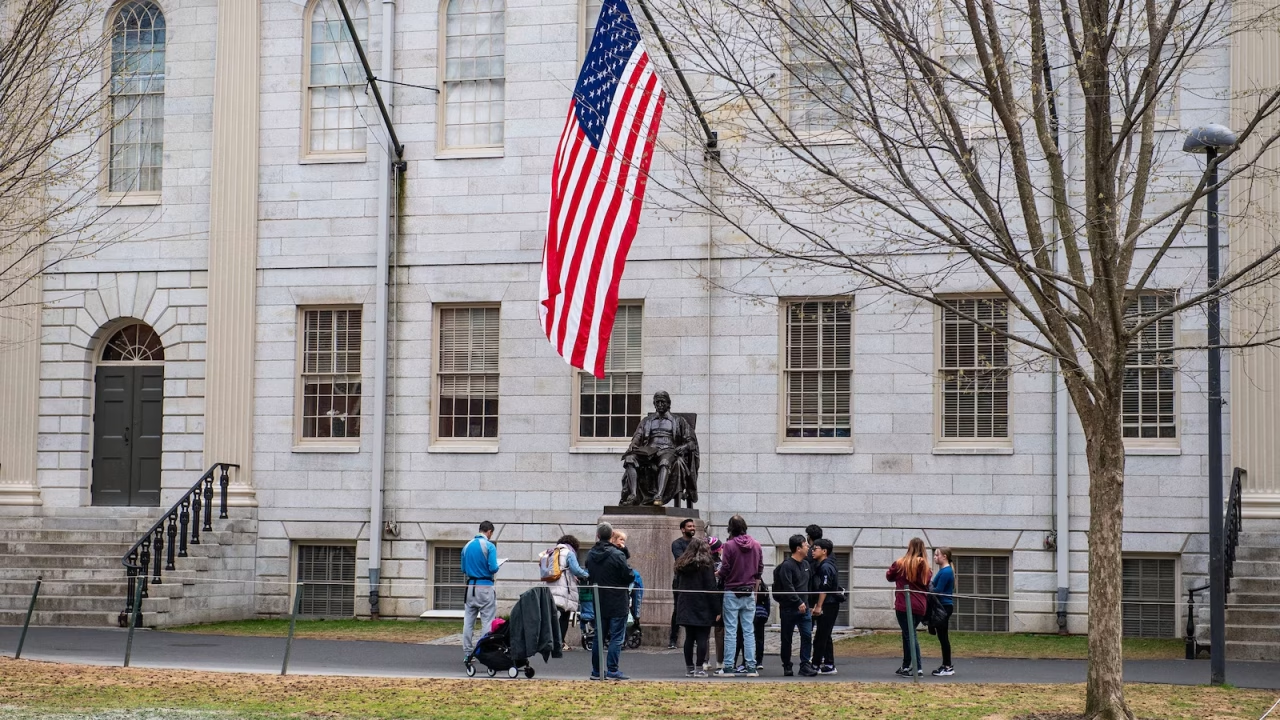
Donald Trump has announced he is seeking $1 billion in damages from Harvard University amid his administration’s ongoing dispute with the institution. The announcement follows reports that the administration had previously sought $200 million in negotiations with the university but later withdrew that demand. Trump referenced the report in a Truth Social post, accusing Harvard of “feeding a lot of nonsense” to the media. Officials from Trump’s administration have claimed that Harvard did not do enough to address antisemitism during pro-Palestinian protests, a charge the university has denied. Harvard has been a frequent target in the White House’s campaign against what it labels “woke” and “radical left” ideologies on American campuses. In April last year, Trump revoked roughly $2 billion in research grants and froze federal funding to Harvard. The university filed a lawsuit, arguing that the government should not dictate what private universities can teach, whom they admit or hire, or which fields of study they pursue. A US federal court later overturned the funding cuts, ruling that the government had violated the university’s free speech rights. The White House pledged to immediately challenge the ruling, maintaining that Harvard remains “ineligible for grants in the future.” Prior to Monday’s announcement, the administration had been in discussions with Harvard about a potential deal to restore the frozen funding. “We are now seeking One Billion Dollars in damages, and want nothing further to do, into the future, with Harvard University,” Trump wrote, accusing the university of “serious and heinous illegalities,” though he did not specify how the law was allegedly broken. Trump has previously threatened to revoke Harvard’s tax-exempt status and seize control of patents resulting from federally funded research. Three other Ivy League schools—Columbia, Penn, and Brown—reached agreements with the administration to protect at-risk funding rather than pursue court battles.

Tech & Tools Desk3 February 2026
DEAL-2.webp

5min4480
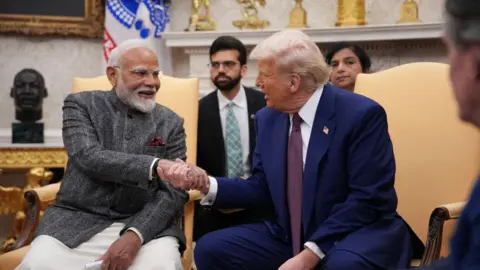
US President Donald Trump’s decision to reduce reciprocal tariffs on Indian goods from 50% to 18% has been welcomed in India, though many details of the agreement remain unclear. Last year, India faced some of the highest US tariffs after Trump increased import duties from 25% to 50%, citing New Delhi’s purchase of discounted Russian oil as supporting Moscow’s war effort in Ukraine. Following a call with Prime Minister Narendra Modi, Trump claimed that Modi had “agreed to stop buying Russian oil, and buy much more from the United States, and potentially Venezuela.” India has not confirmed these claims, but Modi expressed gratitude for the announcement, saying he hoped it would take US-India relations to “unprecedented heights.” The deal marks a thaw after a period of tension caused by Trump’s trade measures, which had hurt key Indian export sectors such as textiles, seafood, and jewellery. The tariffs also pushed India to accelerate other trade agreements and diversify its export markets. Last week, India and the EU finalised a major trade deal that eliminated tariffs on 80–90% of goods, marking Delhi’s ninth free trade agreement in four years. The agreement with the US, however, had previously stalled. The long-awaited announcement has been welcomed by Indian industry. Nilesh Shah, a fund manager, noted that while the full details are yet to be clarified, the reduction “removes a hanging sword over the rupee, equity, and rates market” and could be a “win-win” for both countries. The 18% tariff now aligns India with other Asian peers, such as Vietnam, Thailand, and Bangladesh, which face duties ranging from 19% to 40% on US exports. Analysts say this could enhance India’s appeal as an alternative manufacturing hub to China, citing advantages such as lower labour costs, political stability, and a large domestic market. Textile exporters in India also welcomed the development. The Confederation of Indian Textile Industry said the deal would enable them to compete more effectively in the US, which is the largest market for Indian textile and apparel exports. However, trade experts caution that many questions remain. Ajay Srivastava of the Global Trade and Research Initiative noted that Trump’s statements leave unclear which products are included, the timelines involved, and whether sensitive sectors such as agriculture will face zero tariffs and non-tariff barriers. US Secretary of Agriculture Brooke Rollins said the deal would allow the US to export more farm products to India, helping reduce the $1.3 billion agricultural trade deficit. India, however, has not commented on this aspect, as agriculture employs around half of the country’s population and remains a sensitive issue. Srivastava also warned that claims about India purchasing more than $500 billion of US goods, including energy, technology, and agriculture, should be treated with caution given current US-India trade volumes are under $50 billion. He emphasised that until a formal joint statement or negotiated text is issued, the announcement should be seen as a political signal rather than a completed deal. Nonetheless, the breakthrough after months of stalemate is seen as a positive step, with both governments indicating that further phases and negotiations are expected in the coming months. Geopolitically, the announcement is significant. Over the past year, India had strengthened ties with China and Russia, with leaders displaying solidarity at the Shanghai Co-operation Organisation Summit and Modi meeting Putin to further the “no limits” partnership. Analysts suggest that a renewed engagement with the US could now shift India’s strategic alignment back toward Washington. Shilan Shah of Capital Economics noted that if this rapprochement holds, India is likely to gravitate toward the US bloc, though many in the country still prefer a position of strategic non-alignment.

USS-1280x720.avif

2min3800
A federal judge has temporarily blocked the Trump administration’s attempt to end deportation protections for over 350,000 Haitian immigrants living and working in the US under Temporary Protected Status (TPS). The ruling came just a day before the TPS designation was set to expire. U.S. District Judge Ana Reyes said the Department of Homeland Security’s decision lacked sufficient legal support. She also suggested the move may have been influenced by hostility toward nonwhite immigrants. The administration argued that TPS programs encourage illegal immigration and have been repeatedly extended, but TPS is intended to protect migrants from deportation to countries considered unsafe due to natural disasters, conflict, or other crises. In an 83-page decision, Reyes denied the government’s request to dismiss the lawsuit and allowed the plaintiffs’ request to maintain their deportation protections while the case proceeds in court. The plaintiffs are five Haitian TPS holders. Reyes also cited offensive remarks by Secretary Noem, noting the individuals involved “are not… ‘killers, leeches, or entitlement junkies.’” Haiti was first designated for TPS following the devastating 2010 earthquake, and the status has been extended multiple times, most recently in 2021. The Trump administration has argued that TPS for Haitians has effectively become permanent residency, straying from Congress’ original purpose for the program. The administration has also sought to end most TPS programs, which could affect hundreds of thousands of migrants from countries including Afghanistan, Ethiopia, Honduras, Myanmar, Nepal, South Sudan, Syria, and Venezuela. In addition, deportation protections for roughly 2,500 Somali nationals are set to end on March 17, meaning they will lose their work authorisations and legal status, making them eligible for removal.

TAX.jpg

4min4050
The Federal Government has called on state governments, especially Ondo State, to scrap nuisance and illegal taxes through the implementation of the newly enacted tax reform laws and the adoption of a State Tax Harmonisation Law. The appeal was made on Monday by the Chairman of the Presidential Fiscal Policy and Tax Reforms Committee, Prof. Taiwo Oyedele, during a public lecture in Akure held as part of activities marking Ondo State’s 50th anniversary. Oyedele noted that the Federal Government began implementing the new tax policy on January 1, 2026, and urged states to align their fiscal systems with the reforms. He said states should fully apply the new tax reform laws and establish a harmonised tax framework to address multiple and illegal taxation. He added that Ondo State could also host the National Tax Ombud Office for the South-West to champion taxpayer rights and protection. According to him, the state could further strengthen accountability by introducing an annual Tax Accountability Report for taxpayers and developing a comprehensive tax and fiscal policy to guide revenue generation, spending and debt management. Oyedele also emphasised the need to strengthen fiscal transparency at the local government level, urging councils to prepare economic development plans and publicly disclose their budgets and audited accounts. He said each local government should establish a dedicated portal on the state website to share long-term plans, annual budgets and financial statements. Also speaking at the event, the Special Adviser to President Bola Tinubu on Energy, Mrs Olu Arowolo-Verheije, said the President remained committed to supporting Ondo State in unlocking its development potential. She highlighted several ongoing federal projects in the state, including sections of the Lagos–Calabar Coastal Highway, the Akure–Ore dual carriageway, the Akure–Ado Ekiti Road and the Federal University of Technology Teaching Hospital in Akure. She also said the Ondo Deep Sea Port project at Araromi was progressing steadily, noting that Governor Lucky Aiyedatiwa had recently secured a revalidated licence for the port. When completed, she said, it is expected to become West Africa’s deepest seaport, with a natural draught of about 18 metres. In his keynote address, Governor Lucky Aiyedatiwa said Ondo State had recorded steady progress across various sectors over the past five decades and expressed confidence in its future. He said the state’s development would be driven by economic diversification, technology and innovation, human capital development and strong institutions. The governor highlighted projects such as the Sunshine Free Trade Zone, the Golden Ceramics Industrial Plant, the Ethanol Plant in Ore and the Ondo Deep Sea Port as evidence of the state’s commitment to industrialisation, job creation and attracting investment. He added that tourism was being repositioned as a key growth sector, while continued investment in education, skills acquisition and youth empowerment would remain central to the state’s development agenda.

WAEC-1280x744.png

4min4860
No fewer than 300 secondary school students from across Kwara State have benefited from the 2026 West African Senior School Certificate Examination (WASSCE) scholarship programme of the Muhydeen Okunlola Kayode Foundation. The scholarship presentation ceremony took place on Saturday at the Offa Grammar School Auditorium in Offa Local Government Area, with beneficiaries selected from public secondary schools across the three senatorial districts of the state. The foundation’s WAEC Scholarship is an annual initiative designed to expand access to education, promote academic excellence and ensure that financial challenges do not prevent students from sitting for the examination. Speaking at the event, the foundation’s Executive Director, Saheed Lawal, said the number of beneficiaries was increased this year in line with the organisation’s continued commitment to education and youth development. He explained that the programme began in 2024 with support for 130 students, expanded to 200 beneficiaries in 2025, and has now reached 300 students statewide. Lawal said the steady expansion reflects the vision of the foundation’s founder, Alhaji Muhydeen Okunlola Kayode, to ensure that no child is denied educational opportunities due to financial hardship. He added that the initiative goes beyond numbers, offering hope, motivation and confidence to students to pursue bigger aspirations, noting that education remains a powerful tool for societal change. The 2026 scholarship programme, themed “Continuing the Journey, Lighting the Path to Brighter Futures,” forms part of the foundation’s broader efforts to support underprivileged students in Kwara State. Delivering a lecture at the ceremony, the Director of Weakypedia Linchpin Consult and Educational Services, Aderemi Oladepo, praised the foundation for its consistency and urged beneficiaries to remain focused and disciplined. He encouraged students to value education as a lifelong asset and called on parents and guardians to support their children both academically and morally. Also speaking, the proprietor of Lens Polytechnic and Lens University, Dr Azeez Yisa, represented by Akeem Dunmoye, advised the beneficiaries to justify the support by excelling in their examinations. He commended the foundation for its sustained support for students from disadvantaged backgrounds, noting that private initiatives are vital in complementing government efforts in the education sector. Parents, teachers and guardians at the event described Alhaji Kayode as a visionary community leader and applauded the consistency and positive impact of the scholarship scheme on access to education in the state. Founded by philanthropist and education advocate Alhaji Muhydeen Okunlola Kayode, the MOK Foundation focuses on improving access to education through scholarships and other forms of support for indigent students in Kwara State. Education stakeholders at the event also stressed that philanthropic interventions are increasingly important in widening access to education amid rising examination and schooling costs

house-of-rep.png

3min5920
The Office of the Head of the Civil Service of the Federation has announced the start of the accreditation exercise for the appointment of five new Federal Permanent Secretaries. In a statement issued on Tuesday by the Director of Press at the office, Eno Olotu, the exercise was said to have received the approval of President Bola Tinubu. According to the statement, the process is aimed at filling existing and anticipated vacancies, with eligible candidates drawn from Adamawa, Bayelsa, Enugu, Kano and Ogun states. The Head of the Civil Service of the Federation, Didi Walson-Jack, described the accreditation exercise as a crucial first step in a national assignment that will shape the future quality, integrity and capacity of leadership within the Federal Civil Service. She charged members of the Accreditation Committee to carry out their responsibilities with diligence, thoroughness and strict compliance with established rules and procedures, stressing that fairness, transparency and merit must guide the entire process. Also speaking, the Chairman of the Accreditation Committee and Permanent Secretary of the Federal Ministry of Education, Olumuyiwa Abel Enitan, reaffirmed the directive of the Head of Service. He emphasised the shared responsibility of committee members to safeguard the integrity of the Civil Service. Enitan warned that any error or oversight at the accreditation stage could compromise the credibility of the entire selection process, urging members to pay close attention to detail, work collaboratively and adhere strictly to the approved framework to ensure a transparent and credible outcome. The eligibility requirements for the appointment of Permanent Secretaries are provided in the Public Service Rules 2021. Under the rules, appointments are made from serving Directors in the Federal Civil Service, subject to the recommendation of the Head of the Civil Service of the Federation and approval by the President. The position attracts a four-year renewable term, with a maximum tenure of eight years, and selections are guided by merit and the principle of Federal Character

Tech & Tools Desk3 February 2026
Anti-Ssnake-Venom.webp

6min4900
At least half of health facilities in Nigeria are unable to adequately treat snakebite envenoming, according to a new report. The findings were released by the global Strike Out Snakebite initiative to commemorate World Neglected Tropical Diseases (NTDs) Day 2026, observed annually on January 30. The report highlighted how weak health systems, poor infrastructure and persistent shortages of life-saving antivenom continue to fuel preventable deaths and long-term disabilities, especially in high-burden countries such as Nigeria. The study surveyed 904 frontline healthcare workers in Nigeria, Brazil, India, Indonesia and Kenya — five countries with the highest snakebite burden globally. It found that 50 per cent of respondents said their facilities lacked full capacity to manage snakebite cases, while 99 per cent reported difficulties administering antivenom, the only treatment recognised by the World Health Organisation as essential for snakebite care. In Nigeria, the situation was described as particularly alarming, with 98 per cent of healthcare workers reporting challenges in administering antivenom. The report noted that Nigeria is home to 29 snake species, about 41 per cent of which are venomous, yet many victims struggle to access timely and effective medical care. Healthcare workers identified urgent needs such as improved access to care, better-quality antivenom, stronger regulation, expanded training, and increased community education to reduce risky behaviours. Key contributors to avoidable deaths and disabilities included delays in patients reaching health facilities (57 per cent), poor infrastructure and inadequate equipment (56 per cent), and lack of training and clinical guidelines (42 per cent). The report followed the recent death of Abuja-based music talent Ifunanya Nwangene, who reportedly visited two hospitals unable to administer antivenom before she died. It further revealed that 35 per cent of healthcare workers experience daily shortages of antivenom, while more than 77 per cent reported life-threatening delays in patients seeking care, often due to reliance on traditional remedies. According to the findings, 44 per cent of respondents said such delays had led to amputations or major surgeries, outcomes that frequently push affected families into poverty. Snakebite envenoming was described as a disease of inequality, disproportionately affecting rural communities, children and agricultural workers living far from well-equipped health facilities. Globally, the condition kills an estimated one person every five minutes, yet remains severely underreported and underfunded despite being preventable and treatable. Speaking on the findings, co-chair of the Global Snakebite Taskforce and Chancellor of the London School of Hygiene and Tropical Medicine, Elhadj As Sy, said the research was urgent, noting that snakebite envenoming causes up to 138,000 deaths annually and leaves about 400,000 people with permanent disabilities. He described it as troubling that one of the deadliest neglected tropical diseases remains largely invisible to global decision-makers, donors and funders. He called for urgent action to ensure that a preventable and treatable condition no longer claims lives across Nigeria and other vulnerable regions. As Sy also stressed that frontline healthcare workers are battling the disease within fragile and under-resourced systems, adding that political will and bold commitments from governments, partners and investors are needed to reverse the trend. The report highlighted that victims often endure long journeys to care, limited infrastructure and scarce, expensive antivenom, barriers that turn a treatable condition into a life-threatening emergency. It also pointed to simple preventive measures — such as wearing protective footwear, using mosquito nets, carrying torches at night and avoiding snake habitats — which could significantly reduce risk, particularly in rural communities. Calling for government action, As Sy urged the international community to prioritise snakebite prevention and treatment, noting that solutions already exist and deaths are preventable. Executive Secretary of the African Leaders Malaria Alliance, Joy Phumaphi, said snakebite envenoming continues to claim the lives of vulnerable people despite being preventable, reaffirming commitments to strengthen prevention and control through advocacy and country-led solutions. The report urged governments, philanthropists, multilateral agencies and industry players to increase investment in research, expand affordable and high-quality antivenom production, modernise health infrastructure and integrate snakebite prevention and treatment into national health plans. It warned that snakebite envenoming currently receives only a fraction of the funding required, despite causing up to 138,000 deaths and 400,000 permanent disabilities worldwide each year.