

 Tech & Tools Desk
Optimism Tempered by Doubt as India and the US Finalise Long‑Awaited Trade Agreement
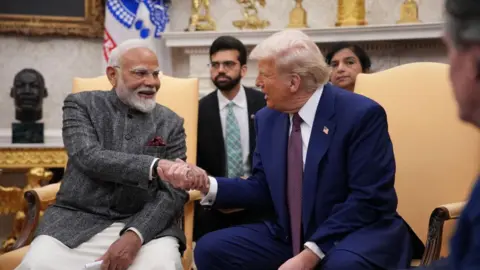
US President Donald Trump’s decision to reduce reciprocal tariffs on Indian goods from 50% to 18% has been welcomed in India, though many details of the agreement remain unclear.
Last year, India faced some of the highest US tariffs after Trump increased import duties from 25% to 50%, citing New Delhi’s purchase of discounted Russian oil as supporting Moscow’s war effort in Ukraine.
Following a call with Prime Minister Narendra Modi, Trump claimed that Modi had “agreed to stop buying Russian oil, and buy much more from the United States, and potentially Venezuela.” India has not confirmed these claims, but Modi expressed gratitude for the announcement, saying he hoped it would take US-India relations to “unprecedented heights.”
The deal marks a thaw after a period of tension caused by Trump’s trade measures, which had hurt key Indian export sectors such as textiles, seafood, and jewellery. The tariffs also pushed India to accelerate other trade agreements and diversify its export markets.
Last week, India and the EU finalised a major trade deal that eliminated tariffs on 80–90% of goods, marking Delhi’s ninth free trade agreement in four years. The agreement with the US, however, had previously stalled.
The long-awaited announcement has been welcomed by Indian industry. Nilesh Shah, a fund manager, noted that while the full details are yet to be clarified, the reduction “removes a hanging sword over the rupee, equity, and rates market” and could be a “win-win” for both countries.
The 18% tariff now aligns India with other Asian peers, such as Vietnam, Thailand, and Bangladesh, which face duties ranging from 19% to 40% on US exports. Analysts say this could enhance India’s appeal as an alternative manufacturing hub to China, citing advantages such as lower labour costs, political stability, and a large domestic market.
Textile exporters in India also welcomed the development. The Confederation of Indian Textile Industry said the deal would enable them to compete more effectively in the US, which is the largest market for Indian textile and apparel exports.
However, trade experts caution that many questions remain. Ajay Srivastava of the Global Trade and Research Initiative noted that Trump’s statements leave unclear which products are included, the timelines involved, and whether sensitive sectors such as agriculture will face zero tariffs and non-tariff barriers.
US Secretary of Agriculture Brooke Rollins said the deal would allow the US to export more farm products to India, helping reduce the $1.3 billion agricultural trade deficit. India, however, has not commented on this aspect, as agriculture employs around half of the country’s population and remains a sensitive issue.
Srivastava also warned that claims about India purchasing more than $500 billion of US goods, including energy, technology, and agriculture, should be treated with caution given current US-India trade volumes are under $50 billion. He emphasised that until a formal joint statement or negotiated text is issued, the announcement should be seen as a political signal rather than a completed deal.
Nonetheless, the breakthrough after months of stalemate is seen as a positive step, with both governments indicating that further phases and negotiations are expected in the coming months.
Geopolitically, the announcement is significant. Over the past year, India had strengthened ties with China and Russia, with leaders displaying solidarity at the Shanghai Co-operation Organisation Summit and Modi meeting Putin to further the “no limits” partnership. Analysts suggest that a renewed engagement with the US could now shift India’s strategic alignment back toward Washington.
Shilan Shah of Capital Economics noted that if this rapprochement holds, India is likely to gravitate toward the US bloc, though many in the country still prefer a position of strategic non-alignment.

