Blog - Edupreneur Select

Bring to the table win-win survival strategies to ensure proactive domination. At the end of the day, going forward, a new normal that has evolved from generation.
Majestic-OIL-1280x757.png

4min4950
Anmerkung der Redaktion: Dieser Artikel enthält Affiliate-Links. Als Amazon-Partner verdiene ich an qualifizierten Käufen. In einem anspruchsvollen Berufsleben geht das Konzept der „Pflege“ über Ihre Ausrüstung und Ihr Heimbüro hinaus. Um als Führungskraft langfristig erfolgreich zu sein, bedarf es einer disziplinierten Herangehensweise an die körperliche Erholung. Das Majestic Pure Vitamin-E-Öl (20.000 IE) ist ein Produkt in pharmazeutischer Qualität, das für Menschen entwickelt wurde, die wissen, dass gesunde Haut ein wesentlicher Bestandteil einer gepflegten, souveränen Ausstrahlung ist. Dieses 100 % reine, kaltgepresste Öl ist kein kosmetischer Luxus, sondern ein bioaktives Mittel zur Zellregeneration und zum Schutz vor Umwelteinflüssen. Hier bei Amazon erhältlich: https://amzn.to/4rV44S1 (Bezahlter Link)   Technische Präzision: Der 20.000-IE-Standard Nicht alle Vitamin-E-Öle sind gleich. Die Wirksamkeit dieses Öls liegt in seiner hochwirksamen Konzentration und dem sauberen Extraktionsverfahren. Integrität durch Kaltpressung: Da auf eine Extraktion unter hoher Hitze verzichtet wird, behält das Öl sein vollständiges Nährstoffprofil. Dies stellt sicher, dass das Vitamin E stabil und wirksam bleibt und tief in das Gewebe eindringen kann. Gezielte Reparatur: Mit einer Wirksamkeit von 20.000 IE wurde dieses Öl speziell für eine hochwirksame Regeneration entwickelt. Ob bei Narbengewebe, Sonnenschäden oder den Umweltbelastungen durch häufiges Reisen – es liefert eine konzentrierte Dosis an Antioxidantien, mit der herkömmliche Lotionen nicht mithalten können. Gentechnikfreie Reinheit: Für den Profi, der jeden Inhaltsstoff genau unter die Lupe nimmt, bietet dieses Öl eine reine, nicht-synthetische Lösung für die Gesichts-, Körper- und Haarpflege. Der Sunday Reset: Optimierung für die kommende Woche Die Einbindung eines hochwirksamen Öls in Ihre Sunday-Reset-Routine ist ein strategischer Schritt für die langfristige Pflege. Haut- und Narbenpflege: Verwenden Sie es als gezielte Behandlung für die Widerstandsfähigkeit der Haut. Seine dickflüssige, nährstoffreiche Konsistenz bildet eine Schutzbarriere, die über Nacht eine tiefgehende Heilung fördert. Der Haarschutz: Ein paar Tropfen in Ihrer Pflegeroutine sorgen für einen Feuchtigkeitsschutzschild, der das Haar vor den Strapazen des Stylings und trockener Büroluft schützt. Der Vorteil als Trägeröl: Als 100 % reines Öl dient es als hochwertiger Träger für ätherische Öle, sodass Sie Ihre Wellness-Atmosphäre mit professioneller Präzision individuell gestalten können. Das Fazit Das Majestic Pure Vitamin-E-Öl steht für ein Bekenntnis zu hochwertiger Selbstpflege. Es ist ein konzentriertes, wirkungsvolles und vielseitiges Produkt, das Ihr Pflege-Set vereinfacht und gleichzeitig die Ergebnisse maximiert. Für den modernen Berufstätigen ist es der letzte Schliff in einer Routine, die auf Ausdauer und Spitzenleistung ausgelegt ist. Hier bei Amazon erhältlich: https://amzn.to/4rV44S1 (Bezahlter Link)

Charger-1280x750.png

4min4220
Editor’s Note: This article contains affiliate links. As an Amazon Associate, I earn from qualifying purchases. Success in a high-output professional environment is often the result of managing small details before they become large disruptions. Whether you are navigating a series of regional board meetings or preparing for international travel, your infrastructure must be as resilient as your strategy. Maintaining a polished image while staying technologically connected requires a specific set of tools. These three selections represent a unified approach to travel efficiency, personal maintenance, and operational readiness. The Power Standard: UK USB-C Fast Charging Adaptor In 2026, dead batteries are a failure of planning. The USBC Fast Charge Plug is the technical foundation for the modern mobile office. Engineered for the latest hardware, including the iPhone 17 Pro Max and the newest iPad iterations, this dual-port adaptor handles both USB and Type-C requirements. When you only have twenty minutes between sessions at a UK terminal, the fast-charge capability ensures your devices are back to operational capacity. It is a compact, high-performance necessity for the global professional. Get the USBC Plug UK Fast Charge Adaptor on Amazon Here: https://amzn.to/4tetMC2 (Paid Link)   The Security Asset: Uniclife Floral Heavy-Duty Badge Reel For the executive navigating secure commercial spaces or large-scale facilities, credential management is a daily constant. The Uniclife Retractable Badge Reel replaces flimsy standard-issue lanyards with a robust, industrial-grade solution. Built with a stainless steel spring coil and a 61 cm high-tensile nylon rope, this reel is designed for high-frequency use. The subtle pink floral design on a strong ABS casing adds a touch of sophisticated branding to a purely functional security tool. It keeps your keys and credentials accessible without compromising your professional silhouette. Get the Uniclife Floral Retractable Badge Reel on Amazon Here: https://amzn.to/47sQgqE (Paid Link)   The Maintenance System: 3-Pack Satin Sleeping Bonnets Traveling across time zones and sleeping in varying climates can compromise your personal grooming standards. High-performance leaders recognize that getting a good night’s rest is an essential part of their job. These satin and silk bonnets are designed to maintain hair integrity and skin moisture during travel. The adjustable soft elastic bands ensure a secure fit for both men and women. By incorporating these into your travel routine, you ensure that you arrive at your morning briefings with the same polished, intentional look you have at your home base. Get the 3-Pack Satin Silk Sleeping Bonnets on Amazon Here: https://amzn.to/3PMqwzp (Paid Link)   The Selection Verdict The intersection of technology, security, and personal maintenance is where the modern professional thrives. By integrating these three assets into your travel kit, you are optimizing for a frictionless transition from the flight to the boardroom.  

Home & Living Desk28 March 2026
Baja-Avocado-1280x740.png

3min5190
Editor’s Note: This article contains affiliate links. As an Amazon Associate, I earn from qualifying purchases. In the world of high-performance living, the most effective systems are those that simplify the complex. We often optimize our digital workflows, but true peak performance starts with the literal fuel we put in our bodies. The Baja Precious 100% Pure Avocado Oil (1-Gallon Jug) is more than a kitchen staple. It is a multi-purpose tool that bridges the gap between culinary precision and a sophisticated wellness routine. Culinary Logic: High Stability for High Performance If you are investing in premium ingredients, you cannot afford to compromise them with unstable oils. Avocado oil is the overachiever of the pantry. Extreme Thermal Stability: With a smoke point of 271°C (520°F), this oil remains chemically stable where others break down. Whether you are searing protein after a late meeting or preparing meals for the week, you ensure your nutrition remains clean. Neutral Palette: It carries a buttery, near-personal profile. It does not compete with your food. It is the silent partner in your kitchen. Wellness Logic: The Biological Hack for Your Sunday Reset In 2026, luxury is about purity and potency. We have moved past the era of ten different chemical-laden bottles for skin and hair. Topical Efficiency: Rich in Vitamin E and monounsaturated fats, this food-grade oil doubles as a professional treatment for skin and hair longevity. The Routine: Incorporate it into your Sunday Reset as a deep-conditioning mask or a base for a minimalist skincare regimen. It absorbs deeply without the greasy residue of lower-quality oils. Economic Logic: The Power of the Gallon As a businessman, you understand that buying small is a tax on your time and your margins. Frictionless Living: A heavy-duty jug eliminates the constant out of stock annoyance. It is a set-it-and-forget-it inventory move for your home. Scalability: One jug replaces your cooking oil, your carrier oil for essential oils, and your hair serum. It is the ultimate minimalist system in a bottle. The Selection Verdict The Baja Precious Avocado Oil is for the individual who values substance over branding. It is hexane-free, expeller-pressed, and ruthlessly efficient. In an age of over-complicated wellness marketing, this is a return to what works. Get the Baja Precious 100% Pure Avocado Oil (1 Gallon) on Amazon Here: https://amzn.to/4szwr9v (Paid Link)

Kenya-Cover.jpg

6min4610
The 2026 Global Education Monitoring report by UNESCO has unveiled a stark divergence in the East African educational landscape. While the region has made historic strides in school enrollment, a massive “retention gap” remains. Kenya, however, has emerged as a regional outlier, successfully transitioning nearly its entire primary-aged population to completion—a feat that contrasts sharply with the struggles of its neighbors. With Sub-Saharan Africa now home to half of the world’s 273 million out-of-school children, the “Kenyan Model” offers a critical case study in how steady investment and policy consistency can stabilize an education system in an era of global volatility. Why This Matters School Leaders and Educators The data shifts the focus from access to progression. In Kenya, primary completion rates have hit a near-universal 99% for boys and 100% for girls, whereas in Uganda, completion hovers at just over 50%. For educators, this highlights that getting a child into a seat is only the first step; the real challenge is building the infrastructure and social support systems that prevent mid-cycle dropouts. Entrepreneurs and Business Leaders Kenya’s success is partly attributed to a diversified “education marketplace,” including a robust private sector and the rapid expansion of distance learning platforms. For investors and EdTech entrepreneurs, this signals a maturing market where the demand is shifting from basic literacy tools to sophisticated platforms that support secondary transition and vocational readiness. Households and Individuals Education remains a significant private cost. In Uganda, public spending has dipped to 6.6% of government expenditure, forcing families to turn to private institutions, which account for 84% of schools in urban hubs like Kampala. Households are increasingly bearing the financial burden of “quality,” creating a tiered system where income level determines a child’s likelihood of finishing secondary school. Africa in the Global Context The stagnation of education transition rates is a global phenomenon. Between 1985 and 2000, global transition rates jumped by 10%, but progress has since slowed to a crawl. Kenya’s ability to buck this trend and near universal completion puts it in a unique position relative to other emerging markets in Southeast Asia and Latin America. However, the UNESCO report warns that this “diversification” of education—while helpful for capacity—mirrors trends seen in the US and UK, where a heavy reliance on private schooling can entrench long-term inequality. Kenya’s challenge now is to ensure that its “layers” of education do not create a permanent class divide, a risk currently facing many Western education systems. Implications and Emerging Signals The Rise of Private-Public Hybrids: We are seeing a strategic shift where governments are no longer the sole providers but the regulators of a vast network of private and digital learning providers. Secondary School as the New Battleground: With primary completion nearing 100% in leading African economies, the strategic focus is moving to secondary and tertiary retention to avoid a “skills ceiling.” Legal Frameworks as Stability Anchors: UNESCO notes that the fastest gains were made in countries that combined investment with “core policies” and strong legal frameworks, rather than radical, frequent overhauls. Key Takeaways Prioritize Completion over Enrollment: Success should be measured by the number of students who finish the cycle, not just those who register on day one. Watch the “Urban-Private” Shift: In cities like Kampala and Nairobi, private education is no longer an alternative—it is the primary system. Businesses should align their CSR and training initiatives with these private networks. Prepare for a High-Skilled Pipeline: Kenya’s near-universal completion rate means it will likely produce a more literate and digitally-ready workforce than its neighbors by 2030. Mitigate Inequality Risks: As the system diversifies, policy-makers must implement targeted financial support for low-income households to prevent a “two-tier” society. “This reflects a broader shift toward a more pragmatic, multi-stakeholder approach to African education, where the state provides the framework and the private sector provides the scale.”

Canada-Cover-2.jpg

12min7230
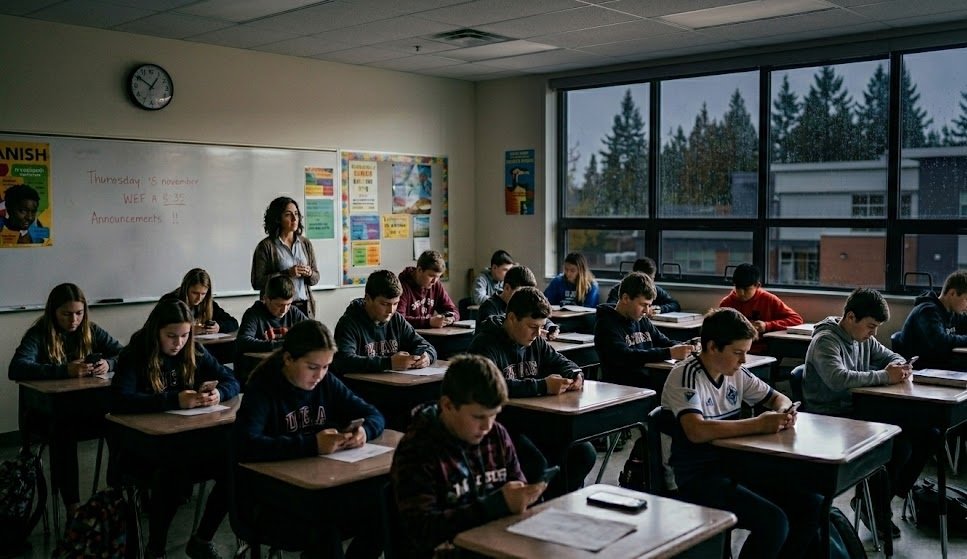
For fifteen years, the morning soundscape of a North American high school was defined by a chaotic, high-decibel social ritual. Today, that noise has been replaced by what educators call a “strange sort of silence.” Even in a room full of students, heads are down, tethered to smartphone screens. This isn’t just a shift in behavior; it is a profound transformation of the Canadian educational environment from a community hub into a collection of isolated digital silos. In districts from North Vancouver to Halifax, teachers are observing that loneliness is rarely loud; it is a quiet, persistent barrier to learning. New longitudinal data from Harvard’s Making Caring Common project confirms that this “silent loneliness” was widespread even before the pandemic and has since become the primary obstacle to student health and happiness—outranking even income or physical exercise as a predictor of long-term well-being. Why This Matters School Leaders and Educators In the Canadian context, where provincial curricula increasingly emphasize “Social-Emotional Learning” (SEL), loneliness is a “silent tax” on academic performance. When students sit in digital isolation, their capacity for cognitive load decreases. For administrators, the implication is clear: community is no longer a “soft skill” or an extracurricular add-on. It is “medicine.” Strategic investment must move toward relational pedagogy—the intentional engineering of social interactions to break the digital trance. Households and Individuals The transition to secondary school is a period of high social risk. Canadian parents often assume that if a child is “connected” via social media, they are socially satisfied. The reality is that many students, including those who appear gregarious, “don’t know where to start” when it comes to face-to-face connection. Households must recognize that the “silence” reported in schools is a signal that students need modeled, low-stakes opportunities to practice human interaction in the physical world. Entrepreneurs and Business Leaders The “loneliness economy” poses a direct threat to the future Canadian workforce. Collaboration, empathy, and the ability to navigate diverse perspectives are the “human-centric” skills that AI cannot replicate. If the “classroom-as-community” fails, the pipeline of emotionally intelligent, collaborative professionals thins. There is a significant opportunity for Canadian EdTech innovators to move away from “solo-user” platforms toward tools that facilitate “stewardship” and collective contribution. Implications and Emerging Signals The move from “classrooms to communities” signals a shift in how we value the school day in Canada: The Rise of the “Classroom Host”: Educators are moving away from being “sages on the stage” to becoming “social architects.” This involves active facilitation—connecting students based on shared interests rather than leaving social bonds to chance. Service-Based Belonging: Canadian schools are finding success in assigning daily roles that create “stewardship.” When a student is responsible for a task—even something as simple as taking attendance or managing equipment—they transition from a passive consumer to a needed contributor. Strategic Physical Re-shuffling: Frequent seating changes (every two months) are becoming a necessity to disrupt fixed social cliques and lower the “social risk” of meeting new peers. Key Takeaways Interrupt the “Digital Trance”: Use intentional rituals (like a “word of the day” or visual check-ins) to break the smartphone silence the moment class begins. Don’t wait for students to look up; give them a social reason to do so. Facilitate “Low-Stakes” Vulnerability: Use play-based learning and non-evaluative projects (like community art or shared cooking) to let students show their unique “quirks” without the pressure of academic judgment. Model Social Connectivity: Actively play the role of a “connector.” If two students share a hobby or a favorite local haunt, name it publicly to give them a built-in conversation starter. Prioritize Contribution over Attendance: Assign tangible roles to every student. Feeling “needed” is the most direct antidote to feeling “lonely.” Normalize Change: Predictable, frequent seating rotations lower the stakes of sitting next to someone new, preventing the “awkwardness” that often keeps students isolated. This reflects a broader shift toward treating the Canadian classroom as a social sanctuary. In an era of digital immersion, the most radical thing a school can do is teach a student how to be seen by—and how to truly see—the person sitting next to them. For fifteen years, the morning soundscape of a North American high school was defined by a chaotic, high-decibel social ritual. Today, that noise has been replaced by what educators call a “strange sort of silence.” Even in a room full of students, heads are down, tethered to smartphone screens. This isn’t just a shift in behavior; it is a profound transformation of the Canadian educational environment from a community hub into a collection of isolated digital silos. In districts from North Vancouver to Halifax, teachers are observing that loneliness is rarely loud; it is a quiet, persistent barrier to learning. New longitudinal data from Harvard’s Making Caring Common project confirms that this “silent loneliness” was widespread even before the pandemic and has since become the primary obstacle to student health and happiness—outranking even income or physical exercise as a predictor of long-term well-being. Why This Matters School Leaders and Educators In the Canadian context, where provincial curricula increasingly emphasize “Social-Emotional Learning” (SEL), loneliness is a “silent tax” on academic performance. When students sit in digital isolation, their capacity for cognitive load decreases. For administrators, the implication is clear: community is no longer a “soft skill” or an extracurricular add-on. It is “medicine.” Strategic investment must move toward relational pedagogy—the intentional engineering of social interactions to break the digital trance. Households and Individuals The transition to secondary school is a period of high social risk. Canadian parents often assume that if a child is “connected” via social media, they are socially satisfied. The reality is that many students, including those who appear gregarious, “don’t know where to start” when it comes to face-to-face connection. Households must recognize that the “silence” reported in schools is a signal that students need modeled, low-stakes opportunities to practice human interaction in the physical world. Entrepreneurs and Business Leaders The “loneliness economy” poses a direct threat to the future Canadian workforce. Collaboration, empathy,

US-Kindergatten-Cover.jpg

6min5370
In the United States, the decision of when to start a child in kindergarten has shifted from a simple age milestone to a strategic maneuver. Known as “redshirting”—a term borrowed from collegiate sports where athletes sit out a year to mature—the practice involves delaying a child’s entry until age six. While social media and high-pressure school districts often frame this as an essential “gift of time,” a landmark 2026 study from the research firm NWEA suggests the benefits are far more fleeting than many parents realize. Despite a small spike during the pandemic, redshirting remains a niche choice, practiced by only about 5% of US families. As states across the country—including Connecticut, Ohio, and Colorado—begin mandating earlier birthdate cut-offs, the debate over “readiness” versus “regulations” is reaching a critical inflection point. Why This Matters Households and Individuals For American parents, the redshirting dilemma is often a choice between perceived academic competitive advantage and immediate financial reality. The NWEA report highlights that a “hold-back year” can cost a family upwards of $15,000 in additional childcare or private preschool expenses. Furthermore, while redshirted children often enjoy a boost in confidence as the oldest in their class, they face long-term risks: they are statistically more likely to drop out of high school because they reach the age of 18 during their junior year. School Leaders and Educators The US educational landscape is currently seeing a wave of “forced redshirting” through legislative changes. States like Connecticut recently moved their cut-off from January 1 to September 1, while Ohio has standardized cut-offs to the first day of school. For administrators, these shifts create logistical hurdles, such as managing “bubble” classes and navigating a 6% drop in disability identification among delayed-entry students. Educators warn that starting late can sometimes delay the diagnosis of developmental needs that would otherwise be caught through early intervention services. Entrepreneurs and Business Leaders The childcare and private “bridge” preschool market is directly influenced by these trends. In affluent US districts, redshirting has created an “academic arms race,” driving demand for high-end “Transitional Kindergarten” (TK) programs. Conversely, in rural and lower-income areas, the 2021-2022 school year saw a jump in redshirting (up to 9% in rural zones), signaling a shift in how these communities utilize local, often less formal, childcare networks to manage school readiness. Implications and Emerging Signals The current state of kindergarten entry reveals several shifting patterns in the US: Standardization of Cut-offs: A growing number of states are moving toward an August or September 1 cut-off to align with the start of the school year, reducing the “January 1” outliers that previously allowed four-year-olds into classrooms. The “Third-Grade Catch-Up”: NWEA data confirms that by the third grade, “on-time” entrants have completely closed the achievement gap with their redshirted peers in math and reading, rendering the initial advantage obsolete. Gender and Racial Disparity: Redshirting remains a “luxury item” predominantly utilized by white families and for boys. Research indicates this practice can inadvertently widen the racial-ethnic achievement gap, as it provides no statistically significant benefit for Hispanic students while offering a 4% boost in “gifted” identification for white students. Key Takeaways Evaluate the “Third-Grade Reset”: Recognize that the 20% to 30% learning advantage seen in redshirted kindergartners is temporary and usually disappears by age nine. Audit Childcare Costs: Before choosing to redshirt, families should perform a cost-benefit analysis of the $12,000–$15,000 expense of an extra year of preschool against the likely short-term academic gains. Prioritize Early Screening: Rather than delaying entry for a “late bloomer,” utilize the public school system’s mandated screening resources to identify and address potential learning disabilities early. Monitor State Cut-off Changes: Parents in states like Ohio and Connecticut should check for new “assessment” or “waiver” processes if their child falls just past new, earlier cut-off dates. Long-term Graduation Risk: Consider the social impact of a child being 19 at high school graduation, which can lead to late-stage disengagement or early entry into the workforce at the cost of higher education. This reflects a broader shift toward a “standardized readiness” model in the US, where the focus is moving away from parental discretion and toward data-driven entry dates and early intervention.

UK-Cover-1280x747.png

6min4740
The UK government has issued its first evidence-backed guidance regarding digital consumption for children under the age of five, marking a significant shift toward a “precautionary approach” in early childhood development. The new recommendations advise that children under five should be limited to one hour of screen time per day, while those under two should avoid solo screen use entirely. Co-authored by the Department for Education’s scientific advisers and the Children’s Commissioner, the guidance arrives amid growing concerns over “fast-paced” digital content and its link to emotional dysregulation. By suggesting “screen swaps”—replacing digital devices with shared reading or physical play—ministers aim to mitigate the risks screens pose to sleep, physical activity, and cognitive growth. This move signals a broader transition in public health policy, treating digital habits with the same level of scrutiny as nutrition or physical exercise. Why This Matters School Leaders and Educators For those in early years settings, this guidance provides a long-awaited benchmark for parental engagement. Educators often deal with the “after-effects” of excessive screen time, such as shortened attention spans or difficulty with peer-to-peer interaction. The focus on “fast-paced” content is particularly relevant; researchers suggest that modern, high-speed digital media can trigger a physiological “fight-or-flight” response in toddlers. Schools and nurseries may now need to align their own digital policies with these national standards, emphasizing the difference between passive consumption and active, adult-led digital learning. Households and Individuals The guidance places a significant burden of “digital modeling” on parents. It acknowledges that children’s brains are “sponges” that mimic adult habits, meaning parental phone use is now directly linked to a child’s developmental environment. However, the reality of modern parenting—where screens often serve as a “digital crutch” during chores or stressful mornings—creates a gap between policy and practice. The shift from “solo” to “joint” viewing is the most practical middle ground offered to families struggling with the “guilt” of screen reliance. Professionals For those working in the tech and toy industries, the government’s recommendation to avoid AI-integrated toys for the under-five demographic is a notable signal. It suggests a growing skepticism toward “smart” playthings that lack human interaction. Furthermore, the emphasis on “slow-paced” content may drive a market shift toward “slow media” or educational tools that prioritize steady engagement over dopamine-driven sensory overload. Implications and Emerging Signals This guidance is not merely a set of rules for parents; it is a harbinger of a more regulated digital childhood. Several key trends are emerging: The End of the “Digital Wild West” for Toddlers: This represents the first time the UK government has provided specific, time-based limits for early years, moving away from vague suggestions toward concrete public health targets. A Shift in Content Standards: The research highlighted by the University of East London suggests that the cadence of content—not just the duration—is a risk factor. We may see future ratings or labels that categorize content based on its pacing and cognitive load. The “Co-Viewing” Mandate: Policy is moving away from the total prohibition of tech and toward “active mediation.” The distinction between a child watching a tablet alone and a child engaging with a screen alongside an adult is now a formal part of developmental strategy. Legislative Momentum: These guidelines arrive alongside consultations on banning social media for under-16s, suggesting a multi-layered government strategy to “de-digitalize” the foundational years of human development. Key Takeaways Prioritize “Co-Engagement”: If a screen must be used, ensure an adult is present to narrate and interact with the child. Solo use is the primary risk factor for cognitive delays. Audit Content Speed: Parents and educators should favor “slower” media—content with fewer cuts, slower speech, and predictable narratives—to avoid triggering stress responses in young brains. Implement “Screen Swaps”: Identify high-friction times (like mealtimes or morning routines) where screens are used as a distraction and gradually replace them with tactile activities or shared reading. Model the Behavior: Children are unlikely to follow time limits if they observe parents in a state of “endless scrolling.” Digital hygiene must be a household-wide commitment. Watch for AI Integration: Be cautious with toys or tools that utilize artificial intelligence for toddlers, as current guidance suggests these are not yet proven to be beneficial for early-stage development. This reflects a broader shift toward treating digital consumption as a public health issue, moving beyond “online safety” to address the fundamental neurological and physical impact of technology on the next generation.

Home & Living Desk27 March 2026
EXPRESSO-MAIN-1280x759.png

4min4350
Editor’s Note: This article contains affiliate links. As an Amazon Associate, I earn from qualifying purchases. In the 2026 professional landscape, the quality of your morning ritual is a primary indicator of your daily output. For the Edupreneur—the school leader, the researcher, or the high-impact facilitator—energy management is a strategic necessity. Transitioning from a complex task to a state of flow requires a sensory “reset,” and nothing facilitates this transition more effectively than a precision-crafted espresso. The Philips 3300 Series Fully Automatic Espresso Machine (EP3341/50) is the technical solution for the executive suite, bringing barista-level systems into your workspace with zero-friction operation. SilentBrew Technology: Maintaining the Focused Environment In leadership, silence is a luxury. Unlike traditional espresso machines that disrupt the cognitive environment with loud grinding, the Philips 3300 features SilentBrew Technology. This patented sound-shielding system reduces noise by 40%, ensuring that your mid-morning cappuccino doesn’t compromise the “Quiet Luxury” of your office or the focus of a nearby Zoom session. It is the invisible layer of technical confidence that allows your machine to perform its duties without announcing them. The LatteGo System: High-Speed Cyclonic Precision For the modern professional, complexity is the enemy of consistency. The LatteGo Milk System is a masterpiece of simplified engineering. Tube-Free Design: By utilizing a two-part cyclonic chamber, LatteGo creates a silky-smooth milk froth—even with plant-based alternatives—without the need for internal tubes. Operational Readiness: In professional facilitation, we prioritize tools that are “Ready to Go.” The LatteGo system can be rinsed clean in just 15 seconds or placed in the dishwasher, ensuring your maintenance cycles never interfere with your meeting schedule. 6 Pre-Set Masterpieces: Versatility at Scale The EP3341/50 is pre-programmed to deliver 6 hot and iced beverages at the touch of a button. Whether you need a double-shot Espresso for a leadership summit or a refreshing Iced Coffee for a post-lecture debrief, the machine utilizes its 15-Bar Pressure and 100% Ceramic Grinders to extract the full flavor profile of your beans. With the “My Coffee Choice” menu, you can adjust aroma strength and volume to mirror your personal preferences with scientific precision. Facilitator’s Insight: The Discipline of Maintenance In leadership, we understand that longevity is a result of proactive systems. The AquaClean Filter is a strategic asset, allowing you to brew up to 5,000 cups before a full descaling cycle is required. It ensures that your water—and therefore your coffee—remains at a high standard of purity, reflecting the internal care you apply to your organizational strategy. By utilizing the Philips 3300 Series, you remove the variable of “mediocre coffee” from your daily routine. It allows you to maintain a polished, high-performance visual presence while fueling the transition toward your 2026 financial goals. The 2026 Executive Essential For our readers who demand both technical excellence and effortless sophistication in their workspace, the Philips 3300 Series LatteGo is an absolute necessity. It is the “Smart Home Cafe” system that ensures your morning fuel is as sophisticated as your strategy. Get the Philips 3300 Series LatteGo Espresso Machine on Amazon Here: https://amzn.to/47mYXmn (Paid Link)

admin26 March 2026

5min5360
Editor’s Note: This article contains affiliate links. As an Amazon Associate, I earn from qualifying purchases. In today’s fast-paced professional and social world, your fragrance is more than a finishing touch. It is part of your identity. The right perfume can signal confidence in the boardroom, elegance on a date, and effortless style in everyday life. Rather than owning dozens of fragrances, the modern woman needs a strategic, well-curated selection that works across different moments. Below are five standout perfumes, each carefully matched to a specific occasion. Best Perfume for Office Maison Francis Kurkdjian Paris 724 EDP for Uni Sex, 2.4 Ounce If your goal is to smell polished, clean, and quietly sophisticated, this is your office signature. Maison Francis Kurkdjian 724 delivers a fresh, airy, and refined scent profile that feels like stepping into a luxury space. It is subtle enough for professional environments yet distinctive enough to leave an impression. Perfect for meetings, presentations, and daily professional interactions. Get it on Amazon : https://amzn.to/4t3YT3a (Paid Link) Best Perfume for Date Night Kilian Angels Share EDP Spray Unisex 1.7 oz For evenings that demand warmth, depth, and memorability, Kilian Angels’ Share stands out. This fragrance is rich, sensual, and slightly sweet, creating an intimate and luxurious aura. It lingers beautifully and evolves throughout the evening, making it ideal for romantic settings and special occasions. This is the scent that gets remembered. Get it on Amazon: https://amzn.to/47rwHyX (Paid Link) Best Going Out Perfume Maison Francis Kurkdjian Baccarat Rouge 540 Pure Perfume, 2.3 Fl Oz (Pack of 1) If there is one fragrance that defines modern luxury and attention, it is Baccarat Rouge 540. This is your statement scent. Bold, distinctive, and instantly recognizable, it is designed for moments when you want to stand out. Whether you are attending events, networking, or stepping out for the night, it delivers presence and confidence. Expect compliments. A lot of them. Get it on Amazon: https://amzn.to/47nmtj3 (Paid Link) Best Perfume for Daily Use Byredo Bal Dafrique, 3.4 Oz For everyday elegance, Byredo Bal d’Afrique strikes the perfect balance between freshness and personality. It is light, uplifting, and versatile, making it ideal for daily wear. Whether you are running errands, working remotely, or meeting friends, this fragrance feels effortless and refined. A true “grab-and-go” signature scent for modern women. Get it on Amazon: https://amzn.to/4t2N7pE (Paid Link) Best Perfume for Hot Weather Victoria’s Secret Bombshell Summer Perfume For Women Eau De Parfum 3.4 Fl Oz Hot weather calls for something fresh, vibrant, and breathable, and Bombshell Summer delivers exactly that. With its bright, fruity-floral profile, this fragrance feels clean, energetic, and perfect for warm days. It is ideal for vacations, daytime outings, and any situation where heavy scents feel overwhelming. Think light, refreshing, and effortlessly attractive. Get it on Amazon: https://amzn.to/3PrJBqA (Paid Link) Facilitator’s Insight: Build a Fragrance Strategy, Not a Collection In leadership and personal branding, consistency matters. The same applies to fragrance. Instead of randomly choosing perfumes, build a fragrance system: one for professional settings one for evenings one for daily wear one for special occasions one for seasonal use This approach ensures that your scent always aligns with your environment and intention. Key Takeaway The modern woman does not need more perfumes. She needs the right ones. With these five selections, you are covered for: work everyday life social outings special moments seasonal changes Your fragrance should work as hard as you do and speak before you say a word.  

Tech & Tools Desk25 March 2026
iPhone-17-Cover-1280x677.png

4min4910
Editor’s Note: This article contains affiliate links. As an Amazon Associate, I earn from qualifying purchases. In the 2026 executive landscape, your iPhone is more than a communication device—it is your primary tool for content creation, document scanning, and high-stakes video conferencing. For the Edupreneur, the advanced triple-lens array of the iPhone 17 is a strategic asset that must be protected. A single hairline scratch on the sapphire glass doesn’t just lower your resale value; it permanently compromises your “Visual Authority” by blurring the clarity of your professional output. The Ailun 3-Pack Camera Lens Protector is the technical solution for leaders who prioritize Operational Readiness and technical precision. Optical Integrity: Why Ailun is the Standard This isn’t a basic plastic cover; it is a high-transparency Optical Defense System engineered to maintain the integrity of your 4K captures while providing a ruggedized barrier against the elements. 9H Tempered Glass Fortification: Specifically formulated to resist the daily environmental assault of keys, coins, and grit. With a 9H hardness rating, these protectors ensure your lenses remain unified in their pristine condition, regardless of how often you transition from the desk to the field. Ultra HD Night-Shot Compatibility: In leadership, we value clarity in all conditions. Unlike inferior protectors that cause “flash flare,” the Ailun system is engineered to be Case-Friendly and light-neutral. It ensures your night-time event photography and low-light Zoom calls remain sharp, reflecting the professional discipline of your brand. Global Recycled Standard (GRS) Certification: Aligning with the 2026 shift toward Strategic Responsibility, this product contains at least 50% recycled materials. It allows you to protect your high-end gear while upholding the sustainable values that define the modern, responsible Edupreneur. Tactical 3-Pack Redundancy: In professional facilitation, we plan for the long term. The 3-pack configuration provides the necessary maintenance cycle to keep your device at peak performance throughout its lifecycle, ensuring you are never one accident away from a “blurred” professional image. Facilitator’s Insight: The Discipline of Detail In leadership, we understand that “The Small Things” are actually the big things. Protecting your camera lenses is a mark of personal discipline and respect for your tools. It shows that you manage the fine details of your professional presentation with the same precision you apply to your organizational strategy. By utilizing the Ailun Lens Protector, you remove the variable of “accidental lens damage” from your routine. It allows you to maintain a polished, high-performance visual presence while supporting the transition toward more sustainable tech manufacturing. The 2026 Eco-Executive Essential For our readers who demand both optical perfection and environmental accountability, the Ailun iPhone 17 Lens Protector is an absolute necessity. It is the invisible layer of technical confidence that ensures your visual message remains as sharp as your strategy. Get it on Amazon Here: https://amzn.to/4c5rmQq (Paid Link)