Blog - Edupreneur Select

Bring to the table win-win survival strategies to ensure proactive domination. At the end of the day, going forward, a new normal that has evolved from generation.
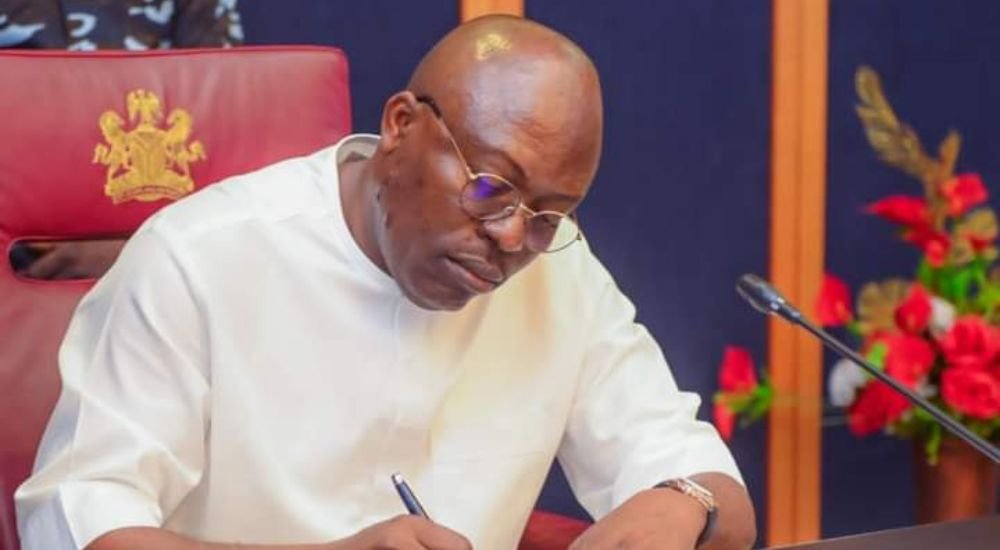
Rivers-State-Governor-Siminalayi-Fubara-signing-the-Executive-Order-No-002_20240805_153413_0000.jpg

4min4730
Rivers State Governor, Siminalayi Fubara, in partnership with TAF Africa Global Limited, has unveiled the first phase of a 20,000-unit low-cost housing project aimed at expanding access to affordable housing for residents of the state. According to a statement, the initiative is part of TAF Africa Global’s broader vision to address Africa’s housing deficit, a commitment that has driven the company’s expansion beyond The Gambia into other West African countries. The statement explained that TAF entered Nigeria in 2011 under the name TAF Nigeria Homes Limited. One of its landmark developments is the RIVTAF Golf Estate in Port Harcourt, Rivers State—a master-planned luxury estate spanning about 40 hectares. The project transformed previously swampy and inaccessible land into a modern residential development, described as the largest luxury estate delivered in the South-South region. Facilities within the estate include a golf course, advanced water reticulation systems, underground power infrastructure, sewage treatment facilities, a safe environment for families, a clubhouse, and a shopping mall. Building on this vision, the company adopted a city-development model rather than standalone estates. This approach began with the 5,000-unit TAF City project in The Gambia, followed by the 5,000-unit TAF Micro City in Sierra Leone, and now culminates in the development of 20,000 housing units in Port Harcourt under the Greater TAF City project. Greater TAF City is a mixed-use development designed as a “live, work, and play” city. The project is being developed in phases by Greater TAF Nigeria Limited, a joint venture between Pricewise Homes Limited (a subsidiary of TAF Africa Global Limited) and the Greater Port Harcourt City Development Authority. The development spans approximately 1,000 hectares across four locations within the Greater Port Harcourt area, including a site along the Airport Road opposite the Omega Power Ministries headquarters. The city is expected to feature about 3,000 affordable housing units in varying designs and price ranges, including two-bedroom and three-bedroom bungalows, as well as four-bedroom duplexes. Infrastructure plans include reliable water and sewage systems, constant power supply supported by generators and solar energy, biodigester sewage facilities, paved road networks, internet connectivity, solar street lighting, landscaped green spaces, wellness centres, and public open areas. Speaking at the unveiling, the Chief Executive Officer of TAF Africa Global Limited, Mustapha Njie, expressed appreciation to the Rivers State Government, noting that the project—formalised through a Memorandum of Understanding, Joint Venture Agreement, and Certificate of Occupancy—has resulted in the delivery of the first 1,000 housing units. Njie commended Governor Fubara for his leadership and support, describing the project as a testament to effective collaboration between the public and private sectors. He also acknowledged the contributions of the Greater Port Harcourt City Development Authority, the host communities, company executives, staff, contractors, and partners. He added that the project reflects the company’s commitment to delivering sustainable communities and fulfilling the dream of homeownership for residents, while fostering long-term prosperity and cooperation

cscsc.png

5min5250
The Central Securities Clearing System (CSCS) Plc has appointed Mr. Shehu Shantali as its new Chief Executive Officer, effective 1 January 2026, following the conclusion of the tenure of the outgoing CEO, Haruna Jalo-Waziri. According to a company statement, the appointment was made after obtaining regulatory approval. Jalo-Waziri, who served for eight years, notably oversaw Nigeria’s transition to a T+2 settlement cycle in the capital market. Commenting on the development, the Chairman of the Board, Mr. Temi Popoola, said, “On behalf of the Board, we extend our sincere appreciation to Haruna Jalo-Waziri for his outstanding service to CSCS. Under his leadership, the company achieved significant milestones and built a legacy of operational excellence, innovation, and stakeholder confidence. “We are equally pleased to welcome Shehu Shantali as the new CEO. He brings extensive experience, deep industry knowledge, and a strong strategic vision. The Board is confident that he will build on the solid foundation laid by his predecessor and lead CSCS into its next phase of growth.” Shantali holds a Bachelor of Science degree in Accounting from Ahmadu Bello University, Zaria, and an Executive MBA from Kingston Business School. With over two decades of experience in accounting, finance, and financial services in Nigeria and the United Kingdom, his expertise spans investment and asset management, financial advisory, and International Financial Reporting Standards. His career includes key roles in capital markets, investment banking, real estate, and financial services, highlighted by a decade at the Securities and Exchange Commission Nigeria, where he led the migration of public entities from Nigerian GAAP to IFRS and oversaw the transition to the contributory pension scheme in 2012. At Apricot Investments Limited, as Managing Director and CEO, Shantali spearheaded the development of the MicroWorld platform, which enables the distribution of structured financial products including micro-health, micro-pension, micro-housing, micro-insurance, and micro-investment solutions. Earlier in his career, he contributed to the development of Nigeria’s first contactless payment solution and played a pioneering role in POS-based agency banking and early mobile-money interoperability via the NIBSS NIP platform. The outgoing CEO, Jalo-Waziri, has been credited with providing visionary leadership that delivered sustained growth and transformational initiatives across CSCS, strengthening governance, operational efficiency, and modernising company systems and processes. He significantly enhanced stakeholder confidence, both locally and internationally, leaving a strong foundation for the company’s future. Reflecting on his tenure, Jalo-Waziri said, “It has been an honour to serve as CEO of CSCS. I am proud of our achievements and grateful for the support of the Board, management, regulators, and all stakeholders. I am confident that CSCS is well-positioned for the future and wish my successor every success.” The incoming CEO, Shantali, commented, “I am deeply honoured by the Board’s confidence in me. CSCS plays a vital role in Nigeria’s capital market ecosystem, and I look forward to collaborating with the Board, management, staff, regulators, and market participants to strengthen the Company’s leadership, deliver value to stakeholders, and support the continued growth and stability of the capital market.” CSCS Plc serves as the central depository for equities, commercial papers, corporate bonds, sub-national bonds, selected sovereign bonds such as the FGN Sukuk and FGN Savings Bond, exchange-traded funds, real estate investment trusts, mutual funds, and commodities.  

bank.jpg

6min5250
With about three months remaining before the deadline for bank recapitalisation expires, shareholder groups have urged banks yet to meet the new minimum capital requirements to take urgent action. Leaders within the minority investors’ community have expressed concern that shareholders would bear the brunt if some banks fail to meet the revised thresholds within the stipulated timeframe. Following the final Monetary Policy Committee meeting of 2025, the Governor of the Central Bank of Nigeria (CBN), Olayemi Cardoso, disclosed that 16 banks have already achieved full compliance with the new capital requirements ahead of the deadline. Cardoso reiterated the CBN’s commitment to ensuring an orderly conclusion to the recapitalisation exercise during a presentation at the U.S.-Nigeria Executive Business Roundtable in Washington, D.C. He noted that Nigeria is currently in the final phase of its most significant banking-sector strengthening initiative in over a decade. According to the CBN governor, the recapitalisation programme is aimed at safeguarding financial stability, expanding banks’ lending capacity, and positioning the financial system to support Nigeria’s broader economic transformation. He added that while 16 banks have met or exceeded the new thresholds, 27 banks have raised capital through public offers, rights issues, private placements, and mergers. While commending the progress made so far, minority shareholders have cautioned that they could suffer losses if some banks fail to complete the process successfully. The National Coordinator of the Independent Shareholders Association of Nigeria, Moses Igbrude, described the recapitalisation exercise as encouraging, highlighting the strong participation of investors and instances of oversubscription as evidence of confidence in Nigeria’s capital market. He noted that banks unable to meet the highest capital category should consider operating under lower licence tiers, adding that government-owned banks should be recapitalised through the CBN and later privatised to recover public funds and deepen market participation. Igbrude urged banks that are lagging behind to explore all available options, including private placements, mergers, and acquisitions, warning against complacency as the deadline approaches. Similarly, the National Coordinator of the Pragmatic Shareholders Association, Bisi Bakare, called on banks to act swiftly, advising those struggling to meet the requirements to pursue mergers, strategic realignments, or acquisitions rather than risk regulatory sanctions. The Chairman of the Ibadan Zone Shareholders Association, Ayoola Gilbert, also called on the CBN to develop and communicate clear contingency plans to protect the integrity of the banking system as the deadline nears. He stressed that the recapitalisation policy goes beyond balance sheet expansion, describing it as a critical pillar in Nigeria’s drive toward a $1 trillion economy by 2030. According to him, banks must be strong enough to absorb domestic and global shocks while providing the scale of credit required to support national development, MSMEs, and key economic sectors. Gilbert pointed to banks such as Access Holdings, Zenith Bank, and Wema Bank as examples of institutions that have successfully raised significant capital, demonstrating that recapitalisation is achievable and market-rewarded. He urged bank boards and management to act decisively, while calling on the CBN to clearly outline an orderly consolidation framework well ahead of the deadline. Also speaking, the Chairman of the Progressive Shareholders Association of Nigeria, Boniface Okezie, expressed confidence that most banks would meet the CBN’s deadline. However, he warned that banks unable to do so should seek mergers or acquisitions early, noting that liquidation remains the likely outcome for those that fail to recapitalise—an outcome that would disproportionately affect shareholders. The CBN had earlier announced revised minimum capital requirements, setting thresholds at ₦500 billion for international banks, ₦200 billion for national banks, ₦50 billion for regional banks, and between ₦10 billion and ₦20 billion for non-interest banks.

Tech & Tools Desk22 December 2025
dollar-Exchange-Rate.png

3min6400
Nigeria’s external reserves have paused their two-month upward trajectory, which saw them surpass the $45 billion mark in December. The first decline in over two months was recorded on 15 December, when the reserves slipped to $45.32 billion from $45.47 billion. This was followed by a further drop to $45.27 billion, before a day-on-day decline of $57.05 million reduced the reserves to $45.21 billion as of 17 December 2025. As a result, year-to-date gains eased to 10.60 per cent, according to AIICO Capital. Prior to this, the last decline was recorded on 8 October, when reserves stood at $42.56 billion. Data from the Central Bank of Nigeria (CBN) show that external reserves had risen consistently over the past three months. They closed September at $42.35 billion, increased to $43.19 billion in October, and reached $44.69 billion by 28 November. The $45 billion threshold was crossed on 4 December 2025 after a $74.93 million increase lifted reserves to $45.04 billion. Meanwhile, the naira weakened by ₦10 to the dollar over the past week, closing at ₦1,464.50/$ on Friday, driven by sustained demand pressure at the official foreign exchange window. At the parallel market, the naira exchanged at ₦1,510.00/$, according to CardinalStone. In its weekly market update, AIICO Capital noted that the naira depreciated despite ongoing interventions by the CBN and inflows from foreign portfolio investors. The firm reported that the currency weakened by ₦10.09/$, representing a 0.69 per cent week-on-week decline. During the week, the naira traded within a range of ₦1,450.00 to ₦1,469.90 per dollar, with a brief appreciation recorded on Tuesday. Looking ahead, the naira is expected to strengthen gradually over the next six months, according to the CBN’s November 2025 Business Expectations Survey. The survey, which sampled businesses nationwide, projects an improvement in the naira’s outlook index from 28.8 points to 42.2 points by May 2026, signalling expectations of increased currency stability into the new year.  

James Obasi22 December 2025
Dangote-Refinery.jpg

3min4300
Dangote Petroleum Refinery has begun nationwide distribution of Premium Motor Spirit (PMS) at a pump price of ₦739 per litre through all MRS Oil Nigeria Plc filling stations, marking a major step toward providing affordable fuel and stabilising Nigeria’s downstream petroleum sector. In a statement issued on Sunday, the refinery noted that the new price would be reflected across more than 2,000 MRS stations nationwide, ensuring widespread access to the reduced rate. The company praised marketers that have adopted the pricing adjustment and encouraged others to do the same in support of the country’s economic recovery. According to the refinery, the move comes at a time when Nigerians usually experience fuel shortages and price increases during the festive season. By lowering prices during this period, the refinery aims to ease pressure on consumers and disrupt the long-standing cycle of scarcity and hikes. Supported by a guaranteed daily supply of 50 million litres, the initiative is expected to significantly improve fuel availability during the holidays. Local refining at scale is also helping to reduce reliance on volatile global markets, conserve foreign exchange, stabilise the naira, and enhance national energy security. The refinery stated that the sustained price reduction and steady supply are already offering relief to households, businesses, and transport operators across the country. It also warned against attempts by unscrupulous operators to create artificial scarcity in response to the price cut, calling on regulatory agencies to act firmly against such practices, especially during the festive period. Consumers were advised to avoid purchasing petrol at inflated prices when cheaper, locally refined options are available. The refinery urged Nigerians to report any MRS station selling above the approved ₦739 per litre price. Dangote Petroleum Refinery further appealed to other filling station operators to patronise its products so that the benefits of the price reduction can reach more Nigerians and promote stability in the downstream market. Reaffirming its long-term commitment, the refinery stressed that its operations are focused on ensuring steady supply, price moderation, and energy security in the national interest. “Our goal remains to provide Nigerians with consistent access to high-quality petroleum products at affordable prices, while strengthening economic stability and reducing dependence on imports,” the statement concluded.

aa-10.jpeg

4min12660
Public concern is growing nationwide following an alert by the National Agency for Food and Drug Administration and Control (NAFDAC) over the recall of Indomie Noodles, Vegetable Flavour, after undeclared allergens were discovered in the product. NAFDAC warned that the affected noodles contain milk and eggs, which were not listed on the label and could cause serious or life-threatening reactions in people with allergies or intolerances. In a notice titled Public Alert No. 041/2025, the agency explained that the recall was prompted by information from France’s food safety authority, Rappel Conso, which flagged the product for failing to disclose the presence of the allergens. The recall applies to all batches of Indomie Noodles, Vegetable Flavour, with a best-before date of February 6, 2026. The country of origin was not specified. NAFDAC noted that Indomie noodles are widely consumed in Nigeria and elsewhere due to their affordability and convenience, especially among children and young adults. Although the Federal Government has banned the importation of noodles, the agency stressed the need for vigilance to prevent illegal entry or circulation of the recalled product. While the official risk of the noodles entering Nigeria is considered low, NAFDAC said the possibility of acquisition through online shopping or international travel could not be ruled out. It has therefore directed zonal directors and state coordinators to intensify nationwide surveillance and immediately remove the product if found. Distributors, retailers and consumers were advised to avoid the sale, distribution or consumption of the recalled noodles. Consumers were urged to discard the product and report any sightings or suspected sales to the nearest NAFDAC office or via its hotline. The agency also encouraged the public to report any adverse reactions linked to the product as part of efforts to protect public health. The alert has sparked widespread reactions on social media platforms such as X and Instagram, with many Nigerians questioning how the product could still reach the country despite the import ban. Concerns were particularly raised about children, who are among the highest consumers of instant noodles, while others called for tighter border controls, routine market inspections and closer monitoring of online marketplaces. Amid speculation, Indomie Nigeria distanced itself from the recalled product, stating that it does not produce, import, distribute or sell any noodle variant known as Vegetable Flavour. In a statement, the company described reports linking it to the recall as misleading, noting that the product was recalled in France in August 2025 and that NAFDAC’s alert was precautionary. Indomie Nigeria assured consumers that all noodles produced locally by Dufil Prima Foods meet safety and regulatory standards and are safe for consumption. It also dismissed images of the recalled product circulating online, saying the packaging does not match its approved branding and labelling. The company reminded the public that noodle importation into Nigeria is prohibited and urged consumers to be cautious of unfamiliar or unapproved products.

Tech & Tools Desk21 December 2025
aa-9.jpeg

3min9700
The United States and Nigeria have entered into a five-year bilateral health agreement aimed at reinforcing Nigeria’s healthcare system, with particular emphasis on expanding faith-based medical services. Under the Memorandum of Understanding (MoU), the US plans to commit nearly $2.1 billion to support prevention and treatment programmes targeting HIV, tuberculosis, malaria, maternal and child health, and polio, according to the US Department of State. In turn, Nigeria is expected to raise its domestic health spending by almost $3 billion over the duration of the agreement. The deal was announced on Saturday by the US Principal Deputy Spokesperson, Thomas Pigott, and falls under the America First Global Health Strategy. In a statement, the State Department described Nigeria’s financial pledge as the largest co-investment made by any country so far under the strategy. The department said the agreement is designed to strengthen Nigeria’s health system, with a strong focus on supporting Christian faith-based healthcare providers. It added that the MoU was negotiated alongside recent Nigerian government reforms aimed at protecting Christian communities from violence. As part of the arrangement, dedicated funding will be directed to Christian healthcare facilities, especially those providing integrated services for infectious diseases as well as maternal and child health. Nigeria currently has about 900 faith-based clinics and hospitals, which collectively serve more than 30 per cent of the population. US officials noted that investments in these facilities are intended to complement government-run health services and enhance the country’s overall health infrastructure. The State Department also stressed that all US assistance remains subject to review, noting that the President and Secretary of State retain the authority to pause or terminate programmes that do not align with US national interests. The agreement comes amid increased US scrutiny of Nigeria, including recent travel restrictions introduced by the Donald Trump administration over national security and visa overstay concerns. Released in September 2025, the America First Global Health Strategy applies to countries receiving US health support and marks a shift toward bilateral agreements, greater partner-country co-investment, and intensified efforts to combat priority diseases while strengthening national health systems.

James Obasi21 December 2025
aa-8.jpeg

5min2890
As Nigeria counts down to the implementation of its tax reforms on January 1, 2026, the Chairman of the Presidential Committee on Fiscal Policy and Tax Reforms, Mr. Taiwo Oyedele, has moved to calm public anxiety, assuring Nigerians that the new tax regime is not intended to impose higher taxes or unfair revenue targets. Speaking at the 2025 Nigeria Media Merit Award (NMMA) ceremony in Lagos, Oyedele said the reform agenda is about more than tax rates and collections. According to him, it is fundamentally aimed at rebuilding trust between citizens and the state. “Tax reform is not just about rates or revenue. At its core, it is about the social contract between citizens and government. People want to know: Why should I pay tax? How is my money used? Is the system fair to everyone?” he said. Oyedele stressed that answering these concerns requires credible and informed media engagement, noting that tax issues are especially prone to misinformation because of their direct impact on people’s livelihoods. He added that a sustainable tax system must be built on fair laws, transparent administration, voluntary compliance and strong public oversight. Against this backdrop, the committee released clarifications on frequently asked questions about the Nigeria Tax Act (NTA) 2025, which takes effect in 2026. Key Clarifications on the New Tax Law The law applies to all individuals earning income in Nigeria, including workers, traders, content creators, influencers and remote workers. Nigerians earning income abroad are also covered if they are tax residents in Nigeria. Bank transfers, deposits, withdrawals and POS transactions are not taxable. Only income earned is taxed. Money kept in a bank account is not taxed; only income such as salary, business profits or interest applies. Students and individuals with no taxable income will not pay tax. Bank accounts may be monitored more closely for compliance, but balances themselves are not taxed. Loans are not taxable, though interest earned by lenders will be taxed. Sole proprietors registered as business names pay Personal Income Tax, while limited liability companies pay Company Income Tax. Capital gains on shares remain tax-free if the value sold does not exceed ₦150 million and gains are not above ₦10 million. Pensions, including disability pensions for injured soldiers, remain tax-exempt. Military salaries are exempt from tax. Profits from crypto assets, NFTs and other digital assets are taxable. Individuals earning the national minimum wage or less, or below ₦800,000 annually, are exempt from Personal Income Tax. New Progressive Tax Bands (from 2026): First ₦800,000: 0% Next ₦2.2 million: 15% Next ₦9 million: 18% Next ₦13 million: 21% Next ₦25 million: 23% Above ₦50 million: 25% Severance pay up to ₦50 million is tax-free; amounts above this will be taxed progressively. Dividends, interest, rent and royalties earned abroad are exempt if repatriated through approved banking channels. Agricultural companies enjoy a five-year tax holiday from the start of operations. Federal and State Government bonds remain tax-exempt. From 2026, individuals can claim rent relief of 20% of annual rent, capped at ₦500,000. A worker earning ₦6 million annually will see tax payable drop from ₦896,000 to ₦780,000, saving ₦116,000. Companies with turnover below ₦50 million are exempt from Company Income Tax. Remote workers in Nigeria for international organisations will pay tax if their income is exempt abroad. TIN and Bank Accounts Oyedele clarified that Nigerians without a Tax Identification Number (TIN) will not lose access to existing bank accounts from January 1, 2026. However, they will be required to provide a TIN over time, and opening new bank accounts without a TIN may not be allowed. He reaffirmed that the reforms are designed to protect low-income earners, promote fairness, and strengthen voluntary compliance, while positioning Nigeria’s tax system to support growth, inclusion and accountability.

aa-9.webp

4min8860
The United States government has temporarily suspended the processing of legal immigration applications submitted by Nigerians and nationals of other countries newly added to the US “travel ban,” according to a report by CBC News. The development largely affects immigrants from selected African and Asian countries and represents a further tightening of legal immigration measures expanded by the Trump administration this month. Those impacted are mostly individuals already living in the United States who are seeking to adjust their immigration status, obtain permanent residency, or apply for US citizenship. Earlier in December, the Trump administration instructed the US Citizenship and Immigration Services (USCIS) to place a complete hold on all immigration petitions including applications for green cards and naturalisation filed by nationals of 19 countries previously listed under the travel ban announced in June. The directive followed the Thanksgiving week shooting of two National Guard soldiers in Washington, D.C., an incident allegedly involving an Afghan national. In addition, the administration suspended all decisions on asylum cases handled by USCIS, as well as the processing of immigration and visa applications submitted by Afghans. On Tuesday, President Trump further expanded the travel ban to include 20 additional countries, imposing full entry bans on five nations and partial restrictions on 15 others. A US official, who spoke to CBS News on Friday on condition of anonymity, said USCIS has now extended its suspension of immigration case processing to nationals of the newly added countries. Under the latest expansion, nationals of Burkina Faso, Mali, Niger, South Sudan and Syria are subject to full bans. Partial restrictions apply to immigrants from Angola, Antigua and Barbuda, Benin, Côte d’Ivoire, Dominica, Gabon, Gambia, Malawi, Mauritania, Nigeria, Senegal, Tanzania, Tonga, Zambia and Zimbabwe. Previously affected countries include Afghanistan, Burundi, Chad, Cuba, the Republic of the Congo, Equatorial Guinea, Eritrea, Haiti, Iran, Libya, Laos, Myanmar, Sierra Leone, Somalia, Sudan, Togo, Turkmenistan, Yemen and Venezuela. In the latest proclamation, Laos and Sierra Leone were upgraded from partial restrictions to full entry bans. USCIS Director Joseph Edlow appeared to confirm the expansion in a social media post late Thursday, stating that the agency was conducting a comprehensive review of individuals deemed to pose security threats, including those named in the President’s latest immigration proclamation. Altogether, the expanded travel ban now affects nationals from more than 60 per cent of African countries and about 20 per cent of countries worldwide. While the Trump administration maintains that the measures are necessary to protect national security and address vetting challenges, the decision has sparked strong reactions among Nigerians. Many critics have described the move as unfair and excessive, questioning the security and religious freedom concerns cited by US authorities. Some commentators warned of diplomatic strain and possible economic consequences, while former senator Shehu Sani described the policy as “a clear signal that migrants from developing countries are no longer welcome.”

aa-7.jpeg

3min6670
A student of St. Charles College, Onitsha, Ikechukwu Ifechukwu, has emerged winner of the 2025 Healthy Living Cooking Competition organised by the wife of the Anambra State Governor, Dr Nonye Soludo. The annual competition, held on Friday at the Light House Banquet Hall in Awka, featured students drawn from secondary schools across the state’s 21 local government areas. Contestants were required to prepare a complete recipe and assorted delicacies within one hour and 20 minutes, with judges assessing their performance based on hygiene, taste, presentation and service etiquette. At the grand finale, Ifechukwu and his partner, who represented the Onitsha zone, outperformed contestants from the Aguata and Nnewi zones to clinch first place, while the female teams from Aguata and Nnewi finished second and third respectively. The competition, which also included a healthy living quiz, was designed to promote good nutrition, personal hygiene and overall wellness among young people. Speaking at the event, Dr Soludo said the initiative was conceived to address the growing inability of many youths to prepare healthy meals. She noted that the Healthy Living Cooking Competition and Healthy Living Quiz, now in their third editions, have become central to her “Healthy Living with Nonye Soludo” school programme. According to her, the programme challenges stereotypes and misconceptions, adding that boys have now emerged winners of the cooking competition for two consecutive years. Dr Soludo stressed the importance of early exposure to healthy eating habits, noting that teaching children to prepare nutritious meals at a young age is key to safeguarding their health and preserving cultural food practices. She also urged parents to avoid assigning household chores based on gender, saying equal training would help children grow independently and confidently. The Anambra State Commissioner for Health, Dr Afam Obidike, said the competition was aimed at teaching students healthy eating, discipline, teamwork and creativity through practical cooking and nutrition education. He added that the initiative promotes indigenous foods, inspires interest in nutrition and hospitality-related careers, and encourages wellness as a way of life. Expressing his appreciation after receiving his prize, Ifechukwu thanked the First Lady for providing a platform for students to showcase their culinary skills. He also credited his mother for teaching him how to prepare healthy meals, describing the experience as both inspiring and rewarding. Meanwhile, students from the state’s six education zones also participated in the Healthy Living Quiz. At the end of the contest, Nnewi zone emerged first, followed by Otuocha and Aguata in second and third positions respectively. Dr Soludo presented cash prizes to the winners, as well as to coordinators and champions of Healthy Living Clubs across schools in the state.