

 Tech & Tools Desk
Centrist Rob Jetten takes oath as the Netherlands’ youngest-ever prime minister
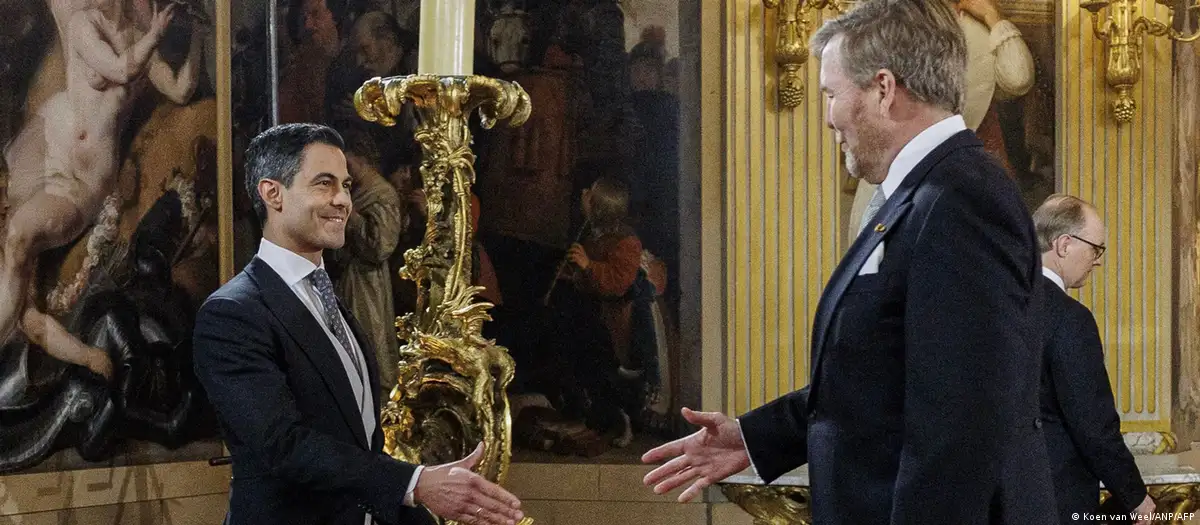
A new government was inaugurated in the Netherlands on Monday, with 38-year-old centrist Rob Jetten taking the oath of office as the country’s youngest-ever prime minister and its first openly gay leader.
Jetten secured a dramatic victory in October’s election, overturning an early deficit to narrowly defeat the far-right Freedom Party led by Geert Wilders.
The snap poll followed the collapse of the previous coalition after Wilders’ party withdrew, ending what had been the most right-leaning government in Dutch history after just 11 months.
Jetten’s Democrats 66 (D66) formed a governing alliance with the centre-right Christian Democratic Appeal (CDA) and the liberal People’s Party for Freedom and Democracy (VVD). Together, the coalition controls 66 seats—nine short of an outright parliamentary majority. Coalition talks lasted 117 days, significantly shorter than the 223 days required to form the outgoing administration.
Following his win, Jetten said populist movements could be defeated through “a positive message for your country.” During the campaign, he emphasised restoring the Netherlands’ central role in Europe, arguing that European cooperation is essential to national success.
In a joint manifesto released in January, the coalition partners pledged full backing for Ukraine and committed to meeting NATO defence spending targets.
Despite being less hardline than its predecessor, the new administration still carries what analysts describe as a “right-wing signature.” Sarah de Lange, a political science professor at Leiden University, noted that the coalition plans to fund investments through budget cuts rather than deficit spending and that its immigration policies largely mirror those of the previous government.
The coalition intends to tighten migration rules, including stricter family reunification requirements, and to reduce certain social benefits, such as unemployment support, to help finance defence and military spending.
However, with no parliamentary majority, the government will depend on opposition backing to pass legislation, a factor De Lange said could slow the pace of major reforms.
Jetten and his ministers were formally sworn in by King Willem-Alexander at Huis Ten Bosch in The Hague.
Although Jetten initially favoured a broader alliance that included the left-leaning GroenLinks–PvdA bloc, this option was strongly opposed by VVD leader Dilan Yeşilgöz.
Wilders, whose party shocked Europe with an election breakthrough in 2023, suffered a sharp decline at the polls. The PVV fell from 37 seats to 26 after a campaign widely viewed as underwhelming. While it finished second overall, coalition parties had ruled out working with Wilders, leaving him excluded from government.
Other far-right groups made gains, however. Forum for Democracy, led by 28-year-old Lidewij de Vos, won four seats on a platform opposing what it called uncontrolled immigration and the European Union. The hard-right JA21 party also surged, picking up eight seats and coming close to joining the cabinet before being blocked by Jetten’s camp.

