

 Lifestyle & Wellness Desk
Musk says SpaceX has shifted focus to building a self-growing city on the Moon
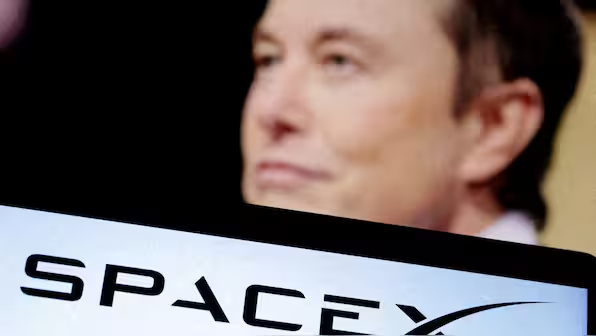
Tech entrepreneur and SpaceX founder Elon Musk has revealed that the company has redirected its main efforts toward building what he described as a “self-growing city” on the Moon, a target he believes could be achieved within the next decade.
Musk made the announcement on Monday in a post shared on his X account. He explained that lunar missions allow for much faster progress than expeditions to Mars, largely due to shorter travel times and more frequent launch opportunities.
According to Musk, missions to the Moon can be launched approximately every 10 days and take about two days to reach their destination. In contrast, journeys to Mars are only possible when the planets align every 26 months and typically require around six months of travel.
“For those who may not be aware, SpaceX has already shifted its focus to building a self-growing city on the Moon, which we could potentially accomplish in under 10 years,” Musk wrote. “A similar effort on Mars would take more than 20 years.” He added that the company’s long-term objective remains unchanged: to expand human life and consciousness beyond Earth.
Musk identified planetary alignment as a key logistical limitation affecting Mars missions. He noted that the ability to launch frequently to the Moon allows SpaceX to test, refine, and scale its technologies more rapidly.
Despite the change in priority, Musk said SpaceX has not abandoned its plans for Mars. He stated that efforts to establish a settlement on the Red Planet could begin within the next five to seven years, although he emphasised that safeguarding humanity’s future makes lunar development the more immediate focus.
SpaceX’s ambitious timelines for Mars exploration have long been met with scepticism, as Musk has revised his projections several times over the years. In 2016, he suggested humans could reach Mars by 2024, following an earlier estimate in 2011 that placed the timeline at between 10 and 20 years.
The renewed emphasis on the Moon aligns with broader changes in US space policy. Under an executive order issued late last year, President Donald Trump reaffirmed plans for the United States to return astronauts to the Moon by 2028 through NASA’s Artemis programme, in which SpaceX plays a significant role as a contractor.
The directive marked a shift from earlier ambitions to send astronauts to Mars within a single presidential term. NASA currently aims to land astronauts on the Moon’s surface in mid-2027 as part of the Artemis III mission, though the schedule has been delayed multiple times. Industry analysts caution that further setbacks are possible, citing the incomplete lunar lander being developed by SpaceX.

