

 Lifestyle & Wellness Desk
72 Reported Dead in Philippines Quake
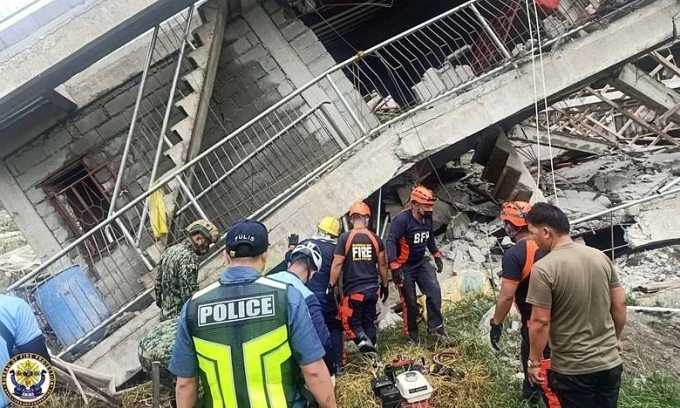
The death toll from the 6.9-magnitude earthquake that struck central Philippines on Tuesday has climbed to 72, authorities confirmed on Thursday. Rescue operations are winding down as officials report no more missing persons, shifting the focus to caring for the hundreds injured and thousands displaced.
Overnight, three more bodies were recovered from the rubble of a collapsed hotel in Bogo City, Cebu province, near the epicentre. “We have zero missing, so the assumption is all are accounted for,” said National Disaster Risk Reduction and Management Council spokesperson Junie Castillo, noting that some rescue units had been asked to demobilise.
Officials said 294 people were injured, while nearly 20,000 residents fled their homes. Around 600 houses were destroyed across northern Cebu, leaving many families camped out on streets as aftershocks continued to rattle the area. “One of the challenges is the aftershocks. Residents are reluctant to return home, even if their houses are still structurally sound,” Castillo explained.
Cebu Governor Pamela Baricuatro called for urgent assistance, appealing for clean water, food, clothing, shelter materials, and volunteers to help distribute aid. President Ferdinand Marcos visited the affected areas on Thursday with senior officials to assess the destruction, including a housing project in Bogo originally built for survivors of the 2013 Super Typhoon Haiyan. Local authorities said eight people were found dead in collapsed houses within the project.
Survivors are now facing dire conditions. In Bogo, 18-year-old Diane Madrigal said she and 14 neighbours were sheltering in a chapel after their homes crumbled. “The entire wall of my house fell. I don’t know when we can go back. I’m still scared of the aftershocks,” she said.
Others queued for water as shortages deepened. “The earthquake really ruined our lives. We cannot eat, drink, or bathe properly,” said Lucille Ipil, a 43-year-old mother of four. At the provincial hospital in Bogo, dozens of patients were being treated in tents due to structural damage to the main building.
Authorities estimate more than 110,000 people across 42 communities will need significant support to rebuild their homes and livelihoods. Many areas remain without power as recovery efforts continue.
Situated on the Pacific “Ring of Fire,” the Philippines is among the world’s most disaster-prone nations, experiencing frequent quakes. While most are mild, destructive tremors strike without warning, often with devastating consequences.

