

 Lifestyle & Wellness Desk
Tinubu Hails NGX’s N100tn Milestone, calls on Nigerians to Invest
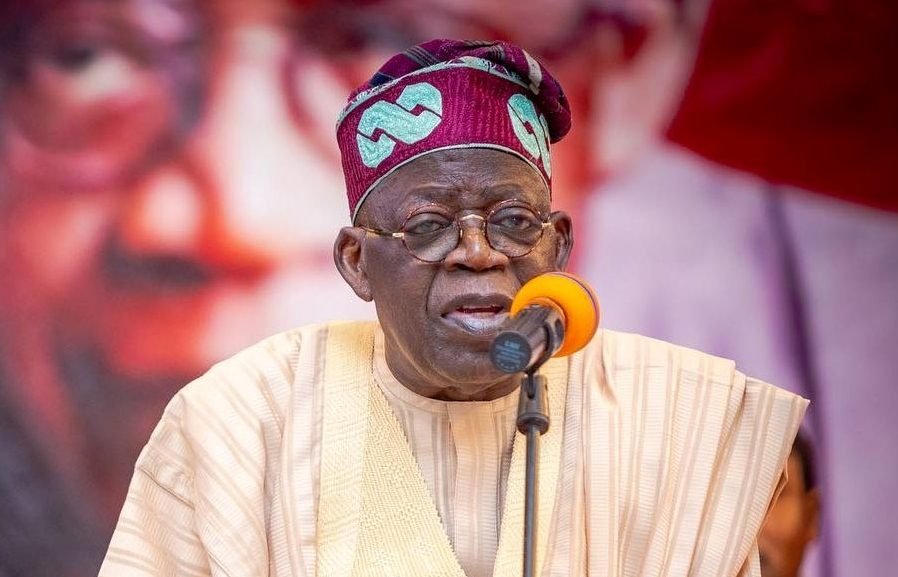
President Bola Tinubu has commended corporate organisations, investors, and stakeholders in Nigeria’s capital market for their roles in pushing the Nigerian Exchange (NGX) beyond the historic N100 trillion market capitalisation mark, describing the milestone as evidence of a “new economic reality” for the country.
In a statement issued by his Special Adviser on Information and Strategy, Bayo Onanuga, the President said the achievement should inspire greater participation in Nigeria’s money and capital markets, urging citizens to channel more investments into the domestic economy.
According to Tinubu, the crossing of the N100 trillion threshold signals renewed confidence and economic rejuvenation, positioning Nigeria as an increasingly attractive investment destination.
He highlighted the strong performance of the NGX in 2025, noting that the All-Share Index recorded a 51.19 per cent return, significantly higher than the 37.65 per cent gain in 2024. The President said the performance ranked among the best globally, outperforming major indices such as the S&P 500, FTSE 100, and several emerging-market benchmarks within the BRICS+ group.
The President stated that Nigeria has moved beyond being a marginal frontier market, describing the stock exchange as a reflection of the broader economy and a key indicator of investor confidence and economic health.
He also drew attention to the performance of listed companies across multiple sectors, including industrial manufacturing, banking, and technology. Tinubu said firms that have strengthened local supply chains and embraced innovation are demonstrating Nigeria’s capacity to generate sustainable investment returns.
According to the President, the NGX milestone forms part of a wider economic recovery driven by reforms introduced by his administration. He said these measures have improved monetary stability, curbed inflationary pressures, and strengthened the naira.
Tinubu noted that inflation has been on a steady decline following earlier reform-related challenges, attributing the trend to monetary tightening, the elimination of distortionary financing practices, and increased investment in agriculture. He said inflation has fallen from a 24-month high of 34.8 per cent in December 2024 to 14.45 per cent in November 2025, with projections pointing to single-digit inflation before the end of the year.
The President also cited improvements in Nigeria’s external position, stating that the country recorded a $16 billion current account surplus in 2024, with projections showing a rise to $18.81 billion in 2026. He added that foreign reserves have surpassed $45 billion, strengthening the Central Bank’s capacity to support currency stability and reduce volatility in the foreign exchange market.
Beyond the capital market, Tinubu highlighted progress in infrastructure, healthcare, and education, including the expansion of rail networks, completion of major road projects, port revitalisation, improved medical facilities, reduced medical tourism costs, and increased access to education financing through the Nigeria Education Loan Fund.
He concluded by calling on Nigerians to take an active role in the country’s economic transformation, stressing that nation-building requires collective effort, discipline, and long-term commitment.
The President reaffirmed his administration’s resolve to sustain reforms and deepen transparency, equity, and growth, noting that the N100 trillion market capitalisation milestone sends a strong signal of Nigeria’s economic resilience and productivity to the global investment community.

