

 Edupreneur Editorial Team
FULL SPEECH: UK PM Keir Starmer urges Europe to strengthen NATO and reduce reliance on US
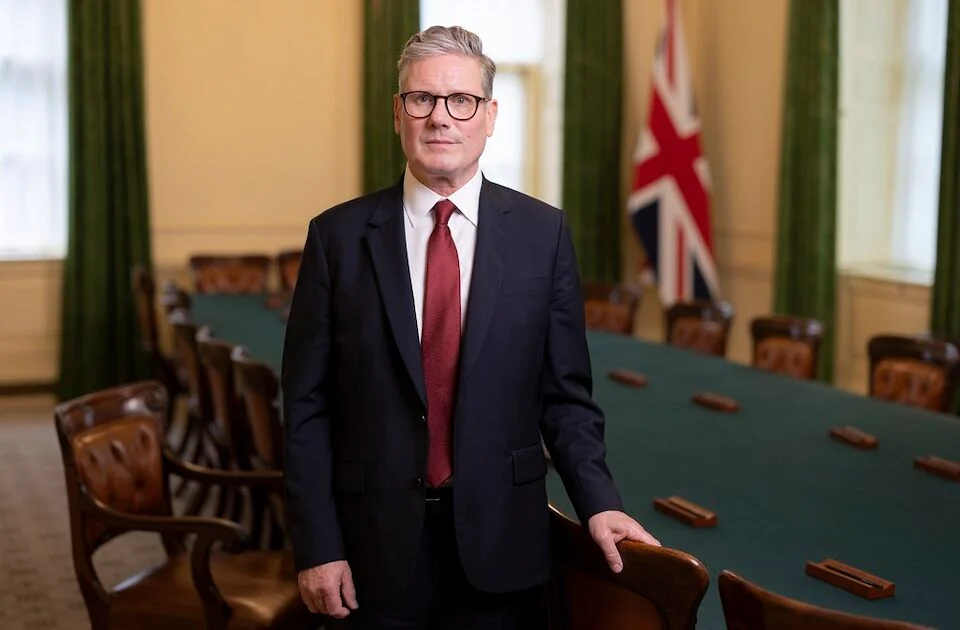
Keir Starmer has called on European nations to urgently strengthen their military capabilities and reduce long-standing dependence on the United States, warning that the foundations of peace in Europe are increasingly fragile.
Addressing the Munich Security Conference on Saturday, the UK prime minister said Europe must “stand on its own two feet” in the face of growing threats from Russia, while continuing to work closely with Washington.
“The ground of peace is softening under our feet,” Starmer said, arguing that European leaders must respond decisively rather than repeat past mistakes of delaying rearmament until crisis strikes.
Call for a “more European NATO”
Starmer urged allies to build what he described as a “more European NATO,” deepen defence cooperation between the UK and the EU, and significantly increase military spending.
While describing the United States as “an indispensable power” whose contribution to European security over the past 80 years is “unparalleled,” he acknowledged that Washington now expects Europe to take greater responsibility for its own defence.
“The US National Security Strategy makes clear that Europe must take primary responsibility for its security. That is the new law,” he said.
Rather than replacing US capabilities, Starmer argued that Europe should reduce excessive dependencies and move “from over-dependence to interdependence” through long-term investment and closer industrial coordination.
Warning over Russia
The prime minister said Russia had demonstrated its “appetite for aggression” in Ukraine and was continuing to rearm despite heavy losses.
He cited warnings from NATO that Moscow could be in a position to use military force against the alliance before the end of the decade. Even if a peace deal is reached in Ukraine, he warned, Russia’s rearmament would likely accelerate.
Starmer accused Moscow of using disinformation, cyber-attacks and political interference to destabilise European societies, and criticised political movements he described as “soft on Russia” and “weak on NATO.”
Boosting defence spending and coordination
Starmer said Europe must “spend more, deliver more, and coordinate more,” pointing to a recent agreement among allies to increase security and defence spending to 5% of GDP.
He criticised inefficiencies in Europe’s defence sector, noting that the continent operates more than 20 types of frigate, 10 types of fighter jet and over 10 types of main battle tank, compared with far fewer standardised systems in the United States.
To address fragmentation, he called for deeper integration of procurement, joint investment in defence industries and expanded UK-EU cooperation.
The UK, he said, is ready to lead a “generational shift” in defence industrial collaboration, working closely with France, Germany and other European partners.
Stronger UK-EU ties
Starmer also signalled openness to closer economic alignment with the EU where it serves mutual interests, arguing that stronger growth would underpin higher defence spending and broader security.
“There is no British security without Europe, and no European security without Britain,” he said, adding that the UK is “not the Britain of the Brexit years anymore.”
He framed the moment as one requiring political courage, warning that leaders in the 1930s had failed to prepare their publics for fundamental change. Without clear leadership now, he cautioned, extremist voices on both the left and right would fill the vacuum.
“If we believe in democracy, liberty and the rule of law, this is the moment to stand up and fight for them,” Starmer said.

