

 James Obasi
Trump Says New Global Tariffs to Rise to 15% After Supreme Court Setback
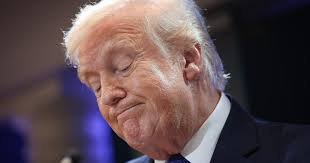
US President Donald Trump has announced plans to raise his proposed global tariffs to 15%, intensifying his trade stance after the Supreme Court struck down his previous import taxes.
On Friday, Trump said he would replace the scrapped tariffs with a 10% levy on all goods entering the United States. However, a day later, he declared on Truth Social that the rate would be increased to 15% the maximum permitted under Section 122 of the Trade Act of 1974, a provision that has never previously been used.
The law allows the tariffs to remain in place for up to five months before congressional approval is required. While the original 10% levy was scheduled to take effect on Tuesday, 24 February, it remains unclear whether the revised 15% rate will begin on the same date.
Trump said the decision followed what he described as a “ridiculous, poorly written, and extraordinarily anti-American” Supreme Court ruling. In a 6-3 judgment, the court found that he had exceeded his authority when he introduced sweeping global tariffs last year under the 1977 International Emergency Economic Powers Act (IEEPA).
The US has already collected at least $130bn (£96.4bn) in tariffs under IEEPA, according to recent government data.
Trump, whose trade policy is central to his economic agenda, has argued that tariffs will encourage domestic manufacturing and reduce the US trade deficit. However, official figures released this week show the trade deficit widening by 2.1% compared with 2024, reaching approximately $1.2 trillion (£890bn).
The proposed 15% tariff would apply broadly to most imported goods, although certain products including critical minerals, metals and pharmaceuticals are expected to be exempt. Separate tariffs on steel, aluminium, lumber and automotive parts introduced under other trade laws remain unaffected by the court’s decision.
The move has created uncertainty for countries such as the UK and Australia, which had previously agreed to a 10% tariff arrangement with the US. A White House official indicated that countries with trade agreements could still be subject to the new global rate under Section 122, though sector-specific arrangements may remain intact.
Reactions have been mixed. Some US manufacturers expressed disappointment over the court’s ruling, while others, including farming representatives, welcomed it as a blow to the president’s trade policy.
Business groups have warned that the shift could complicate global trade and weaken economic growth. There are also growing calls for clarity on whether companies will receive refunds for tariffs deemed unlawful by the Supreme Court a matter the court did not address directly.
Trump has suggested that any refunds would likely face lengthy legal battles. Meanwhile, lawmakers and business associations are pressing the administration for details on how it intends to handle potential reimbursements.
The development marks a significant escalation in Trump’s trade strategy and sets the stage for further legal and political battles over US tariff policy.

