

 Zara Lianne
Dangote’s Move to Cut Cooking Gas Prices Sparks Reactions from Marketers
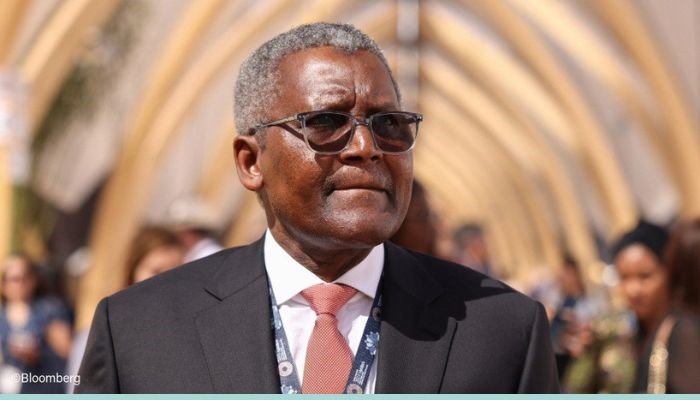
Alhaji Aliko Dangote, President of the Dangote Group, has revealed plans to reduce the cost of cooking gas, also known as Liquefied Petroleum Gas (LPG). He also stated that if current distributors fail to lower prices, he may begin selling directly to consumers.
This announcement, however, has stirred mixed reactions among industry stakeholders. Some operators in the LPG sector have raised concerns about the potential for monopolisation, warning against any move that could sideline existing players.
During a recent visit to his refinery by both local and international guests, Dangote emphasized that the current price of cooking gas is too high for many Nigerians, especially those who still rely on firewood for cooking. He disclosed that the refinery is producing around 22,000 tonnes of LPG daily and is working to increase supply across the country, as more Nigerians shift to gas for domestic use.
While addressing members of the Lagos Business School CGEO Africa at the refinery in Lekki, Dangote said, “Right now, we’re producing about 2,000 tonnes of LPG daily. We know LPG use is growing in Nigeria, but the cost is still too high. We’re working to bring it down so it’s more affordable.”
He also made it clear that if distributors do not adjust the prices, his company may step in and sell directly to end users to encourage a switch from firewood and kerosene to gas.
In a related development, Dangote is also preparing to begin direct distribution of petrol, diesel, and aviation fuel to marketers across the country by August. As part of that initiative, 4,000 buses powered by compressed natural gas (CNG) have already been acquired. Presently, cooking gas is sold at about ₦1,000 to ₦1,300 per kilogram, but Dangote aims to reduce this to make it more accessible.
There were mixed reactions from operators. Despite the good intentions behind the move, some stakeholders are not fully on board. A former chairman of the LPG and Natural Gas Downstream Group of the Lagos Chamber of Commerce and Industry, Godwin Okoduwa, expressed strong reservations.
He described the plan as monopolistic and cautioned that the sector, which grew from just 70,000 metric tonnes in 2007 to over 1.3 million tonnes in 2022, was built through partnership among the government, gas producers, and marketers. He warned that trying to dominate the sector could undermine years of collective effort.
Okoduwa explained, “This growth came through collaboration. If we want to go further to 5 million tonnes it should be through the same approach. Other countries like South Africa, Morocco, and Tunisia have higher per capita usage of LPG. Nigeria has the potential to do even better, but not through monopolistic moves.”
He stressed the need for inclusivity, noting that many investors have spent years developing infrastructure and building consumer confidence in LPG. “He didn’t come into an empty market. The foundation was already laid. He should respect that and work together with existing stakeholders,” he added.
Instead of competition, Okoduwa advised Dangote to focus on cooperation. “There’s room to grow. The Nigerian LPG market could reach 5 million tonnes. Everyone benefits from working together,” he said.
On the claim that the goal is to make LPG affordable and reduce reliance on firewood, Okoduwa said, “If that’s truly the goal, he should focus on the Northeast, where LPG consumption is the lowest. Build infrastructure there, and we’ll thank him for it.”
Bassey Essien, the Executive Secretary of the Nigerian Association of Liquefied Petroleum Gas Marketers, also cast doubt on the feasibility of Dangote’s direct-to-consumer plan.
He said, “It’s not realistic. Look at petrol has the refinery been able to sell it directly to consumers at a cheaper rate? That’s the real test.”

