
Author: Edupreneur Editorial Team

zz-8.webp

2min3460
The United States government on Thursday temporarily eased certain economic sanctions on Russia to allow Russian oil currently stranded at sea to be sold to India. In a statement, the U.S. Treasury Department said its Office of Foreign Assets Control had issued a Russia-related licence authorising the delivery and sale of crude oil and petroleum products of Russian origin that were already loaded on vessels as of March 5, 2026, to India. According to the department, the authorised transactions, including those involving vessels affected by various sanctions regimes, will be permitted until the end of April 3, 2026. U.S. Treasury Secretary Scott Bessent said the waiver was introduced to ensure that oil continues to flow into the global market. He explained that the short-term measure would not provide significant financial gains for the Russian government, as it only covers oil that was already stranded at sea. Bessent also noted that the move is intended to ease pressure created by Iran’s attempts to disrupt global energy supply, even though India has indicated it plans to halt purchases of Russian oil as part of a trade agreement with the United States. Last November, U.S. President Donald Trump imposed sanctions on major Russian oil companies, including Lukoil and Rosneft, in a rare effort to increase pressure on Russia over its invasion of Ukraine. The sanctions prompted several major buyers of Russian oil to look for alternative suppliers. Reports have also indicated that Russia has assembled a fleet of ageing oil tankers with unclear ownership structures to bypass sanctions imposed by the United States, the European Union, and the G7 following Moscow’s full-scale invasion of Ukraine in 2022.

zz-7.webp

2min13530
Britain’s defence secretary, John Healey, arrived in Cyprus on Thursday, according to a defence source, days after a drone targeted a British air base on the island. The visit follows an attack on the runway of the Royal Air Force base at RAF Akrotiri on Monday, where an Iranian-made drone struck the facility. British Prime Minister Keir Starmer announced on Tuesday that the UK would deploy helicopters with counter-drone capabilities and a naval warship, HMS Dragon, to Cyprus as part of what he described as ongoing defensive operations in the region. HMS Dragon is one of the Royal Navy’s six Type 45 air-defence destroyers. It is equipped with the Sea Viper missile system, which can launch eight missiles in less than 10 seconds and guide up to 16 missiles at the same time, according to Britain’s defence ministry. The helicopters being deployed are Wildcat aircraft armed with Martlet missiles designed to intercept and destroy drones. On Wednesday, Cyprus’s High Commissioner to the UK, Kyriacos Kouros, said many Cypriots were disappointed with the level of information shared with residents after the strike on RAF Akrotiri and the interception of additional drones. Speaking on the Newsnight programme, he said people felt concerned and had expected clearer communication following the incident. Starmer had initially ruled out any involvement in the conflict between the US and Israel and Iran, but later approved a request from United States authorities to use two British military bases for what was described as a specific and limited defensive purpose. The facilities are located in Gloucestershire and at the joint UK-US base on Diego Garcia. Starmer has also stated that RAF Akrotiri is not being used by US bombers. British officials said Monday’s drone strike caused only minor damage and no injuries. As a precaution, families of service personnel stationed at the base have been temporarily relocated.

zz-6-1280x720.webp

3min2720
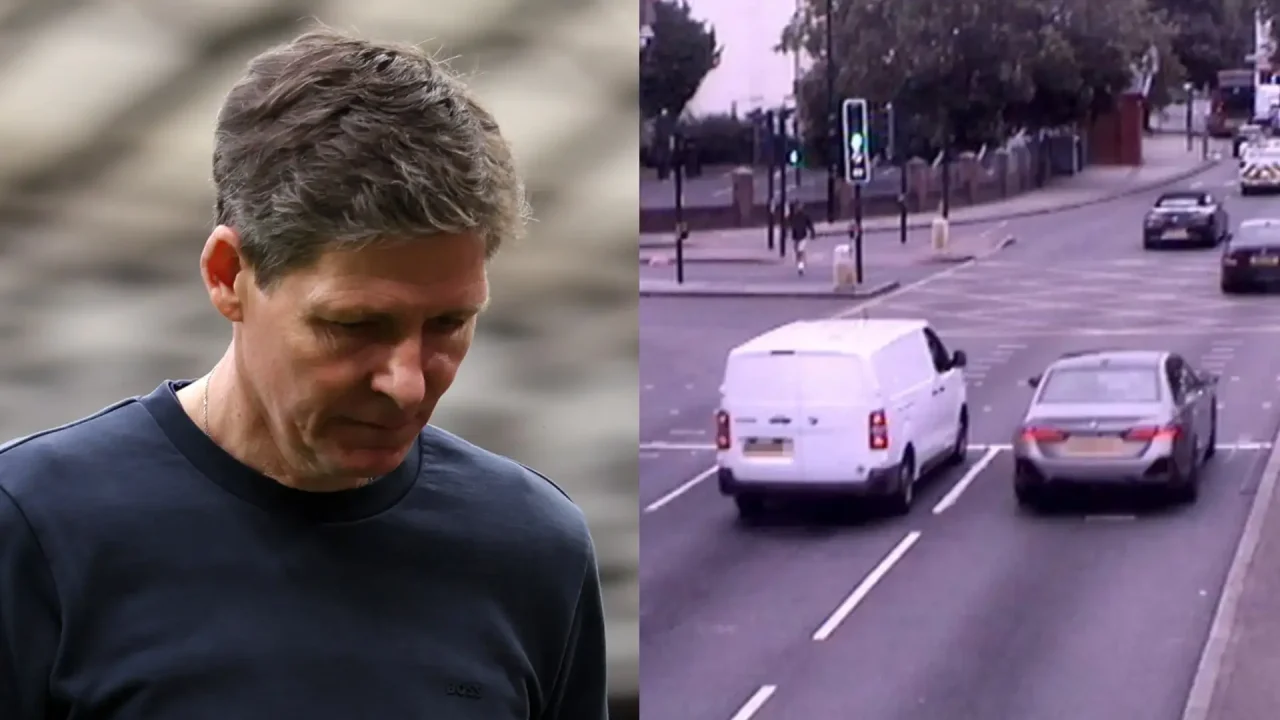
Crystal Palace manager Oliver Glasner has been banned from driving for six months after exceeding a 20 mph speed limit in London. The 51-year-old FA Cup-winning coach was recorded by a speed camera driving his BMW at 29 mph along Old Kent Road in Bermondsey, south London, last July. According to court documents, Glasner already had previous driving offences, which led to an automatic disqualification. The Austrian admitted the offence in a letter to Willesden Magistrates’ Court in northwest London, acknowledging he had been speeding on a road with a 20 mph limit. In a handwritten note submitted to the court, he accepted responsibility for his actions and assured authorities that he would not repeat the offence. He also chose not to contest the ban. A magistrate imposed the six-month driving disqualification last Tuesday. Glasner was also ordered to pay a £660 fine, along with £130 in court costs and a £264 victim surcharge. In May, Glasner guided Crystal Palace to victory in the FA Cup during his first full season in charge, securing the club’s first major trophy. However, the team was knocked out of this season’s FA Cup in the third round by non-league side Macclesfield in January. A week later, Glasner announced he would leave the club when his contract expires at the end of the season, a decision that appeared linked to dissatisfaction with the club’s transfer policy, which saw several key players depart while those remaining at Selhurst Park were, according to him, left without adequate support from the club’s leadership. Crystal Palace are scheduled to face London rivals Tottenham Hotspur on Thursday in an important Premier League match, with both teams battling to avoid relegation. Glasner submitted his guilty plea in writing on January 27 and later confirmed in another letter on February 16 that he accepted the expected ban without requiring a public court hearing. Details of the case emerged after Britain’s Press Association obtained access to the court documents earlier this week.

zz-2.avif

2min11850
China’s manufacturing activity continued to weaken in February, official data released on Wednesday showed, falling short of forecasts and prolonging a slowdown ahead of key policy announcements. The world’s second-largest economy has been grappling with sluggish domestic demand and investment, putting pressure on its extensive manufacturing sector. According to the National Bureau of Statistics (NBS), the manufacturing purchasing managers’ index (PMI) dropped to 49.0 in February, below the 50-point threshold that separates expansion from contraction. This was down from January’s 49.3 and slightly below the Bloomberg survey forecast of 49.2. NBS statistician Huo Lihui attributed the decline primarily to slower activity during the Spring Festival holiday, which fell entirely in February this year. Huo added that sectors such as textiles, apparel, and automobiles remained below the critical point, reflecting continued weak market activity. China’s non-manufacturing PMI, which measures performance in services and construction, rose slightly to 49.5 in February, improving modestly from January’s reading. The figures were released just a day before Chinese leaders are scheduled to unveil the new Five-Year Plan at the annual Two Sessions political gathering in Beijing. The announcements, expected on Thursday, will include this year’s growth target and the defence budget. “Economic activity contracted at the start of the year,” said Zhiwei Zhang, President and Chief Economist at Pinpoint Asset Management. He noted that the government’s policy approach remains flexible and expects that moderate investment support may be introduced to ease pressure on the economy if the slowdown continues in the coming months.

aa-4.webp

5min4490
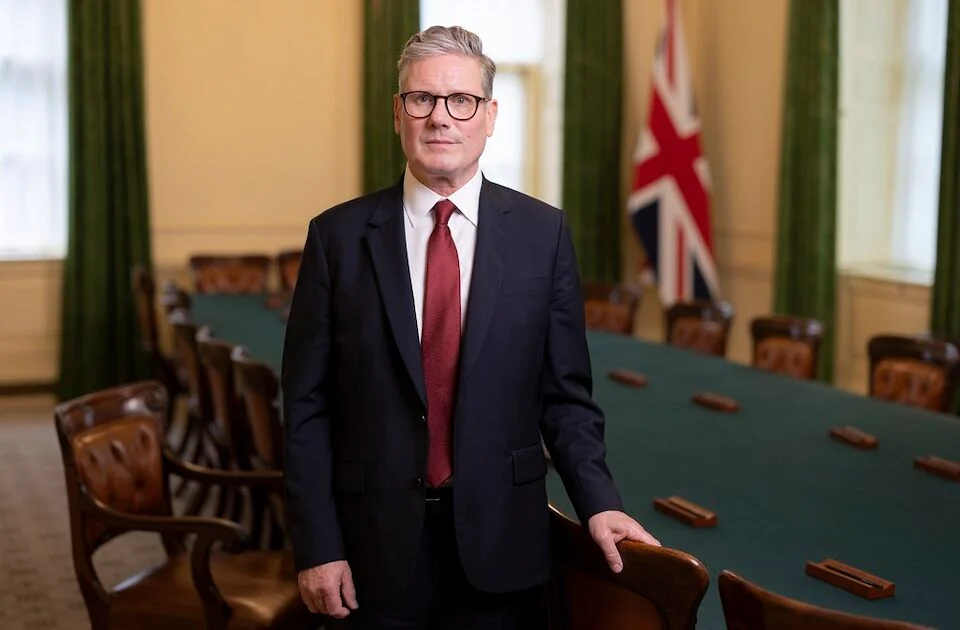
Keir Starmer has called on European nations to urgently strengthen their military capabilities and reduce long-standing dependence on the United States, warning that the foundations of peace in Europe are increasingly fragile. Addressing the Munich Security Conference on Saturday, the UK prime minister said Europe must “stand on its own two feet” in the face of growing threats from Russia, while continuing to work closely with Washington. “The ground of peace is softening under our feet,” Starmer said, arguing that European leaders must respond decisively rather than repeat past mistakes of delaying rearmament until crisis strikes. Call for a “more European NATO” Starmer urged allies to build what he described as a “more European NATO,” deepen defence cooperation between the UK and the EU, and significantly increase military spending. While describing the United States as “an indispensable power” whose contribution to European security over the past 80 years is “unparalleled,” he acknowledged that Washington now expects Europe to take greater responsibility for its own defence. “The US National Security Strategy makes clear that Europe must take primary responsibility for its security. That is the new law,” he said. Rather than replacing US capabilities, Starmer argued that Europe should reduce excessive dependencies and move “from over-dependence to interdependence” through long-term investment and closer industrial coordination. Warning over Russia The prime minister said Russia had demonstrated its “appetite for aggression” in Ukraine and was continuing to rearm despite heavy losses. He cited warnings from NATO that Moscow could be in a position to use military force against the alliance before the end of the decade. Even if a peace deal is reached in Ukraine, he warned, Russia’s rearmament would likely accelerate. Starmer accused Moscow of using disinformation, cyber-attacks and political interference to destabilise European societies, and criticised political movements he described as “soft on Russia” and “weak on NATO.” Boosting defence spending and coordination Starmer said Europe must “spend more, deliver more, and coordinate more,” pointing to a recent agreement among allies to increase security and defence spending to 5% of GDP. He criticised inefficiencies in Europe’s defence sector, noting that the continent operates more than 20 types of frigate, 10 types of fighter jet and over 10 types of main battle tank, compared with far fewer standardised systems in the United States. To address fragmentation, he called for deeper integration of procurement, joint investment in defence industries and expanded UK-EU cooperation. The UK, he said, is ready to lead a “generational shift” in defence industrial collaboration, working closely with France, Germany and other European partners. Stronger UK-EU ties Starmer also signalled openness to closer economic alignment with the EU where it serves mutual interests, arguing that stronger growth would underpin higher defence spending and broader security. “There is no British security without Europe, and no European security without Britain,” he said, adding that the UK is “not the Britain of the Brexit years anymore.” He framed the moment as one requiring political courage, warning that leaders in the 1930s had failed to prepare their publics for fundamental change. Without clear leadership now, he cautioned, extremist voices on both the left and right would fill the vacuum. “If we believe in democracy, liberty and the rule of law, this is the moment to stand up and fight for them,” Starmer said.

zz-4.webp

1min4240
Two people were fatally shot and another was injured Thursday at a university in the southern United States, authorities said, prompting a lockdown that is still in effect. Officials at South Carolina State University said the campus was placed under lockdown at about 9:15 p.m. Thursday (0215 GMT Friday) after reports of gunfire at an apartment in the Hugine Suites student housing complex. In a statement, the school said it had not yet been able to verify the identities of the victims or provide an update on the condition of the person who was wounded. The campus “remains on lockdown,” the university added. University authorities did not immediately say whether any suspects were in custody, but they noted that local police agencies were assisting with patrols on and around the grounds. The university also announced that classes scheduled for Friday have been cancelled. The shooting follows another deadly school attack earlier this week in British Columbia, Canada, and adds to a series of firearm‑related incidents at educational institutions in the United States amid ongoing political debate over gun policy.

zz-7.jpeg

4min2910
A prolonged standoff between Republicans and Democrats in the US Congress over immigration enforcement is threatening to push the Department of Homeland Security (DHS) into a partial government shutdown from Saturday, following two fatal shootings in Minneapolis. “For weeks, we’ve been advocating for commonsense reforms,” said Chuck Schumer, the leading Democrat in the Republican-controlled Senate, as the deadline for a shutdown loomed after midnight on Friday. Democrats have refused to approve additional funding for DHS unless significant changes are made to the operations of Immigration and Customs Enforcement (ICE), the agency at the centre of President Donald Trump’s immigration crackdown. Their demands include limiting roving patrols, banning ICE agents from wearing facemasks during operations, and requiring judicial warrants before entering private property. Opposition to ICE intensified after the January deaths of Renee Good and Alex Pretti, two US citizens who were shot and killed by federal agents in Minneapolis during protests against immigration enforcement actions. Lawmakers are now calling for stricter accountability for ICE officers, including adherence to existing standards governing the use of force. “Democrats will not sign off on a blank cheque for chaos,” Schumer said. Half-measures House Minority Leader Hakeem Jeffries echoed those concerns on Thursday, warning that ICE had become “completely and totally out of control.” He argued that public funds should be spent on easing the cost of living for Americans rather than being used in ways that harm them, adding that violence often erupts “whenever these masked and untrained ICE agents arrive on the scene.” Even if all 53 Republican senators back DHS funding, Senate rules require at least 60 votes to move the budget forward, meaning support from several Democrats would still be needed. The White House said it was open to negotiations and submitted a counterproposal late Wednesday. Senate Majority Leader John Thune described the offer as “extremely serious,” while cautioning that Democrats would not secure all of their demands. Democrats rejected the proposal outright. “Half-measures are not enough,” said Senator Patty Murray, insisting her party’s conditions were both reasonable and necessary. Airports impacted If no agreement is reached, thousands of federal workers could be placed on furlough, while many others would be required to continue working without pay until a budget is passed. ICE operations would continue during a partial shutdown due to funding approved last year, meaning the effects would be felt more sharply by other agencies, including the Federal Emergency Management Agency (FEMA), which coordinates disaster response. The Transportation Security Administration has warned that a prolonged shutdown could have serious consequences for air travel, including staff shortages, longer security lines, and flight delays or cancellations. If it occurs, this would be the third shutdown of Trump’s second term, following a record 43-day government closure last October and November.

zz-6-1280x853.jpeg

3min6440
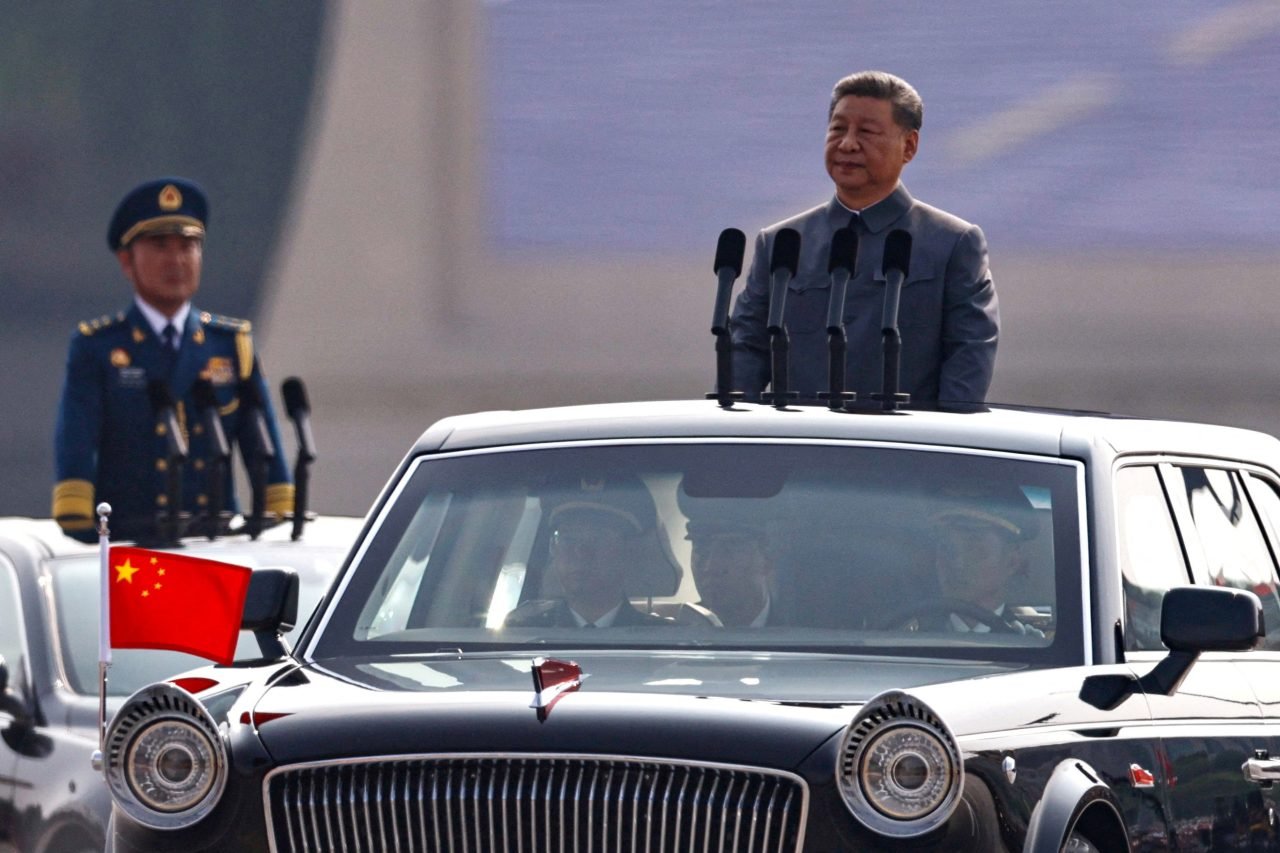
Chinese President Xi Jinping has made a rare public reference to a recent military crackdown that saw the country’s top general removed from his post. General Zhang Youxia, widely regarded as one of Xi’s closest military allies, was dismissed in January over “serious violations of discipline and law,” a term often used to indicate corruption. Another senior officer, General Liu Zhenli, was also removed. In a virtual address on Tuesday, Xi described the past year as “unusual and extraordinary,” saying the People’s Liberation Army (PLA) had undergone “revolutionary tempering in the fight against corruption.” He added that the army had addressed “various risks and challenges” and that many personnel had gone through “in-depth political rectification,” while emphasizing that PLA troops remained “loyal to the Party” and “capable and dependable.” The remarks were part of Xi’s annual Chinese New Year greetings to the PLA and mark the first time since 2022 that he publicly referenced corruption in this context. Zhang, 75, was vice-chairman of the powerful Central Military Commission (CMC), which Xi heads. The latest dismissals follow a previous purge in October 2025 that removed nine top generals, including some CMC members, as part of an anti-corruption campaign. Over the past three years, 14 full-rank generals have been sacked or investigated, leaving the seven-member CMC with only two members, including Xi himself. Observers note that Xi rarely speaks publicly, making these comments highly unusual. Analysts suggest that addressing the crackdown serves to reassure Party officials and the public that the measures are part of a broader plan, especially given the impact of the purges on the military’s operational capacity. Xi has made anti-corruption efforts a central pillar of his leadership, calling corruption the “biggest threat” to the Communist Party and describing the fight as “grave and complex.” Experts say the public messaging is intended more as an internal signal within the Party, demonstrating the consequences of disloyalty or corruption, rather than providing detailed explanations of the internal dynamics.

zz-3.jpeg

4min5790
The Federal High Court in Lagos on Wednesday convicted and sentenced two Chinese nationals, Huang Haoyu (also known as Ken) and An Hongxu, directors of Genting International Co. Limited, to 46 years’ imprisonment each over their involvement in a multi-billion-naira cybercrime and money-laundering operation. Justice Daniel Osiagor, who delivered the judgment, imposed an alternative fine of N56 million on each convict. He also ordered them to perform three days of community service and directed that they be repatriated to China after completing their sentences and the community service. The two were among 792 suspects arrested by operatives of the Economic and Financial Crimes Commission in Lagos in December 2024 in connection with alleged internet and cryptocurrency fraud. A third defendant, Audu Friday, pleaded not guilty and will face trial. During proceedings, defence counsel Bridget Omateno informed the court that Huang and An had opted to withdraw their initial not-guilty pleas and enter guilty pleas, requesting that the charges be read to them afresh. The court granted the request, and after the seven-count charge was re-read, the two pleaded guilty, while Friday maintained his innocence. The EFCC prosecutor, Bilkisu Bala-Buhari, urged the court to convict the defendants based on their guilty pleas, noting that the prosecution had already called two witnesses before the change of plea. She added that some of the charges carried life imprisonment and others up to 14 years, and asked the court to impose the maximum penalty as a deterrent. In his ruling, Justice Osiagor convicted the two men and sentenced each to a cumulative 46 years in prison, with the option of a N56 million fine. He further ordered that they be repatriated to their country of origin after serving their sentences and completing the community service. The court also approved the forfeiture of assets recovered during the investigation to the Federal Government. Items forfeited include 1,596 mobile phones, 2,120 office chairs, 544 office tables, 194 routers, 43 computer systems, a network server, 126 air-conditioning units, generators, vehicles, hundreds of mattresses and bunk beds, thousands of SIM cards across various networks, and other electronic and household items. The items were recovered from several locations in Victoria Island and Ikoyi, Lagos. According to the charges, the defendants allegedly conspired in 2024 to unlawfully access computer systems and recruit Nigerian youths to impersonate foreign nationals online for financial gain, actions said to threaten Nigeria’s economic and social stability, contrary to the Cybercrimes (Prohibition, Prevention, Etc.) Act, 2015, as amended. They were also accused of laundering proceeds of fraud, including retaining $1.262 million USDT in a Binance wallet and $1.300 million USDT in a Bybit wallet. Prosecutors further alleged that between August and December 2024, the defendants retained N3.4 billion in Genting International’s Union Bank account, funds believed to be proceeds of illegal activities. They were also said to have transferred N913.9 million to an associate, Duliang Pan, who is currently at large, and N106.95 million to Lagos Oriental Hotel Limited. Trial is expected to continue against Audu Friday and the company on separate charges related to unlawful foreign exchange transactions and failure to make statutory declarations to the Special Control Unit Against Money Laundering.

zz-1.webp

3min6750
India has introduced new rules requiring social media companies to remove unlawful content within three hours of notification, a sharp reduction from the previous 36-hour window. The updated guidelines, effective from 20 February, apply to major platforms including Meta, YouTube, and X, and cover AI-generated content as well. The government has not explained why the takedown timeframe was shortened. Critics warn the move could intensify government oversight of online content and potentially lead to censorship in the world’s largest democracy, home to over a billion internet users. In recent years, Indian authorities have used Information Technology rules to direct social media firms to remove material deemed illegal under national security and public order laws. Transparency reports indicate that more than 28,000 URLs were blocked following government requests in 2024. The amendments also introduce rules for AI-generated material, defining it as audio, video, or other content created or altered to appear real, such as deepfakes. Ordinary editing, accessibility features, and legitimate educational or design work are excluded. Platforms must label AI-generated content clearly and, where possible, add permanent markers to trace its origin. These labels cannot be removed, and automated tools must be used to detect and prevent illegal AI content, including deceptive or non-consensual material, false documents, child sexual abuse content, explosives-related material, and impersonation. Digital rights groups and technology experts have raised concerns about the feasibility and implications of the new rules. The Internet Freedom Foundation warned that the three-hour window would turn platforms into “rapid-fire censors,” leaving little time for human review and forcing over-reliance on automation. Anushka Jain, a research associate at the Digital Futures Lab, noted that while the AI labelling requirement could improve transparency, the tight deadline risks pushing platforms toward fully automated moderation, increasing the likelihood of wrongful removal. Delhi-based technology analyst Prasanto K Roy described the regulations as “perhaps the most extreme takedown regime in any democracy,” highlighting the difficulty of compliance without extensive automation and minimal human oversight. On AI labelling, Roy added that while the intent is positive, tamper-proof and reliable technologies are still under development.