Author: Tech & Tools Desk

Tech & Tools Desk12 January 2026
crude-oil.jpeg

4min6860
Oil prices have surged past $63 per barrel as markets reacted to rising geopolitical tensions in the Middle East, according to oilprice.com data on Sunday. The increase follows early gains on Friday as widespread protests in Iran raised concerns that output from one of the region’s major oil producers could be disrupted. The rebound comes after two days of decline, as investors weighed developments in Venezuela alongside supply concerns from Iran, Russia, and Iraq. Both benchmarks, Brent and West Texas Intermediate (WTI), traded higher on Sunday. WTI futures stood at $59.12 per barrel, while Brent climbed to $63.34, after previously rising above $62.42 on Friday. Crude prices jumped more than 3% on Thursday amid heightened geopolitical risks spanning from Venezuela to Iran. Friday’s gains were further supported by escalating protests in Iran and remarks by former US President Donald Trump, who claimed that Iran’s Supreme Leader, Ayatollah Ali Khamenei, was considering fleeing the country. In response to the unrest, Iran reportedly shut down internet access on Friday, a tactic often used during domestic instability. The demonstrations, which began nearly two weeks ago, have resulted in approximately 40 fatalities and around 2,000 arrests. Khamenei condemned the protests, accusing participants of acting under foreign influence, and vowed that the regime would not yield. Ole Hansen, Head of Commodity Strategy at Saxo Bank, said the market is now focused on Iran, where the risk of near-term supply disruption outweighs potential long-term supply recovery should the regime face further instability. Earlier in the week, oil prices dipped as markets anticipated a potential supply boost from Venezuela. Reports indicated that the US and Venezuelan authorities reached an agreement under which 30–50 million barrels of Venezuelan crude, valued at roughly $2 billion, would be exported to the US. This agreement aimed to increase supplies of heavy crude to Gulf Coast refineries while limiting illicit shipments to other markets. Political developments in Venezuela also contributed to market volatility. President Nicolás Maduro was captured by US authorities and transferred to the US to face federal charges, including narcotics and terrorism-related offenses, which he denies. Following his detention, Vice President Delcy Rodríguez assumed the role of Acting President to maintain institutional continuity. Despite the midweek dip—Brent fell to $59.99 and WTI to $56.10 on Wednesday—oil prices have since recovered, with Brent climbing to $63.34 and WTI reaching $59.12 per barrel, reflecting heightened geopolitical risks and concerns over potential supply disruptions.

Tech & Tools Desk12 January 2026
SCURITY.webp

3min4650
Coronation Insurance Plc has highlighted the transformative impact of the Nigerian Insurance Industry Reform Act (NIIRA) 2025, describing the legislation as a significant step toward boosting consumer protection, enhancing safety standards, and expanding insurance coverage nationwide. In its latest thought leadership release, Coronation Insurance noted that NIIRA, signed into law in July 2025, has been widely welcomed by industry players, many of whom contributed to its development. The law has also prompted a sector-wide recapitalisation exercise. According to the company, the reform elevates insurance from a largely optional service to an essential element of economic and social life. “The Act replaces outdated regulations with a modern framework that integrates insurance into daily activities, including construction, healthcare, aviation, lending, and public buildings. By reinforcing mandatory insurance classes and introducing stronger enforcement mechanisms, NIIRA 2025 makes insurance both a legal and operational necessity,” Coronation Insurance said. Under the new law, key compulsory insurance classes have been clearly defined, including builders’ liability, occupiers’ liability for public buildings, group life, credit life, petroleum station insurance, healthcare professional indemnity, and aviation liabilities. The Act also introduces stricter enforcement measures. Insurers are now required to remit 0.25 per cent of certain net premiums quarterly to the Fire Services Maintenance Fund, while regulators have the authority to seal buildings lacking the required insurance coverage. Significant fines and prison terms have been instituted for non-compliance. Coronation Insurance emphasised that NIIRA 2025 directly addresses ongoing national challenges, such as building collapses and fire incidents. By mandating insurance for properties under construction and commercial buildings, the law encourages a stronger safety culture. “This reform positions insurance as a core component of business management rather than an afterthought. Building owners and facility managers now carry defined responsibilities toward occupants and third parties, while insurers must expand digital capabilities to serve a growing market,” the company added.  

Tech & Tools Desk12 January 2026
rail-way.jpg

7min7190
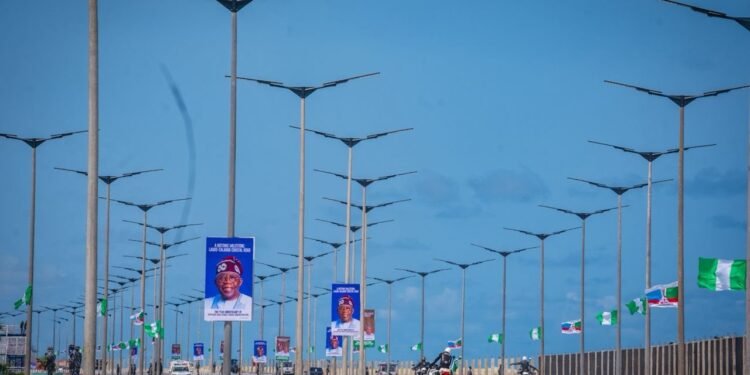
The Federal Government has addressed public concerns over the seeming absence of railway tracks along some sections of the Lagos–Calabar Coastal Highway, explaining that the rail line remains a core part of the project but cannot be accommodated in certain built-up areas due to limited land space. The explanation comes amid public discussions triggered by recent videos of the project, which is estimated at about N4bn per kilometre. The footage showed stretches of the 700-kilometre highway where no rail track was visible within the median, particularly around the Lekki Deep Seaport axis in Lagos. Construction of the Lagos–Calabar Coastal Highway began in 2024 and is one of the Federal Government’s major infrastructure initiatives designed to enhance connectivity, trade, and tourism along Nigeria’s southern coastline. Earlier, the Minister of Works, David Umahi, had stated that the highway’s design includes a railway line running through the median to support multi-modal transportation. He noted that rail infrastructure forms part of the coastal highway and other legacy projects, adding that construction of the rail component for the section would commence in 2025. However, videos shared by urban development commentators on social media raised questions about apparent inconsistencies in the road’s layout. Observations showed that from Chainage Zero at Eko Atlantic to Chainage Nine around the Jakande area—covering Victoria Island and parts of the Lekki corridor—as well as Section Two and areas under construction from the Calabar end, the highway appears to lack a central rail corridor, with parallel carriageways and no wide median. Responding to these concerns, the Federal Controller of Works in Lagos State, Olufemi Dare, explained that the absence of rail space in some sections was intentional and based on physical and environmental constraints. According to Dare, the railway component is fully embedded in the project design but could not be implemented along the initial stretch of the Lagos alignment because of dense development and limited available land. He explained that from Chainage Zero at Eko Atlantic to Chainage Nine around Jakande, there is insufficient land to accommodate both the road and a rail line. The corridor passing through Victoria Island and parts of Lekki is heavily developed, leaving room only for the highway itself. As a result, the first nine kilometres of the route do not include space for railway tracks, despite the rail component being part of the overall design. Dare emphasised that the constraint is strictly due to land availability and not an omission from the project plan. He added that from Chainage Nine onward, adequate space has been provided for the railway line, which will run through the median for the remainder of the highway. A railway station is also planned around that area. According to him, a 20-metre-wide gap has been deliberately created between the carriageways beyond Jakande to allow for the installation of rail infrastructure, where land availability is no longer a challenge. Dare stressed that the Lagos alignment’s first nine kilometres are the only section without rail provision, noting that from Chainage Nine to the end of the highway, the design includes railway tracks running through the centre. Commenting on similar observations at the Calabar end of the project, Dare said he could not provide details, as his oversight is limited to the Lagos section. The Lagos–Calabar Coastal Highway is designed to pass through several states along Nigeria’s Atlantic coast, linking Lagos to Cross River State. While the project has generated optimism over its economic and regional development potential, it has also attracted scrutiny regarding cost, environmental impact, and engineering design. The route starts from Victoria Island near Eko Atlantic City and runs through the Lekki Coastal Road, Lekki Free Trade Zone, and Dangote Refinery, extending through Ogun, Ondo, Delta, and Edo states before terminating in Calabar, Cross River State. The highway’s design features 10 lanes, with rail lines positioned within the central corridor of the main carriageways, and includes 11-inch-thick concrete pavement reinforced with 20-millimetre steel. The entire project is expected to be completed within eight years, with multiple sections constructed simultaneously once approvals and procurement processes are finalised. Completed portions will be opened in phases and subjected to tolling, supporting infrastructure expansion and regional economic growth. In December 2025, the Federal Government temporarily opened the 47.47-kilometre Section One, Phase One of the highway and announced that $1.26bn in funding had been secured for the execution of Section Two of the project’s first phase.

Tech & Tools Desk9 January 2026
Crude-Oil-1.jpg

3min4300
The Nigerian Upstream Petroleum Regulatory Commission (NUPRC) and the Nigerian Midstream and Downstream Petroleum Regulatory Authority (NMDPRA) have renewed their commitment to enhance regulatory efficiency and attract investments in Nigeria’s oil and gas sector, marking a new phase of collaboration between the two agencies. A statement from Eniola Akinkuotu, Head of Media and Strategic Communication at NUPRC, confirmed that the renewed cooperation was formalised during a meeting at the Commission’s corporate headquarters in Abuja on Thursday, January 8, 2026. During the meeting, both agencies agreed to work more closely, appointing representatives to address regulatory bottlenecks across the upstream, midstream, and downstream segments of the sector. The partnership aims to promote investor confidence, streamline processes, and support overall industry growth. “The Nigerian Upstream Petroleum Regulatory Commission and the Nigerian Midstream and Downstream Regulatory Authority have taken significant steps to improve regulatory efficiency and encourage investment in Nigeria’s oil and gas sector,” the statement said. To institutionalise the collaboration, NUPRC and NMDPRA agreed to hold quarterly meetings, which will strengthen communication, resolve challenges promptly, and align regulatory approaches across the oil and gas value chain. Speaking at the meeting, NUPRC Chief Executive Oritsemeyiwa Eyesan highlighted the importance of synergy between the two agencies. “Whether upstream, midstream, or downstream, we are enablers for the industry, which is the heartbeat of the nation’s economy. We are committed to ensuring proper functioning and growth, and that requires working together. Sometimes the lines between upstream, midstream, and downstream overlap, and cooperation is essential to prevent challenges. This meeting is the beginning of many more engagements,” she said. Mrs. Eyesan also invited NMDPRA Chief Executive Saidu Aliyu Mohammed to the pre-bid conference for the ongoing licensing round at Eko Hotels and Suites, Lagos, on January 14, 2026. The round, offering 50 oil and gas blocks, is expected to attract substantial domestic and foreign investment while bolstering Nigeria’s hydrocarbon reserves. Responding, Mr. Mohammed emphasised the importance of harmonious collaboration, noting that any differences between the agencies should be resolved internally and amicably. “We must strengthen the relationship between these sister agencies,” he said. The renewed partnership demonstrates both agencies’ commitment to boosting regulatory efficiency, enhancing investor confidence, and driving sustainable growth in Nigeria’s oil and gas sector, promising tangible economic benefits for the nation. Both leaders were appointed by President Bola Tinubu in December 2025, following the resignations of their predecessors, NUPRC’s Gbenga Komolafe and NMDPRA’s Farouk Ahmed.  

Tech & Tools Desk9 January 2026
Stanbic-IBTC-Insurance.webp

3min2650
Credit rating firm Agusto & Co. has awarded Stanbic IBTC Insurance a Long-Term Rating of A and a Short-Term Rating of A1, both carrying a stable outlook. The ratings were announced as part of Agusto & Co.’s credit assessment for the 2025–2026 financial year and reflect increased confidence in the insurer’s financial strength, governance framework, and long-term sustainability. Reacting to the development, the Chief Executive Officer of Stanbic IBTC Insurance, Akinjide Orimolade, described the ratings as recognition of the company’s steady progress and growing stakeholder trust. He stated that the insurer remains committed to providing dependable protection, quality service, and lasting value to policyholders and partners, adding that the recognition reinforces its resolve to maintain strong financial discipline, service excellence, and ethical standards. According to the company, the improved ratings highlight its robust risk management practices, operational efficiency, and solid capacity to meet policyholder obligations. Agusto & Co. also pointed to Stanbic IBTC Insurance’s healthy liquidity position, prudent business approach, and the strategic support it enjoys as part of Stanbic IBTC Holdings. As part of its growth agenda, the insurer noted that it has continued to expand its retail presence nationwide, increasing access to life insurance products and strengthening its footprint in key markets. The company added that it has consistently demonstrated commitment to prompt and efficient claims settlement. Since commencing operations in 2021, Stanbic IBTC Insurance has settled more than 2,000 claims valued at over N1.8bn. In addition, the insurer disclosed that it has paid over N16bn in annuities to more than 4,900 retirees, reinforcing its dedication to timely and reliable benefit payments. Stanbic IBTC Insurance reaffirmed its commitment to sustaining a strong financial position, advancing customer-focused innovation, and delivering long-term security and peace of mind to Nigerians.  

Tech & Tools Desk8 January 2026
Donald-Trump.jpg

2min2800
U.S. President Donald Trump announced on Wednesday that defence companies would be barred from paying dividends or conducting stock buybacks until they resolve ongoing issues in the production and maintenance of military equipment, according to Reuters. In a post on Truth Social, Trump criticised defence contractors for slow delivery of military hardware and inadequate upkeep of equipment once produced. “Defence companies are not producing our military equipment quickly enough, and once produced, they are not maintaining it properly or promptly,” he said. Trump also condemned high executive pay in the defence sector, calling it “exorbitant and unjustifiable.” He stressed that senior executives should focus on expanding and modernising production capacity rather than rewarding shareholders and management. “From this point forward, these executives must build new and modern production facilities to deliver and maintain essential equipment and to develop future military models,” he added, without naming specific firms or individuals. He proposed a cap on executive compensation, suggesting that no defence industry executive should earn more than $5 million annually until production challenges are resolved. While substantial, he noted this is far below the current earnings of many top executives. Reuters reported that Trump’s remarks reflect long-standing concerns from both the president and the U.S. Department of Defense over what they view as an expensive, slow-moving, and entrenched defence industry. The statements signal potential tighter government oversight of defence contractors and may affect investors, as dividends and share buybacks are important components of shareholder returns in the sector.

Tech & Tools Desk8 January 2026
Tax-illustration-1.webp

8min3860
The full rollout of Nigeria’s Tax Reform Acts marks a significant shift with far-reaching consequences for both the private and public sectors. The new framework compels businesses to reassess their operations quickly to avoid stiff sanctions and regulatory setbacks. One immediate relief under the new regime is for salary earners, especially those earning below N800,000 annually, who are expected to see a modest increase in take-home pay from the end of January. This adjustment reflects changes introduced by the revised personal income tax structure. At the same time, businesses are required to apply and report Value Added Tax (VAT) and Withholding Tax (WHT) in full, regardless of any pending legal debates surrounding the reforms. These transaction taxes have emerged as critical compliance priorities for organisations across the country. Overall, the suite of new tax laws—including the Nigeria Tax Administration Act, the Nigeria Revenue Service (Establishment) Act, the Joint Revenue Board (Establishment) Act and the Nigeria Tax Act—signals a move away from routine compliance toward urgent operational realignment. Under the new rules, individuals earning N800,000 or less annually are exempt from income tax, while higher earners are taxed on a graduated scale, with rates rising to 25 per cent for top income brackets. The VAT framework has also been expanded, allowing companies to claim input VAT on services and fixed assets, in addition to goods purchased for resale or production. Furthermore, the law mandates the use of electronic fiscalisation systems, including e-invoicing, for VAT collection and reporting. On WHT, companies are required to deduct and remit taxes promptly, with penalties for non-compliance reaching up to 40 per cent of the unpaid amount, alongside interest charges and possible criminal liability. Speaking on the implications of the reforms at the 2026 Nigeria Economic Outlook organised by FirstBank in Lagos, Kenneth Erikume, Partner, Tax Reporting and Strategy at PwC, identified payroll and the automation of VAT and WHT processes as the most urgent issues for businesses. He warned that failure to comply could attract severe penalties. According to him, payroll systems must be updated immediately to reflect the new tax thresholds and rates, as staff salaries are paid monthly. He explained that incomes up to N800,000 are now exempt, with higher earnings taxed progressively, and income above N50m subject to a 25 per cent rate. As a result, employees earning below N25m annually are likely to see higher take-home pay, while those above that level may experience reduced net income due to higher tax obligations. Erikume noted that this creates a human capital challenge, as organisations may need to decide whether to absorb part of the increased tax burden for higher-earning staff. He stressed that payroll adjustments are the most immediate concern and require urgent attention. He further emphasised that VAT and WHT are equally critical areas. He described the VAT reforms as a major opportunity for cost reduction, noting that businesses can now potentially lower costs by up to 7.5 per cent through expanded VAT claims on overheads and fixed assets. He explained that VAT on costs should now be treated as a recoverable asset rather than an expense, allowing it to be offset against output VAT during filing. However, he cautioned that systems must be updated to capture this correctly. Erikume also highlighted compliance risks related to dealing with vendors without Tax Identification Numbers (TINs). Under the new rules, transactions with unregistered vendors can attract penalties of up to N5m. This, he said, requires businesses to strengthen vendor onboarding and validation processes, including in cases involving informal suppliers or reimbursements. On WHT, he warned that errors in deduction or remittance could result in penalties of up to 40 per cent, making automation essential to reduce risks associated with manual processes. He stressed the need for close collaboration between finance and IT teams to ensure accurate implementation based on the final version of the law passed by the National Assembly. Adding a legal perspective, corporate and technology lawyer Nneoma Agwu-Okoro, in her Legal Bytes newsletter, noted that all VAT-able transactions must be calculated, collected and remitted accurately and on time. She stressed that WHT deductions on payments to contractors, suppliers and service providers must also be handled correctly, particularly for fintechs and businesses with high transaction volumes, where automation is crucial to prevent cumulative liabilities that could erode profits. She urged businesses to maintain strict compliance across all operations, including low-margin activities, by keeping monthly reconciliations, proper documentation and clear audit trails. She noted that tax authorities now have the capacity to cross-check bank accounts, payment platforms and TIN-linked records, making proactive compliance essential. PwC’s 2025 Nigerian Tax Reforms Insight Series further advises that all taxable individuals and entities must register for tax and obtain a TIN to avoid significant penalties. Awarding contracts to unregistered persons now attracts fines of up to N5m, while late or inaccurate filings result in escalating monthly penalties. Adequate record-keeping, timely responses to tax authority requests and the use of approved electronic fiscalisation systems are also mandatory, with non-compliance attracting daily penalties and interest. Special caution is advised for operators in the petroleum and mineral sectors, who face some of the heaviest sanctions for late filing or payment, including daily fines, interest linked to prevailing financial benchmarks, and the risk of asset seizure or licence cancellation. Businesses are therefore encouraged to adopt robust compliance systems, including automated reminders, regular internal audits and prompt engagement with tax authorities, to mitigate risks under the new tax regime.


Tech & Tools Desk7 January 2026
UBA-8-1.png

2min4260
United Bank for Africa (UBA) has successfully completed its rights issue, raising ₦157.84 billion after the offer was fully subscribed, the bank announced on Wednesday. The exercise involved 3,156,869,665 ordinary shares at ₦50 each, offered on the basis of one new share for every thirteen existing shares held by shareholders on the register as of 16 July 2025. At the close of the acceptance list on 19 September 2025, UBA received 6,404 applications for 4.13 billion shares valued at ₦206.74 billion. After scaling adjustments, the final allotment stood at 3.16 billion shares worth ₦157.84 billion, representing full subscription of the rights issue. Of the applications received, 3.57 billion shares valued at ₦178.3 billion were valid, while 568.7 million shares valued at ₦28.43 billion were rejected. Full acceptances totalled 453.58 million shares, partial acceptances accounted for 135.27 million shares, and 190.93 million shares were partially renounced. A total of 2,568,006,215 shares were renounced and subsequently reallocated. Applications for additional shares reached 2.98 billion shares valued at ₦148.86 billion, with 2.57 billion shares worth ₦128.4 billion allotted after scaling down. The Securities and Exchange Commission (SEC) has approved the basis of allotment. PAC Registrars and Investor Services Limited will credit the CSCS accounts of allottees by Friday, 16 January 2026, while surplus subscription funds will be returned by Tuesday, 13 January 2026. Shareholders without CSCS accounts will have shares credited using a Registrar Identification Number, in line with SEC’s dematerialisation guidelines. The fully subscribed rights issue reflects strong investor confidence in UBA and provides additional capital to support the bank’s operations and growth initiatives across Africa.

Tech & Tools Desk7 January 2026
Ecobank-.webp

2min5640
Ecobank Nigeria Limited has completed the repayment of bondholders who validly tendered their notes ahead of the February 2026 maturity date. The bank disclosed this in a statement released on Tuesday. Ecobank Nigeria had earlier prepaid about $245 million of its $300 million Eurobond, accounting for over 80 per cent of the total issuance. The 7.125 per cent senior notes are scheduled to mature in February 2026. According to the statement, the bank launched a tender offer on 27 November 2025 to eligible noteholders for the remaining $150 million outstanding on the bond, giving investors the option to redeem their holdings before the original maturity date of 16 February 2026. The early and late tender deadlines were set for 11 December 2025 and 29 December 2025, respectively. Bondholders whose notes were validly tendered and accepted received a cash payment of $1,000 for every $1,000 in principal, along with accrued interest calculated from the last interest payment date up to, but excluding, the final settlement date of 31 December 2025. Following the completion of the tender process, the outstanding principal on the notes was reduced to about $55.09 million. The bank said the move underscores its proactive liability management strategy and commitment to strengthening its balance sheet. The transaction was carried out with Renaissance Capital Africa, through Renaissance Securities Nigeria Limited, serving as financial adviser and dealer manager, while Sodali & Co Limited acted as tender agent. The notes were originally issued by EBN Finance Company B.V. solely to finance the $300 million 7.125 per cent senior notes due in 2026 issued by Ecobank Nigeria Limited.  

Tech & Tools Desk6 January 2026
fuel-Petrol-Pump-750x375-1.jpg

5min4810
Local refinery operators, represented by the Crude Oil Refineries Association of Nigeria (CORAN), have challenged fuel importers, clashing with marketers over the continued importation of refined petroleum products. CORAN called on the Federal Government to prioritise domestic refining and restrict imports, while retailers under the Petroleum Products Retail Outlet Owners Association of Nigeria (PETROAN) argued that importation should remain open throughout 2026 to ensure sufficient supply. CORAN stated that imports should serve only as a balancing mechanism, but PETROAN maintained that willing traders should be allowed to import fuel to prevent shortages. In a position paper titled “True Faith in Nigeria’s Downstream: Why Local Refinery Companies Built While Importers Traded”, CORAN highlighted that true commitment to the sector is measured by long-term investment and risk exposure, not trading activity. The association said local refinery companies have shown faith in Nigeria by investing in fixed industrial assets within the country. “Refining is one of the most capital-intensive and risk-exposed segments of the petroleum value chain. Investors contend with construction risks, crude supply uncertainties, foreign exchange volatility, power, logistics, evacuation constraints, and policy inconsistencies,” CORAN said. “Once a refinery is built, capital is effectively locked in. It cannot be relocated or exited without substantial loss. This is not a trading strategy—it is an industrial declaration of confidence in Nigeria’s future.” The association noted that local refiners have collectively committed tens of billions of dollars to downstream infrastructure, which only delivers value if Nigeria succeeds as a refining and industrial economy. By contrast, Nigeria’s downstream sector has historically been dominated by an import-driven model, particularly during the subsidy era, which yielded substantial profits but failed to develop local refining capacity. CORAN cited official data showing that Nigeria remains heavily reliant on fuel imports. According to the National Bureau of Statistics, over 20 billion litres of Premium Motor Spirit were imported in 2023. The association also noted a sharp rise in import bills, with petrol imports reaching approximately ₦15.4 trillion in 2024, more than double the ₦7.5 trillion recorded in 2023. These outflows, CORAN said, could have circulated within the domestic economy through refining, logistics, storage, petrochemicals, and industrial employment. “Importation consumed national wealth but did not build national capacity,” the association said. It added that capital generated from import trading largely flowed into real estate, financial portfolios, and upstream acquisitions, often with crude subsequently exported rather than refined locally. CORAN described the situation as a clash between two competing downstream philosophies: one focused on domestic value addition, energy security, and long-term economic resilience, and the other reliant on continued import access, FX windows, and permissive import regimes. The association called on the Federal Government to guarantee crude supply to domestic refineries, regulate imports where local capacity exists, and establish rule-based, enforceable allocation mechanisms. CORAN urged conditional import licensing, fair pricing, and equitable foreign exchange treatment for refiners, stressing that importation should be a balancing tool rather than a default option. “This is not about favouring one company over another; it is about deciding the kind of downstream sector Nigeria wants,” the association said. The statement comes amid calls from Dangote Petroleum Refinery for the Nigerian Midstream and Downstream Petroleum Regulatory Authority (NMDPRA) to halt fuel import licences. Aliko Dangote accused the former NMDPRA chief of issuing ‘reckless’ licences in November despite full refinery tanks. Reacting to these calls, PETROAN spokesman Joseph Obele said no single source can supply the nation alone. He reaffirmed that the import window should remain open throughout 2026 and warned that restricting imports could lead to fuel scarcity.