Author: Tech & Tools Desk

Tech & Tools Desk16 January 2026
VAT1.jpg

4min8900
The Federal Government clarified on Thursday that value-added tax (VAT) on banking services is not a new policy, following reports suggesting the levy had recently been applied to electronic money transfers and other banking transactions. The clarification came after complaints from customers who believed fresh charges were being imposed at a time of rising inflation and higher living costs. In a statement, the Nigeria Revenue Service (NRS) said existing tax laws already require banks to charge and remit VAT on fees and commissions for services such as transfer fees, USSD transactions, card issuance, and account maintenance. The agency emphasized that banks act as collection agents under Nigeria’s established VAT regime and that no new tax has been introduced. “The Nigeria Tax Act did not introduce VAT on banking charges, nor did it impose any new tax obligation on customers in this regard,” said Dare Adekanmbi, Special Adviser on Media to the NRS Chairman, Zacch Adedeji. The NRS explained that the government is now focusing on strengthening enforcement and compliance. Banks, microfinance institutions, and electronic money operators are required to ensure proper collection and remittance of VAT according to the Nigeria Tax Act. Payment platforms, including fintech company Moniepoint, had previously informed customers that from January 19, 2026, VAT at 7.5 per cent would apply to service charges on mobile money transfers, USSD transactions, and card issuance. The company clarified that VAT applies only to service fees—not to the amounts being transferred—and that the move is a statutory requirement, not a price increase. The NRS stressed that the change relates to enforcement, not the law itself, reminding financial institutions of their obligation to remit VAT already collected. The renewed enforcement effort is part of a broader initiative to standardize VAT collection in Nigeria’s digital financial sector, enhance transparency, and boost revenue amid the country’s growing digital economy. Moniepoint further clarified that services exempt from VAT include interest earned on deposits and savings, as well as essential goods, education, and medical services. VAT will be clearly itemized on transaction statements. “Services that do not attract VAT include interest on loans and advances and interest on deposits and savings. This is not a price increase by Moniepoint. The company is required to collect and remit VAT to the NRS,” the fintech said. It added that all banks, microfinance institutions, and electronic money operators must begin collecting and remitting VAT by January 19, 2026. In addition, Nigerian banks in December began applying a N50 stamp duty on electronic transfers of N10,000 and above, a charge previously known as the Electronic Money Transfer Levy, now formally reclassified as stamp duty.


Tech & Tools Desk16 January 2026
bank.jpg

5min6360
The Central Bank of Nigeria has disclosed that about 20 deposit money banks have already met the new capital requirements under the ongoing banking recapitalisation programme, as the apex bank shifts attention to ensuring that stronger balance sheets translate into increased credit to the real sector. This was revealed by the Deputy Governor, Economic Policy, Central Bank of Nigeria, Dr Muhammad Abdullahi, while speaking on a panel at the launch of the Nigerian Economic Summit Group’s 2026 Macroeconomic Outlook in Lagos. Abdullahi explained that the recapitalisation exercise was designed to create stronger banks capable of supporting Nigeria’s ambition of becoming a trillion-dollar economy. According to him, the goal is to ensure that well-capitalised banks can extend affordable credit to small and medium-scale enterprises and businesses that drive economic growth. As the deadline approaches, he noted that progress has been significant, with about 20 banks already meeting the requirements and more achieving compliance daily. He added that activity within the Central Bank remains intense as institutions work toward full compliance by March. However, Abdullahi emphasised that recapitalisation alone is not enough, stressing that the priority must now be on productive, targeted, and sustainable lending. He said the Central Bank is focused on ensuring that increased capital bases are effectively channelled into sectors that support economic development. He further stated that over the past year, the apex bank has strengthened its regulatory capacity through the use of technology to closely monitor how recapitalisation impacts credit flow to the real sector, particularly to SMEs. He added that the Central Bank would intervene where banks fail to deploy increased capital into productive lending. Beyond the banking sector, Abdullahi highlighted Nigeria’s significant development finance challenge, estimating the country’s funding needs at about N230tn across key sectors. He noted that the combined capitalisation of development finance institutions is far below this level, creating a substantial financing gap. According to him, efforts are now focused on mobilising private sector capital, both locally and internationally, to bridge this gap. He said the Ministry of Finance has taken the lead on development finance strategy, with the Central Bank providing support through regulation and financial system stability. He also noted ongoing efforts to reform incentives within development finance institutions to ensure funds are deployed efficiently and responsibly. Abdullahi expressed optimism that closer coordination between fiscal and monetary authorities would yield visible results in the coming months as capital mobilisation improves. Also speaking at the event, the World Bank Group’s Senior Economist for Nigeria, Dr Samer Matta, said monetary authorities had largely exhausted the tools available to them in managing current economic challenges. Meanwhile, the Minister of State for Industry, Senator John Enoh, unveiled the National Industrial Policy, aimed at driving job creation, expanding manufacturing capacity, and reducing Nigeria’s dependence on imports. He explained that the policy is built on clear execution strategies, performance benchmarks, timelines, and alignment across trade, investment, finance, energy, skills, infrastructure, and regulation. The policy is structured around six pillars, including competitive industrial production, value-chain development and import substitution, MSME-to-industry transition, trade competitiveness and AfCFTA readiness, and strong institutional governance under a Nigeria-First framework. Enoh said the policy targets sectors such as agro-processing, solid minerals, petrochemicals, automotive, and pharmaceuticals, with defined local value-addition thresholds. He described the goal of increasing manufacturing’s contribution to GDP to 20–25 per cent by 2030 as ambitious but achievable. On MSMEs, he noted that while Nigeria has over 40 million small businesses, the key challenge is integrating them into industrial value chains through access to long-term finance, supply development, and relevant skills. He stressed that implementation would determine the policy’s success, adding that a detailed implementation framework would be unveiled alongside the policy. According to him, stability has been achieved and consolidation is ongoing, but the ultimate objective remains job creation and shared prosperity driven by disciplined execution and collective commitment.

Tech & Tools Desk15 January 2026
bank-1.jpg

2min6840
Major US banks reported robust fourth-quarter earnings for 2025, driven by strong growth in loans, a trend analysts say could support continued profitability for lenders. Bank of America saw average loans rise by 8% year-on-year, with net interest income reaching a record $15.9 billion. JPMorgan Chase reported a 9% increase in average loans, reflecting strong lending across both consumer and commercial sectors. “We’ve seen growth across all consumer borrowing categories, but 2025 was largely a commercial lending story,” said Bank of America CFO Alastair Borthwick. “Our clients have continued to invest in a growing economy, which supported our Q4 results.” Analysts at S&P Global Market Intelligence noted that US bank loan growth accelerated to 5.3% year-on-year by the end of 2025 and is expected to continue into 2026, supported by stable macroeconomic conditions and favorable lending trends. Citigroup recorded a 7% rise in average loans in Q4, driven by its markets division and personal banking services, while Wells Fargo posted 12% growth in commercial loans, alongside revenue gains from auto and credit card lending. Wells Fargo CFO Mike Santomassimo highlighted that the pace of loan growth picked up for the first time in several quarters. Bank executives also flagged potential risks from regulatory proposals. Citigroup CFO Mark Mason expressed concerns over a proposed 10% cap on credit card interest rates, cautioning that it could limit credit access and impact the broader economy. He also emphasised the importance of maintaining the Federal Reserve’s independence. Despite strong earnings, the S&P 500 banks index fell about 1% in early trading, reflecting investor caution amid regulatory uncertainty and broader economic considerations. The fourth-quarter results underscore the resilience of US banks, driven by both consumer and commercial lending, and signal optimism for the sector heading into 2026.

Tech & Tools Desk15 January 2026
ngx.jpg

3min7260
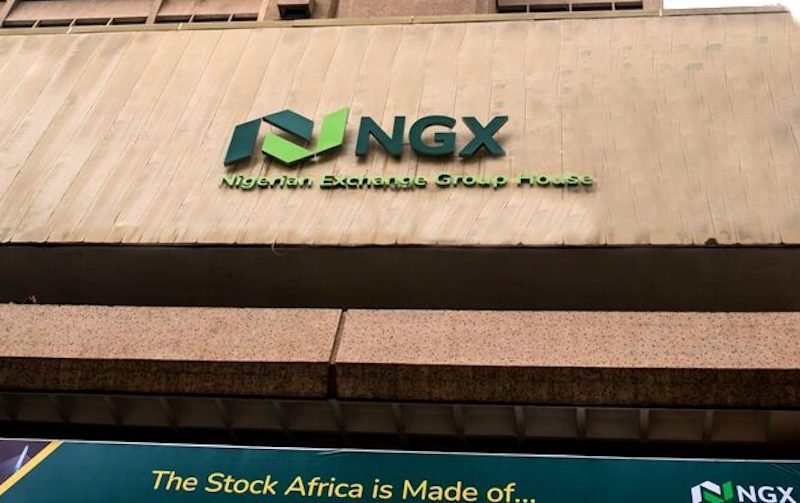
The Nigerian Exchange Limited (NGX) has officially listed 3,156,869,665 additional ordinary shares of United Bank for Africa Plc (UBA) on its Daily Official List, strengthening the bank’s capital base and enhancing liquidity in the Nigerian capital market. The listing follows the successful conclusion of UBA’s recent rights issue, which offered shareholders one new share for every 13 held at N50 per share. With this addition, UBA’s total outstanding shares on NGX have increased from 41,039,305,642 to 44,196,175,307 ordinary shares. The move significantly boosts the bank’s market capitalisation and is expected to improve trading liquidity for its stock. The NGX confirmed the listing in a letter dated 12 January 2026, signed by Godstime Iwenkehai, Head of the Issuer Regulation Department. Iwenkehai stated, “Following the submission of all post-approval documents, United Bank for Africa Plc’s Rights Issue of 3,156,869,665 ordinary shares of 50 kobo each at N50 per share was formally listed on the Daily Official List of Nigerian Exchange Limited on Monday, 12 January 2026.” UBA’s Group Managing Director and Chief Executive Officer, Oliver Alawuba, welcomed the confirmation, describing it as a strong indicator of investor confidence. “The formal listing of our rights issue shares reflects market trust in UBA’s financial strength, governance, and growth strategy. The additional capital will further support our Pan-African and global expansion and enhance our ability to deliver sustainable value to all stakeholders,” he said. The rights issue raised N158 billion for UBA, bringing the bank’s total capital base to N513 billion when combined with the N239 billion raised in November 2024. This ensures that UBA’s qualifying capital comfortably exceeds the N500 billion minimum required by the Central Bank of Nigeria for banks with international authorisation, solidifying its position as one of Nigeria’s leading financial institutions. UBA is a major employer in the African financial sector, with over 25,000 employees serving more than 45 million customers globally. The bank operates in 20 African countries, as well as in the United Kingdom, United States, France, and the United Arab Emirates, offering a wide range of retail, commercial, and institutional banking services.

Tech & Tools Desk15 January 2026
crude-oil.jpeg

4min5050
The cost of Premium Motor Spirit (petrol) and other refined petroleum products, including diesel and household kerosene, is expected to rise as crude oil, the primary feedstock for refined fuel, crossed $66 per barrel on Wednesday. Brent crude, the global benchmark, traded above $66, while other oil grades also gained, raising concerns that domestic fuel prices could increase in the coming days. Industry experts cited geopolitical instability in Iran and Venezuela, alongside recent actions by the United States concerning both countries, as key factors driving crude prices. They warned that crude costs may continue to rise unless stability is restored in these major oil-producing nations. Some oil marketers project that prices could hit $80 per barrel amid ongoing uncertainties in the international market. Crude oil remains the main input for producing refined petroleum products, while foreign exchange rates continue to influence the cost of imported fuel. Billy Gillis-Harry, National President of the Petroleum Products Retail Outlets Owners Association of Nigeria (PETROAN), confirmed that fuel consumers should prepare for potential price increases. He said, “Crude oil is the primary feedstock for refined petroleum products, so as its price rises, the cost of these products inevitably goes up. With only one major refinery currently operating in Nigeria, it is uncertain whether domestic prices can be maintained. Imported petrol will rise, and the same applies to locally produced fuel. Geopolitical instability in Iran and Venezuela is impacting global supply, and even US interventions may not lower international prices. Consumers should brace for higher fuel costs in the near term.” Gillis-Harry also noted that crude prices could reach $80 per barrel before the end of the month, which would generate more foreign exchange for the government but increase domestic fuel prices. Global oil markets have seen significant developments pushing prices above the $60 per barrel level. Recent drone attacks on Russia’s Novorossiysk terminal, a key export hub handling roughly 2% of global oil supply, and disruptions at the Caspian Pipeline Consortium in Kazakhstan have intensified supply concerns. Brent crude rose from $63 per barrel on Monday to around $65.14 on Tuesday, while US West Texas Intermediate climbed from $59 to $60.75 per barrel. Domestically, data from the Major Energy Marketers Association of Nigeria (MEMAN) shows that the landing cost of imported petrol remains above the Dangote Petroleum Refinery ex-depot price of N699 per litre. MEMAN’s latest bulletin recorded the landing cost at N754.96 per litre, slightly lower than last week’s N758. Oil marketers warn that both imported and locally refined fuel prices will rise if crude oil continues to increase. They urged the government to expedite the revamp of Nigeria’s refineries in Port Harcourt, Kaduna, and Warri under the management of the Nigerian National Petroleum Company Limited. Gillis-Harry emphasized, “These refineries must operate efficiently, as their performance is critical to stabilizing the oil sector and impacting domestic fuel pricing positively.”

Tech & Tools Desk14 January 2026
multichoice-1.jpg

2min9870
MultiChoice Nigeria has named Kemi Omotosho as its new Chief Executive Officer, succeeding John Ugbe, the company announced on Monday. The appointment takes effect from January 2026, marking a leadership change at the pay-TV operator after nearly 15 years under Ugbe, who guided the business through major shifts in Nigeria’s media and entertainment industry. Ugbe retired following a tenure that saw MultiChoice Nigeria navigate rapid digital transformation, evolving consumer habits, and growing competition in the pay-TV and streaming sectors. Omotosho brings over 20 years of experience in media, telecommunications, and digital services across Nigeria and sub-Saharan Africa. She has held several senior positions within the MultiChoice Group, including Executive Head of Customer Value Management in Nigeria, Group Executive Head of Customer Value Management for the Rest of Africa, and most recently, Regional Director for Southern Africa, overseeing operations in seven countries. On her appointment, Omotosho highlighted Nigeria’s strategic importance to the Group and expressed enthusiasm for leading the business at a key moment. “It is a privilege to lead MultiChoice Nigeria at this critical time. Nigeria remains one of the Group’s most dynamic and strategic markets,” she said. “I look forward to working with our teams and partners to strengthen consumer relationships, promote local storytelling and the creative economy, and build a future-ready organisation that delivers sustainable value.” The company noted that the leadership transition followed a structured process to ensure continuity and stability in its Nigerian operations.

Tech & Tools Desk14 January 2026
TURKISSH.jpg

3min7330
Turkish Airlines has renewed its sports partnership with a new three-year agreement, reinforcing its long-standing commitment to professional golf and international sports sponsorship. Under the deal, the airline will continue as title sponsor of the Turkish Airlines Open, a key event on the DP World Tour held annually in Antalya. The airline first took on the title sponsorship in 2013, attracting global stars including Tiger Woods, Rory McIlroy, Justin Rose, Sergio Garcia, and Tyrrell Hatton. In addition to professional golf, Turkish Airlines organizes the Turkish Airlines World Golf Cup, the world’s largest amateur golf tournament, which this year took place across 122 destinations in 83 countries. The agreement ensures the tournament’s place on the international golf calendar for the next three seasons, providing continuity for players, fans, and the broader golfing community. Turkish Airlines emphasized that the partnership aligns with its broader strategy of using sport to connect globally. “This agreement goes beyond branding; it represents long-term investment in sport, tourism, and international engagement. Golf allows us to showcase Türkiye as a world-class destination while reaching millions of fans worldwide,” the airline stated. DP World Tour Director of Tournament Business, Mark Casey, welcomed the extension, highlighting that the National Golf Club will continue to offer players a challenging and rewarding experience. National Golf Club General Manager Hasan Ceylan described hosting the event as a landmark moment, noting that the course, designed by former Ryder Cup player David Feherty and Seniors Tour player David Jones, is fully equipped for a world-class championship. Turkish Airlines CEO Bilal Ekşi said the renewed sponsorship demonstrates the airline’s commitment to sports and Türkiye’s growing role as a global hub for tourism and international events. “We are proud to once again be the title sponsor of a prestigious international event like the Turkish Airlines Open. This tournament showcases the unifying power of sport while reflecting Türkiye’s vision as a global center for sports and tourism. Turkish Airlines remains dedicated to supporting athletes and contributing to our nation’s global brand,” Ekşi said.

Tech & Tools Desk13 January 2026
PROCESS-FOOD-1280x729.jpg

5min4600
Nutritionists have urged parents to limit their children’s consumption of processed foods, warning that excessive reliance on packaged snacks and sugary meals could expose children to nutrition-related health problems. Experts explained that many processed foods are high in sugar, salt, and unhealthy fats but lack the essential nutrients needed for growth and brain development. Regular intake, they said, could increase the risk of obesity, weakened immunity, and early onset of non-communicable diseases. The United Nations Children’s Fund (UNICEF) recently highlighted that children’s diets worldwide are rapidly shifting toward ultra-processed foods. In its December 2025 report on UPFs and children, the agency noted that traditional meals are increasingly being replaced by diets dominated by highly processed products. UNICEF warned that these foods are designed to maximize profit rather than nutrition, combining sugars, fats, salt, and additives that stimulate brain reward pathways and encourage overconsumption. “Children and adolescents with diets high in ultra-processed foods face a higher risk of overweight, obesity, and related cardiometabolic conditions,” UNICEF said, noting that the consequences of childhood obesity often persist into adulthood, contributing to chronic conditions such as type 2 diabetes, cardiovascular disease, and certain cancers. Prof. Wasiu Afolabi, former President of the Nutrition Society of Nigeria, emphasized that healthy eating habits formed in childhood are critical for long-term well-being. He advised parents to prioritize home-cooked meals made from fresh, local ingredients over processed options. Describing processed foods as industrially manufactured products, Afolabi noted that overfeeding children with such items can negatively affect their health. He acknowledged that children naturally enjoy these foods but stressed moderation. “Children have a strong taste for these foods, but parents must limit their consumption,” he said. “Examples include breakfast cereals, biscuits, pastries, snacks, and pasta. Frequent consumption can establish habits that increase the risk of obesity and related diseases later in life.” Afolabi recommended replacing processed foods with nutrient-rich alternatives such as meat, dairy, fruits, and vegetables. “It’s not about eliminating processed foods entirely but making healthier choices to build strong food habits. Excessive intake of sugary drinks, snacks, and processed meals can increase the risk of obesity, diabetes, cancer, and cardiovascular disease in adulthood,” he said. He also encouraged parents to read nutritional labels and choose foods lower in sugar, salt, and unhealthy fats. “Pay attention to protein, fibre, vitamins, and cholesterol content. Prioritize fruits, vegetables, meat, and dairy products, which are rich in essential nutrients for children,” Afolabi added. Prof. Beatrice Ogunba, a Public Health Nutrition expert at Obafemi Awolowo University, supported this advice, emphasizing the importance of homemade meals over processed foods. “Homemade foods retain nutrients that are often lost during processing. To maintain health, we need to reduce sugar, salt, and fatty foods,” she said. Similarly, Dr. Temilade Babatunde warned that diets high in processed foods, often called pro-inflammatory diets, can increase the risk of heart disease. She explained that pro-inflammatory foods—such as processed meats, refined sugars, fried foods, and items high in saturated and trans fats—can trigger chronic inflammation in the body, potentially damaging the heart and blood vessels and increasing the risk of heart failure. “A diet rich in processed foods, added sugars, and unhealthy fats promotes inflammation, which can lead to heart disease and heart failure. Moderation and healthier alternatives are essential to protect children’s long-term health,” she said.

Tech & Tools Desk13 January 2026
5-STATEE.jpg

4min5350
Fifteen states plan to spend over N10tn on infrastructure in 2026, marking a major fiscal effort to improve roads, schools, hospitals, and public utilities, according to an analysis of their budgets. The states, including Lagos, Akwa Ibom, Enugu, Anambra, Kano, Imo, Yobe, Ebonyi, Oyo, Kaduna, Ekiti, Osun, Ondo, Edo, and Plateau, have collectively earmarked N10.7tn for capital expenditure this year. Governors presented their budgets to state legislatures between November 2025 and January 2026, with approvals already signed. The focus on capital spending aims to strengthen human capital, enhance public services, and stimulate regional economies, though results will depend on how efficiently funds are deployed. Nigeria continues to face significant infrastructure deficits, estimated at about $100bn annually and projected to reach $878bn by 2040, according to credit rating agency Augusto & Co. Ebonyi State leads in prioritising infrastructure, allocating N749.49bn, or 84.7 per cent of its N884.87bn total budget. Imo State follows with N1.2tn, 83.4 per cent of its N1.44tn budget, for capital projects. Enugu State set aside N1.29tn, or 80 per cent of its N1.62tn budget, for roads, schools, and hospitals. Anambra plans N595.3bn (77.7 per cent of N766bn), and Akwa Ibom allocated N1.16tn (73.7 per cent of N1.584tn) to similar projects. Most states remain heavily dependent on federally shared revenue, as internally generated revenue is limited. Funding for capital projects will largely rely on a mix of loans, bond issuances, grants, capital receipts, and public–private partnerships. Analysts note that leveraging these alternative sources is essential to ensure infrastructure spending results in tangible improvements. Northern state Yobe will devote N291.9bn (56.6 per cent of N515.53bn), while Oyo State in the South-West plans N505bn (56.6 per cent of N892bn) for capital projects. Osun State set aside N388.38bn (55 per cent of N705bn), and Ekiti State will invest N193.7bn (46.6 per cent of N415.57bn). Lagos State, despite having the largest total budget of N4.237tn, will allocate N1.23tn (29.2 per cent) for capital projects, reflecting a balanced approach between recurrent spending and development. Kaduna State earmarked N698.9bn (70.9 per cent of N985.9bn), with education taking a quarter of the allocation. Edo State plans N637bn (67.8 per cent of N939.85bn), Kano N934.6bn (63.3 per cent of N1.477tn), Plateau N501.09bn (61.3 per cent of N817.51bn), and Ondo N303.58bn (57.9 per cent of N524.41bn) for infrastructure. Economists emphasise the need for states to focus on areas of comparative advantage such as agriculture, manufacturing, tourism, logistics, and services. Dr Ayodeji Ebo, Managing Director of Optimus by Afrinvest, noted that attracting investment requires reliable infrastructure, predictable regulation, accessible land, and stable tax policies. He added that stronger public-private partnerships and regional collaboration can unlock capital and efficiency, reducing dependence on borrowing. “Long-term fiscal sustainability will depend not on higher transfers or more debt, but on productive local economies, broader tax bases, disciplined spending, and strategic collaboration,” Dr Ebo said.

Tech & Tools Desk13 January 2026
bank.jpg

7min5540
Three bank mergers are expected early this year as financial institutions race to meet the Central Bank of Nigeria’s revised minimum capital requirements ahead of the 31 March 2026 recapitalisation deadline. This outlook was presented by rating firm DataPro in its 2026 Banking Sector Prospects in Nigeria, which also outlined key risks facing the industry. By the end of 2025, most tier-1 banks had already met the new capital threshold, with several others announcing compliance at the start of the new year. This has intensified regulatory and market pressure on smaller lenders to strengthen their balance sheets. Providing insight into the sector’s 2026 outlook, DataPro’s Enterprise Risk Management analyst, Idris Shittu, noted that while major banks are largely compliant, tier-2 institutions face mounting pressure. He explained that three major mergers are likely by early 2026 as banks scramble to meet the recapitalisation deadline. According to him, the regulatory push has triggered heightened merger and acquisition activity, but it also introduces significant risks. These include post-merger integration challenges such as aligning IT systems, blending organisational cultures, and managing the transfer of non-performing loans—issues that could strain newly merged entities, particularly smaller banks. He added that the tight deadline has prompted intense internal strategy sessions focused on deal execution and risk management. Shittu further stated that the banking sector will confront three major threats in the new year, requiring increased agility and operational resilience. These include tighter regulation, with a high Cash Reserve Ratio continuing to constrain liquidity; capital pressure from recapitalisation-driven consolidation, which raises execution and integration risks; and rapid technological disruption from fintech innovation, pushing traditional banks to accelerate digital transformation to remain competitive. He projected that banks would continue to prioritise fee-based income over conventional lending due to the 45 per cent Cash Reserve Ratio for commercial banks, which effectively locks up nearly half of deposit funds and limits liquidity. On fintech competition, Shittu observed that technology is reshaping Nigeria’s banking landscape, with players such as Moniepoint and Opay rapidly gaining market share, particularly among SMEs and retail customers. In response, he said 2026 could mark a shift as banks evolve beyond traditional services into lifestyle-focused “super-apps.” These platforms aim to integrate services such as travel bookings, food delivery, and other everyday needs into banking applications to boost customer engagement and retention. However, he warned that legacy systems and slow IT procurement processes could hinder traditional banks, potentially accelerating the migration of younger customers to more agile fintech platforms. To stay competitive, banks may pursue fintech acquisitions or create independent digital subsidiaries capable of operating with greater speed and flexibility. Looking ahead, Shittu forecast a reduction in the number of banks by the end of 2026 as consolidation deepens. While this could produce a stronger and more resilient banking system capable of supporting larger transactions and Nigeria’s long-term economic ambitions, he cautioned that integration risks remain substantial. Drawing lessons from previous consolidation efforts, particularly in 2005, he highlighted the dangers of IT failures and cultural conflicts, especially when conservative tier-1 banks merge with more aggressive tier-2 institutions. Such combinations, he said, could result in decision-making bottlenecks and operational disruptions. He stressed that successful consolidation will depend on thorough due diligence, careful assessment of asset quality and cultural compatibility, and robust post-merger integration planning. Meanwhile, professional services firm PwC expressed a more optimistic view of the sector, identifying finance as a key driver of economic growth in 2026 in its Nigeria Economic Outlook – January 2026. PwC noted that regulatory initiatives such as recapitalisation requirements and evolving fintech frameworks are attracting institutional interest. It added that secondary listings by major banks on international exchanges reflect growing cross-border investor confidence. The firm projected that strong demand for innovative financial products, credit expansion, and improved risk management—alongside expected capital market growth to N262tn, driven by potential listings from Dangote Refinery and NNPC—would enhance liquidity and sustain investor interest across banking, fintech, and insurance. On technology, PwC observed that banks and fintechs accelerated the adoption of artificial intelligence and blockchain in 2025 to personalise services, automate risk management, and strengthen fraud detection. Major lenders deployed AI-powered chatbots and analytics to improve efficiency, while the insurance sector embraced insurtech through collaboration between regulators and fintech firms. PwC expects this momentum to continue in 2026, supported by strong investment inflows, a growing pool of tech talent, and expanding embedded finance solutions.