Author: James Obasi

James Obasi18 October 2025
aa-3.jpeg

2min4640
The Director General of the National Agency for Food and Drug Administration and Control (NAFDAC), Prof. Mojisola Adeyeye, has reaffirmed that mental health is a fundamental human right and stressed the need for robust regulation of psychotropic drugs to ensure safe, stigma-free access to care in Nigeria. Speaking at the 3rd Vanguard Mental Health Summit in Lagos, Prof. Adeyeye highlighted the critical link between mental health care and the strict oversight of controlled substances, warning that poor regulation could lead to abuse and erode public trust. “Mental health is a state of well-being that helps people manage life’s stress. Regulation goes beyond policy it’s about protecting lives,” she said. She noted that stigma remains a major barrier, preventing many from accessing effective medications for conditions like depression and anxiety. “People avoid treatment due to stigma, even when effective drugs exist,” she said. Prof. Adeyeye emphasized that strong, transparent regulation is not only essential for public safety but also for building confidence in Nigeria’s mental health system. She also called for cross-sector collaboration to address the dual challenges of drug abuse and mental health neglect. “We must all work together to end drug abuse and support mental health,” she added. Highlighting NAFDAC’s youth-focused efforts, she spoke about the “Catch Them Young” initiative, which targets schoolchildren nationwide to promote early education on drug misuse and mental health. “We train students to become ambassadors against drug abuse and stigma. We also partner with faith-based groups to foster a stigma-free environment,” she said. Prof. Adeyeye reaffirmed NAFDAC’s commitment to science-driven regulation, public awareness, and ensuring safe, equitable access to mental health care for all Nigerians.

James Obasi17 October 2025
11.jpg

3min6610
Britain’s King Charles III, the head of the Church of England, along with Queen Camilla, will undertake a historic state visit to the Vatican next week to meet Pope Leo XIV for the first time, Buckingham Palace announced on Friday. “The King and Queen will visit the Holy See from October 22nd to 23rd, 2025. This will be Their Majesties’ inaugural meeting with Pope Leo XIV since his election in May 2025,” the palace statement said. This visit follows approximately six months after the royal couple’s private meeting with Pope Francis, Leo’s predecessor, shortly before his passing. Pope Francis died on April 21 after serving 12 years as the spiritual leader of the world’s 1.4 billion Catholics. His successor, Pope Leo, 70, who has a background in missionary work in Peru and is the first U.S.-born pope, was elected by the cardinals on May 8. During their visit next Wednesday and Thursday, Charles and Camilla will participate in celebrations marking the special Jubilee Year, observed every 25 years, the palace noted. The itinerary includes a service in the Sistine Chapel highlighting both Leo and Charles’ shared dedication to environmental protection. Additionally, the King will tour a seminary that trains priests from Commonwealth nations, while the Queen will meet with Catholic sisters involved in girls’ education programs aimed at addressing issues such as sexual violence, human trafficking, and limited healthcare access. The palace described the visit as “a significant moment” in the relationship between the Catholic Church and the Church of England, acknowledging the ecumenical efforts made and reflecting the Jubilee Year’s theme of “Pilgrims of Hope.” King Charles, 76, leads the Church of England, the mother church of global Anglicanism, which was founded in the 16th century by Henry VIII following his split from the Catholic Church over an annulment dispute. Although the separation once caused centuries of tension, relations between the Catholic Church and the Anglican Church have become increasingly friendly in recent times. Charles last met Pope Francis in Rome this past April, sharing a mutual passion for environmental issues, despite having officially postponed the private audience due to the Pope’s declining health. The King, who is currently receiving treatment for an undisclosed cancer, has visited the Vatican five times as Prince of Wales and has met with three popes prior to this upcoming visit.

James Obasi16 October 2025
12.jpeg

3min1930
The Nigerian Police Force and the Nigerian Bar Association’s Section on Public Interest and Development Law (NBA-SPIDEL) have agreed to establish a joint committee to review the current regulations governing tinted vehicle permits. This was announced by NBA-SPIDEL Chairman, Prof. Paul Ananaba (SAN), during an interactive session in Ikeja on Thursday. The session was part of the build-up to the NBA-SPIDEL Annual Conference scheduled for December 1–5 in Akwa Ibom. Ananaba stated that the decision followed weeks of dialogue between the association and senior police officials, prompted by growing public concerns over the harassment of motorists with tinted windows. He revealed that NBA-SPIDEL stepped in after numerous reports of indiscriminate arrests and vehicle seizures related to the enforcement of the tinted glass directive. “Following constructive engagements, it was agreed that enforcement of the tinted permit regulation be suspended temporarily, pending the outcome of a joint review by a committee comprising representatives from both NBA-SPIDEL and the police,” Ananaba said. He emphasized that SPIDEL’s approach was not adversarial but aimed at fostering accountability and promoting justice in public policy. According to him, the committee will evaluate the legal and security aspects of the policy and propose revised guidelines that reflect national security priorities while safeguarding civil liberties. Ananaba also disclosed that the association had initiated legal action against the police, challenging alleged discriminatory enforcement practices. “We are not activists,” he added. “Our mandate is to protect the public interest and promote development.” Meanwhile, during the event, Mrs. Adaobi Egboka, Director of the Africa Programme at the Vance Centre (New York City Bar Association), presented a proposal to partner with NBA-SPIDEL in strengthening public interest law and institutionalising pro bono legal services across Africa. Egboka explained that the Vance Centre, a non-profit organisation, works globally to promote justice through cross-border legal collaboration, pro bono service, and institutional reform. She said the proposed partnership would support the NBA in developing a structured pro bono system, including a database of participating law firms and standards for measuring legal aid contributions. She further recommended the adoption of a “Pro Bono Declaration for Africa”, similar to the one in the Americas, to encourage law firms to commit a set number of annual hours to free legal services for disadvantaged populations. Egboka cited the successful launch of a Pro Bono Institute in Kenya created in collaboration with local law schools and firms as a potential model for Nigeria. “We encourage the NBA to support our mission of building a sustainable, data-driven pro bono culture across Africa,” she said.

James Obasi15 October 2025
aa.png

4min2550
The Federal Government has approved sweeping reforms to admission requirements across all tertiary institutions in Nigeria, introducing a more flexible and inclusive framework aimed at expanding access to higher education. This change follows the official endorsement of the National Guidelines for Entry Requirements into Tertiary Institutions in Nigeria, as announced in a statement by Boriowo Folasade, Director of Press and Public Relations at the Federal Ministry of Education. Spearheaded by the Minister of Education, Dr. Maruf Tunji Alausa, the new policy is designed to democratize access to tertiary education, aligning with President Bola Tinubu’s Renewed Hope Agenda. According to the ministry, the reform marks a significant step toward promoting educational equity and driving national development. Dr. Alausa explained that the overhaul was necessary to eliminate outdated and restrictive admission policies that had previously denied access to many qualified candidates. While over two million candidates sit for the Unified Tertiary Matriculation Examination (UTME) each year, only about 700,000 are admitted an issue the Minister attributed to rigid entry criteria, not a lack of ability. “The current imbalance must give way to fairness and opportunity. No capable student should be denied a future because of obsolete rules,” he said. Key Changes in the New Guidelines: Universities: Candidates must have a minimum of five credit passes, including English Language, in no more than two sittings. Mathematics is now optional for Arts students but remains compulsory for Science, Technology, and Social Science programmes. Polytechnics (ND Level): Minimum of four credits, with English required for non-science courses and Mathematics mandatory for science-related fields. Polytechnics (HND Level): Minimum of five credits, including English Language and Mathematics. Colleges of Education (NCE Level): At least four credits. English is compulsory for Arts and Social Science courses; Mathematics is required for Science, Vocational, and Technical programmes. Colleges of Education (B.Ed Level): Five credits, including English and Mathematics, based on the course of study. Innovation Enterprise Academies (IEAs): Will now follow the same ND requirements as Polytechnics. The previously awarded National Innovation Diploma (NID) has been replaced with the National Diploma (ND) to standardize qualifications across institutions. The National Board for Technical Education (NBTE) has been instructed to re-accredit all IEAs to comply with the new standards. Institutions failing to meet full accreditation will be de-accredited. Dr. Alausa projected that the reforms could open up space for an additional 250,000 to 300,000 students to gain admission each year. “Our youth are the heartbeat of this nation,” he stated. “This policy ensures that every Nigerian youth has a fair chance to acquire quality education and skills needed for personal and national development.” The Federal Government reiterated its commitment to inclusive education, youth empowerment, and human capital development in line with its Renewed Hope Agenda.

James Obasi14 October 2025
aa9-1280x746.jpg

3min3920
Nigeria has recorded another milestone in its gas sector as energy giant Shell announced a $2 billion investment in developing the HI Field, a shallow offshore Non-Associated Gas project located in OML 144. According to a statement issued in Abuja by the Special Adviser to the President on Information and Strategy, Bayo Onanuga, the project is expected to deliver about 350 million standard cubic feet of gas per day by 2028. It marks Nigeria’s second major gas investment within 18 months, reflecting renewed investor confidence in the nation’s energy sector under President Bola Tinubu’s administration. The statement noted that with this development, total upstream investment commitments through Final Investment Decisions (FIDs) have now exceeded $8 billion since 2023. President Tinubu welcomed the announcement, describing it as a validation of his administration’s energy reforms and Nigeria’s growing appeal to global investors. “This major investment decision by Shell — their second in one year — reaffirms our reform efforts and demonstrates that Nigeria is open for business,” Tinubu said. Discovered in 1985, the HI Field will supply almost one-third of the gas needed for Nigeria LNG Train 7, which aims to expand national LNG production capacity by 8 million metric tonnes per year, representing a 35 per cent increase. The project follows the Ubeta Non-Associated Gas and Bonga North Deepwater developments, making it the third major oil and gas FID in just 18 months. The Special Adviser to the President on Energy, Olu Arowolo Verheijen, attributed the successful deal to recent policy initiatives such as Presidential Directive 40, which introduced a competitive fiscal framework for onshore and shallow offshore gas projects. “With the Ubeta and HI FIDs, we’ve secured the gas supply needed to make NLNG Train 7 not only viable but transformative,” she noted, adding that the projects will boost LNG exports, expand domestic LPG availability, cut imports, and promote clean cooking for millions of households. Shell’s Upstream President, Peter Costello, said the investment reinforces the company’s long-term commitment to Nigeria’s energy future, focusing on Deepwater and Integrated Gas opportunities. The Presidency reiterated that the Tinubu administration remains dedicated to creating a business-friendly environment to attract more local and foreign investments and strengthen Nigeria’s position in the global gas market.

James Obasi14 October 2025
aa1.jpg

6min1670
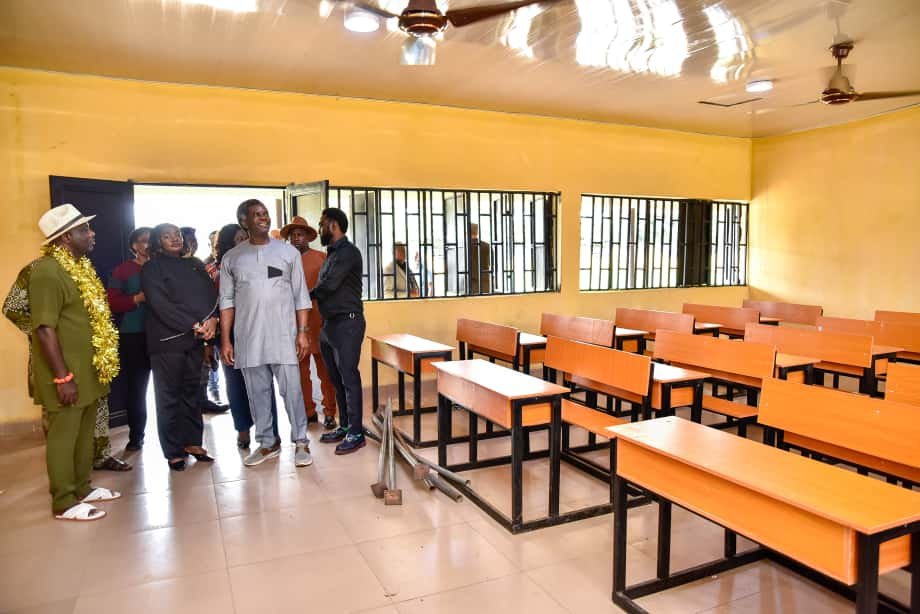
The Nigerian Upstream Petroleum Regulatory Commission (NUPRC) has announced that the Host Community Development Trust (HCDT) fund has reached ₦373 billion as of October 13, 2025, with 536 community development projects currently ongoing across oil-producing regions in Nigeria. In a statement signed by the Commission’s Head of Media and Strategic Communications, Eniola Akinkuotu, on Monday, the fund comprises ₦125 billion and $168.9 million, contributed by oil companies operating under the Petroleum Industry Act (PIA), 2021. Established under Section 235 of the PIA, the HCDT mandates oil companies—referred to as “settlors”—to allocate 3 per cent of their annual operating expenditure from the previous financial year to a trust fund dedicated to developing their host communities. The statement noted that the funds, deposited in banks with at least a BBB credit rating, are used to finance projects in infrastructure, education, healthcare, and environmental protection. Although the Commission does not directly manage the funds, it ensures transparency and compliance through a digital monitoring platform known as HostComply, which tracks project implementation and fund disbursement in real time. Highlighting recent achievements, the NUPRC facilitated the commissioning of over 10 completed projects and the launch of another 10 under the Obagi Host Community Development Trust in Rivers State, operated by TotalEnergies. The projects were inaugurated between September 24 and 25, 2025, in Ogbogu community, Ogba/Egbema/Ndoni Local Government Area. Completed projects include an 18-classroom two-storey school building, the remodelling of Ogbogu Cottage Hospital with a 20-bed capacity and diagnostic centre, and upgrades to the Ogbogu Ultra-Modern Civic Centre. Others comprise road pavements in Oboburu, a bottled and sachet water factory in Amah, and the installation of gas skid plants and school renovations in Erema and Akabuka communities. Speaking at the event, the Commission Chief Executive, Gbenga Komolafe, represented by the Executive Commissioner for Health, Safety, Environment, and Community, John Tonglagha, said the projects were designed to tackle pressing community needs such as education, healthcare, and employment. “These projects are intended to deliver lasting benefits to host communities while strengthening cooperation with the oil industry,” Komolafe said. He also commended President Bola Tinubu for creating a policy environment that continues to attract new upstream investments. Rivers State Deputy Governor, Prof. Ngozi Odu, representing Governor Siminalayi Fubara, praised the transparent management of HCDT funds, noting that the initiative has ensured better accountability and tangible results compared to the past. “In previous years, community funds were not effectively utilised. What we are witnessing now is transparency and real impact,” she said. The Chairman of the Senate Committee on Oil and Gas Host Communities, Senator Benson Agadaga, also lauded the initiative, stating that it has contributed to sustaining peace in the Niger Delta. “The relative peace we see in the region today is largely due to the visible achievements of the PIA. Host communities now experience real development and are more cooperative,” he said. TotalEnergies Upstream Nigeria Managing Director, Matthieu Bouyer, expressed pride in being among the first companies to implement the HCDT framework, revealing that over 500 projects across 60 communities have been identified under its plan. “This initiative has created more than 1,000 jobs and will benefit over 30,000 people,” Bouyer stated, describing the Obagi Trust as “a model of what can be achieved when trust and policy work together.” Chairman of the Obagi HCDT Board of Trustees, High Chief Dike Hopeson Dike, reaffirmed the community’s commitment to collaboration, adding that over 125 solar-powered boreholes have been provided, meeting about 70 per cent of local water needs. “These projects are helping our people move from poverty to prosperity,” Dike said. The Host Community Development Trust remains one of the key provisions of the Petroleum Industry Act, designed to foster inclusion, transparency, and sustainable peace between oil companies and their host communities.


James Obasi13 October 2025
a1j.jpg

3min2230
The Labour Party’s 2023 presidential candidate, Peter Obi, has criticised the demolition of citizens’ properties and businesses by government authorities without adequate notice. In a statement shared on his verified X (formerly Twitter) account on Monday, Obi described the ongoing demolitions of shops, buildings, and other structures in different parts of the country as “unjustifiable” and “inhumane,” particularly amid worsening economic conditions. He said, “I strongly condemn the deliberate destruction of people’s properties and livelihoods by any government without due notice. The recent demolitions and loss of citizens’ goods and investments remain deeply unacceptable.” The former governor of Anambra State faulted the government’s actions, saying they have pushed millions further into poverty rather than providing relief. “At a time when government should be creating opportunities to lift people out of poverty, it is instead driving them into greater hardship,” he wrote. “These demolitions destroy livelihoods, cripple small businesses, and threaten the economic stability of struggling Nigerians.” Obi noted that many of the affected structures contained goods worth billions of naira — representing years of hard work and investment — and insisted that there is no lawful justification for such actions without due process or prior notification. He further questioned whether the demolitions truly serve public interest or reflect “arbitrary and excessive use of power.” According to him, such actions discourage local and foreign investors by creating uncertainty about property rights and business security. “If we fail to oppose these injustices, we risk eroding the foundations of our economy and social stability,” Obi warned. “Every Nigerian has the right to build a decent life through honest work — a right that must be respected and protected.”

James Obasi13 October 2025
a1b-1280x653.jpg

2min2580
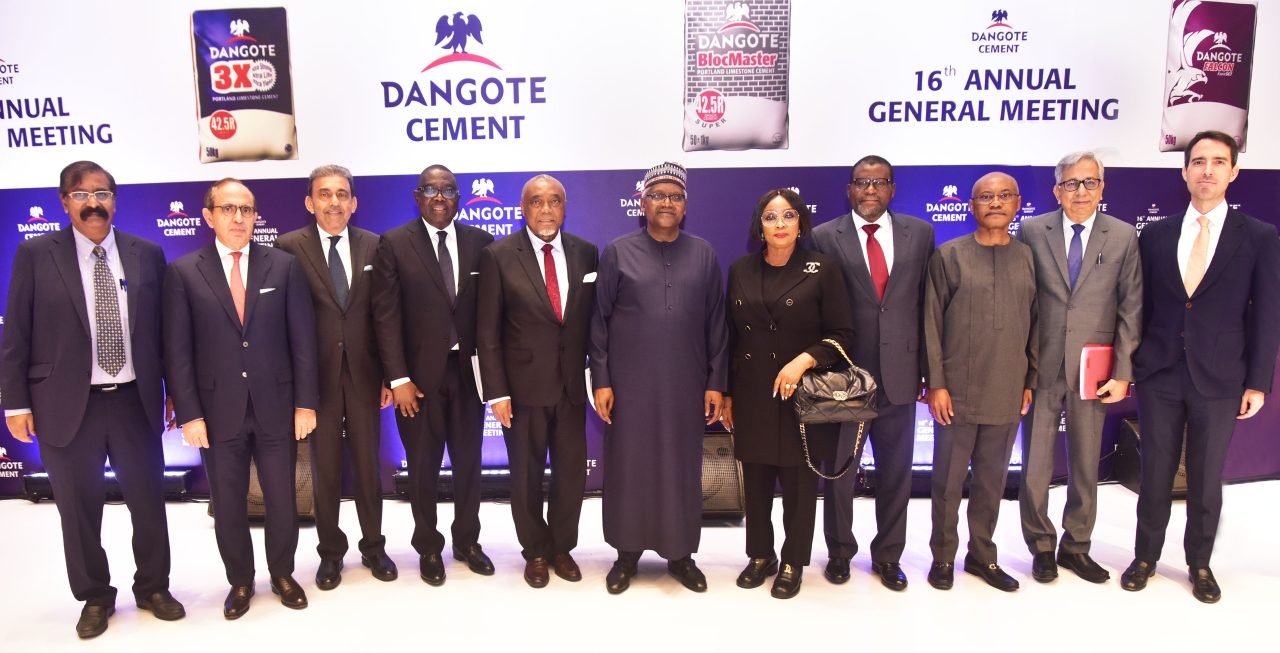
Dangote Cement has commenced operations at its new plant in Attingué, located about 30 kilometres from Abidjan, Ivory Coast. The Managing Director of Dangote Cement Ivory Coast, Serge Gbotta, announced the development during an event held at Novotel Abidjan-Marcory. Occupying 50 hectares of land, the facility boasts an annual production capacity of three million tonnes of cement, ranking among the group’s largest plants outside Nigeria. Valued at approximately 100 billion CFA francs, the project reflects Aliko Dangote’s vision of a self-reliant Africa capable of processing its own resources into high-quality finished products. With this launch, Ivory Coast becomes the 11th African country to host a Dangote Cement plant. The group now operates with a total production capacity of 55 million tonnes per year across the continent, aiming to support infrastructure growth and meet rising demand for building materials fuelled by rapid urbanisation and major construction initiatives. The Attingué plant is expected to create over 1,000 direct and indirect jobs, offering opportunities for young people and strengthening local small and medium-sized enterprises, including transporters, artisans, retailers, suppliers, and subcontractors. Speaking at the inauguration, Gbotta said, “Our ambition is clear: to provide Ivorians with world-class cement produced locally at competitive prices. The Attingué plant represents more than an industrial investment—it is a symbol of confidence in Ivory Coast’s future and a commitment to sustainable development in partnership with local communities.”

James Obasi12 October 2025
aa.webp

2min2030
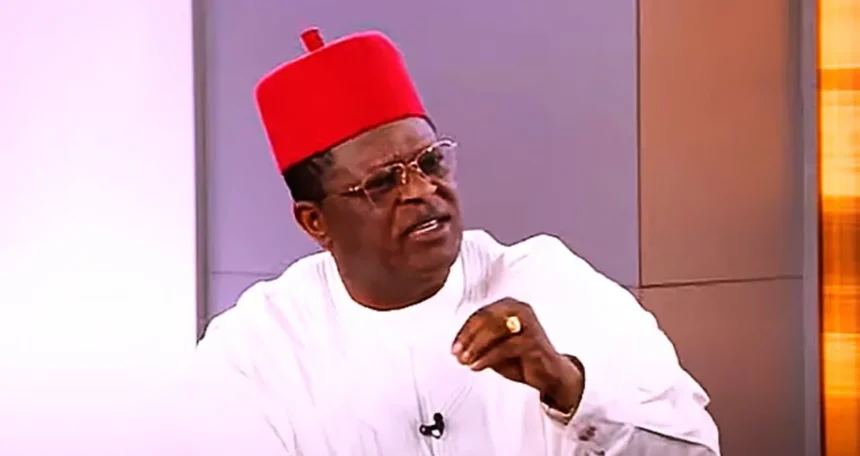
Minister of Works, David Umahi, has stated that the South-East region must remain patient in its pursuit of the Nigerian presidency, affirming that 2027 is not yet its turn. Speaking in an interview with the News Agency of Nigeria (NAN) on Sunday in Abuja, Umahi stressed the importance of political fairness and continuity, pointing to President Bola Tinubu’s ongoing administration as one that should be allowed to complete its two terms. “It’s not yet the turn of the South-East,” Umahi said. “In 2021, Southern governors agreed the presidency should return to the South, and Tinubu emerged. He must finish his eight years, after which the South-East can fairly contest.” He noted that both the South-East and North-East are yet to produce a president and should be considered after Tinubu’s tenure ends in 2031. Addressing the region’s historical marginalisation, Umahi acknowledged the difficulty in delivering votes for the APC in 2023. The party garnered only 5.85% of the vote in the zone. However, he praised President Tinubu’s current inclusive leadership style and highlighted major infrastructure projects in the South-East, including: Enugu-Onitsha Road (N350bn) Anambra Access Roads (N174bn) Port Harcourt-Aba and Aba-Umuahia roads Enugu-Abakaliki dualisation (N183bn) Trans-Sahara Road to Benue boundary (N456bn) Various bridges and flyovers in Ebonyi, Enugu, and Imo states Umahi argued that these developments reflect the president’s commitment to the region, regardless of past political support. “We have no reason not to be grateful,” he said. “This is not just about appointments it’s about what we’ve used them to achieve for our people.” He concluded by urging the South-East to remain realistic and strategic in its political aspirations, saying, “Yes, remember the past, but let’s focus on the present realities.”

James Obasi11 October 2025
11.webp

1min3420
President Donald Trump reignited U.S.-China trade tensions on Friday by announcing a sweeping 100% tariff on Chinese goods, effective November 1. The move comes in response to China’s export restrictions on rare earth minerals, which are vital for tech and defense industries. Trump also threatened to cancel his upcoming meeting with Chinese President Xi Jinping at the APEC summit, citing Beijing’s “hostile” behavior. The announcement sent U.S. markets tumbling, with the Nasdaq falling 3.6% and the S&P 500 dropping 2.7%. Trump accused China of trying to hold the world “captive” through control of rare earths and claimed the country was “lying in wait” despite recent diplomatic progress. Current U.S. tariffs on Chinese imports stand at 30%, while China imposes 10% tariffs in retaliation. The surprise escalation adds fresh uncertainty to U.S.-China relations, just weeks after Trump had emphasized the importance of face-to-face diplomacy with Xi.