Author: James Obasi

James Obasi24 October 2025
z2.webp

4min10800
Zenith General Insurance Limited has donated food items and essential supplies to two Lagos-based orphanages — Heritage Homes and Children Anchor Orphanage Home — as part of its ongoing corporate social responsibility initiatives. According to the company, the gesture underscores its dedication to supporting vulnerable children and improving the well-being of communities across Nigeria. During the visits, senior officials from Zenith General Insurance highlighted the organisation’s commitment to empathy, care, and social impact. Edith Agu, Senior Manager overseeing Head Office Marketing and the South-South branches, explained that the initiative was designed to show the children they are loved and valued. “We want them to know that Zenith Insurance truly cares and prioritises their well-being,” she said. Agu also encouraged companies to maintain their community support efforts despite economic challenges, advising that organisations should “plan and make budgetary provisions for societal improvement through various corporate social responsibility programmes.” Speaking during the visit, the supervisor of Children Anchor Orphanage Home, Olajide Bankole, expressed appreciation for the support, noting that running an orphanage housing over 35 children comes with daily challenges. “We are truly grateful. Many homes exist, yet Zenith chose us, and we deeply appreciate that,” he said. Heritage Home representatives also shared that the orphanage was established to provide a safe haven for abandoned and vulnerable children, helping connect them with prospective caregivers. Team members from Zenith General Insurance shared personal words of encouragement with the children. Deputy Head of IT, Abimbola Sarumi, stated that the visit was meant “to put an extra smile on the faces of our children — our future.” Head of Internal Control and Audit, Muyiwa Aderibigbe, added that the outreach reflects the company’s value of empathy. “This activity speaks to one of our core principles. We want you to know that our business is about restoring hope — joy is coming,” he told the children and caregivers. He also called on other organisations to emulate such acts of kindness, saying, “Even in challenging times, we must remember that business goes beyond profit — it’s about touching lives.” The visits ended on a heartwarming note, with both orphanages expressing gratitude and hope for continued partnership with Zenith General Insurance, a company committed to making a meaningful difference in the lives of the less privileged.
James Obasi23 October 2025
13-6.jpeg

3min5570
President Bola Tinubu will on Thursday afternoon swear in Prof. Joash Amupitan (SAN) as the new Chairman of the Independent National Electoral Commission (INEC). The ceremony is scheduled for 12:00 noon at the Council Chamber of the Presidential Villa, Abuja, according to officials familiar with the President’s itinerary. Key government officials, members of the National Assembly, legal experts, civil society representatives, and senior INEC officers are expected to attend the event. Following his inauguration, Prof. Amupitan is set to hold his first official meeting with INEC directors at 1:30 p.m. at the commission’s headquarters, as stated in a notice issued by INEC’s Deputy Director of Publicity, Wilfred Ifogah. Members of the INEC Press Corps have been invited to cover the opening session. President Tinubu described Amupitan as a candidate chosen for his integrity, impartiality, and distinguished record of service. He also noted that Amupitan is the first individual from Kogi State, in the North-Central region, to hold the position. Amupitan, a Senior Advocate of Nigeria and Professor of Law at the University of Jos, was confirmed by the Senate on October 16, 2025, after receiving approval from the National Council of State. His appointment follows the exit of Prof. Mahmood Yakubu on October 7. Born on April 25, 1967, in Ayetoro Gbede, Kogi State, Amupitan’s academic career spans over three decades. He earned his LL.B, LL.M, and Ph.D. degrees from the University of Jos, where he joined the Faculty of Law in 1989 and became a full professor in 2008. Throughout his career, he has held several leadership roles, including Head of Department, Dean of Law, Deputy Vice-Chancellor (Administration), and Pro-Chancellor of Joseph Ayo Babalola University, Osun State. Conferred with the rank of Senior Advocate of Nigeria in 2014, Amupitan is widely recognized for his expertise in corporate governance, privatisation law, and the law of evidence. He has authored several legal texts, including Corporate Governance: Models and Principles (2008), Documentary Evidence in Nigeria (2008), and Evidence Law: Theory and Practice in Nigeria (2013). He serves on the boards of multiple institutions, including Integrated Dairies Limited and the Nigerian Institute of Advanced Legal Studies Governing Council. Amupitan is married and blessed with four children.

James Obasi23 October 2025
1.jpg

5min3030
U.S. President Donald Trump is set to begin a major tour of Asia this week, with global attention focused on a possible meeting with Chinese President Xi Jinping — a development that could have significant economic and diplomatic implications. Speaking on Wednesday, Trump announced he would embark on what he called a “big trip” to Malaysia, Japan, and South Korea — his first visit to the region since returning to the White House amid renewed trade tensions and geopolitical challenges. Details of the tour remain limited, with the White House offering little information. Trump has cautioned that his anticipated meeting with Xi in South Korea might not occur due to ongoing friction between Washington and Beijing. Nonetheless, he has expressed optimism about reaching a “good” trade deal to end the long-standing dispute between the two economic giants. Host nations are expected to extend warm receptions as they seek favorable trade and security agreements with the unpredictable 79-year-old leader. Stops in Malaysia and JapanTrump’s first destination will be Malaysia, where he is expected to attend the ASEAN Summit from October 26–28 — an event he had skipped several times during his first term. There, he plans to sign a trade agreement with Malaysia and witness a peace accord between Thailand and Cambodia, signaling continued interest in global diplomacy. “President Trump is eager to see the positive outcome of peace efforts between Thailand and Cambodia,” said Malaysian Prime Minister Anwar Ibrahim on Wednesday. Trump may also meet with Brazilian President Luiz Inácio Lula da Silva on the sidelines of the summit in an effort to mend strained relations. In Japan, Trump is expected to hold talks with newly appointed Prime Minister Sanae Takaichi, the country’s first female leader. While Japan has largely avoided the harsh tariffs imposed by Trump’s administration, the U.S. president is expected to urge Tokyo to cut energy ties with Russia and boost defense spending in line with Western allies. Possible Meeting with Xi in South KoreaThe most anticipated leg of the trip will be in South Korea, where Trump is scheduled to attend the APEC Summit on October 29 — and possibly meet Xi Jinping. The encounter, if confirmed, would mark the first meeting between the two since Trump’s return to office and could serve as a step toward easing trade tensions. However, recent restrictions by Beijing on rare earth exports have reignited friction. Trump had previously hinted at canceling the meeting before later signaling a willingness to proceed, though he added the talks were still uncertain. He also expressed hopes that Xi could play a role in persuading Russian President Vladimir Putin to end the war in Ukraine. Analysts, however, have cautioned against expecting major breakthroughs.“The meeting will likely be another step in the ongoing dynamic between both nations rather than a turning point,” said Ryan Hass, a senior fellow at the Brookings Institution. South Korea, seeking closer trade ties, is reportedly considering granting Trump the Grand Order of Mugunghwa — its highest national honor — during his visit. North Korea’s recent missile tests are also expected to feature prominently in discussions. Trump has signaled interest in another meeting with North Korean leader Kim Jong Un, following their earlier summits, though there has been no official confirmation from Washington.

James Obasi22 October 2025
ae.webp

3min5430
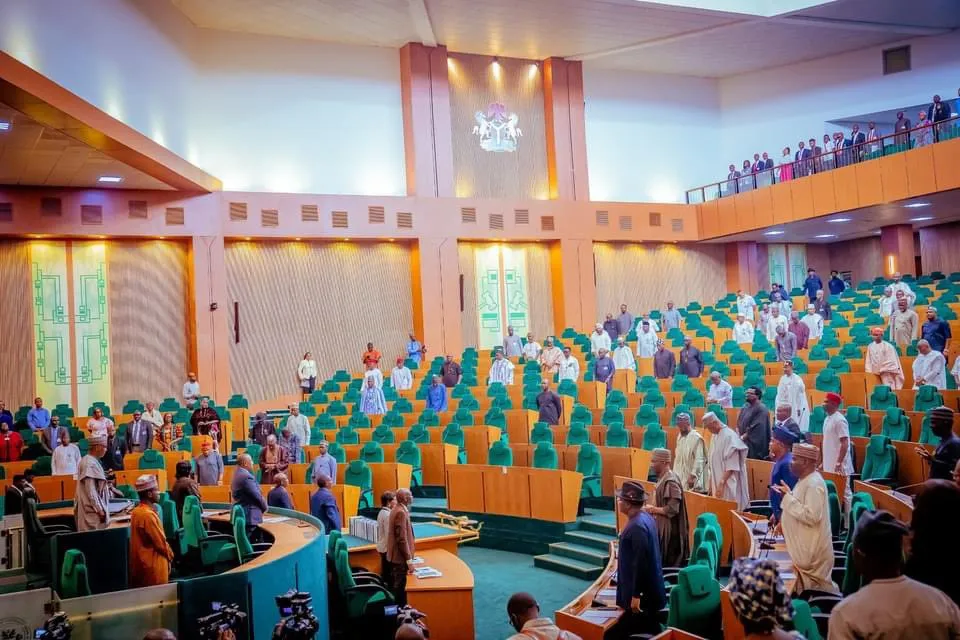
The House of Representatives has raised alarm over Nigeria’s persistent high HIV/AIDS burden despite receiving more than $4.6 billion in international health aid in recent years. During its plenary on Tuesday, the House resolved to investigate how grants and donations from the Global Fund and the United States Agency for International Development (USAID) were utilised between 2021 and 2025. Lawmakers expressed concern that, despite the substantial financial support intended to combat HIV/AIDS, tuberculosis, malaria, and other diseases, the country’s health indicators remain among the lowest globally. The decision followed the adoption of a motion sponsored by Amobi Ogah (LP, Abia) and presented by House Deputy Spokesman, Philip Agbese. Ogah lamented that Nigeria continues to rank among the countries with the highest rates of malaria, HIV/AIDS, and tuberculosis despite consistent donor assistance. He revealed that the Global Fund provided about $1.8 billion between 2021 and 2024 to strengthen Nigeria’s Resilient and Sustainable Systems for Health (RSSH) initiative, while USAID disbursed over $2.8 billion within the same period for community health programmes. “The PEPFAR programme alone has invested more than $6 billion in Nigeria’s HIV/AIDS response since its inception, yet the nation continues to record troubling health statistics,” Ogah said. He cited recent data indicating that 51,000 AIDS-related deaths were recorded in 2023, including 15,000 children under 14, placing Nigeria third globally in HIV-related mortality. The country, he added, accounts for 26.6% of global malaria cases, 31% of malaria deaths, and ranks sixth worldwide for tuberculosis. “These figures show that, despite billions of dollars in donor assistance, preventable diseases continue to claim lives in Nigeria. There’s an urgent need to ensure proper use of funds and achieve measurable results,” he stressed. Following deliberations, the House directed its Committee on HIV/AIDS, Tuberculosis, and Malaria Control to probe the management of Global Fund and USAID health grants disbursed between 2021 and 2025 and report back within four weeks. Civil society and non-governmental organisations have consistently called for increased transparency and accountability in the management of international health funding, warning that weak oversight continues to undermine Nigeria’s fight against preventable diseases.

James Obasi22 October 2025
ab.jpeg

4min2890
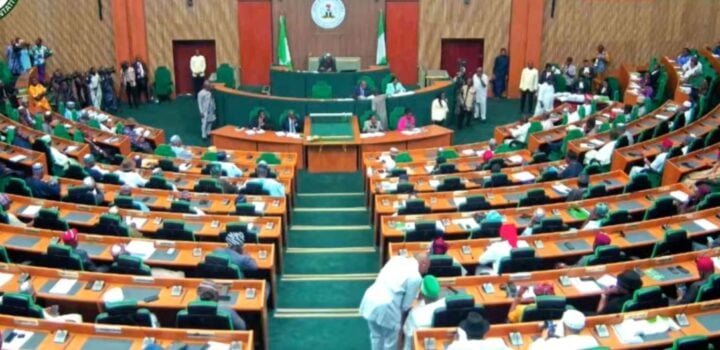
The House of Representatives has resolved to intervene in the ongoing dispute between the Petroleum and Natural Gas Senior Staff Association of Nigeria (PENGASSAN) and the Dangote Refinery, which recently disrupted the distribution of petroleum products across the country. The decision followed the consideration and adoption of a motion of urgent public importance co-sponsored by lawmakers Alhassan Doguwa (Kano) and Abdussamad Dasuki (Sokoto) during Tuesday’s plenary session. In the motion titled “We need to protect private investment from adversarial unionism,” the lawmakers highlighted the critical role of the Dangote Refinery, describing it as the largest privately owned petroleum refinery in Africa. The industrial action by PENGASSAN, which began on September 29, 2025, halted operations at the $20 billion refinery and caused a decline in Nigeria’s crude oil production, reportedly leading to a loss of about 200,000 barrels daily over a three-day period. The strike also intensified the nationwide fuel shortage, resulting in long queues at filling stations and hardship for millions of Nigerians. Presenting the motion, Doguwa, who represents the Doguwa/Tudun Wada Federal Constituency of Kano State, emphasized the importance of safeguarding the Dangote Refinery, citing its potential to enhance energy security, reduce import dependency, generate jobs, and conserve foreign exchange. He pointed out that the refinery operates within a Free Trade Zone under the Nigeria Export Processing Zones Authority (NEPZA), which, according to Section 18(5) of the NEPZA Act, provides that employment matters within such zones are governed by the Authority’s regulations rather than general labour laws. Doguwa warned that union activities that disregard these legal provisions could create a hostile environment for investors and threaten future private investments. He stated, “If strategic private investments continue to face unlawful disruptions through adversarial unionism, Nigeria risks losing key economic assets and eroding investor confidence crucial for national growth.” Contributing to the debate, Ahmad Jaha, who represents Chibok/Damboa/Gwoza Federal Constituency, cautioned the House to act with prudence, noting that an immediate probe might not be appropriate at this stage. Following deliberations, the House resolved to facilitate peace talks between PENGASSAN and the Dangote Refinery in the national interest. Additionally, it urged the Federal Ministries of Labour and Employment, Industry, Trade and Investment, and Justice to jointly create and implement a national framework to protect strategic private investments from unlawful union disruptions. The House also directed the Ministry of Justice and NEPZA to ensure full enforcement of Section 18(5) of the NEPZA Act across all Free Zone operations in the country.

James Obasi21 October 2025
bh.png

4min2800
The Nigeria Labour Congress (NLC) and its affiliate unions in the education sector have given the Federal Government a four-week ultimatum to resolve all outstanding issues affecting the sector, warning that failure to act will result in a nationwide industrial action. The NLC and the unions also announced a “no pay, no work” policy in response to the government’s “no work, no pay” stance following the ongoing two-week warning strike by the Academic Staff Union of Universities (ASUU). The unions involved include ASUU, the Senior Staff Association of Nigerian Universities (SSANU), Non-Academic Staff Union of Educational and Associated Institutions (NASU), National Association of Academic Technologists (NAAT), Academic Staff Union of Polytechnics (ASUP), Senior Staff Association of Nigerian Polytechnics (SSANIP), Academic Staff Union of Research Institutions (ASURI), and the College of Education Staff Union (COESU), among others. Speaking after a joint meeting in Abuja, NLC President Joe Ajaero said the unions had agreed to act collectively to end the government’s persistent disregard for agreements and neglect of the education sector. “The NLC, after extensive discussions with unions in the tertiary education sector, has resolved to work together to find lasting solutions to the challenges that have plagued the sector for years,” Ajaero stated. He explained that the unions would create a framework for implementing existing agreements, ensuring sustainable funding for education in line with UNESCO’s 25–26% budgetary recommendation, and reviewing wage structures and allowances for academic and non-academic staff. Ajaero also criticized government officials who attend negotiation meetings without the authority to make binding commitments. “No union will again attend meetings with representatives who lack the mandate to reach agreements. We won’t continue to negotiate only for the government to renege afterward,” he said. He announced that a coordinated team would soon begin a national campaign focused on education reform and accountability. “We have given the Federal Government four weeks to conclude all negotiations in this sector. Talks may have started with ASUU, but the problems go beyond one union. If, after four weeks, no progress is made, the NLC will convene to decide on a nationwide action involving all workers and unions,” he warned. Rejecting the government’s “no work, no pay” policy, Ajaero declared, “From now on, it will be no pay, no work. You can’t instigate an action and then benefit from it. Most strikes in this country are caused by the government’s failure to honor agreements. Those who create the problem should face the consequences.” With this firm stance, the NLC and its education affiliates appear ready for a major confrontation with the Federal Government if urgent steps are not taken to resolve the ongoing crisis in the nation’s education sector.

James Obasi21 October 2025
ba.jpg

6min3450
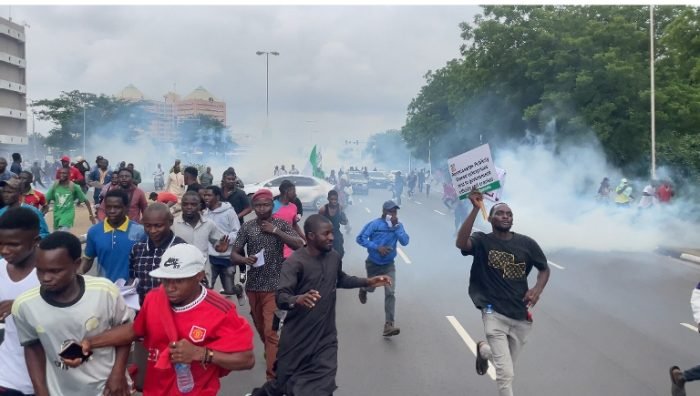
A coordinated wave of demonstrations demanding the release of the detained leader of the Indigenous People of Biafra (IPOB), Nnamdi Kanu, swept through the Federal Capital Territory and major cities across the South-East on Monday, disrupting commercial activities and grounding transportation networks. The protest, organized by activist and former presidential candidate Omoyele Sowore, leader of the #RevolutionNow movement, triggered a massive deployment of security personnel around critical government facilities, including the Three Arms Zone — home to the Presidential Villa, National Assembly, and Supreme Court. By early morning, heavily armed security operatives had cordoned off major access routes to the area, restricting movement and intensifying stop-and-search operations. Armoured vehicles and patrol trucks were stationed at key intersections, while federal civil servants faced temporary delays accessing ministries within the central business district. In Abuja, protesters who converged at the Unity Fountain were dispersed by combined teams of police, soldiers, and operatives of the Department of State Services (DSS) as they attempted to march towards the Presidential Villa. The dispersal operation led to significant traffic gridlock across the capital city, especially along the Nyanya–Mararaba axis and Airport Road. Security presence was also heightened around Eagle Square, the Federal Secretariat, and other strategic points to prevent a possible escalation. The protest was part of renewed calls for the Federal Government to comply with existing court rulings ordering Kanu’s release. The IPOB leader, arrested and extradited from Kenya in 2021, has remained in DSS custody despite multiple court decisions granting him bail. Supporters of Kanu have repeatedly expressed concern over his health, urging the government to allow him access to medical care. However, the Federal Government maintains that Kanu faces serious charges bordering on treasonable felony and terrorism. Speaking on the motive behind the demonstration, Sowore said the protest aimed to highlight the government’s “blatant disregard for the rule of law,” adding that peaceful assembly is a constitutional right. The Nigeria Police Force later defended its dispersal of protesters, stating that officers acted lawfully in enforcing a court order that restricted access to sensitive government zones, including the Presidential Villa and National Assembly. Force Public Relations Officer, Benjamin Hundeyin, clarified that only tear gas was used to control the crowd and that no live ammunition was fired. The Nigeria Security and Civil Defence Corps (NSCDC) also condemned the demonstration, describing it as an “anti-government protest disguised as a campaign for justice.” The agency confirmed that over 50 individuals had gathered at its national headquarters, prompting the deployment of additional security operatives nationwide to protect critical infrastructure. Across the South-East, the impact of the protest was widespread. Cities such as Enugu, Aba, Owerri, and Onitsha experienced total lockdowns, with banks, schools, and markets shut down. In Umuahia and Aba, supporters of the movement sang solidarity songs and called for Kanu’s release through peaceful dialogue. Several Igbo socio-cultural leaders appealed to the Federal Government to resolve the issue through negotiation and reconciliation. They stressed that releasing Kanu would promote peace, unity, and national healing. In Anambra State, residents observed a total sit-at-home, with major markets like Onitsha Main Market and Nkwo Nnewi closed. Although authorities had earlier discouraged the practice, traders and transport operators stayed indoors in solidarity. The Commissioner of Police, Ikioye Orutugu, assured residents of adequate security and reiterated the command’s commitment to maintaining peace and order. Similar scenes were recorded in Ebonyi, where economic activities were halted despite the absence of physical marches. Major streets and markets were deserted as security personnel maintained patrols to forestall possible unrest. In Ondo State, many Igbo traders joined the protest symbolically by shutting their shops. In Akure, commercial areas such as Arakale and Oyemekun roads were quiet, with traders saying the action was a show of solidarity for Kanu’s release. Security agencies across the affected states maintained heavy patrols throughout the day, ensuring that the demonstrations did not degenerate into violence.

James Obasi20 October 2025
aaa6.png

2min7980
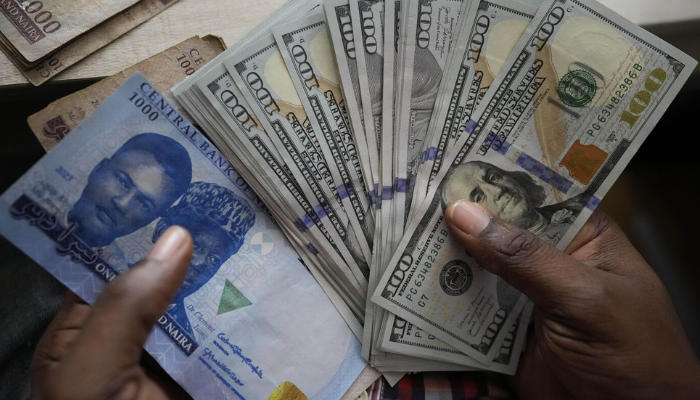
The naira showed a mixed performance on Monday, with official exchange rates holding steady while the parallel market remained weaker, reflecting persistent dollar scarcity and strong demand from importers and retail traders. Exchange Rates: Official (CBN/NFEM volume-weighted average): ₦1,467.43 per US$1 Interbank/Spot Market: Around ₦1,468–₦1,475 per US$1 Parallel/Black Market: Buy at ₦1,480 — Sell at ₦1,500 per US$1 Market Overview:At the official market, the Central Bank’s Daily Nigerian Foreign Exchange Market (NFEM) rate — the benchmark used for official transactions — hovered in the mid-₦1,400 range on Monday. Data from interbank sources showed the dollar trading between ₦1,467 and ₦1,475, depending on market timing. However, in the parallel market, street traders offered weaker rates, buying the dollar at about ₦1,480 and selling around ₦1,500, underscoring the continued pressure from limited foreign currency supply. Reasons Behind the Gap:Experts attribute the persistent gap between the official and street market rates to ongoing dollar shortages amid high demand from businesses and individuals. While recent monetary policy adjustments — including the Central Bank’s September rate cut and tighter FX management — have helped stabilize trading, structural supply constraints continue to drive up parallel market prices. Implications: For consumers: Prices of imported goods and services may remain high due to elevated parallel market rates. For businesses: Companies reliant on foreign exchange may face increased costs when sourcing dollars from the street market. For households receiving remittances: Recipients may get higher naira value through the parallel market, though official channels remain more secure and traceable for large transactions.

James Obasi20 October 2025
aaa1.jpg

2min3730
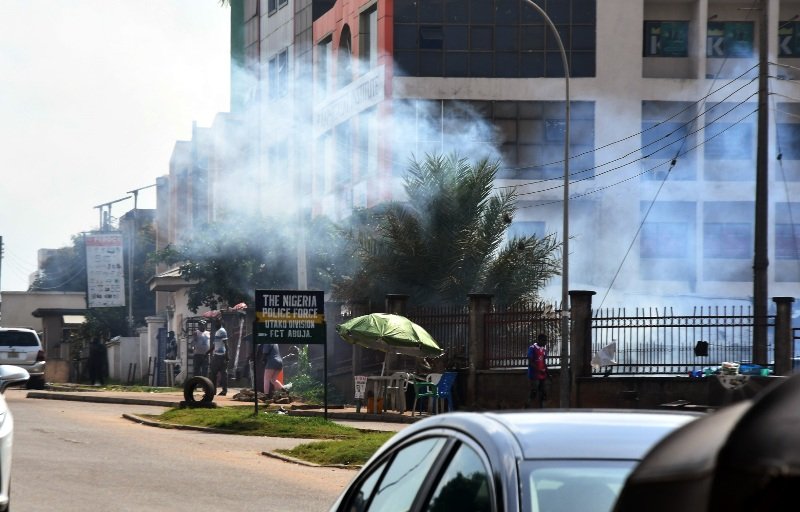
Police officers on Monday dispersed demonstrators calling for the release of the detained leader of the Indigenous People of Biafra (IPOB), Nnamdi Kanu, in the Utako area of Abuja. The protesters, who had earlier fled after police fired tear gas at them near the Maitama area, regrouped at Utako to resume their demonstration. Armed officers later arrived at the scene and dispersed the crowd once again. The group, comprising civil rights activists and members of pro-democracy organizations, participated in the #ReleaseNnamdiKanuNow campaign, urging the Federal Government to enforce the 2022 Court of Appeal judgment that discharged and acquitted Kanu. Earlier in the day, multiple rounds of tear gas were fired at protesters and passersby around the Transcorp Hilton and nearby streets in Maitama, causing panic and prompting traders, motorists, and commuters to flee. After regrouping at Utako, the protesters sang solidarity songs and displayed banners before being dispersed once more by security agents. Security across the Federal Capital Territory has since been intensified, with soldiers, police, and operatives of the Department of State Services deployed to key locations, including Eagle Square, the Federal Secretariat, and the Three Arms Zone. At the Berger roundabout, a large number of soldiers were also observed, with a gun truck positioned in the area.

James Obasi19 October 2025
aa-3.webp

3min5240
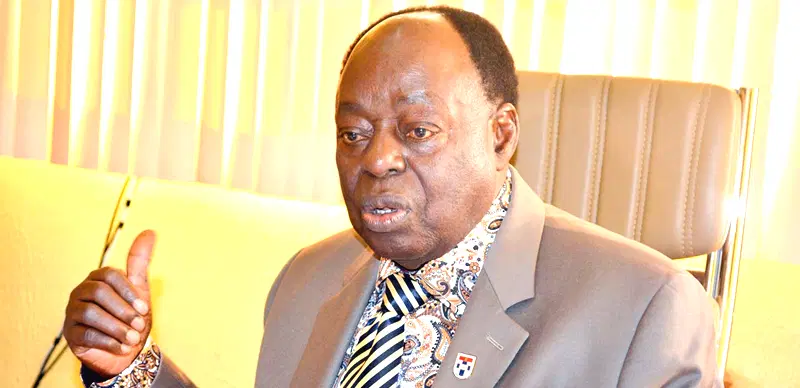
Renowned legal icon and founder of Afe Babalola University, Ado-Ekiti (ABUAD), Aare Afe Babalola, has raised alarm over Nigeria’s escalating debt profile, warning that it is tarnishing the country’s economic image and deterring foreign investment. Babalola made the remarks during the 2025 International Leadership Conference on Leadership, Governance, Sustainable Change, and Wealth Creation (2.0), held over the weekend in Ado-Ekiti. The event was jointly organised by ABUAD, Nigeria; Trinity Western University (TWU), Vancouver, Canada; and the African Centre for Leadership, Strategy, and Development (CentreLSD). Speaking on the conference theme, “Shaping Transformational Leaders for a Changing World: Tackling Insecurity, Governance and Development,” Babalola described it as timely, noting that Nigeria’s current financial situation is deeply concerning. He stated: “Records show that Nigeria is now a heavily indebted country, with total public debt reaching N152.4 trillion, or $99.7 billion. As a result, many foreign companies are reluctant to invest here. Banks have also raised concerns, stating that the Central Bank of Nigeria (CBN) is unable to honour government-issued promissory notes due to the Federal Government’s inability to meet its financial obligations.” Babalola warned that the country’s worsening debt crisis is eroding investor confidence and putting additional pressure on the domestic financial system. He called for urgent fiscal reforms and more responsible economic management to restore investor trust and promote sustainable development. He also referenced the Nigerian Constitution, stressing the government’s obligation to uphold democracy and ensure the welfare and security of its citizens: “Section 14 of the Constitution clearly states that sovereignty belongs to the people, and that the security and welfare of the people shall be the primary purpose of government.” In a keynote lecture titled “Transformational Leadership in an Insecure and Disruptive Era: Building Ethical, Resilient and Impactful Leaders for Africa,” Dr. Otive Igbuzor, founding Executive Director of CentreLSD, emphasised that transformational leadership is key to overcoming Nigeria’s challenges including corruption, poor governance, youth unemployment, gender inequality, and environmental degradation. According to Igbuzor, Africa needs a new wave of visionary leaders who can challenge outdated systems and drive innovation. He urged the Nigerian government to integrate leadership education across all levels of schooling, making it as fundamental as literacy. He added that ethical leadership, institutional integrity, inclusive governance, and continental collaboration must form the bedrock of Africa’s development strategy. In her remarks, ABUAD Vice-Chancellor, Professor Smaranda Olarinde, described the conference as timely and crucial. She highlighted the importance of global, regional, and public-private partnerships in addressing pressing issues such as insecurity, poverty, hunger, infrastructural deficits, and economic volatility.