
Author: Lifestyle & Wellness Desk

aa-9.webp

4min8770
The United States government has temporarily suspended the processing of legal immigration applications submitted by Nigerians and nationals of other countries newly added to the US “travel ban,” according to a report by CBC News. The development largely affects immigrants from selected African and Asian countries and represents a further tightening of legal immigration measures expanded by the Trump administration this month. Those impacted are mostly individuals already living in the United States who are seeking to adjust their immigration status, obtain permanent residency, or apply for US citizenship. Earlier in December, the Trump administration instructed the US Citizenship and Immigration Services (USCIS) to place a complete hold on all immigration petitions including applications for green cards and naturalisation filed by nationals of 19 countries previously listed under the travel ban announced in June. The directive followed the Thanksgiving week shooting of two National Guard soldiers in Washington, D.C., an incident allegedly involving an Afghan national. In addition, the administration suspended all decisions on asylum cases handled by USCIS, as well as the processing of immigration and visa applications submitted by Afghans. On Tuesday, President Trump further expanded the travel ban to include 20 additional countries, imposing full entry bans on five nations and partial restrictions on 15 others. A US official, who spoke to CBS News on Friday on condition of anonymity, said USCIS has now extended its suspension of immigration case processing to nationals of the newly added countries. Under the latest expansion, nationals of Burkina Faso, Mali, Niger, South Sudan and Syria are subject to full bans. Partial restrictions apply to immigrants from Angola, Antigua and Barbuda, Benin, Côte d’Ivoire, Dominica, Gabon, Gambia, Malawi, Mauritania, Nigeria, Senegal, Tanzania, Tonga, Zambia and Zimbabwe. Previously affected countries include Afghanistan, Burundi, Chad, Cuba, the Republic of the Congo, Equatorial Guinea, Eritrea, Haiti, Iran, Libya, Laos, Myanmar, Sierra Leone, Somalia, Sudan, Togo, Turkmenistan, Yemen and Venezuela. In the latest proclamation, Laos and Sierra Leone were upgraded from partial restrictions to full entry bans. USCIS Director Joseph Edlow appeared to confirm the expansion in a social media post late Thursday, stating that the agency was conducting a comprehensive review of individuals deemed to pose security threats, including those named in the President’s latest immigration proclamation. Altogether, the expanded travel ban now affects nationals from more than 60 per cent of African countries and about 20 per cent of countries worldwide. While the Trump administration maintains that the measures are necessary to protect national security and address vetting challenges, the decision has sparked strong reactions among Nigerians. Many critics have described the move as unfair and excessive, questioning the security and religious freedom concerns cited by US authorities. Some commentators warned of diplomatic strain and possible economic consequences, while former senator Shehu Sani described the policy as “a clear signal that migrants from developing countries are no longer welcome.”

aa-7.jpeg

3min6580
A student of St. Charles College, Onitsha, Ikechukwu Ifechukwu, has emerged winner of the 2025 Healthy Living Cooking Competition organised by the wife of the Anambra State Governor, Dr Nonye Soludo. The annual competition, held on Friday at the Light House Banquet Hall in Awka, featured students drawn from secondary schools across the state’s 21 local government areas. Contestants were required to prepare a complete recipe and assorted delicacies within one hour and 20 minutes, with judges assessing their performance based on hygiene, taste, presentation and service etiquette. At the grand finale, Ifechukwu and his partner, who represented the Onitsha zone, outperformed contestants from the Aguata and Nnewi zones to clinch first place, while the female teams from Aguata and Nnewi finished second and third respectively. The competition, which also included a healthy living quiz, was designed to promote good nutrition, personal hygiene and overall wellness among young people. Speaking at the event, Dr Soludo said the initiative was conceived to address the growing inability of many youths to prepare healthy meals. She noted that the Healthy Living Cooking Competition and Healthy Living Quiz, now in their third editions, have become central to her “Healthy Living with Nonye Soludo” school programme. According to her, the programme challenges stereotypes and misconceptions, adding that boys have now emerged winners of the cooking competition for two consecutive years. Dr Soludo stressed the importance of early exposure to healthy eating habits, noting that teaching children to prepare nutritious meals at a young age is key to safeguarding their health and preserving cultural food practices. She also urged parents to avoid assigning household chores based on gender, saying equal training would help children grow independently and confidently. The Anambra State Commissioner for Health, Dr Afam Obidike, said the competition was aimed at teaching students healthy eating, discipline, teamwork and creativity through practical cooking and nutrition education. He added that the initiative promotes indigenous foods, inspires interest in nutrition and hospitality-related careers, and encourages wellness as a way of life. Expressing his appreciation after receiving his prize, Ifechukwu thanked the First Lady for providing a platform for students to showcase their culinary skills. He also credited his mother for teaching him how to prepare healthy meals, describing the experience as both inspiring and rewarding. Meanwhile, students from the state’s six education zones also participated in the Healthy Living Quiz. At the end of the contest, Nnewi zone emerged first, followed by Otuocha and Aguata in second and third positions respectively. Dr Soludo presented cash prizes to the winners, as well as to coordinators and champions of Healthy Living Clubs across schools in the state.

Dangote-Refinery.jpg

3min11060
Africa’s wealthiest man and President of Dangote Group, Aliko Dangote, petroleum marketer Gabriel Ogbechie, and the Major Energies Marketers Association of Nigeria (MEMAN) were among the top winners at the inaugural Petroleum Prize, Recognition and Awards 2025, hosted by digital oil and gas intelligence platform Petroleumprice.ng. The awards, introduced to promote performance, accountability, and measurable impact within Nigeria’s downstream petroleum sector, represent the first industry recognition framework built largely on user participation alongside structured expert evaluation. In a Thursday statement, Petroleumprice.ng explained that the Petroleum Prize was designed to move away from conventional honours by adopting a hybrid evaluation model that blends real-time market experience with professional scrutiny. Dangote was named Downstream Sector Personality of the Year for his influence on market structure and supply dynamics, while Ogbechie, founder of Rainoil, received the Petroleum Depot Owner of the Year award. MEMAN was recognised as Downstream Petroleum Industry Advocate of the Year. Other recipients included MRS Oil, awarded Best Fuel Station of the Year, and Samson Victoria of BOVAS, named Best Female Petroleum Depot Owner of the Year. Petroleumprice.ng stated, “The awards focus on recognising operators and institutions whose activities have shaped pricing, supply reliability, advocacy, and market development within the downstream value chain during the review period.” The scoring system was split between public input and expert assessment: 60 per cent of the final score was based on votes from stakeholders across the downstream sector—including marketers, depot operators, transporters, and end-users—while 40 per cent was determined by a four-member independent panel, which assessed nominees based on measurable impact, performance consistency, and contribution to market stability. “The hybrid model ensures a balance between real-world operational experience and professional evaluation,” the platform noted. The initiative responds to calls for transparent, data-driven recognition in Nigeria’s downstream petroleum sector, particularly amid ongoing reforms. The awards aim to document leadership and accountability during this period of transition, rather than promote individual brands or commercial interests. Petroleumprice.ng confirmed that future editions would maintain open participation, published criteria, and a consistent scoring framework to ensure credibility and independence.

Idea-Basic-Measures-of-Electricity.webp

4min9830
All On has released its Impact Evaluation Report 2025, detailing how its interventions have transformed Nigeria’s energy sector and improved the lives of over one million people across the country. The report traces All On’s journey since entering the Nigerian energy market in 2016, a time when nearly half the population lacked electricity and the sector faced an estimated 92% annual funding gap. To address these challenges, All On adopted a risk-tolerant approach, combining catalytic investments, innovative financing solutions, and ecosystem-building strategies to accelerate progress toward universal energy access. Between 2018 and 2024, All On invested in more than 50 energy businesses and provided grants and technical support to over 80 others. These interventions helped energy providers connect more than 230,000 households, businesses, and facilities to electricity nationwide. The report noted that these efforts strengthened operational capacity, improved affordability and reliability for consumers, and delivered social and environmental benefits. About half of the supported households reported better air quality, enhanced safety, and reduced noise pollution, contributing to improved health outcomes and sustainability. All On’s holistic support model—combining tailored due diligence, sector expertise, and sustained ecosystem engagement—has positioned it as a trusted partner driving business growth and systemic change in Nigeria’s energy sector. The report highlighted innovative programs such as the Demand Aggregation for Renewable Technology (DART) initiative, which cut procurement costs for supported businesses by up to 50%, allowing developers to scale faster and pass savings to consumers. Since 2018, the sector has seen notable growth: the number of energy players has doubled, while investment nearly tripled from $90 million to over $250 million, reflecting increased investor confidence and a more diverse funding landscape. Investees also reported improved visibility and credibility, unlocking additional financing opportunities. Commenting on the report, All On CEO Caroline Eboumbou said, “This evaluation confirms that our approach is effective. By combining patient capital, technical support, and ecosystem engagement, we have delivered scalable, sustainable energy solutions for unserved and underserved communities. “While the progress is significant, much work remains. As we look toward 2030, we are committed to deepening our impact and creating more meaningful energy connections across Nigeria.” The report further outlined plans to scale proven models, strengthen local capacity, and expand outreach to underserved regions, particularly the Niger Delta. With a proven track record and a clear roadmap, All On aims to drive the next phase of Nigeria’s clean energy transition. The full Impact Evaluation Report 2025 is available for download on All On’s website.    

crude-oil.jpeg

5min9130
Nigerian crude oil producers are facing difficulties finding buyers in the global market, even as the Dangote Petroleum Refinery continues to report low domestic crude supply. According to a Reuters report, West African crude sellers are struggling to secure buyers for cargoes scheduled for December 2025 and January 2026 due to heavy competition from abundant and cheaper alternative supplies. As of Thursday, around 20 million barrels of Nigerian crude for December and January delivery remained unsold, according to two traders cited by Reuters. The Dangote refinery recently stated it has been importing crude from the United States, Ghana, and other African nations due to insufficient local supply. Analysts attribute the unsold Nigerian and Angolan crude to a broader global oil surplus, which has also depressed Brent crude prices below $60 per barrel—the lowest since May 2025. “The overhang of West African cargoes partly reflects the global crude supply surplus emerging in the first quarter,” said Victoria Grabenwoger of analytics firm Kpler. The Reuters report added that Angola’s December-January shipments also had five to six cargoes remaining unsold. The unusually high volume of unsold oil has slowed the start of the trading cycle for February cargoes, despite Angola’s loading schedule and term nominations already being released. Earlier estimates suggested that Nigeria and Angola together had as much as 40 million barrels unsold. Francisco Gutierrez, an analyst at OilX, said the market softness is partly seasonal and partly due to shifting purchasing patterns driven by freight costs and alternative supply options. He added that Angola’s January trade is about 20% behind its long-term average pace, as China, the world’s largest oil importer, has turned to cheaper or closer alternatives. Supplies from the Middle East are displacing medium- and heavy-density West African crudes in Asia, thanks to lower official selling prices and shorter shipping distances. West African light- to medium-density crudes are also facing competition from oil supplied by Argentina and Brazil, according to traders. Meanwhile, India’s imports of Russian crude remain strong despite tighter Western sanctions, further limiting demand for West African grades. Kpler’s Grabenwoger noted that Nigeria has had to market more oil because the Dangote refinery, Africa’s largest with a 650,000-barrel-per-day capacity, will undergo maintenance in January 2026. At a media briefing, Dangote Group President Alhaji Aliko Dangote highlighted the continued challenge of securing sufficient domestic crude under the Petroleum Industry Act. He explained that the refinery imports crude from Ghana, other African countries, and the United States to maintain operations. “On average, we purchase no less than 100 million barrels from the US, which has become a key supplier for our refinery,” Dangote said. The Dangote refinery has had previous disputes with the Nigerian Upstream Petroleum Regulatory Commission (NUPRC) over the domestic crude supply obligation. In June 2024, Dangote’s deputy, Devakumar Edwin, accused international oil companies of pricing local crude above market rates, forcing the refinery to import from abroad. The refinery also criticised the NUPRC for not enforcing domestic supply obligations. Following government intervention, the Nigerian National Petroleum Company Limited was ordered to sell crude to Dangote in naira. This “naira-for-crude” arrangement, launched in October 2024, helped increase local fuel supply, reduce queues, and bring down prices. Dangote subsequently reduced petrol prices from about N1,100 per litre to N739, but the refinery still relies on imported crude to maintain operations.  

NEPAD.png

2min2850
The NEPAD Business Group Nigeria has renewed its commitment to driving private sector–led economic transformation in Nigeria and across Africa, with particular emphasis on unlocking opportunities presented by the African Continental Free Trade Area (AfCFTA). This commitment was reiterated at the 2025 High-Level Business Forum in Lagos, where the group’s chairman, Bashorun J.K. Randle, called for swift and coordinated efforts to reposition Africa’s private sector to effectively tap into the $3.4 trillion AfCFTA market. Randle emphasised that Africa’s economic goals can only be achieved through concrete implementation rather than policy statements, stressing that the private sector must spearhead the continent’s next phase of development. He noted that sustained efforts are needed to move from ambition to action by building a prosperous Africa powered by competitive enterprises, innovation, and strong institutions. The forum, themed “Mobilising Africa’s Private Sector for AfCFTA towards Africa’s Economic Development Amid Global Uncertainty,” convened business leaders, policymakers, and development partners to explore strategies for accelerating private sector participation in regional trade and economic growth. Key discussions highlighted priority areas requiring immediate attention, including improved access to long-term financing for micro, small, and medium-sized enterprises; stronger institutions and harmonised standards to facilitate cross-border trade; and expanded public-private partnerships to address the continent’s infrastructure challenges.

essss.jpg

2min2100
Business analyst Adewale Adebawo has urged African entrepreneurs to transform challenges into opportunities, stressing that innovative ideas often emerge from difficult economic conditions. Speaking at the Business Verge Awards—an event that recognises innovation and excellence across Africa’s business and technology landscape—Adebawo noted that innovators across the continent continue to demonstrate how adversity can fuel creativity and progress. He said African entrepreneurs are improving livelihoods, reshaping industries, and strengthening communities despite operating in challenging environments. According to him, the continent’s greatest strength lies in its people—bold innovators who convert limitations into opportunities and build enterprises that create social value. In line with the event’s emphasis on innovation, Adebawo highlighted advancements in fintech, clean energy, and technology-driven sectors. He commended African fintech founders for expanding financial inclusion, enhancing cross-border payments, and driving digital banking, while also praising clean energy startups for delivering sustainable power solutions to communities. He further acknowledged the creative economy, applauding content creators, storytellers, and digital entrepreneurs for reshaping narratives, amplifying diverse voices, and inspiring positive change across Africa. Based in the United Kingdom with strong ties to Nigeria, Adebawo oversees business operations across both regions and works as a strategist supporting institutions in finance, fintech, construction, environmental services, and other sectors. His ability to simplify complex systems and mentor emerging leaders has earned him recognition as a trusted adviser across industries. In his closing remarks, Adebawo challenged African innovators to remain focused on solutions that promote impact, inclusion, and community development. He described innovation as more than technology, urging entrepreneurs to embrace courage, consistency, and the commitment to building lasting legacies. The Business Verge Awards continues to showcase Africa’s emerging innovators, creators, and leaders who are shaping the continent’s future.    

accci.jpg

6min4290
The President of the Abuja Chamber of Commerce and Industry (ACCI), Chief Emeka Obegolu (SAN), has expressed concern over Nigeria’s challenging business environment, warning that the economy is shrinking as companies continue to shut down nationwide. Speaking at the 2025 Media Parley on National Security, Ranching Reforms and Satellite Monitoring for an Improved Business Environment, Obegolu revealed that the chamber receives job applications daily—an indication, he said, of growing unemployment and declining economic activity. “Businesses are closing down. Even as a chamber of commerce, we receive employment applications on a daily basis. What this tells us is that the economy is contracting,” he said. While commending the Federal Capital Territory Minister for progress at the industrial park, Obegolu noted that the main commercial and industrial base remains largely neglected. He pointed out that the lack of basic infrastructure at the park is a major setback and should not be attributed to insecurity. “If you visit the industrial park, the FCT minister is doing commendable work, but the core of commerce and industry is being neglected. There are no facilities in the industrial park. That is not an insecurity issue. There is so much government can do to improve the situation for businesses in this country,” he said. Obegolu also stressed the need for strong political will, clear policies and stakeholder engagement to resolve open grazing challenges. He urged the government to adopt proven ranching models from other countries rather than attempting to reinvent existing solutions. He warned that insecurity and weak policy implementation have significantly contributed to business closures and rising unemployment, describing the situation as unsustainable. According to him, businesses must be recognised as key partners in national development. “Government needs to understand that businesses are partners in development. The tax law clearly recognises this partnership, but a partnership requires support. While I do not have exact figures, the losses are enormous and unsustainable. If this continues, something will eventually give,” he cautioned. On tax reforms, Obegolu noted that financial illiteracy remains prevalent within the business community, prompting the chamber to organise tax awareness programmes for its members. He said views on the new tax law vary, but many believe it has reduced multiple taxation and offers benefits to tax-compliant businesses. He urged business owners to fully understand their tax obligations, warning that the technical nature of taxation could lead to unintended violations. “Tax does not create hardship; it eliminates multiple taxation. But without a tax consultant, you could easily commit an offence unknowingly,” he said. Describing taxation as the “next oil” amid declining petroleum revenues, Obegolu explained that government effectively holds a 30 per cent stake in every business through taxation. He said this underscores the need for businesses, through chambers of commerce, to demand accountability in the use of tax revenues. “If government takes 30 per cent of your profit, it means it owns 30 per cent of every business in Nigeria. Whether listed or not, government is effectively a shareholder. That understanding should compel businesses to ask how tax revenues are being used,” he stated. Obegolu further expressed concern over rising production costs, noting that there are no immediate signs of stabilisation. He said the chamber is working with multinational, multilateral and national finance institutions to support members, including facilitating access to funding through the Bank of Industry. However, he observed that many business owners fail to prepare bankable feasibility studies, leading to rejected loan applications. He advised entrepreneurs to engage sector-specific consultants and utilise ACCI’s support services. He also warned against the politicisation of financial intervention programmes, calling for greater transparency and stronger public-sector support for private enterprises. He urged the government to be open about consultancy projects, particularly in the tax sector, which he described as central to national development. Raising concerns over data security and national interest, Obegolu said unclear terms and conditions of certain engagements could pose security risks. He called on the government to disclose details of such agreements and explain measures being taken to protect national data and security. “If a significant portion of national income is handed to a foreign government, it has security implications. We need clarity on the terms of such agreements and assurances on how Nigeria’s data and national interest will be protected,” he added.  

labour.jpeg

5min2800
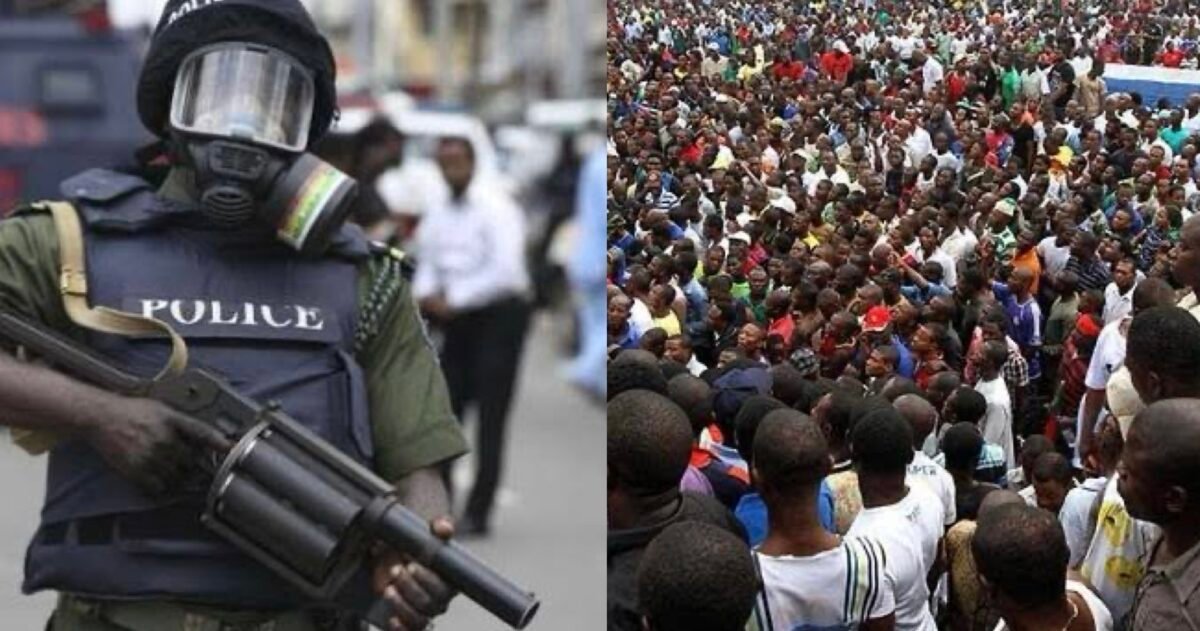
The Nigeria Labour Congress (NLC) yesterday staged nationwide protests over the worsening security situation in the country, urging the federal government to deploy “the full machinery of governance” to reclaim communities, protect workers, and restore public confidence. The union also called for the immediate arrest and prosecution of those funding insecurity. In Abuja, the protest ended abruptly after heavy security deployment prevented demonstrators from advancing beyond the Ministry of Finance, located just meters from the Labour House. The procession, which began between 11:15 a.m. and 11:39 a.m., saw the absence of NLC President Comrade Joe Ajaero and other top leaders, who were engaged in a closed-door meeting lasting several hours. Prior to the procession, Omoyele Sowore, leader of the Revolution Now Movement, visited the Labour House in solidarity with the NLC. Workers, union affiliates, civil society partners, and journalists arrived from early morning, but waited until after 11 a.m. for directives from union leadership. Ajaero clarified that the protest was not canceled despite the previous night’s meeting with President Bola Tinubu, stressing that the demonstration aimed to draw attention to both physical and financial insecurity. He explained that letters previously sent to the President, the Minister of Labour, the Chief of Staff, and the Secretary to the Federal Government had been acknowledged, but issues remained unresolved. During the protest, the NLC highlighted core concerns including security, strikes in tertiary institutions, and unpaid health workers. Ajaero noted that discussions with the President would continue, with a scheduled meeting with the NLC National Administrative Council (NAC) in January. Deputy General Secretary Comrade Ismail Bello emphasized that the protest served the broader interest of all Nigerians, not just workers, and called attention to the toll insecurity has taken on communities and livelihoods. NLC’s Head of International Department, Comrade Uche Ekwe, urged authorities to apprehend those funding insecurity. The NLC stated that insecurity has plagued Nigeria for nearly two decades, resulting in thousands of deaths, displacements, and destruction of schools and health facilities, particularly in the North-East. Labour attributed insecurity to socio-economic injustice, widening inequality, corruption, and underfunding of key sectors, citing losses of over ₦300 billion during the 30-day JOHESU strike alone. In Lagos, the NLC and civil society allies demanded urgent federal action to safeguard citizens, noting that insecurity persists despite Nigeria’s peacekeeping efforts abroad. Human rights activist Femi Falana, SAN, called for better-equipped security forces and prosecution of terrorism financiers arrested in 2021. He further stressed that addressing fiscal and social security issues, including youth employment and poverty alleviation, is essential to reducing insecurity. Protests also took place in Kebbi, Osun, Kano, Enugu, Delta, Abia, and Sokoto, among others. Demonstrators submitted letters to state Houses of Assembly demanding decisive action. In Kano, NLC Chairman Comrade Kabiru Inuwa called on the federal government to find lasting solutions to insecurity, while state representatives assured that security efforts were ongoing. In Sokoto, protesters marched to the state NLC Secretariat, highlighting attacks on villages, farms, and highways that have left residents displaced and unable to sustain livelihoods. Labour warned that persistent inaction would worsen the humanitarian and economic crisis nationwide. The nationwide demonstrations ended with resolutions demanding swift federal intervention to restore security across affected states and safeguard citizens’ lives and property.

UBA-United-Bank-for-Africa.jpg

3min1720
United Bank for Africa (UBA) Plc has launched a $100 million vehicle financing partnership with CIG Motors, Lagride, and the Lagos State Government, designed to transform urban mobility and promote financial inclusion in Nigeria. Branded “Drive to Own,” the initiative positions UBA as the principal financier, allowing beneficiaries to acquire a CIG/Lagride vehicle by paying just 10% of the total cost upfront, with the balance payable over 48 months. Unveiled at a ceremony in Alausa, Lagos, the scheme targets empowering 3,500 drivers in the state with opportunities for asset ownership, setting a new standard for structured credit in Africa’s mobility sector. UBA Group Managing Director/CEO, Oliver Alawuba, highlighted the bank’s commitment to inclusive economic growth, MSME development, and creating opportunities for younger Nigerians. He said, “This partnership with Lagride is transformational. It will drive inclusivity and economic growth for all. We are committed to supporting you, and this is only the beginning.” Alawuba added that UBA is focused on addressing immediate, real-world challenges, stating, “We are connecting this initiative to broader urban development. Lagos will change because of this program, and we plan to expand beyond the city.” Babatunde Ajayi, UBA Head of SME Banking, explained that the partnership redefines traditional banking models. “Not every business has a shop; some operate on wheels. Commercial drivers run businesses but have largely been outside formal finance. We designed credit to fit their realities, and that’s the UBA way,” he said. Lagride Chairman Diana Chen noted that the company has developed a data-driven, credit-ready mobility platform for drivers. “Transportation is key to Africa’s economic future. Lagride is now the most structured and data-driven mobility platform in Nigeria, enabling UBA to assess driver performance with accuracy and confidence, creating a new standard for bankable driver financing,” Chen said.