Author: Lifestyle & Wellness Desk

aa-17.jpeg

4min5960
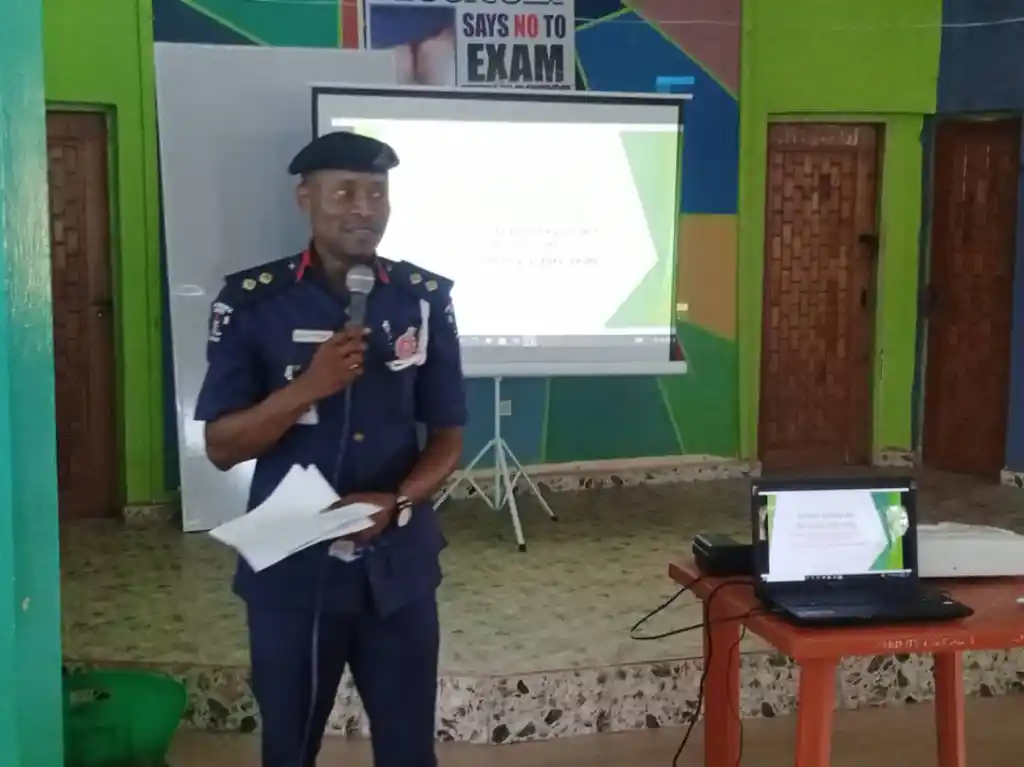
Kwara State and 20 other states, including the Federal Capital Territory, are set to repeat the polio component of the nationwide Integrated Measles-Rubella vaccination campaign, initially conducted in October 2025. The exercise, targeting children under five, had been temporarily paused but will resume under the supervision of the Kwara State Primary Health Care Development Agency in collaboration with UNICEF, the World Health Organization (WHO), and other development partners. Speaking at a media dialogue on the November SNIPDs, Maternal, Newborn and Child Health Week, and the Human Papillomavirus Intensification Campaign on Monday, WHO Coordinator for Kwara State, Dr. Eyitayo Emmanuel, said the decision to repeat the vaccination was based on “identified gaps” observed during the earlier round. Dr. Emmanuel, represented by Dr. Gwomson Dauda, explained that some schools refused participation, claiming they had not received notification letters prior to the exercise. “In some locations, schools declined vaccines because they alleged no official communication reached them,” he said. He added that certain military and federal schools also turned down vaccination teams despite receiving formal letters. WHO officials further cited challenges in accessing some residential estates and other logistical barriers, underscoring the need for another vaccination round. Dr. Dauda urged Nigerians to reject myths and misconceptions about polio vaccination, emphasizing that the disease remains a real threat. “Some elderly people you see with mobility challenges were affected by polio. One of our staff members who suffered polio as a child is now working with WHO. Polio is real,” he noted. He also praised the Kwara State Government for meeting its counterpart funding obligations, a commitment that helped immunize over one million children in the state during the previous campaign. “Kwara consistently stands out in implementation because the government fulfills its obligations,” he added. In her remarks, the Executive Secretary of the Kwara State Primary Health Care Development Agency, Prof. Nusirat Elelu, represented by Director Dr. Oguntoyinbo, highlighted the critical role of the media in addressing misinformation during vaccination exercises. She noted that while media platforms are essential for health education, misinformation, disinformation, and rumors—especially on social media—can undermine public health efforts. Prof. Elelu urged journalists and other stakeholders to intensify community awareness campaigns in rural areas to ensure accurate information reaches citizens ahead of the next phase of the vaccination exercise.

cort.jpeg

3min1950
The National Industrial Court in Abuja has directed United Bank for Africa (UBA) Plc to pay N1.07 billion to former Kogi State Deputy Governor, Simon Achuba, to satisfy a judgment debt owed by the Kogi State Government. Justice R. B. Haastrup delivered the ruling on November 27, confirming an earlier garnishee order nisi after finding that UBA failed to prove that the funds in the Kogi State Government account were World Bank monies or jointly owned by 19 northern states. Achuba, represented by human rights lawyer Femi Falana (SAN), had urged the court to make the earlier order absolute, noting UBA’s admission that it held sufficient funds in the Kogi State ACRESAL IDA Designated Account, a dollar account with the bank. UBA argued that the funds were sourced from the World Bank for environmental projects across northern states and were therefore unavailable to settle the debt. Justice Haastrup dismissed this claim, ruling that the bank provided no credible documentary evidence. The court emphasized that when a garnishee admits funds sufficient to satisfy a judgment but cannot prove they are legally restricted, “the law does not permit depriving a successful litigant of the fruits of his judgment.” The judgment directs UBA to pay N1,070,860,138 to Achuba, alongside N2 million as costs awarded by the Court of Appeal and N1 million for the garnishee proceedings. The total sum is to be transferred directly into Achuba’s Access Bank account. Other banks previously joined as garnishees, including Zenith Bank, First Bank, GTBank, Access Bank, and Polaris Bank, were discharged. The ruling marks a significant development in Achuba’s legal dispute with the Kogi State Government over his removal from office in 2019. Justice Haastrup also criticized the conduct of Kogi State government’s counsel, Paul Daudu (SAN), describing his application as malafide and intended to circumvent the Court of Appeal’s orders and constitutional provisions. The judge awarded N1 million personally against Daudu in favor of Achuba, citing professional misconduct.

otti-visit.jpg

2min1780
Abia State Governor Alex Otti on Sunday visited the detained leader of the Indigenous People of Biafra (IPOB), Nnamdi Kanu, at the Sokoto Correctional Centre, assuring him that efforts to secure his release are still in progress. The governor was accompanied by Kanu’s younger brother, Emmanuel Kanu; the Abia State Attorney General and Commissioner for Justice, Ikechukwu Uwanna (SAN); and his Special Adviser on Media and Publicity, Ferdinand Ekeoma. Officials from the Sokoto State Government were also in attendance. In a statement issued after the meeting, Ekeoma said Governor Otti encouraged Kanu to remain steadfast, explaining that negotiations and engagements initiated over two years ago had been strengthened. He added that the governor was confident the matter would soon be resolved through administrative channels, raising hopes for Kanu’s eventual freedom. Ekeoma further noted that Otti informed Kanu that the Sultan of Sokoto had shown openness to a peaceful outcome. In a light moment during the visit, Otti joked that Kanu was now the Sultan’s “subject” and could be turbaned, which reportedly drew laughter from the IPOB leader. Kanu, described as being in good spirits, thanked the governor for visiting. He commended the progress recorded in Abia State and encouraged Otti to continue prioritising effective governance for the benefit of the people. He also offered prayers for the governor and his entourage.

first-lady.webp

2min6900
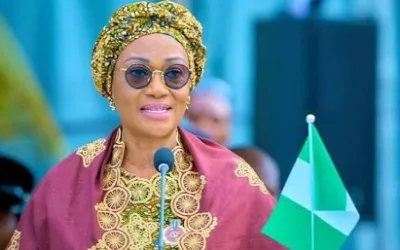
Nigeria’s First Lady, Senator Oluremi Tinubu, has urged citizens, stakeholders and communities to renew their commitment toward eliminating HIV/AIDS by the year 2030. Marking World AIDS Day 2025, themed “Overcoming Disruptions; Transforming the AIDS Response,” Mrs Tinubu, in a message shared on her X account, said the annual observance offers an opportunity to reinforce strategies and intensify action towards ending the disease. She acknowledged that Nigeria has recorded notable progress in HIV prevention, treatment and care over the years, but stressed that more effort is required to achieve an AIDS-free future. “Every Nigerian deserves access to life-saving services, free from stigma and discrimination,” she stated. She further encouraged young people to prioritise their health, know their HIV status through regular testing, and seek treatment immediately if positive. The First Lady also appealed to families and communities to support people affected by the virus and reject discrimination in all forms. World AIDS Day is commemorated every December 1 to raise global awareness, honour those lost to AIDS-related illnesses, and support individuals living with HIV.

aa-23.jpeg

3min4720
The Socio-Economic Rights and Accountability Project (SERAP) has taken legal action against Senate President Godswill Akpabio and House of Representatives Speaker Tajudeen Abbas for allegedly failing to account for ₦18.6 billion earmarked for the construction of the National Assembly Service Commission (NASC) office complex. The suit, marked FHC/ABJ/CS/2457/2025, was filed at the Federal High Court in Abuja last week. Akpabio and Abbas were listed as defendants on behalf of all members of the National Assembly, while the NASC was joined as a respondent. In a statement on Sunday signed by SERAP’s Deputy Director, Kolawole Oluwadare, the organisation said the case was prompted by “serious allegations” contained in the Auditor-General of the Federation’s 2022 report released on September 9, 2025. Citing details from the audit report, SERAP said the NASC paid over ₦11.6 billion to an “unknown construction company” on August 11, 2020, for the Commission’s complex, originally slated for completion within 24 months. The contract was later allegedly inflated by more than ₦6.9 billion, with additional payments made on November 29, 2023, purportedly for converting a roof garden into office space. SERAP added that the contracts were reportedly awarded without a Bill of Quantity, needs assessment, public advertisement, bidding process, contract agreement, bidders’ quotations or Federal Executive Council approval. There was also allegedly no Bureau of Public Procurement certificate of “No Objection.” According to the Auditor-General, the ₦18.6 billion allocated for the project “may have been diverted, misappropriated or stolen,” prompting calls for full accountability. In the lawsuit filed by SERAP’s lawyers Kolawole Oluwadare, Kehinde Oyewumi and Andrew Nwankwo the group is seeking an order compelling Akpabio, Abbas and the NASC to explain how the ₦18.6 billion was spent. SERAP is also asking the court to mandate the disclosure of the identity of the construction company that received the payments, alongside assessment reports, bid advertisements, quotations, contract documents, minutes of tender meetings and evidence of FEC approval. SERAP argued that the alleged diversion of funds violates public trust, the 1999 Constitution and international anti-corruption obligations. The organisation said Nigerians “have the right to know” what happened to the money, insisting that transparency and accountability are essential to strengthening democratic governance. The suit maintains that ensuring public access to these details would help recover any misused funds, reinforce accountability and promote trust in public institutions. It also invokes provisions of the Constitution that mandate the responsible management of national resources and Nigeria’s commitments under the UN Convention Against Corruption. A hearing date has yet to be scheduled.

aa-8.jpeg

2min2080
The Nigerian Education Loan Fund (NELFUND) has disbursed N140.9 billion in student loans since the launch of its application portal on May 24, 2024. A Daily Status Report released on Sunday via the fund’s official X handle shows that NELFUND has so far received 1,193,228 applications, with 788,947 students benefiting from the scheme. As of November 12, 2025, the report recorded 35,773 new successful applications within the week and 3,367 on that day alone, marking a 0.3% increase from the previous day. According to the report, NELFUND has paid a total of N140,884,471,740 to 262 institutions—covering N88,947,000 in institutional fees and N53,776,000,000 in upkeep allowances. The fund recently announced plans to expand its loan scheme to include vocational and skills acquisition programmes. Managing Director Akintunde Sawyerr explained in an interview with the News Agency of Nigeria that the initiative aligns with the Federal Government’s broader agenda for education and skills development. Sawyerr said the expansion reflects President Bola Tinubu’s commitment to inclusive human capital development across both academic and technical fields. He noted that Nigeria’s next development phase requires strengthening vocational training alongside traditional university education. “At NELFUND, we have a mandate to also support vocational skills,” he said. “We have not started yet, but the administration has ensured full coverage around the skills development agenda.”

aa-5.webp

2min2260
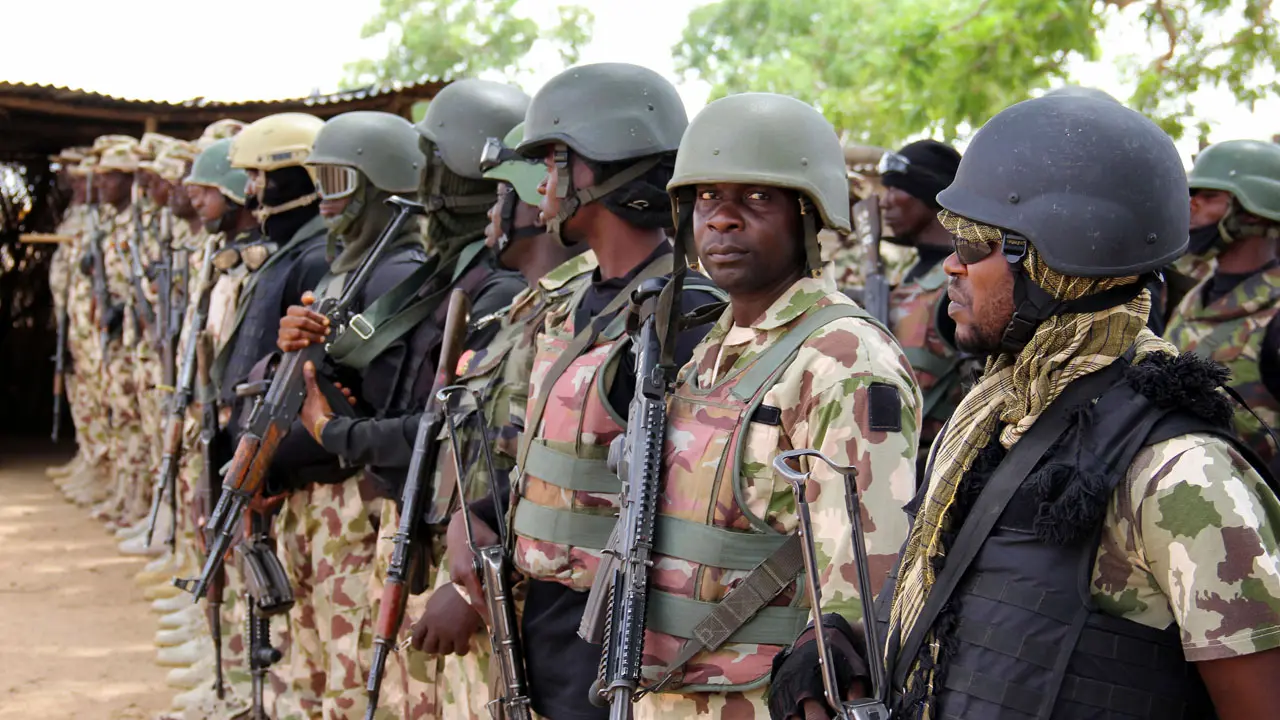
Retired senior military officers have dismissed reports that the Nigerian Army plans to forcibly conscript citizens aged 18 and above, stressing that such action would violate the Constitution. The officers noted that the Army has no legal authority to compel any Nigerian to enlist. Their reaction followed a viral post claiming that the Chief of Army Staff, Lt.-Gen. Waidi Shaibu, had threatened mandatory enlistment for youths who fail to volunteer for service. The Nigerian Army, through its Acting Director of Public Relations, Lt.-Col. Appolonia Anele, debunked the claim in a statement issued in Abuja last Friday, describing the allegation as false, misleading, and aimed at causing unnecessary fear among the public. Speaking on the matter, former Deputy Director of Defence Administration at Defence Headquarters, Commodore Kunle Olawunmi (retd.), said compulsory recruitment cannot be implemented without legislative approval. “You are talking about the military trying to conscript youths into the military. It is not something the military can do except it goes through the legislative arm. It is a constitutional requirement. It is not going to happen,” he said. He added that Nigeria is not officially at war, noting, “You can only be at war if it is so declared. If you are not at war, why would you want to conscript people into the army?” Olawunmi further advised that instead of considering forced enlistment, authorities should address internal challenges affecting morale and motivation within the military. Similarly, retired Army Colonel Yomi Dare affirmed that the Constitution does not permit forced recruitment. “The military cannot force anyone. This is a constitutional issue. It must go before the National Assembly, pass through all due processes, and become law before such a move can happen,” he said. Dare added that Nigerians should begin to view the military as a noble service deserving of commitment, recognition, and respect.

aa-20.jpeg

3min4790
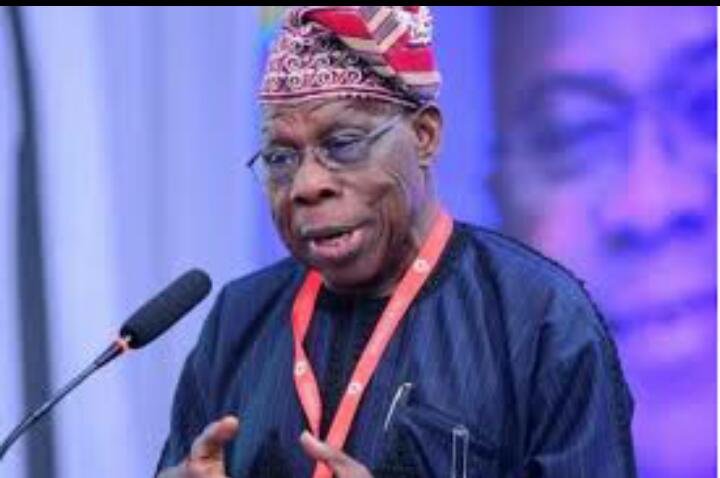
Former President Olusegun Obasanjo has rejected calls for dialogue with bandits, urging the Federal Government to adopt decisive measures and seek international support to tackle the worsening insecurity across the country. Speaking on Friday at the Plateau State Unity Christmas Carol and Praise Festival in Jos, Obasanjo criticised the government for negotiating and apologising to terrorists, noting that such approaches only embolden criminal groups. His comments come amid a surge in killings, abductions, and attacks on communities in the North. Recent incidents include the November 21 abduction of 315 students and 13 teachers from St Mary’s Catholic School in Papiri, Niger State, and the earlier kidnapping of 26 schoolgirls from Government Girls Secondary School, Maga, in Kebbi State. In another attack, bandits raided Palaita community in Shiroro LGA of Niger State, abducting 24 people, including pregnant women, from a rice farm. Between Monday night and Tuesday morning, about 20 people were also kidnapped in separate attacks in Kano and Kwara states. This followed the release of 38 worshippers abducted from Christ Apostolic Church, Oke-Isegun, after the Federal Government reportedly negotiated with their captors. In another incident on Tuesday, 10 people including a pregnant woman, nursing mothers, and children were seized in Isapa community near Eruku, Kwara State. Expressing frustration over the deteriorating security situation, Obasanjo argued that Nigerians have the right to seek help from the international community if the government fails in its constitutional duty to protect lives and property. “No matter your religion, your origin, or your profession, we Nigerians are being killed, and our government seems incapable of protecting us,” he said. “If our government cannot do it, we have the right to call on the international community to do for us what our government cannot.” Obasanjo added that advancements in modern technology have made it easier to track and eliminate terrorists, questioning why the government is not deploying available resources. “Before I left office, we had the capacity to identify and locate any criminal in Nigeria. What we lacked was the ability to apprehend them without moving by land or air. Now we have that capacity. With drones, we can take them out. Why are we not doing that? Why are we apologising? Why are we negotiating?” he asked.

security.webp

3min4990
A group of Ondo State indigenes residing in France has urged the state government to incorporate security training into the school curriculum, aiming to equip students at all levels with military skills and security awareness. The recommendation came from the Ondo State Indigenes in Diaspora, France chapter, citing rising insecurity in the country, particularly affecting schools. The call was made in an open letter addressed to the state governor, Mr. Lucky Aiyedatiwa, signed by the group’s Coordinator, Mr. Akintoye Ogundoju. The letter stressed that the current security situation “demands proactive measures to equip our younger generation with essential military skills and security awareness.” It added: “The alarming rate of insecurity in Nigeria highlights the importance of fostering vigilance, resilience, and self-defense among citizens. By integrating military skills and security awareness into the curriculum at primary, secondary, and tertiary levels, students can be empowered to recognise, respond to, and mitigate security threats effectively. Ignorance in matters of security is a luxury we can no longer afford.” The group further emphasized that such training would provide students with knowledge of personal and community safety measures. “It would equip them with basic self-defense techniques and emergency response strategies, instill a sense of civic duty toward their communities, and build confidence and mental resilience to face challenges in a rapidly changing world,” the letter stated. Ogundoju noted that the proposal aligns with global best practices, where nations prioritise citizen safety from a young age. “Security education is not a luxury but a necessity, especially in a country facing multiple security challenges. By nurturing security consciousness in our youth, we are investing in a safer future for Ondo State and Nigeria at large. We urge the state government to take swift action to implement this proposal and set an example for other states to follow.” In a related development, the Commander of the Ondo State Security Network Agency (Amotekun Corps), Akogun Adetunji Adeleye, said the corps had intensified patrols of schools, especially boarding schools, in response to the rising cases of insecurity and child kidnappings. “Following recent security concerns, the corps has commenced enhanced patrols of all boarding schools in the state. In the past week, we’ve visited numerous schools to ensure their safety,” he said.

cbnn.webp

4min4520
The Central Bank of Nigeria (CBN) has directed all banks, payment service banks, and other regulated financial institutions to immediately withdraw any advertisements or promotional materials that fail to meet established consumer-protection and fair-marketing standards. The directive, outlined in a circular issued on Thursday and signed by Olubunmi Ayodele-Oni on behalf of the Director of the CBN’s Compliance Department, follows an industry review that highlighted inconsistencies in how institutions interpret disclosure, transparency, and marketing obligations under the Consumer Protection Regulations 2019 and the 2000 Guidelines on Advertisements by Deposit-Taking Financial Institutions. The CBN noted that many institutions continue to publish adverts that exaggerate benefits, omit key information, obscure risks, or rely on unaudited financial statements. Such practices, the regulator said, mislead customers, distort competition, and undermine the integrity of the financial system. The apex bank emphasised that all advertisements must be factual, balanced, and transparent. It also prohibited comparative, superlative, or de-marketing statements—whether direct or implied—and banned promotional inducements such as lotteries, lucky dips, prize draws, or other chance-based incentives that could pressure consumers into financial decisions without fully understanding associated risks. Under the tightened compliance framework, financial institutions are now required to submit detailed notifications to the CBN before releasing any advert or marketing material. The notification must include the advert’s duration, creative content, intended demographic and geographic targets, and written confirmation of internal clearance by both the compliance and legal departments. Institutions must also provide evidence that the product or service being advertised has already received CBN approval. The CBN clarified that this notification process is for monitoring purposes only and does not constitute prior approval or endorsement. Institutions remain fully responsible for ensuring compliance with all relevant laws and regulations. All non-compliant adverts must be withdrawn immediately. Within 30 days, institutions must submit a compliance attestation jointly signed by the Managing Director or Chief Executive Officer, the Executive Compliance Officer, and the Chief Compliance Officer, confirming that all current advertising and promotional practices meet regulatory requirements and internal governance rules. The regulator stated that from January 2026, it will conduct a follow-up review to assess industry compliance. Sanctions will be applied to any institution found violating the rules, in accordance with the Banks and Other Financial Institutions Act 2020 and the Consumer Protection Regulations. The CBN reaffirmed its commitment to promoting fairness, transparency, and responsible marketing practices across Nigeria’s financial system.