Author: Lifestyle & Wellness Desk

aa-1.png

3min2740
The Lagos State Government has launched a digital skills and entrepreneurship training programme for students of Lagos State University (LASU), Ojo, and the Lagos State College of Health Technology, Yaba. The programme, known as Job Initiative Lagos, is designed to reduce youth poverty and unemployment, according to a statement issued on Saturday by the Director of Public Affairs, Ministry of Tertiary Education, Mamud Hassan. Addressing LASU students during the launch, the Commissioner for Tertiary Education, Tolani Sule, said the state remains committed to preparing its students for the “fast-evolving global economy.” He noted that the initiative aligns with Governor Babajide Sanwo-Olu’s THEMES+ Agenda and ensures that no graduate is left behind in an increasingly digital world. Sule explained that beyond equipping students with globally competitive digital skills to position Lagos as a leading innovation hub in West Africa, the programme is also part of ongoing efforts to strengthen tertiary education and expand youth access to tech-driven opportunities. He emphasised the government’s commitment to prioritising digital and entrepreneurial knowledge as essential tools for self-reliance and job creation. The commissioner urged students to take the training seriously, noting that the funds invested are public resources that must translate into meaningful contributions to Lagos’ economic growth. According to the statement, Sule encouraged participants to maximise the opportunity, stressing the need for them to apply their new skills to improve productivity, become job creators, and support the state’s broader development goals. The Permanent Secretary of the Ministry, Adeniran Kasali, added that the training curriculum was carefully developed by top experts in digital and entrepreneurship fields. Facilitators were selected for their ability to deliver practical, real-world guidance on succeeding in challenging environments. Kasali urged students to put their new knowledge into practice immediately ideally before graduation stating that the government has equipped them to become future employers of labour. The three-weekend intensive training is being conducted simultaneously at LASU and the Lagos State College of Health Technology. The initiative forms a key component of the administration’s strategic implementation of the THEMES+ Agenda, aimed at preparing undergraduates in state-owned tertiary institutions to compete globally and reinforce Lagos’ status as a digital hub in West Africa.
aa-8.jpeg

3min8170
The Managing Director of the Nigerian Education Loan Fund (NELFUND), Akintunde Sawyerr, has clarified why the Fund cannot pay institutional fees for newly admitted students until they complete their registration. Speaking with the News Agency of Nigeria in Abuja, Sawyerr said paying fees for students who have not fully enrolled or matriculated could lead to significant financial losses. “If we pay for students who have not entered, what happens if they change their minds and decide not to attend the school anymore?” he asked. He noted that releasing funds before registration would amount to “disbursing against intention,” exposing the government to financial risks. According to him, many admitted students may switch schools, study abroad, drop out, or change programmes scenarios that could cost the government billions of naira if payments are made prematurely. Sawyerr also highlighted challenges within the admission process itself, especially the requirement for a matriculation number before students can access their loans. To address this, he said NELFUND is working with tertiary institutions to allow the temporary use of Joint Admissions and Matriculation Board (JAMB) registration numbers for students who have completed school registration but are yet to matriculate. “There are many genuine applicants who need their matriculation numbers to process their fees, but they can’t matriculate until they have paid,” he said. “We are exploring the possibility of using JAMB registration numbers as a temporary substitute.” Reflecting on NELFUND’s development, Sawyerr noted that the initial law establishing the Fund, signed on June 12, 2023, had several limitations including the requirement for guarantors and a household income cap of ₦500,000, which excluded many families. He described the guarantor requirement as burdensome for students who might have to “plead with or pay someone” to qualify. The income cap, he added, was also unrealistic for most households. The first law also failed to provide for students’ living expenses, offering support only for tuition, he said. Sawyerr explained that President Bola Tinubu initiated a repeal of the flawed legislation, paving the way for the new Education Loan Act passed and launched in May 2024. “Since we began operations in May 2024, our platform has not crashed even once, despite unexpectedly high demand,” he said. “We have continued to receive applications, process them, and pay students and institutions from the funds allocated.” He thanked President Tinubu for his support, noting that NELFUND has become a lifeline for thousands of students who might otherwise have been unable to continue their education.

aa-6.jpeg

3min2530
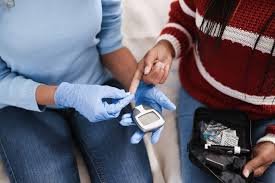
Endocrinologists have emphasized the need for greater public awareness on early detection of diabetes, warning that late diagnosis exposes individuals to serious and potentially life-threatening complications. The appeal was made on Friday during a free diabetes screening organised by the Endocrinology, Diabetes and Metabolism Unit of the Lagos University Teaching Hospital to mark World Diabetes Day. The event began with a brief awareness walk aimed at educating the public and promoting early testing. Speaking during the exercise, the Deputy Chairman of the Medical Planning Committee at the College of Medicine, Lagos State University, Dr Wale Bello, said the initiative was designed to help participants “know their numbers” through free checks for weight, height, blood pressure and blood sugar levels. Representing the Chief Medical Director, Prof. Wasiu Adeyemo, he described the growing prevalence of diabetes in the country as worrisome and stressed that routine screening remains key to reducing rising cases. He noted that while government provides infrastructure, personnel and policies including mandatory blood sugar checks for patients in public hospitals health professionals and medical associations must continue to drive public enlightenment, especially among people with limited access to healthcare facilities. Bello warned that avoiding screening out of fear only increases the risk of undetected diabetes, which may silently damage vital organs. Early diagnosis, he said, helps patients manage the condition effectively, sometimes without medication. “The earlier we diagnose diabetes, the easier it is to control and prevent complications. Not everyone with diabetes will need drugs immediately; some only require lifestyle changes such as diet adjustments, weight loss and regular exercise,” he said. He added that diabetes can occur at any age, with children more likely to develop type 1 diabetes and adults more commonly presenting with type 2. Also speaking, the Head of the Endocrine, Diabetes and Metabolism Unit at LUTH, Prof. Olufemi Fasanmade, expressed concern about the rising diabetes burden, noting that one in every 10 adults is affected. He urged Nigerians to include blood sugar checks during routine tests for common illnesses such as malaria and typhoid, adding that diabetes often occurs alongside hypertension and high cholesterol. Fasanmade encouraged individuals to monitor their vital health indicators closely, as early detection reduces the likelihood of preventable complications. “It’s important to know your numbers,” he said, explaining that global diabetes cases now exceed 600 million. He added that in Nigeria, an estimated five to 10 million people live with the condition. “For proper monitoring,” he noted, “blood sugar should not exceed 7 mmol/L or 126 mg/dL. Blood pressure should ideally remain at or below 120/80, and cholesterol should not be above 5 mmol/L. Any readings above these require medical attention.”

aa-8.jpg

3min1970
The Minister of Power, Adebayo Adelabu, has stated that the Federal Government, under President Bola Tinubu, is taking steps to curb frequent power grid collapses and improve the stability and reliability of the national grid. Adelabu made the remarks in Uyo, Akwa Ibom State, on Friday while speaking with journalists at the maiden retreat of the Nigerian Independent System Operator (NISO) themed “NISO on the Move.” Represented by the Permanent Secretary of the Ministry, Alhaji Muhammadu Mamman, the minister said the current administration has adopted new approaches aimed at strengthening the grid and reducing nationwide power outages. He explained that the establishment of NISO was part of government efforts to introduce reforms within the power sector. Nigeria has long faced recurring grid failures linked to ageing infrastructure, inadequate maintenance, limited funding, and vandalism factors that have led to frequent blackouts and forced homes and businesses to rely on generators and other costly alternatives. Adelabu said, “Since the commencement of this administration, things have been done differently. The creation of the Nigerian Independent System Operator is one of the initiatives introduced to stabilise the grid, minimise outages, and expand access to electricity. This retreat provides an opportunity for stakeholders to review practices and ensure they are adopting improved methods to strengthen the sector.” Chairman of the NISO Board of Directors, Dr. Adesegun Akin-Olugbade, commended the agency’s staff for their commitment, noting that their efforts contributed to the successful synchronisation of the Nigerian grid with the West African Power Pool (WAPP). He highlighted the role of NISO personnel in maintaining grid stability, promoting fair market operations, and representing Nigeria in regional partnerships. According to him, the synchronisation achieved through enhanced coordination and professional system operations allowed Nigeria, Niger, and parts of Benin and Togo to operate on a unified frequency with the rest of West Africa for four uninterrupted hours. The Managing Director of NISO, Abdul Mohammed, said the organisation was established to support government reforms by encouraging private-sector investment and ensuring better utilisation of existing infrastructure. Addressing concerns about the sector’s performance despite significant financial commitments, he said the power industry is highly capital-intensive and that historical investments have not been sufficient to achieve the level of reliability expected by consumers.

aa.avif

2min2640
South Korean police are seeking to detain a truck driver who ploughed into a traditional market, killing two people and injuring 19 others, authorities said on Friday. The incident occurred on Thursday in Bucheon, Gyeonggi Province, when a man in his sixties drove a one-ton cargo truck into shoppers and market stalls. Police have requested a detailed analysis of the vehicle’s event data recorder by traffic and forensic experts to help determine the cause of the crash. “We have applied for an arrest warrant for the suspect on charges of causing death and injury under the Act on Special Cases of Traffic Accidents,” a local police official said. The suspect was questioned for about two and a half hours, the official added, noting that the warrant request reflects “the seriousness of the offence.” According to a police report, the truck reversed before suddenly accelerating forward for about 130 metres (approximately 425 feet) through narrow market lanes. Most of the injured victims were between 50 and 70 years old, the National Fire Agency confirmed. Local media reported that the driver claimed to suffer from moyamoya disease, a rare blood vessel disorder for which he takes prescribed medication. However, he insisted the condition “has nothing to do with driving and does not affect my ability to drive.” Mass-casualty road accidents are uncommon in South Korea, a country known for its well-maintained roads and strict vehicle safety standards.

aa-3.jpeg

3min1050
The Joint Admissions and Matriculation Board (JAMB) on Thursday administered a computer-based promotion examination for 6,000 directorate-level officers under the Federal Civil Service Commission. In the Federal Capital Territory, the exercise was held at JAMB’s CBT centre in Kogo, Bwari Area Council. Speaking during the exercise, JAMB Registrar, Prof. Ishaq Oloyede, revealed that the examination was simultaneously conducted for candidates in the United Kingdom, United States, India, and Egypt. He described the initiative as a bold step by the Federal Civil Service Commission, noting that the reliance on CBT would help reduce anxiety associated with technology. “I think it’s important to emphasise that this is a very bold initiative by the Federal Civil Service Commission, driven by visionary leadership,” he said. “Many candidates arrived apprehensive, as if operating a computer was beyond them, but the system is simple. If you can use a phone, you can take this exam it’s just A, B, C, and you don’t even need the mouse.” Oloyede added that the exam’s deployment across four countries demonstrated JAMB’s capacity to manage large-scale CBT operations globally. He noted that initial nervousness among candidates quickly gave way to confidence after they settled in. “When I entered the hall, many were anxious, but once the instructions became clear, they relaxed. I interacted with several of them, and they were smiling,” he said. Also speaking, Dr. Hussaini Adamu, Commissioner representing the FCT and Niger on the Federal Civil Service Commission, expressed satisfaction with the process. He disclosed that the exercise began on Wednesday, with about 1,500 candidates participating across three sessions. “My assessment is that this has been an excellent exercise. It reflects JAMB’s decades of experience. Although candidates were initially tense, many now prefer the CBT method to the old pen-and-paper system. It is transparent and efficient,” he stated. Adamu added that CCTV cameras monitored the halls to prevent malpractice, noting that the environment was secure, well-cooled, and properly organised. Chairman of the Federal Civil Service Commission, Prof. Adetunji Olaopa, said this was the first time the commission would adopt CBT for promotion examinations. He commended the flawless conduct of the test for the 6,000 director-level candidates. “It is a modest step, but highly significant for us,” he said. “Computer-based testing is already widely accepted, but this is our first attempt. We had confidence because we partnered with JAMB, an institution with decades of expertise. With Professor Ishaq Oloyede leading the process—someone known for integrity and results—we knew we were in safe hands.”

asuu-strike.jpg

4min2860
The Academic Staff Union of Universities (ASUU) has urged the Federal Government to use the remaining 10 days of the one-month window granted to it to fully resolve outstanding issues between the parties. This directive emerged from ASUU’s National Executive Council meeting held at Taraba State University, Jalingo, on November 8–9, as highlighted in a statement issued on Wednesday by the union’s President, Prof. Chris Piwuna. The union said the warning became necessary after some government officials were accused of undermining negotiations through statements that misrepresented the government’s offers and the status of agreement implementation. ASUU had suspended its two-week warning strike on October 22, giving the Federal Government a one-month period to meet its demands, which expires on November 22. The demands include the review of the 2009 ASUU-Federal Government agreement, payment of outstanding salaries and earned allowances, and release of the university revitalisation fund. The union warned that it would resume industrial action without further notice if no meaningful steps are taken within the period. In the statement, ASUU called on the government to adopt comprehensive measures to improve the living and working conditions of Nigerian academics. The union noted that the way government actions and proposals have been presented so far shows insincerity and misrepresents the true status of negotiations. The statement said, “ASUU NEC regrets that government officials are undermining the negotiation process by misrepresenting offers and implementation of agreements. Partial payment of promotion arrears dating back to 2017, or the release of third-party deductions, are at best confidence-boosting measures and cannot be framed as the core issues of the negotiations. The way government presents its implementation does not reflect reality and signals risks to the renegotiation process. The remaining days of the one-month window must be used effectively to achieve a holistic resolution, especially to improve academics’ living conditions.” While acknowledging progress in some non-monetary aspects of the negotiations, ASUU maintained that salary and conditions of service require a more comprehensive approach. The union also rejected the government’s proposed salary offer, describing it as grossly inadequate. “Members of NEC observed with concern the government’s failure to prioritise education, treating it as a commercial good rather than a social good essential for national development,” the statement read. “The proposed salary increment is insufficient to address the ongoing brain drain and longstanding challenges in university education.” ASUU also disputed the government’s claim of insufficient funds, arguing that the real issue is a lack of political will. The union cited revenue data showing a substantial increase in both federal and state government receipts in recent years, noting that political will, not finances, has hindered the resolution of negotiations. The union appealed to traditional rulers, opinion leaders, students, the Nigeria Labour Congress, and civil society groups to continue pressuring the government to meet its obligations and ensure that lecturers receive a living wage.

400x225_334449.webp

4min2470
A group, Ogoni Business Owners in America (OBOA), has raised concerns over ongoing environmental degradation in Ogoniland despite claims that over $1 billion has been spent on its cleanup. In a statement released on Wednesday from Uyo, Akwa Ibom State, the group’s president, Chief Anthony Waadaah, described the state of the region as “an unimaginable betrayal of the sacred cause for which Ken Saro-Wiwa and the Ogoni Nine gave their lives.” The statement, titled “Ken Saro-Wiwa Lives On: The Unfinished Struggle for Justice, Dignity, and Accountability in Ogoniland,” commemorated the anniversary of the execution of Saro-Wiwa and eight other Ogoni leaders on November 10, 1995, by the late Gen. Sani Abacha’s regime. Waadaah lamented that decades after their deaths, Ogoniland remains polluted, its rivers contaminated, and its people impoverished. “Over $1 billion has been spent in the name of the Ogoni cleanup project under HYPREP. Yet, if you walk through Ogoniland today, it does not look like a place where such an enormous amount has been invested. The water is still polluted, the soil poisoned, the air toxic, and our people continue to suffer preventable diseases,” he said. The group accused the Hydrocarbon Pollution Remediation Project (HYPREP) of betraying the ideals of Saro-Wiwa’s struggle, claiming the agency has become “a conduit for corruption and political patronage” rather than a vehicle for environmental restoration. Waadaah alleged that politicians and contractors have hijacked the project for personal gain. “HYPREP, which was meant to heal our land, has become a tool for contracts and kickbacks, harassing those who expose corruption instead of cleaning Ogoniland,” he added. He further claimed that millions have been spent lobbying media outlets to suppress accountability, including efforts to silence a local radio and television program, Bua Bee Ogoni, which monitored the cleanup project. “They can kill the channels of communication, but they cannot kill the message,” Waadaah asserted. The OBOA president accused HYPREP of misleading Nigerians and the international community into believing significant progress had been made, while the reality on the ground remains one of polluted rivers, abandoned communities, and broken promises. Waadaah called on the Federal Government to order a forensic audit of all funds released for the cleanup and to investigate reports that an additional $300 million from the Nigerian National Petroleum Company Limited is missing. Regarding the recent delegation sent by President Bola Tinubu to engage Ogoni stakeholders, Waadaah warned against any attempt to reopen oil operations in the area before full cleanup and accountability are achieved. “Do not rush to reopen oil operations in Ogoniland. First, clean the land. Second, account for the $1 billion spent and the missing $300 million. Third, rebuild the trust that has been eroded for decades,” he said. Efforts to reach HYPREP Project Coordinator, Prof. Nenebarini Zabbey, were unsuccessful, as calls and messages were not returned at the time of reporting.

OPEC.jpg

3min4520
Nigeria’s average crude oil production inched up to 1.401 million barrels per day in October 2025, according to the Organisation of Petroleum Exporting Countries (OPEC) Monthly Oil Market Report released on Wednesday. The figure represents a small increase from 1.39 million barrels per day in September but remains below the country’s OPEC production quota of approximately 1.5 million barrels per day. This marks the third consecutive month Nigeria has failed to meet its assigned target, the last shortfall occurring in July 2025. The underproduction comes as the Minister of State for Petroleum Resources (Oil), Heineken Lokpobiri, plans to request a higher OPEC quota at the organisation’s upcoming meeting. Lokpobiri stated that the current quota no longer reflects Nigeria’s true production capacity and that the country will make a case for an increase to at least two million barrels per day. “The OPEC quota is reviewed periodically, and at the upcoming annual meeting, we will push for a higher allocation for Nigeria. Now is the right time to make the case for a quota of two million barrels per day or more,” the minister said. OPEC data indicate that Nigeria averaged 1.444 million barrels per day in the third quarter, down from 1.481 million barrels in the second quarter and 1.468 million barrels in the first quarter. The numbers reflect ongoing challenges in maintaining stable production, despite government initiatives and new upstream investments. Globally, OPEC reported that oil supply in October exceeded demand by 500,000 barrels per day, reversing the 400,000-barrel deficit recorded in September. The increase was driven mainly by non-OPEC producers, with the United States contributing more than half of the 890,000-barrel rise in global output. The report highlights the balance the market is trying to achieve between slowing global demand growth and steady production increases from non-OPEC countries, which has kept oil prices volatile, fluctuating between $82 and $86 per barrel in recent weeks. Monthly production figures in Nigeria showed further volatility, with output peaking at 1.529 million barrels per day in April before gradually declining to 1.401 million barrels per day by September. These fluctuations underscore persistent operational and sectoral challenges, despite efforts to boost production and attract investment in the upstream oil sector.

road-close.jpg

4min1750
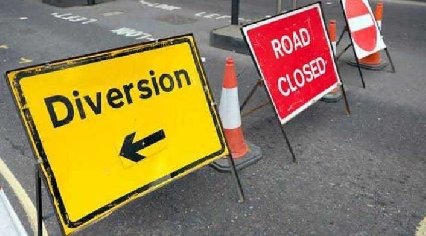
The Lagos State Government has announced the commencement of road rehabilitation works along the Lekki-Ajah corridor, beginning Saturday, November 15, 2025, and running until Wednesday, July 15, 2026 — a duration of eight months. In a statement issued on Wednesday by the Commissioner for Transportation, Mr. Oluwaseun Osiyemi, the government explained that the project is aimed at enhancing road infrastructure and improving traffic flow along one of the state’s busiest routes. According to Osiyemi, the rehabilitation will be carried out in two phases to minimize disruption for residents, businesses, and motorists, with preliminary works already underway. Phase 1: Lekki 1st Toll Gate to Lekki 2nd Toll GateThis phase will cover seven sections of the expressway. During the construction, one of the two lanes will be closed while the other remains open to traffic. Upon completion of the first lane, work will shift to the second. The commissioner assured that motorists traveling to Lekki and Ajah will still have access throughout the duration of this phase. Phase 2: Lekki 2nd Toll Gate to Ajah Under-BridgeThe second phase will focus on four sections of the road, with necessary diversions implemented to ensure continued traffic movement. Motorists from Ajah heading towards Lekki will use one lane while repairs are ongoing on the other. Once completed, work will switch lanes, allowing for a consistent traffic flow toward Ajah. Traffic AdvisoryThe state government appealed to road users for patience and cooperation during the rehabilitation period, stressing that the temporary inconvenience would lead to long-term benefits. “Some portions of the road will be partially closed during the repairs. Motorists are advised to be patient and comply with traffic management instructions,” the statement noted. Osiyemi reaffirmed that the project reflects Governor Babajide Sanwo-Olu’s commitment to sustainable urban mobility and infrastructural renewal across Lagos. He urged commuters to plan their movements in advance and adhere to the guidance of traffic officers deployed to maintain order. Earlier in September, the government commenced rehabilitation on another section of the Eti-Osa/Lekki/Epe Expressway, stretching from Admiralty Way Junction to Jubilee Bridge, as part of ongoing efforts to enhance road infrastructure across the state.