
Author: Lifestyle & Wellness Desk

Court-gavel-1-750x422-1.webp

6min2760
The Gauteng Division of the High Court in Johannesburg has issued an order restraining the anti-migrant organisation Operation Dudula and its leaders, Zandile Dabula and Dan Radebe, from intimidating, harassing, or assaulting foreign nationals in South Africa. Delivering the judgment, Justice Leicester Adams ruled that the group’s actions against migrants were unlawful and unconstitutional. The court further prohibited Operation Dudula and its members from demanding that private individuals produce passports or identity documents to prove their right to reside in the country. The ruling, delivered electronically and circulated to the parties’ representatives via email, also bars the group from disrupting access to healthcare services, interfering with school operations, or harassing learners, teachers, and parents. Justice Adams directed relevant government bodies to enforce the decision, affirming the constitutionally protected rights of migrants. The verdict followed an application filed by Kopanang Africa Against Xenophobia (KAAX) and several other groups seeking to restrain Operation Dudula and the South African government from unlawful and discriminatory actions. The applicants argued that only immigration and police officers are legally authorised to request identification documents from individuals. Applicants in the case included KAAX, the South African Informal Traders Forum, the Inner City Federation, and the Abahlali Basemjondolo Movement SA. Respondents comprised Operation Dudula, the Government of the Republic of South Africa, and 11 others. The applicants also asked the court to bar the group from engaging in hate speech, unlawful conduct, or acts that amount to taking the law into its own hands. The court consequently forbade Operation Dudula from making public statements that promote hate speech based on nationality, ethnicity, or social origin—whether at gatherings, on social media, or through other platforms. The group was also restrained from unlawfully evicting foreign nationals, removing them from trading spaces, or interfering with their employment in shops and businesses. Additionally, the order prevents them from encouraging or inciting others to engage in similar prohibited acts. Respondents named in the case include the Government of South Africa, the Ministers of Police, Home Affairs, Justice and Correctional Services, Health, and Basic Education, as well as the National Commissioner of Police, the Gauteng MECs for Health and Education, Zandile Dabula, Dan Radebe, and the South African Human Rights Commission. The judgment, delivered in November, further directed the South African government to implement the National Action Plan to Combat Racism, Racial Discrimination, Xenophobia and Related Intolerance. It also called for the establishment of an early warning and rapid response mechanism to address xenophobic hate speech and hate crimes. Authorities were instructed to gather and publish data on incidents of xenophobic hate speech and hate crimes, including prosecutions and convictions. Justice Adams reaffirmed that only immigration and police officials are empowered to request identification documents and that such actions must occur only in public spaces, not in private homes, workplaces, or schools. Officers, he added, must have reasonable suspicion before making such requests. The court further cautioned that children under 18 should not be interrogated, arrested, or detained except as a last resort, in accordance with Section 28(1)(g) of the Constitution. Meanwhile, the Nigerian Union South Africa (NUSA) has welcomed the ruling, describing it as a significant victory for migrant rights. In a statement signed by NUSA National President, Mr. Smart Nwobi, and Publicity Secretary, Mr. Akindele Olunloyo, the union said the decision was “a monumental step forward in protecting the rights of Nigerians and other migrants in South Africa.” According to the statement, the judgment affirms that vigilante groups cannot take the law into their own hands or deny foreigners access to essential services. NUSA commended KAAX and its partners for their advocacy and urged the South African government to fully implement the National Action Plan and uphold its constitutional responsibility to protect all residents, regardless of nationality or origin.

Charles-Soludo-and-Donald-Trump.webp

2min2800
Anambra State Governor, Charles Chukwuma Soludo, has dismissed claims of a religious genocide against Christians in Nigeria’s South-East, calling such allegations inaccurate and misleading. Speaking during a live interview on Channels Television, Soludo clarified that the region’s unrest stems from social, political, and economic factors rather than religious persecution. His remarks followed recent accusations by U.S. President Donald Trump, who alleged that Christians in Nigeria were being targeted and threatened possible military intervention. “There is a deeper issue behind what is happening,” Soludo explained. “In the South-East, this is not about religion. Christians are killing fellow Christians. The people hiding in the bushes — Emmanuel, Peter, John — all have Christian names. They have destroyed lives and communities, but it’s not a religious conflict.” The former Central Bank governor stressed that the South-East is predominantly Christian, with both perpetrators and victims sharing the same faith. “In this region, about 95 percent of the population are Christians,” he said. “The people behind the killings bear Christian names. It’s beyond a Christian-versus-Muslim narrative. Nigeria will heal, and dialogue will prevail.” He added that while the United States has the right to express its views, any action it takes must respect international law.

amed.png

3min2080
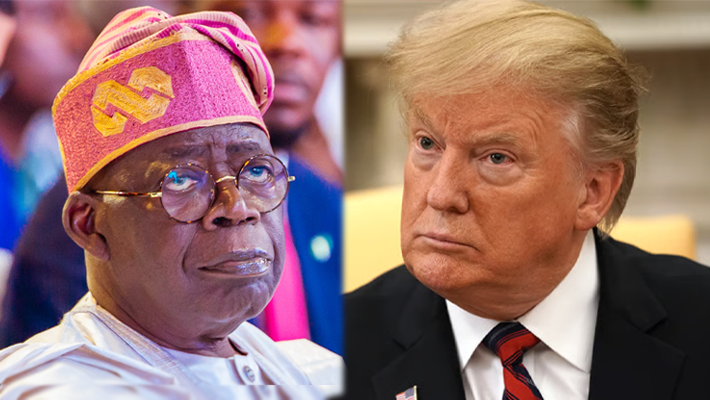
A former presidential adviser, Hakeem Baba-Ahmed, has urged President Bola Tinubu to personally address Nigerians following the recent military threat issued by U.S. President Donald Trump. In a statement on Thursday, Baba-Ahmed voiced concern over the President’s silence since Trump accused Nigeria of allowing the alleged killing of Christians and warned of a possible American response. He noted that Tinubu’s quietness could be seen as weakness at a time when the nation needs decisive leadership and clear communication. “If President Tinubu truly has competent advisers and understands the weight of his office, he should have spoken to Nigerians by now,” Baba-Ahmed stated. He stressed that this is not the time for aides or ministers to release statements, insisting that the President himself should reassure citizens, clarify Nigeria’s position, and outline the government’s next steps. Baba-Ahmed also cautioned Tinubu against travelling to the U.S. to meet with Trump, saying such a move would be inappropriate and damaging to the nation’s image. “At this critical time, Tinubu should not even consider going to America to meet Trump. It would only make Nigeria appear weak—like smiling after being slapped,” he said. He further urged the President to take swift action to rebuild public trust. “If Tinubu truly listens to those who care about this country, he must act immediately—appoint ambassadors, strengthen Nigeria’s diplomatic presence, and address the nation directly.” Trump recently threatened possible military action, alleging there was genocide against Christians in Nigeria—a claim the Federal Government has strongly refuted. Meanwhile, China has voiced support for Nigeria, emphasizing its opposition to any form of foreign interference based on religion or human rights. The Federal Government reiterated that the country’s security challenges stem from terrorism affecting both Christians and Muslims, not religious persecution.

China-and-Nigerian-flag.jpg

4min2260
The Federal Government has wrapped up high-level talks in China, securing a landmark discounted diagnostics agreement and attracting renewed investor commitments to Nigeria’s pharmaceutical and medical manufacturing industries. The Ministry of Health and Social Welfare announced this on Wednesday via its official X handle, noting that the developments mark visible progress in the country’s ongoing health sector reform agenda. During a visit to PlusLife Diagnostics’ corporate headquarters and manufacturing facilities in Guangzhou, the Coordinating Minister of Health and Social Welfare, Prof. Muhammad Pate, finalised deals for the mass procurement of heavily discounted Point-of-Care diagnostic equipment for tuberculosis and other non-communicable diseases through the UN StopTB Global Drug Facility. According to the ministry, the agreement aligns with the Nigeria Health Sector Renewal Investment Initiative, designed to expand access to affordable testing, reduce catastrophic out-of-pocket costs, and strengthen the healthcare value chain for long-term resilience. In addition, PlusLife pledged to establish a local manufacturing plant in Nigeria between 2026 and 2028 — a move seen as a vote of confidence in the country’s reform-driven business environment under President Bola Tinubu’s Renewed Hope Agenda. Pate described the outcomes as “a transformational milestone” in Nigeria’s push to decentralise diagnostics and expand access to essential testing through the primary healthcare network. “With the cost efficiency of PlusLife technology, we can test more people and save more lives using the same resources,” he said. He further credited the investment surge to President Tinubu’s Executive Order that removed taxes and import duties on pharmaceutical raw materials, diagnostic equipment, vaccines, and related health manufacturing inputs. “This order is already delivering results,” Pate added. “Global partners now see Nigeria as a viable hub for innovation, production, and growth in the healthcare value chain.” Speaking at the Sino-Africa Healthcare Cooperation Forum 2025 in Beijing — organised by the Nigerian Embassy in partnership with CEIBS, AFKMED, and VCBeat — Pate emphasised that macroeconomic and health reforms were now working hand in hand to align industrial policy with public health goals. He said Nigeria was steadily emerging as Africa’s leading centre for diagnostic innovation, pharmaceutical manufacturing, and health technology expansion — boosting national preparedness, improving access to quality care, and positioning the health sector as a key driver of economic growth.

kanu-2.jpeg

3min1720
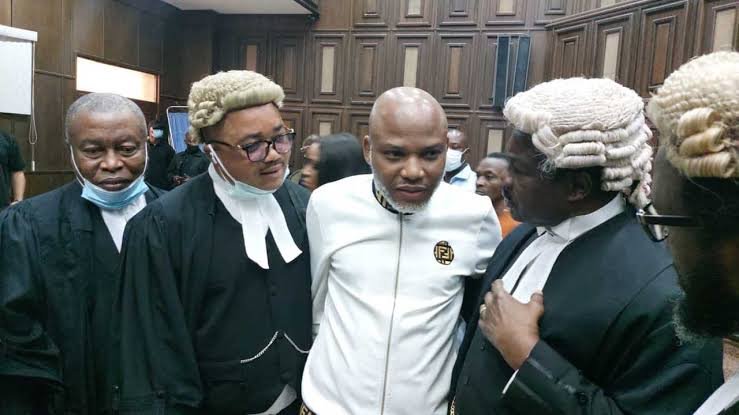
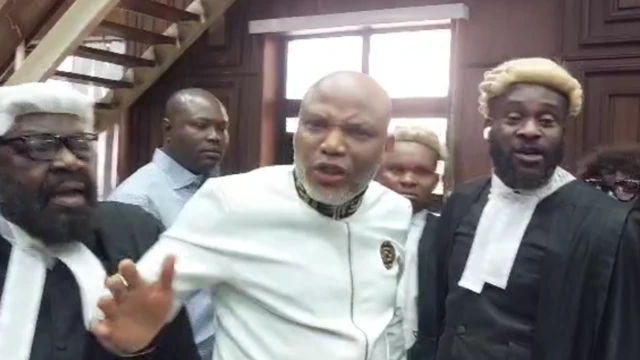
The detained leader of the Indigenous People of Biafra, Nnamdi Kanu, on Wednesday agreed to consult with his legal advisers before opening his defence in the terrorism case brought against him by the Federal Government. Justice James Omotosho of the Federal High Court in Abuja once again advised Kanu to seek proper legal counsel after he repeatedly argued that the seven-count charge against him was invalid. Although he had earlier declined to proceed with his defence, Kanu eventually informed the court that he would consult with his legal team, naming Nnaemeka Ejiofor, Aloy Ejimakor, Maxwell Okpara, and Mandela Umegborogu as his lawyers. The court then adjourned the matter to November 7 — marking the fourth time Kanu has been given the opportunity to either begin his defence or waive the right to do so. Kanu had in October dismissed his legal team, led by former Attorney General of the Federation, Kanu Agabi (SAN), choosing instead to represent himself. Initially, he listed 23 witnesses, including Lagos State Governor Babajide Sanwo-Olu and FCT Minister Nyesom Wike, but later withdrew the list, arguing that the charges against him had no legal basis. At Wednesday’s proceedings, Kanu maintained that the terrorism charges were invalid, claiming the law under which he was being tried had been repealed and that the prosecution failed to amend the charge as directed by the Supreme Court. “The Terrorism Prevention and Prohibition Act has been repealed. I cannot defend myself under a repealed law,” he told the court. The prosecution had closed its case on June 19, 2025, after presenting five witnesses. The court ruled on September 26 that a prima facie case had been established against Kanu. However, he has twice failed to open his defence since then, citing the unavailability of documents from his former lawyers. During the hearing, Federal Government’s counsel, Adegboyega Awomolo (SAN), urged the court to enforce its order for Kanu to either present his defence or waive the right. Justice Omotosho, however, said the court would once again “bend backward” in the interest of justice to allow Kanu consult lawyers experienced in criminal law.

cop30-1280x853.jpg

3min7650
Ahead of the official opening of the United Nations Climate Change Conference, world leaders are gathering on Thursday and Friday in Belém, Brazil, to discuss urgent actions to tackle global warming. European leaders attending include German Chancellor Friedrich Merz, French President Emmanuel Macron, and British Prime Minister Keir Starmer, alongside top officials from the European Union and the United Nations. The host nation, Brazil, hopes the meeting will set the stage for the two-week COP30 summit, which officially begins on Monday and is expected to attract tens of thousands of participants from about 200 countries. President Luiz Inácio Lula da Silva, who has described it as the “COP of Truth,” emphasized that the conference must deliver real and measurable progress. However, the global political landscape remains complex, with conflicts, economic instability, and uncertain fiscal outlooks overshadowing the climate agenda. The United States, under President Donald Trump, continues to advance its fossil fuel policies and has announced that it will not send a high-level delegation to COP30. On Thursday, leaders are expected to launch a new multibillion-dollar fund to protect tropical forests — often referred to as the planet’s “green lungs.” Despite past pledges, progress has been slow. Although 140 countries committed in 2019 to end deforestation by 2030, the World Wide Fund for Nature (WWF) reports that nearly seven million hectares of primary forest were lost in 2024 alone. The summit will also present a joint call to improve international forest fire management and support Brazil’s sustainable fuel initiative, which seeks to quadruple production and usage by 2035. A declaration addressing hunger, poverty, and climate protection is also expected to be released during the meeting.

trump-ad-tinubu-2.webp

4min7720
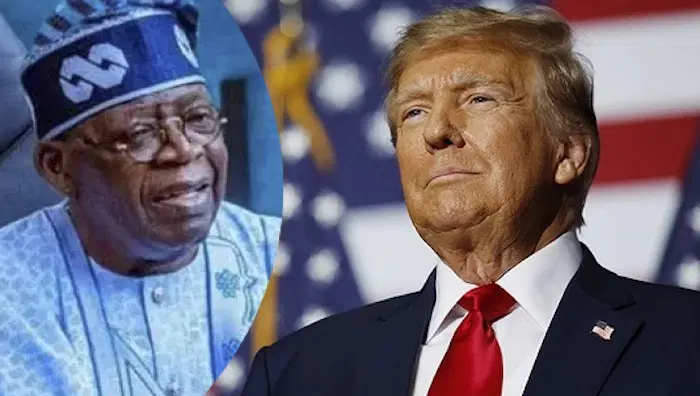
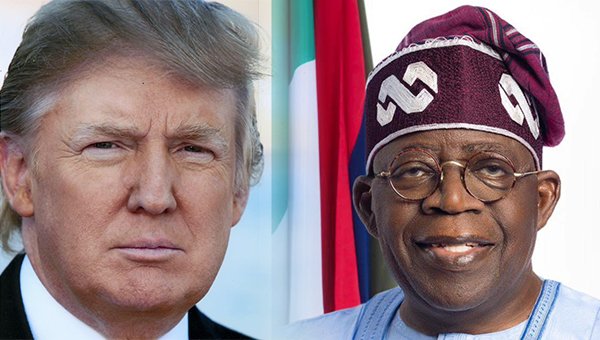
United States President Donald Trump has once again claimed that Christians in Nigeria are facing widespread killings, describing the alleged attacks as a serious threat to the survival of Christianity in the country. In a video released by the White House on X (formerly Twitter) on Wednesday, Trump alleged that “thousands and thousands” of Christians were being killed by what he termed “radical Islamists,” calling the situation a “mass slaughter.” “Christianity is facing an existential threat in Nigeria. Thousands and thousands of Christians are being killed. Radical Islamists are responsible for this mass slaughter,” Trump said. In the same clip, he announced that Nigeria was being classified as a “country of particular concern,” a designation he said carried legal implications. “I am hereby making Nigeria a country of particular concern. That’s a legal definition,” he stated. “When Christians or any group is being slaughtered like what is happening in Nigeria—3,100 compared to 4,476 worldwide—it is unacceptable,” he added. Describing the statistics as “horrific,” Trump called for urgent congressional intervention. “What terrible numbers. Something must be done. I am asking Congressman Riley Moore, along with Chairman Tom Cole and the House Appropriations Committee, to immediately investigate and report back to me—right away,” he said. Trump further stated that the United States would not remain passive while Christians were being targeted in Nigeria and other nations. “The United States cannot stand by while such atrocities are happening in Nigeria and in several other countries. We stand ready, willing, and able to defend our great Christian population around the world. The killing of Christians will not continue,” he declared. Earlier, Trump had warned that he might authorize U.S. military intervention if the alleged persecution of Christians in Nigeria was not addressed. The “country of particular concern” classification, under U.S. law, is typically issued by the Secretary of State for nations accused of engaging in severe violations of religious freedom or human rights. Meanwhile, the Nigerian government has repeatedly rejected the allegations, affirming that the country upholds freedom of religion and equal rights for all citizens. In a statement issued by President Bola Tinubu on November 1, the government reiterated that Nigeria remains a constitutional democracy committed to protecting religious liberty. The President emphasized that the nation’s diversity has always been a source of strength, not division, and that religious tolerance “remains a core value of our collective identity.”

china-nigeria-us-1280x791.webp

6min2470
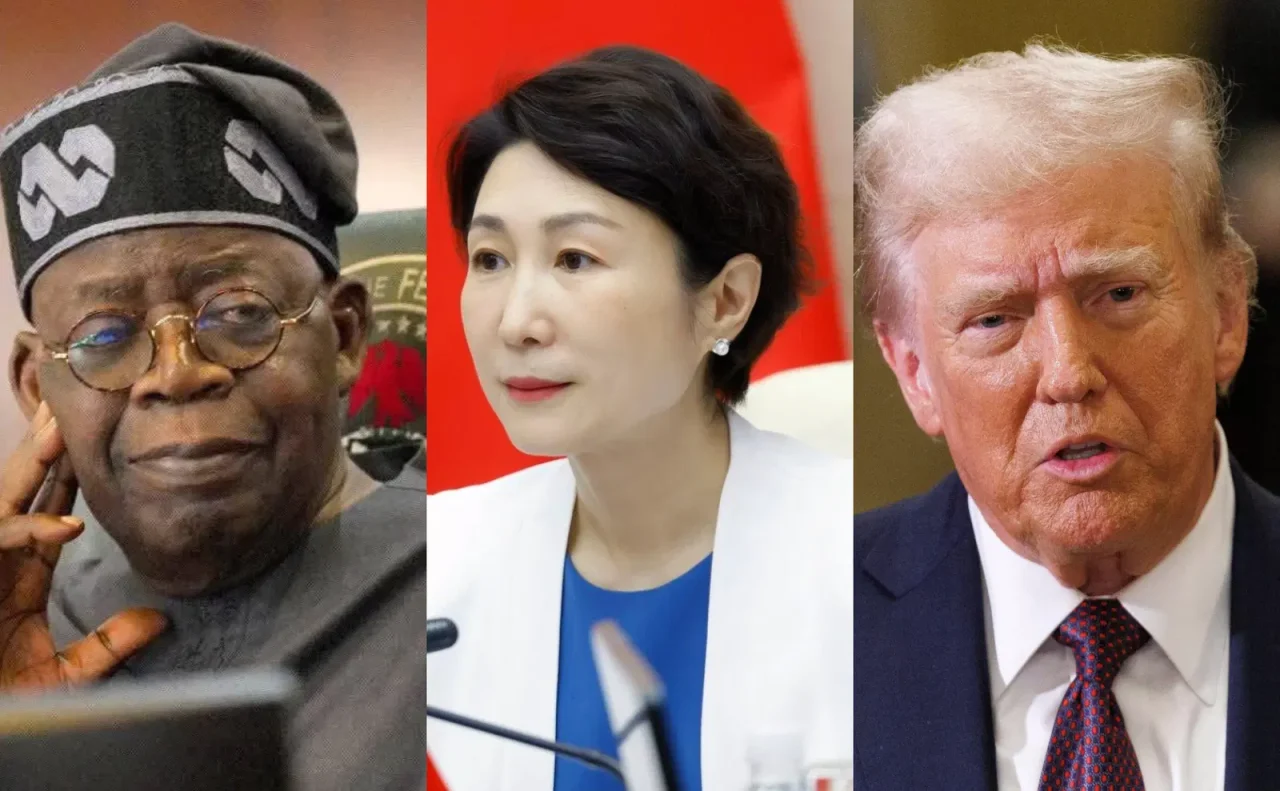
ABUJA — China has firmly rejected the United States’ recent threat of military action against Nigeria, stressing its opposition to any form of external interference in the country’s internal affairs. This follows U.S. President Donald Trump’s warning over alleged persecution of Christians in Nigeria — a claim the Nigerian government has dismissed, describing it as a narrative driven by religious extremists seeking to divide the nation. Chinese Foreign Ministry spokesperson Mao Ning, in a statement posted on the ministry’s website, said China stands with Nigeria as a “comprehensive strategic partner” and supports its right to choose its own development path. He said, “China strongly supports the Nigerian government in leading its people on a development path that suits its national realities. We oppose any country’s interference in another nation’s internal affairs under the pretext of religion or human rights. We also reject threats of sanctions or use of force.” Meanwhile, Nigeria’s Senate President, Godswill Akpabio, stated that the Senate will discuss Trump’s remarks with the executive arm, emphasizing the need for a coordinated national response since the issue concerns foreign policy and diplomacy. Akpabio noted that Trump’s position appeared to be based on outdated reports that failed to capture the country’s current security realities, adding that both Christians and Muslims have been victims of terrorism and banditry across Nigeria. Similarly, the Federal Government reiterated that there is no genocide against Christians in the country. Minister of Information and National Orientation, Mohammed Idris, said after a meeting with President Bola Tinubu that the President remains calm and focused, engaging international partners to clarify Nigeria’s efforts in tackling insecurity. He added that President Tinubu’s administration is addressing the situation through reforms, including the appointment of new service chiefs, and urged Nigerians not to fall for extremist propaganda aimed at dividing the nation. Also reacting, two members of the U.S. Congress — Gregory Meeks and Sara Jacobs — criticised President Trump’s comments, describing them as “reckless and irresponsible.” The lawmakers said the situation in Nigeria is complex, driven by resource conflicts rather than religious persecution, and warned that military threats would worsen instability. In its response, ECOWAS also dismissed allegations of Christian genocide in Nigeria, describing them as false claims meant to incite division and weaken regional stability. The regional bloc reaffirmed that terrorist violence in West Africa affects people of all faiths and called for continued international cooperation against extremism. Former Chief of Army Staff and ex-Minister of Interior, Lt. Gen. Abdulrahman Dambazau (rtd), also criticised Trump’s position, arguing that the U.S. was acting out of self-interest and might be seeking to establish a new military base in Nigeria. The Christian Association of Nigeria (CAN) in the 19 northern states, through its chairman, Rev. John Hayab, urged both Christians and Muslims to use Trump’s comments as a call for unity and cooperation to end violence rather than a reason for division. Similarly, the Southern and Middle Belt Leaders Forum (SMBLF) rejected Trump’s threat, calling instead for Nigerians to stand together and urging the government to intensify efforts to curb killings, disarm armed groups, and restore peace. The Nigerian Christian Pilgrim Commission (NCPC) also cautioned that Nigeria needs partnership and intelligence sharing, not threats of invasion. Its Executive Secretary, Bishop Stephen Adegbite, said insecurity affects all faiths and urged for greater international collaboration to build a safer, more peaceful nation. In his view, former Deputy Ambassador to the U.S., Ambassador Hassan Mohammed, said Trump’s military threat was unlawful under the U.S. International Freedom of Religion Act, explaining that the act allows for diplomatic pressure — not military intervention — in matters related to religious freedom. He added that Nigeria had previously resolved similar designations through dialogue, stressing that fairness and cooperation remain the best path forward.

kanu-case.webp

5min1950
ABUJA — The detained leader of the Indigenous People of Biafra (IPOB), Nnamdi Kanu, on Monday, again refused to open his defence in the seven-count terrorism charge filed against him by the Federal Government, insisting he has no case to answer. At the resumed hearing, Kanu, who dismissed his legal team and is representing himself, maintained that there was no valid charge before the court, arguing that it lacked the legal basis to compel him to present a defence or exchange final written addresses with the prosecution. He urged the judge to take judicial notice of his motion and supporting affidavit challenging the court’s jurisdiction to try him for what he described as an offence unknown to Nigerian law. Kanu demanded his immediate release from the custody of the Department of State Services (DSS), where he has been held since 2021, saying:“You cannot ask me to begin my defence when the charge has no legal foundation. There’s no law backing these charges. I request to be released.” Citing Section 36(12) of the 1999 Constitution, Kanu argued that the terrorism charge against him has no legal basis, further accusing the court of ignoring a Supreme Court ruling that condemned his alleged extraordinary rendition from Kenya. When reminded that the apex court had ordered a fresh trial, Kanu maintained his stance, stating that he could not be tried under a repealed law. “There’s no valid charge against me. I will not return to detention unless I’m shown a lawful charge. Prosecuting me under a repealed law violates my fundamental rights,” he said. Prosecution counsel, Chief Adegboyega Awomolo (SAN), however, challenged the competence of Kanu’s filed documents, describing them as lacking evidential value and urging the court not to indulge him further. He prayed the court to treat the documents as Kanu’s final written address to allow judgment to proceed. In a brief ruling, Justice James Omotosho dismissed the prosecution’s objection, ruling that Kanu’s documents would be considered in the final judgment. The judge acknowledged that Kanu is not a lawyer and granted him additional time to consult legal counsel, warning that failure to present a defence within the allotted time would result in forfeiture of that right. The case was adjourned to Wednesday for continuation. It will be recalled that on October 24, the court directed Kanu to open his defence. Although he had earlier listed several prominent individuals, including governors, ministers, and security chiefs, as witnesses, he later withdrew his plan to call them. Kanu had previously requested 90 days to secure their testimony but later backtracked. The court had earlier rejected his no-case submission, ruling that the prosecution’s evidence was sufficient to warrant a defence. The Federal Government accuses Kanu of leading a separatist movement seeking the secession of Nigeria’s South-East region and of inciting violence through his broadcasts. Kanu maintains his innocence.

t-t.jpg

3min7500
Afenifere has described U.S. President Donald Trump’s recent threat to invade Nigeria under the guise of fighting terrorism as a cover for his displeasure with President Bola Tinubu’s independent stance on key national issues. In a statement issued by its National Publicity Secretary, Jare Ajayi, the pan-Yoruba socio-political group dismissed Trump’s claim that the Nigerian government is complicit in attacks on Christians, calling it a baseless attempt to tarnish the country’s image. Afenifere argued that Trump’s position is driven by economic interests, suggesting that his harsh tone is a strategy to pressure President Tinubu into granting the U.S. more access to Nigeria’s economy and boosting American exports, particularly weapons. The group also noted that Nigeria’s growing relationship with China might not sit well with Washington. Ajayi emphasized Nigeria’s sovereignty, noting that security challenges are being addressed by the government, though more effort is needed. He pointed out that bandits and terrorists target the nation’s economy rather than specific religious groups, as their sponsors aim to exploit mineral-rich areas once residents are displaced. He cautioned Nigerians against making statements that could justify external interference, urging them to remain patriotic and avoid actions that could destabilize the country. Meanwhile, Lagos State Governor Babajide Sanwo-Olu, represented by Deputy Governor Dr. Obafemi Hamzat, called on citizens to stand firm in defending the nation against any external threat. Speaking during the flag-off of the APC e-registration initiative at Lagos House, Marina, Sanwo-Olu stressed the importance of safeguarding national investments such as the Dangote Refinery, highlighting President Tinubu’s ongoing efforts to strengthen Nigeria’s economic and political stability.