
Author: Lifestyle & Wellness Desk

1.3.jpg

4min3010
The naira experienced a mixed performance over the past week, appreciating by 1.12 percent in the official market while weakening by 0.49 percent in the parallel market. At the official window, the local currency closed trading at 1,457.95 naira per dollar, an improvement from 1,475.35 recorded the previous week. The gain was attributed to limited interventions by the Central Bank of Nigeria (CBN) and inflows from foreign portfolio investors. In contrast, at the parallel market, the naira slipped slightly to 1,491.25 per dollar, reflecting ongoing foreign exchange demand pressures and cautious investor sentiment. Nigeria’s external reserves, however, maintained a steady upward trajectory, rising to 42.87 billion dollars on Wednesday — about 170 million dollars higher than the previous Friday’s figure. The increase was supported by improved oil earnings, stronger non-oil inflows, and a sustained trade surplus, all of which continued to bolster the CBN’s efforts to stabilise the foreign exchange market. Analysts at Cowry Asset Management projected a mildly pressured outlook for the naira in the near term, citing persistent demand and limited market liquidity. They noted that steady oil receipts and gradual reserve growth could help cushion the local currency. “In the coming week, we expect the naira to experience mild pressure as FX demand persists amid limited liquidity. However, stable oil inflows and reserve accretion could offer some support,” the firm said. Experts at Afrinvest Research shared similar views, predicting that the naira would likely trade within current bands across FX segments, barring any major disruptions. In the long term, the naira is expected to benefit from the CBN’s renewed interest in currency swap arrangements. Speaking at the IMF/World Bank Annual Meetings in Washington, D.C., CBN Governor Olayemi Cardoso noted that while earlier efforts to promote local currency trade agreements were unsuccessful, new frameworks are being developed to ensure future success. “We have had an experiment with that (switching to national currencies in bilateral trade). It did not work well for us, but we are now developing a new framework, given our currency’s improved competitiveness,” he said. Investment firm Comercio Partners, in its latest market note titled “The Sequel Nobody Asked For,” described the new naira–yuan swap deal valued at N3.28 trillion as a step toward strengthening trade settlements and reducing reliance on the U.S. dollar. According to the firm, “Cardoso admitted previous attempts failed due to weak logistics and poor awareness, but with ongoing FX reforms making the naira more competitive, this new arrangement could improve trade ties and stabilise reserves — third time’s the charm, hopefully.”
aa-6.webp

3min7790
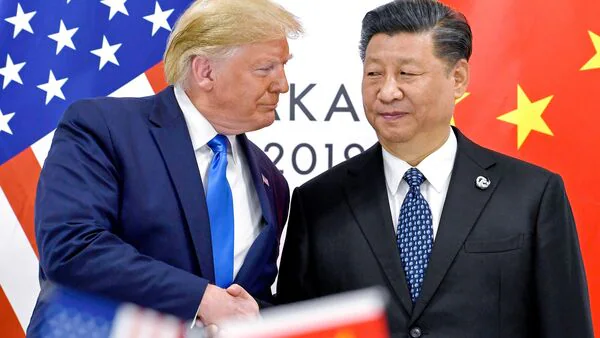
The United States and China have agreed on the framework of a potential trade deal to be finalized when Presidents Donald Trump and Xi Jinping meet later this week, according to U.S. Trade Secretary Scott Bessent. Speaking to CBS, Bessent said the agreement includes a “final deal” on TikTok’s U.S. operations and a one-year deferral of China’s tightened controls on rare earth mineral exports. He also expressed confidence that the 100% tariff on Chinese goods threatened by President Trump would not take effect, while confirming that China plans to resume large-scale soybean purchases from the U.S. Both nations are seeking to ease tensions in the ongoing trade dispute between the world’s two largest economies. Trump and Xi are scheduled to meet on Thursday in South Korea. Bessent met with senior Chinese trade officials on the sidelines of the ASEAN summit in Malaysia, which Trump is attending as part of his Asia tour. Beijing described the talks as “constructive.” “We’ve reached a substantial framework for the two leaders,” Bessent said. “The tariffs will be averted.” Since returning to the White House, Trump has imposed or threatened sweeping tariffs on imports, particularly from China, arguing that the measures would bolster U.S. manufacturing and job growth. Beijing responded with retaliatory actions, but both sides have since agreed to pause further escalation while negotiating a broader deal. Trump had warned that new 100% tariffs on Chinese goods would take effect in November unless Beijing rolled back its export restrictions on rare earth minerals essential components in electronics, renewable energy systems, and defense technologies. China processes roughly 90% of the world’s supply, giving it significant leverage. Bessent told CBS that China would postpone implementing those restrictions for a year while reassessing them. He also indicated that China’s ban on U.S. soybean imports which has hit American farmers hard may soon be lifted. “I’m actually a soybean farmer, so I’ve felt this pain too,” he said. “I think when the deal is announced, our farmers will feel really good about what’s coming this season and for years ahead.” Bessent further confirmed that both countries have agreed on terms for TikTok’s U.S. operations, with final approval expected when Trump and Xi meet on Thursday. Washington has long pressed for the Chinese-owned app to divest from its parent company, ByteDance, over national security concerns. While TikTok was previously ordered to sell its U.S. arm or face a ban, Trump has extended the deadline several times most recently to December to allow negotiations to continue.

aa-8.jpeg

3min3820
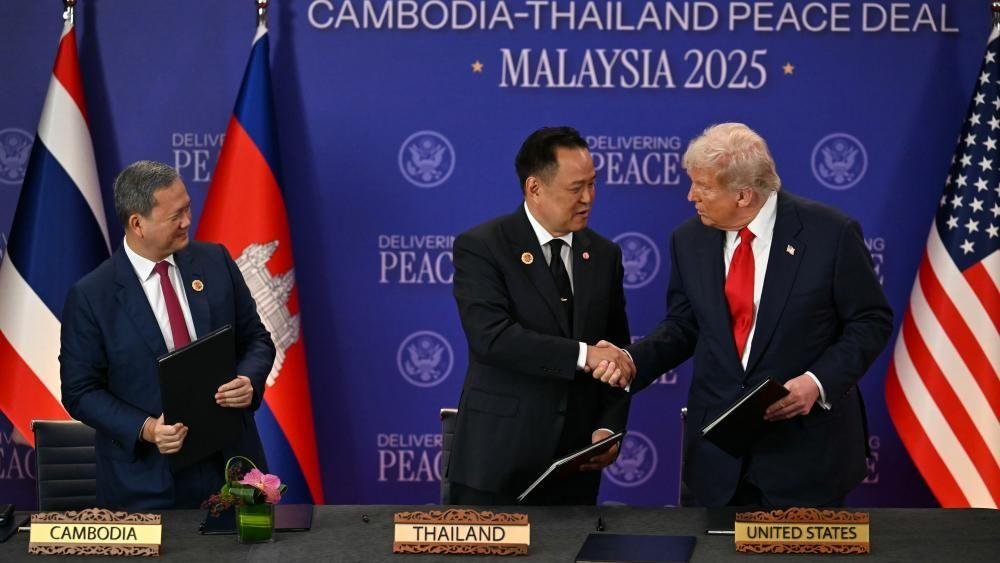
As expected, the spotlight in Kuala Lumpur was firmly on U.S. President Donald Trump. Standing head and shoulders above the other delegates, Trump dominated the ceremony where Thailand and Cambodia signed what he has branded the Kuala Lumpur Peace Accord. His speech was the longest, his claims the boldest and his tone, typically triumphant. “This is a momentous day for Southeast Asia,” Trump declared. “A monumental step.” He praised the two somewhat reserved prime ministers as “historic figures” and recounted how he became involved in mediating their border dispute while visiting his Turnberry golf course in Scotland last July. “I said this is much more important than a round of golf,” he recalled. “I could have had a lot of fun, but this is much more fun saving people and saving countries.” The ceremony was reportedly held at Trump’s request, as a condition for his attendance at the annual Association of Southeast Asian Nations (ASEAN) summit an event previous U.S. presidents have attended only intermittently. Trump used the moment to bolster his image as a global peacemaker. “In eight months, my administration has ended eight wars there’s never been anything like that,” he said. “We’re averaging one a month. I shouldn’t say it’s a hobby, because it’s serious, but it’s something I’m good at and something I love to do.” But beyond the theatrics, questions remain over what the “peace accord” actually achieves. Both Thailand and Cambodia had already agreed to a ceasefire in July a truce that Trump’s administration helped accelerate. The new agreement adds several practical measures: the withdrawal of heavy weapons from the border, the deployment of an interim observer team, a joint task force to tackle scam centres, and a plan to replace missing boundary markers. It also introduces a new landmine-clearing procedure. Diplomats describe the accord as modest but welcome progress. Some Thai officials say Trump’s personal involvement could help sustain the fragile peace. Still, the long-standing border dispute rooted in decades of territorial claims remains unresolved and could easily resurface. For all the fanfare, the Kuala Lumpur signing may prove less a historic breakthrough than a brief pause in a much older conflict.

aa-1.png

1min8740
The Lagos State Records and Archives Bureau (LASRAB) is set to launch the Governor’s Milestone Quiz Competition, an online contest designed to test students’ knowledge of Lagos State and reward academic excellence. According to a statement issued on Friday, the initiative organised in collaboration with the Ministry of Information and Strategy aims to deepen students’ understanding of the achievements of Governor Babajide Sanwo-Olu’s administration and the state’s rich history. The bureau encouraged interested participants to visit the programme’s official website to learn about key historical events and landmark developments across Lagos’ five divisions. The competition, which will run online for four weeks starting November 1, 2025, seeks to promote civic awareness, inspire young people, and foster academic engagement. Each week, participants who correctly answer the highest number of multiple-choice questions within the allotted time will be announced as winners. Attractive prizes including computer tablets, smart wristwatches, headsets, tote bags, and other consolation gifts—will be awarded to outstanding contestants.

aa-2.png

3min2470
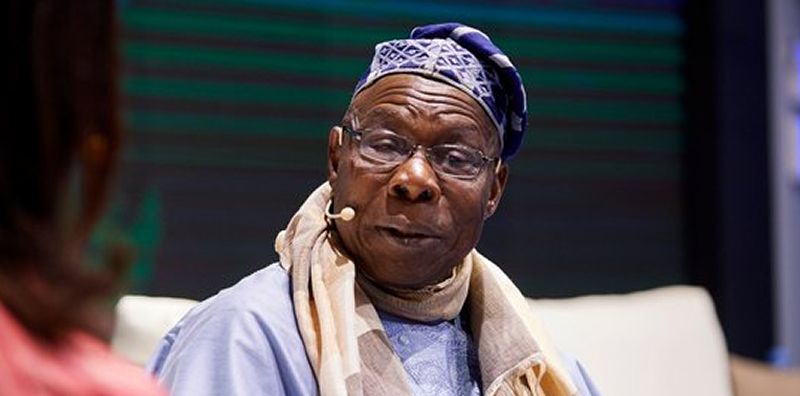
Former President Olusegun Obasanjo has revealed that he once turned down a proposal suggesting former Federal Capital Territory (FCT) Minister Nasir El-Rufai as his preferred successor at the end of his administration in 2007. Speaking on Friday at the Ajibosin Platform Annual Symposium in Abeokuta, Ogun State, Obasanjo said he rejected the idea because he believed El-Rufai was “not yet mature enough” to lead a complex nation like Nigeria. The former president made the comment while responding to a keynote address delivered by former Minister of Aviation Osita Chidoka, who had recalled how El-Rufai introduced him to Obasanjo in 2004 a meeting that led to his appointment as Corps Marshal of the Federal Road Safety Corps (FRSC). Interrupting Chidoka’s speech, Obasanjo humorously said, “He didn’t mention that when I was leaving government, he was pushing that his friend, El-Rufai, should be brought in as my successor.” Turning to Chidoka, he added, “No be so?” prompting a nod of agreement. Obasanjo continued, “I did not yield to the pressure. Later, he asked why I didn’t agree, and I told him El-Rufai needed to mature. Years later, after observing his performance, he came back and said, ‘You were absolutely correct El-Rufai needed to mature.’” Despite the lighthearted exchange, Obasanjo praised both El-Rufai and Chidoka, describing members of his former administration as “individuals with unique qualities” who played key roles in his government between 1999 and 2007. The former president also emphasized that effective leadership requires character, experience, and training. “It’s only in politics that I discovered there’s no training for leadership,” Obasanjo said. “Even among armed robbers, there’s apprenticeship but not in politics. That’s not good enough.” In his address, Chidoka argued that Nigeria’s biggest challenge is not the absence of ideas but the lack of strong institutions to ensure accountability and continuity in governance. “Leadership finds its true measure not in speeches or charisma, but in the systems it leaves behind,” he said. “Nigeria’s problem has never been the absence of ideas; it is the absence of systems strong enough to outlive their authors.” The symposium, themed “Leadership, Governance, and Institutional Renewal in Nigeria,” attracted political leaders, scholars, and civic advocates from across the country.

a.jpg

3min3870
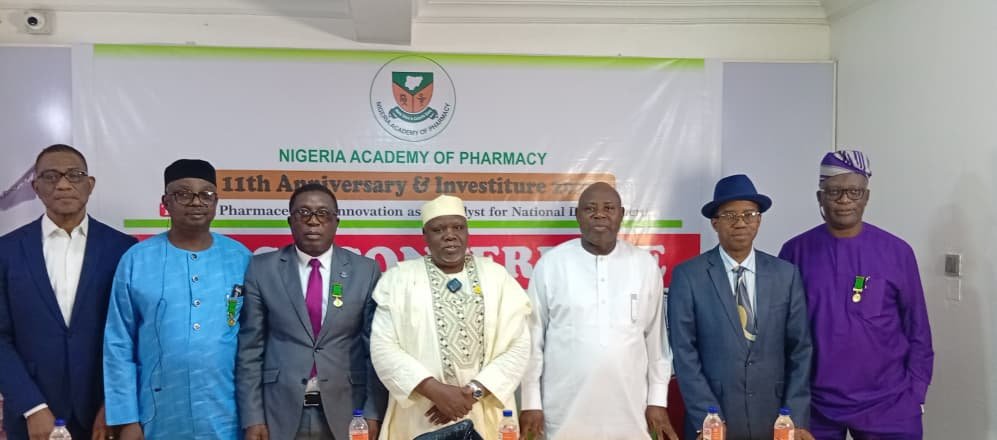
The Nigeria Academy of Pharmacy has emphasized the need for stronger collaboration among researchers, policymakers, and industry leaders to advance pharmaceutical innovation and promote national growth. In a statement issued after its 2025 Investiture and Public Lecture held in Lagos, the President and Chairman of the Governing Council, Prof. Lere Baale, highlighted the importance of unity in strengthening research, local manufacturing, and health security. “We must strive for self-reliance. Pharmaceutical innovation is not just about science — it encompasses governance, business, and, most importantly, nation building,” Baale said. The event, themed “Pharmaceutical Innovation and Nation Building,” brought together professionals from academia, industry, and regulatory bodies to discuss how innovation can transform Nigeria’s healthcare and pharmaceutical landscape. The Director-General of NAFDAC, Prof. Mojisola Adeyeye, noted that ongoing regulatory reforms are improving the quality and competitiveness of locally produced medicines. She revealed that Nigeria now has two WHO-prequalified medicine manufacturers and one WHO-prequalified medical device company, crediting collaboration with universities such as the University of Lagos and the Federal University of Technology, Minna for driving innovation and research. Delivering the keynote address, Group Managing Director of FBN Holdings, Mr. Wale Oyedeji, underscored that innovation and collaboration are key to repositioning Nigeria’s pharmaceutical industry. “We must invest more in research and development. India looked inward and became the world’s pharmacy — Nigeria can do the same,” he said. The event also featured a valedictory session honouring the late Pharm. (Chief) Oludolapo Akinkugbe, celebrated as a pioneer of modern pharmacy education in Nigeria. A total of 14 new Fellows were inducted, while six distinguished professionals were honoured for their outstanding contributions to healthcare, research, and the pharmaceutical sector. Recipients of the Lifetime Achievement Award included Chief Theophilous Adebowale Omotosho, Dr. Fidelis Ayebae, Pharm. (Dr.) Stella Okoli, and Prof. Gabriel Osuide.Honorary Fellowship Awards were also presented to Pharm. Elder Ebenezer Adeleke, Alhaji Sayyid Atana, Dr. Obiora Chukwuka, Pharm. Sir Alfred Osinoiki, Alhaji Auwalu Rano, and Chief Varkey Verghese (MFR) for their exceptional contributions to national development and the growth of the pharmaceutical profession.

z10.jpg

2min2390
According to the latest Quarterly Statistical Bulletin from the Central Bank of Nigeria (CBN), Nigerians spent approximately $4.74 million on foreign healthcare services between May 2023 and March 2025 — marking the first 22 months of President Bola Tinubu’s administration. This figure represents a 52% drop compared to the $9.83 million spent on medical tourism during the first 22 months of the previous administration. The decline reflects tighter foreign exchange policies and possibly a growing reliance on local healthcare facilities. From May to December 2023, medical tourism expenses totalled $2.28 million, while 2024 recorded $2.40 million. Spending remained minimal into early 2025, with just $0.06 million recorded in January and none in February or March. By contrast, between May 2015 and February 2017, Nigerians spent $9.83 million abroad on healthcare, with the highest monthly expenditure hitting $3.20 million in September 2015. The Nigerian Academy of Medicine has consistently expressed concern over the country’s reliance on medical tourism, warning that Nigerians spend over $1 billion annually on healthcare abroad — a pattern that drains foreign reserves and weakens investment in domestic health infrastructure.

z9.png

2min7860
Industrial Development Organisation (UNIDO) and with funding support from the Government of Japan, has launched a focused initiative to prevent cholera outbreaks in flood-prone communities across the state. The project, titled “Emergency Capacity Building of Informal Food and Water Vendors and Waste Workers in Flood-Affected Lagos to Combat Cholera Outbreaks,” is backed by a grant of about $275,000. Speaking at a sensitisation programme in Lagos on Wednesday, LASEPA General Manager Dr. Babatunde Ajayi highlighted the critical role of informal food and water vendors, as well as waste workers, in safeguarding public health and ensuring environmental safety. He explained that their daily activities directly affect public health outcomes, environmental hygiene, and the general well-being of residents. The intervention, supported by the Government of Japan and UNIDO, aims to build the capacity of these groups through training in hygiene, sanitation, and safe handling practices. Ajayi noted that the funds would also provide hygiene supplies, awareness materials, and support systems for high-risk local government areas while strengthening monitoring and cooperation among government agencies, vendors, and waste-management operators. He added, “Together, we can ensure a safer, healthier, and more resilient Lagos.” UNIDO Project Assistant Wunako Elam described the project as a timely and practical step that not only responds to past cholera outbreaks but also enhances the state’s preparedness for future public health challenges.

z6.jpg

3min5660
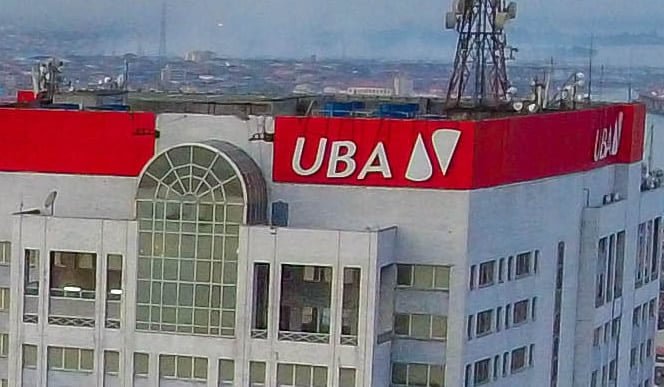
United Bank for Africa (UBA) has partnered with Renewvia Solar Nigeria to deploy renewable energy systems across 25 of its branches in five Nigerian states, marking a major step forward in strengthening Nigeria–Norway collaboration on clean energy. The initiative was officially launched at a ribbon-cutting ceremony held at UBA’s Oba Akran 2 branch in Ikeja, Lagos, with the Nordic Ambassador to Nigeria, Mr. Svein Bæra, in attendance. The event featured a guided tour of the Inverter and Battery Room by the Renewvia team. According to UBA, the partnership underscores its growing commitment to sustainability, innovation, and responsible investment — a message echoed by UBA Group Chairman, Tony O. Elumelu, during the Norway-Africa Business Summit in Oslo, where he urged global investors to see Africa as a hub of opportunity rather than a destination for aid. “Africa needs partners, not charity,” Elumelu stated, calling for collaboration grounded in mutual respect, entrepreneurship, and shared growth. Under a 10-year Power-as-a-Service agreement, Renewvia will install advanced solar and battery hybrid systems across UBA branches to enhance power reliability, operational efficiency, and customer experience. Upon completion, the project will extend to 50 locations across 18 states, delivering 3 MWp of solar capacity and 7 MWh of energy storage. UBA’s Deputy Managing Director, Muyiwa Akinyemi, described sustainability as central to the bank’s vision, saying, “At UBA, we see sustainability not just as a responsibility but as a key pillar in building Africa’s future.” Renewvia Solar Nigeria’s Managing Director, Adebowale Dosunmu, described the collaboration as a major milestone in providing reliable and clean energy to commercial and industrial clients across Nigeria. Oladipupo Omodara, CEO of Incremental Energy Solutions (IES) Ltd, commended UBA’s management for its proactive approach in bringing the project to life, while Empower New Energy’s CEO, Terje Osmundsen, noted that his company is proud to serve as the financing partner supporting UBA’s clean energy vision. In his goodwill remarks, Ambassador Svein Bæra praised the partnership as “a shining example of what is possible when African ambition meets Nordic innovation and investment.”

z5-1280x731.jpg

4min2070
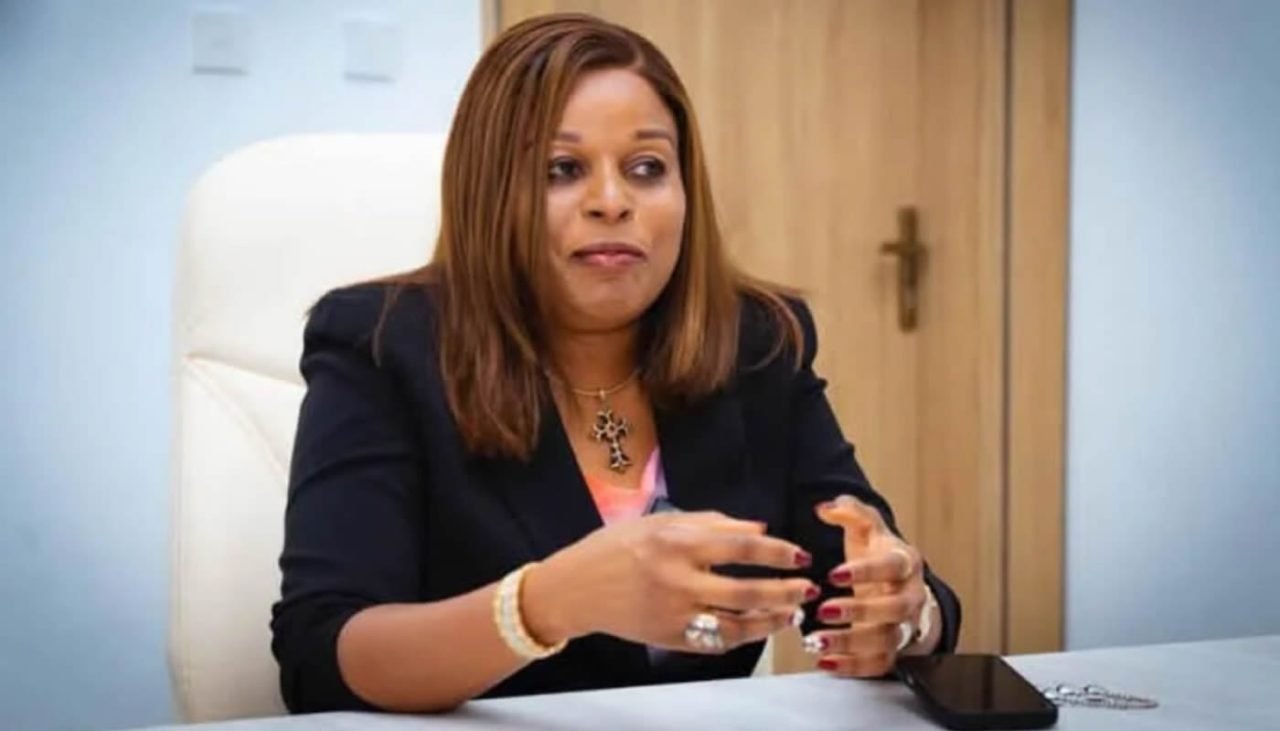
The wife of the Anambra State Governor, Dr. Nonye Soludo, has called for urgent and coordinated action to address the rising cases of Hepatitis B and C in Nigeria, warning that the situation demands immediate national attention. Dr. Soludo, who is also the founder of Healthy Living with Nonye Soludo, noted that an estimated 20 million Nigerians are currently infected with either or both forms of the disease, with more than 80 percent unaware of their status. Speaking at the 2025 National Hepatitis Summit in Abuja, she expressed concern that limited public awareness remains one of the major factors fuelling the spread of the disease. “A large majority of our people know very little or absolutely nothing about Hepatitis and how dangerous it can be,” she said. She emphasised that early detection and treatment are key to managing the disease, explaining that Hepatitis B can be treated if discovered early, while Hepatitis C can be cured with antiviral medicines when detected in its initial stages. Dr. Soludo urged increased public education and stronger collaboration among stakeholders to intensify the fight against the disease at both state and national levels. “Even though we are behind, progress is still possible if we act now,” she noted. Highlighting preventive measures, she pointed out that the Hepatitis B vaccine is already part of Nigeria’s routine immunisation schedule for children and encouraged adults to get vaccinated at accredited health facilities. “These vaccines are not only safe but also highly effective,” she added. She warned that failure to act promptly could lead to a public health crisis. “The numbers are frightening, but if we remain committed to education and strategic dialogue, we can prevent a much bigger problem in the near future,” she said. Dr. Soludo reaffirmed her commitment to advancing awareness and prevention through her Healthy Living campaign in Anambra State and beyond. As part of her broader health advocacy, she recently led a Healthy Living Walk across several Anambra communities to promote fitness, healthy eating, and disease prevention. The event, which started in Aroma, Awka, brought together government officials, health workers, students, and residents. Following the exercise, Dr. Soludo reiterated the importance of physical activity and nutrition, describing exercise as “medicine for healing and overall well-being.”