Author: Lifestyle & Wellness Desk

aaa10-1280x790.jpg

4min3790
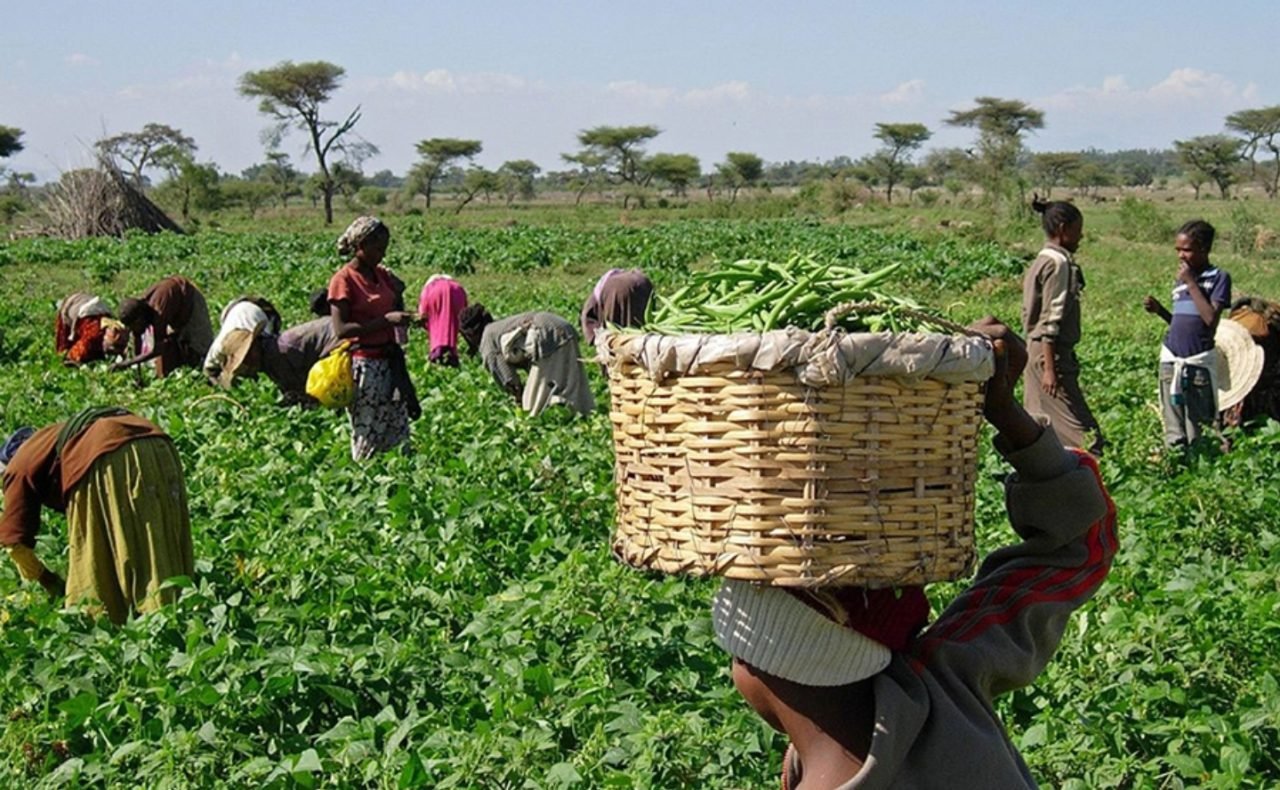
It appears that the era when Nigerians relied heavily on banks or investment firms for saving money is gradually fading. Many people are now turning to traditional methods of investment, particularly in farm produce storage, as a more profitable alternative. Recent findings show that a growing number of Nigerians are buying agricultural products in bulk, storing them until they become scarce and prices rise, and then selling for profit. For some, this approach has become a lifeline in the face of economic hardship. Ahmedu Memunat, a tailor, shared her experience:“Before now, I used to save all my money in the bank throughout the year and earned almost nothing in return. But this year, a friend introduced me to the palm oil business. I invested ₦400,000, and within a few months, my money doubled. Many of my friends are doing the same to survive. I plan to continue with this alongside my tailoring work.” This age-old saving method, once common in rural communities, is now being revived by modern Nigerians seeking better returns. While it requires patience — since stored goods may take months to appreciate — the eventual profit keeps investors motivated. Mrs. Sadiat Akhigbe, a civil servant, also adopted the idea:“I never thought I’d go into such a business. A few months ago, a colleague gave me ₦500,000 to keep for her until December. Around that time, a friend told me about buying and reselling Ogbono (African bush mango). I decided to try it with the money. Thankfully, it paid off — I made enough profit to return the capital and still had gains. I plan to do it again next year.” Further investigation revealed that many participants fund these ventures through thrift contributions (locally known as ajo or esusu), which allow them to collect lump sums to invest in goods. One hairdresser, Mrs. Okoli Judith, explained:“I join two thrift groups and take an early turn so I can collect the money, buy goods, and store them. It’s not easy — I have to sacrifice a lot — but when I finally sell, I can take care of my family and bills. My husband also contributes, and together we reinvest. It’s about teamwork and survival.” She added that limited access to credit facilities has forced many small business owners to explore such alternatives.“The banks won’t give small individuals like us loans without collateral, and even if they do, the interest rates are too high. So, this is the best way for us to make our money work,” she said.

aaa7.jpg

4min5710
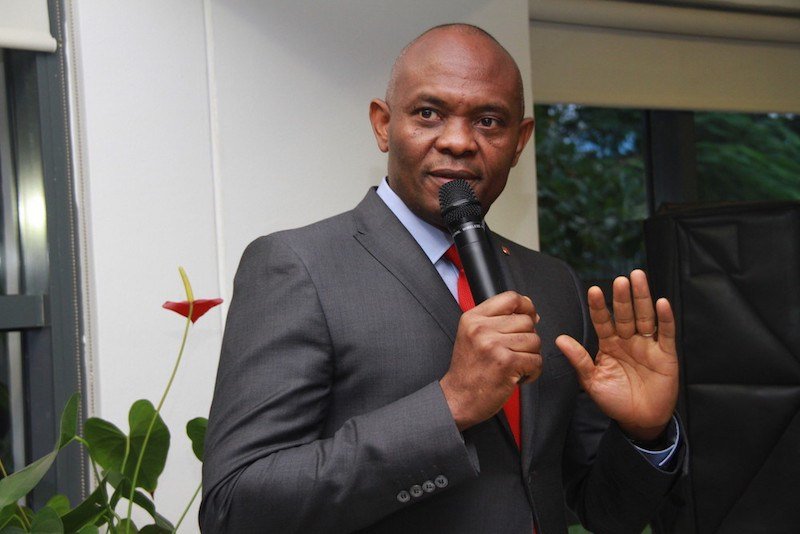
During the ongoing annual meetings of the World Bank and International Monetary Fund (IMF) in Washington, D.C., Chairman of United Bank for Africa (UBA) Plc and Founder of the Tony Elumelu Foundation, Tony Elumelu, emphasized the urgent need for Africa’s inclusion in the global digital and artificial intelligence (AI) revolution. Speaking at a seminar themed “Boosting Productivity Growth in the Digital Age,” Elumelu underscored that Africa must not be left behind as global systems for digital governance and AI frameworks are being designed. “My message is simple — Africa must be included. The world must be intentional about ensuring Africa has a seat at the table where the rules and protocols for AI are shaped,” he said. “Digital inclusion is economic inclusion. Transformation should not only drive productivity but also democratize prosperity.” Elumelu noted that Africa has shown great potential in past technological shifts, citing the mobile money revolution as an example, and urged the continent to seize the current opportunity presented by the digital and AI era. However, he stressed that reliable electricity supply remains a major obstacle to progress. “Over half of our population still lacks access to electricity — this is unacceptable. African governments must fix the power challenge if they truly want to address youth unemployment and drive transformation,” he added. The UBA Chairman also highlighted findings from the newly released UBA White Paper, “Banking on Africa’s Future: Unlocking Capital and Partnerships for Sustainable Growth,” which was launched on the sidelines of the meetings. The report shows that Africa holds over $4 trillion in untapped economic potential. Elumelu explained that mobilizing domestic financial resources is key to unlocking growth: “Nations that developed did so by leveraging internal capital first. If we can mobilize our $4 trillion effectively, we will attract even greater foreign investment.” He emphasized that execution, not discussion, should now take center stage. “Talking is less than one percent of the work. What matters is getting things done. We’ve said ‘Africa is rising’ for over 25 years — now is the time to act, starting with solving the power crisis,” he stated. Commenting on the role of sovereign and pension funds, Elumelu pointed out that much of Africa’s wealth is currently invested in low-risk instruments rather than productive sectors. “Pension funds helped build great economies like the U.S. It’s time ours did the same. Investing only in treasury bills won’t develop Nigeria. We must channel funds into infrastructure, energy, and manufacturing — even if there are initial risks,” he advised. Elumelu concluded by reiterating that Africa’s progress depends on Africans taking ownership of their development agenda. “No one will build Africa for us. We must do it ourselves. Our capital, our resources, our commitment — that’s what will drive sustainable growth on the continent.”

aaa5-1.jpg

2min5060
ABUJA — Several residents were left stranded and frustrated on Monday morning following the heavy security barricades mounted at key locations across the Federal Capital Territory, leading to severe traffic congestion. The gridlock affected commuters from areas such as Bwari, Ushafa, Dutse, and parts of Kubwa, leaving many unable to reach the city centre. The security presence was heightened after activists, including Sahara Reporters publisher Omoyele Sowore, mobilised for a demonstration demanding the release of the detained leader of the Indigenous People of Biafra (IPOB), Nnamdi Kanu. The protesters had planned to march to the State House, the official residence of President Bola Tinubu. Traffic was also brought to a standstill along the Nyanya-Mararaba axis due to multiple security checkpoints. At Sokale, a motorist, Usman Jibrin, lamented being stuck in the same spot for over an hour. “If people are heading to the Villa, why should it affect those of us coming from the outskirts? Are they afraid protesters will be brought in from other areas? This is pure suffering, and God is watching,” he said.

aaa3-1.webp

7min2690
As Nigeria continues to grapple with the world’s highest burden of sickle cell disease, a senior registrar in community medicine and primary care at the Federal Medical Centre, Abeokuta, Ogun State, Dr. Solomon Olorunfemi, has said that the country must confront the disorder not only as a medical challenge but also as a societal one. Olorunfemi, who is also the founder of the Dr. Olorunfemi Life Foundation (DOLF), a non-governmental organisation focused on healthcare advocacy and support for vulnerable groups, stated that sickle cell disease could become a story of hope and resilience if society confronts it with knowledge and coordinated action. He noted that sickle cell disease could be mitigated through awareness, prevention, and timely medical intervention. Speaking in Abeokuta, the medical expert described SCD as one of the most common inherited blood disorders globally, with Nigeria bearing a disproportionate share of the global burden. He disclosed that an estimated 150,000 babies are born with the condition in Nigeria every year, the highest figure for any country in the world. This alarming statistic, he said, demands urgent national attention. According to Olorunfemi, SCD occurs when red blood cells that are typically round and flexible become rigid, sticky, and shaped like sickles or crescent moons. He explained that these malformed cells tend to block blood flow in the body, causing episodes of severe pain, chronic anaemia, organ damage, and other life-threatening complications. He added, “The disease manifests in different genetic forms, the most severe being HbSS, also known as sickle cell anaemia. “Other variants include HbSC and HbS beta-thalassaemia, both of which vary in severity but still require continuous medical care and emotional support.” The physician emphasised that SCD is not contagious but inherited when both parents carry the abnormal haemoglobin gene (HbS). According to him, a child stands a 25 per cent chance of inheriting the disease when both parents are carriers (AS genotype), while there is a 50 per cent chance the child will be a carrier, and another 25 per cent chance the child will be completely free (AA genotype). He noted that when one parent is AA and the other AS, none of their children will inherit the disease, although they may still be carriers. Olorunfemi stressed that this clear pattern of inheritance underscores the critical importance of genotype testing before marriage, adding that many families continue to suffer avoidable pain due to ignorance or disregard for this medical counsel. He noted that beyond personal responsibility, the government and stakeholders in the health sector must make genotype awareness and pre-marital counselling a public health priority. Describing the daily reality of those living with SCD, the public health expert said symptoms usually begin in early childhood and include unpredictable episodes of severe pain (known as pain crises), general fatigue due to chronic anaemia, swelling of the hands and feet in children, frequent infections, delayed growth, and eye complications. He noted that these symptoms are often aggravated by factors such as dehydration, infection, or exposure to extreme weather, all of which make regular hospital visits, proper hydration, and preventive care essential for survival. He warned that, without appropriate management, the disease can lead to devastating complications, including strokes (particularly in children), acute chest syndrome, a potentially fatal lung condition, kidney problems, leg ulcers, eye damage, priapism in males, and severe pregnancy-related complications in women living with the condition. While there is currently no universal cure for SCD, Olorunfemi highlighted that it is a condition that can be effectively managed, provided individuals and families are armed with the right knowledge and access to quality healthcare. He called for urgent expansion of newborn screening programmes, saying early diagnosis is crucial in preventing many of the diseases’ long-term complications. He urged schools, religious institutions, and community leaders to be active participants in educating the public about SCD, calling on them to incorporate genotype awareness and sickle cell education into their community engagements. The physician also noted that although scientific and medical advancements have significantly improved life expectancy for people with SCD, the real transformation must come from a society that is informed, empathetic, and proactive. He explained that many individuals living with SCD today are not just surviving but thriving, building families, pursuing careers, and becoming advocates for others. These stories, he said, are proof that the disease, though painful, can become a platform for strength, faith, and resilience. He stressed that sickle cell disease should no longer be seen as a curse but a condition that can be controlled and even overcome through informed decisions, early intervention, and communal support. “Nigeria can no longer afford to ignore the burden of this disease. “We must start with education, move to prevention, and build a healthcare system that supports those living with it. Sickle cell is not a death sentence. It is a challenge, yes, but one we can defeat, one family at a time,” he said.


aa-1.jpg

3min1970
Health workers in Edo State have vowed to continue their ongoing strike action, despite the state government’s disapproval and efforts to resume negotiations. The Medical and Health Workers Union of Nigeria (MHWUN), Edo State Chapter, began a seven-day warning strike at midnight on Friday, following what it described as the government’s failure to respond to its demands after a 14-day ultimatum expired last Thursday. In a message circulated to members on Sunday, the union’s Public Relations Officer, Iduwe Endurance, reiterated the need for total compliance, warning that any deviation from the directive would not be accepted. “Total compliance is required, and anything short of that will not be tolerated,” the message stated. The union had earlier, in a statement signed by Chairman Osagie Ogbeide and Secretary Barivure Kpakol, instructed members to withdraw their services from all state and local government health facilities, pending a “genuine and concrete” response from the state government on their outstanding welfare-related demands. However, the Edo State Government, through a statement by Governor Monday Okpebholo’s Chief Press Secretary, Fred Itua, condemned the strike, calling it “ill-timed, unpatriotic, and unjustified.” The government expressed disappointment that the action came even as negotiations were ongoing. “The strike undermines the spirit of dialogue and reflects a lack of sincerity on the part of the union’s leadership,” the statement read. “Some of the issues raised, including the renovation of doctors’ quarters, are already receiving attention from the current administration. Many of these concerns were inherited from the previous government.” The government accused a section of the union leadership of pursuing personal financial interests, claiming that the refusal to meet “unlawful financial demands” led to the industrial action. “The strike seems driven by ulterior motives known only to a few individuals in the union’s leadership, rather than the broader interests of its members,” the government stated. “This action endangers the lives of vulnerable citizens in need of medical care and amounts to a betrayal of the medical profession’s core ethics.” Despite the backlash, union members remain resolute. Some workers who spoke anonymously on Sunday said they would only return to work if directed by the union leadership. “We stand with our leaders and hope that discussions will lead to a resolution before the end of the warning strike,” one member said. The state government has scheduled a meeting with union representatives for Monday (today) to continue discussions.

aa-5.jpeg

5min5040
Vatican City – The bells of St. Peter’s Basilica rang out on Sunday as Pope Leo XIV canonised seven new saints in a landmark ceremony that drew tens of thousands of faithful to the Vatican, marking World Mission Day with a powerful celebration of global Catholic witness. Among those elevated to sainthood were the first saint from Papua New Guinea, a Venezuelan physician known as the “doctor of the poor,” an Armenian archbishop martyred during the 1915 genocide, and Bartolo Longo, a former Satanic priest who later returned to the Catholic faith and founded the Pontifical Shrine of the Blessed Virgin of the Rosary of Pompeii. The Pope, dressed in a ceremonial white cassock and mitre, presided over the solemn rite under clear skies in St. Peter’s Square, where large portraits of the seven newly canonised individuals were displayed from the surrounding windows. According to Vatican estimates, around 55,000 people were in attendance. “Today we honour seven new saints witnesses who, by God’s grace, kept the flame of faith alive,” Pope Leo said in his homily. “May their lives inspire us in our common calling to holiness and their intercession guide us through life’s trials.” Cardinal Marcello Semeraro, Prefect of the Dicastery for the Causes of Saints, formally presented the biographies of each candidate. The Pope then pronounced the official canonisation formula, declaring them saints of the Catholic Church prompting applause and prayerful celebration across the square. In his address, Pope Leo described the new saints as “martyrs,” “missionaries,” “founders,” and “benefactors of humanity,” praising their service, sacrifice, and enduring faith. This marked Pope Leo’s second canonisation ceremony since his election as pontiff on May 8. His first was held last month, when he canonised Carlo Acutis, the teenage internet evangelist known as “God’s Influencer,” and Pier Giorgio Frassati, an early 20th-century Italian known for his deep charity and social activism. The New Saints Among the newly canonised: Peter To Rot – A lay catechist from Papua New Guinea, martyred by Japanese forces during World War II for defending the Christian faith and opposing polygamy. Ignazio Choukrallah Maloyan – An Armenian Catholic bishop killed during the Armenian genocide in 1915 by Ottoman forces for refusing to convert to Islam. Jose Gregorio Hernandez Cisneros – A revered Venezuelan physician and layman who died in 1919. Known for his care for the poor, he was affectionately dubbed “doctor of the poor.” Maria Carmen Elena Rendiles Martinez – A Venezuelan nun born without a left arm, who founded the Congregation of the Servants of Jesus and dedicated her life to religious service. She becomes Venezuela’s first female saint. Bartolo Longo – An Italian lawyer and former Satanic priest who returned to Catholicism and became a lay Dominican. He is best known for founding a major Marian shrine in Pompeii. Vincenza Maria Poloni – Founder of the Institute of the Sisters of Mercy of Verona, which focused on serving the sick in hospitals in 19th-century Italy. Maria Troncatti – A missionary nun with the Daughters of Mary Help of Christians, who spent decades working with indigenous communities in Ecuador during the 1920s. The Path to Sainthood Canonisation is the final stage in the process of recognising sainthood in the Catholic Church. It typically requires evidence of at least two miracles, a demonstration of heroic Christian virtue, and that the candidate has been deceased for at least five years. Martyrs may be canonised with fewer requirements. Sunday’s event reflects Pope Leo’s stated commitment to highlighting diverse models of holiness from around the world men and women whose lives demonstrate the Church’s mission of faith, service, and compassion across cultures and continents.

aa-1.png

2min4490
The Lagos State Health Facilities Monitoring and Accreditation Agency (HEFAMAA) has issued a warning to residents, urging them to avoid patronising unregistered health facilities and unaccredited healthcare providers across the state. The warning was delivered during a public sensitisation programme held at the Oshodi/Isolo Local Government Secretariat, where the agency sought to educate residents on how to identify approved healthcare providers. Speaking on behalf of HEFAMAA’s Permanent Secretary, Dr Abiola Idowu, the agency’s Deputy Director of Inspection and Monitoring, Oladuni Omitola, emphasized that only HEFAMAA-accredited facilities should be used, noting that the agency was established to address serious gaps in healthcare delivery. “Health is wealth. We urge everyone to prioritise their well-being by visiting only government-accredited health centres,” she said. To enhance transparency and patient safety, she introduced a digital barcode system now available in all accredited facilities, allowing patients to verify registration status, lodge complaints, and offer feedback. Dr Idowu noted that since its inception in 2006, over 4,000 healthcare facilities have been documented in HEFAMAA’s registry. She also encouraged residents to enroll in the state’s health insurance scheme to gain easier access to medical care. Also speaking at the event, HEFAMAA’s Director of Administration and Human Resources, AbdulAzeez Jimoh, stressed that sanctions await facilities that violate professional standards. “Accredited facilities bear the symbol of Lagos State. If a facility fails to meet standards or performs exceptionally well, residents can scan the QR code displayed and report accordingly,” Jimoh explained. The agency reaffirmed its commitment to ensuring safe, quality healthcare delivery and urged the public to be vigilant and proactive when choosing healthcare providers.

aa-2.webp

1min4260
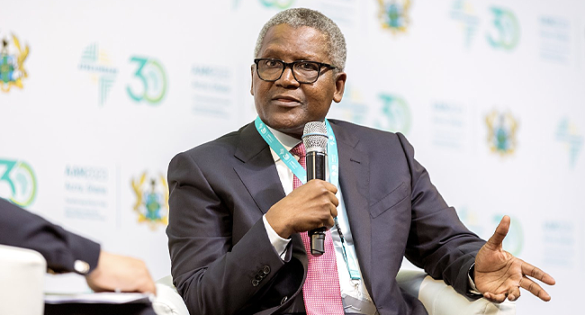
President and CEO of Dangote Group, Aliko Dangote, has called on Nigerians to prioritise locally made products as a crucial step toward strengthening the economy and creating employment. In a video message shared on Saturday by former presidential aide Reno Omokri via X (formerly Twitter), the billionaire industrialist urged citizens to choose Nigerian-made goods over imports, emphasizing that such choices promote self-sufficiency and national prosperity. “I want to encourage all Nigerians to buy only made-in-Nigeria. When you buy anything made in Nigeria, you are helping to create jobs,” Dangote said. “The only way for us to be a stronger nation is to patronise ourselves.” A longtime advocate for local production, Dangote’s business empire spans cement, sugar, salt, and now oil refining all aimed at reducing Nigeria’s reliance on foreign goods and boosting domestic industry. He concluded his message with a note of gratitude and hope, saying: “Thank you for watching, and may God bless you.”

14.png

4min4020
Nearly 900 million of the world’s poorest people about 80% of the global poor are directly exposed to climate-related hazards intensified by global warming, according to a new United Nations report released on Friday. These populations are bearing a “double and deeply unequal burden,” said Haoliang Xu, acting administrator of the United Nations Development Programme (UNDP), in a statement to AFP. “While no one is immune to the increasing impacts of climate change such as droughts, floods, heatwaves, and air pollution the poorest communities are suffering the most,” Xu said. He urged global leaders to treat climate action as a vital part of the fight against poverty, ahead of COP30, the UN climate summit scheduled for November in Brazil. The warning comes alongside an annual report co-published by the UNDP and the Oxford Poverty and Human Development Initiative. The study shows that 1.1 billion people in 109 countries approximately 18% of a population of 6.3 billion live in acute multidimensional poverty, measured by indicators such as child mortality, inadequate housing, limited access to education, electricity, clean water, and sanitation. Notably, half of this group are children. The report illustrates the grim reality of multidimensional poverty through real-life examples, including Ricardo, a day labourer from Bolivia’s Guarani Indigenous community near Santa Cruz de la Sierra. Ricardo lives in a crowded single-family home with 18 relatives, including three children, and lacks access to basic services like schooling, clean cooking, and sanitation. “This household’s daily life exemplifies the interconnected challenges of poverty,” the report stated. Sub-Saharan Africa, South Asia Face the Greatest Risks The report identifies sub-Saharan Africa and South Asia as the two regions most affected by multidimensional poverty and also among the most vulnerable to climate change impacts. Researchers analysed four major environmental risks: extreme heat, floods, drought, and air pollution. Poor households are disproportionately affected due to their dependence on sectors like agriculture and informal work, which are highly sensitive to climate shocks. “When environmental hazards occur repeatedly or simultaneously, they worsen existing poverty,” the report said. Key findings include: 608 million poor people face extreme heat 577 million are affected by air pollution 465 million live in flood-prone areas 207 million suffer from drought conditions 651 million are exposed to at least two of these risks 309 million experience three or more 11 million poor individuals are exposed to all four risks within a single year “These overlapping threats highlight that climate vulnerability and poverty are globally intertwined,” the report warned. Climate Change Threatens Development Gains The intensification of extreme weather events threatens to undermine decades of progress in development and poverty reduction. South Asia, for instance, has made notable advances in lowering poverty rates, yet 99.1% of its poor population remains exposed to at least one climate hazard. The report urges countries in vulnerable regions to adopt a new development path that integrates aggressive poverty reduction efforts with innovative climate strategies. With the planet continuing to warm, the situation is expected to deteriorate further especially for the world’s poorest nations, which face the highest exposure and have the least capacity to adapt. “Responding to these layered risks means prioritising both people and the planet,” the report concludes. “What’s urgently needed now is a shift from acknowledgment to rapid, coordinated action.” AFP

13-6.jpeg

5min2100
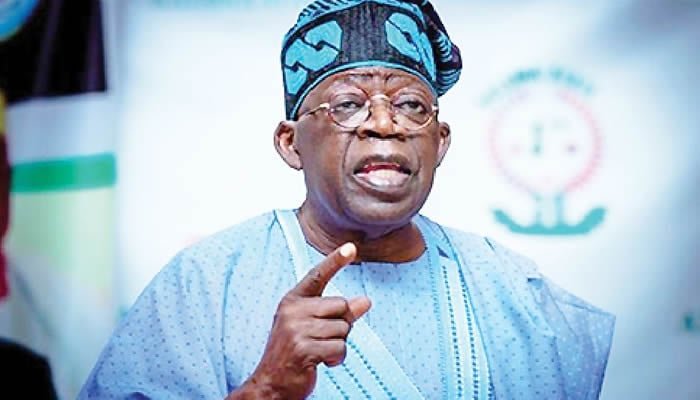
The Federal Government is preparing to roll out a nationwide campaign to promote Made-in-Nigeria goods and services under the “Nigeria First” policy, as part of broader efforts to boost the country’s manufacturing sector. President Bola Tinubu announced the initiative on Thursday during the fifth Adeola Odutola Lecture, hosted by the Manufacturers Association of Nigeria (MAN) in Lagos. The President was represented at the event by the Minister of State for Industry, Trade and Investment, Senator John Enoh. According to Enoh, the campaign is designed to redirect domestic demand toward locally produced goods that meet international quality standards, while also tackling Nigeria’s heavy reliance on imports. He noted that early research suggests the campaign could increase manufacturing output by as much as six percent and generate over 500,000 jobs within three years. Tinubu reaffirmed his administration’s commitment to supporting the growth of the manufacturing sector through targeted policies that encourage local production, consumption, and export. “No nation achieves sustainable prosperity without producing competitively and exporting at scale,” the President said. “Economic resilience begins in the factory and is sustained in the marketplace. We are committed to lowering structural costs and enabling Nigerian manufacturers to thrive both locally and globally.” He also outlined six core policy pillars of the “Nigeria First” agenda: Reforms in federal procurement Enforcement of quality and standards Export market expansion Improved access to finance Enhancements in energy, logistics, and skills development Strengthening of input security President Tinubu urged manufacturers to maintain high standards and transparency, and to work closely with government agencies by sharing accurate data on production capacity and pricing to help guide policy decisions. In his remarks, President of Dangote Group, Alhaji Aliko Dangote represented by former MAN President, Mr. Mansur Ahmed outlined eight key expectations from the Nigeria First policy. Dangote emphasized that for the policy to be effective, it must be institutionalised as a legally binding national strategy that can endure political transitions and withstand market fluctuations. He stressed that the policy must reflect global best practices while being rooted in Nigeria’s unique industrial context. Among the key expectations he listed were: Enacting the policy into law with enforcement mechanisms Ensuring consistency and stability of implementation Creating a national supplier registry Encouraging consumer engagement and cultural buy-in Incentivising backward integration Addressing infrastructure and energy challenges Expanding access to finance Leveraging the African Continental Free Trade Area (AfCFTA) for regional export growth “The Nigeria First Policy offers a bold path to sustainable industrialisation,” Dangote stated. “But its success hinges on strong legislation, institutional backing, and coordinated implementation across government and industry. It must produce measurable outcomes that focus on local value creation and national development.” He added that every country is competing to improve the living standards of its people, and Nigeria must act decisively to stay competitive. President of MAN, Otunba Francis Meshioye, commended the government’s ongoing reform efforts, including the Nigeria First policy. He said full legislation and rigorous implementation could significantly uplift the manufacturing sector and enhance the welfare of Nigerian citizens. However, Meshioye acknowledged that local manufacturers continue to face severe challenges, both from global economic pressures and domestic policy and macroeconomic constraints. He stressed that the Nigeria First policy is not just an industrial strategy, but a matter of national economic survival. “If we fail to intentionally support our own manufacturers, we risk becoming uncompetitive globally,” Meshioye warned. “MAN views this policy as a foundation for national resilience, job creation, foreign exchange savings, and technological advancement. Its success depends on firm legislation and unwavering execution.” The 5th Adeola Odutola Lecture and Made-in-Nigeria Exhibition took place from October 14 to 16 in Lagos.  NAN