
Author: Lifestyle & Wellness Desk

Donald-Trump-2-1.webp

6min3610
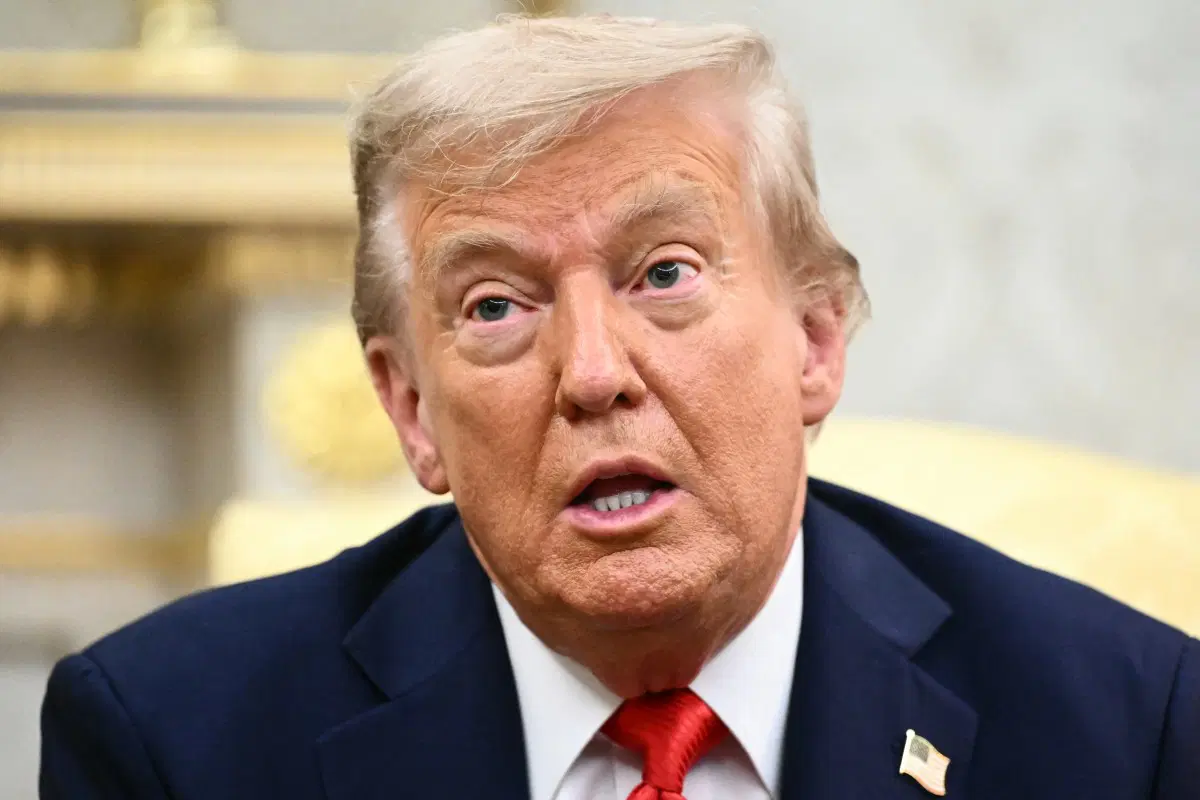
Former U.S. President Donald Trump has confirmed that he approved covert CIA operations inside Venezuela, triggering strong backlash from Venezuelan President Nicolás Maduro, who accused the U.S. of pursuing regime change under the guise of counter-narcotics operations. Trump’s remarks come amid a wave of U.S. military activity in the Caribbean, including at least five strikes on boats suspected of drug trafficking, which have resulted in the deaths of 27 people. UN human rights experts have condemned the actions, describing them as potential “extrajudicial executions.” Speaking at the White House, Trump said the U.S. was considering expanding operations from the sea to land in its efforts to dismantle drug networks in the region. “We’re looking at land,” Trump said. “They Venezuela have emptied their prisons into the United States, and we have a drug problem coming from there we’re going to stop it.” While Venezuela is not a major player in the global drug trade compared to its neighbors, Trump cited both immigration and narcotics as reasons for greenlighting CIA activity. He declined to confirm whether the ultimate goal of the operations was to oust Maduro, instead replying, “Wouldn’t it be a ridiculous question for me to answer?” According to The New York Times, the authorization gives the CIA leeway to act independently or alongside broader U.S. military efforts. However, it remains unclear whether operations are currently underway or if the agency is preparing for future missions. The CIA has a long history of intervention in Latin America. Maduro Responds: “No to War, No to Coups” In a televised address, Maduro, whose presidency remains contested internationally after disputed elections, appealed directly to the American public: “No war, yes peace. No to regime change, no to CIA-orchestrated coups d’état.” He compared the current tensions to the failed military interventions in Afghanistan, Iraq, and Libya, warning against escalating conflict in the region. In response to rising U.S. military deployments reportedly involving eight warships, a nuclear-powered submarine, and fighter jets Maduro ordered military drills in the Petare district of Caracas and the nearby Miranda state. He also mobilized police forces, the military, and civilian militias, citing national defense. U.S. Expands Military Presence The U.S. military buildup in the Caribbean has raised fears in Caracas of a potential intervention. Around 10,000 U.S. troops are believed to be stationed in the region, either on naval vessels or in Puerto Rico, a U.S. territory. On Tuesday, the U.S. carried out another strike near Venezuela’s coastline, killing six people aboard a boat that Trump later described as part of a narcotics network. In a statement posted on Truth Social, he claimed intelligence confirmed the vessel was linked to drug-trafficking organizations and transiting a known route. U.S. officials have not released details about the individuals on board or the specific drug network involved. Venezuelan Government Condemns U.S. Actions Venezuelan Foreign Minister Yván Gil strongly condemned Trump’s remarks and the increased U.S. military activity. “We reject the warmongering and provocative statements of the U.S. president. The use of the CIA and military deployment in the Caribbean amounts to acts of aggression and harassment,” Gil wrote on Telegram. The U.S. has previously accused Maduro of involvement in the so-called Cartel of the Suns, alleging that high-ranking Venezuelan military officials are complicit in drug trafficking. Maduro has denied these claims. In a leaked memo to U.S. lawmakers, the Trump administration described its operations against drug cartels as part of a “non-international armed conflict” a legal term often used in the context of counterterrorism. Analysts Weigh In Mick Mulroy, a former CIA paramilitary officer and senior Pentagon official, said that CIA covert operations must be authorized through a presidential finding a formal and classified order identifying specific targets and objectives. “Such a finding would represent a significant escalation,” Mulroy said. “Perhaps a real-life Sicario,” he added, referencing the Hollywood film that depicts U.S. agents conducting clandestine operations against Mexican cartels. As tensions mount, observers warn that escalating covert and military operations could lead to broader conflict, deepening instability in an already volatile region. While Washington justifies its actions as part of a crackdown on narcotics, Venezuela views them as an existential threat to its sovereignty.

mm-1.jpeg

3min1310
Nigeria’s inflation rate fell to 18.02% in September 2025, marking a 2.1 percentage point drop from 20.12% in August 2025, according to the National Bureau of Statistics (NBS). This is the first time in three years that the country’s inflation rate has dropped below 20%, and it also marks the sixth consecutive monthly decline since April 2025. The latest figures were released in the NBS’s Consumer Price Index (CPI) report for September 2025, published on Wednesday. While economists and analysts welcomed the continued decline in inflation, many cautioned that consumer purchasing power remains weak. They also noted that the current rate is still significantly above the Central Bank of Nigeria’s (CBN) long-term inflation target of 9%. According to the NBS report: “In September 2025, the headline inflation rate eased to 18.02% from 20.12% in August 2025, reflecting a 2.1 percentage point decline. Year-on-year, this represents a significant drop of 14.68 percentage points from the 32.7% recorded in September 2024.” On a month-on-month basis, inflation was slightly lower at 0.72% in September, compared to 0.74% in August, indicating a modest slowdown in the pace of price increases. “This suggests that the rate of increase in average prices was lower in September than in the previous month,” the NBS explained. Food Inflation Falls Sharply Food inflation, a major driver of headline inflation, also saw a notable decline. The rate dropped by 5.0 percentage points to 16.87% in September, down from 21.87% in August 2025. The decrease was attributed to falling prices of key staples including maize, garri, beans, millet, potatoes, onions, eggs, tomatoes, and fresh pepper. On a year-on-year basis, food inflation was 20.9 percentage points lower than the 37.77% recorded in September 2024. Month-on-month, the food inflation rate was -1.57% in September, a significant drop of 3.22 percentage points compared to 1.65% in August. Regional Breakdown of Food Inflation (YoY) The NBS data also provided a state-by-state breakdown of food inflation on a year-on-year basis: Highest increases were recorded in: Ekiti – 28.68% Rivers – 24.18% Nasarawa – 22.74% Lowest increases were seen in: Bauchi – 2.81% Niger – 8.38% Anambra – 8.41% Despite the downward trend, analysts stress that inflation remains a major concern, especially for low-income households, and called for continued policy focus on stabilizing food supply chains and improving local production to sustain the gains.

cc.jpg

3min2360
An Israeli couple abducted during the Hamas attack on 7 October 2023 has finally been reunited after nearly two years in captivity. Noa Argamani and Avinatan Or were kidnapped from the Nova music festival, one of the deadliest scenes during the coordinated assault. Video footage of Ms Argamani being forcibly taken away on a motorbike became one of the defining images of the tragedy. Ms Argamani was rescued on 8 June 2024 during a special forces operation. Her partner, Avinatan Or, was held separately in Gaza for 738 days and was released this week as part of a broader ceasefire deal brokered by U.S. President Donald Trump. In an emotional Instagram post shared shortly after their reunion, Ms Argamani wrote, “Two years since the last moment I saw Avinatan, my love. Two years since terrorists kidnapped us, tore us apart in front of the whole world.” Now reunited, she said they are ready to “begin healing together.” Israeli media reported that the couple shared their first cigarette together since 2023, a small but poignant symbol of reconnection after their long separation. Ms Argamani described her time in captivity held with other women and children in residential buildings while Avinatan, she said, was kept in Hamas tunnels, with little to no contact with the outside world. “Hamas released proof of life from me, but there was complete silence about Avinatan,” she wrote in Hebrew. “We won our personal war, and the world fought with us to reach this moment.” She also thanked President Trump for his role in facilitating the deal that secured the release of hostages, saying his intervention helped them “overcome the darkness.” Avinatan Or’s father, Yaron Or, spoke to Israeli media about the harsh conditions his son endured. He revealed that Avinatan who stands nearly 2 meters tall was held for months in confined underground spaces as small as 1.8 meters high, with minimal food and almost no human interaction. “He had no books, no contact, nothing,” his father said. “At one point, he was given a Rubik’s Cube. That was all.” According to him, Avinatan was once beaten after attempting to escape while being moved through a tunnel. “His guards were people who had lost family members in Israeli airstrikes. It’s a miracle they didn’t harm him more,” Mr. Or added. He noted that his son is slowly beginning to share his experiences: “We’re not pushing him he’s opening up bit by bit. Physically, he’s still recovering. But mentally, thank God, he’s the same Avinatan same humour, same strength.” The couple’s reunion has offered a rare moment of relief in a deeply painful conflict, reminding many of the human stories behind the headlines.

aaa6.png

3min1930
The International Monetary Fund (IMF) has stated that the recent depreciation of the Naira should not be viewed entirely negatively, noting that it could serve as a useful tool in helping Nigeria adjust to economic shocks. Speaking at the Global Fiscal Sustainability Report press briefing during the ongoing IMF-World Bank Annual Meetings in Washington, D.C., the IMF’s Financial Counsellor and Director of Monetary and Capital Markets, Mr. Tobias Adrian, said a weaker exchange rate can support macroeconomic stability. “In the context of the Nigerian economy, exchange rates serve as important buffers to absorb shocks,” he said. “A depreciating exchange rate is not necessarily a bad thing in fact, it may help restore economic equilibrium.” Responding to questions on policy advice for Nigeria following the Naira’s significant devaluation over the past two years, Adrian highlighted progress made by Nigerian authorities in implementing stronger monetary policies and moving toward a more flexible exchange rate regime. He added that improved transparency in foreign exchange reserve reporting and better revenue collection had contributed to declining inflation from over 30% last year to 23% this year and more stable FX reserves. “So, the direction of travel appears to be positive,” he said. Sub-Saharan Africa Facing Economic Headwinds Mr. Adrian also commented on broader regional challenges, noting that Sub-Saharan Africa continues to face economic headwinds despite a period of relatively strong growth. “While capital flows are beginning to resume, these economies remain vulnerable,” he cautioned. “If foreign investment retracts, it could expose structural weaknesses. That’s why strengthening fiscal and monetary fundamentals, revenue mobilization, and effective debt management remains crucial.” He added that support from the international community would be important in helping countries like Nigeria build resilience. IMF Welcomes Stablecoin Regulations On digital currencies, Adrian welcomed recent steps taken by various countries to regulate stablecoins, including the U.S., European Union, and Japan. “There are currently about $400 billion in stablecoins globally, most of which are denominated in U.S. dollars,” he said. “We’re seeing progress as jurisdictions begin to establish legal and regulatory frameworks.” He noted that the IMF had published a comprehensive policy framework for crypto assets in February 2023, providing guidance for countries on how to regulate and manage these evolving financial instruments. “While approaches differ across countries, the general direction aligns with our recommendations,” Adrian said.

a1m.jpeg

3min4890
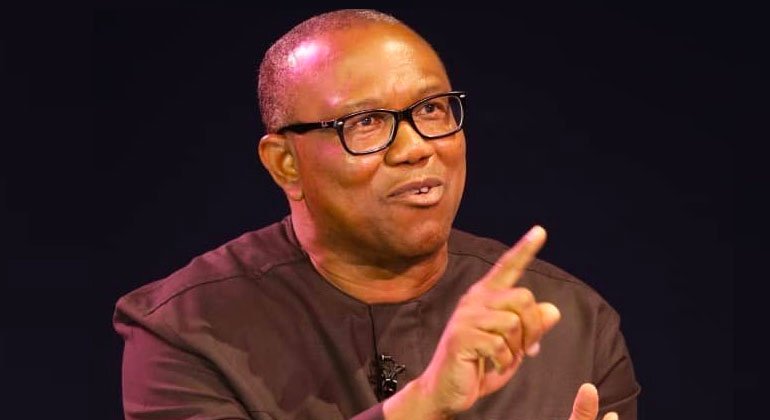
Abuja — The 2023 Labour Party presidential candidate, Peter Obi, has strongly criticised the ongoing demolition of private properties by government agencies across the country, describing the actions as unjust and insensitive, especially when carried out without prior notice. In a statement shared on his X handle, Obi condemned what he called the “willful destruction” of citizens’ homes, shops, and goods by both federal and state authorities. He said: “The recent wave of demolitions and destruction of people’s properties and merchandise is deeply condemnable. A government whose policies have already pushed millions into poverty should show compassion, not add to their suffering.” Obi lamented that the demolitions were happening at a time when the government ought to be focused on easing the economic hardship faced by Nigerians, noting that such actions were further impoverishing citizens and stifling small businesses. “These demolitions wipe out livelihoods, destroy years of investment, and erode the economic security of hardworking Nigerians. Many of the affected shops contained goods worth billions of naira, representing years of sacrifice and effort,” he stated. He questioned the legality of destroying private property not linked to any criminal activity and without following due process, asking whether such actions truly serve the public interest or merely reflect arbitrary use of power. “The government must ensure that urban development and enforcement measures align with the rule of law and protect citizens’ rights,” he added. Obi warned that the ongoing demolitions send a negative signal to local and foreign investors, discouraging entrepreneurship and economic growth. “If we fail to speak up against such injustices, we risk undermining the very foundation of economic progress and social stability. Every Nigerian has the right to earn a living through honest work, and that right must be protected,” he said.

aaa6.png

2min5120
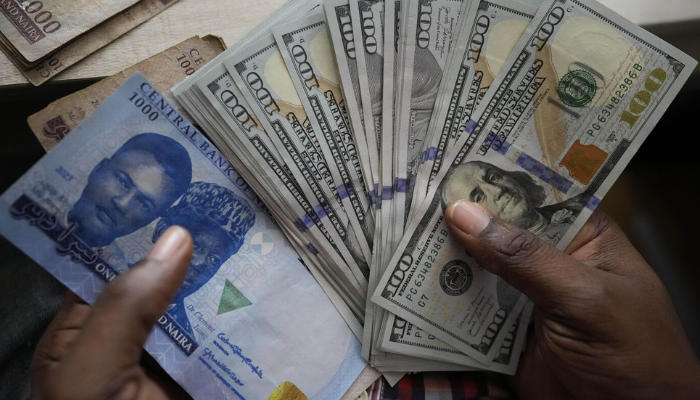
The naira recorded a mild depreciation on Tuesday across Nigeria’s foreign exchange markets, as official (NFEM/CBN) rates hovered in the mid-₦1,400 range, while parallel market traders continued quoting the dollar between ₦1,490 and ₦1,505. At the NFEM or official market, the exchange rate fluctuated between ₦1,460 and ₦1,466 per dollar, with Central Bank reference figures also maintaining levels within the high ₦1,400s — the benchmark used by banks and authorised dealers. In the parallel market, rates remained elevated, trading around ₦1,490 to ₦1,505 per dollar, depending on the location and vendor. Market overview Data from FX trackers and trading platforms showed that the official (NFEM/CBN-linked) rate traded in the mid-₦1,400s on October 14, with TradingEconomics reporting a USD/NGN rate of ₦1,461.36 for the day. By contrast, parallel market rates — where most retail dollar demand is met — stayed higher, reflecting continued pressure from importers, travellers, and individuals seeking quick access to foreign currency. The persistent gap between the two markets highlights limited dollar supply at the street level and small-scale arbitrage across trading channels. Reasons for the rate gap Analysts attribute the difference between official and parallel rates to factors such as: Restricted FX inflows and rising import and remittance demand. Delayed liquidity transmission from central bank operations to bureau de change operators. Uneven access to official forex by small businesses and individuals. They note that while the CBN’s benchmark rates guide banks and large corporates, parallel market rates capture real-time retail demand. Future interventions by the apex bank — including direct forex sales to BDCs or policy adjustments — could either narrow or widen the spread. Broader implications For consumers and businesses dependent on cash dollars, such as importers and travellers, the higher parallel market rate increases costs. Corporates with access to official channels, however, continue to settle closer to NFEM reference levels. Nigerians planning foreign transactions are advised to compare both official and street rates before making payments.

aaa5-1280x828.jpg

4min4230
Senior figures in Nigeria’s medical field have identified mentorship as a vital tool to curb the increasing migration of doctors abroad, popularly referred to as the Japa syndrome. They urged young doctors to remain in the country after graduation and contribute to national development, despite existing challenges in the health sector. The experts — including the Chief Medical Director of the Lagos University Teaching Hospital (LUTH), Prof. Wasiu Adeyemo; fertility specialist and Secretary-General of the International Federation of Fertility Societies, Prof. Oladapo Ashiru; and Dean of the Faculty of Clinical Sciences, University of Lagos, Prof. Olufemi Fasanmade — emphasised the need for stronger mentorship between senior and younger medical professionals to address the ongoing brain drain. They spoke at the 20th Annual Scientific Conference and Faculty Gathering of the Faculty of Clinical Sciences, College of Medicine, University of Lagos, themed “Mentorship: Raising the Next Generation of Leaders in the Medical Profession.” The event, held at the Old Great Hall of the college, brought together distinguished medical professionals who have made significant contributions to healthcare delivery in Nigeria and across Africa. The experts expressed concern that the mass emigration of doctors has left the health system overstretched and underscored the need for senior professionals to engage, guide, and inspire younger doctors to explore opportunities in clinical practice, academia, research, and healthcare management within the country. Prof. Ashiru, who delivered the keynote address, reflected on his early career journey and credited his mentors for shaping his path in medicine. He highlighted mentorship as a transformative process that not only transfers knowledge but also builds character, confidence, and vision. “Mentorship is not just about teaching — it’s about transformation. It bridges the knowledge, courage, and vision gaps. The future of medicine depends on the mentors we become today,” he said. He advised mentors to listen more than they speak and to guide young doctors with empathy and purpose, while urging mentees to remain humble, disciplined, and eager to learn. Prof. Adeyemo described the Japa trend as a major threat to Nigeria’s healthcare system, stressing the need to nurture the next generation of doctors through deliberate mentoring and better welfare conditions. “We must care for our health workers and create systems that make them want to stay,” he said. On his part, Prof. Fasanmade said the goal of the conference was to ensure that senior professionals pass down the right knowledge, skills, and values to sustain the future of medical practice in Nigeria. He added that mentorship remains the cornerstone for building leadership and excellence in medicine, noting that “the future of healthcare depends on how well today’s leaders prepare the next generation.”

aaaaaaaaaaaaa222222.webp

5min2800
Medical experts have warned that individuals who consistently work in high-stress or adrenaline-driven environments face a greater risk of developing hypertension, anxiety, and sleep disorders if such conditions are not properly managed. They explained that people in fast-paced professions—such as emergency medical staff, trauma responders, journalists, and security personnel—are particularly vulnerable due to their constant exposure to stress and crisis situations. Experts noted that while adrenaline levels usually drop once a stressful event ends, repeated exposure to high-pressure situations keeps stress hormones like adrenaline and cortisol elevated, leading to persistently high blood pressure and cardiovascular strain over time. According to Mental Health America, adrenaline, or epinephrine, is a hormone produced by the adrenal glands in response to excitement or danger. It prepares the body for “fight or flight” by increasing heart rate, expanding airways, and improving blood flow to muscles. However, prolonged or frequent surges can negatively affect heart health. The World Health Organisation defines hypertension as sustained blood pressure readings of 140/90 mmHg or higher. It identifies the condition as a leading cause of death globally, with more than 1.4 million adults aged 30–79 diagnosed in 2024. A professor of medicine at the College of Medicine, University of Lagos, Idi-Araba, Olufemi Fasanmade, explained that individuals in demanding professions often record higher blood pressure and blood sugar levels, experience poor sleep, and endure continuous heart strain. “When this persists without sufficient rest or recovery, it can result in hypertension, diabetes, obesity, poor sleep quality, and mental health issues such as anxiety or post-traumatic stress disorder,” he said. He advised that prevention should focus on self-care, including regular rest, exercise, adequate sleep, and mental health support. “If stress occurs continuously without downtime, it eventually takes a toll on the body,” he warned. Fasanmade also observed that some professionals become psychologically attached to constant pressure, finding it difficult to relax outside work. “Some people actually get addicted to high-pressure jobs and feel unfulfilled when away from them. That’s not a healthy pattern. Taking breaks, exercising, and seeking therapy when necessary are essential,” he added. He encouraged those in stressful roles to take frequent holidays, include short breaks during shifts, and engage in relaxing activities such as reading or watching TV. In some cases, he said, therapy may be necessary to manage chronic stress. He further advised workers in such roles to watch for warning signs like fatigue, anxiety, sleep disturbance, or rising blood pressure, noting that these are indicators the body needs recovery. “If blood pressure readings rise steadily over time, it’s a signal to rest and undergo medical evaluation,” he said. Similarly, the President of the Nigerian Hypertension Society, Professor Simeon Isezuo, said hypertension affects one in three adults in Nigeria. While genetics play a role, he emphasised that lifestyle factors—especially stress and high salt consumption—are major contributors. He added that individuals with underlying risk factors who work in high-pressure environments are more likely to develop hypertension, while those already diagnosed may find it harder to keep their blood pressure under control.

aaa9.jpg

5min1420
Nigeria’s agricultural sector is set to receive a major boost following the approval of a €190 million (approximately ₦320.5 billion) credit line by the European Union to enhance lending to farmers and agribusinesses through local commercial banks and development finance institutions. The facility, provided by the European Investment Bank (EIB), was unveiled during a bilateral meeting between senior EIB officials and representatives of Nigeria’s Federal Ministry of Budget and Economic Planning on the sidelines of the Global Gateway Forum in Brussels, Belgium. According to a statement from the Minister of Budget and Economic Planning’s Special Adviser on Media, Bolaji Adeniyi, the initiative reflects the EU’s growing commitment to Nigeria’s economic diversification agenda. EIB Director for International Partnerships, Thourayya Tricki, said the funding aims to strengthen Nigeria’s agricultural value chains, particularly in cocoa and dairy, while advancing climate-smart and sustainable farming practices. “This credit line will expand access to finance and enhance the competitiveness of Nigeria’s agri-food products,” she noted. Tricki, accompanied by EIB’s Head of Sub-Saharan Africa Relations, Diedrick Zambon, explained that the facility combines credit and technical support components designed to “de-risk agricultural lending and build institutional capacity for long-term financing.” Nigeria currently benefits from multiple EU-backed programmes, including an €18 million grant to enhance local vaccine production and a €50 million credit line to improve access to finance in the pharmaceutical sector. Representing Nigeria, Special Assistant to the Minister of Budget and Economic Planning, Bolaji Onalaja, and EU Unit Focal Officer, Benjamin Galadima, reaffirmed the government’s commitment to implementing reforms under President Bola Tinubu’s Renewed Hope Agenda to attract sustainable investments. “Our administration is focused on creating an enabling investment environment through the upcoming National Development Plan (2026–2030) and the Ward-Based Development Programme to drive inclusive growth,” Onalaja stated. The Nigerian delegation also met with officials from the Directorate of International Partnerships and the European Bank for Reconstruction and Development to explore collaboration opportunities in renewable energy, green infrastructure, and industrial development. Speaking on behalf of Minister of Budget and Economic Planning Senator Abubakar Bagudu, who was on an official visit to Vienna, the delegation expressed gratitude to the EU Delegation to Nigeria and ECOWAS, led by Ambassador Gauthier Mignot, for supporting Nigeria’s participation in the Global Gateway Forum. The Global Gateway Forum, the EU’s flagship investment platform, convenes governments, investors, and development institutions to mobilise resources for sustainable projects in digitalisation, green transition, and human capital growth. European Commission President Ursula von der Leyen reaffirmed the EU’s commitment to “building partnerships founded on trust and shared prosperity,” adding that the Global Gateway Investment Package has been expanded to €400 billion with a new Investment Hub to fast-track project delivery, particularly in Africa. The EU–Nigeria credit agreement is expected to further strengthen bilateral ties under the Global Gateway Strategy while advancing Nigeria’s agricultural transformation, food security, and export competitiveness.

aa7.webp

4min1810
The newly elected Chairman of the Chartered Institute of Bankers of Nigeria (CIBN), Lagos State Branch, Akinwunmi Lawal, has assured Nigerians that the recently enacted tax law is not designed to burden the poor but to strengthen government revenue and support economic growth. Lawal gave the assurance on Saturday during the 2025 Annual General Meeting and election of new executive committee members of the Lagos branch, where he was elected as the 18th chairman. Lawal, the immediate past Managing Director and Chief Executive Officer of NPF Microfinance Bank, succeeded Adeyemo Adeoye, the Managing Director/CEO of Chem & Eleos Capital. He and other newly elected executives will steer the affairs of the branch for the next two years. Speaking after his election, Lawal noted that Nigeria’s tax-to-GDP ratio had increased to 13.5 per cent from below 10 per cent and was projected to rise further when the new tax law takes effect in January. “The new tax law is not about placing additional pressure on existing taxpayers,” he explained. “It is about expanding the tax base to fund national development and providing relief to low-income earners.” Delivering his acceptance speech titled ‘Repositioning the Lagos State Branch for Sustainable Growth, Inclusiveness, and Professional Excellence,’ Lawal commended President Bola Tinubu’s ongoing economic reforms, describing them as bold and transformative. “Nigeria’s economy is recovering steadily. The reforms initiated over the past two years are now yielding measurable results,” he said. “The country’s GDP grew by 4.23 per cent in the second quarter of 2025 — the fastest in four years — surpassing the IMF’s projection of 3.4 per cent. Inflation also dropped to 20.12 per cent in August, the lowest in three years.” He outlined key focus areas for his tenure, including membership expansion, financial sustainability, academic–industry partnerships, and health and wellness initiatives. In his valedictory address, the outgoing chairman, Adeoye, reported that the branch’s income rose from ₦27.19 million when he assumed office to ₦54.82 million in 2024 — a 101.65 per cent increase. Cash balances also grew by over 30 per cent during his tenure. “The results recorded in the year under review represent the branch’s strongest performance in more than a decade,” Adeoye stated, expressing optimism that the momentum would continue. Other newly elected officers include Dr. Abosede Yinka-Ogundimu as first vice chairman, Oyelayo Adekanye as second vice chairman, Nze Nnaji as secretary, and Damilola Owoeye as treasurer, among others.