

 Lifestyle & Wellness Desk
Naira Depreciation Not Necessarily Negative — IMF
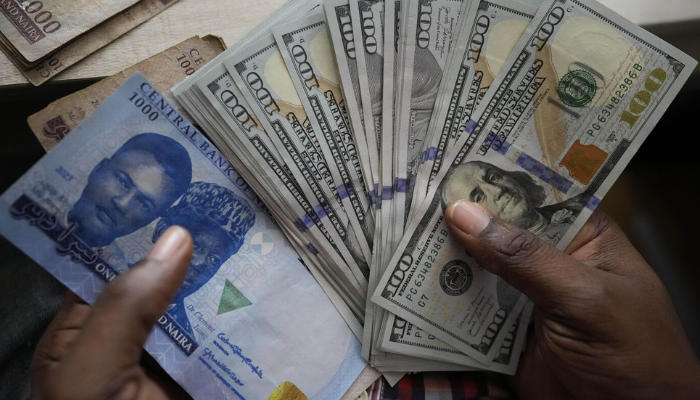
The International Monetary Fund (IMF) has stated that the recent depreciation of the Naira should not be viewed entirely negatively, noting that it could serve as a useful tool in helping Nigeria adjust to economic shocks.
Speaking at the Global Fiscal Sustainability Report press briefing during the ongoing IMF-World Bank Annual Meetings in Washington, D.C., the IMF’s Financial Counsellor and Director of Monetary and Capital Markets, Mr. Tobias Adrian, said a weaker exchange rate can support macroeconomic stability.
“In the context of the Nigerian economy, exchange rates serve as important buffers to absorb shocks,” he said. “A depreciating exchange rate is not necessarily a bad thing in fact, it may help restore economic equilibrium.”
Responding to questions on policy advice for Nigeria following the Naira’s significant devaluation over the past two years, Adrian highlighted progress made by Nigerian authorities in implementing stronger monetary policies and moving toward a more flexible exchange rate regime.
He added that improved transparency in foreign exchange reserve reporting and better revenue collection had contributed to declining inflation from over 30% last year to 23% this year and more stable FX reserves.
“So, the direction of travel appears to be positive,” he said.
Sub-Saharan Africa Facing Economic Headwinds
Mr. Adrian also commented on broader regional challenges, noting that Sub-Saharan Africa continues to face economic headwinds despite a period of relatively strong growth.
“While capital flows are beginning to resume, these economies remain vulnerable,” he cautioned. “If foreign investment retracts, it could expose structural weaknesses. That’s why strengthening fiscal and monetary fundamentals, revenue mobilization, and effective debt management remains crucial.”
He added that support from the international community would be important in helping countries like Nigeria build resilience.
IMF Welcomes Stablecoin Regulations
On digital currencies, Adrian welcomed recent steps taken by various countries to regulate stablecoins, including the U.S., European Union, and Japan.
“There are currently about $400 billion in stablecoins globally, most of which are denominated in U.S. dollars,” he said. “We’re seeing progress as jurisdictions begin to establish legal and regulatory frameworks.”
He noted that the IMF had published a comprehensive policy framework for crypto assets in February 2023, providing guidance for countries on how to regulate and manage these evolving financial instruments.
“While approaches differ across countries, the general direction aligns with our recommendations,” Adrian said.

