
Author: Lifestyle & Wellness Desk

Real-Estate.png

4min5340
Nigeria’s rental market is spiralling, with two-bedroom apartments now averaging ₦2.5m annually in major cities—far above rates recorded just a few years ago. From ₦250,000 flats in Benin to ₦20m luxury units in Lagos, tenants nationwide are feeling the pinch of surging rents that have triggered an affordability crisis. Rising costs nationwideIn Lagos, Ibadan, Port Harcourt, Kano, Abuja, and other cities, rent hikes have become steep and unpredictable. The two-bedroom flat—once considered the “middle ground” for families and professionals—has moved out of reach for many households. In Jos, Plateau State, residents report that rents in standard areas range between ₦1.5m and ₦2.5m, while less developed districts cost between ₦500,000 and ₦800,000. In Abuja, disparities are stark: two-bedroom flats in Kubwa or Karu average ₦1.5m–₦2.5m, but in Maitama and Asokoro, rents soar up to ₦10m annually. Ibadan, long regarded as affordable, has seen rents jump from ₦300,000–₦500,000 in 2022 to ₦800,000–₦1.5m today. In Lagos, the spread is dramatic: Ikorodu flats go for ₦1.5m–₦2m, while Ikoyi and Victoria Island command ₦8m–₦20m. Similar trends are seen in Ogun, Enugu, Uyo, Calabar, and Kano, where location and amenities significantly drive pricing. Hidden costs and frustrationsTenants lament not just rent increases but also hidden costs such as legal fees, agency commissions, and service charges. In Ibadan, inspections have turned into bidding wars, while in Lagos, some tenants report rents tripling within a review cycle. Why rents are climbingExperts trace the surge to multiple factors. Soaring construction costs as inflation has driven up prices of cement, steel, tiles, and labour. Currency instability as naira depreciation has made imported building materials far costlier. Housing deficit as Nigeria faces a shortfall of about 28 million units, keeping demand high. Urban migration as cities like Lagos attract hundreds of thousands of new residents annually. Speculative pricing as landlords target elites and expatriates, sidelining middle-income earners. Calls for solutionsThe Nigerian Institution of Estate Surveyors and Valuers warns that unchecked rent hikes could worsen inequality and urban poverty. Experts recommend mass housing delivery, use of local building materials, rent-to-own schemes, tax incentives for affordable landlords, and stronger rent regulation. Dr. Timilehin Olubiyi of West Midlands Open University added that without urgent action, more families will be forced to choose between rent and basic needs like food, healthcare, and education. OutlookNigeria’s rental crisis is tightening its grip, with middle-income households spending up to 40% of their income on housing—far above global affordability benchmarks. Unless systemic reforms are implemented, experts warn that shelter may remain an elusive dream for millions of Nigerians.
dagote-2222-1.jpg

4min2190
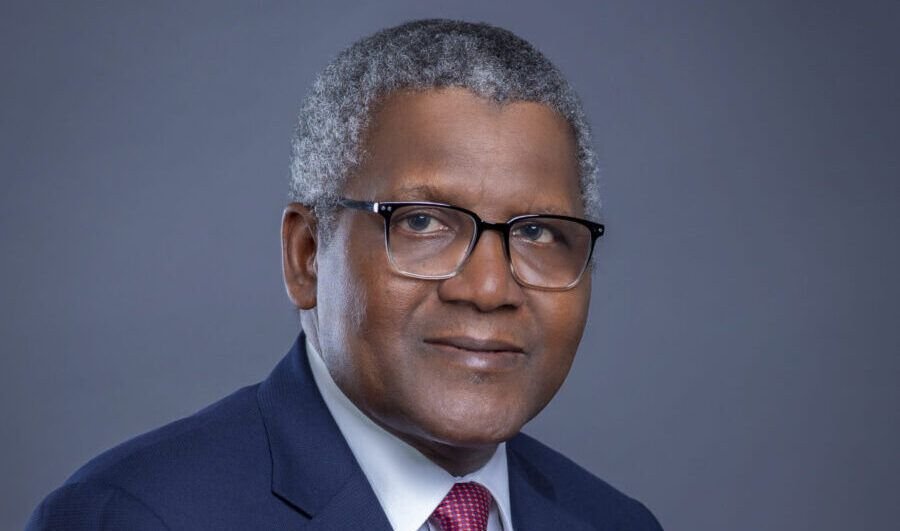
The Federal Government is intensifying efforts to mediate in the ongoing dispute between Dangote Petroleum Refinery and the Petroleum and Natural Gas Senior Staff Association of Nigeria (PENGASSAN) over the alleged mass dismissal of union members and their replacement with expatriates. Minister of Labour and Employment, Muhammad Maigari Dingyadi, has appealed to PENGASSAN to suspend its nationwide strike, which commenced yesterday, stressing that dialogue remains the only path to resolution. The strike has already disrupted operations, with members of the Nigeria Union of Petroleum and Natural Gas Workers (NUPENG) unable to effectively lift products or provide key services. In a swift reaction, the management of Dangote Refinery condemned PENGASSAN’s action, accusing the union of sabotaging Nigeria’s oil and gas sector for decades and prioritising the interests of its leaders over ordinary Nigerians. Government officials confirmed that the Ministry of Labour and Employment has scheduled an emergency conciliation meeting with both parties, urging them to prioritise peace and economic stability. “There is no alternative to dialogue,” a senior ministry source said, adding that the strike poses risks to revenue, energy security, and the wider economy. PENGASSAN has maintained that only the unconditional reinstatement of all affected members will bring the strike to an end. The union further warned against what it described as the replacement of Nigerian workers with foreign nationals. Meanwhile, the Trade Union Congress (TUC) has declared support for PENGASSAN, placing its affiliates on standby for a possible nationwide action if the matter is not resolved. The Nigerian Upstream Petroleum Regulatory Commission (NUPRC) also appealed to both parties to settle their differences amicably, citing the importance of maintaining stability in the energy supply chain. Amidst the tensions, NUPENG distanced itself from individuals parading as “elders” of its Petroleum Tanker Drivers (PTD) branch, describing them as impostors and calling for their arrest. In a separate development, the Concerned Nigerian Consumers Forum criticised PENGASSAN’s industrial action, warning that it could trigger fuel shortages and economic instability. The group urged the government to protect the refinery, describing it as a vital asset for energy independence and job creation. The Dangote Refinery, in its own statement, accused PENGASSAN of reckless behaviour, recalling past opposition by oil unions to refinery reforms and privatisation efforts. The company highlighted its contribution to infrastructure, job creation, and tax revenues, stressing that the strike was an act of “economic sabotage” against over 200 million Nigerians. The refinery called on the government and security agencies to act swiftly to safeguard national energy security and prevent further disruption.

CBN-3.jpg

3min3530
Banks with significant exposure to government deposits may come under increased pressure following the Central Bank of Nigeria’s (CBN) decision to impose a 75 per cent Cash Reserve Ratio (CRR) on non-Treasury Single Account (TSA) public sector funds. The policy was announced by CBN Governor Olayemi Cardoso in the communiqué issued after the two-day Monetary Policy Committee (MPC) meeting. He explained that the measure is aimed at strengthening liquidity management, as the MPC observed a build-up of excess liquidity in the banking system despite slowing inflation. This liquidity, the committee noted, largely stems from fiscal releases tied to improved government revenues. TSA balances, which represent federal revenues warehoused directly with the CBN, remain unaffected. However, non-TSA deposits — comprising state and local government funds typically kept with deposit money banks — have been identified as a major source of liquidity surges, particularly after Federation Account Allocation Committee (FAAC) disbursements. Afrinvest analysts observed that such inflows have historically provided banks with a pool of low-cost deposits but often coincided with periods of naira depreciation. “By sterilising 75 per cent of these balances, banks would need to intensify efforts to mobilise private sector deposits,” the firm stated, warning that lenders with large government exposures may face short-term margin pressures. Tilewa Adebajo, CEO of CFG Advisory, welcomed the policy, describing it as necessary to curb excess liquidity and rein in inflationary pressures. He argued that unchecked fiscal spending has been a key driver of core inflation, adding that the collaboration between the Ministry of Finance and the CBN would help sustain the downward trend. “If Nigeria can bring inflation to around 12 per cent, the economy could grow at eight per cent or more on a sustainable basis,” he said. Adebajo also noted that banks would gain some relief from the adjustment of the general CRR for commercial lenders, which has been reduced to 45 per cent from 50 per cent. In its post-MPC analysis, CardinalStone stated that non-TSA balances accounted for about 1.6 per cent of broad money supply at the end of 2024 and were equivalent to 1.3 times December FAAC allocations to states and local governments. The firm said this adjustment would help moderate foreign exchange pressures, as outflows from these deposits are expected to be gradual and expenditure-linked. Analysts concluded that the MPC’s decisions reflect a careful balancing act — easing slightly to support growth while tightening liquidity conditions around sensitive channels to preserve price stability and sustain confidence in the foreign exchange market.

Naria.jpg

3min3220
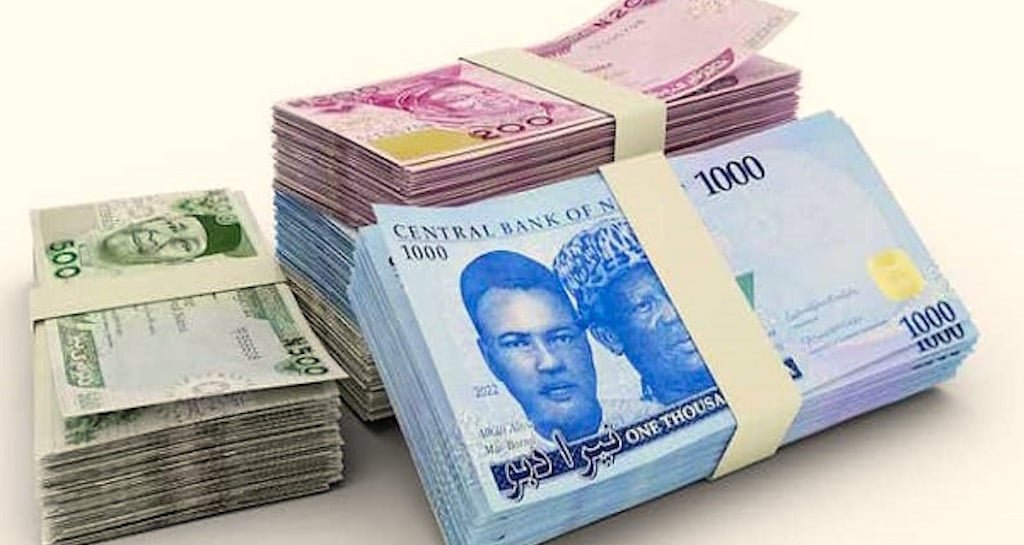
The naira has maintained its strength at the official foreign exchange market, trading below the ₦1,500/$ threshold for 10 consecutive sessions, according to data from the Central Bank of Nigeria (CBN). The local currency first dipped below the ₦1,500/$ mark on September 15, closing at ₦1,497/$ — its strongest level in more than six months. Since then, it has continued to appreciate, ending last Friday’s session at ₦1,480/$. At the parallel market, the naira also posted marginal gains, appreciating by 0.13 per cent to an average of ₦1,510/$. External reserves have provided additional support for the currency, rising to $42.23 billion from $42.03 billion over the past week, a 0.47 per cent increase. Analysts noted that the build-up in reserves has enhanced the CBN’s capacity to stabilise supply-demand imbalances while boosting confidence in near-term exchange rate stability. Reviewing last week’s performance, AIICO Capital attributed the naira’s resilience to improved liquidity from local market participants, oil inflows, and offshore portfolio investments. The firm highlighted that early trading sessions saw balanced supply and demand dynamics, with rates anchored around ₦1,492–₦1,495/$. Midweek pressures briefly pushed the rate to ₦1,498/$ before fresh dollar inflows and modest CBN interventions — estimated at $20 million across sessions — eased market tensions. By the close of the week, foreign portfolio inflows supported favourable liquidity conditions, strengthening the naira further into the ₦1,471–₦1,487/$ range. Overall, the currency appreciated by about 49 basis points week-on-week, closing at ₦1,480.66/$ at the Nigerian Autonomous Foreign Exchange Market (NAFEM). AIICO Capital added that FX market stability is expected to persist in the near term, supported by CBN’s policy adjustments and complementary fiscal measures. Cowry Asset Management Limited expressed similar optimism, projecting relative stability for the naira across markets on the back of stronger FX inflows, rising reserves, and sustained central bank interventions. Meanwhile, financial experts have welcomed the Monetary Policy Committee’s recent decision to cut the policy rate by 50 basis points. They noted that the move could ease borrowing costs for the real sector, reinforce FX stability, and shift investor sentiment towards equities as fixed-income yields moderate in response to the new macroeconomic outlook.

trade-fair-demolition-1200x750-1.jpg

3min3110
A non-profit organisation, Spaces for Change, has condemned the recent demolition of structures at the Lagos International Trade Fair Complex, describing the exercise as a violation of traders’ economic rights. In a statement issued after a visit to the site, the group expressed concern that the demolition, which began on September 25, 2025, targeted plazas, malls, shops, and other business premises without proper consultation or notice to stakeholders. “We demand justice for the unconstitutional destruction of several business premises in the Complex,” the statement read. The organisation argued that the exercise, carried out under the directive of the Lagos State Government, was justified on claims of illegal developments, lack of approvals, and defective structures, but said its findings contradicted those claims. According to Spaces for Change, victims presented building approvals issued by the Lagos International Trade Fair Complex Management Board (LITFCMB) through the Federal Ministry of Works and Housing — approvals which, it noted, call into question the state government’s assertions. The group stressed that under the LITFCMB Act of 1993, the Federal Government has authority to administer the Complex and grant leases to investors. The organisation further alleged that protesters were harassed by security agents and non-state actors mobilised during the exercise, leaving some victims hospitalised and in distress. It described the development as “economic sabotage” and a “brazen act of injustice” against legitimate business owners. The group urged the Lagos State Government to halt the exercise, compensate affected traders, and collaborate with the Federal Board to avoid future conflicts. It insisted that those responsible must be held accountable, warning that failure to act decisively would undermine confidence in the rule of law and discourage investments in the state. Meanwhile, the Lagos State Government confirmed on Thursday that the demolitions were aimed at removing illegal developments, defective structures, and buildings erected on road setbacks and drainage channels. According to the Senior Special Assistant on New Media to the Governor, Jubril Gawat, the operation was carried out jointly by officials from the Ministry of Physical Planning, Lagos State Building Control Agency, Lagos State Urban Renewal Agency, Lagos State Physical Planning Permit Authority, and other relevant agencies, alongside security personnel and lawmakers.

13-1.jpg

2min3450
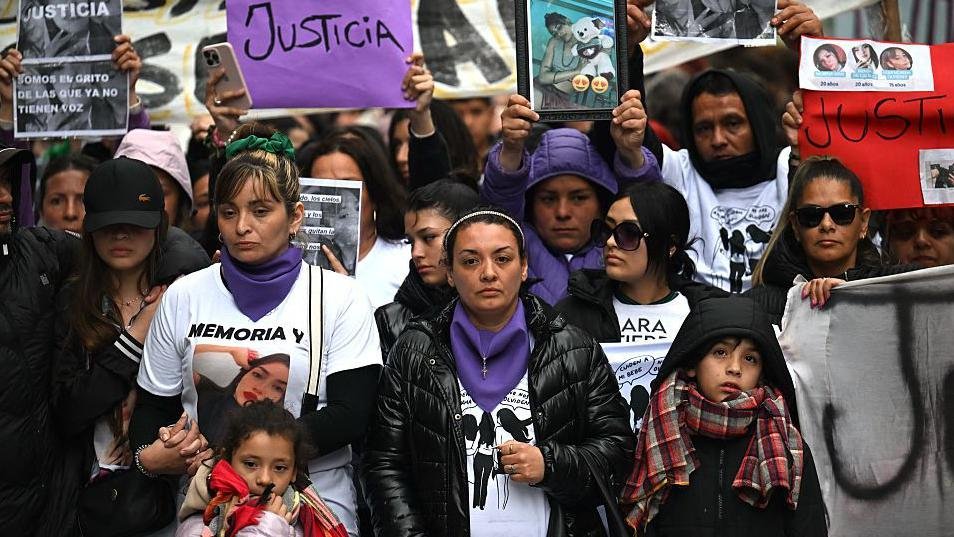
Thousands gathered in Buenos Aires on Saturday to demand justice after the horrific torture and murder of three young women Lara Gutiérrez (15), and cousins Morena Verdi and Brenda del Castillo (both 20) in a case that has shocked Argentina. The victims were lured into a van on September 19 under the pretense of attending a party, but were instead abducted, tortured, and killed an attack authorities say was orchestrated by a drug gang to punish them for allegedly violating gang rules. The killings were livestreamed on social media as a chilling warning. Five suspects three men and two women have been arrested, but the alleged ringleader, a 20-year-old Peruvian man, remains at large, according to National Security Minister Patricia Bullrich. A video recovered during questioning shows a man saying, “This is what happens to those who steal drugs from me.” The bodies were discovered buried in a property in a southern suburb of Buenos Aires, five days after the victims went missing. At the protest, grieving relatives marched to Parliament, calling for stronger protections for women and tougher action against gang violence. Brenda’s father, Leonel del Castillo, described the extent of the abuse as so severe he couldn’t recognize his daughter’s body. Her grandfather called the killers “bloodthirsty” and said, “You wouldn’t do what they did to an animal.” Femicide remains a major issue in Argentina, with one woman killed by a man every 36 hours, according to a national monitoring group.

14.jpg

2min5220
Tensions surrounding the $20 billion Dangote Petroleum Refinery escalated over the weekend, as the Forum of Concerned Nigerian Consumers called on the Federal Government and security agencies to intervene in the brewing conflict between the refinery and the Petroleum and Natural Gas Senior Staff Association of Nigeria (PENGASSAN). At a press conference in Abuja, the Forum accused the union of trying to sabotage Nigeria’s most significant private-sector energy investment, warning that such actions could trigger fuel scarcity and economic instability. Forum President Olabisi Taiwo described PENGASSAN’s threat to shut down operations over alleged mass layoffs as “industrial blackmail,” urging the government to protect the refinery from “vested interests” undermining national energy security. PENGASSAN had accused Dangote of violating labour laws by reportedly dismissing 800 workers for union activities. The union has called for a nationwide withdrawal of services beginning Monday. However, the Forum criticized the union’s defiance of a court order restraining industrial action, labeling it a disregard for the rule of law and a threat to public interest. “The Dangote Refinery is vital to Nigeria’s fuel independence. Disrupting its operations only benefits fuel importers and rent seekers,” the Forum said, urging the Ministries of Labour, Petroleum, and Justice to step in and prevent further crisis. The 650,000 bpd refinery is currently the largest single-train facility in the world and employs over 3,000 Nigerians.

14.jpg

2min4380
An ongoing industrial dispute between the Petroleum and Natural Gas Senior Staff Association of Nigeria (PENGASSAN) and Dangote Petroleum Refinery escalated sharply on Saturday, as the union ordered an immediate suspension of crude oil and gas supply to the $20 billion refinery. In a letter dated September 26, PENGASSAN accused Dangote management of sacking unionized workers in retaliation for exercising their constitutional right to join the union. The union labeled the move as anti-labour and unlawful. As a result, PENGASSAN directed its branches in major oil companies including TotalEnergies, Chevron, Seplat, Shell Nigeria Gas, Oando, Nigerian Gas Infrastructure Company (NGIC), and Renaissance to halt all crude and gas supplies to the refinery. They also ordered the shutdown of supply valves and the suspension of vessel loading operations headed to the plant. The union also accused the refinery of discriminatory practices, alleging that local workers were denied access to the site while expatriates were allowed in, and staff buses were withdrawn following the unionization drive. PENGASSAN warned that further action, including picketing, could follow if the issue remains unresolved. In response, Dangote Refinery denied claims of mass layoffs, stating that only a few workers were affected by what it described as an internal reorganization aimed at preventing sabotage. It insisted that over 3,000 Nigerians remain employed at the facility. The refinery described the union’s actions as based on misinformation and urged constructive dialogue instead. Meanwhile, the company announced it would suspend naira-based petrol sales from September 28 after exhausting its crude-for-naira allocation.

13.jpg

1min5510
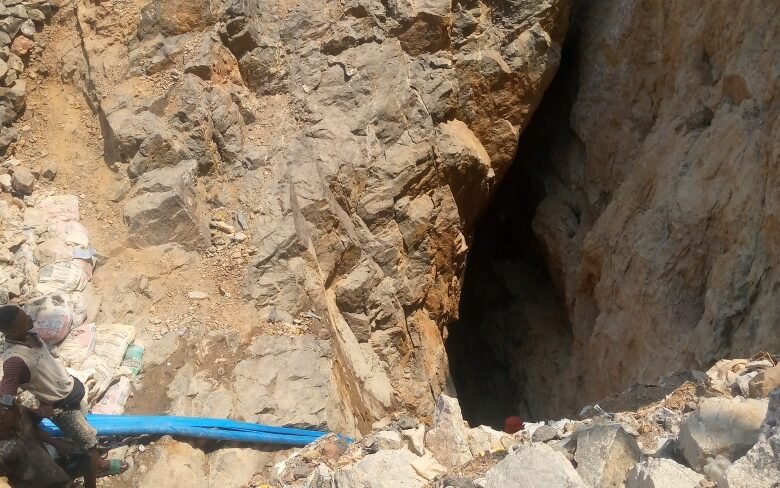
A tragic mining accident has occurred in Kadauri community, Maru Local Government Area of Zamfara State, where several artisanal miners have been reported trapped following the collapse of mining pits. The Executive Secretary of the Zamfara State Emergency Management Agency (ZSEMA), Ambassador Bala Ahmad, confirmed the incident on Friday in Gusau. He said the collapse took place on Thursday night but declined to provide further details, stating that discussions with key stakeholders were ongoing and more information would be released in due course. Local sources in Kadauri confirmed that the collapse happened after prolonged rainfall in the area, which may have weakened the structure of the pits. They reported that an unspecified number of miners remain trapped underground. While the exact number of casualties has not been confirmed, residents said that several injured miners have been taken to Maru General Hospital for treatment. Rescue efforts are currently underway, with local volunteers working alongside state emergency personnel in a desperate attempt to locate and save those still trapped. The situation remains tense as families of the miners await news of their loved ones.

kanu.jpeg

1min1780
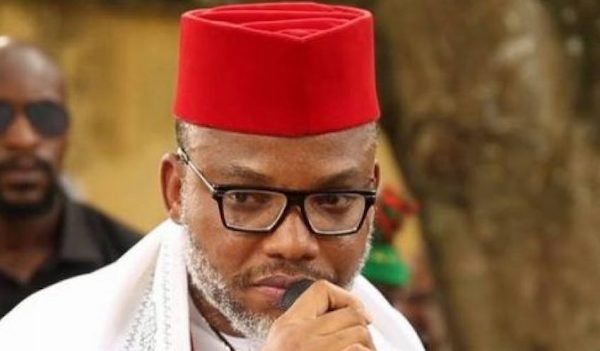
Justice James Omotosho, delivering the ruling on Friday, ordered that the medical team’s findings be submitted to the court within eight days. He explained that the report would guide the court in deciding on Kanu’s application to be transferred to the National Hospital in Abuja for comprehensive medical care. The court instructed the NMA panel to examine the medical facilities at the Department of State Services (DSS) to determine whether they are adequate for Kanu’s treatment. It added that the committee may use any hospital in the country to conduct its evaluation. According to the order, the panel should consist of 8–10 members, including a cardiologist, a neurologist, and the Chief Medical Director of the National Hospital, who must be part of the team.