Author: Lifestyle & Wellness Desk

adc.jpg

3min10760
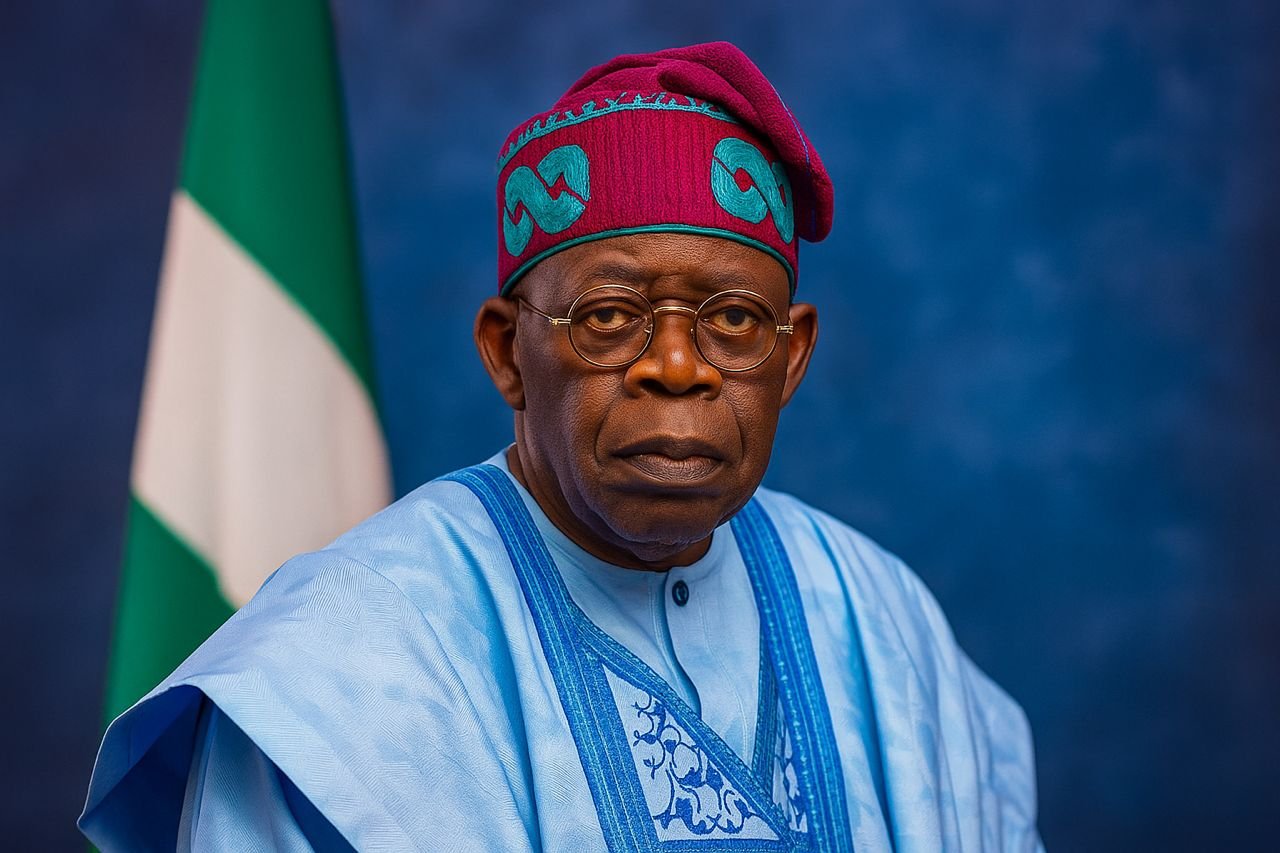
The African Democratic Congress (ADC) has called on President Bola Tinubu to leave the comfort of the Presidential Villa and engage directly with everyday Nigerians to better understand the country’s worsening security situation. According to Bolaji Abdullahi, spokesperson for the opposition coalition, the president is being misled by state governors and close advisers who are painting a distorted picture of national security. Abdullahi argued that many leaders are more interested in political appeasement than in conveying the harsh realities faced by citizens. “President Tinubu needs to step outside the Villa, interact with ordinary people, and stop relying on filtered reports that suggest insecurity is under control,” he said. “Many governors are simply telling him what they think he wants to hear.” The remarks came in response to recent claims by a presidential aide who asserted that the security situation in the country has improved under the current administration, citing reduced violence in parts of Benue, Plateau, and the South-East. The aide described ongoing security challenges as criminal acts unrelated to governance, suggesting that such issues exist globally and should not be seen as a failure of leadership. But the ADC rejected this view, warning that it risks giving the president a false sense of progress. Abdullahi said the daily experiences of Nigerians in many communities tell a different story. “I genuinely feel sorry for the president if these are the kinds of narratives he hears regularly. It means he’s being kept in a bubble,” Abdullahi said. “Across Nigeria, people are living under the constant threat of violence and insecurity. That reality cannot be ignored.” The ADC urged the president to take a more hands-on approach to assessing the country’s security landscape, warning that continued reliance on secondhand reports could prevent meaningful action and further disconnect leadership from the people.  

canada.jpg

3min6650
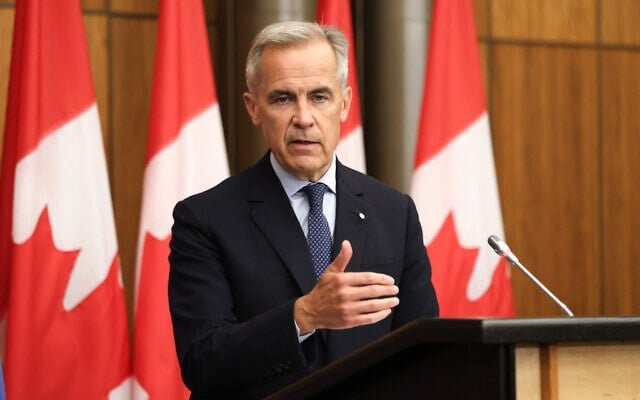
Canada has announced its intention to formally recognise the State of Palestine during the 80th United Nations General Assembly in September 2025, marking a significant departure from its long-standing policy on the Israeli-Palestinian conflict. Prime Minister Mark Carney made the announcement on Wednesday, citing the urgent need to revive the two-state solution amid escalating violence and worsening humanitarian conditions in Gaza. “This is a step we take to preserve the hope of peace, a hope that is being eroded before our eyes,” he said. Canada becomes the third G7 country, following France and the United Kingdom, to signal formal recognition of Palestinian statehood ahead of the upcoming UN session. Carney emphasised that continued civilian suffering in Gaza made coordinated international action imperative. The announcement has drawn sharp criticism from Israel, which described the move as part of a “distorted campaign of international pressure.” Former U.S. President Donald Trump also reacted strongly, warning that the decision could impact trade relations with Washington. “It will make it very hard for us to make a trade deal with them,” he posted on social media. Carney acknowledged the potential diplomatic fallout but maintained that Canada’s decision was grounded in a commitment to peace and contingent on key conditions. These include reforms within the Palestinian Authority and a firm commitment to exclude Hamas from future governance. The recognition is also tied to a pledge by Palestinian President Mahmoud Abbas to hold general elections in 2026 and to ensure the demilitarisation of a future Palestinian state. Despite the controversy, the Palestinian Authority welcomed Canada’s stance as “historic,” while France expressed readiness to work jointly toward restoring prospects for peace in the region. The UK has taken a similar position, stating it will recognise Palestine in September unless Israel commits to a ceasefire and takes other substantive steps. Carney acknowledged the complexities of the issue, blaming both Hamas’s violent opposition to Israel’s existence and the ongoing expansion of Israeli settlements in the West Bank and East Jerusalem for the erosion of the peace process. “This is not a decision we take lightly,” he said. “But if we are to support a lasting peace, we must also support a viable and democratic Palestinian state, one that coexists alongside Israel, which has an inalienable right to security.” The move signals a new chapter in Canada’s foreign policy, potentially reshaping its role in Middle East diplomacy as tensions continue to rise and hopes for negotiated peace grow increasingly fragile.  

IMG-20250727-WA0001.jpg

5min3320
The debate over Nigeria’s power rotation resurfaced on Tuesday as political leaders, traditional rulers, technocrats, and civil society representatives from across the North gathered in Kaduna to assess President Bola Tinubu’s administration at the midpoint of his tenure. The event, hosted at Arewa House and organised by the Sir Ahmadu Bello Memorial Foundation, was themed “Assessing Electoral Promises: Fostering Government-Citizen Engagement for National Unity.” It attracted prominent figures from the 19 northern states and the Federal Capital Territory. Speaking on behalf of the President, Secretary to the Government of the Federation, George Akume, emphasized that the principle of power rotation, a political understanding since Nigeria’s return to democracy in 1999 requires that the presidency remain in the South until 2031. Akume urged northern politicians to exercise patience and uphold the spirit of national unity, noting that northern leaders had supported southern leadership in the past for stability. Regional Responses: Calls for Patience and Equity The Middle Belt Forum endorsed Akume’s position, asserting that while the rotation agreement is not constitutionally binding, it remains critical to national cohesion. The group’s leader, Bitrus Pogu, stressed that equitable power sharing is essential in a diverse federation like Nigeria. However, he lamented the country’s continued struggle with ethnic and regional loyalty, which he described as a legacy of colonial division. Afenifere, a Yoruba socio-political group, also backed Akume, calling his message a timely reminder to political actors. The group applauded his defense of the administration’s development projects and governance reforms, while encouraging all regions to assess government performance through tangible results rather than emotion. Opposition Parties React: Disagreement Over Rotation Principle The Labour Party and New Nigeria People’s Party pushed back against the idea of restricting presidential ambition based on zoning. NNPP spokesman Ladipo Johnson questioned the logic of enforcing zoning when religious balancing once a political norm was disregarded in the 2023 elections. He argued that no region should be barred from contesting in 2027. Similarly, Labour Party leadership maintained that competence should outweigh zoning considerations. They emphasized the need to focus on candidates’ capacity to lead, not their region of origin, pointing to issues like security, the economy, and national development as priorities. Former Secretary to the Government of the Federation, Babachir Lawal, was more critical. He dismissed Akume’s call as hypocritical, referencing the Muslim-Muslim ticket adopted by the ruling party in the last election. Lawal said there was no binding rule on rotation and that the North had the right to contest in 2027 if it chose to. Parties Prepare for 2027 While internal debates continue, some parties are already aligning their strategies. The All Progressives Grand Alliance declared its intention to support a southern candidate in 2027, citing the need for balance and fairness. However, the party rejected any alliance with other opposition blocs, labelling them self-serving. The Peoples Democratic Party, meanwhile, maintained that the ultimate decision rests with voters. The party accused the current administration of failure and said Nigerians would decide their fate at the ballot box. Kwankwaso’s Remarks Spark Backlash Former Kano State governor Rabiu Kwankwaso faced criticism for alleging that the current administration was prioritizing development in the South at the expense of the North. In response, federal authorities released data showing significant infrastructure investment in northern states under the Tinubu administration. A former APC spokesman, Yekini Nabena, accused Kwankwaso of attempting to incite regional tension to bolster political relevance. He said the North had held power for eight years under the previous administration and that fairness required allowing the South to complete an equivalent term. Nabena dismissed attempts to reignite ethnic and religious divisions, stating that voters were now more politically aware and less susceptible to manipulation. He emphasized that any candidate with national ambition should focus on unifying the country rather than deepening divides.


nurse-s.png

3min3010
Nurses across federal health institutions in Nigeria have confirmed plans to begin a seven-day warning strike starting Wednesday, insisting the action will go ahead regardless of any last-minute outreach from the government. The decision follows a 15-day ultimatum issued earlier this month by the National Association of Nigeria Nurses and Midwives (Federal Health Institutions Sector), calling on the federal government to urgently address longstanding demands or risk a disruption in healthcare services. Speaking on Tuesday, the association’s national chairman, Morakinyo Rilwan, expressed frustration over the government’s silence despite having ample time to respond. “As far as we’re concerned, there has been no communication from the government,” Rilwan said. “Even if they reach out now, it won’t stop the strike. They had 15 days to act, and they did nothing. That shows a lack of concern for the welfare of both health workers and the public.” The union’s demands include a review of shift and uniform allowances, a separate salary structure for nurses, an increase in core duty allowances, mass recruitment of nurses, and the creation of a dedicated nursing department within the Federal Ministry of Health. According to Rilwan, nurses across the country have grown weary of working under poor conditions, often without basic supplies or proper equipment. “For over 40 years, we’ve endured this,” he said. “This strike isn’t coming from the leadership, it’s coming from the members themselves. They are tired, and they are ready.” He added that the nurses are prepared to face any fallout from the action, including the potential implementation of the ‘no work, no pay’ policy. “The salaries are barely enough to begin with, so our members are ready to make that sacrifice if that’s what it takes.” The warning strike will last seven days, after which the union says it will issue another 21-day notice in line with labor laws. If no resolution is reached within that period, a full and indefinite strike will follow. On concerns that some hospitals may not participate, Rilwan clarified that only facilities without registered financial members of the association will be exempt. “Federal Medical Centre, Ebute-Metta, and Lagos University Teaching Hospital have not been part of our association for the past three years, so they’re not legally covered to join. But other federal hospitals across Lagos, the states, and the FCT are fully involved.”

youtube-1280x853.jpg

3min13680
Australia is set to introduce one of the world’s toughest laws on children’s access to digital platforms, aiming to ban anyone under the age of 16 from creating accounts on YouTube and major social media sites. The initiative is part of a broader effort to safeguard young users from harmful online content and what officials describe as “predatory algorithms.” According to authorities, a significant number of Australian children, roughly 40% have reported exposure to disturbing content while using YouTube. “We want kids to understand who they are before algorithms decide that for them,” said the country’s communications minister. “There’s a place for digital platforms, but not when they exploit children’s vulnerabilities.” The new rules will prevent users under 16 from signing up for platforms such as YouTube, Facebook, Instagram, TikTok, Snapchat, and X (formerly Twitter). The decision marks a shift in approach, particularly for YouTube, which had previously been seen as an exception due to its use in educational settings. The prime minister emphasized that while enforcement might not be flawless similar to other age-restricted activities like alcohol consumption, the move was necessary to protect young people. “We want families to know we’re on their side,” he said. Notably, YouTube has pushed back against the decision, arguing that the platform serves primarily as a video-sharing service, not a social media network. “This is a significant policy reversal,” a spokesperson said. “YouTube provides a vast library of high-quality, free content that’s often viewed on TV screens. We are not a social media platform.” Although the ban is scheduled to take effect on December 10, questions remain about how it will be enforced. The current legislation offers few specifics on implementation, raising concerns among experts that the law could end up being more symbolic than effective. Companies that fail to comply could face fines of up to 49.5 million Australian dollars (approximately 32 million US dollars). However, tech firms have voiced strong criticism, calling the law vague, rushed, and difficult to apply in practice. Some companies have also argued that the ban overlooks the advice of mental health professionals, online safety experts, and youth advocates who have warned against such blanket restrictions. Others have noted the additional pressure the ban could place on families already trying to manage children’s digital lives. The world will be watching closely, as several countries consider similar legislation aimed at curbing young users’ access to social media and protecting their mental health in the digital age.  

russia.jpeg

4min5670
A Russian airstrike targeting a prison facility in southeastern Ukraine has left at least 17 people dead and 42 others injured, according to Ukrainian officials. The attack took place overnight in the Zaporizhzhia region, where Russian forces reportedly launched eight high-explosive aerial glide bombs. The strikes hit the Bilenke penitentiary, destroying key areas including the dining hall, administrative offices, and quarantine zones. All casualties were inmates at the facility. Local authorities also reported damage to surrounding residential buildings as a result of the blasts. President Volodymyr Zelensky condemned the strike, describing it as a “deliberate attack” on a correctional facility and accusing Moscow of continuing aggression despite the possibility of a ceasefire. “They are killing Ukrainians when peace could have already been achieved,” he said. Zaporizhzhia is one of four regions Russia claims to have annexed since 2022, although large parts of the area remain under Ukrainian control. Since the start of the full-scale invasion, the region has frequently come under Russian bombardment. Ukraine’s human rights commissioner called the attack a blatant breach of international humanitarian law, stressing that detainees are entitled to protection under wartime conventions. Elsewhere in eastern Ukraine, missile and drone attacks continued on Monday, with multiple casualties reported. In the industrial city of Kamyanske, two people were killed and five injured in a strike. Additional attacks in the Synelnykivsky district claimed the life of one person and left several others wounded. In a nearby village, a 75-year-old woman was killed and her husband injured when their home was hit. These strikes come as Russian forces attempt to make further territorial gains in the Dnipropetrovsk region. Over the weekend, Russia claimed to have captured the village of Maliyevka, a claim Ukraine has denied. Meanwhile, Russia reported that Ukraine launched a major drone offensive overnight, targeting the southern Rostov region. One person was killed in Salsk when a drone struck their vehicle, and a fire broke out on a freight train. In the Belgorod region near the border, another civilian was killed and his wife injured after a drone strike on their car. Tensions continue to escalate despite recent calls for a ceasefire. In a statement made during a visit to Scotland, U.S. President Donald Trump issued a renewed warning to Moscow, giving the Kremlin a tight deadline to reach a truce or face sweeping new sanctions. “There’s no reason to wait, if you already know the answer,” Trump said. Zelensky welcomed the statement, calling Trump’s words “very important” and saying Russia was “wasting the world’s time” by refusing to end hostilities. Despite international pressure, Russian attacks have persisted, with no immediate signs of de-escalation.

US-IMM-1280x853.png

3min10380
The United States has issued a warning that it will deny visa applications from Nigerians intending to travel primarily to give birth in the U.S. in order to secure American citizenship for their children. In an official statement shared on its verified social media platform, the U.S. Mission in Nigeria emphasized that traveling for the sole purpose of giving birth in the U.S, commonly known as birth tourism is not permitted under U.S. visa regulations. “Using your visa to travel for the primary purpose of giving birth in the United States so that your child will have U.S. citizenship is not allowed,” the Mission stated. “We will deny your visa if we believe your primary purpose of travel is to give birth in the United States.” Birth tourism refers to the practice of pregnant women traveling to another country to give birth so that their child acquires citizenship under jus soli, the legal principle that grants citizenship to anyone born within a country’s territory. The United States, among a few other nations, currently grants citizenship by birth regardless of parental nationality or immigration status. The practice has faced increasing scrutiny, particularly in the U.S., where concerns have been raised about potential abuse of immigration policies and public resources. In response, efforts to curb the practice have intensified. Earlier, an executive order aimed at ending birthright citizenship for children of undocumented immigrants was introduced by former U.S. President Donald Trump, with plans for implementation beginning February 2025. The move has since sparked ongoing legal challenges. A federal judge recently issued a nationwide injunction blocking the enforcement of the order. In the ruling, Judge Joseph Laplante described U.S. citizenship as “the greatest privilege that exists in the world” and noted that implementing such a sweeping policy without legislation or public debate posed a risk of irreparable harm to thousands of individuals. Legal battles continue over the constitutionality of altering long-standing birthright citizenship policies through executive action. Meanwhile, U.S. immigration authorities have reiterated their commitment to enforcing existing visa laws and preventing misuse of travel privileges.

providus.png

4min3400
Providus Bank has reaffirmed its long-term commitment to the growth and development of small and medium-sized enterprises (SMEs) in Nigeria as it celebrated the fifth anniversary of its SME support programme in partnership with the Enterprise Development Centre (EDC). Speaking at the anniversary event held in Lagos, the bank’s Deputy Managing Director, Kingsley Aigbokhaevbo, emphasized that entrepreneurship support remains a strategic focus for Providus Bank. He noted that the initiative was conceived as part of the bank’s mission to give back to society and help bridge critical gaps in the SME ecosystem. “Being an entrepreneur is not easy, especially within the first five years when most businesses struggle to survive,” Aigbokhaevbo said. “When we launched Providus Bank, we asked ourselves what we could do differently and this programme was one of the answers. SMEs face real challenges, from lack of access to funding to infrastructural deficits. We saw a need and committed ourselves to be part of the solution.” He reiterated the bank’s ambition to become one of Nigeria’s top three banks in SME support and entrepreneurship development. Acknowledging the partnership with the EDC, Aigbokhaevbo thanked the Centre for its role in implementing the initiative and encouraged alumni of the programme to share their experiences with others who could benefit from the support. He also revealed ongoing discussions between Providus Bank and the Development Bank of Nigeria aimed at improving access to credit for SMEs, particularly at more affordable rates than the current double-digit interest loans that many entrepreneurs face. Also speaking at the event, the Head of Strategy and Business Development at Providus Bank, Ernest Elue, expressed appreciation to EDC staff and programme graduates for contributing to the initiative’s impact on the SME landscape. The Programmes and Partnerships Director at the EDC, Dr. Olawale Anifowose, commended Providus Bank for its genuine commitment to empowering entrepreneurs. He highlighted that the programme remains free of charge for participants and continues to offer valuable support to SMEs across the country. “This initiative shows that Providus Bank is playing a significant role in shaping Nigeria’s SME ecosystem. My hope is that its reach will one day extend across Africa,” Anifowose said. Echoing his remarks, Director at the EDC, Dr. Nneka Okekearu, praised the bank’s vision and dedication. Addressing the graduates, she underscored the value of the networks and relationships fostered through the programme. “It’s not just about training, this programme transforms lives,” she said. “You are now in a position to do the same for others. By supporting new entrepreneurs, you’ll help build the Nigeria we all hope for.” The event concluded with the graduation of 96 entrepreneurs from the programme, including 61 from Lagos and 35 from Abuja.

xx-1.jpeg

3min2870
England’s victory at Euro 2025 may have seemed unlikely for much of the tournament, but it showcased the resilience and winning mentality instilled by head coach Sarina Wiegman, solidifying her status as one of the most successful managers in women’s football. The Lionesses lifted the trophy after a dramatic final in Basel, coming from behind to draw 1-1 with Spain before winning 3-1 on penalties. The triumph avenged last year’s World Cup final loss to the same opponents and marked the first time any England senior team, men’s or women’s, has won a major trophy on foreign soil. England’s campaign was anything but straightforward. They opened with a 2-1 defeat to France, survived a tense quarter-final against Sweden after overturning a late 2-0 deficit, and required stoppage-time heroics against Italy in the semi-final before advancing. Across all three knockout matches, England led for just one minute in total. “This was the most chaotic and challenging tournament we’ve ever played,” Wiegman admitted. “But the belief and determination in this team are incredible. They never give up.” Despite missing key players through retirement and unavailability, England’s depth proved crucial, with impactful performances from the bench changing the course of matches. Since Wiegman’s appointment in 2021, England has won consecutive European Championships, reached a first-ever World Cup final, and maintained a remarkable record of reaching five consecutive finals across major tournaments. Wiegman herself has now won three successive Euros, including her 2017 triumph with the Netherlands. Chloe Kelly, who scored the decisive penalty in the final, praised the manager: “She’s incredible. What she’s done for women’s football here and globally is next level.” The tournament in Switzerland also highlighted the rapid growth of women’s football. A record-breaking 657,291 fans attended matches, surpassing the previous mark set in England in 2022. Alongside England’s triumph and Spain’s strong performance, Italy made headlines by reaching their first semi-final since 1997. Looking ahead, England will shift focus to the 2027 Women’s World Cup in Brazil, with qualifying starting next year. Football officials have expressed their commitment to keeping Wiegman in charge, hoping to build on the team’s historic success. Reflecting on the tournament’s impact, Wiegman said: “The level of competition has risen again, and the intensity was through the roof. I believe this will only continue to push women’s football forward, not just in England but across Europe.”

ob-1.jpeg

1min23010
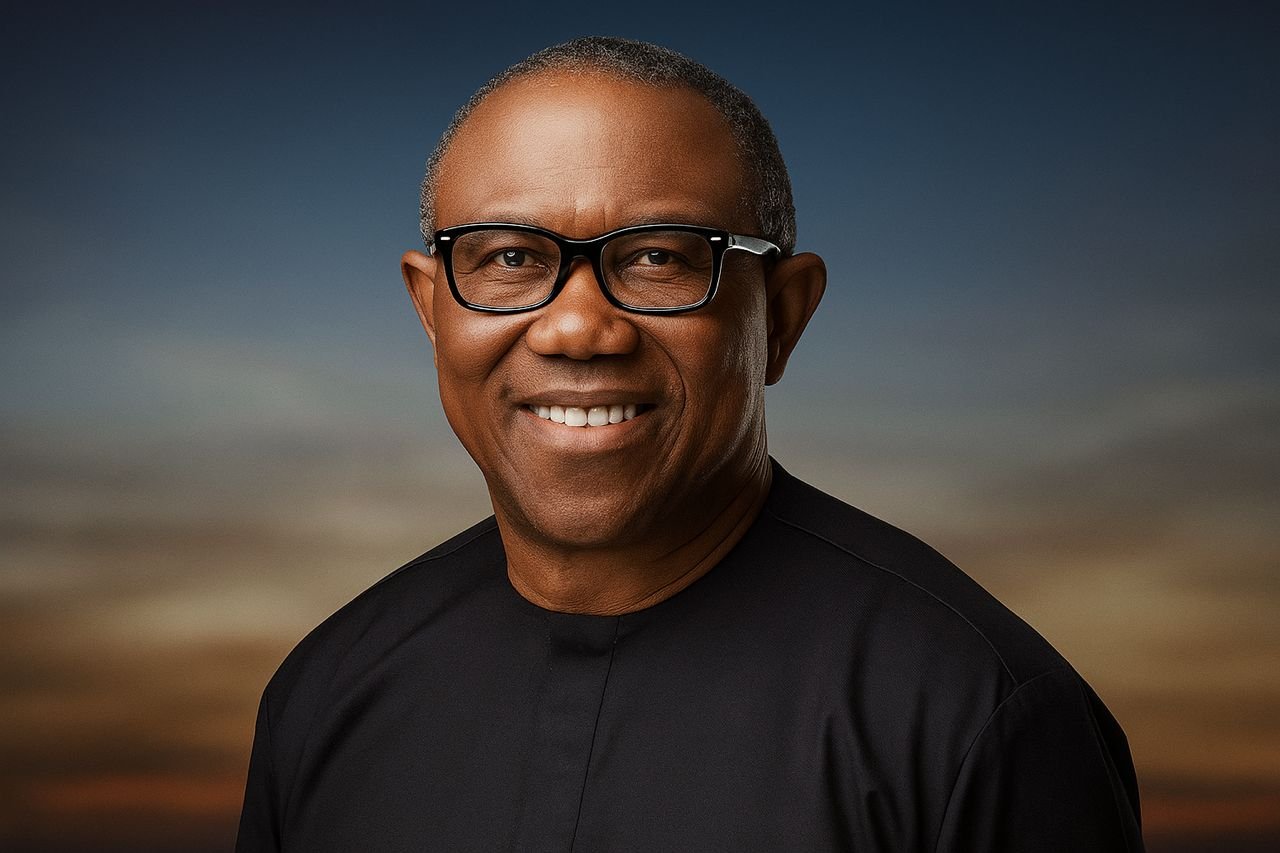
Former Labour Party presidential candidate Peter Obi has criticised President Bola Tinubu’s management of the economy, accusing the administration of presenting misleading statistics to mask worsening economic conditions. In a statement shared on Monday, Obi recalled Tinubu’s 2022 campaign remarks in Delta State, where the then-presidential candidate dismissed his emphasis on data and statistics, saying Nigerians needed food on their tables, not figures. “Two years into his four-year tenure, Nigeria ranks among the world’s hungriest nations, with millions unsure of their next meal,” Obi said, alleging that the government is using incorrect data on unemployment, inflation, and GDP to project a false sense of progress. Reaffirming his position on leadership, Obi stated that effective governance demands sincerity, character, competence, capacity, and compassion, rather than what he described as attempts to spin economic realities.