
Author: Lifestyle & Wellness Desk

doc.jpeg

5min3750
The Lagos State branch of the Nigerian Medical Association (NMA) has outrightly rejected the Federal Government’s proposed salary structure for medical doctors, describing it as unjust, unprofessional, and a threat to Nigeria’s already fragile healthcare system. Speaking at a press conference in Lagos on Friday, NMA Lagos Chairman, Dr. Babajide Saheed, criticised the proposed structure, saying it undermines clinical leadership and weakens professional accountability within hospitals. “After careful review and wide consultations with stakeholders, it is clear that this proposed structure is fundamentally flawed and capable of damaging the integrity of our health system,” Saheed declared. The NMA accused the Federal Government of disregarding the long-standing salary relativity, which determines the pay structure for doctors and other health professionals based on training, clinical responsibility, and risk exposure. “This is not about superiority,” Saheed emphasised, quoting the late Prof. Olikoye Ransome-Kuti. “Hierarchy in healthcare is not about ego it is about responsibility. Undermining that structure destroys the chain of accountability that ensures patient safety.” The association warned that scrapping salary relativity would trigger confusion and power struggles over clinical leadership within hospitals. Saheed also condemned the inclusion of specialist and honorarium allowances for non-medical doctors in the proposed structure, calling it an insult to those who undergo years of rigorous postgraduate clinical training. “These allowances are intended for certified clinicians, recognised by accredited professional colleges. Extending them to non-clinicians completely erodes the value and purpose of specialist certification,” he explained. Citing World Health Organisation guidelines, Saheed stressed that specialist remuneration must reflect clinical leadership, advanced expertise, and risk exposure factors ignored in the current proposal. The NMA further opposed the proposed pay parity between medical doctors and holders of academic doctorates in allied fields such as pharmacy and optometry. “While we respect the contributions of every healthcare professional, clinical licensure and direct patient care are entirely different from academic qualifications,” Saheed argued. “Equating a Doctor of Pharmacy to a certified medical consultant is professionally indefensible. No serious health system in the world operates like that not in the UK, not in Canada, not in Australia.” The Lagos NMA also backed the 21-day ultimatum issued by the national body to the Federal Government, demanding the immediate reversal of the proposed structure and the restoration of salary relativity. “This is not about confrontation it is a call for responsible dialogue and meaningful reform. We stand firmly by all the demands of the NMA,” Saheed stated. The association also urged the Lagos State Government to reject the proposed structure, warning that adopting it could damage the state’s reputation for healthcare excellence. “Lagos has always been a model for healthcare standards in Nigeria. We strongly advise against implementing a structure that is divisive, flawed, and professionally damaging,” Saheed warned. The NMA raised concerns about worsening brain drain in the health sector, noting that Nigeria’s doctor-to-patient ratio, currently estimated at 1:5,000, is far below the WHO-recommended 1:600 and could deteriorate further. “Doctors are leaving Nigeria in droves. This proposed structure will only accelerate that trend. Every doctor who leaves means a collapsing clinic and another patient left behind,” he cautioned. The association called on the Federal Government to engage in constructive, evidence-based dialogue with the NMA to develop a fair, globally competitive, and sustainable salary framework for medical professionals. “We are not opposed to reform. But reform must be fair, professional, and grounded in the realities of clinical work in Nigeria,” Saheed concluded. “This is about preserving the future of our healthcare system and recognising the sacrifices of those who carry its heaviest burdens.
ama.jpeg

3min3230
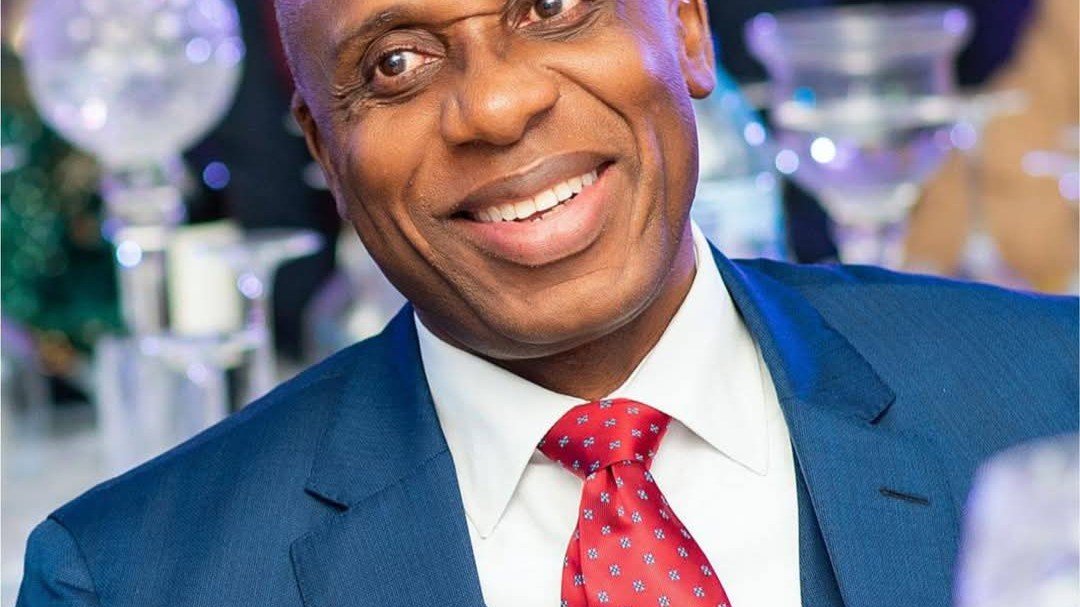
Former Minister of Transportation, Rotimi Amaechi, has formally declared his intention to contest the 2027 presidential election, joining other opposition leaders aiming to unseat President Bola Tinubu. Speaking during a live interview on Channels Television on Thursday, Mr Amaechi also expressed support for the newly formed opposition coalition, describing it as a necessary response to what he called “unprecedented economic hardship” under the current administration. The coalition, operating under the African Democratic Congress (ADC), brings together prominent politicians such as Atiku Abubakar, Peter Obi, Nasir El-Rufai, Abubakar Malami, and others a diverse lineup drawn from different regions and political parties. Respected political figures have been appointed to lead the coalition: former Senate President David Mark as National Chairperson, former Osun State Governor and ex-Tinubu ally Rauf Aregbesola as National Secretary, and former Minister of Youth and Sports Bolaji Abdullahi as Spokesperson. Mr Amaechi, a former Rivers State Governor, emphasised his commitment to Nigeria’s unwritten power-sharing arrangement between the North and South, which has shaped the country’s political structure for decades. “For now, the way Nigeria is, you must stick to that agreement that the South does eight years, the North does eight years,” he said. He further declared that if elected, he would serve only one four-year term to uphold that agreement. “I won’t do more than four years,” Amaechi stated. The former minister recalled his role in 2015 when he championed the transfer of power to the North, following what he described as a violation of the power rotation principle by the then-ruling party. “I led the fight against the PDP government because there was an agreement for four years, but they reneged. Supporting the North at the time was necessary to keep the country stable,” he explained. He added that just as he stood for fairness then, he would now insist that the South be allowed to complete its eight-year tenure before power returns to the North. Meanwhile, former Anambra State Governor Peter Obi has also declared his intention to run in the 2027 presidential election, similarly pledging to serve for only four years if elected, provided such an agreement is reached with his supporters. With the opposition adopting the ADC as a platform for unity, analysts predict that the 2027 presidential election will be fiercely contested, with the coalition expected to present a formidable challenge to President Tinubu, who is widely expected to seek a second term. The coalition has yet to announce which region will be favoured for the presidential ticket, but political tensions are expected to rise as the race for 2027 intensifies.

ta.jpeg

4min3300
The Taliban-led government of Afghanistan announced on Thursday that Russia has become the first nation to officially recognise its administration, calling it a “brave decision” that could pave the way for broader international acceptance. The Taliban regained power in 2021 after toppling the former foreign-backed government and have since enforced a strict interpretation of Islamic law. Since then, they have actively sought global recognition and foreign investment to help rebuild the country after four decades of war, including the Soviet invasion that lasted from 1979 to 1989. The announcement came after Afghanistan’s Foreign Minister, Amir Khan Muttaqi, held talks with Russia’s Ambassador to Afghanistan, Dmitry Zhirnov, in Kabul. “This courageous decision by Russia sets an example for other countries,” Muttaqi said in a video of the meeting shared on social media platform X (formerly Twitter). “Russia is the first country to officially recognise the Islamic Emirate.” Taliban foreign ministry spokesperson, Zia Ahmad Takal, confirmed the recognition to AFP, describing it as a significant step for the administration. Muttaqi hailed the decision as the beginning of “a new phase of positive relations, mutual respect, and constructive engagement,” according to a statement posted by the Taliban’s foreign ministry. Russia’s own foreign ministry, in a post on Telegram, said that formal recognition would strengthen bilateral cooperation across multiple sectors, including energy, transportation, agriculture, and infrastructure. Moscow also pledged to support Afghanistan in regional security efforts and combating terrorism and drug trafficking. Over recent months, Russia has taken clear steps towards normalising relations with the Taliban, including removing the group from its list of terrorist organisations in April and formally accepting a Taliban ambassador in Kabul. Russian President Vladimir Putin previously referred to the Taliban as “allies in the fight against terrorism” in July 2024. Russia was also the first country to open a business representative office in Kabul after the Taliban takeover and has since revealed plans to use Afghanistan as a transit route for gas supplies to Southeast Asia. During the Taliban’s first period in power from 1996 to 2001, only Saudi Arabia, Pakistan, and the United Arab Emirates recognised their regime. Since their return, several countries, including China and Pakistan, have accepted Taliban-appointed ambassadors but have stopped short of granting full diplomatic recognition. China welcomed Russia’s decision on Friday, stating that Afghanistan should not be isolated from the international community. “China, as a traditional friendly neighbour of Afghanistan, supports Afghanistan’s integration,” Chinese Foreign Ministry spokesperson Mao Ning said. However, Western countries remain staunchly opposed to recognising the Taliban due to severe restrictions imposed on women and girls, particularly the ban on female education and widespread exclusion from public life. Several Afghan women’s rights activists condemned Russia’s recognition. Former Afghan lawmaker Mariam Solaimankhil called the move “a dangerous signal” that prioritises strategic interests over human rights and international law. “It legitimises a regime that bans girls from schools, sanctions public floggings, and harbours UN-listed terrorists,” she said. Another former MP, Fawzia Koofi, warned that recognising the Taliban would not bring peace but rather embolden impunity and risk undermining global security. “This move threatens not only Afghans but the wider international community,” she cautioned. Many top Taliban officials remain under United Nations sanctions, with the group’s leadership still facing international scrutiny over human rights abuses.

mil.jpeg

4min6020
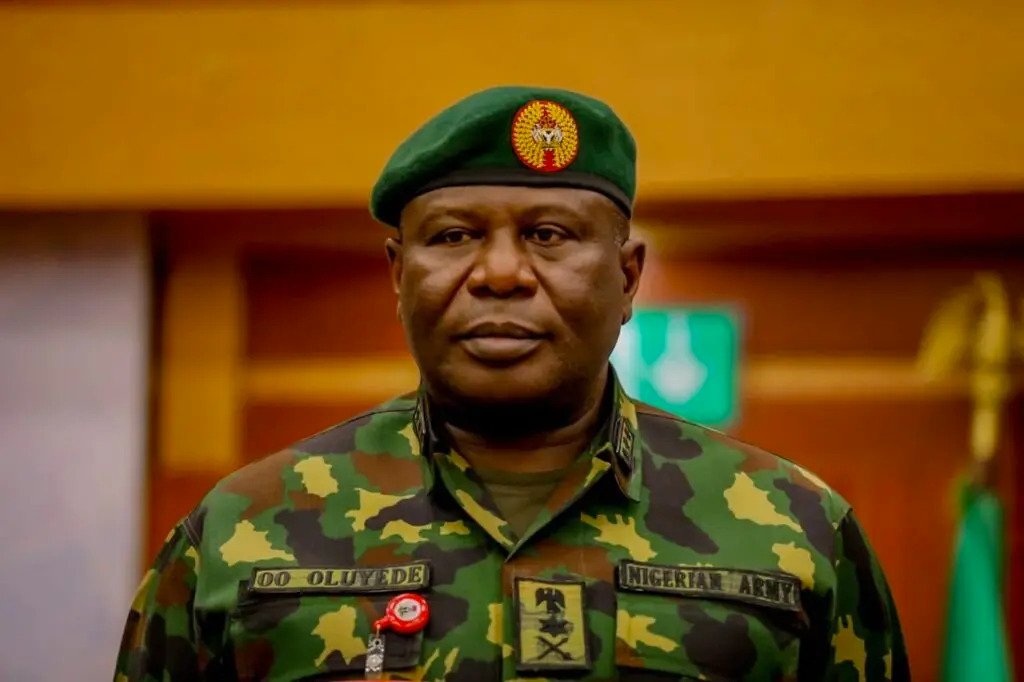
The Defence Headquarters (DHQ) has announced significant achievements by the Nigerian Armed Forces in the ongoing fight against terrorism and criminality across the country, revealing that troops neutralised dozens of notorious terrorists and apprehended 1,191 suspects between April and June. Major General Markus Kangye, Director of Defence Media Operations, disclosed this on Thursday in Abuja while briefing journalists on military operations for the second quarter of 2024. Kangye said the troops under various operations including Operation Hadin Kai, Operation Fasin Yamma, Operation Safe Haven, Operation UDO KA, and Operation Delta Safe recorded impressive successes during the period under review. According to him, several high-profile terrorist commanders were eliminated in the operations. Those killed include Amir Abu Fatimah, Kinging Auta, Abdul Jamilu, Salisu, Mallam Jidda, Maiwada, Mai Dada, and Nwachi Eze, also known as Onowu. “Just two days ago, the notorious bandit leader Yellow Danbokkolo succumbed to injuries sustained during a clash with troops last week, where many of his top lieutenants were also neutralised,” Kangye revealed. He added that troops also apprehended several wanted gunrunners and kidnappers, including Buhari Umar, Hassam Mohammed, Saleh Sani, Adamu Dan Mai, Idi Yusuf, Hassan Bello, Muhammed Isah, Shimu Adamu, Ismaila Hassan, Michael, and Shittu Muazu. “Our troops eliminated several terrorist kingpins and their fighters, arrested over 1,191 suspects, and successfully rescued 543 kidnapped victims,” the Defence spokesperson stated. Kangye explained that the military has sustained pressure on terrorist groups, bandits, and other criminal elements threatening Nigeria’s security and economy. He also reported that the quarter witnessed the mass surrender of Boko Haram and ISWAP/JAS terrorists, with 682 fighters and their family members laying down their arms due to overwhelming military firepower. In the South-South region, troops under Operation Delta Safe disrupted illegal oil activities, preventing oil theft valued at over ₦3.5 billion, Kangye disclosed. Recovered items during the anti-oil theft operations include: 2.38 million litres of stolen crude oil 605,393 litres of illegally refined Automotive Gas Oil (AGO) 41,465 litres of Dual-Purpose Kerosene (DPK) 26,905 litres of Premium Motor Spirit (PMS) Major General Kangye commended the field commanders and troops for their courage and commitment across all operational zones. “We sincerely appreciate the unwavering dedication of our field commanders and their personnel in ensuring that threats to Nigeria’s peace and stability are effectively tackled,” he said. He also assured Nigerians that the military remains committed to adhering to established rules and standards, including the Code of Conduct for Internal Security Operations, the Laws of Armed Conflict, and the Rules of Engagement. The Defence Headquarters further acknowledged the role of the media in keeping the public informed about the ongoing efforts of the military to safeguard the nation.

bu.jpeg

4min2700
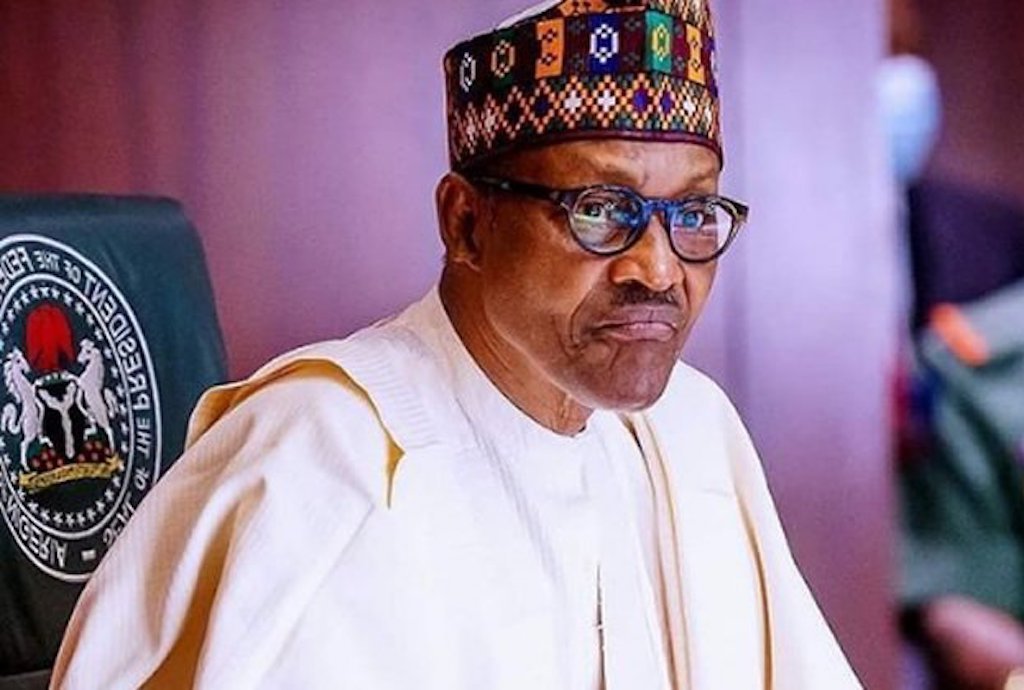
Former Nigerian President Muhammadu Buhari is currently undergoing medical treatment in London, multiple sources familiar with the situation have confirmed to Premium Times. Buhari, who completed his second term in office in May 2023, has been outside the country since April. Sources close to the family revealed that the former president initially travelled to the United Kingdom for a routine medical check-up, but subsequently took ill. “There are conflicting reports regarding the timeline of his illness,” one source disclosed. “Some believe he became unwell while still in Nigeria and was flown abroad. Others say the health issues began after he arrived in London for his scheduled medical appointment.” When contacted, Garba Shehu, Mr Buhari’s longtime spokesperson, confirmed the development. “It is true that former President Muhammadu Buhari is currently unwell and undergoing treatment in the United Kingdom,” Shehu stated. “You may recall that he had earlier announced plans for his annual medical check-up. Unfortunately, he became ill during the visit. However, I’m pleased to inform you that he is responding well to treatment, and we continue to pray for his full recovery.” The specific nature of Mr Buhari’s illness and details of the medical facility treating him have not been disclosed. His latest health episode has reignited public discussions about his longstanding reliance on medical treatment abroad during his presidency. Throughout his tenure from 2015 to 2023, Buhari frequently sought medical care in the UK, a practice that drew widespread criticism and sparked debates about the state of Nigeria’s healthcare system. Notable examples include: February 2016: Buhari took his first medical trip to London for an undisclosed illness, triggering concerns about domestic healthcare capacity. June 2016: He returned to London to treat an ear infection, prompting criticism from the Nigerian Medical Association for neglecting local medical experts. January 2017: The president spent 50 days in the UK for what was described as routine health checks, though few details were provided to the public. May 2017: Buhari embarked on his longest medical trip, spending 104 days in London, a period that raised serious questions about his health and ability to lead. The latest development has once again brought the spotlight on Nigeria’s healthcare challenges and the medical tourism culture among the country’s political elite. Political Fallout as Buhari’s Allies Join Opposition Buhari’s health concerns come at a politically sensitive time, as several of his former appointees have joined the opposition coalition working to unseat President Bola Tinubu in the 2027 elections. Prominent figures such as Rotimi Amaechi, Abubakar Malami, Rauf Aregbesola, and Hadi Sirika, all of whom served under Buhari, have been criticised by the Tinubu administration for aligning with the coalition, which recently adopted the African Democratic Congress (ADC) as its new platform. The presidency has described the defectors as driven by personal ambition rather than ideology, with top officials like Bayo Onanuga and Festus Keyamo predicting that the coalition will unravel due to internal divisions. Observers say the absence of Buhari, a key figure within the APC, from Nigeria’s political space could further expose the deepening cracks within the ruling party, as rival factions reposition ahead of the next elections.

pp-1280x960.jpeg

5min5230
The Presidency has lashed out at former officials who served under ex-President Muhammadu Buhari for aligning with the new opposition coalition gearing up to challenge President Bola Tinubu in the 2027 general elections. Bayo Onanuga, Special Adviser to President Tinubu on Media and Strategy, criticised the defectors, accusing them of pursuing personal interests rather than upholding principles or ideology. Among those singled out by Onanuga are: Rotimi Amaechi, former Minister of Transportation and a founding member of the APC, whom Onanuga alleged distanced himself from the party after losing the 2022 presidential primary to Tinubu. Abubakar Malami, former Attorney-General, who Onanuga said has been disconnected from the APC since his unsuccessful bid for the Kebbi State governorship. Hadi Sirika, former Minister of Aviation, who is currently facing legal action over allegations of contract splitting and other offences. Rauf Aregbesola, ex-Governor of Osun State and former Interior Minister, who Onanuga claimed was expelled from the APC for anti-party activities during the last Osun election. In a statement posted on Facebook Wednesday night, Onanuga warned Nigerians to be wary of the coalition, describing its members as “desperate politicians” driven by their opposition to Tinubu rather than shared values or vision. He further predicted that the alliance would soon collapse under the weight of the members’ competing ambitions and internal divisions. The Presidency’s remarks underscore the growing rift within the ruling APC and the mounting pressure from the opposition coalition, which aims to unseat Tinubu in 2027. As reported by Premium Times, months of behind-the-scenes meetings culminated this week in the adoption of the African Democratic Congress (ADC) as the new political platform for the coalition. The group unveiled experienced political figures as interim leaders, including former Senate President David Mark as National Chairman, former Osun Governor and Tinubu ally-turned-critic Rauf Aregbesola as National Secretary, and former Minister of Youth and Sports Bolaji Abdullahi as spokesperson. Keyamo Ridicules Coalition Festus Keyamo, Aviation Minister and APC leader, also mocked the opposition bloc, arguing that their defection to the ADC effectively weakens their former parties while strengthening the APC. “By law, individuals cannot simultaneously belong to multiple political parties. Their public alignment with the ADC signals a formal departure from their old parties,” Keyamo stated on X. “In reality, the PDP once Nigeria’s strongest opposition — is now crumbling.” The newly formed coalition draws from a broad pool of political actors across the PDP, Labour Party, and even disenchanted members of the APC. Prominent figures include Atiku Abubakar, Peter Obi, Nasir El-Rufai, Bukola Saraki, Rotimi Amaechi, Abubakar Malami, among others. However, Keyamo dismissed the coalition as little more than an elaborate power grab by Atiku Abubakar, suggesting that Peter Obi is being exploited for his popularity, without any genuine intention of giving him the coalition’s presidential ticket. “They want Obi’s support base, but they don’t plan to offer him the ticket,” Keyamo argued. “The choice of David Mark as interim Chairman reveals the real agenda. If Obi isn’t given the ticket, his supporters walk away plain and simple.” Another Realignment in Nigerian Politics? Coalition-building is not new to Nigeria’s political landscape. The ruling APC itself was born from a merger of opposition parties in 2013, leading to its historic victory over the PDP in 2015. Observers say the ADC-led coalition could mark another critical shift, as the opposition attempts to rally against the Tinubu administration ahead of 2027. Nonetheless, Keyamo dismissed their efforts as insignificant. “In the end, the PDP and Labour Party will lose ground, the ADC will become a political sideshow, and the APC remains unshaken,” he concluded.

ab.jpeg

3min3800
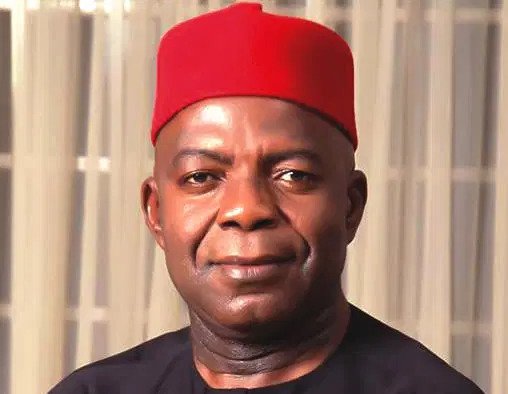
The Abia State Government has issued a stern warning to public school teachers, vowing to clamp down on absenteeism, negligence, and other forms of professional misconduct. Lady Lydia Onuoha, Executive Chairman of the Abia State Universal Basic Education Board (ASUBEB), delivered the warning on Tuesday at the Board’s headquarters in Umuahia. She expressed concern over what she described as a troubling rise in teacher absenteeism and irregular attendance, despite Governor Alex Otti’s administration making significant efforts to improve teachers’ welfare. Onuoha made it clear that such actions will no longer be tolerated, stressing that erring teachers will face strict disciplinary measures, including queries, suspension, or dismissal in line with Public Service Rules and the Teachers’ Code of Conduct. “The government will not hesitate to apply the full provisions of the Public Service Rules when necessary. Our priority is to protect the education and future of Abia’s children,” she stated. The ASUBEB Chair described the situation as an unacceptable violation of professional standards, saying it undermines the trust placed in teachers to nurture the next generation. She noted that under Governor Otti’s leadership, teachers’ welfare has been prioritised like never before, with prompt and consistent salary payments, approval of long-delayed promotions, payment of leave allowances, and the implementation of the 27.5% Teachers Special Salary (TSS). “Abia State now allocates over 20% of its 2025 budget to education one of the highest in the country underscoring the government’s sincerity and commitment to transforming the sector,” she added. To ensure accountability, Onuoha announced that ASUBEB, in collaboration with Local Government Education Authorities and School-Based Management Committees, is rolling out a comprehensive statewide monitoring strategy. Key elements of the initiative include the introduction of biometric attendance systems to track daily teacher attendance and punctuality, as well as the deployment of strengthened Quality Assurance and Monitoring Teams to conduct surprise visits and audits of public primary and junior secondary schools. In addition, headteachers will be required to submit monthly attendance reports to their respective LG Education Authorities and ASUBEB. She urged teachers and education stakeholders to support the administration’s vision of a “New Abia,” where education is not only free and compulsory but also effective and life-changing. “This government is not just building classrooms we are committed to ensuring they are filled with qualified, motivated, and accountable teachers. We expect teachers to reciprocate this goodwill by being present, prepared, and committed to their duties,” Onuoha emphasised. She also encouraged parents and members of the public to play their part by reporting teacher misconduct, absenteeism, or school-related complaints via the ASUBEB customer care line: 07076904864.

wik.jpeg

3min26880
The Minister of the Federal Capital Territory (FCT), Nyesom Wike, is set to meet on Thursday with area council chairmen, representatives of the Nigeria Union of Teachers (NUT), and the National Association of Nigerian Students (NANS) to address the prolonged closure of public primary schools in the FCT. The development was disclosed in a statement on Wednesday by NANS President, Olushola Oladoja, and the association’s Public Relations Officer, Adeyemi Ajasa. NANS revealed that it had initially planned a mass protest at the FCT Administration Secretariat on Wednesday morning to demand swift action on the strike, which has left thousands of students out of school. However, the protest was shelved following an invitation to a closed-door meeting at the Department of State Services (DSS) headquarters. During the meeting, NANS officials and security stakeholders discussed the ongoing strike and its negative impact on students across the FCT. The dialogue paved the way for a subsequent strategic engagement with Muktar Betara, Chairman of the House of Representatives Committee on FCT. According to NANS, these meetings provided greater clarity on the root causes of the industrial action and the measures taken by the FCT Administration under Wike’s leadership. A follow-up meeting held on Tuesday with the FCT Minister saw Wike provide further explanations on the salary crisis affecting primary school teachers. He explained that, unlike other parts of the country, the FCT operates full local government autonomy, which makes area councils solely responsible for paying primary school teachers. “The FCT Administration does not directly manage the salaries of primary school teachers. That responsibility lies with the area councils, who control their own finances,” Wike was quoted as saying. To help resolve the salary crisis, Wike reportedly proposed a bailout plan, with the FCTA agreeing to cover 60% of the outstanding salaries, while the area councils were expected to pay the remaining 40%. However, when the councils failed to fulfill their part of the arrangement, Wike took further action by withholding the Internally Generated Revenue (IGR) due to the area councils for May and June. “The withheld IGR is being earmarked to cover the councils’ outstanding 40% share of the salary arrears owed to teachers,” NANS explained. The association noted that the withheld funds are expected to be released this week to address the backlog. In light of these developments, NANS announced the suspension of its planned protest but vowed to closely monitor the situation. “We remain committed to protecting the rights of Nigerian students and ensuring that no child’s education suffers as a result of avoidable government shortcomings,” the association concluded.

pp-1280x853.jpeg

4min6200
President Bola Tinubu has described data as Nigeria’s new strategic resource, stressing its vital role in shaping governance and enhancing the country’s global competitiveness. Speaking at the 2025 International Civil Service Conference in Abuja, President Tinubu issued a directive to all Ministries, Departments, and Agencies (MDAs) to prioritise the collection, protection, and responsible use of data to maximise public value and facilitate global benchmarking. The conference also marked the launch of Galaxy Backbone’s 1Government Cloud Academy, a key initiative aimed at equipping civil servants with the digital skills necessary to drive Nigeria’s transition to a paperless, technology-driven public sector. According to a statement from Galaxy Backbone on Wednesday, the new academy forms part of Nigeria’s broader strategy to enhance communication and collaboration across MDAs while modernising public service delivery. In his address, President Tinubu underscored that data, unlike crude oil, appreciates in value through proper management and ethical utilisation. “All MDAs must actively capture and secure data in line with the Nigerian Data Protection Act (2023), and release verified information in ways that create value for citizens,” Tinubu stated. He emphasised that by sharing credible data, Nigeria can better position itself for international assessments and improve its global standing. He further called for robust measures to safeguard data sovereignty and privacy, ensuring that data is stored and managed within secure local and allied data centres. The 1Government Cloud Academy is designed to develop a new generation of “digital champions” within government agencies. These transformation champions will guide their colleagues in adopting new technologies and overcoming resistance to change. Programme Director for the initiative, Mr. Wumi Oghoetuoma, speaking during a panel session, highlighted the importance of trust and user understanding in the success of digital reforms. “Digital tools often fail, not because they’re ineffective, but because users either distrust them or lack the necessary understanding to use them confidently,” Oghoetuoma explained. He praised the Head of the Civil Service of the Federation, Mrs. Didi Esther Walson-Jack, for spearheading bold digital reforms, including process automation, the implementation of a Performance Management System, and the rollout of ServiceWise GPT a tool designed to align individual responsibilities with national development goals. The academy’s training will cover technical skills, soft skills, and specialised certifications for IT departments, aiming to boost collaboration, problem-solving, and responsiveness across MDAs. Oghoetuoma noted that barriers to digital transformation are often rooted not in a lack of digital literacy as most civil servants are comfortable with smartphones and social media but in mindset, motivation, and the availability of consistent internal support. “Sustainable digital transformation depends on people, processes, and technology, with communication acting as the glue that binds them together,” he added. The British High Commissioner to Nigeria, Richard Montgomery, commended the country’s ongoing reform agenda, describing it as both ambitious and essential for Nigeria’s long-term development. He stressed that the success of these reforms hinges on efficient service delivery and integrity within the civil service. Mrs. Walson-Jack, in her remarks, described Nigeria’s public sector digital reforms as a model for other developing nations, noting that the country is laying the foundation for a modern, accountable, and digitally-driven civil service.

el-1280x853.jpeg

2min6180
U.S. President Donald Trump has suggested he could consider deporting billionaire Elon Musk, following the South African-born entrepreneur’s criticism of his administration’s flagship spending bill. Speaking to reporters at the White House on Tuesday, Trump also hinted that the Department of Government Efficiency (DOGE) — which Musk led until his resignation in late May — could investigate the Tesla and SpaceX founder’s government subsidies. “I don’t know. We’ll have to take a look,” Trump said when asked if Musk’s immigration status could come under review. “We might have to put DOGE on Elon. You know what DOGE is? DOGE is the monster that might have to go back and eat Elon.” Trump, who has dubbed his signature economic legislation the “One Big Beautiful Bill,” claimed Musk’s recent criticisms stem from frustration over the bill’s removal of electric vehicle (EV) incentives. “He’s losing his EV mandate. He’s very upset about that — but I can tell you, he could lose a lot more than that,” Trump warned. The president made similar remarks on his Truth Social platform Monday night, saying, “Without subsidies, Elon would probably have to close up shop and head back home to South Africa.” Musk, the world’s richest person and a major donor to Trump’s 2024 election campaign, had been a close ally of the president in the early months of the new administration. However, their relationship soured this month after Musk publicly opposed the spending bill, accusing Republican leaders of abandoning efforts to keep the U.S. at the forefront of the EV and clean energy revolution. In recent days, Musk has reignited his criticism, threatening to push for the creation of a new political party — the “America Party” — if the controversial bill passes. AFP