
Author: Lifestyle & Wellness Desk

da.jpeg

3min2860
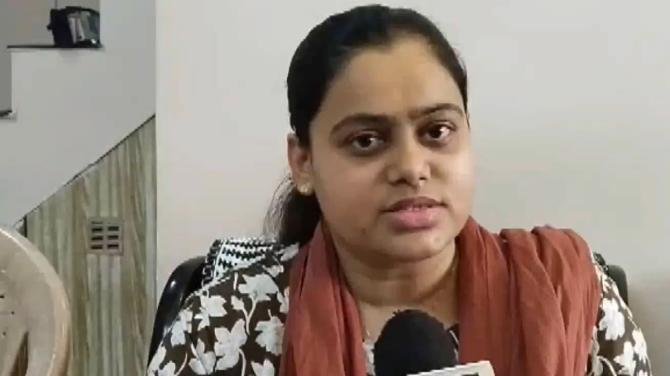
Bhoomi Chauhan will never forget the mix of anger and frustration she felt that day. Caught in bumper-to-bumper traffic on her way to Ahmedabad airport, her car journey was so delayed that she arrived just 10 minutes too late to board her Air India flight to London Gatwick. Chauhan, a 28-year-old business administration student based in Bristol, had been visiting western India on holiday with her husband. She was scheduled to return home on Flight AI171 this past Thursday — the same flight that tragically crashed shortly after take-off, killing 241 passengers and crew and causing additional fatalities on the ground. After reaching the airport less than an hour before departure, Chauhan says airline staff refused to let her board. “We were so angry with our driver and left the airport in frustration,” she recalls. “I was very disappointed.” After leaving the terminal, Chauhan and her husband stopped nearby for tea while discussing a refund with their travel agent. “It was then that I got the call — the plane had crashed,” she says. “For me, this is nothing short of a miracle.” In an interview with the BBC’s Gujarati service, Chauhan shared that she arrived at the airport at 12:20 pm local time — just 10 minutes after boarding had been scheduled to begin. Her digital boarding pass, reviewed by BBC News, showed an assigned economy seat: 36G. Although she had checked in online, Chauhan says staff at the airport refused to complete the boarding process. Her journey to the airport had started from Ankleshwar, a town about 201km (125 miles) south of Ahmedabad, but heavy city traffic caused the crucial delay. “When I missed the flight, I was heartbroken,” she says. “All I could think was, ‘If only we had started earlier, I would have boarded that plane.’” “I pleaded with the airline staff to let me through. I told them I was just 10 minutes late and the last passenger — but they refused to allow me to board.” The ill-fated flight took off as scheduled on Thursday afternoon, but struggled to gain altitude and crashed approximately 30 seconds after take-off. The aircraft struck a residential neighborhood, killing all 241 passengers and 12 crew members. At least eight fatalities have also been confirmed among those on the ground. One passenger, British national Vishwashkumar Ramesh, miraculously survived the crash and is recovering in hospital. Indian, Portuguese, and Canadian nationals were also among those on board.
baba-1280x853.jpeg

3min4060
Lekan Abiola, son of the late Chief Moshood Kashimawo Olawale (MKO) Abiola — winner of the annulled June 12, 1993 presidential election — has revealed that former military president, General Ibrahim Babangida (retd), has formally apologised to the Abiola family for the decision to void the historic poll. Lekan made the disclosure on Thursday during the MKO Abiola Memorial Symposium and the pre-launch event for the book “MKO Abiola: Symbol of Democracy”, held in Lagos and organised by the Kudirat Initiative for Democracy (KIND). He also urged President Bola Tinubu to ensure the Federal Government settles all outstanding entitlements owed to his late father, adding that successive administrations had failed to do so. Speaking to journalists at the event, Lekan Abiola said Babangida’s public apology had brought relief to the family and helped end lingering controversy over the outcome of the election. “We returned from the United States and met with IBB; he privately apologised to us. But when he later came out publicly to say he was sorry for annulling the election — and acknowledged that MKO won — he simply confirmed in public what he had already told us in private,” Lekan said. “Before now, it was like someone punching you in public and only saying sorry in private. His public admission gave us peace of mind. For years, some people questioned whether MKO truly won. But now that IBB has released the full results, it is officially clear that MKO won — and that is no longer in doubt.” He also noted that Babangida routinely sends a representative to the family’s annual June 12 commemoration events. Meanwhile, the author of the forthcoming book, Dr. Layo Adeniyi, said the 440-page volume provides a comprehensive account of Abiola’s life and legacy. “This book captures everything you would want to know about MKO Abiola — from his background and business rise to his political journey,” Dr. Adeniyi said. “It traces his roots and early political involvement, starting with the defunct National Convention of Nigerian Citizens (NCNC), followed by his time in the National Party of Nigeria (NPN), and leading to the historic June 12 election. No election in Nigeria has ever been as free and fair as that one — and this story deserves to be properly told, especially at a time when the country is grappling with insecurity and disunity.”

aba-1280x853.jpeg

3min3290
Transport unions in Abia State have formally declared their support for Governor Alex Otti’s re-election bid in the 2027 governorship election. The endorsement was announced by the State President of the Cooperative Motor Union, Mr. Chukwuma Azode, during a massive Two-Million Man March held Thursday in Aba. The rally, organized by various transport unions, was a show of solidarity for the governor’s road infrastructure achievements across the state. Azode stated that with Governor Otti’s “unprecedented achievements,” it would be unwise for any opposition candidate to contest against him in 2027. “From what we are seeing, I don’t think any sensible person should involve himself in anything concerning elections because His Excellency is supposed to enjoy his 8 years,” he said. “Any opposition that is coming out is taking a very big risk because we, Abians, are in support of His Excellency, Dr. Alex Otti, for now, and no other person. All the motor unions in Abia State are also endorsing His Excellency for 2027 — that’s part of our gathering here today.” Azode emphasized that the march was a non-political event attended by supporters from various political backgrounds, all united by their appreciation of Governor Otti’s work. “We are here to show solidarity and celebrate all his good works in Abia State. Within two years in office, he has shown great capacity. This is why we are gathering to celebrate him,” he said, noting that Aba, where the march was held, is a priority area in Otti’s development plans. Also speaking, the state chairman of the Abia State Tricycle Operators Union, Comrade Victor Azubuike, said the rally was organized to express gratitude for the improved transportation conditions in Abia, particularly in Aba. “Aba transporters are the biggest beneficiaries of the progress under this administration,” Azubuike said, thanking Governor Otti for his leadership. Dr. Obioma Nwaogbe, the Governor’s Senior Special Assistant on Transportation, said the transport sector has seen tangible benefits from Otti’s infrastructure projects. “He has been constructing numerous roads across the state — urban and rural — and these roads directly benefit transport operators and commuters alike,” Nwaogbe said. He added that Aba, as the economic hub of the eastern region, was chosen for the rally because of its central role in the governor’s investment and development strategy. The Two-Million Man March began at Osisioma Junction, continued through Aba-Owerri Road, and concluded at Asa Road, with jubilant Aba residents lining the streets of the Enyimba City to celebrate the governor’s achievements.

fla.jpeg

5min5090
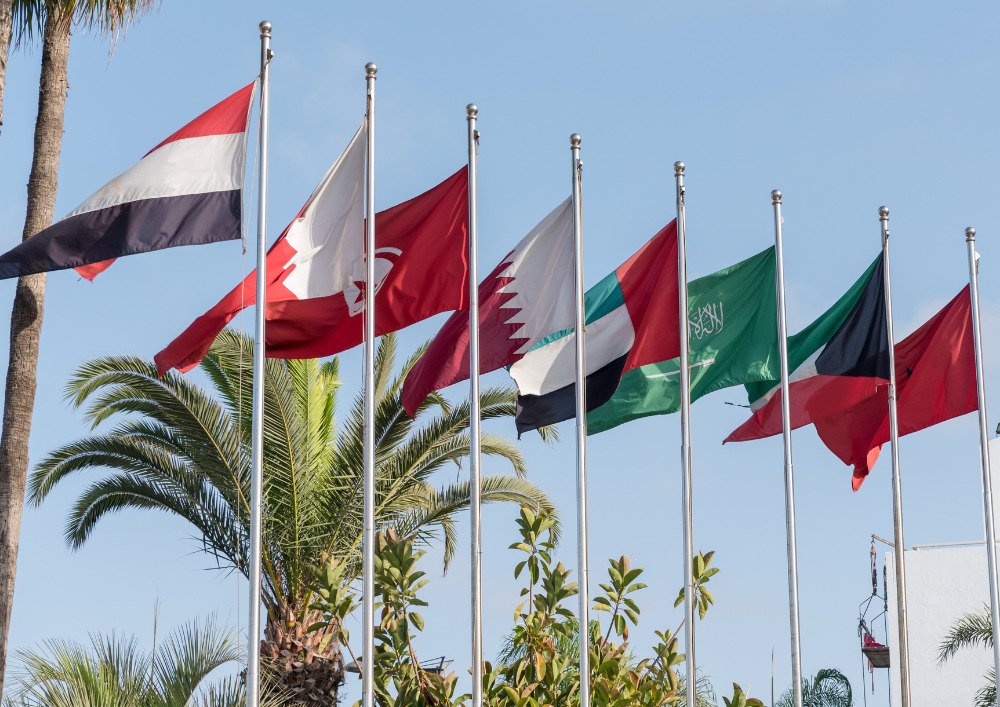
Several Arab nations have publicly condemned Israel’s recent strikes on Iran, as concerns grow that the escalating conflict could engulf the broader Middle East. The condemnations also reflect a clear desire by these countries to avoid being drawn into the hostilities. Saudi Arabia issued a sharp rebuke, expressing “strong condemnation and denunciation” of Israel’s targeting of Iran’s nuclear facilities and senior military figures. “While the Kingdom condemns these heinous attacks, it affirms that the international community and the [UN] Security Council bear a great responsibility to halt this aggression,” the Saudi Foreign Ministry stated. Though longtime rivals, Iran and Saudi Arabia have recently improved diplomatic ties after years of tension rooted in religious and geopolitical competition. The United Arab Emirates (UAE) — which normalized relations with Israel in 2020 through the Abraham Accords — condemned the strikes “in the strongest terms.” Qatar, which Israeli officials have accused of supporting Hamas, called the Israeli attacks “a blatant violation of Iran’s sovereignty and security.” Both Qatar and the UAE host significant U.S. military presences, heightening concerns that they could become targets if Iran opts to retaliate against U.S. interests in the region. Oman, which has been mediating ongoing talks between Washington and Tehran, described the Israeli strikes as “reckless” and carried out at “an extremely sensitive time” for nuclear negotiations. Lebanon’s Prime Minister Nawaf Salam, who is seeking to reduce Iranian influence in Lebanon, also condemned the Israeli operation. “This dangerous Israeli aggression constitutes a flagrant violation of international law and Iranian sovereignty, and its repercussions threaten the stability of the entire region and even world peace,” Salam warned. Why Did Israel Attack Iran? The Israeli strikes on Iran’s nuclear facilities come after months of mounting warnings and escalating tensions — both strategic and political. Strategic Imperatives: U.S. intelligence agencies have warned since February that Israel was likely preparing to target key components of Iran’s nuclear program this year. Israeli Prime Minister Benjamin Netanyahu has long advocated for a military option to halt Iran’s nuclear ambitions. Recent U.S. intelligence also suggests that Israel is looking to build on gains from its October strikes, which damaged Iran’s missile production infrastructure and air defenses. More broadly, one intelligence report indicated that Israel still harbors a long-term goal of seeking regime change in Iran. An Existential Threat: For years, Israel has viewed Iran’s nuclear ambitions as an existential threat. Iran refuses to recognize Israel’s right to exist, and Israeli officials fear that a nuclear-armed Iran would fundamentally alter the region’s security landscape. Israel and Iran have been engaged in a shadow war for decades — waged through proxy forces and covert operations. Iran has armed and supported groups like Hezbollah in Lebanon, Hamas in Gaza, and the Houthis in Yemen — all of whom have engaged in direct hostilities with Israel. Since Israel’s war in Gaza began, Iranian-backed proxy attacks have increased in solidarity with the Palestinians. Domestic Politics: Netanyahu is also facing intense domestic political pressure. Opposition to a controversial new military conscription bill has triggered a political standoff, with Israel’s parliament (the Knesset) recently debating whether to dissolve itself — a move that could have forced early elections, which polls suggest Netanyahu would likely lose. A key vote to dissolve parliament failed on Wednesday, giving Netanyahu a temporary reprieve but leaving the political crisis unresolved. Why Now: The immediate trigger for Israel’s strikes was a resolution passed Thursday by the United Nations’ nuclear watchdog, which found Iran in violation of its non-proliferation commitments. Tehran responded by vowing to accelerate its nuclear activities and warning that it “had no option but to respond.” Uranium — when highly enriched — can be used to build nuclear weapons, though Iran maintains that its nuclear program is for peaceful energy purposes.

is.jpeg

4min7720
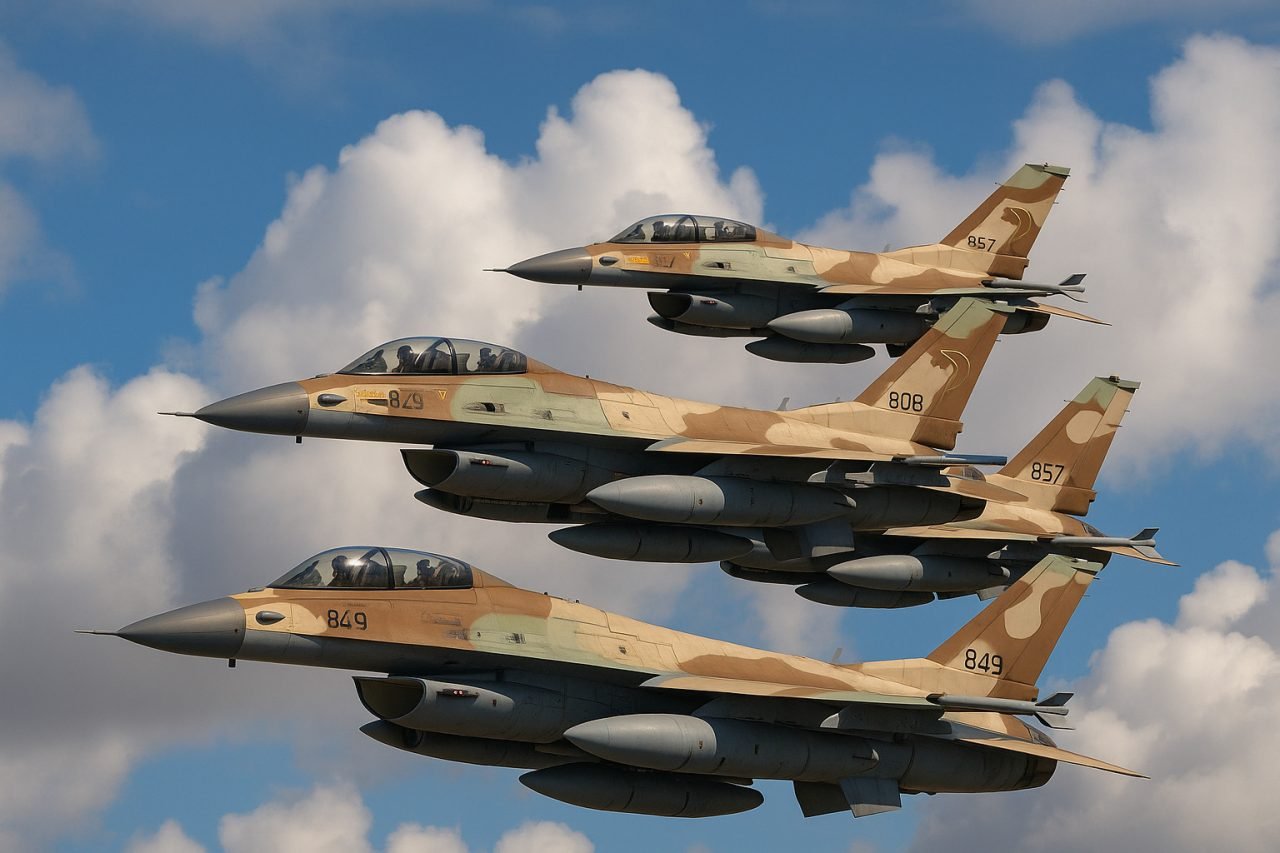
Latest Developments • Israeli Offensive: Israel has launched an unprecedented wave of airstrikes against Iran, targeting its nuclear program and senior military figures. Prime Minister Benjamin Netanyahu announced that the operation, dubbed Operation Rising Lion, will continue over several days. According to the Israeli military, 200 fighter jets were deployed in the assault. In response, Iran fired more than 100 drones toward Israeli territory, the Israeli military reported. Senior Military Losses: The strikes killed General Hossein Salami, commander-in-chief of Iran’s Revolutionary Guard, one of the most powerful figures in Iran. Major General Mohammad Bagheri, Iran’s top-ranking military officer, was also reported killed. Nuclear Facilities Hit: Netanyahu confirmed that the strikes targeted Iran’s primary uranium enrichment site at Natanz, key nuclear scientists, and what he described as “the heart of Iran’s ballistic missile program.” Iranian state-affiliated Tasnim news agency reported that six nuclear scientists were killed in the attack. US Response: US Secretary of State Marco Rubio stated that the United States had no involvement or assistance in the Israeli strikes. Prior to the offensive, President Donald Trump expressed opposition to an Israeli attack on Iran while US efforts to negotiate a new nuclear deal with Tehran remain ongoing. How We Got Here: A Quick Timeline of Escalation Israel’s early Friday strikes on Iranian nuclear facilities have pushed the Middle East closer to the brink of a wider regional conflict. Here’s how the situation escalated in recent weeks: First Signals (May): In May, U.S. intelligence indicated that Israel was preparing potential strikes against Iranian nuclear sites, even as President Donald Trump’s administration pursued a diplomatic agreement with Tehran, according to multiple U.S. officials familiar with the intelligence. U.S. Precautions (Wednesday): The U.S. began pulling non-essential personnel and their families from various locations across the Middle East. While no specific trigger was publicly cited, a defense official said U.S. Central Command was monitoring “developing tension in the Middle East.” President Trump commented that the move was precautionary, stating, “it could be a dangerous place, and we’ll see what happens.” UN Resolution and Iran’s Response (Thursday): The UN’s nuclear watchdog passed a resolution declaring Iran in breach of its nuclear non-proliferation commitments. In response, Tehran announced the launch of a new uranium enrichment facility and warned that it had “no option but to respond.” Uranium, when highly enriched, can be used to produce nuclear weapons. Iran insists its nuclear program is strictly for peaceful purposes. Escalating Rhetoric (Thursday): President Trump said an Israeli strike on Iran “could very well happen,” warning of the potential for a “massive conflict” in the region “soon.” The Strikes Begin (Friday): In the early hours of Friday, Israel launched strikes on dozens of locations across Iran, targeting key nuclear facilities and long-range missile capabilities, according to Israeli military sources. “This is not a one-day attack,” an Israeli military official told CNN. The Diplomatic Fallout (This Weekend): Iran and the U.S. had been scheduled to resume nuclear talks on Sunday in Oman — the latest round in ongoing negotiations. The fate of those talks is now uncertain in the wake of the Israeli offensive.

zz-1280x853.jpeg

2min5400
President Bola Tinubu has conferred national honours on a distinguished group of Nigerians, including Nobel Laureate Prof. Wole Soyinka, renowned human rights lawyer Femi Falana (SAN), and Catholic Bishop Matthew Hassan Kukah, in recognition of their exceptional contributions to the country. The announcement, made on Thursday, acknowledges both living and posthumous recipients for their invaluable service to Nigeria, particularly in the context of the June 12 democratic struggle. Among the posthumous honourees is Kudirat Abiola, who was awarded the Commander of the Federal Republic (CFR) for her pivotal role in the fight to validate the June 12, 1993, election. Other posthumous recipients include Shehu Musa Yar’Adua (GCFR), Prof. Humphrey Nwosu (CON), Rear Admiral Ndubuisi Kanu (CON), and environmental activist Ken Saro-Wiwa (CON), along with the Ogoni Nine, all of whom were granted full presidential pardons. Living honourees include Prof. Olatunji Dare (CON), Kunle Ajibade (OON), Dapo Olorunyomi (OON), Bayo Onanuga (CON), Ayo Obe (OON), and veteran journalist and Vanguard publisher Uncle Sam Amuka Pemu (CON), who celebrates his 90th birthday on June 13. Other notable recipients include Senator Shehu Sani, Governor Uba Sani, Bishop Kukah, Prof. Shafideen Amuwo, Barr. Ledum Mitee, Hon. Labaran Maku, Prof. Julius Ihonvbere, and Mobolaji Akinyemi. The awards ranged from the Grand Commander of the Order of the Niger (GCON) to the Officer of the Order of the Niger (OON). In addition, President Tinubu also presented National Assembly leaders with the honours previously awarded to them in 2023, including Senate President Godswill Akpabio and Speaker Tajudeen Abbas (GCON), as well as Deputy Senate President Jibrin Barau and Deputy Speaker Benjamin Kalu (CFR).

xx-1280x853.jpeg

3min2510
Israel is reportedly considering launching a military strike on Iran in the coming days, potentially without US support, as concerns grow over the progress of Iran’s nuclear program and the possibility of a weak deal between the US and Iran. Western officials revealed that Israeli strategists are increasingly inclined toward a unilateral attack on Tehran, fearing that US President Donald Trump may either fail to reach a deal or settle for a weak agreement on Iran’s nuclear program. This decision comes as the UN’s nuclear watchdog has confirmed that Iran has violated its non-proliferation agreement for the first time in two decades, prompting calls for immediate clarification on uranium traces found at undisclosed sites. Iran is believed to have enriched uranium to 60%, bringing it closer to the capacity to develop a nuclear weapon. In response to these developments, Iran has announced the establishment of a new enrichment facility and plans to significantly increase uranium production. Despite this, Iranian officials remain firm on their right to uranium enrichment, adding that they had been alerted by a “friendly” country about a potential Israeli military strike. The US, which has been in talks with Iran to curb its nuclear program, has been put on high alert for a possible Israeli strike. The White House has already ordered the evacuation of non-essential staff from US embassies and consulates in the Middle East. The UK Maritime and Trade Organisation has also issued a warning to vessels operating in the Persian Gulf, Strait of Hormuz, and the Gulf of Oman to exercise heightened caution. Although Israeli officials have the military capability to target Iran’s nuclear sites, they acknowledge that only with US backing can they ensure a substantial blow to Tehran’s nuclear program. Iran, in turn, has large stocks of non-nuclear ballistic missiles, and while Israel has a sophisticated missile defense system, a large-scale attack from Iran could overwhelm these defenses. The situation has become increasingly tense, with both Israeli and US military leaders concerned that the window for a diplomatic solution is closing. Despite the growing frustration within Israel’s military, it is unlikely that Prime Minister Benjamin Netanyahu would act without US support, given the potential consequences for Israel’s security. The US is closely monitoring the situation, as any escalation could result in further destabilization in the region and raise the likelihood of military retaliation.

pres-1-1280x853.jpeg

3min3290
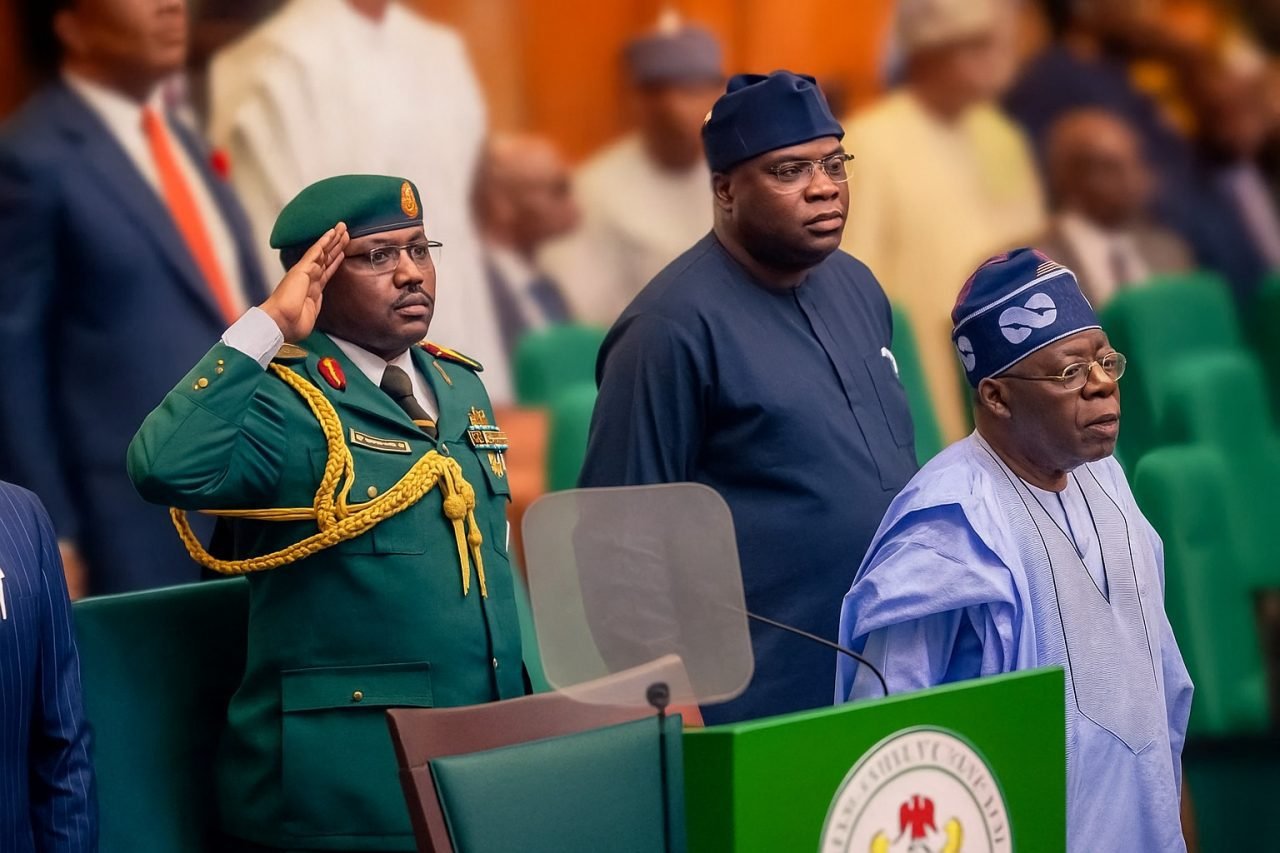
President Bola Tinubu has refuted claims that his administration is pushing Nigeria toward a one-party system, reaffirming that the All Progressives Congress (APC) remains a political platform open to all Nigerians, including opposition members. In a speech at a special joint session of the National Assembly on Thursday, marking Democracy Day, President Tinubu emphasized that the APC welcomes competition both internally and externally, and will continue to embrace defections from other parties. “You are all welcome to the progressive fold. No one should close the door,” he stated. “Political parties concerned about members leaving should focus on improving their internal processes, rather than creating unfounded fears.” His comments come amidst growing opposition from critics, who allege that the APC is trying to suppress dissent and consolidate political power across Nigeria. However, the president firmly rejected these accusations. “I will not tell you to try and put your house in order. I won’t assist you in doing so, either,” Tinubu added, taking a direct swipe at opposition parties grappling with internal struggles. Reflecting on Nigeria’s two decades of democratic governance, Tinubu noted the significant progress made since the end of military rule. “I felt a sense of collective pride when I saw how far we have come. Democracy has emerged from the ashes of military dictatorship, reclaiming its rightful place as the only legitimate form of governance for our people,” he said. He paid tribute to Nigeria’s pro-democracy heroes, particularly the late Chief Moshood Abiola, whose June 12, 1993 presidential victory was annulled by General Ibrahim Babangida’s military regime. “I also commend my predecessor, President Muhammadu Buhari, for rectifying this historic injustice by declaring June 12 as Democracy Day and posthumously honouring Abiola,” Tinubu added. The president also acknowledged the sacrifices of other martyrs of the democratic struggle, including Kudirat Abiola and Pa Alfred Rewane, who were murdered by agents of military repression. While speaking to lawmakers, Tinubu stressed the importance of continued cooperation between the executive and legislative branches. “Though we may not always agree, we must find ways to work together because that is the essence of democracy,” he said. He urged lawmakers to prioritize the people in their decisions, highlighting that nation-building is a collective effort. “Democracy isn’t perfect, but it is the best path we’ve chosen. We must walk it together—sometimes in disagreement, but always with hope,” he concluded.

dd.jpeg

4min4580
Austria observed a minute of silence for the 10 people killed in a school shooting, with thousands gathering for a candlelight vigil on Tuesday evening to honor the victims. Police confirmed that the 21-year-old suspect, a former student, took his own life in a school bathroom shortly after carrying out the attack in Graz, marking the deadliest mass shooting in Austria’s recent history. Authorities found a “farewell letter” and a non-functional pipe bomb at the suspect’s home, though the motive remains unclear. The incident occurred at Dreierschützengasse secondary school, located in the north-west of Graz, and also left 12 people injured. The victims included six females and three males, with a seventh female succumbing to her injuries in the hospital. Seven of the deceased were students. In response, Austria declared three days of mourning. A nationwide minute of silence was held at 10:00 AM local time on Wednesday in remembrance of the victims, with flags lowered to half-mast at all public buildings. During the vigil in Graz’s main square, Tores, a local resident, shared her sorrow as she had known one of the victims personally. “I rang immediately to ask if everything was OK. Then they let me know that the boy was one of those slaughtered,” she said. The square was transformed into a sea of candles, with thousands of mostly young people lighting candles and offering their support. Some prayed or stood in quiet contemplation, while others carefully placed their candles at the Archduke Johann fountain, a symbolic site in the heart of Graz. Chancellor Christian Stocker expressed his deep sorrow, describing the day as a “dark day in the history of our country” and referring to the attack as a “national tragedy.” He emphasized that a school should be a place of trust and safety, which had been tragically violated. The suspect, whose identity has not been disclosed, was a former student of Dreierschützengasse but did not graduate from the school. Interior Minister Gerhard Karner confirmed the gunman had no prior criminal record. The suspect legally owned two guns used in the shooting. Police responded swiftly, deploying a specialist Cobra tactical unit after hearing gunshots from inside the school. The building was secured, and all students and staff were evacuated safely. However, the close-knit nature of Graz meant that many residents personally knew someone at the school, making the tragedy all the more painful for the community. Local media reported queues forming outside blood donation centers in Graz as residents came together to help those affected. “Today I’m here to donate my blood to help other people who need it,” said 25-year-old Stephanie Koenig. This tragic event is the deadliest mass shooting in Austria’s recent history. It follows other high-profile shootings in the country, including the 2020 jihadist attack in Vienna, which left four people dead and 23 injured, and a 2016 shooting in Nenzing that claimed two lives.

na.jpeg

2min4420
The Court of Appeal, Abuja Division, has struck out two motions filed by Senate President Godswill Akpabio and imposed a ₦100,000 fine on him. A three-member panel, led by Justice Hamman Barka, struck out the motions on May 21, 2025, following a request for withdrawal of the appeal. The court’s decision was disclosed on Tuesday evening through a certified true copy of the ruling. The motions, dated March 3, 2025, and March 25, 2025, were marked CV/395/M1/2025 and CV/395/M2/2025, with Akpabio listed as the appellant. The respondents in the case included Senator Natasha Akpoti-Uduaghan, the Clerk of the National Assembly, the Senate, and Senator Neda Imasuem, Chairman of the Senate Committee on Ethics, Privileges, and Public Petitions. In the appeal, Akpabio had sought several reliefs, including requests for an extension of time to seek leave to appeal a decision of the Federal High Court, Abuja, in the case of Senator Natasha Akpoti-Uduaghan v. Clerk of the National Assembly, which was delivered on March 10, 2025. He also sought leave to appeal the decision and a stay of further proceedings in the matter until the appeal was heard. The Court, in its ruling, granted the request to withdraw the motions and struck them out, awarding costs of ₦100,000 to the first respondent. The appeal was officially dismissed and removed from the court’s record.