Author: Zara Lianne

Zara Lianne3 June 2025
WAEC.png

4min31960
The House of Representatives Committee on Basic Education and Examination Bodies sharply criticized the West African Examinations Council (WAEC) on Monday over widespread operational failures and irregularities that have marred the 2025 Senior Secondary School Certificate Examination (SSSCE). During a heated investigative hearing at the National Assembly, the committee grilled WAEC Nigeria’s Head, Dr. Amos Dangut, over what legislators described as deep-rooted systemic lapses that have shaken public confidence in the credibility of Nigeria’s examination system. The session follows mounting backlash from students, parents, and education stakeholders who have decried logistical failures, security breakdowns, and poor coordination during the ongoing examination exercise. The controversy has fueled calls for immediate reforms to protect the integrity of the country’s education assessment framework. Opening the hearing, Committee Chairman Oforji Oboku (PDP – Yenagoa/Opokuma, Bayelsa State) delivered a stinging critique of WAEC’s recent performance. Despite the National Assembly being on recess, Oboku praised committee members for prioritizing the urgent oversight. “This session underscores our collective commitment to restoring dignity and integrity to our national examination system,” he stated. “To every Nigerian parent, guardian, and candidate affected by the recent chaos, we offer our deepest apologies. This failure must never be repeated.” He recalled a May 30 meeting with WAEC where it emerged that students in multiple centres were forced to take exams under inhumane conditions, including sitting late-night papers lit by torchlight. “In what world is it acceptable that students are writing exams at 11 p.m. using phone flashlights?” Oboku asked. “That is not just a logistical failure; it is a complete breakdown of leadership.” While clarifying that the inquiry was not intended as a witch-hunt, lawmakers expressed frustration with WAEC’s pattern of negligence. Tensions escalated when one lawmaker openly called for Dr. Dangut’s resignation. “Own up to the Nigerian people,” the lawmaker said. “If you must cry, cry. But once you’re done, resign.” Committee members also pushed back on WAEC’s plans to roll out nationwide Computer-Based Testing (CBT) by 2026, describing the proposal as disconnected from current realities. “You talk about CBT readiness when entire local governments lack a single CBT centre,” Oboku said. “That’s like claiming you own a car and a driver—but there’s no road. It’s not readiness; it’s wishful thinking.” Beyond infrastructure concerns, lawmakers expressed alarm over the reputational damage Nigeria is suffering across the West African region due to repeated WAEC failures. Dr. Dangut, in his defense, cited logistical setbacks and ongoing insecurity in some regions as major obstacles to smooth exam delivery. However, lawmakers found the explanation unconvincing, frequently cutting him off and describing his responses as inadequate. By the end of the session, the committee passed several resolutions, including a directive for WAEC to submit a full audit of its digital and examination infrastructure—particularly in underserved areas—and a clear implementation plan for CBT deployment. Additionally, the council was instructed to provide the National Assembly with detailed operational protocols and all reports linked to exam malpractice or paper leakages. Concluding the session, Oboku remarked, “This moment demands accountability, transparency, and lasting reform. Education cannot be governed by trial and error. The future of our children, and our country, is on the line.”


Zara Lianne3 June 2025
WhatsApp-Image-2025-06-03-at-3.01.50-PM-1.jpeg

3min8270
Mongolia’s Prime Minister, Luvsannamsrain Oyun-Erdene, has stepped down following growing public anger sparked by images of his son’s extravagant vacation, which circulated widely on social media and triggered an anti-corruption probe. Although Oyun-Erdene has consistently denied any misconduct, he lost a parliamentary vote of confidence on Tuesday. Of the 88 lawmakers who participated in the secret ballot, 44 voted in his favor, while 38 opposed him—well short of the 64 votes required to remain in office. The controversy erupted after photos emerged online showing the prime minister’s son and his fiancée enjoying what appeared to be a luxurious engagement trip. One viral image featured the couple with multiple high-end shopping bags, including a black Dior shoulder bag, with the caption “Happy birthday to me” reportedly posted by the girlfriend. Another photo showed the couple sharing a kiss in a swimming pool. The images drew sharp criticism from the public, with many questioning how the prime minister’s family could afford such extravagance. Mongolia’s anti-corruption authority reportedly began reviewing their financial records in response to the uproar. Transparency International has noted a decline in Mongolia’s anti-corruption performance during Oyun-Erdene’s tenure, ranking the country 114th out of 180 in its most recent global transparency index. Mongolia, a former Soviet satellite state nestled between Russia and China, has struggled with entrenched corruption since its transition to democracy in the early 1990s. In a separate case last year, U.S. authorities sought to seize two New York properties allegedly purchased with embezzled mining funds by former Prime Minister Sukhbaatar Batbold, who governed from 2012 to 2015. Batbold denied the allegations. Despite its internal challenges, Mongolia has in recent years pursued a “third neighbour” policy aimed at strengthening relations with Western democracies, including the United States and European nations. In his farewell remarks after the vote, Oyun-Erdene said, “It was an honour to serve my country and people through difficult times, including pandemics, wars, and trade tensions.” Mass protests, driven largely by young citizens, had intensified in the two weeks leading up to the parliamentary vote, with demonstrators calling for his resignation. Oyun-Erdene maintains that the accusations are part of a politically motivated smear campaign.

Zara Lianne30 May 2025
Google-Unveils-Willow-Quantum-Chip-That-Could-Revolutionize-Computing-Power-1280x744.jpg

2min9100
China’s biggest technology companies are stepping up efforts to replace U.S.-made AI chips with domestically produced alternatives, as ongoing U.S. export restrictions tighten access to Nvidia’s high-performance processors. Major firms such as Alibaba, Tencent, and Baidu have already started testing and integrating homegrown chips into their systems, signaling a significant pivot toward semiconductor self-reliance. The move is seen as a direct response to U.S. sanctions, which have severely limited the availability of advanced Nvidia chips used for training and running AI models. While the transition presents technical challenges—including delays of up to three months due to compatibility and performance differences—companies are adopting a hybrid approach. Many continue to use existing Nvidia chips for training complex AI models, while deploying Chinese chips like Huawei’s Ascend for running applications. To meet the surge in demand, Huawei is ramping up production of its AI chips, though supply still falls short. Other local players, such as Cambricon and Hygon, are also being considered. Some tech firms are even developing their own chips to reduce dependence on foreign technology. Nvidia has taken a financial hit due to the export curbs, reporting losses of $2.5 billion last quarter and anticipating further declines. CEO Jensen Huang has openly criticized the restrictions, warning they may be accelerating China’s push for chip independence. As geopolitical and trade tensions persist, China’s tech industry appears determined to secure a future less reliant on U.S. technology, with long-term investments in chip innovation and manufacturing.

Zara Lianne30 May 2025
3-1280x744.png

2min7750
A federal appeals court has temporarily restored one of the most far-reaching sets of tariffs introduced during former President Donald Trump’s administration. This comes just a day after a lower trade court ruled the tariffs illegal and ordered them to be halted. The U.S. Court of Appeals for the Federal Circuit issued a stay on the ruling made by the Court of International Trade, allowing the contested tariffs to remain in effect while the legal battle continues. The initial decision had found that Trump had overstepped his authority under the International Emergency Economic Powers Act (IEEPA) by imposing wide-ranging tariffs without congressional approval. The case—V.O.S. Selections, Inc. v. United States—has reignited debate over presidential power in setting trade policy. The reinstated tariffs affect a broad range of imports, including steep duties on Chinese goods and products from key trade partners like Canada and Mexico. The appeals court has set a rapid timeline for both sides to submit further arguments, with responses due in early June. If the matter remains unresolved, it could eventually make its way to the U.S. Supreme Court. As businesses and trade partners await a final outcome, the temporary reinstatement of the tariffs adds fresh uncertainty to the U.S. trade landscape.

Zara Lianne30 May 2025
website-images-9-1280x744.png

2min3720
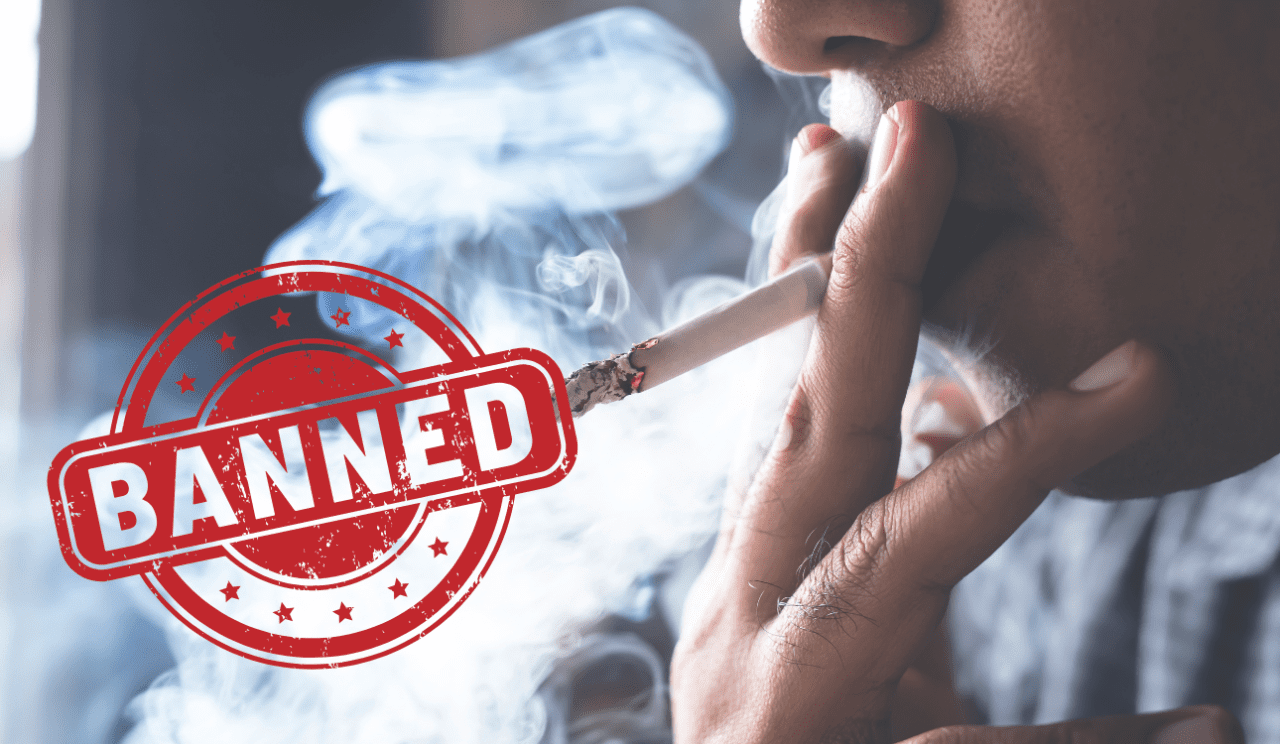
In a bold move to protect children from the dangers of secondhand smoke, France has announced that smoking will be banned in several outdoor public spaces starting July 1, 2025. The restriction will apply to areas where children are commonly present, including beaches, public parks, near schools, and outdoor sports venues. Health and Families Minister Catherine Vautrin confirmed the new policy as part of the government’s ongoing efforts to curb tobacco use and safeguard public health. While smoking will still be allowed on café terraces and the use of e-cigarettes won’t be affected, anyone caught violating the ban could face a fine of €135. This initiative forms part of France’s broader National Anti-Tobacco Programme (2023–2027), which aims to create a tobacco-free generation by 2032. Although the country has seen a historic drop in smoking rates—now at just under 25% of adults—tobacco remains a leading health risk. More than 1,500 municipalities in France already have similar local bans in place, but this nationwide regulation strengthens the fight against smoking in public spaces, especially around children. France joins a growing list of European countries stepping up restrictions on smoking in public to prioritize health and safety.

Zara Lianne29 May 2025
2-13-1280x744.jpg

1min4180
Chinese artificial intelligence startup DeepSeek has rolled out an updated version of its flagship R1 reasoning model, known as R1-0528. The update was quietly released on the Hugging Face platform and marks a step forward in the company’s efforts to compete with global AI leaders. According to recent benchmarks, DeepSeek’s upgraded model performs impressively in coding tasks, ranking just behind leading models from OpenAI and ahead of competitors like xAI and Alibaba. This highlights DeepSeek’s growing capability in the AI reasoning and code generation space. The R1 model uses advanced training techniques, including reinforcement learning, to improve its ability to understand and solve complex problems. While the update was introduced without a formal public announcement, it demonstrates DeepSeek’s ongoing commitment to innovation in artificial intelligence. As DeepSeek continues to develop its AI technology, industry watchers are eager to see how the company’s models will influence the global AI landscape in the coming months.

Zara Lianne29 May 2025
Untitled-design-4-4-1280x744.jpg

2min5810
The U.S. Department of Health and Human Services (HHS) has officially terminated a high-profile contract with pharmaceutical company Moderna, halting the late-stage development of its experimental bird flu vaccine. The canceled agreement, initially worth over $700 million, was aimed at supporting the final development and supply of mRNA-1018—Moderna’s vaccine candidate designed to protect humans from strains of avian influenza, such as H5N1. This decision has surprised many, especially given the growing global concern over the spread of bird flu. Despite promising early trial results showing strong immune responses in healthy volunteers, federal health officials decided to pull funding, reportedly influenced by internal policy shifts and skepticism regarding mRNA vaccines. The vaccine was part of broader efforts to prepare for a potential flu pandemic. Health experts are voicing concerns about the cancellation, especially with recent cases of H5N1 infections in the U.S., including one fatality. Scientists warn that further mutation of the virus could lead to a more serious public health crisis if not monitored and managed effectively. Moderna, in response, expressed disappointment but remains committed to advancing the vaccine through other partnerships and funding opportunities. The company highlighted the importance of pandemic preparedness and reaffirmed its focus on developing life-saving solutions through mRNA technology.

Zara Lianne29 May 2025
website-images-8-1280x744.png

2min8140
Popular confectionery brand Haribo has recalled a specific batch of its Happy Cola F!ZZ sweets in the Netherlands after reports surfaced that some packs may contain traces of cannabis. The recall follows several complaints from consumers who experienced unusual symptoms after consuming the sweets. Upon investigation, the Netherlands Food and Consumer Product Safety Authority (NVWA) confirmed that the affected batch did indeed contain traces of cannabis. According to Haribo, the issue is limited to one specific batch: L341-4002307906. The company assured the public that no other Haribo products, including those sold in the UK or other countries, have been affected. In a public statement, Haribo emphasized its commitment to safety and transparency. Customers in possession of the recalled batch are advised to send the product directly to the company for a refund, rather than returning it to stores. This incident has brought renewed attention to the risks posed by cannabis-laced edibles, especially when they resemble regular sweets. In a separate incident, six children in The Hague were hospitalized after consuming THC-laced candy, raising concerns about the packaging and accessibility of such products. Food safety authorities continue to warn parents and caregivers to stay vigilant and check sweets carefully before giving them to children. Haribo is working closely with authorities to understand how the contamination occurred and to ensure such incidents are prevented in the future.

Zara Lianne29 May 2025
WAEC-1280x744.png

2min5450
The National Association of Nigerian Students (NANS) has criticized the West African Examinations Council (WAEC) over the unexpected delay in the conduct of the English Language paper in the ongoing West African Senior School Certificate Examination (WASSCE). The delay, which affected several schools across the country, reportedly stemmed from an alleged leak of exam questions. As a result, many students ended up writing the paper late into the evening — with some finishing as late as 8:00 p.m. In a statement issued on Thursday, NANS condemned the situation, calling it a clear sign of negligence and insensitivity by WAEC. The student body said the delay not only disrupted students’ focus but also put their safety at risk, especially for those who had to walk home at night in areas with security challenges. NANS demanded that WAEC hold those behind the leak accountable, put stronger exam security measures in place, and issue a public apology to the affected students and their families. Reacting to the backlash, WAEC said the delay was due to efforts aimed at preventing the leaked questions from being used. The council also blamed security and logistical challenges in some states and promised to work with relevant agencies to prevent such incidents in future exams. Meanwhile, parents and education stakeholders across states like Osun and Delta expressed disappointment. A mother in Delta State shared how her son’s exam, initially scheduled for 8:30 a.m., was not written until nearly 6:00 p.m., leaving her worried about his safety and mental state. Stakeholders are now calling on the Ministry of Education and WAEC to take urgent steps to ensure better planning and student safety in future exams.

Zara Lianne28 May 2025
3-4-1280x744.jpg

2min7560
The Joint Admissions and Matriculation Board (JAMB) has debunked misleading messages currently circulating online, which claim that candidates for the 2025 Unified Tertiary Matriculation Examination (UTME) are required to reprint their examination slips for a resit. In a statement released by JAMB’s Public Communication Advisor, Dr. Fabian Benjamin, the board clarified that it did not issue any directive for slip reprinting related to a resit exam. He described the messages—some of which falsely appear to be sent from JAMB’s official shortcode (66019)—as fraudulent and designed to mislead candidates. Dr. Benjamin emphasized that the resit for candidates affected by technical issues has already been conducted and results released. Therefore, any message suggesting another round of exams should be ignored. He added that the only examination currently being prepared by JAMB is the foreign UTME, which will take place in nine countries outside Nigeria, including locations in Europe, the Middle East, and Africa. In addition, a mop-up exam is being arranged for candidates who missed the main or resit exams due to biometric issues or other officially approved reasons. JAMB advised all candidates to rely only on its verified communication platforms for authentic updates and urged the public to report any suspicious or unofficial messages.