Author: Zara Lianne

Zara Lianne3 September 2025
lagos-island-nigeria-january-28-600w-1907683729.webp

3min3810
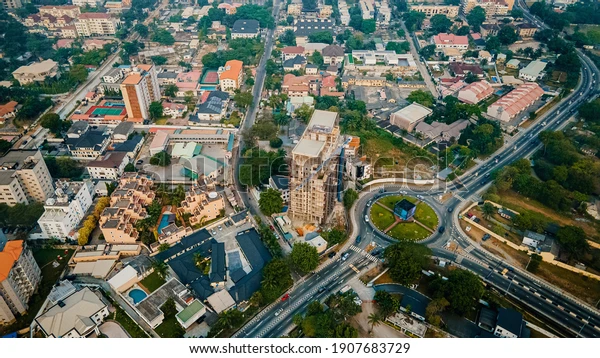
The projection was disclosed at a high-level pre-summit dialogue on “Catalysing Bankable PPPs through the Infrastructure Project Preparation Facility” ahead of the 31st Nigerian Economic Summit (NES #31), hosted in Abuja by the Nigerian Economic Summit Group (NESG) in collaboration with the UK Nigeria Infrastructure Advisory Facility (UKNIAF). The session brought together policymakers, development partners, financiers, and private sector stakeholders to examine the infrastructure gap highlighted in the National Integrated Infrastructure Master Plan (NIIMP). Discussions focused on the critical role of Public-Private Partnerships (PPPs) and the importance of stronger project preparation to attract private investment. In his welcome remarks, NESG Board Director, Nnanna Ude, underscored that unlocking private capital through well-prepared projects is vital to inclusive and sustainable growth. He reaffirmed NESG’s commitment to advancing reforms that strengthen Nigeria’s investment climate and competitiveness. Delivering the keynote, the UKNIAF team, led by Abdul Oladapo, identified weak project preparation as the biggest obstacle to successful PPPs in Nigeria. Poorly structured proposals, inadequate feasibility studies, and weak institutional capacity were cited as recurring barriers. They urged systematic approaches through the Nigeria Project Preparation Facility (NPPF), which has received ₦42 billion in the 2024 and 2025 federal budgets. They also noted that previous interventions by institutions such as the International Development Association (IDA) and the Public-Private Infrastructure Advisory Facility (PPIAF) had limited impact due to similar shortcomings. A panel session on “Strengthening Nigeria’s PPP Pipeline – Institutional Perspectives”, moderated by NESG’s Thematic Lead on Infrastructure and Allied Services Policy Commission, Engr. Nyananso Gabriel Ekanem, featured government, finance, and development experts. Panelists stressed the need for stronger risk assessment, technical expertise, and risk-sharing mechanisms (ICRC), recycling funds from successful transactions and leveraging climate finance (REA, PPP specialists), and building implementing entities that integrate technical skills with project co-development (AFC). Collectively, they agreed that robust institutional frameworks, improved technical capacity, and de-risked pipelines are essential to mobilising long-term capital. Earlier, Saadiya Aliyu, Facilitator of the NESG Infrastructure & Allied Services Policy Commission, called for deeper collaboration between government, private sector, and development partners to drive sustainable infrastructure growth. The dialogue closed with a unified call to prioritise bankable project preparation as the cornerstone for unlocking Nigeria’s infrastructure transformation. Deliberations from the session will inform discussions at NES #31, themed “The Reform Imperative: Building a Prosperous and Inclusive Nigeria by 2030”, scheduled for October 2025.

Zara Lianne2 September 2025
Graduation-Ceremonies-for-Primary-Nursery-Pupils.jpg

2min4090
The Benue State Government has prohibited graduation parties for kindergarten, nursery, and primary schools across the state. Acting Commissioner for Education and Knowledge Management, Mrs. Helen Nambativ, announced the policy in Makurdi on Tuesday, warning that defaulting schools risk sanctions, including temporary closure. She explained that the ban, which takes immediate effect, is aimed at easing financial pressure on parents and refocusing attention on the academic development of children. According to her, schools that fail to comply in the 2025/2026 academic session may lose approval to operate, as a task force will be set up for enforcement. The policy also abolishes the compulsory purchase of customised books that cannot be reused by other pupils, while restoring the practice of passing textbooks down to junior students. In addition, extended lessons after school hours are no longer mandatory unless parents request them. Reactions have been mixed. While some parents, like Mr. James Bemgba, welcomed the move for lifting financial burdens, school proprietors expressed concern about the abrupt implementation, with some calling for a one-year grace period to phase out already purchased materials.

Zara Lianne2 September 2025
INDIA.jpg

2min3820
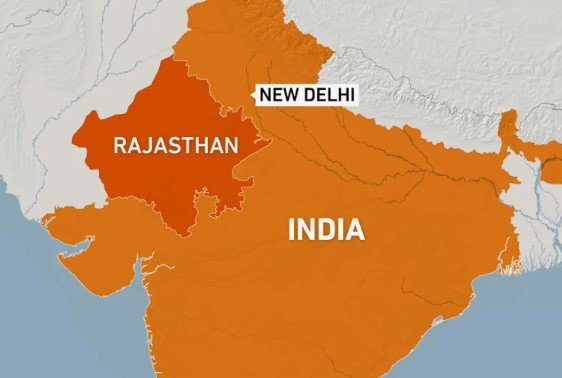
India will commence commercial semiconductor production by late 2025, Prime Minister Narendra Modi announced on Tuesday, positioning the country as a potential “global hub” for chip innovation. Speaking at the Semicon India conference in New Delhi, Modi revealed that test chips from Micron and Tata are already in production.“Commercial chip production will begin this year,” he said, underscoring the speed at which India is advancing in the semiconductor sector. The Indian semiconductor market has grown from $38 billion in 2023 to an estimated $45–50 billion in 2024–2025, with government targets set at $100–110 billion by 2030. Currently, 10 semiconductor projects worth $18 billion are underway, including two state-of-the-art 3-nanometre design facilities in Noida and Bengaluru. “Our journey may have started late, but nothing can stop us now,” Modi declared. According to the Prime Minister, India holds an edge in three critical areas: producing components for semiconductor equipment, supplying essential materials such as chemicals and minerals, and providing services in R&D, AI, big data, and cloud computing. He also highlighted India’s “human capital advantage,” noting that 20 percent of the world’s semiconductor design talent is of Indian origin. The announcement follows Japan’s pledge of 10 trillion yen ($68 billion) in new investment, covering semiconductors and AI, during Modi’s recent visit to Tokyo. As the world’s fifth-largest and fastest-growing major economy, India aims to build a self-reliant and globally competitive semiconductor ecosystem, spanning design, manufacturing, and packaging. “Today’s India inspires confidence in the world,” Modi said in a government briefing. “When the chips are down, you can bet on India.”

Zara Lianne1 September 2025
11-1280x720.jpeg

2min3530
The prize pool for the Women’s World Cup cricket has been set at $13.88 million, exceeding the men’s edition by more than one-third, the International Cricket Council (ICC) announced on Monday. The new figure marks a significant leap from the $3.5 million offered in 2022 and eclipses the $10 million awarded at the last men’s World Cup. According to the ICC, the 13th edition of the women’s 50-over tournament, scheduled to begin on September 30 in India and Sri Lanka, represents a “monumental rise” compared with the 2022 event in New Zealand. “This announcement marks a defining milestone in the journey of women’s cricket,” said ICC chairman Jay Shah. “This four-fold increase in prize money reflects our clear commitment to the long-term growth of the women’s game. Our message is simple: women cricketers must know they will be treated on par with men if they choose this sport professionally.” The winners of this year’s World Cup will take home $4.48 million, a 239 percent increase from the $1.32 million awarded to Australia in 2022. The runners-up will earn $2.24 million, up from the $600,000 England received three years ago. The tournament will open with co-hosts India facing Sri Lanka in Guwahati, while Pakistan will play all their matches in Colombo under a compromise arrangement that ensures both India and Pakistan compete at neutral venues. The final is scheduled for November 2 and will be held either in Mumbai or Colombo, depending on Pakistan’s progression to the title match.

Zara Lianne1 September 2025
06-1280x854.jpeg

3min3620
The Minister of the Federal Capital Territory (FCT), Nyesom Wike, has cautioned the Peoples Democratic Party (PDP) against re-admitting former Labour Party presidential candidate, Peter Obi, warning that such a move could spell the party’s downfall. Speaking during a media chat on Monday, Wike said the PDP had failed to learn from the missteps that cost it dearly in the 2023 general elections. He recalled that he and other party leaders had repeatedly warned against allowing both the presidential candidate and the national chairman to emerge from the North, describing the arrangement as unfair and politically damaging. “From day one, I told my colleagues in the PDP, you are shooting yourselves in the foot. If you continue like this, you’ll pay for it. You cannot have both the presidential candidate and the national chairman from the same region,” Wike said. The former Rivers State governor accused the party of “hijacking” both positions despite calls for fairness and balance, arguing that the decision contributed significantly to its electoral loss. “It is better now you stole the presidential ticket, and again you took the national chairman. I said it would purge you, and it did. I have no regrets,” he declared. Wike maintained that the presidency must return to the South in the interest of equity and political stability, adding that PDP’s arrogance and refusal to heed internal advice had weakened the party. He dismissed speculations about Obi’s possible return to the PDP, describing the idea as dangerous and hypocritical. “Bring Obi to where? You want to kill the party? Obi was the one calling PDP rotten, and now the party is suddenly good enough for him? Ambition can make people even go to Satan’s house,” Wike said. According to him, such a decision would further undermine the party’s credibility and erode its ideological foundation. “If you want to destroy this party, dare it bring Obi back. There’s no way he should return just because of ambition. That would mean no ideology, no principle,” he added. Wike reiterated that equity, justice, and zoning remain the only viable path for the PDP to regain national relevance.

Zara Lianne29 August 2025
05.jpeg

2min3290
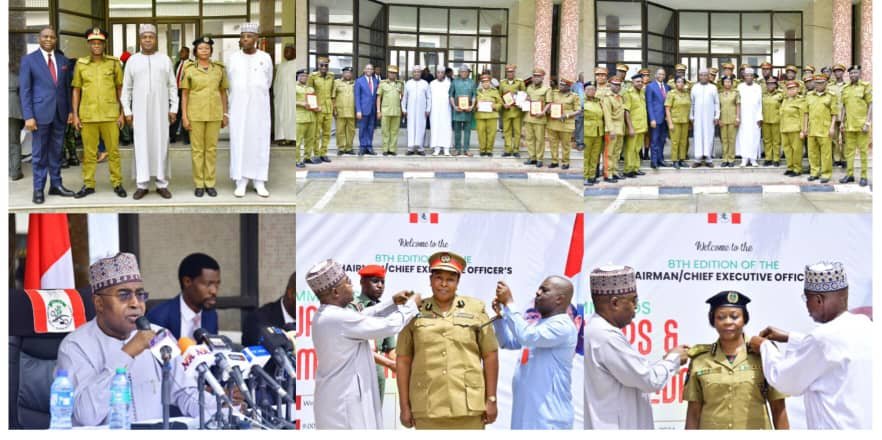
The Edo State Commander of the National Drug Law Enforcement Agency (NDLEA), Mitchell Ofoyeju, on Friday decorated seven officers recently elevated to the rank of Deputy Commander of Narcotics. The promotion was approved by the agency’s Chairman/Chief Executive, Brig. Gen. Mohamed Buba Marwa (retd.), CON. In a statement sent, Ofoyeju said the decoration ceremony, held at the Command’s headquarters in Benin City, was filled with pride, joy, and renewed dedication to the fight against drug abuse and trafficking. Those promoted include Timothy Nku Odu, James Olusola Olarewaju, Akpabio Akpan, Anthony Odu Oko, Fidelis Nkazi Heijirika, Paul Akhazee, and Mohammed Danmusa. Addressing the officers, Ofoyeju described their elevation as both recognition of past service and a call to greater responsibility. “The elevation of these officers strengthens our operational capacity and reinforces the agency’s resolve to curb drug-related crimes in Edo State. I congratulate you and urge you to remain courageous and dogged in your duties,” he said. He further expressed confidence in the team’s ability to meet evolving challenges in law enforcement, stressing that the NDLEA remains resolute in upholding the rule of law and safeguarding the public from the dangers of illicit substances. Speaking on behalf of the newly promoted officers, Nku pledged their loyalty and commitment. “To whom much is given, much is expected. We are grateful for this promotion and will continue to give our best in service to the nation,” he assured.

Zara Lianne29 August 2025
01.jpeg

3min5130
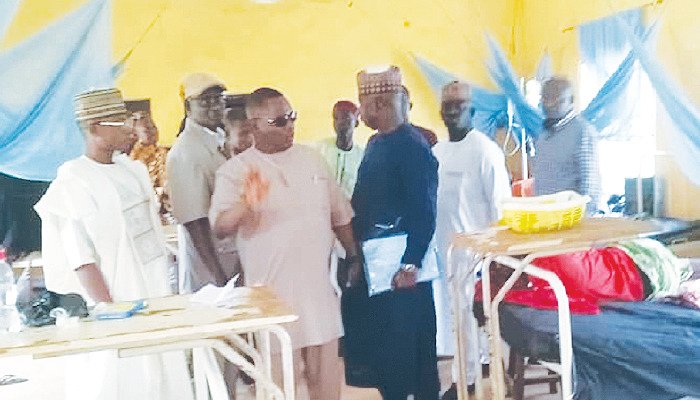
Members of the Kaduna State House of Assembly have expressed deep concern over the poor state of some government hospitals, warning that immediate action is required to avert their total collapse. The lawmakers, during an on-the-spot assessment of facilities in Kagarko and Chikun Local Government Areas, said they were shocked by the level of decay in the hospitals. The inspection was conducted in collaboration with the Maternal Accountability Mechanism in Kaduna Initiatives, supported by the Legislative Initiative for Sustainable Development and the Engender Health Consortium Partners. Leading the delegation, the Minority Leader and member representing Jema’a Constituency, Hon. Ali Kalat, said the exercise was part of a wider effort to review health facilities across the 23 local government areas of the state. He lamented the dire condition of the facilities, describing leaking roofs, broken windows, dilapidated wards, and poorly equipped theatres, laboratories, and pharmacies as common features. “From the emergency ward to the male and female wards, including the theatre, laboratory, and pharmacy, the level of neglect is alarming. Patients and staff are subjected to untold hardship because these facilities cannot provide quality healthcare,” he stated. At the General Hospital, Kagarko, the Medical Director complained of severe manpower shortages and crumbling infrastructure, appealing for a complete overhaul of the facility. A patient, Hajiya Rabi Gambo, also recounted how patients struggled with leaking roofs and the absence of functional toilets. A nurse, who spoke anonymously, revealed that workers often bought drugs and equipment with their own money to assist patients. At the Primary Health Centre, Jere, Chief Health Officer Mrs. Abigail Nuhu said the hospital had been without electricity for two years and lacked water supply, toilets, and staff quarters, appealing for urgent government intervention. In contrast, the General Hospital, Sabo, Chikun LGA, was commended for its upgrades under Governor Uba Sani. However, its Medical Director, Dr. Dsekome, noted that the facility is overstretched due to an influx of patients from neighbouring communities. He also expressed concern over threats to medical staff by some patients resisting procedures, stressing the need for more personnel and bed spaces. The Chief Health Officer at the Primary Health Centre, Sabo Tasha, further decried the poor state of the access road leading to the facility. Assuring the communities, the lawmakers pledged to present their findings before the Assembly and push for an increased health budget in the next fiscal year.

Zara Lianne20 August 2025
Owo.png

3min16240
The Department of State Services (DSS) has urged the Federal High Court in Abuja to deny bail to five men standing trial over their alleged involvement in the June 5, 2022, terrorist attack on St. Francis Xavier Catholic Church, Owo, Ondo State, which killed about 40 worshippers and injured over 100 others. The defendants—Idris Abdulmalik Omeiza (25), Al Qasim Idris (20), Jamiu Abdulmalik (26), Abdulhaleem Idris (25), and Momoh Otuho Abubakar (47)—were arraigned on August 11 on a nine-count charge (FHC/ABJ/CR/301/2025) bordering on terrorism. DSS Opposes Bail In a counter-affidavit to their bail application, the DSS alleged that the accused men have ties to foreign fighters linked to the Al-Shabab terrorist group. The service warned that releasing them on bail could compromise national security, endanger witnesses, and jeopardize the trial. “There is a very high likelihood of defendants evading trial in view of their connection to foreign fighters linked to Al-Shabab. Their accomplices are still at large and are making frantic efforts to monitor the trial, intimidate witnesses, and free the defendants from lawful custody,” the DSS stated. The security agency further disclosed that it is investigating intelligence leads to apprehend other collaborators allegedly plotting to compromise proceedings. Witness Protection According to the DSS, several prosecution witnesses had expressed fears of attacks, prompting the agency to file an ex parte application for their protection. In a brief ruling, Justice Emeka Nwite granted the application, ordering that witnesses testify under protection—hooded and veiled—while their real names and personal details remain shielded from the public record. Court Proceedings Prosecuting counsel, Dr. Calistus Eze, urged the court to reject the bail application, describing it as unmeritorious in light of ongoing threats to witnesses. He confirmed that the case had been reassigned to Senior Advocate of Nigeria, Ayodeji Adedipe, who will now lead the prosecution once a fiat is secured from the Attorney-General’s office. Justice Nwite adjourned ruling on the bail application until September 10, 2025.  

Zara Lianne11 August 2025
NAF-aircraft.jpg

1min11630
The Nigerian Air Force (NAF) says it has neutralised multiple bandits in Zamfara State during a coordinated air–ground operation on Makakkari Forest under Operation Fasan Yamma. In a statement on Monday, NAF Director of Public Relations and Information Ehimen Ejodame said Intelligence, Surveillance and Reconnaissance (ISR) detected the movement of over 400 armed bandits allegedly preparing to attack a farming community. He said precision airstrikes, supported by ground forces, killed “several notorious kingpins” and scores of fighters in an assault carried out on Sunday, Aug. 10. Ejodame credited the outcome to close coordination between air and land components, describing the synergy as “exceptional.” No official casualty figures or details of arrests were released.  

Zara Lianne11 August 2025
NELFUND-Student-loan.jpeg

2min8520
The Nigerian Education Loan Fund (NELFUND) says it has disbursed ₦86.35 billion to 449,039 students since the scheme launched on May 24, 2024, marking its largest payout to date under the federal student loan programme. In its latest daily status update, NELFUND said the total includes ₦47.63bn paid directly to 218 institutions as tuition and ₦38.72bn transferred to students as upkeep allowances. The fund added that 731,140 students have registered on the portal, with 720,732 successful applications—about a 98% success rate as of August 6, 2025. “The scheme delivers on the Renewed Hope Agenda of empowering every Nigerian student through access to higher education funding,” the fund said, noting steady daily increases in both registrants and approvals. Independent tallies published earlier in July placed cumulative disbursements above ₦73bn to more than 366,000 students, indicating a sharp rise in uptake over the last month as more institutions completed onboarding. NELFUND’s website describes the initiative as a zero-interest loan scheme aimed at widening access to higher education, with repayments commencing post-graduation under defined conditions. The rapid expansion comes amid increased scrutiny of the programme’s processes and data integrity. In May, the ICPC opened an investigation into reported discrepancies in disbursements, saying it would track funds to beneficiary institutions and students. By the numbers (as of Aug. 6): Beneficiaries: 449,039 students Total disbursed: ₦86.35bn Tuition to institutions: ₦47.63bn across 218 schools Upkeep to students: ₦38.72bn Registered on portal: 731,140 Successful applications: 720,732 (~98% success rate) NELFUND says it will continue publishing daily dashboard updates as schools resume and the 2024/25 application cycle advances.