Blog - Edupreneur Select

Bring to the table win-win survival strategies to ensure proactive domination. At the end of the day, going forward, a new normal that has evolved from generation.
3-1.jpg

3min4550
The Nigerian Electricity Regulatory Commission (NERC) has unveiled a series of events to celebrate its 20th anniversary, marking two decades of reform, oversight, and transformation in Nigeria’s electricity supply industry. Established on October 31, 2005, under the former Electric Power Sector Reform Act—now replaced by the Electricity Act 2023—NERC has played a central role in steering the country’s power sector through major transitions and reforms. In a statement issued on Wednesday, the Commission said the anniversary celebration would highlight its journey from inception, through the unbundling of the Power Holding Company of Nigeria, the privatisation of generation and distribution companies in 2013, and its continued regulation of the electricity market from the post-privatisation phase to the current Transition Market stage. “This 20th anniversary is not just a milestone; it’s a reaffirmation of our mandate to protect consumers, promote investment, and ensure a fair and competitive electricity sector,” said NERC Vice-Chairman, Dr. Musiliu Oseni. “We remain committed to reforms that deliver real value to Nigerians.” Over the past two decades, NERC has driven key regulatory reforms promoting transparency, accountability, and sustainability in the power sector. The Commission has introduced market rules, performance benchmarks, consumer protection measures, and tariff structures that balance investor confidence with public interest. It has also advanced off-grid electrification, renewable energy initiatives, and energy transition policies in line with Nigeria’s development and climate goals. To commemorate the anniversary, NERC has lined up a week-long programme of events, including technical panel sessions featuring energy experts, a health and wellness programme for staff, and a secondary school debate on energy conservation. A gala dinner will also be held to honour past leaders, pioneer staff, and deceased members who contributed to the Commission’s legacy. “These activities are designed to encourage collaboration, innovation, and public participation as we reflect on our journey and envision the future of Nigeria’s power industry,” the statement added. The anniversary comes at a pivotal time for Nigeria’s electricity sector, which is undergoing significant transformation under the Electricity Act 2023. The new legislation decentralises electricity regulation, empowering states to establish their own regulatory agencies—a move NERC has pledged to support through technical assistance and policy guidance. Looking ahead, the Commission reaffirmed its commitment to building a fully competitive electricity market defined by improved service delivery, market discipline, and consumer protection. As NERC marks 20 years of impact, it remains dedicated to ensuring that Nigerians enjoy reliable, affordable, and sustainable power supply, guided by its mission to regulate the electricity industry in the public interest.

Tech & Tools Desk30 October 2025
2.png

2min2830
FirstBank of Nigeria Limited, a subsidiary of FBN Holdings Plc (FirstHoldCo), has fully redeemed its $350 million subordinated Eurobond due in October 2025, reaffirming its strong liquidity and financial resilience. The Eurobond, issued in 2020 at an 8.625% coupon rate, matured on October 23, 2025, and was repaid in full from the bank’s balance sheet without any refinancing. This achievement highlights FirstBank’s solid capital position and disciplined risk management strategy. In a statement filed with the Nigerian Exchange Limited on Wednesday, the bank noted that the successful redemption reflects its unwavering commitment to maintaining investor confidence and preserving its reputation in the global debt market. Since 2007, FirstBank has issued and fully redeemed four Eurobonds, totalling $1.275 billion, underscoring its consistent financial performance and reliability in meeting international debt obligations. Recently, Fitch Ratings and Standard & Poor’s reaffirmed the credit ratings of both FBN Holdings and FirstBank, maintaining a stable outlook on the group’s operations. Commenting on the development, FirstBank CEO Olusegun Alebiosu said the successful Eurobond redemption “demonstrates our strong financial fundamentals and the enduring trust of our stakeholders in the FirstBank brand.” He added that the bank remains committed to pursuing sustainable funding options to drive growth and support key sectors of the Nigerian economy.

James Obasi30 October 2025
11-2.jpg

4min3720
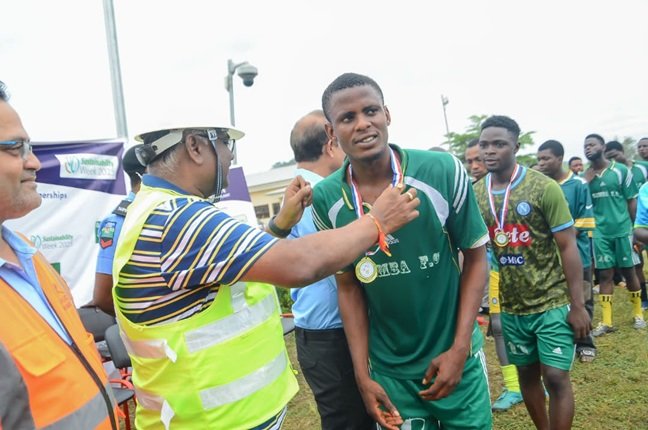
Dangote Cement Plant, Obajana, has kicked off its 2025 Sustainability Week with a lineup of dynamic activities celebrating sportsmanship, education, and community partnership under the theme “Sustainable Progress: Celebrating Growth and Partnerships.” The annual event, which began on October 24, has been broadened this year to include more initiatives aimed at promoting holistic community development, according to a statement from the company on Wednesday. The opening ceremony set the stage for a week of meaningful engagement and collaboration, bringing together Dangote Cement employees and members of surrounding host communities. A major highlight of the celebration was a football tournament that embodied teamwork, inclusion, and healthy competition. The tournament’s grand finale took place on October 29, 2025, at the Obajana Academy Field, where the Oyo Community Football Team triumphed over Dangote Cement Transport with a narrow 1–0 victory. The event marked the conclusion of several days of thrilling matches featuring teams from the plant, transport division, and host communities. Beyond recreation, the football tournament aimed to promote physical wellness and unity while strengthening the bond between the company and its host communities. The final match drew an enthusiastic crowd, including top management members such as the Plant Director, Mr. Azad Nawabuddin; CGM Maintenance, Mr. Panjala Sreedar; CGM Production, Mr. John Gwong; and GM Special Duties, Mr. Ademola Adeyemi, among others. The event concluded with commendations from participants and guests who applauded the initiative for reinforcing Dangote Cement’s values of collaboration, inclusion, and sustainable development. In addition to the sports programme, the company organized an Inter-School Spelling Bee and Quiz Competition, featuring ten secondary schools from the host communities. The competition provided a platform for young learners to display their academic skills and intellectual curiosity. Golden Vessels Academy, Obajana, emerged as the overall Spelling Bee champion, showcasing excellence and the company’s commitment to promoting quality education and leadership among youth. During his address, Plant Director Azad Nawabuddin highlighted the company’s vision for an inclusive and impactful Sustainability Week. “Our investment in sports and education represents a deep commitment to the overall well-being of our communities,” he said. “The football tournament builds character, teamwork, and strong bonds between our organization and the people we serve. These relationships strengthen our collective pursuit of progress and shared growth.” Similarly, Head of HAM-Admin/HR, Mr. Peter Agba, emphasized the company’s integrated approach to development. “By combining sporting activities with academic competitions, we are nurturing both the physical and intellectual strengths of our youth,” he said. “This holistic strategy lays a strong foundation for long-term empowerment and sustainable community growth.” The successful launch of the 2025 Sustainability Week paves the way for upcoming events focused on environmental protection, health awareness, and skill development. The expanded programme reflects Dangote Cement’s evolving sustainability vision—one that links health, education, and environmental stewardship as key pillars of community progress. The company reaffirmed its commitment to continuous engagement through quarterly sporting events and regular educational initiatives, ensuring that empowerment remains a year-round focus. As the week continues, Dangote Cement remains dedicated to advancing meaningful progress through collaboration, innovation, and responsible corporate citizenship—proving that through sports and education, stronger, more united communities can be built.

10-1.jpg

4min4780
The Nigerian Medical Association (NMA) has expressed full support for the nationwide indefinite strike declared by the Nigerian Association of Resident Doctors (NARD), describing the doctors’ demands as justified and long overdue. According to the NMA, the Federal Government has consistently failed to fulfil its promises and address pressing issues affecting healthcare workers and the system at large. NARD announced the indefinite strike after the expiration of its 30-day ultimatum, effective Saturday, November 1. Speaking on the development, NMA Secretary-General Dr. Ben Egbo said the association stands firmly behind NARD, noting that both groups share the same concerns. “We are fully in support of NARD’s decision. Their demands are essentially the same as ours. The government has not treated healthcare workers fairly and continues to make promises it never keeps,” Egbo said. He criticised the government’s handling of the situation, adding that strikes appear to be the only language the authorities understand. “Resident doctors have 19 legitimate demands. The NMA, as their parent body, fully supports them. Each time we engage with the government, they promise action but fail to deliver. It’s a cycle of unfulfilled commitments,” he added. Confirming reports that healthcare workers are owed over ₦38 billion in various allowances, Egbo questioned the government’s priorities. “The government knows it owes that amount. You never hear of lawmakers being owed such sums, yet essential healthcare workers are left unpaid despite the enormous workload they bear. The system is failing and needs urgent attention,” he said. When contacted, the Federal Ministry of Health and Social Welfare’s Head of Information and Public Relations, Mr. Alaba Balogun, said he was not authorised to comment on the issue. NARD’s 19-point demand includes the immediate payment of outstanding 25–35 per cent CONMESS salary arrears, withheld allowances, and the reinstatement of five resident doctors dismissed by the Federal Teaching Hospital, Lokoja. Other demands include implementing an internationally accepted working-hours policy, recruiting more doctors under a one-for-one replacement plan, upgrading hospital facilities and equipment, paying specialist allowances promptly, correcting placement levels for house officers, and ensuring all junior doctors are properly included in the public service salary structure. NARD also called for a speedy review of the Consolidated Medical Salary Structure through the Collective Bargaining Agreement Committee, payment of promotion arrears, ending staff casualisation, and enforcing uniform salary circulars across all levels. The association further demanded the proper recognition of certificates issued by professional bodies and faster issuance of postgraduate qualifications.

9.webp

7min4010
Health remains the true foundation of wealth and national progress. No nation can rise above the health of its people. As Mahatma Gandhi wisely said, “It is health that is real wealth and not pieces of gold and silver.” Yet today, Nigeria faces a health crisis that is denying millions this very wealth. Nigeria’s health indicators paint a troubling picture. The average life expectancy stands at just 55 years for men and 58 for women. Maternal mortality remains among the highest globally, with one in every four maternal deaths occurring in Nigeria. Far too many women enter delivery rooms but never return home. Children are equally vulnerable — one in ten will not live to see their fifth birthday, while over 30 per cent of those under five suffer stunted growth due to malnutrition. Communicable diseases still dominate the landscape. Malaria claims about 200,000 lives every year; HIV affects nearly two million Nigerians; and tuberculosis continues to spread. Outbreaks of preventable diseases such as measles and meningitis persist. Meanwhile, non-communicable diseases are rising sharply. Nearly four in ten adults live with hypertension, diabetes is increasing, and cancers are often detected late. Stroke and heart disease now claim thousands of lives annually. Behind these figures is a fragile health system — fewer than 40,000 doctors serve a population of over 200 million, with most concentrated in urban centres. Rural dwellers travel long distances for basic care. Out-of-pocket spending accounts for more than 70 per cent of healthcare financing, driving families into poverty. To make matters worse, many healthcare professionals are emigrating in search of better opportunities. Arthur Schopenhauer once warned, “The greatest of follies is to sacrifice health for any other kind of happiness.” Nigeria can no longer afford to sacrifice the health of its citizens. Artificial Intelligence (AI) — the science of teaching machines to think and act like humans, but faster and more accurately — offers a new path forward. It’s already part of daily life through tools like Siri, Google Assistant, and fraud detection systems. In healthcare, AI is diagnosing diseases from scans, analysing records, and recommending treatments with unmatched precision. Kofi Annan aptly said, “Knowledge is power. Information is liberating. Education is the premise of progress in every society.” AI represents this liberating knowledge. Across the world, AI is already saving lives — from detecting diabetic eye disease in India to identifying breast cancer earlier in the UK. During the COVID-19 pandemic, it accelerated vaccine development. In the U.S., AI-powered chatbots help triage patients before they reach hospitals. As Albert Einstein once said, “In the middle of every difficulty lies opportunity.” For Nigeria, AI represents that opportunity. Potential Benefits of AI in Nigerian Healthcare: Early diagnosis: AI can analyse malaria slides, X-rays, and CT scans with great accuracy, ensuring timely treatment. Telemedicine: With mobile technology, rural patients can access AI-powered consultations, reducing the strain on urban hospitals. Personalised medicine: AI can recommend treatments based on a patient’s genetics and lifestyle. Hospital efficiency: AI can predict patient flow, optimise bed use, and reduce waiting times. Counterfeit drug detection: AI can trace medicines through supply chains to curb fake drugs. Disease surveillance: AI can forecast outbreaks of malaria or cholera using environmental and health data. Nigeria’s youthful and tech-savvy population can build local AI tools tailored to our health challenges. Just as we skipped landlines and embraced mobile phones, we can leap into AI-powered healthcare. This could mean reduced costs, fewer unnecessary hospital visits, and enhanced medical training. As Alan Kay said, “The best way to predict the future is to invent it.” However, challenges remain — unreliable health data, weak infrastructure, poor internet access, and ethical concerns about patient privacy. Without data and policies, AI cannot thrive. William S. Burroughs reminds us that “The purpose of technology is not to confuse the brain but to serve the body.” AI should not replace healthcare workers but empower them. To make this vision real, Nigeria needs a national policy on AI in healthcare, strong public–private partnerships, training programmes for healthcare professionals, and support for local innovators tackling diseases like malaria and sickle cell. Robust data protection laws are also essential to ensure ethical use. As John Maxwell said, “The true measure of leadership is to see possibility in the impossible.” Imagine a Nigeria where no mother dies in childbirth because AI flagged her risk early, no child dies of malaria due to timely diagnosis, and no family falls into poverty because AI made healthcare efficient and affordable. Gandhi’s words ring true: “The future depends on what you do today.” AI is not here to replace doctors, nurses, or pharmacists — it’s here to strengthen their work. With wisdom, vision, and commitment, Nigeria can transform its health system from one of scarcity to one of innovation, efficiency, and hope. The future of healthcare in Nigeria depends on the choices we make today. — Dr. Lolu Ojo, Consultant Pharmacist

8.jpeg

3min3790
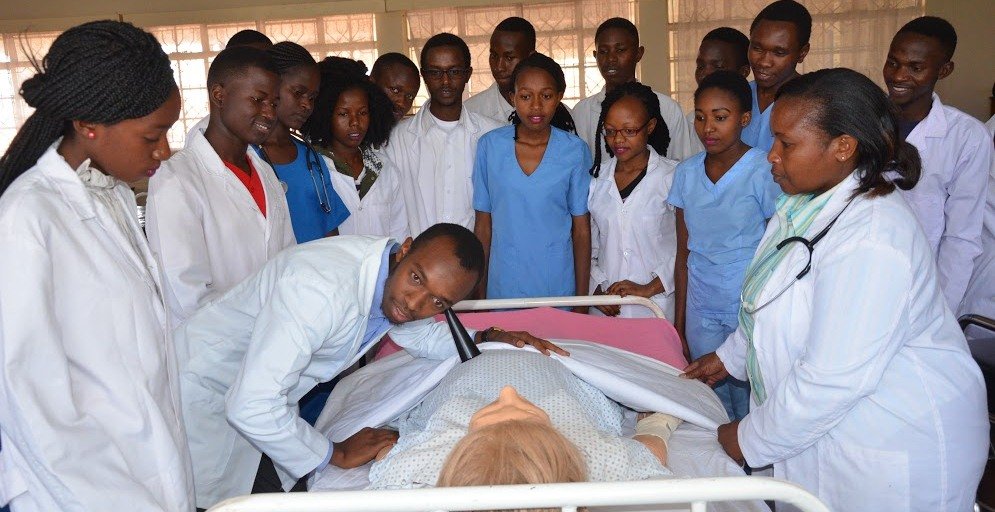
The Golden Lamp Leadership Initiative Africa (GLLIA) Undergraduate Nursing Research Summit & Awards recently honoured the groundbreaking research of final-year nursing students from across Nigeria. Held at LTV Combo Hall in Ikeja, Lagos, the event was themed “From Basics to Cutting Edge: Advancing Nursing Through Research.” It gathered nursing students from universities in the Southwest and Southeast for a day of keynote sessions, research presentations, and mentorship designed to promote leadership and innovation in healthcare. Led by GLLIA CEO Oluyemisi Otitoloju, the summit brought together academic and healthcare professionals to celebrate research addressing critical health challenges across Africa. Distinguished speakers, including Professor Prisca Adejumo and Professor Omolola Irinoye, Vice Chancellor of Achievers University, discussed global health trends and cancer prevention. Research projects were evaluated by Professor Adekemi Olowokere of Obafemi Awolowo University and Dr Rafiat Anokwuru of Babcock University, ensuring high academic standards. The event attracted notable guests from Lagos State’s health sector, including the Director of Nursing Services, Olusola Aketi, and representatives of the Special Adviser to the Governor on Health, Dr Kemi Ogunyemi, underscoring the importance of research-driven healthcare policy. Top honours went to students from Redeemer’s University and Obafemi Awolowo University (OAU). Redeemer’s University student Victor Saliu emerged as the overall winner, receiving ₦2 million for his project, while his classmate Uba Paul took third place with ₦250,000. The university’s Department of Nursing Science also received ₦1 million for its outstanding contribution. OAU students claimed second place, highlighting the institution’s strong research culture. In his remarks, Victor Saliu said, “This is for every nurse who dreams of making a difference. Research helps us touch lives in new and powerful ways.” His colleague, Uba Paul, added, “Our mentors believed in us, and that belief pushed us beyond limits.” The 2025 GLLIA Summit brought together participants from various universities, fostering collaboration, mentorship, and innovation. It reinforced the vital role of nursing research in transforming healthcare across Africa and celebrated the emergence of a new generation of nurse leaders dedicated to impact and excellence.

Tech & Tools Desk29 October 2025
7-1.jpg

4min3470
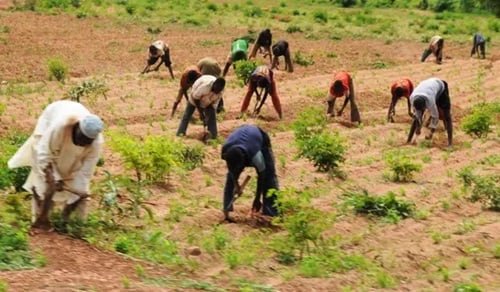
About 630 young people, women, and persons with disabilities on Tuesday began an orientation for the Livelihood Improvement Family Enterprises in the Niger Delta programme in Edo State. According to the organisers, the training duration will vary for participants, with the minimum period being three months. Speaking at the event, Governor Monday Okpebholo said his administration’s agricultural initiatives were pathways to prosperity and economic development. The Head of the Edo Agricultural Development Programme, Princewill Igbinedion, who represented the governor and the Commissioner for Agriculture, Jerry Uwangue, said the government was determined to transform Edo into a hub of modern agriculture and food security. The governor commended the International Fund for Agricultural Development and the Federal Government of Nigeria, through the Niger Delta Development Commission, for their consistent partnership and support for the project, which he said had continued to empower rural youths and women to engage meaningfully in agriculture. He said his administration prioritised agricultural mechanisation, youth empowerment, job creation, rural development, and industrialisation. He added, “The IFAD LIFE-ND project objectives align perfectly with the vision of our administration to nurture young farmers into successful agripreneurs who can transform subsistence farming into profitable agribusiness ventures. “With 630 incubatees participating, we are not just training individuals, we are breeding a new generation of innovators, leaders, and wealth creators who will drive Edo State towards self-sufficiency in food production. “Our government remains committed to supporting all LIFE-ND beneficiaries through improved access to inputs, extension services, value chain development, and linkages to markets. We are also integrating LIFE-ND initiatives into the broader state agricultural transformation framework to ensure sustainability beyond donor support. “As a government, we will continue to provide an enabling environment for agribusiness to thrive through policies that encourage mechanisation, irrigation, access to finance, and private sector collaboration.” The Edo Project Coordinator of LIFE-ND, John Omoruyi, said Governor Okpebholo had shown strong commitment to strengthening food security and empowering youths through agriculture. Omoruyi noted that large hectares of land would be made available for the trainees under the programme. The Agribusiness Promotion Coordinator of the project, Anthonia Esenwa, urged the beneficiaries to take the programme seriously, warning that those found to be underperforming would be replaced. The National Coordinator of the project, Dr Abiodun Sanni, represented by Justina Osaegwiwa, said that when the project began, some communities initially resisted it, but that attitudes had since changed, with many now eager to participate. A representative of the Niger Delta Development Commission, Clementina Osabuohien, cautioned beneficiaries against diverting funds meant for agricultural purposes.

James Obasi29 October 2025
Cooking-Gas-Scarcity.jpg

4min3850
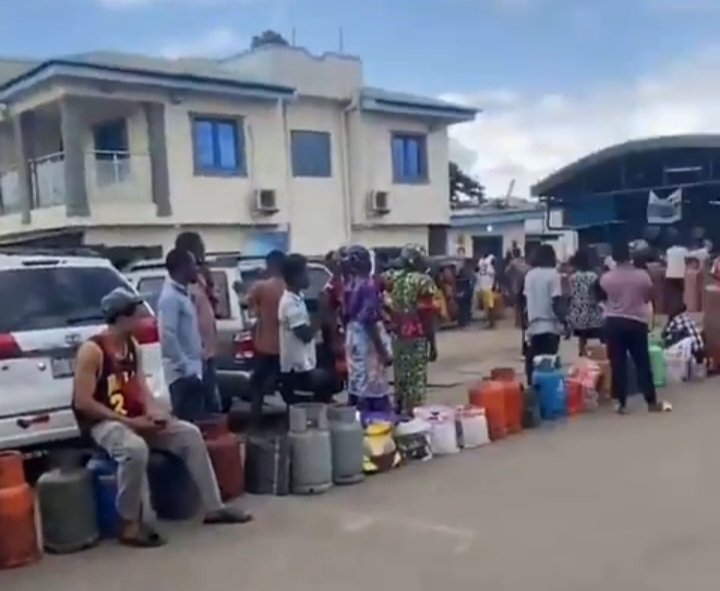
Liquefied Petroleum Gas (LPG) marketers have announced plans to boost Nigeria’s annual LPG supply to six million metric tonnes in the coming years, as part of ongoing efforts to promote the use of cleaner energy across the country. The outgoing President of the Nigerian Association of Liquefied Petroleum Gas Marketers (NALPGAM), Oladapo Olatunbosun, made this known on Tuesday during the association’s 38th Annual General Meeting in Abuja, where he reviewed industry progress and set new goals for the sector. Olatunbosun noted that Nigeria’s LPG consumption had risen from about 900,000 metric tonnes four years ago to over two million metric tonnes in 2024 — a growth he attributed to increased private investment, government collaboration, and greater public acceptance of gas as a household energy source. He expressed optimism that with continued policy support and active private sector involvement, the country could achieve the six-million-tonne target under the Federal Government’s Decade of Gas initiative. “By working closely with the government, we have been able to strengthen the future of LPG in Nigeria. Our goal is to reach six million metric tonnes per year, placing us among Africa’s top gas producers alongside Morocco and Egypt,” he said. Despite the progress, Olatunbosun highlighted persistent challenges such as high costs and limited access in rural areas. He assured, however, that ongoing investments — including Seplat Energy’s upcoming gas supply and increased production from the Dangote Refinery — would help stabilise prices and improve availability. “Affordability remains critical. Every household should have access to LPG, and we must continue pushing for measures that ensure consistent supply and price stability,” he emphasised. He acknowledged recent disruptions caused by plant maintenance and logistics challenges but said prices were expected to fall as local production ramps up. Olatunbosun also urged operators to adopt technology-driven solutions such as artificial intelligence and digital monitoring to curb product theft, enhance safety, and improve operational efficiency. Reflecting on his four-year tenure, he thanked association members for their cooperation, describing the period as one of transformation and resilience. He encouraged the incoming leadership to build on existing achievements and pursue more investment opportunities to strengthen the industry. The event concluded with the election of new executives to lead NALPGAM for the next four years.

Court-gavel-1-750x422-1.webp

3min4700
Justice Alexander Owoeye of the Federal High Court in Lagos has ordered the permanent forfeiture of a four-bedroom duplex with two sitting rooms and boys’ quarters in Lekki to the Federal Government, after determining that the property was used for drug trafficking operations. The property, located at Block 11, House 2, Mobolaji Johnson Estate, Lekki Phase 1, was linked to a suspected drug trafficker based in Canada and served as the syndicate’s operational hub for smuggling and distributing Canadian Loud — a potent strain of cannabis — into Nigeria. Counsel to the National Drug Law Enforcement Agency (NDLEA), Buhari Abdulahi, informed the court that an interim forfeiture order had earlier been issued on March 20, 2024. In compliance with court directives, public notices were published in national newspapers to allow any interested parties to contest the forfeiture, but none came forward. Abdulahi urged the court to issue a final forfeiture order under the provisions of the NDLEA Act, noting that the property was purchased and maintained with proceeds from drug trafficking. After reviewing the evidence and submissions, Justice Owoeye granted the application, ruling that the property and all items within it were used in committing drug-related offences. According to an affidavit filed by NDLEA Deputy Commander of Narcotics, Nasir Garba Bungudu, the agency received intelligence in 2023 about a syndicate smuggling high-grade cannabis from Canada into Nigeria. Surveillance traced their base to the Lekki property, which was used as a warehouse and coordination centre. During a raid on February 5, 2023, NDLEA operatives seized 1.088 kilograms of Canadian Loud and arrested five suspects: Tijani Hakeem, Eric Makuo, Adaobi Fortune, Ahmed Jubril, and Ekwejunor Oritsematosan. Four of them were later convicted, while one suspect remains on trial along with a company, Femaffix Global Services Limited. Investigations revealed that the ringleader, identified as Adebanjo, purchased the property to accommodate his associates and manage the syndicate’s operations, using a company to launder the illicit proceeds. Justice Owoeye concluded that all due legal procedures had been followed and ordered the property’s final forfeiture to the Federal Government as proceeds of crime.

Police-3-e1761573426871.webp

2min3020
The Anambra State Police Command has rescued a newborn baby and arrested four women over alleged child trafficking in Ifite-Awkuzu, Oyi Local Government Area. Police spokesperson SP Tochukwu Ikenga disclosed this in a statement issued in Awka on Tuesday, noting that operatives of the Rapid Response Squad, Awkuzu, acted on credible intelligence to carry out the operation in the early hours of the day. According to Ikenga, the officers raided a facility identified as Mama Maternity in Ifite-Awkuzu, where they rescued a one-week-old baby girl and apprehended four female suspects linked to a case of conspiracy and child trafficking. Those arrested were identified as 62-year-old Elizabeth Okafor, 48-year-old Esther Nweke, 45-year-old Ngozi Maanfa, and 25-year-old Peace Elijah Moses. Preliminary investigations revealed that the suspects conspired to purchase the newborn for ₦1.7 million. An advance payment of ₦350,000 was allegedly made to the baby’s biological mother, identified as Peace Elijah Moses, who is among the arrested suspects. Ikenga confirmed that the rescued baby is now in protective custody, while the Commissioner of Police, CP Ikioye Orutugu, has directed that the case be transferred to the State Criminal Investigation Department’s Gender Unit in Awka for further investigation and prosecution. He reaffirmed the Command’s firm stance on child protection and its ongoing efforts to combat human trafficking across the state. This development follows a similar operation in July 2025, when the Command uncovered an interstate child trafficking network in Uruagu, Nnewi North LGA, leading to the arrest of one suspect and the rescue of 11 children — five boys and six girls — who were reportedly abducted from Adamawa State and sold to unsuspecting adopters for amounts ranging from ₦800,000 to ₦1.5 million.